Monthly Archives: August 2011

Abandoned Six Flags New Orleans

I couldn’t post the “LA Light” video and not post one of the creepiest, most effective videos I’ve seen online.

This is a tour of the former Six Flags amusement park near New Orleans. The park was closed in 2005 when Hurricane Katrina was bearing down on Louisiana and never reopened.

Watch this video and try not to think about the end of the world.

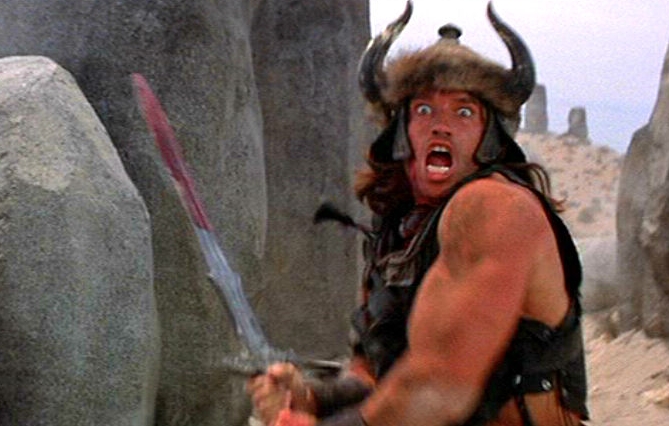
In which I’m as tall as Arnold Schwarzenegger

I used to be about five feet 10 inches tall. And I used to write about movies.

What do those two factoids have in common?

What if I threw in a third factoid: I’m as tall as bodybuilder-turned-actor-turned-governor-turned-tabloid-fodder Arnold Schwarzenegger.

Or at least I used to be. Or Arnold used to be.

Confused yet?

Even though I’ve written about weightier subjects for most of the last 20 years, the first dozen or so years of my journalism career were devoted, primarily, to feature and entertainment writing. Besides writing for the now-defunct Muncie Evening Press, I wrote for some Indianapolis-based entertainment tabloids, Hot Potato and The Alternative, and some fan-published magazines.

I also tried to write once for a nationally-distributed entertainment magazine, but my submission — an in-depth review of an early, unused script for the 1989 “Batman” movie — earned me a cease-and-desist letter from Warner Bros., the makers of that movie. That’s a story for another day though.

For a guy writing about books, music and movies in a town the size of Muncie, I was pretty ambitious. I requested and received opportunities to do phone interviews with directors like John Carpenter (“Halloween”) and George Romero (“Night of the Living Dead”). I got to interview Julie Walters — now better known as Mrs. Weasley from the “Harry Potter” films — early in her career.

I also went on press junkets, in which studios flew entertainment writers to big-city screenings of upcoming movie releases. They put us up in a hotel, screened the movie for us and let us interview, in brief fashion, the stars. Sometime I’ll tell you about getting to meet Nick Nolte that way.

But it was at one of those press junkets where I got the opportunity to meet Arnold Schwarzenegger.

Now, this isn’t the Arnold Schwarzenegger we all know today. This was in 1982, and Arnold was publicizing “Conan the Barbarian.” He had been in a couple of movies by that time, but the Arnold that would be the stuff of action movie legend — “The Terminator,” “Commando,” and many more films — hadn’t happened yet.

This Arnold was still a fairly unpolished guy. I mean, he was dressed up for the press junket, in a suit and tie. And he was unfailingly polite. But I remember him as being rough around the edges, even in front of the press. He was outgoing and friendly but maybe a little louder than you would expect of a Hollywood type. I also remember he seemed flirty toward the female journalists in the group.

These press junkets are run like an interview factory. Arnold and co-stars Gerry Lopez (a surfer-turned-actor who played Arnold’s sidekick in the movie) and the gorgeous Sandahl Bergman (a dancer-turned-actor who was also seen in “All That Jazz”) were brought into a hotel room rented by the movie company and seated for 20 or 30 minutes with a group of four or five entertainment writers. Each writer threw out a couple of questions, in turn. I mostly found myself hoping that the only interesting questions wouldn’t be asked by somebody else first. Once that session was done, the writers were herded to another room to interview the next cast member and a new group was brought in.

The TV interviewers got one-on-one time with the actors but they were all cursory interviews, really. There’s not much time for an in-depth discussion in 20 minutes.

I don’t remember a lot about the interview with Arnold that my group conducted. Questions were asked and answered and it all sounded a lot like the kind of stuff you see on TV and online to this day. Yes, making the movie was a lot of fun. Yes, the cast got along. Yes, the stunts were a challenge.

But what I do remember was thinking, “Wow. Arnold is just about my height, maybe a little taller.”

Yes, it’s a strange thought to come away from the interview with. But Schwarzenegger — who was, with “Conan,” just beginning to build a larger-than-life image — was already being marketed as a big guy. Certainly he was “pumped up,” to quote Hans and Franz, but height-wise he seemed like a normal guy.

Arnold’s height has been the subject of some conjecture over the years. In researching this blog entry, I found an Internet site, www.arnoldheight.com, that takes a tongue-in-cheek approach to solving the mystery of just how tall he is. The site speculates that the actor is somewhere between five feet nine and six feet two. But if offers photographic evidence — mostly by matching Arnold up against some famous c0-workers — suggesting that the actor, who claims to be six feet two inches, has perhaps — ahem — fibbed a bit about his height.

In the nearly 30 years since my encounter with Arnold, I’ve met a number of actors and TV personalities. I’ve found that many of them are kind of on the small side, probably because TV and film cameras make most of the general population look like hideous, hulking creatures. The camera adds 10 or 20 or 50 pounds, all of it ugly.

As for me, I’m shrinking in my declining years. I’m not sure I’ll ever measure five feet 10 inches again, even on a good day.

And if I’m shrinking, one can only imagine that Arnold is, nearly 30 years on, experiencing the same effect.

I used to be five feet 10 inches tall. Maybe, just maybe, Arnold can make the same claim.

Not that he’d want to.
Summer nights watching the skies

I’m not sure I’ll be up after midnight tonight to try to catch the Perseid meteor shower. I haven’t even found any real indication online that we’ll be able to see it around here.

But the idea of staying up late and being out under the Hoosier summer sky really takes me back.

When I was a young adult, my friends and I were night owls. Most weekends, when I didn’t have school or work, I was up all night, greeting the dawn with the satisfaction of a night spent in the company of buddies — and the first twinges of a hangover. But we didn’t spend those nights outside. We were more likely to have spent our evening and night moving from restaurant to movie theater to midnight showing to somebody’s house, where we stayed up late watching TV and chattering like geeky monkeys.

Back then, nighttime wasn’t a time for falling asleep exhausted from a day of obligations. It was playtime.

But even years earlier, when I was growing up, I loved the summertime night sky.

I fell asleep each night with the window in my upstairs bedroom open. I usually placed my bed where I could see out the widow. Since we lived in the country, my view was of the cornfield across the road, the railroad track on the other side of the field and the night sky above.

I’ll forever associate the mournful sound of a train whistle, the rustle of wind among cornstalks and the deep, dark blue of a country sky.

I still remember seeing “shooting stars” — maybe the Perseids, although I’m not certain — out my window on moonless nights. They were more than a show. They were my nightlight.

(Note: The photo above is not out my childhood window. It’s an iPhone picture I took recently, at dusk, not far from where I live today.)

New life for “The Stand?”

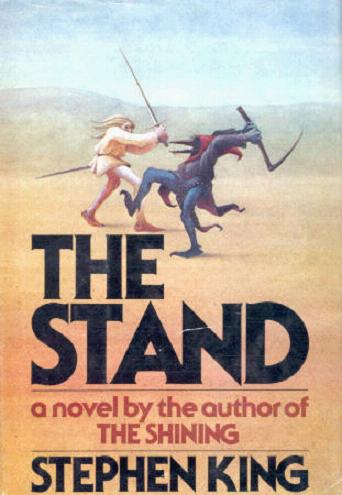
More than 30 years down the road, I still vividly remember the thrill of reading Stephen King’s “The Stand.”

I was already a fan of King by 1978, when the book came out, having read “Carrie” and “Salem’s Lot” and “The Shining.” I admired “Carrie” for the writing exercise that it was — pieced together from newspaper articles and journal entries and what-have-you — but was genuinely creeped out by “Salem’s Lot” and “The Shining.” These were the real deal: Scary tales by a talented writer. We’re not talking hack stuff here. How many of us cringed even as we eagerly anticipated what we would find behind the door to Room 237 in “The Shining?”

So I was expecting a lot from “The Stand” but not quite sure exactly what. There was that strange cover on the hardback, for instance.

But when I dug into the book, boy oh boy. King’s tale of the end of the world and the real battle that begins after was everything I wanted from a novel: Great if flawed good guys like Stu and Larry and Frannie; a frightening bad guy in Flagg who surrounded himself with bullies and hoods, just as you would expect to happen in real life; characters like Harold whose fall from grace propelled the plot to new heights even as you wanted them to be redeemed.

Somebody, somewhere, has written the definitive article or thesis on all the book’s influences on the pop culture that followed it, and I won’t attempt to do that here. But how many books and TV shows (including my beloved “Buffy the Vampire Slayer”) were able to go where they went because King had gone there first?

There was a pretty good TV miniseries adaptation of “The Stand” in 1994 featuring Gary Sinise in a damn-near-perfect portrayal of Stu Redman.

So it’s with a mixture of anticipation and dread that I read Hollywood is making a big-screen version of “The Stand.” It’s comforting knowing that Steve Kloves and David Yates, who wrote and directed the most recent “Harry Potter” films, are tentatively scheduled to make the movie (or movies).

I thought Stanley Kubrick horribly bungled the movie version of “The Shining,” but Kloves and Yates just might pull this off.

And even if they don’t, as the author himself  is fond of noting, “The Stand” will still be there, on my shelf, ready for the next time I want to jump into King’s post-apocalyptic world.

iPhoneography: Indiana State Fair Part Two

Yes, the people watching at the Indiana State Fair is wonderful. But what about those wacky signs?

First things first, though: My friend Andy Tooze today uttered the wittiest and most literary remark that will be heard on the fairgrounds this week. Maybe any week.

I spotted a guy wearing a T-shirt with a reproduction of a book cover for John Steinbeck’s “Of Mice and Men,” noting that wasn’t a typical T-shirt among fairgoers.

“Perhaps he’s here to see the rabbits,” Andy replied.

And what about those signs?

Yes, we all know about the corndogs and lemon shakeups. But what about this?

Gotta say “Hot Beef Sundae” sounds more like a male revue than fair food.

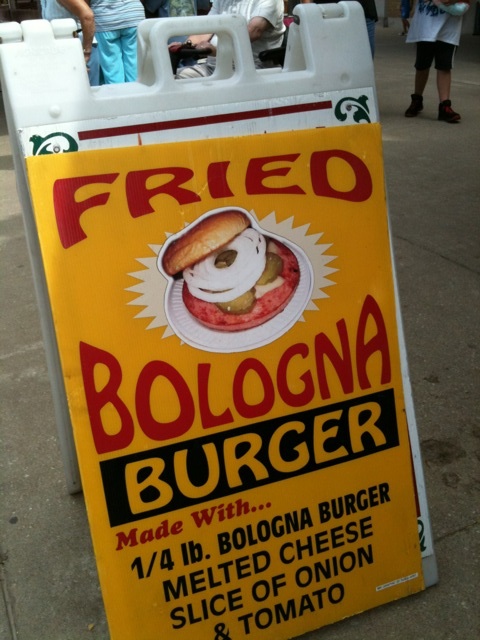
Now here’s a tempting offer:

I don’t think they really mean a burger made of baloney. Fried baloney is awesome enough.

How’s this for enticement?

Uh, no thanks. I’ll just wander over to the horse barns.

And last but in no way least is this statue, which might be the strangest, kinkiest, dirtiest way of advertising corndog sales ever. Ever.

That is just all kinds of odd. Happy dining!


iPhoneography: Indiana State Fair

I try to get to the Indiana State Fair at least once every year. I really enjoy fairs because my son loves the rides. For me, it’s the people watching and the photography opportunities. Not the rides. Definitely not the rides.

Monday’s state fair visit was a good time: Not too hot — the fair in 2010 was blisteringly hot — and the rain arrived only a little while before we were due to leave anyway.

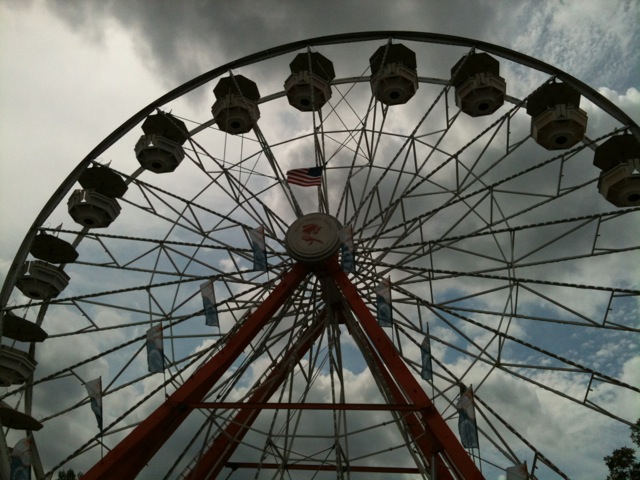
The change in weather gave me the opportunity to capture the fair under both pretty blue sky and ominously gray sky.

Here’s the pending storm perspective on the Ferris wheel:

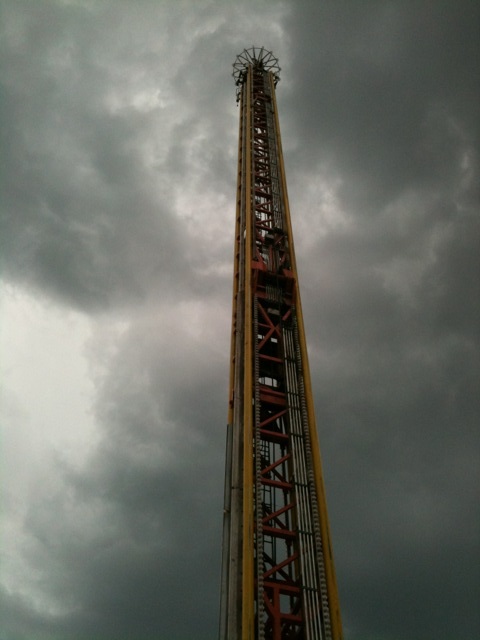
The sky made the drop tower look like Mordor from “Lord of the Rings.”

Little things at the fair catch my eye. The rubber ducks carnival game, for example.

Dreams in a cardboard box: Captain Action

So the TV was on today and there was a commercial for Squinkies.

If you’re not already totally lost, you must have a kid or grandkid who is still young enough to be in the demographic for toys.

I can’t with utter confidence explain what Squinkies are. We don’t have any in our household but they appear to be squishy little plastic figures that come in about a thousand variations so your kids can collect them all (of course).

What really struck me about this commercial was that it was for Squinkies for boys. The spot featured comic book character versions of the squishy little figures. So while they still looked like something that would be lost in every nook and cranny of your couch within a couple hours of purchase, the makers are obviously trying to appeal to the male subset of toybuyers.

Which makes me think of my childhood and the dawn of the action figure.

While Barbie and her legion of high-heel-wearing imitators beat them to stores by several years, the action figures of my youth changed the play habits of a couple of generation of boys — all of a sudden, it was okay to play with dolls and please call them action figures by the way — and made millions for a few toy companies.

Hasbro launched the GI Joe line in 1964 at a time when little boys were still re-enacting the battlefield exploits of their fathers in World War II and Korea. The 12-inch figures introduced millions of little boys to machine guns, sandbags and footlockers.

I loved my GI Joes and my Johnny Wests (the latter an old west action figure) but for me there was no toy that compared to Captain Action.

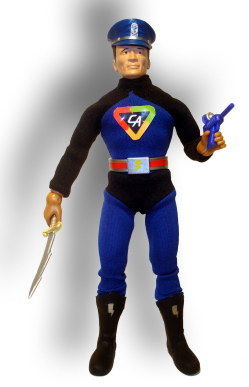
Introduced in 1966 by the Ideal Toy Company, Captain Action was unusual in that his schtick revolved around becoming other heroes.

Somehow Ideal and GI Joe developer Stan Weston worked out character licensing agreements with Marvel and DC Comics as well as King Features Syndicate, the company that owned the rights to many popular newspaper comic strips.

So Captain Action, who wore a black and blue unitard and jaunty cap in his everyday mode, slipped into the costumes of other superheroes when needed. Captain Action could be Superman, Batman, Captain America, Spider-Man, the Lone Ranger and several other heroes.

The business dealings necessary to make this happen were above my head at the time and still seem kind of improbable, but even as a grade-schooler I knew that Captain Action was special. Like Barbie, he had a limitless supply of outfits. Unlike Barbie, Captain Action could go out and kick evil butt when he slipped into Superman’s spandex or the Lone Ranger’s chaps.

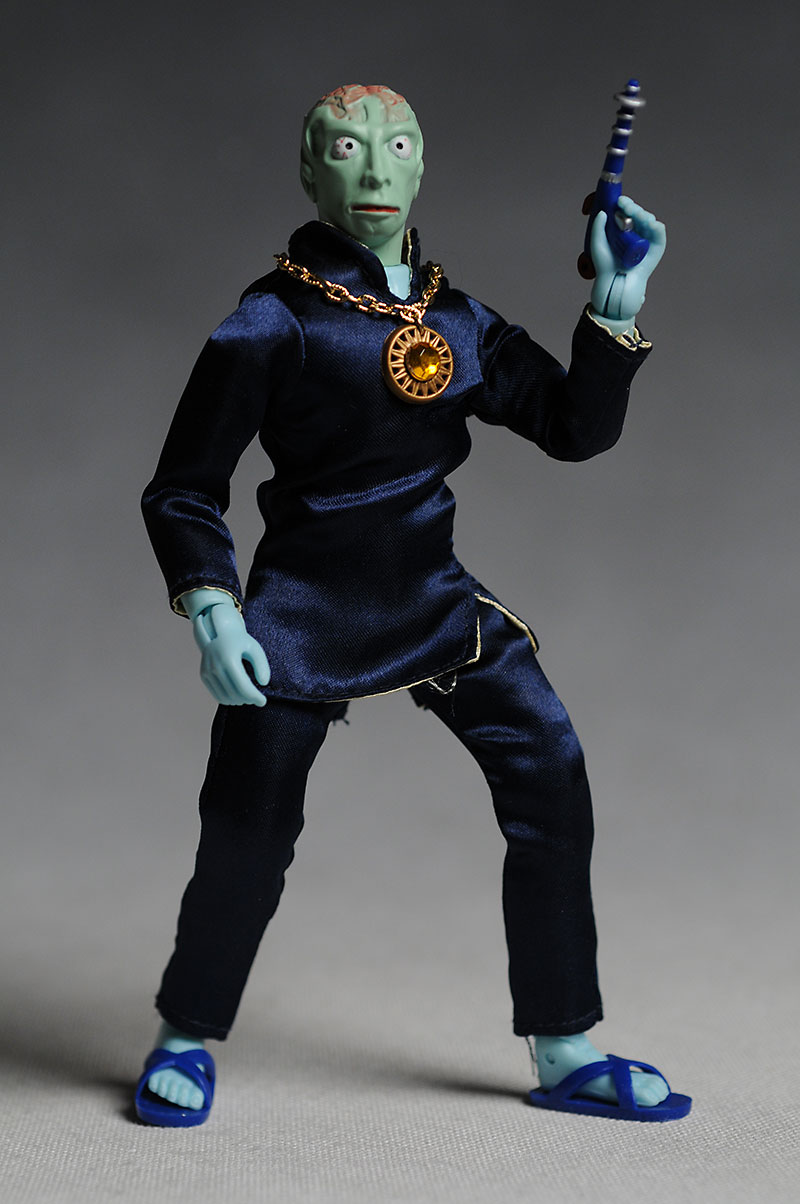
And if heroes are only as good as their villains, Captain Action was great. His bad guy was Dr. Evil. No, not the “Austin Powers” baldie. Captain Action’s Dr. Evil was a bug-eyed, blue-skinned alien of some kind with — get this — an exposed brain. That’s right. The top of his skull was missing and his pink brain was right there for all to see. Kind of makes you wonder why Captain Action didn’t put an end to more of their clashes by sticking his finger in Dr. Evil’s brain and stirring.

While Dr. Evil’s exposed brain might have been his oddest feature, his wardrobe was likewise offbeat. This baddie wore a Nehru jacket, sandals and a medallion on a gold chain.

Yeah, I know. But believe me, as a kid, you didn’t think about how unlikely that outfit was. Plus — exposed brain. Kind of trumped everything else.

My Captain Action figures didn’t survive many, many hard days of play. unfortunately, and neither did Captain Action as a toy in general survive changes in the toy market. The good captain never got a second wind in a smaller size, as GI Joe did, and couldn’t sustain the licensing agreements that made him so unique. With the nostalgia business in mind, new Captain Action figures were released a few years ago but couldn’t possibly thrive in today’s toy market.

But who knows? Maybe Captain Action and Dr. Evil are still out there, waiting for their comeback. All the captain needs is a few good costumes to borrow and all Dr. Evil needs is a bike helmet.

It’s the end of the world as we know it

Do we all have end of the world jitters? Or is the apocalypse just a passing fad in books, TV and movies?

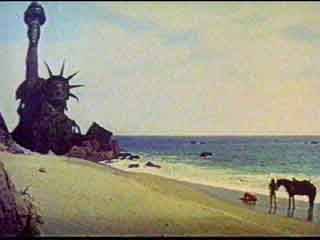
I just saw “Rise of the Planet of the Apes” with my old pal Steve Warstler (hey Steve!) and we were impressed with how good the movie was. The story is straightforward and compelling and while the human characters are nothing special, the apes — particularly Caesar, the sympathetic chimpanzee who in the original films led an ape rebellion — were astounding.

Computer-generated effects can be cool and leave us cold at the same time. There’s the “uncanny valley” effect, of course, in which digital images that look kinda human but not quite creep us out. But no matter how good the effects are, the characters created by CGI are only as good as they are written and acted.

The smart script makes Caesar so sympathetic — orphaned in infancy, raised in a loving home, torn from his surrogate father (James Franco) and bullied until he rebels — we can’t help but root for him to throw off the shackles of human oppression. And Andy Serkis — who also performed Gollum in the “Lord of the Rings” movies — gives Caesar a foundation that goes beyond just a performance to layer special effects over.

But one thing I noticed before and after the movie was the number of apocalyptic, end of the world stories that are coming out. Attached to the “Apes” movie were trailers for a couple of them, the most memorable of which was “Contagion,” in which Matt Damon plays a man trying to survive an outbreak of a deadly virus.

The trailer for “Contagion” notes that most people touch their face several times each minute (and thus expose themselves to every germ their hands come into contact with). I don’t know if that’s true, but just the suggestion was enough to make me wish I had a bottle of hand sanitizer in my cupholder.

There’s quite a slate of end of the world movies on tap, chief among them, at least in my mind, “World War Z,” based on the terrific Max Brooks book about a zombie apocalypse. I’ve heard that a movie version of “The Passage” is going to happen, and it’s only a matter of time until the camera-ready trilogy of books — two out so far — in “The Strain” trilogy gets filmed. While “The Passage” left me cold, I’m loving “The Strain” books.

Of course, the original “Planet of the Apes” movies came out when the US was slogging through a seemingly endless war in Vietnam and turmoil on the home front. And the likes of “Earthquake” and “The Towering Inferno” and other big-screen disaster movies premiered during this same stressful period.

Maybe the books, TV shows and comics like “The Walking Dead” and movies like “Contagion” and “World War Z” reflect our collective feeling of unease. Maybe they’re just capitalizing on audience interest.

Either way, pass the hand sanitizer.

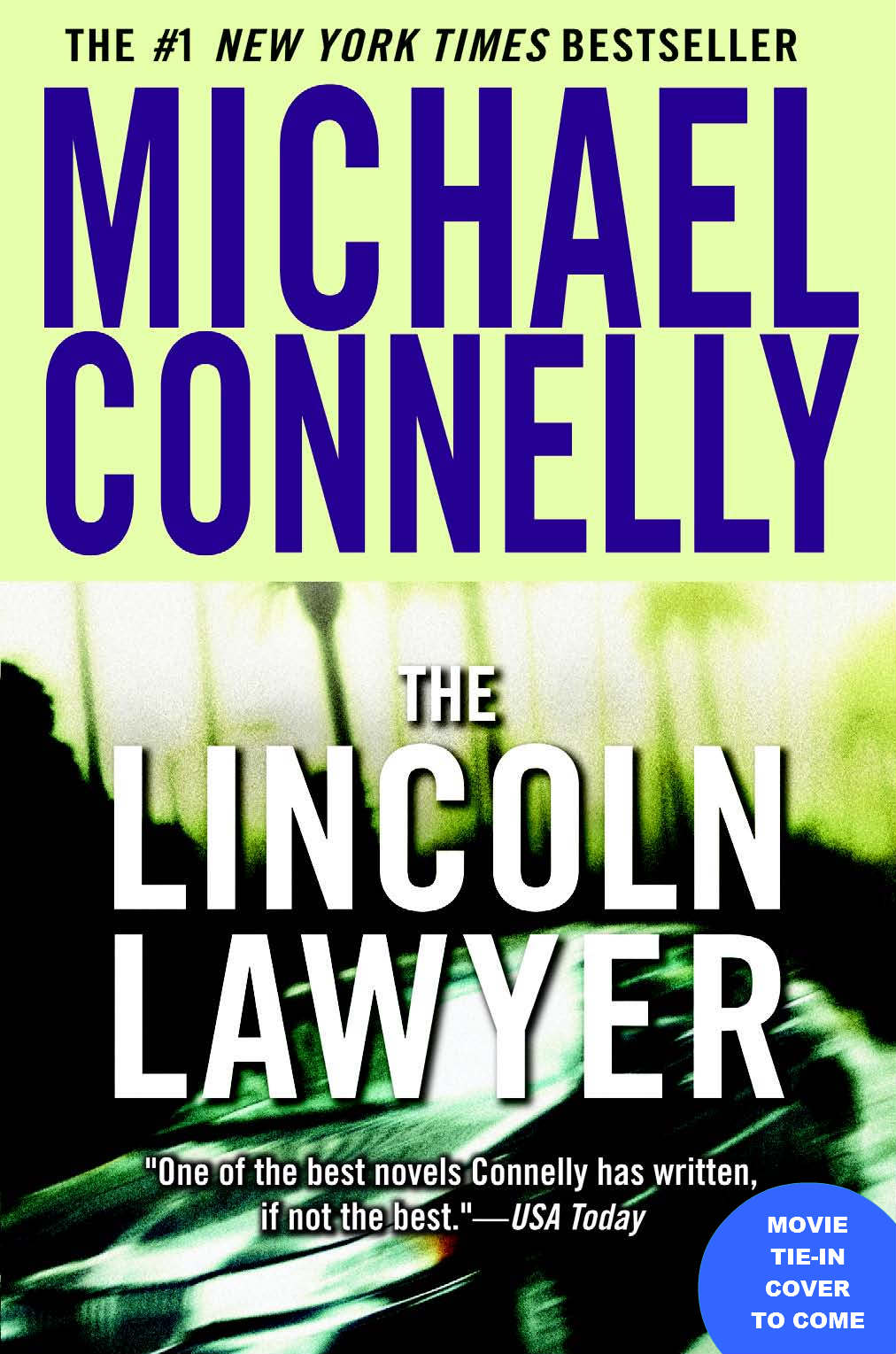
Michael Connelly and Mickey Haller

For some reason — maybe because I’ve seen previews for the new “Conan the Barbarian” movie — I’ve been thinking about when I met Arnold Schwarzenegger in 1982, when he was promoting the original “Conan” movie.

But then I watched the movie adaptation of Michael Connelly’s “The Lincoln Lawyer” tonight and decided that Arnold could wait.

The movie version, out on DVD, features Matthew McConaughey as Mickey Haller, the Los Angeles lawyer protagonist of Connelly’s book. The title comes from the defense attorney’s practice of maintaining office hours from the backseat of a Lincoln piloted around LA by Haller’s driver. The rolling legal suite is a cool, only-in-LA idea that demonstrates Connelly’s knack for nice character touches.

The movie’s pretty good. McConaughey isn’t necessarily who I pictured when I imagined Mick Haller, the canny attorney with a clear sense of right and wrong and an even clearer sense of what a jury will believe. However, McConaughey does a nice job with the role, which is a more internal, instinctive hero than most you’ll find in movies these days.

But the movie, entertaining as it is, doesn’t compare to Connelly’s books. The former LA newspaper reporter has written about two dozen books in the past 20 years. Several are about Haller. Most are about Harry Bosch, a veteran cop with more than a few dark shadings to his personality. Both characters are driven by a sense of justice, even if they approach that ideal from different paths at times.

The movie can’t capture the best part about Connelly’s characters: Their thoughts, their obsessions, their preconceived notions that they sometimes realize they must overcome. Bosch in particular is such a hardcase he would be very nearly unlikable if he really existed and you met him in person. But Connelly makes Bosch human and relatable because he lets us into his head. We see LA’s murder victims through Bosch’s eyes and feel his outrage at the very idea their deaths might go unpunished.

Haller is a more easygoing character than Bosch but also more clever. When confronted with a client who is guilty beyond reasonable doubt, he doesn’t throw up his hands and walk away. But he does ensure that justice is done.

In an interview on the DVD, Connelly echoes something Stephen King has said. He’s not so worried about movie versions of his work getting the characters wrong and messing up the storylines because the books are right there, on the shelf, uncompromised and waiting. Not unlike his characters.

One more thing: I haven’t been to LA in what’s going on 20 years now. But the city that Connelly and Robert Crais, in his Elvis Cole/Joe Pike books, portray is the one that I knew, from the precarious houses on hillsides to the rambling concrete highways. If you’ve ever been to LA and want to recapture it or have never been and want to know what it’s like, Connelly’s books give you a view from the backseat of Haller’s Lincoln.

Okay. Soon we’ll come back to the topic of Arnold and the most lasting impression he made on me: His height.