Tag Archives: writing

What is the Nickajack and how does it relate to my crime novel SEVEN ANGELS?

Anyone who follows me on social media – bless you dear folks – knows that I’ve been promoting my new crime novel SEVEN ANGELS, which publishes June 1 from our own Constellate Publishing.

When I wrote SEVEN ANGELS in 2019 I was living in Indiana but had a history with Tennessee: My parents were from the little town I based Seven Angels the town on. And I had family members in Tennessee and still do. More than three years ago, I moved from Indiana to Knoxville, where the finishing touches of the novel were written.

I didn’t get to hear “Southern Comfort,” a song by the sister blues/rock/country duo Larkin Poe, when I was writing SEVEN ANGELS, but I’ve grown to love the song and feel it relates closely to SEVEN ANGELS with its story of a woman who returns to her home place.

There’s a verse in Larkin Poe’s “Southern Comfort” that struck a nerve:

Left my soul in the Nickajack
God willing, I’ll find my way back
Counting down, my days are numbered
Gimme, gimme that southern comfort

But what is the Nickajack?

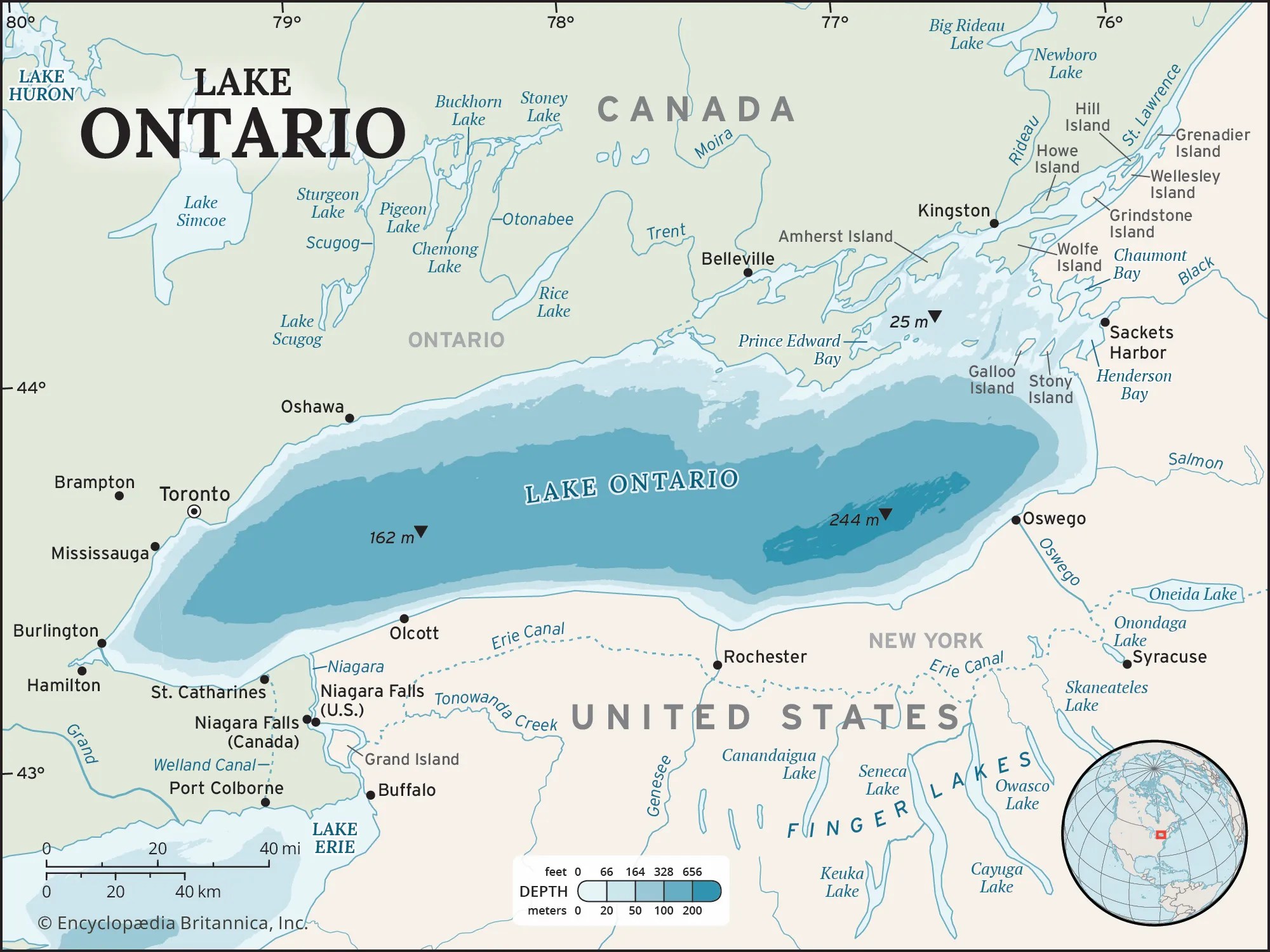
There are more accomplished historians than me – I’m not one at all, really – who can tell you better what the Nickajack is or was, but it was basically parts of two states, Alabama and Tennessee, that didn’t support the Southern ideal of slavery and whose leadership considered secession from the Southern secession movement.

The Nickajack would have been a state of its own, independent of Tennessee and Alabama, and an ally of the North. Leaders of the Nickajack modeled their secession plans after West Virginia’s exit from Virginia.

It never came to that, fortunately or unfortunately, because that would no doubt have cost lives if hostilities had broken out.

And the defeat of the South by the Union meant that the boosters of the Nickajack’s statehood movement dropped their plans.

So when the Lovell sisters of Larkin Poe sing about leaving their souls in the Nickajack, they’re talking about a pro-Union, anti-slavery part of the country, made up of parts of Alabama and East Tennessee, where I live now and where SEVEN ANGELS’ main character is from. Gloria Shepherd is a prosecutor’s investigator in Knoxville as the story begins but she returns to her home of Seven Angels in Crockett County, where much of the story takes place.

So now you know at least a little about the Nickajack. There’s more out there, especially about the Native American history of the area and the African American history of the Nickajack, and I’ll link to that below.

Credit to the Justin Brown and the Battleground substack for a lot of history and for that illustration of the Nickajack above.

https://battleground.substack.com/p/statehood-nickajack

And more info here:

https://www.quora.com/What-if-the-proposed-state-of-Nickajack-had-successfully-separated-from-the-Confederacy-and-was-admitted-into-the-Union

The Facebook page I can’t kill

This is NOT a “pity me” post. Poor baby! He’s got a Facebook page that’s so popular he wants to kill it but can’t!

Well, I guess it is a “pity me” post.

My longtime co-author Douglas Walker and I wrote the first of our true crime books, WICKED MUNCIE, for the History Press in 2015 and the book was published in 2016. It did well enough that History Press wanted us to keep writing the books and we complied through our fourth, COLD CASE MUNCIE, published in 2023.

My favorite of the four books is THE WESTSIDE PARK MURDERS, about the most famous unsolved murders in our area, in and around Muncie, Indiana, published in 2021. A pandemic publication, it has done well despite – or because of? – we didn’t get to do our usual talks and signings.

Even before we were unable to talk to people in person because of the pandemic, four years before, in fact, I created a Facebook page named after WICKED MUNCIE, the first book. Over the years since 2016, I populated the page – sometimes on a hit and miss basis – with anecdotes about the four books and their making, plus I told stories that were not included in any of the books.

This year, 10 years after I created it, the WICKED MUNCIE Facebook page is still going strong, adding new followers every day. I haven’t posted much true crime content in a while – hmm maybe people prefer a page that doesn’t have a lot of new content from the likes of me – and now tops 3,600 Facebook followers. Undoubtedly some of those are bots and now-inactive accounts, but it’s a lot of eyeballs to just casually turn away from. Until just recently, it was my largest social media presence. That’s no longer the case as just this week, my Bluesky account reached more than 3,800 followers. That’s about the same number as follow my Twitter account, although I really suspect many of the “people” on that hellsite are not actually people.

So with 3,600 followers on the WICKED MUNCIE page, I don’t feel like I can shutter it or even walk away and neglect it. So I’m cross-posting some of the same stuff I post on my other socials. And of course there’ll be some true crime stuff occasionally. Not as much as in the past, though.

So yes, there’s a word for someone who won’t walk away from a platform that affords them thousands of followers. Several words, really.

It’s like that old joke with the punchline, “We’ve already established what you are. Now we’re just haggling over the price.”

Facebook is the worst. And yeah, I’m still on it.

The photo above appeared on the Facebook history page for my hometown and hundreds of people are commenting on it. The building in question was the headquarters of a long-gone local dairy operation that was a beloved part of the community. In the comments, people are mourning the loss of the building and, long before that, the dairy business, and they’re citing their favorite products.

Only one problem: As some of the comments point out, this photo is more than 10 years old. The building was torn down more than 10 years ago. Because it’s not a great picture, it’s hard to tell that this demolition, more than a decade ago, left a prominent part of the complex standing. And it’s still there this morning.

The caption reads only, “Demo of Riggins Dairy.” That’s it. It doesn’t note that the demo took place 11 years ago. That’s left up to a commenter.

There are soooo many problems with Facebook. (And yes, I’m still on there, because it’s a way to communicate with friends and family and promote my work and that of others.) The worst is that the parent company, Meta, actively supports the destruction of our democratic society.

But another huge problem is misinformation and, charitably, half-assed information. I suppose the original poster didn’t intend to mislead people – including many, many people who follow the page who haven’t been in the city in 10, 20, 30 or 50 years – into thinking the demo was actively going on today. It’s hard to say.

But even by omitting information and context, even if innocently intended, it’s given the impression that “they’re tearing down the old dairy building.” I thought that myself because I haven’t lived there in going on four years. Then I saw the comments giving some trimeframe context.

I can’t tell you to boycott Facebook because I’ve got three pages – my personal page, which has very limited access by readers, and my author page and Wicked Muncie page, created in 2016 to promote our true crime books.

But for pete’s sake, be aware that you’re not getting the whole story when you see something on Facebook. Sometimes all that means is that you’re misinformed about a building. Sometimes it means you’re misinformed about assaults on our democracy.

Two years since my first story published in an anthology, MOTEL

It’s been two years since the first time one of my short stories was published in an anthology. The Cowboy Jamboree Press MOTEL anthology, edited by Barbara Byar, came out in March 2024. I’d had short stories published before, starting in 2023, and of course my non-fiction had been published since 1977 and in true crime books since 2016. But having a short story in an anthology was a very cool development.

I still really like the story, “Independence,” about an unnamed cowboy passing through a small Tennessee town who gets caught up in a conflict between some small business owners and the corrupt sheriff. If you read my upcoming second novel, SEVEN ANGELS, you might realize that town is Seven Angels. I never cite the town by name in “Independence” but the sheriff in the short story is named and he’s the same corrupt sheriff as in SEVEN ANGELS.

It was a kick to have the story published in an anthology and a few followed. It’s always a kick, although I suspect the anthologies you have to purchase have smaller readership than the stories published online. Still a kick, though.

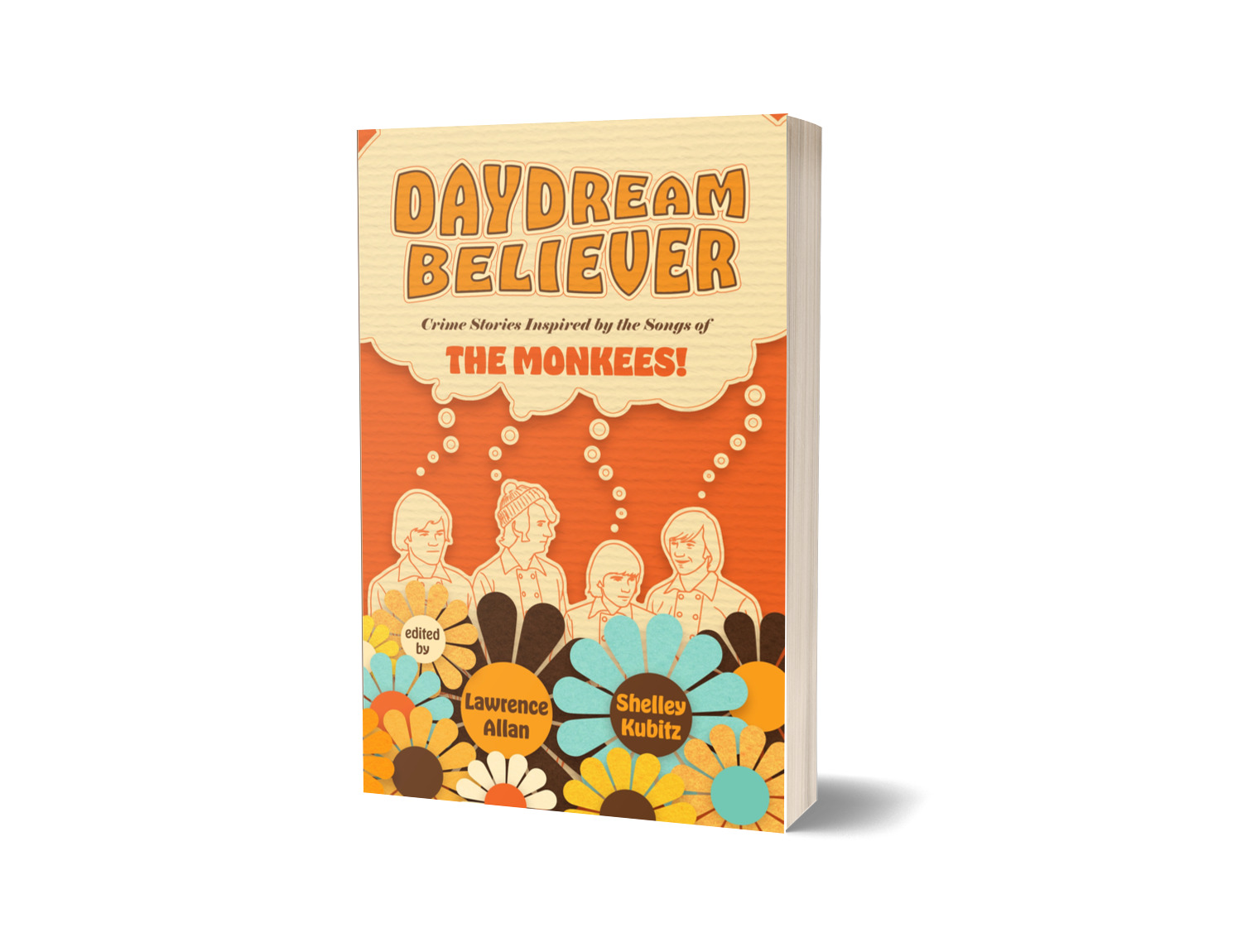
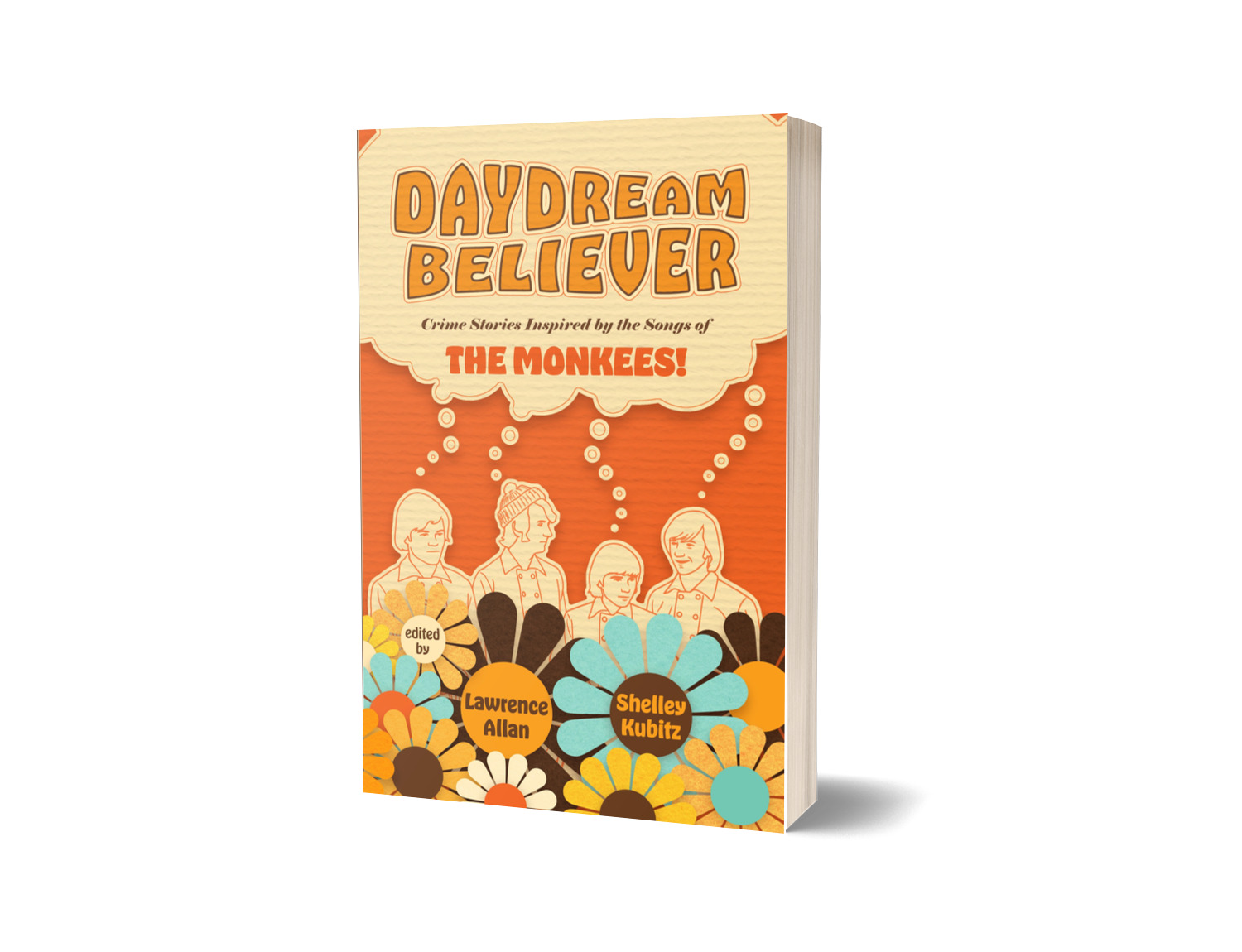
This year, in 2026, I’ll have short stories in three anthologies I know of, including my story “A Fighting Life,” about foul-mouthed kids in 1948 who figure out they can make money by scrapping with neighborhood kids, which is in the just-published-in-paperback FIGHTING WORDS. My story “This Just Doesn’t Seem To Be My Day,” about a kid spending the day with his older brothers in 1970, will appear this fall in DAYDREAM BELIEVER, an anthology of crime stories based on Monkees songs.

And a while back, I had a crime story accepted for an anthology that hasn’t been announced yet.

For me, three stories in anthologies in one year is a lot, so I doubt there will be others. But I’ll submit some stories and we’ll see.

Here’s a link to the paperback of FIGHTING WORDS is you want to read my short story and the work of some really amazing authors:

My love-hate – mostly hate – relationship with alerts and notifications (disclaimer: not my phone pictured here)

If I’m ever swept away by a tornado, you can blame the authorities in Tennessee.

I appreciate that I can get notifications on my phone. They’re often helpful. I just wish I could choose when I want them to be helpful.

Notifications – letting us know we’ve got a text message or a new email or if bad weather is on the way or a public figure has kicked the bucket – are a way of life for many of us now, and I’m not going to disable all my notifications – which are called “push alerts” by many newspapers, or just a “push” – because they can be useful.

These thoughts are occasioned by a couple of obnoxious instances of push alerts or notifications in the past couple of days, some of these of the health app variety. Yes, thank you, phone, for letting me know my trend in walking has changed lately. Did you happen to notice how rainy it was? And yes, thank you, other health app, for waking me up in the middle of the night to let me know of something that might otherwise have let me croak deep in peaceful slumber.

Part of my hate for pushes is that I’m obsessive enough to not only swipe them off my screen but actually go to my email inbox to delete the email that generated the push or, gasp, read it and even possibly respond.

(Don’t think we don’t understand that the Push Alert Industrial Complex is conspiring with our phone manufacturers to ensure we spend more time on our devices. It’s true. I read about it on the internet.)

Anyway, I’ve gradually over time changed my phone settings to end most push alerts from the authorities, who seem to abuse the tool.

The final push alert that broke the camel’s back was one recently that alerted me of a fatal shooting in Memphis, which is five hours and 47 minutes from me. Needless to say, this 2 or 3 a.m. push alert was not from a news outlet. It was from a state-run agency. I won’t comment on why this push was sent out but not why other fatal shootings are not sent out. You can guess.

So here I am, because the state insists on alerting me to things happening six hours away, perhaps expecting me to run down to the street at 3 a.m. and scan passing vehicles for the suspect, without any means of being woken in case of forest fire or flood or tornado or hurricane.

If I die, it’s on you, state officials.

Blurbs about my novel SEVEN ANGELS: Claire Booth

Screenshot

I’m posting some blurbs I’ve received from authors who read my new crime novel SEVEN ANGELS and were kind enough to give me a blurb to use in promoting the book.

We at Constellate Publishing will publish SEVEN ANGELS on June 1. It’s available for pre-order through all the usual outlets now.

I asked a few authors I know if they’d read the book and, providing they didn’t hate it, give me a blurb.

Claire’s blurb, as seen above, suggests the background she and I have in common: journalism. I was a newspaper reporter and editor in Indiana before I started writing fiction. Claire’s reporting experience was all over the United States.

I met Claire at Bouchercon in Nashville in 2024. She was the moderator of a panel I served on about true crime writing. It was a great group and I was really pleased to get to check in with Claire again at Bcon in New Orleans in 2025.

Sometime after that point, I asked if she’d read SEVEN ANGELS and she did and gave me that wonderful blurb. I was somewhat surprised she had time because she’s incredibly busy and prolific and her book history demonstrates that.

Here’s how to know more about Claire:

https://clairebooth.com/

It comes and it goes and it comes around again

My morning began with a rejection but ended up with signing a short story contract, all threaded through writing some totally separate piece of work.

Man, every day is a little game of expectations versus reality for all of us, but that’s especially evident for writers.

The rejection email, as these things go, was from an editor and fiction outlet I haven’t tried before. It was direct and to the point but also gracious, saying a couple of nice things about the story I’d submitted and they’d rejected. Much better than a form rejection – I got one of those just a while back – and even thanked me for my support of them on social media, which will absolutely continue.

This rejection stung, man. It was for a story I wrote for an earlier anthology call for submissions and honestly, I really like this story. It’s not my typical crime-wimey story. It was, dare I say it, hearfelt.

But I’ll submit it again somewhere and I’m sure I’ll submit something else to the humane editor who rejected this particular story this particular morning,

So i got back to work. I’m close, very close, to finishing a 5,000-word short story to sub to an anthology/collection that I really want to be included in. I’ve got a few more words to write.

Then I signed a contract for the anthology you see above, DAYDREAM BELIEVER: CRIME STORIES INSPIRED BY THE MUSIC OF THE MONKEES. The anthology comes out this fall and has some wonderful writers in it and I’m happy that editors Shelley and Larry chose my story to include.

Then I got back to working on that 5,000-worder. And I wrote this.

(I’m thinking about having a snack later, if you need that much insight into my day,)

All of this could be filed under the life in a day of a writer. Or maybe managing expectations. Or dealing with rejections and successes.

To writers and other people: Push on. The only way out is through.

A cold case father died without justice for his son

It’s been two years now since Calletano Cisneros died. A lot of people won’t know who he was, but he made a big impression on me. I interviewed him for our fourth true crime book, COLD CASE MUNCIE, which was published by History Press in 2023.

For those of you who don’t know, longtime writing collaborator Douglas Walker and I wrote about cold cases – unsolved murders – in the area of Muncie, Indiana for a few decades for The Star Press newspaper. This entailed going over old cases, some of them dating back decades and some of more recent vintage, and reviewing the facts, looking at old files and articles and often interviewing police investigators, prosecutors, coroners and, most importantly, surviving family members. Cold cases have an impact on all of those people but especially, of course, on surviving family members.

Sebastian Cisneros – that’s him in the upper right photo of the book cover above – was killed in April 2009 in Muncie, which is marred by dozens of unsolved murders. Sebastian Cisneros was killed outside his house on Ribble Avenue in Muncie.

We wrote about the case at the time and wrote about it as a chapter of the Cold Case Muncie book because it was a compelling story, made all the more so because I interviewed his father, 75-year-old Calletano Cisneros. When we spoke via long distance – he lived in Texas – he volunteered something that I hadn’t known when I called him: He himself had killed a man in a bar fight when he was 17 and had spent 10 years in prison before he was released by the governor. He’d lived with that past for a half-century and had, in the past several years, lived with the murder of his own son.

Calletano Cisneros told me he wanted justice for his son and wanted his son’s killer to be tried and sentenced to prison just as he had been more than 50 years earlier.

“I did my time. I’d like to see the same justice done in my son’s case.”

Calletano Cisneros didn’t live to see justice for his son. He died in January 2024.

Cold cases are cases that often don’t see justice done.

You can read about the Sebatian Cisneros case in our third true crime book:

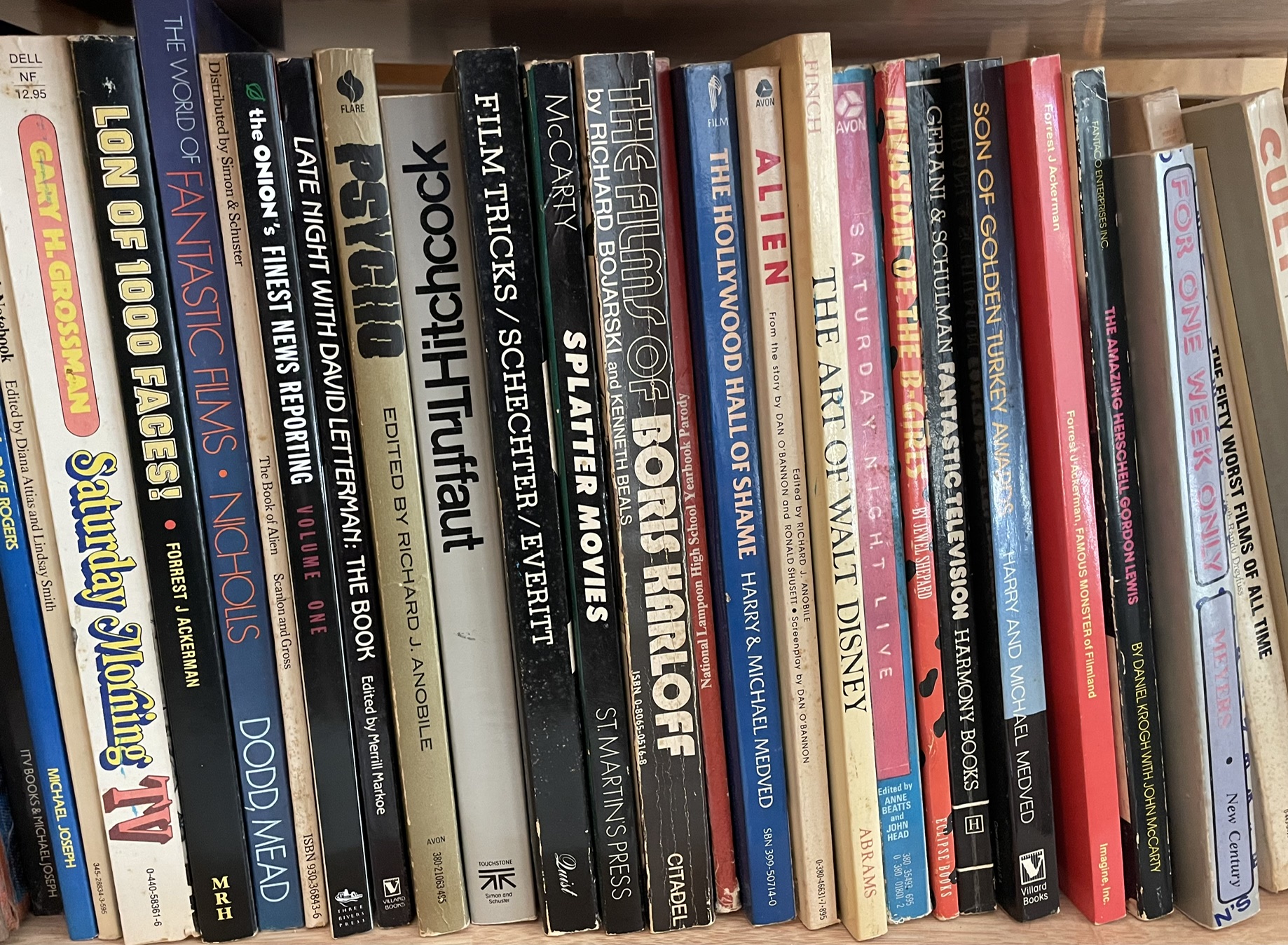
I come here not to bury the mass market paperback, but to praise it

This is sad news. Not nearly as sad or despairing as much of what we see in the news in recent years, but sad nonetheless.

The mass market paperback is dead.

This might not surprise some of you who react, “Yeah, I know, I haven’t seen one in a bookstore in a while,” or “What is a mass market paperback?” For those young enough that they don”t remember the mass market paperback, I’m fearful you’re reading this past your bedtime.

Publishers Weekly likely broke the news to most of us who remember mass market paperbacks – I’m going to refer to them as just paperbacks pretty soon now, for expediency’s sake – in a December article that noted that the ReaderLink company said it would no longer distribute mass market paperbacks. The format’s share of the market had dropped dramatically over the past couple of decades as larger-format paperbacks, sometimes referred to as trade paperbacks, and ebooks had usurped the market that had been dominated for many decades by mass market paperbacks.

Paperbacks had been the format of choice for much of the 20th century. They were less expensive than hardbacks but more cheaply made and thus less durable. But they had an ease of use, a convenience and an aura that were hugely appealing to most of us who were buying books in the last few decades of the past century. In 1966, the Beatles released a single, “Paperback Writer,” that ironically but lovingly paid tribute to the format. You didn’t hear the Beatles singing about their desire to be a hardcover writer, did you? No you did not.

As many know, paperbacks – measuring about 4 inches by 7 inches, just the size to fit in a pocket so you could always have a book at hand – were introduced before mid-century but might have become the hottest book trend ever in the 1940s and 1950s, continuing that hot streak into the 1960s and 1970s.

Paperbacks went to our workplaces, where they were handy to read on our lunch hour. They went on our commutes, where they occupied many a train and bus rider. They went to school and war in backpacks and pockets. They went everywhere, in part because of their convenient size and in part because they were so incredibly inexpensive to buy. I just looked at one of my oldest and most rare paperbacks this morning, a copy of Harlan Elliison’s “Rockabilly” from 1961. The cover price was 35 cents.

The vast majority of paperbacks I bought in the late 1960s and 1970s were priced at 65 cents, 75 cents, 95 cents. Paperbacks I bought into the 1990s were still only a few dollars, inexpensive compared to hardcovers and large-format trade paperbacks that, in my buying experience, were confined to scholarly or pop-culture works about movies, TV shows and comic books. At least that’s what still fills my bookshelves. I recently noted my copy of “The Marx Brothers at the Movies,” a 1975 Berkley trade paperback of a 1968 hardcover original, cost me just $3.95.

I have hundreds of books. Some are of recent vintage but the majority date from the 1960s to the 1990s. Among people my age, that’s probably not uncommon. Paperbacks entertained and informed us. Some of my favorites are early Stephen King novels and short story collections, the work of Robert A Heinlein and Ray Bradbury and Dean Koontz.

And I wasn’t alone. Publishers Weekly says 387 million mass market paperbacks were sold in 1979, compared to 82 million hardcovers and 59 million trade paperbacks. The 1975 movie tie-in of Peter Benchley’s “Jaws” sold 11 million copies in its first six months

Publishers Weekly notes that the paperback began losing its share of the market with the growing popularity of trade paperbacks and ebooks, the latter of which boomed in the early 2000s. And of course the shrinking number of bookstores – a trend which has, happily, reversed course – further eroded paperback sales.

Folks who’ve read this site before know I’m a fan of bookstores, especially used bookstores, and they’ll forever be a place to find books in all formats, including the once-beloved paperback, also known as the mass market paperback.

That’s where you’ll find me, looking to recapture a little of a past that’s quickly disappearing.

Filling the void in indie publishing? Is that possible?

I won’t pretend to sum up the weird state of small publishing here. If you’re been following the world of indie and small publishing, you know that 2025 has seen some small imprints go out of business – in some cases leaving authors unpaid – and others purport to try to fill that void.

I’m not sure that Constellate Creatives’ publishing arm, Constellate Publishing, the enterprise I’m affiliated with, will fill that void. For one thing, we can’t be all things to all people.

But as we started Constellate’s venture into editing – developmental editing and copy editing — and publishing and marketing a few months ago, it became obvious that somebody needed to be around to step in and catch a few worthy projects. Or maybe juggle chainsaws.

It’s making for a 2026 I’m really excited about. Constellate Publishing will publish my novel SEVEN ANGELS but there’s a diverse lineup of books on tap for the first two quarters of 2026, including a book of mindful self-help, a book of poetry, my novel and two by Jill Blocker, a reissue of her WHAT WAS BEAUTIFUL AND GOOD and her new novel, HAPPILY AFTER EVER. The latter is what’s increasingly termed a “new adult” book and will appeal to readers post-YA in their reading interests.

I’m proud to have noticed that every book besides mine is written by a woman and even mine has a cast of woman as protagonists.

And note the slide I’ve posted above: Constellate Creatives is offering editing, publishing and marketing services, or some combination of those, and at socially-responsible fees based on the regional wage in each writer’s local economy.

Some of us love to edit copy and help with developing your work. Others (raises hand) love marketing. Yes, I’m weird like that. We can’t promise that PR about your book will land on large market-share sites like KTLA, where our news release announcing our slate for the first half of 2026, was picked up. But we’ll be pitching your work and you won’t have to deal with the dreaded marketing.

There’s a button somewhere on the CC site that will lead you to a free consultation. We might be able to answer some questions for you.

https://constellatecreatives.com/