Countdown’s almost over: SEVEN ANGELS publishes tomorrow, June 1

Okay, I should just acknowledge that when you’ve published a book, the promotional push for it is never over.

But it feels like we’ve reached something of a milestone as my new crime novel SEVEN ANGELS is published tomorrow, June 1, 2026, by Constellate Publishing, a publishing imprint of Constellate Creatives, a company founded by my longtime friend Jill Blocker and for which I do some editing and other work.

By way of noting that promoting a book is never ending, I’ll say that I’ll be darkening your doorstep plenty even after the book is published.

A few quick words on how I got here:

I wrote a few crime novels back in the early 2000s that weren’t completely baked and I didn’t pursue publishing them. A few years later, sometime before 2010, I outlined a book called SEVEN ANGELS, a crime story about a fictionalized version of the little town in Tennessee where my parents grew up.

(I was still about 14 years from being a Tennessee resident myself, but I’d been down here plenty of times, visiting family.)

After I outlined SEVEN ANGELS, I set it aside. I didn’t write a book-length project again until my first true crime book, co-authored with Douglas Walker, was published in 2016. Three more true crime books followed. It turns out that writing and co-writing and editing those books was essential for me in figuring out how to write a book-length manuscript. I’m a plotter and outliner, and turning out an outline – one paragraph per chapter, outline length in total 15 or 16 pages or more – is a step I can’t imagine skipping.

In 2019, I took a buyout from my newspaper job and finally felt I had time and focus to write novels. In a few years, I’d written SEVEN ANGELS, GHOST SHOW and THAT OCTOBER. The latter was the first to be published (self-published) in 2025.

I’d gone back to SEVEN ANGELS almost every year since 2019, fleshing it out with new characters and I hopefully made it better.

The blurbs and comments and reviews have been laudatory and I appreciate it.

For a few months now, I’ve been actively compiling ideas for a new novel, including using some elements from an aborted novel from 2025. (I’ve mined those early 2000s books for a number of ideas and characters, and I’ve done the same with GHOST SHOW, so nothing ever entirely goes to waste.)

So here I am with a promise: I’ll be working on the next novel, along with articles and short stories.

And I’ll be promoting it all, so forewarned is forearmed.

Cover reveal: The BAD INTENTIONS anthology

The folks behind the BAD INTENTIONS anthology, publisher Literary Garage and anthology editor Michael Downing, have revealed the cover for the collection, which comes out July 7.

And that cover is a gem, as you can plainly see.

If you’re a compulsive watcher and reader of credits, like me, you know that Frank Vatel, a writer and artist, has turned out some beautiful work and this is another example of that. (Frank is @vatel1675 on the former Twitter.) He really captured the mood of the 15 stories in BAD INTENTIONS.

I’ve got a story in the anthology: “Sunset Stakeout” is set in 1979 and is about three increasingly desperate men – a producer, a faded star and a film school screenwriter – as they face the extinction of their show, “Sunset Stakeout,” a “Rockford”-esque action/drama in a time when TV viewers loved sitcoms.

How desperate do my characters get? You can find out July 7.

I wrote the story as a love letter to Los Angeles as the 1970s were about to become the 1980s. I sent a lot of time in L.A. in the 1980s, visiting a friend who worked in the movie business, and I based the characters on people I met through him. Zevon’s song “Looking for the Next Best Thing” inspired my story.

I hope you like it – and there are 14 other stories by great writers in BAD INTENTIONS.

Best of all, proceeds from the anthology go to Philabundance, a non-profit food bank working to help people facing hunger.

You’ll find BAD INTENTIONS in paperback on Amazon and the usual booksellers as we get closer to July 7.

Thoughts on AI and the ‘I never say no’ tech culture

We’re living in the opening scenes of every dystopian science-gone-mad sci-fi story ever, even though most of them never included as a plot device some mundane but infuriating circumstances like billionaires’ Artificial Intelligence stealing our writing.

But we definitely find ourselves in the beginnings of dystopian tech-gone-amok sci-fi stories with this AI girlfriend thing.

There’s plenty of science fiction, books or stories or movies or TV, that rely for drama on the devaluation of individuals or a class of people: just to cite one example, remember the “furniture” in “Soylent Green?” That was the term for a rich man’s female sex companion.

But rarely have we seen “sex bots” that are not as stupid as the dumbass guys who are going to pay to use them.

I’m certainly not the first person to equate where the world is today, under the leadership of malignant and greedy oligarchs and their toadies, to say we’re entering dystopian science fiction territory. All we have to think about is the wanton destruction of democracy, our climate, our oceans, our natural habitats, the devaluing of people and originality and creativity and the wholesale assault on privacy and the rights of women.

And yes, I’m sure I left something out.

But in recent days, in the wake of reading many articles about AI and the pollution and water use for data centers to run AI servers and how the technology is devaluing so much of what’s important, I started seeing ads like the one above, in my Instagram feed in particular. There are others, but that’s the most blatant.

The illustration shows a “sexy” AI woman, like most of the ads, but this one is very explicit in what’s likely to be the most appealing aspect of these AI girlfriends to many men:

“I never say no.”

Talking to friends about these ads, they note – rightly so – that there’s always been an element of rape culture to AI sex. “Control your AI girlfriend” says one ad that I saw, along with enticements to make her look how the user wants – skin tone, hair color, figure, etc.

Certainly there’s always been a destructive undertone – sometimes overtone – to porn. (There can be in any kind of real-life relationship, of course. It’s how humans, especially men, function. But with two actual people involved, there’s always a chance for people to learn to treat each other better.)

But without a real woman in the mix in these AI girlfriends, other than the environmental destruction caused by AI-generating data centers, the greatest destructive effect is to the idiotic men who pay to use these programs. They’re stupid. And sad.

I didn’t expect to be telling other guys, in effect, “Dude, just go find some porn. You’ll feel like less of a fool. Maybe.”

Having said that, maybe these AI girlfriends will keep them busy so they don’t spend quite as much time destroying everything else.

Colbert, Letterman and the death of CBS’ late-night slot

There were some genuinely funny moments in the final episode of “The Late Show,” Stephen Colbert’s late-night talk show airing Thursday evening from the Ed Sullivan Theatre. Probably my favorite line was when Seth Meyers, host of an even-later late night show on NBC, told Colbert he was sorry to see him go because where would the world hear what middle-aged white guys thought of the news? (All of the current late-night hosts are in that cohort.)

I hadn’t been a dedicated follower of Colbert’s show, or any show past 11:35 p.m., really, but the manner in which CBS unceremoniously yanked Colbert – indeed the whole damn “Late Show” brand, founded with David Letterman’s CBS show in 1993 – is part and parcel with how the network and owner Paramount have kowtowed to the current occupant of the White House and guaranteed I’d tune in to Colbert’s last few shows – at least to see clips I wasn’t already watching on Instagram.

Colbert appears to be a nice person and a smart person, so while the end of his show after 11 years was no doubt a blow to the talented former host of “The Colbert Report” on Comedy Central – that show I did watch every night – the end of his show and the resulting blowback might prove uncomfortable to CBS/Paramount. Possibly even a kick in the nuts, if the recent downturn in anything Paramount touches continues.

At any rate, while I won’t do a comprehensive assessment of the state of late-night TV talk shows or a comprehensive history of the shows and timeslot, I will share a few thoughts:

I grew up enjoying being the last person awake in my household, even when I was a kid. I could watch TV after my parents went to bed. That late-night period was, as I’ve noted before, an educational and formative place for me. I was a devotee of Johnny Carson’s “Tonight Show” on NBC and watched it for decades until his retirement. Where else could a kid from rural Indiana learn about jazz – from the Tonight Show Orchestra and guests like Buddy Rich – and Jewish comedians like Henny Youngman? Not to mention the authors Carson highlighted in the final segment of most shows.

I was definitely a fan of David Letterman, another Hoosier who seemed destined to inherit Carson’s “Tonight Show” crown but, as we all know, did not. When Letterman hosted his funny and offbeat NBC show following Carson, I would actually sit up every night and record the show AND cut commercials from my VHS recordings. I had an ungodly number of tapes filled with commercial-free Letterman episodes, at least until almost all of my hundreds of VHS tapes went to a landfill with the advent of DVDs.

The CBS plans for the slot – fill it with comedy programs leased from comedian Byron Allen – in effect means the return of infomercials to a national network following the 11 o’clock news. I wonder if CBS affiliates are obligated to air the network’s programing or if they can fill it with syndicated shows that might draw more viewers, like police procedurals? I’m old enough to remember when CBS (and ABC at times) threw everything they could find into the post-news slot, which meant we got to see lots of Canadian-made thrillers.

CBS is, in effect, abdicating the entire time slot, recalling the days before Letterman tamed that frontier for CBS and the network would air “The CBS Late Movie” – including repeats of made-for-TV movies – from 1972 to 1976 and then reruns of “Kojack” and “The Night Stalker” until 1985 and then “CrimeTime After Primetime” for a few years until Letterman debuted in 1993.

CBS, as if to erase all memory of the politically offending Colbert, not only fired him but ended the whole “Late Show” franchise Letterman and his company, Worldwide Pants, created.

It’s hard to imagine anyone tuning in from here on out.

A few words on the correct social media lifts all boats

It’s crazy how much time we spend – okay, how much time I spend – on social media. And even crazier is how influential social media is in our lives. It’s fractured in many ways from what it used to be and while I’m on most of the social platforms, I spend more time on BlueSky than anywhere.

This is, however, a story about two platforms from the detested Meta stable of social media, Facebook and Instagram.

I really don’t like the Meta platforms and I like their owner even less. But they’re where the eyeballs are, unfortunately. Facebook still drives far more traffic to newspaper sites, for example, than any other platform. Many, many times more.

Two examples from my recent postings prove that the platforms have a long reach.

I follow the actress Sarah Herrman on Instagram. She’s funny and posts videos not especially related to her film work, which included the recent film “Chili Finger,” but posts videos of her attempts at baking and cooking. Those videos often feature, off-screen, her mother, who appears to have an acerbic wit.

In a recent video, Herrman tells her mother that she received two requests from followers for pictures of her feet.

“Only two?” her mother replied, with a tinge of “you can do better than that” in her voice.

In the comments, I quoted her mother in a two-word-and-two-word only comment: “Only two?”

So far, 4,296 people have “liked” my comment.

Crazy.

More recently, I found copies from the mid-1970s of the “Star Trek Log” books, in which author Alan Dean Foster adapted the “Star Trek” animated series into short story and novella form.

I posted my picture on the Facebook page “Vintage Paperback Books.” It was my first post, so it’s not like I’m a favorite of the page’s followers.

But those vintage “Star Trek” fans are fans of the books, apparently. As of right now, since Saturday the post has accumulated 503 likes.

Again, crazy.

Those are examples of social media’s reach. There are other, better, more important and relevant examples.

But those kinda boggled my mind.

What is the Nickajack and how does it relate to my crime novel SEVEN ANGELS?

Anyone who follows me on social media – bless you dear folks – knows that I’ve been promoting my new crime novel SEVEN ANGELS, which publishes June 1 from our own Constellate Publishing.

When I wrote SEVEN ANGELS in 2019 I was living in Indiana but had a history with Tennessee: My parents were from the little town I based Seven Angels the town on. And I had family members in Tennessee and still do. More than three years ago, I moved from Indiana to Knoxville, where the finishing touches of the novel were written.

I didn’t get to hear “Southern Comfort,” a song by the sister blues/rock/country duo Larkin Poe, when I was writing SEVEN ANGELS, but I’ve grown to love the song and feel it relates closely to SEVEN ANGELS with its story of a woman who returns to her home place.

There’s a verse in Larkin Poe’s “Southern Comfort” that struck a nerve:

Left my soul in the Nickajack
God willing, I’ll find my way back
Counting down, my days are numbered
Gimme, gimme that southern comfort

But what is the Nickajack?

There are more accomplished historians than me – I’m not one at all, really – who can tell you better what the Nickajack is or was, but it was basically parts of two states, Alabama and Tennessee, that didn’t support the Southern ideal of slavery and whose leadership considered secession from the Southern secession movement.

The Nickajack would have been a state of its own, independent of Tennessee and Alabama, and an ally of the North. Leaders of the Nickajack modeled their secession plans after West Virginia’s exit from Virginia.

It never came to that, fortunately or unfortunately, because that would no doubt have cost lives if hostilities had broken out.

And the defeat of the South by the Union meant that the boosters of the Nickajack’s statehood movement dropped their plans.

So when the Lovell sisters of Larkin Poe sing about leaving their souls in the Nickajack, they’re talking about a pro-Union, anti-slavery part of the country, made up of parts of Alabama and East Tennessee, where I live now and where SEVEN ANGELS’ main character is from. Gloria Shepherd is a prosecutor’s investigator in Knoxville as the story begins but she returns to her home of Seven Angels in Crockett County, where much of the story takes place.

So now you know at least a little about the Nickajack. There’s more out there, especially about the Native American history of the area and the African American history of the Nickajack, and I’ll link to that below.

Credit to the Justin Brown and the Battleground substack for a lot of history and for that illustration of the Nickajack above.

https://battleground.substack.com/p/statehood-nickajack

And more info here:

https://www.quora.com/What-if-the-proposed-state-of-Nickajack-had-successfully-separated-from-the-Confederacy-and-was-admitted-into-the-Union

The Facebook page I can’t kill

This is NOT a “pity me” post. Poor baby! He’s got a Facebook page that’s so popular he wants to kill it but can’t!

Well, I guess it is a “pity me” post.

My longtime co-author Douglas Walker and I wrote the first of our true crime books, WICKED MUNCIE, for the History Press in 2015 and the book was published in 2016. It did well enough that History Press wanted us to keep writing the books and we complied through our fourth, COLD CASE MUNCIE, published in 2023.

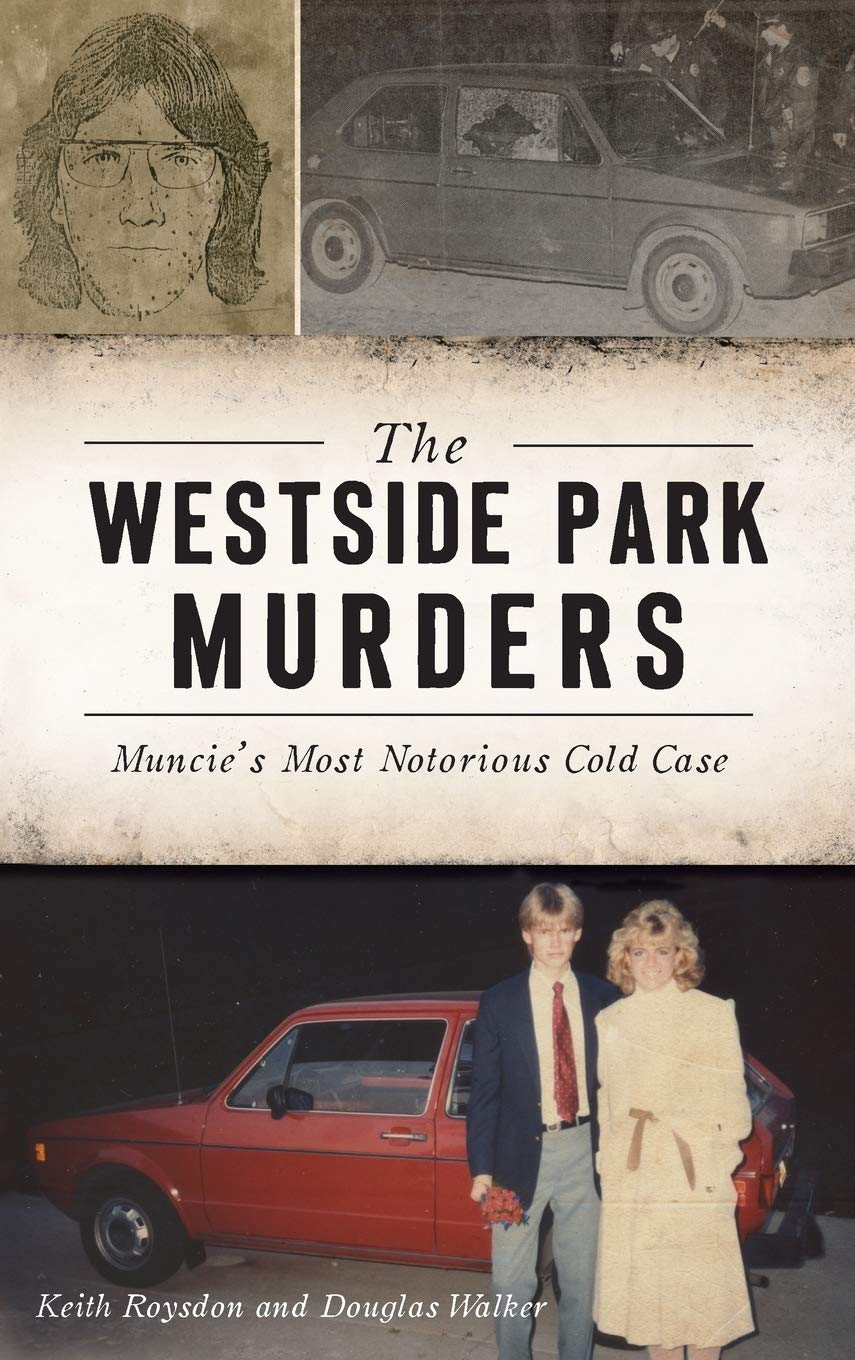
My favorite of the four books is THE WESTSIDE PARK MURDERS, about the most famous unsolved murders in our area, in and around Muncie, Indiana, published in 2021. A pandemic publication, it has done well despite – or because of? – we didn’t get to do our usual talks and signings.

Even before we were unable to talk to people in person because of the pandemic, four years before, in fact, I created a Facebook page named after WICKED MUNCIE, the first book. Over the years since 2016, I populated the page – sometimes on a hit and miss basis – with anecdotes about the four books and their making, plus I told stories that were not included in any of the books.

This year, 10 years after I created it, the WICKED MUNCIE Facebook page is still going strong, adding new followers every day. I haven’t posted much true crime content in a while – hmm maybe people prefer a page that doesn’t have a lot of new content from the likes of me – and now tops 3,600 Facebook followers. Undoubtedly some of those are bots and now-inactive accounts, but it’s a lot of eyeballs to just casually turn away from. Until just recently, it was my largest social media presence. That’s no longer the case as just this week, my Bluesky account reached more than 3,800 followers. That’s about the same number as follow my Twitter account, although I really suspect many of the “people” on that hellsite are not actually people.

So with 3,600 followers on the WICKED MUNCIE page, I don’t feel like I can shutter it or even walk away and neglect it. So I’m cross-posting some of the same stuff I post on my other socials. And of course there’ll be some true crime stuff occasionally. Not as much as in the past, though.

So yes, there’s a word for someone who won’t walk away from a platform that affords them thousands of followers. Several words, really.

It’s like that old joke with the punchline, “We’ve already established what you are. Now we’re just haggling over the price.”

Less than a month until SEVEN ANGELS is here!

Less than a month until my second crime novel, SEVEN ANGELS, is out.

A young woman returns to her small Tennessee hometown to help run the family funeral business after her father’s death and discovers Seven Angels has changed for the worse: prescription drug abuse is rampant, murders go unsolved, the sheriff is corrupt, white supremacists rule and a human trafficker from Russia controls the town.

Gloria Shepherd grew up in Seven Angels and is shocked by the changes. She gets drafted into replacing her ailing mentor as the county coroner. The duties put her in deadly conflict with the sheriff and the trafficker, who pursues a Ukrainian girl.

Gloria assembles a close group of trusted friends – including an overlooked sheriff’s deputy, a fearless state investigator and an old mountain woman – to fight the forces of crime and corruption and rescue the missing girl.

You can pre-order the softcover anywhere now. Ebook to come late summer/early fall.

Facebook is the worst. And yeah, I’m still on it.

The photo above appeared on the Facebook history page for my hometown and hundreds of people are commenting on it. The building in question was the headquarters of a long-gone local dairy operation that was a beloved part of the community. In the comments, people are mourning the loss of the building and, long before that, the dairy business, and they’re citing their favorite products.

Only one problem: As some of the comments point out, this photo is more than 10 years old. The building was torn down more than 10 years ago. Because it’s not a great picture, it’s hard to tell that this demolition, more than a decade ago, left a prominent part of the complex standing. And it’s still there this morning.

The caption reads only, “Demo of Riggins Dairy.” That’s it. It doesn’t note that the demo took place 11 years ago. That’s left up to a commenter.

There are soooo many problems with Facebook. (And yes, I’m still on there, because it’s a way to communicate with friends and family and promote my work and that of others.) The worst is that the parent company, Meta, actively supports the destruction of our democratic society.

But another huge problem is misinformation and, charitably, half-assed information. I suppose the original poster didn’t intend to mislead people – including many, many people who follow the page who haven’t been in the city in 10, 20, 30 or 50 years – into thinking the demo was actively going on today. It’s hard to say.

But even by omitting information and context, even if innocently intended, it’s given the impression that “they’re tearing down the old dairy building.” I thought that myself because I haven’t lived there in going on four years. Then I saw the comments giving some trimeframe context.

I can’t tell you to boycott Facebook because I’ve got three pages – my personal page, which has very limited access by readers, and my author page and Wicked Muncie page, created in 2016 to promote our true crime books.

But for pete’s sake, be aware that you’re not getting the whole story when you see something on Facebook. Sometimes all that means is that you’re misinformed about a building. Sometimes it means you’re misinformed about assaults on our democracy.