Tag Archives: reading

Nancy Drew and the Hardy Boys meet Bob Mackie

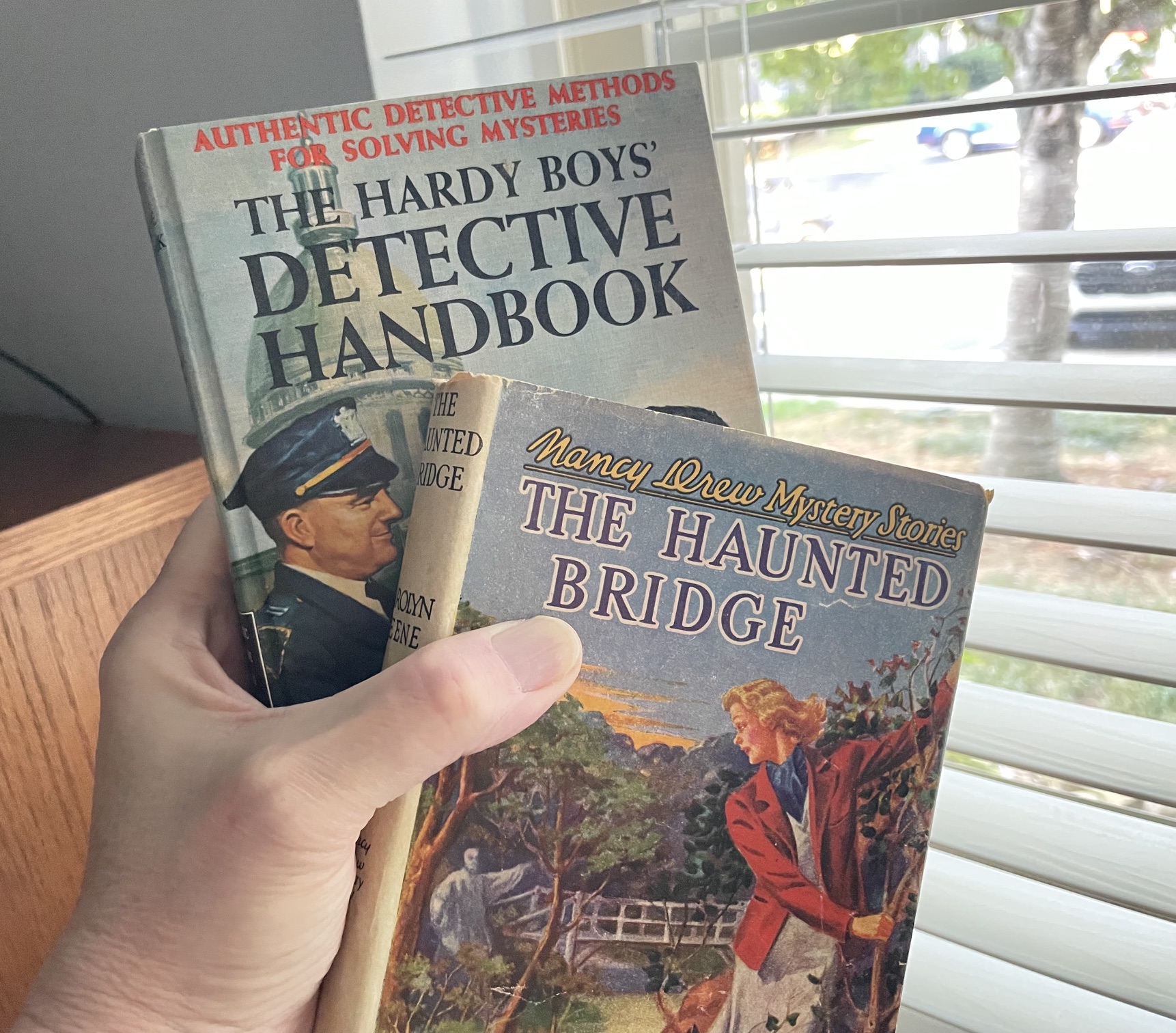
How about a two-for-one today? Okay then, buckle up for quick items on my citation of the late fashion designer Bob Mackie in a new short story as well as the Mystery of Why Public Libraries Didn’t Carry Nancy Drew and Hardy Boys Books. Lets start with the vintage stuff first:

I’m on the record about my love of juvenile mysteries like those featuring the Hardy brothers, Nancy Drew and the Three Investigators. Six years ago – and I can’t believe it was that long ago – I wrote a piece for CrimeReads about devouring those juvenile mysteries when I was a kid in the 1960s and 1970s and specifically credited my school library and beloved librarian in encouraging young readers to read a little bit of everything. Here’s a link to that CrimeReads piece to check out after you’re done here.

So considering how my school library encouraged us to read everything, including the Hardys and Nancy, I felt sad to see a September 10 post in the Hardy Boys and Nancy Drew Mysteries Facebook page that noted that libraries – public libraries certainly but sometimes school libraries – didn’t carry the books. And many librarians considered them trash.

I think – I hope – the prevailing sentiment in recent years has been to encourage young readers to read, no matter what, because instilling a love of reading is more important than being a snob.

The Facebook post has hundreds of comments from people who said that, yes, unfortunately, their libraries didn’t carry the books.

This wasn’t just a coincidence, scholar James D. Keeline wrote. There was, particularly in the first half of the 20th Century, a coordinated effort by some to keep those books and other series books out of libraries.

From the 1940s through the 1970s, the librarian school programs had an organized method to exclude popular series books from school and public libraries. They started to exchange lists of books “not to be circulated” in “standard libraries.” These were published in regional library journals. These lists were devoted to series authors and series.

Even in the late 1970s through the 1990s this practice continued in SOME libraries. Other libraries were led by people who had grown up reading books like Nancy Drew and did not find them harmful, despite the librarian training. So the practice of excluding series books reduced but was still present in places like San Francisco in the late 1990s.

Keeline produces a list of dozens and dozens of series books authors from 1949, published by the University of the State of New York, an umbrella organization that oversees educational and cultural institutions.

If you’re a fan of the books, the Hardy Boys and Nancy Drew Facebook page is well worth following.

On the Bob Mackie front, the veteran clothing designer died September 14. He was best known for outfitting Cher and other celebrities in the 1960s and 1970s in flamboyant gowns festooned with feathers and sequins.

As a kid who absorbed everything to do with Hollywood and show business when I was growing up, I always paid attention when a talk show host or celebrity credited Mackie with a gown. I knew – and still know – nothing about fashion, but Mackie designed outfits that looked like wild, sexy science fiction universe clothes to me.

His name got stuck in my brain, of course, and I name checked him in “Sunset Stakeout,” a short story I wrote for BAD INTENTIONS: Crime Fiction Inspired by Warren Zevon. (The Literary Garage anthology was edited by Michael Downing and has a great cover by Frank Vatel. Link to it at the end of this post.)

In “Sunset Stakeout,” which was inspired by Zevon’s “Looking for the Next Best Thing,” I wrote about three hapless guys moving through the Hollywood backwaters in January 1979. They’re the producer, co-star and novice screenwriter for “Sunset Stakeout,” an action/crime drama that really wanted to be “The Rockford Files” but was really more like “Riptide.” When the show is on the brink of cancelation, they team up with Hollywood’s most dangerous drug dealer to find a path forward.

I don’t write a lot of stories like this – it’s set in Hollywood, for one thing, and for another is a little more humorous than my usual – but I’m proud of it.

So with players in Hollywood in the mix, you just know I had to namecheck Mackie.

“I asked you to give me some time to think, Jimmy,” she said. Corbett looked like an unmade bed but Melody wore a sequined hot pink pantsuit. Hornblow recognized a Bob Mackie design from going to every awards show for the past 20 years. When you’re always a bridesmaid, you gotta have something to concentrate on.

I hope you enjoy “Sunset Stakeout” and all of BAD INTENTIONS. It was a labor of love and proceeds go to Philabundance, a non-profit food bank.

Here’s more about BAD INTENTIONS:
https://literarygarage.com/bad-intentions-anthology

Which book genre is stuggling now? Nonfiction books.

Oscar-winning screenwriter William Goldman probably wishes he’d monetized his famous phrase, “Nobody knows anything,” because while Goldman (“Butch Cassidy and the Sundance Kid,” “All the President’s Men,” “The Princess Bride”) painted a wide swath with that statement, he’s surely as correct as correct can be. If we’ve learned nothing from watching movies, books, politics and, well, every damn thing, in the past decade, it’s that uncertainty is the norm.

I’m enjoying paying more attention to the publishing industry lately as I’m doing some editing for Constellate Publishing and working on three – count ’em – three novels. I get a lot of insights from the several-times-daily email from Publishers Marketplace and I’m enjoying learning which books and genres are going to be populating bookstore shelves in a year’s time.

But the more information I have, the more I need. I’ve got a William Goldman-level lack of knowing anything about the book industry and I’m trying to remedy it.

So today I was fascinated with a new piece by editor Sean Delone – link at the end of this post – in which he looks at some trends in publishing, specifically about non-fiction book publishing.

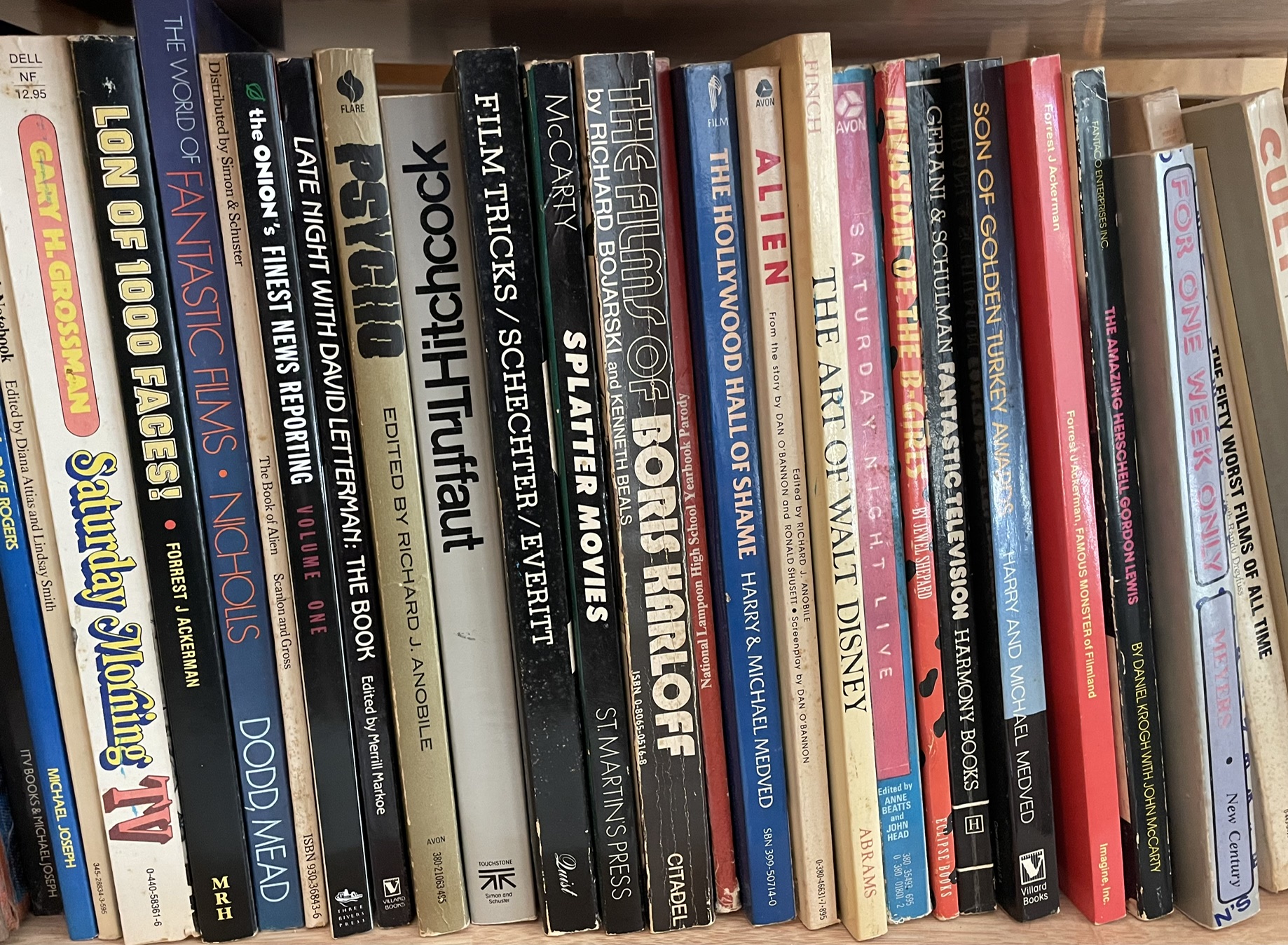
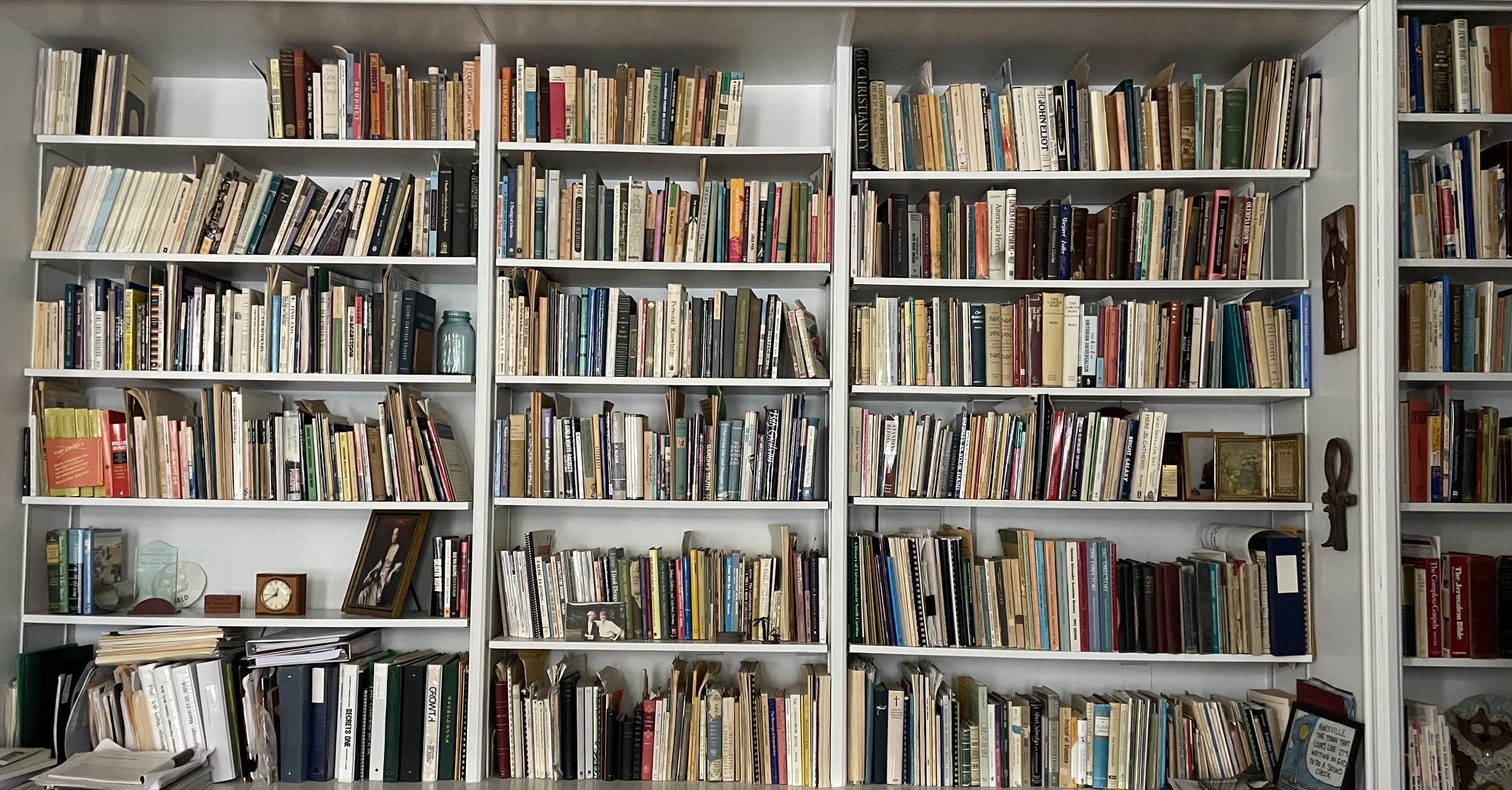
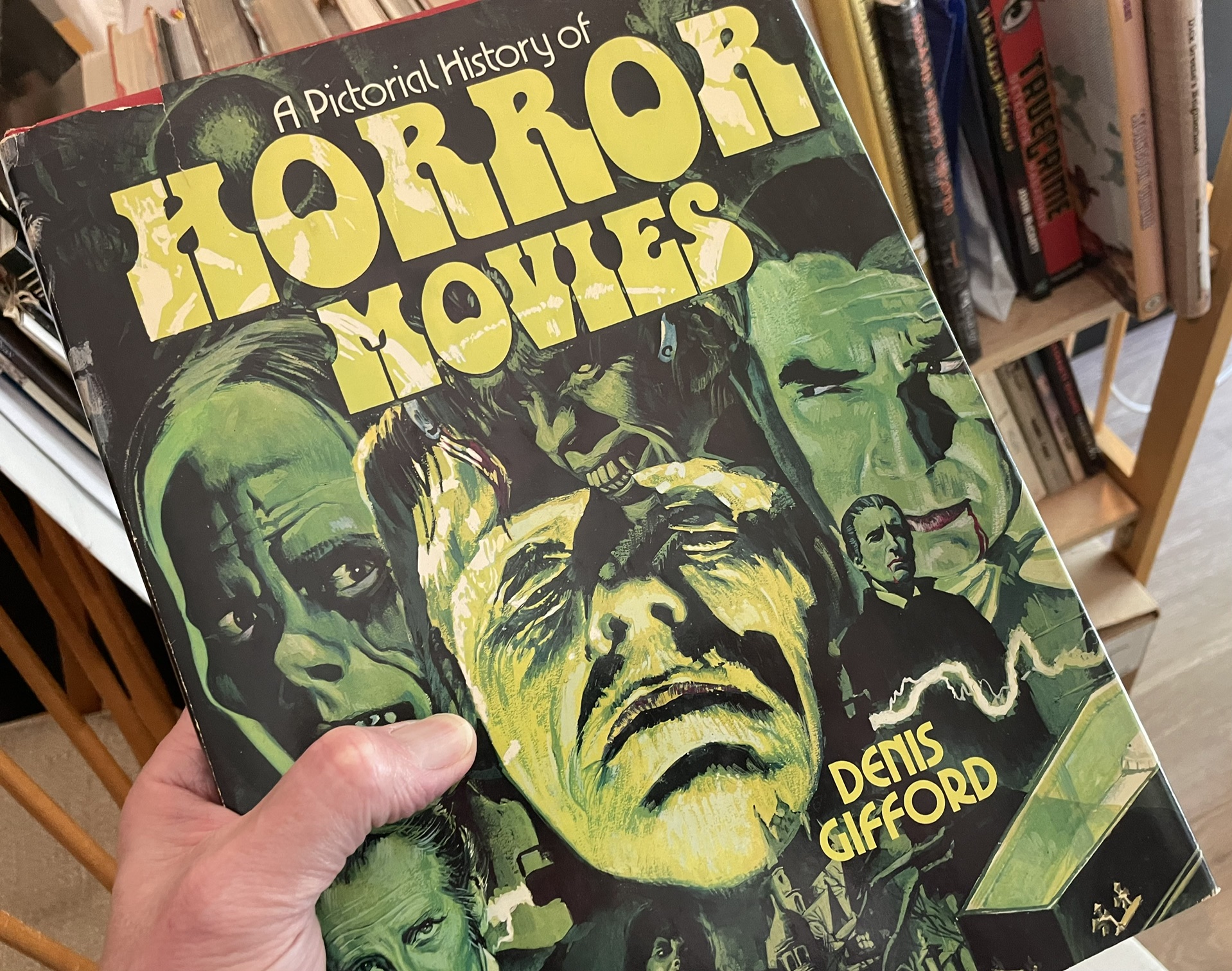
Before I get into details, here’s a picture I just took of one of my several shelves of non-fiction books, very specifically in this case books about movies, TV and entertainment, but we’ve accumulated hundreds of non-fiction books in the past few decades. Pictured above, my copy of Denis Gifford’s “A Pictorial History of Horror Movies” was published in the early 1970s. My copy was published around 1974 and it’s not even the oldest non-fiction book in the house.

It’s accurate to say that I love non-fiction books, history or news or photography or films or Saturday morning cartoons or whatever, and while I don’t buy as many as I used to – I think my latest might be “TCM Underground,” the cult films book released right before TCM canceled the Saturday night/Sunday morning program – but while dozens of boxes of fiction going back to the 1960s are still stored in boxes here, our non-fiction books are mostly but not entirely displayed. Yeah, I love ’em.

And there’s no doubt that online sites have decimated the need for nonfiction magazines and books. Why buy an authoritative book when you can look something up on some possibly totally erroneous online site?

Anyway, Delone’s article, “The Nonfiction Book Market is Collapsing,” carried disheartening news.

The gist of it:

First, the entire industry boomed in Covid—writing is a hobby and reading for pleasure is, too—and has trudged along as it usually does, staying flat, growing a little over the years since 2020. But for the past decade the market for nonfiction has slowly collapsed. What has happened in the last ten years1 is that the overall industry has grown modestly, but fiction and nonfiction have basically flipped positions. In 2015, 6 of the top 25 bestselling hardcover books—this is a not-perfect but useful proxy for new books published—were fiction. In 2025, 18 of the top 25 hardcover books were fiction, meaning only 7 were nonfiction, almost an exact inversion of ten years ago.

Delone emphasizes he’s not writing an Atlantic-style “end of reading, end of books” essay. If you remember, that one alarmed at lot of writers, editors, publishers and readers a while back.

Delone notes that media – which used to be a few big newspaper book review sections and late-night talk shows, where even a Midwestern rube like me could see important authors interviewed by Johnny Carson – is much more decentralized than it used to be and there’s some emphasis placed on book influencers and book accounts on social media. (I follow a bunch of them, for enjoyment more than education, but information nonetheless.)

But he also notes a colossal fall-off in demand for the kind of information we formerly turned to non-fiction books for:

No amount of platform is going to change that interest across the board in nonfiction from celebrities down to science has been slowly disappearing. Even if nonfiction is stable and more predictable than fiction in the abstract, it’s by far worth taking the risk on an unknown novelist if the return is potentially 4x as much. Let’s bring the nonfiction collapse into current day context. Two weeks ago, the entire hardcover nonfiction bestseller list sold 42,000 copies, whereas just the top two bestselling fiction hardcovers the same week—The Calamity Club in its 15th week on-sale and Yesteryear in its 19th week on-sale—sold 52,000 copies. It’s not inconceivable that on the right week, one fiction hardcover with first week sales could outsell the entirety of the hardcover nonfiction bestseller list.

Welp, as the young people used to say.

Want another gulp moment?

The tide going out on nonfiction sales and reading is entirely reshaping the power balance in the industry. Not overnight, but slowly, the money is flowing to fiction and away from nonfiction. It is causing quite a scramble. Fiction is unpredictable, it requires taste, it does not favor the solid metrics or predictability which, if you are running a publishing company, are much more preferable (businesses tend to prefer predictable growth and low volatility or at least high growth alongside high volatility). Fiction is also an easier category for the big publishers to capture and corner the market on. For instance, a handful of talent agencies represent nearly all A-list actors, and therefore a significant supply of big nonfiction bestsellers. The capture in supply carries over to publishers—when is the last time a big celebrity has published a huge bestseller with an indie press?

Delone has a lot of interesting thoughts on the industry. You can find some very thought-provoking posts here:

Indie authors can take steps to help get their books into bookstores. A few ideas:

For most authors, especially indie authors, getting your books on bookstore shelves is a huge end goal.

It can seem like an impossible goal because brick-and-mortar bookstores have only so much shelf space. Your book is competing for space with books by masterful writers and the most hyped – many times rightfully so – books in print.

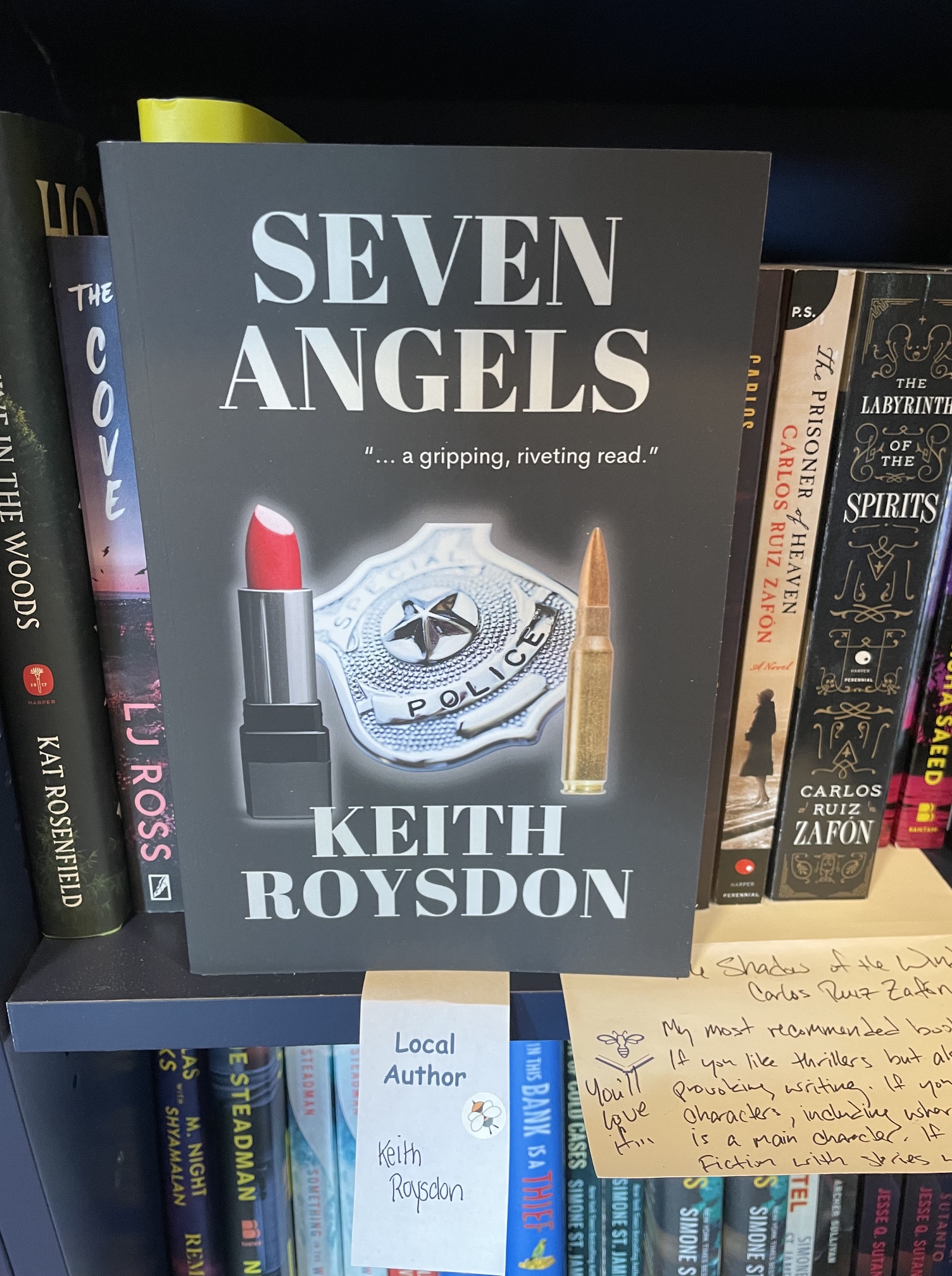
So as someone who’s recently placed my second crime novel, SEVEN ANGELS, on the shelves of the Hive Bookshop, a local woman-owned store here in Knoxville, I can tell you what steps I took that might have paid off and landed a spot on those shelves not only for SEVEN ANGELS but also my first crime novel, THAT OCTOBER.

(And yes, I say “might have paid off” because, ultimately, who can say why a bookstore owner or manager decides to stock the books they stock? I’m sure there are as many reasons for carrying a book as there are books.)

First, write your book. Finish your book. And work on it, with friends who are willing to read it – not to mention a pro editor, if you can afford it – until you’ve got a good book. Yes, I know that’s highly subjective, but in my case, the Hive owners asked if I could drop off copies of my two books so they could check them out. A few weeks later, they let me know they wanted to stock the books. One of the owners apparently read them, or at least enough of them to know a few customers might consider buying them.

And when I say “work on your book,” I’ll note that I outlined SEVEN ANGELS around 2009 and then returned to that outline to write the novel in 2019, after I’d taken a buyout from the daily newspaper business and could devote time to writing it. I added major characters and subplots years later, in 2022 and 2023 or thereabouts, that made the book more well-rounded. This isn’t a typical book-writing timeline for me, although it did take me about a year and a half to write THAT OCTOBER.

Secondly, timing is important. The Hive is literally a new bookstore, as opposed to the long-established other local indie bookstore that didn’t even respond to my request – in person and through their formal process – that they carry my work. Is a new bookstore less hidebound? Is a new bookstore more willing to take a chance on a new author? Certainly the Hive emphasizes that they’re very focused on community and local authors. Maybe your bookstore is new or they have a new decision-maker or they’re just willing to take that small gamble.

Third, cultivate relationships. I didn’t do a lot of that with the Hive, but I don’t think it hurt that I visited their store during their soft opening and bought a book, DUNGEON CRAWLER CARL, which I’d been wanting to read. Nothing’s better than when your bookstore knows you’ll not only support their store but also recommend their store to others.

Fourth, be understanding and don’t be pushy. Understand what an investment opening and maintaining a good bookstore is. As much as I wanted to, I didn’t “circle back” to the bookstore during the weeks after they had copies of my books and before they notified me they’d carry my books. I figured the owners had enough on their hands without having to respond to multiple email inquiries with an “are we there yet?” type message.

(I have traditionally been pushier with two stores back in my hometown of Muncie, Indiana. The wonderful folks at Ink Drinkers Anonymous and Aw Yeah Comics have been receptive not only when I ask if they’ll carry my books but also when I ask if they need more copies.)

Fifth, have good packaging and presentation. My cohort Jill Blocker and I published THAT OCTOBER and SEVEN ANGELS, the latter through Constellate Publishing, Jill’s book imprint spin-off of her Constellate Creatives company. (Link to Constellate is at the end of this piece.)

Sixth: Try to copy edit to avoid typos – we didn’t manage to have no typos, but I see professionally published books that have typos – and have someone – Jill in this case – who can format the book in an eye-pleasing manner.

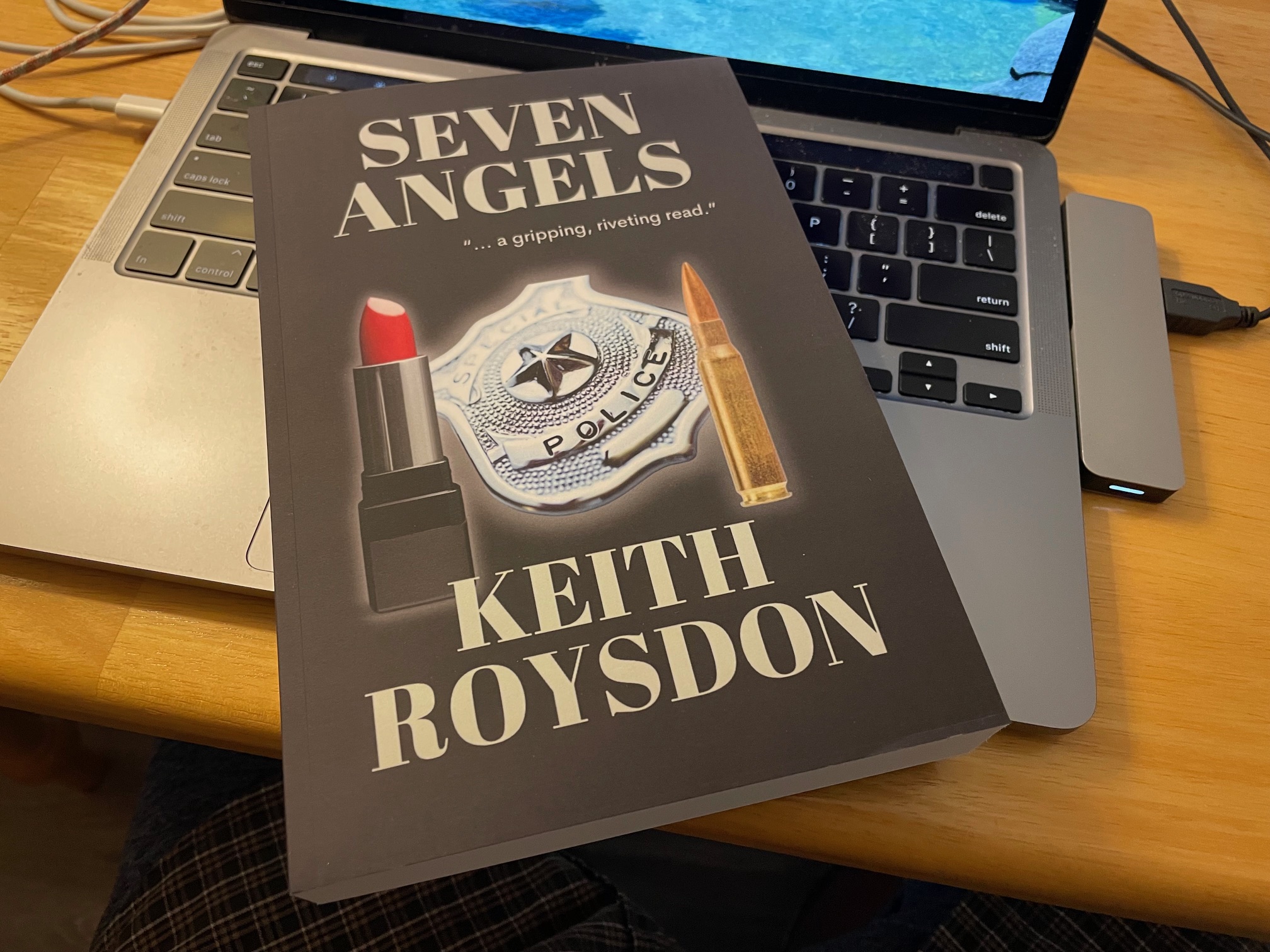
Seventh: Have a good cover. I’m lucky that my artist friend Sara McKinley drew the cover for THAT OCTOBER based on my suggestion that I wanted something reminiscent of a dramatic X-Men comic book cover pose for the young protagonists. With SEVEN ANGELS, I knew I wanted a cover that paid tribute to those Robert B. Parker covers for the Spenser books that had one or two or three elements on a background. I found the three elements – a lipstick, a bullet and a badge – and Jill executed the cover.

Eighth: Your book might be totally bookstore-worthy but never find its way onto shelves. I thought that would be the case with mine. I didn’t give up, but I was pretty resigned to never seeing my cover in a bookstore.

And I was doubly thrilled when it happened and hope it happens for you if that’s your goal.

Here’s that Constellate link:

Celebration: Local bookstore carries my books – and what that means for other indie authors

I had the coolest experience I’ve had in a long time on Saturday: I signed copies of my novels SEVEN ANGELS and THAT OCTOBER for a bookstore. And not just any bookstore, but my local indie bookstore The Hive, which opened this spring.

(Link to the Hive site at the end.)

I’ve had books in local bookstores for 10 years now, since 2016, when the first of my co-written true crime books, WICKED MUNCIE, was published. Each of the three true crime books that followed were also placed in Muncie bookstores (and in displays at Walgreen’s and other stores) by the History Press. Whatever else you might say about History Press, but they have the juice to get books in stores in and around the area that’s depicted in the book.

Since publishing my first novel, THAT OCTOBER, in June 2025, I’ve tried to get it in stores here in Knoxville, where I’ve lived for not quite four years. The long-established indie bookstore here turned up its nose at my request they carry that first novel. And by turn up its nose, I mean that I brought the book to that store and went through their formal online process for requesting that the store carry a book. I heard crickets back. They just never responded, and it’s been 16 months. 

And yes, I know all about how much of a premium shelf space in bookstores is. Spare me that factoid, please. Because even though Barnes & Noble replied to my request that they carry the book locally with a refusal to do so, at least THEY REPLIED. (They carry my books online, as does virtually every other bookseller, so I appreciate that.)

So I didn’t have high hopes for the Hive, even though pretty early on it was obvious how they liked to focus locally, with space on shelves and book clubs and talks and signings. I asked.

So when the Hive responded a few weeks ago with a “we’d be happy to carry your novels” and this past week said, “Your books have arrived, would you like to come in and sign copies?” I was just incredibly, pleasantly surprised.

(When I vague-posted on social media about this, some people thought I had interest in my books from TV or movies and, yeah, I have gotten a nibble in that regard but I’ve yet to see follow-through and yet to ensure it’s legit. So we’ll see.)

I’ve been lucky since THAT OCTOBER came out that not only libraries back in Indiana but two of my hometown bookstores, Ink Drinkers Anonymous and Aw Yeah Comics, have been happy to carry my novels. And it was a hell of an experience in 2025 when THAT OCTOBER was carried in the bookstore at Bouchercon in New Orleans.

So the Hive carrying my novels and asking me to sign them and even marking them with a “local author” tag was the best thing yet.

In this “all about me” celebration and back-patting here, I’ll note that there’s a slightly larger issue here. I self-published, through the good work of my friend Jill Blocker, THAT OCTOBER and Jill and I published SEVEN ANGELS through Constellate Publishing, the indie publishing imprint and spinoff of Jill’s company, Constellate Creatives. 

So three things can be inferred from my personal victory of The Hive carrying my books: Indie bookstores are the best. Decisions about what books to stock are best made locally.

And indie authors and small imprints should be heartened by the fact that small potatoes book publishing can get your book into bookstores. 

Here’s the link for the Hive on bookshop dot org

https://bookshop.org/shop/hivebookshop

Book sales are up to $32.5 billion, but books are dead, right?

Books are dead! Long live books!

A while back I wrote a piece for CrimeReads – link at the end of this mini-rant – about how those of us at Constellate Publishing were getting into the book publishing business even though it appeared to be an uncertain time for the industry: Some small publishers had gone out of business and some book distributors were shutting their doors, and yet such notable independent booksellers as Barnes & Noble – sarcasm there – were opening new stores all over.

So which is it? Are writers and designers and publishers doomed or are we seeing a boom time?

Today, Publisher’s Weekly reported:

The Association of American Publishers put 2025 industry sales at $32.5 billion, a 2.5% increase over 2024. Unlike 2024, when unit sales fell, the number of books sold in 2025 inched up 0.4%, to 3.15 billion.

I copied this to a writer friend who replied, in effect, “So publishers are selling a lot of books but are nickel-and-diming us writers to death.”

And yes, PW reported that religion-themed books had seen the biggest increase, but:

Adult fiction sales had the second biggest sales increase, with revenue up 3.9%, to $7.1 billion.

There’s a lot to digest in the report, but here’s a bookstore tidbit:

In terms of channels, physical stores had the biggest increase in the year, with sales up 6%, to $5 billion, an increase likely due in part to the opening of more Barnes & Noble stores as well as more independent bookstores.

Amazon was still the largest channel for book sales, with $11.3 billion in sales.

“This year’s report reflects a healthy and agile publishing industry,” commented Syreeta Swann, chief operating officer of AAP in a statement. She pointed to the resilience of print even as digital formats continue to grow.

Things can change and there’s just no doubt it’s hard to concentrate to read when it feels like we’re teetering on the brink of climate, social and political collapse with a strong tailwind, but the message to writers seems to be:

Write your asses off. There’s a readership out there.

Here’s my CrimeReads piece from a while back about getting into the publishing industry, with comments from some absolutely first-rate writers:

Jill Blocker and I sat down to talk about our new books, writing, publishing and more

My longtime friend and fellow author Jill Blocker and I have been all over the Internet lately, talking about our new novels – HAPPILY AFTER EVER for Jill and SEVEN ANGELS for me – and we had the idea of interviewing each other and asking a few questions that we haven’t really addressed in the many articles, interviews and podcasts so far.

In the process, we worked out all the problems in the universe.

You believe that, right?

We did talk about our early writing days, what our journalism backgrounds brought to our writing and more.

For example, Jill on journalism:

I wish journalists were valued more in our society. Some of the most brilliant people I know are journalists -including some of the characters in the book. Journalists have the ability to sit down and understand important, complex issues and communicate them to the masses. Journalism definitely affects my writing style. I like short sentences and punchy lines, but more-so, I think accuracy and reliability in storytelling is one of our most important roles as writers. No one needs Fake News… real life is unbelievable enough.

And my writing routine:

My routine is to not have a routine, at least not in hours. I write almost every day, but the hours of when I write vary in that I work around other things, like taking care of our cats, laundry and exercise or appointments or interviews. Some days I don’t write fiction but I’m writing articles for sites like CrimeReads. One thing I almost never do is write in the evening, because I’m brain-fried by that point.

Here’s a link to the full interview, which is on the Constellate Creatives/Constellate Publishing site. While you’re there, if you have a book inside you or your computer that’s waiting to get out, consider clicking a button for more information about Constellate.

Hey look: A press release about where we’ll be in July

I’m not sure if you heard or not, but I’ve got a new crime novel, SEVEN ANGELS, out and my longtime friend Jill Blocker has a new novel out, HAPPILY AFTER EVER.

You know I’m kidding, because if you’ve seen me on social media for the past several months, you know these things.

But if you’re in Indiana – both of us are from the Hoosier state – and want to come see us, you can.

Here’s a quick rundown of where both of us will be. Jill will also have events in Seattle, New York City and Zurich after our Hoosier trip. (I’ll link to the Constellate Publishing events page below.)

Anyway:

Authors Roysdon, Blocker plan book talks, signings

Two authors with Muncie, Indiana, ties are releasing new novels and planning on talks and signings in Muncie in July.

Keith Roysdon and Jill Blocker will be speaking and signing books at events July 14 and 15 in Muncie.

The two will be talking about “Seven Angels,” Roysdon’s latest novel, and “Happily After Ever,” Blocker’s new novel.

They’ll be speaking and signing books:

Tuesday, July 14, 6-8 p.m., at the E.B. and Bertha C. Ball Center, 400 W. Minnetrista Blvd., Muncie. The talk is free and open to the public, but the Ball Center requests advance registration to ensure plenty of seating and refreshments.

Earlier Tuesday, at 3 p.m., they’ll be at Ink Drinkers Anonymous Bookstore, 108 S. Walnut Street.

Wednesday, July 15, 6:30 p.m. at Carnegie Library, 301 E. Jackson Street.

Earlier Wednesday, at 3 p.m., they’ll be at Aw Yeah Comics, 119 E. Charles Street.

Also earlier Wednesday, July 15, at noon, they’ll be at the Orchard Shop at Minnetrista, 311 W. St. Joseph St.

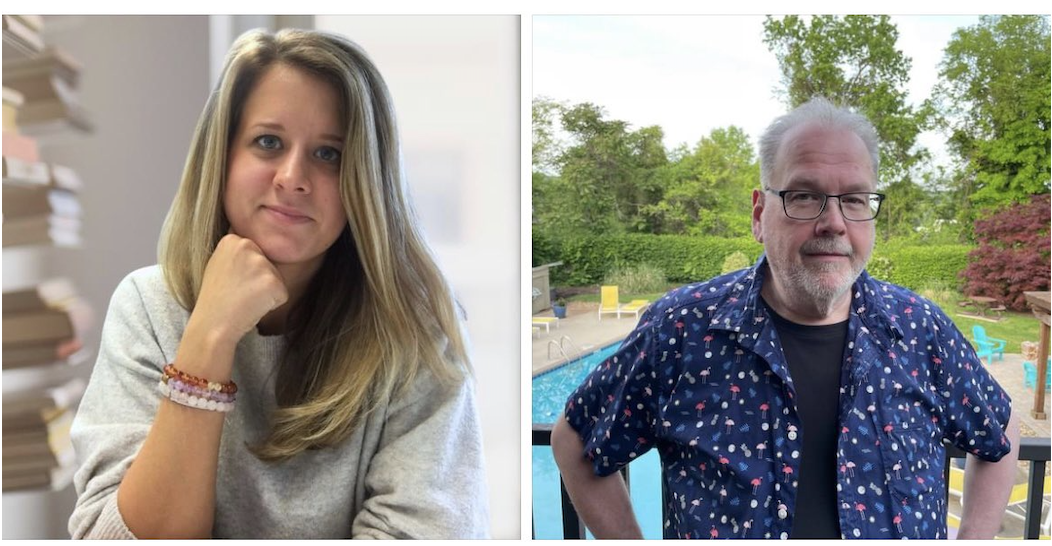
Blocker, a native Hoosier, is a Ball State University graduate who worked at The Star Press while she was attending the university. A resident of Switzerland, Blocker is the author of “What Was Beautiful and Good,” an epic but personal account of love and the beginnings of the Dada art movement in the early days of World War I, and her new novel, “Happily After Ever,” the story of a young writer from America who finds love, disappointment and renewed hope as a citizen of the world.

Blocker and her sister are principals of Constellate Creatives, a multi-faceted international company that publishes books (through its Constellate Publishing division) and provides editorial and marketing services for a variety of books, authors and clients. Constellate’s announcement of its 2026 slate of books was widely publicized earlier this year. Constellate also has a studio for recording audiobooks or podcasts.

Roysdon, a resident of Tennessee, was a reporter and editor for 40 years for The Star Press (and its predecessors) in Muncie. He won or co-won more than 30 first-place awards in Indiana and national journalism competitions. He’s the co-author with Douglas Walker of four award-winning true crime books about the Muncie area, including “Wicked Muncie,” “Muncie Murder & Mayhem,” “The Westside Park Murders” and “Cold Case Muncie.” Roysdon’s short fiction, news and pop culture writing has been widely published. His short stories are included in three 2026 anthologies, “Fighting Words,” “Bad Intentions” and “Daydream Believer.”

Roysdon’s first novel, “That October,” was published in 2025. Set in a fictionalized version of Muncie in 1984, the novel is about six high school friends who band together to solve the mystery of a friend’s murder and another’s disappearance. His new novel, “Seven Angels,” is about a young woman who returns to her small Tennessee town to help run the family funeral home. After she’s named county coroner, she must not only solve a murder but battle white supremacists, a pill-pushing doctor, a corrupt sheriff and a ruthless Russian trafficker hunting a young girl from Ukraine.

More about Constellate Publishing and the authors:

Countdown’s almost over: SEVEN ANGELS publishes tomorrow, June 1

Okay, I should just acknowledge that when you’ve published a book, the promotional push for it is never over.

But it feels like we’ve reached something of a milestone as my new crime novel SEVEN ANGELS is published tomorrow, June 1, 2026, by Constellate Publishing, a publishing imprint of Constellate Creatives, a company founded by my longtime friend Jill Blocker and for which I do some editing and other work.

By way of noting that promoting a book is never ending, I’ll say that I’ll be darkening your doorstep plenty even after the book is published.

A few quick words on how I got here:

I wrote a few crime novels back in the early 2000s that weren’t completely baked and I didn’t pursue publishing them. A few years later, sometime before 2010, I outlined a book called SEVEN ANGELS, a crime story about a fictionalized version of the little town in Tennessee where my parents grew up.

(I was still about 14 years from being a Tennessee resident myself, but I’d been down here plenty of times, visiting family.)

After I outlined SEVEN ANGELS, I set it aside. I didn’t write a book-length project again until my first true crime book, co-authored with Douglas Walker, was published in 2016. Three more true crime books followed. It turns out that writing and co-writing and editing those books was essential for me in figuring out how to write a book-length manuscript. I’m a plotter and outliner, and turning out an outline – one paragraph per chapter, outline length in total 15 or 16 pages or more – is a step I can’t imagine skipping.

In 2019, I took a buyout from my newspaper job and finally felt I had time and focus to write novels. In a few years, I’d written SEVEN ANGELS, GHOST SHOW and THAT OCTOBER. The latter was the first to be published (self-published) in 2025.

I’d gone back to SEVEN ANGELS almost every year since 2019, fleshing it out with new characters and I hopefully made it better.

The blurbs and comments and reviews have been laudatory and I appreciate it.

For a few months now, I’ve been actively compiling ideas for a new novel, including using some elements from an aborted novel from 2025. (I’ve mined those early 2000s books for a number of ideas and characters, and I’ve done the same with GHOST SHOW, so nothing ever entirely goes to waste.)

So here I am with a promise: I’ll be working on the next novel, along with articles and short stories.

And I’ll be promoting it all, so forewarned is forearmed.

My world and welcome to it: Seven Angels and Middletown, my fictional places

When my short story “A Fighting Life” was published in the past couple of weeks in the FIGHTING WORDS anthology, it contained the latest reference to the fiction worlds I operate in.

Since I wrote four or five novels back in the early 2000s – books that’ll probably never be seen, unless radically rewritten with what I’ve learned about writing in the meantime – I’ve enjoyed writing in a universe where, despite some timey-wimey variations, most of my characters and storylines play out in a shared world mostly consisting of the small city of Middletown, Indiana – based on my hometown of Muncie, Indiana, which was referred to in 20th century sociological studies as Middletown – and Seven Angels, a Tennessee town based on Jamestown, the small town my parents came from.

The early 2000s books featured Jack Richmond, a Middletown newspaper reporter, and a group of friends including Jess Peterson, an affable cop on the Middletown police force. There are lots of other characters too, including Luna, a topless dancer Jack falls in love with. By the end of the series of books, the two are married and have a son, Cody, and the final, still-to-be-completed book features Jack and Peterson’s desperate efforts to get Cody back after Luna’s ex brutally assaults her and kidnaps the boy.

When I wrote SEVEN ANGELS in 2019, my first crack at writing a novel in 15 years or more, I set it in the titular small Tennessee town with a side trip to Middletown and a pivotal appearance by Peterson.

My next novel, the also unpubished GHOST SHOW, is set in Middletown, but in 1948 and follows the Anderson family, who came to the big industrial town from the small Tennessee town of Seven Angels. No crossover characters, though.

My third novel, THAT OCTOBER, which was just published in June 2025, is set in 1984 Middletown and includes, among secondary characters, Richmond and Peterson at the beginning of their newspaper and police careers, respectively.

I won’t detail it all here, but I’ve returned to the Middletown and Seven Angels wells numerous times in short stories. The foul-mouthed, fightin’ siblings in “A Fighting Life” are pulled from GHOST SHOW. My very first published short story, “Independence” from the MOTEL anthology, is set in little Seven Angels, complete with the sheriff/main bad guy from the SEVEN ANGELS novel.

The seeding of characters from my earlier stories – like Butcher Crabtree, who I posted about here recently – throughout my fiction just goes on and on.

And so do I. To quote one of my (hopefully) self-deprecating quotes, “Enough about me. What do you think of me?”

The most famous shirt at Bouchercon

At some point I’ll write a little bit about Bouchercon, held last week (as of this writing) in New Orleans. Many of you know this is the annual worldwide convention/conference of crime writers and readers. This was my second Bouchercon and they’re a lot of fun because they’re a chance for writers like me and many much more accomplished to meet with other writers and readers.

I’ll write more about Bouchercon in the coming days, or I intend to, but a quick anecdote:

On Saturday, I was one of the authors at the debut authors’ breakfast at Bouchercon. The annual event was sponsored by Lee (“Reacher”) Child and his brother Andrew, who now writers most of the Reacher books. Another sponsor is Michael Connelly, creator of Harry Bosch and Renee Ballard and other great crime fiction characters.

Connelly also kindly hosted the breakfast.

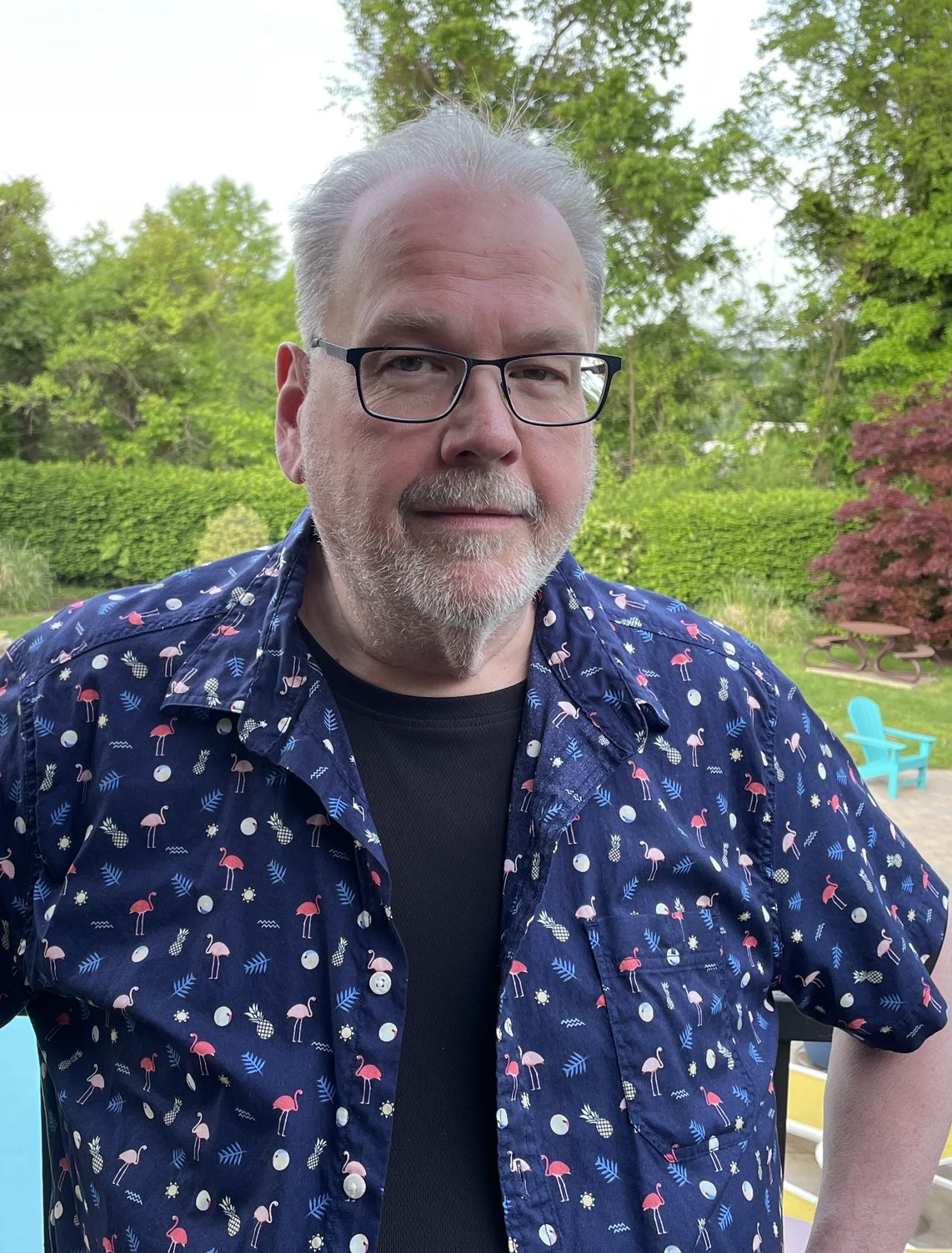
At some point I’ll tell you how I had a quick breakfast with Connelly, but today I’ll talk about the shirt you see me wearing in the photo above.

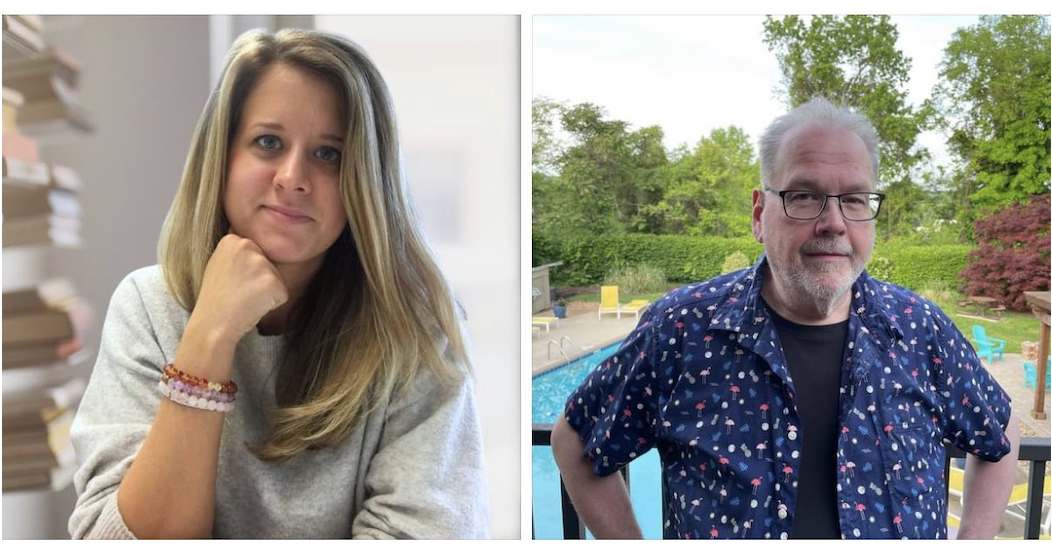
In the photo, I’m wearing a colorful shirt with pink flamingoes and other images and it’s pretty memorable. This was the photo of me that I submitted weeks or months ago for them to use in the program book for the breakfast.

This was also the shirt I managed to wear that day to the breakfast.

I realized this only after I’m sitting at the table and about to be introduced by Connelly to speak for one minute about myself and my book, THAT OCTOBER.

So, in the interest of transparency, I opened my one minute of remarks by noting the coincidence.

“If you notice, in the our program book, I’m wearing a particular shirt and I’m wearing it today as well.

“You could assume from that that I apparently have a favorite shirt.”

I went on to talk about my book briefly but the line about my favorite shirt got a good laugh.

And I had people come up to me afterward and later in the day remarking, “Your favorite shirt!”

And it apparently is.