Monthly Archives: October 2011

‘Avengers’ assemble

The trailer for “The Avengers,” next summer’s Marvel superhero team-up movie, hit the Internets today.

And it’s pretty cool.

I’d like to embed the video here, but as is typical of WordPress lately, it won’t let me.

So, rather than have you take my word for it, I’ll post a link here.

iPhoneography: Latest Halloween pics

You know the drill by now. I check out Halloween stores for masks, costumes and spooky decorations. I take pictures with my iPhone. I post them here.

We’re still about three weeks out from Halloween, but I’ve explored most of the Halloween stores in these parts.

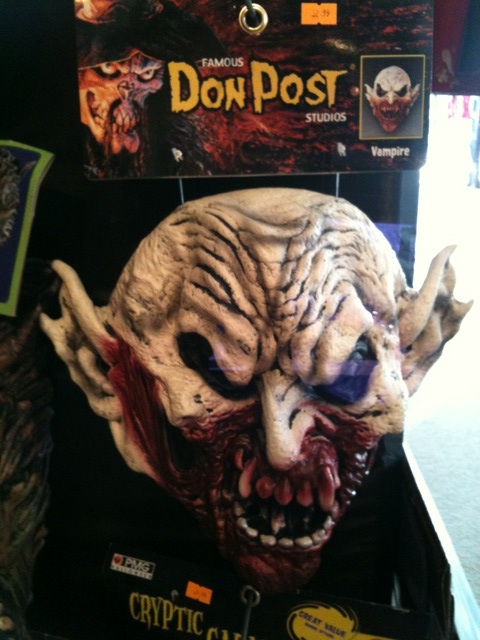
Anybody else remember those Don Post Studios ads in Famous Monsters and other old monster magazines? The masks were head and shoulders — no pun intended — above the beloved but cheesy Collegeville and Ben Cooper costumes most kids wore.

Here’s a Don Post vampire mask:

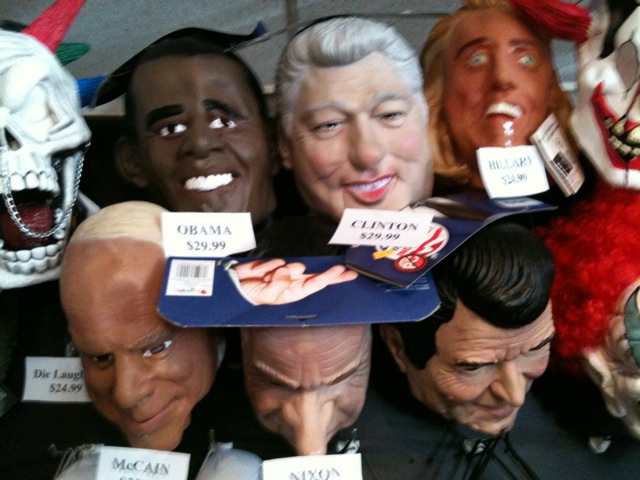
Each year some of the most popular masks are those depicting political figures. There are a couple of really good ones among these, but what’s the deal with Hilary Clinton near the upper right corner? Her face is so red it looks like she’s going to explode.

Personally, I think the Bill Clinton mask is great. And look at the nose on Nixon, down on the bottom row. Nice.

Costumes for kids are fascinating to me, although I think many of them are too gruesome and otherwise “edgy” for most kids. Not to mention for their parents.

Here’s one for the sports enthusiast: The zombie referee.

There are so many inappropriate costumes out there for young girls. This one isn’t scandalous but sends a strange, mixed message with its name alone.

‘Nuff said. That’s all ’til next time.

Richard Matheson: More than just ‘Real Steel’

The Hugh Jackman-starring robot boxing movie “Real Steel” is at the top of the box-office charts this weekend, just where it deserves to be. The movie features the “X-Men” star as a washed-up boxer who takes custody not only of his 11-year-old son but also a sparring partner robot literally pulled out of a junkyard.

In this future U.S., humans don’t box anymore but robots do. Their fight-to-the-death bouts are the logical extension, in some ways, of the current bloodsports enjoyed by many fans. The dad and son’s faith in each other and their  battlin’ robot pays off, of course.

The most enjoyable element of all this, to me, is that the movie is based on “Steel,” a short story from 1956 written by Richard Matheson. The story was previously adapted — with a lot less high-tech wizardry — on the classic TV series “The Twilight Zone.”

Matheson, born in 1926, is enjoying some renewed interest as a result of the movie. There’s this good interview at aintitcool and just the mention of the octogenarian writer’s body of work is enough to send geeks tripping through decades of favorite movies and TV shows.

Putting aside that Matheson wrote some wonderfully creepy short stories, like “Born of Man and Woman,” and terrific novels, like “I Am Legend,” if you just consider the number of good movies that had been made from his stories — “Omega Man” and “I Am Legend,” “Stir of Echoes” and “The Incredible Shrinking Man” to name a few — you’ve got a source of big-screen inspiration that might be second only to Philip K. Dick (“Bladerunner”).

But the TV shows and TV movies Matheson wrote. Oh my.

“Nightmare at 20,000 Feet” for “The Twilight Zone.” “Trilogy of Terror,” famous for its segment about a tribal doll come to murderous life. And “The Night Stalker,” one of the greatest combination horror movies/cop dramas/newspaper movies ever.

Yeah. Oh my.

I enjoyed “Real Steel” today, but I’ve been thankful for Richard Matheson’s talents since I was a kid.

A man ahead of his time

Charles Fort blew my mind. For a guy who died nearly 30 years before I was born, that’s no small accomplishment.

Fort was a New York resident, born in 1874, who collected odd bits of information.

If a man was reported to have burst into flames in his New York apartment, Fort made note of it. If the man’s burned body was found in an un-singed armchair in his equally untouched living room, that was even better fodder for Fort.

How about a rain of frogs? Fort was all over it.

For a couple of decades, Fort scrutinized newspapers and scientific journals and haunted libraries and museums, looking for reports of disappearing people and objects that appeared in places they didn’t belong.

Fort collected these strange tidbits in a series of books, including “Lo!” “Wild Talents” and “The Book of the Damned.”

The books were reprinted in paperback in the 1960s and early 1970s, when I — like other fans of what became known as Fortean phenomena — discovered them.

It’s possible, I think, to draw a line from Fort’s oddball reports to classic TV shows like “The Night Stalker” and “The X Files,” and certainly Fort’s bread and butter, baffling happenings and unexplained events, are the stuff of modern-day shows like “Fringe.”

So it’s appropriate and perhaps inevitable that Fort would be the the subject of a movie. Robert Zemeckis, who directed the “Back to the Future” movies as well as animated films like “The Polar Express,” is bringing Fort to the big screen.

Zemeckis sees Fort as something of a real-life Ghostbuster, according to recent news stories. I don’t recall Fort ever reporting busting any ghosts or getting slimed, but considering that all modern movies must be boiled down to a pitch like “It’s ‘Twilight’ meets ‘Star Trek,'” I guess it’s as good a comparison as any. It’ll be interesting to see how Hollywood treats Fort.


So long, Charles Napier

One of the benefits of being a habitual film credits reader is that you get to know the names of unsung actors who play memorable parts in movies.

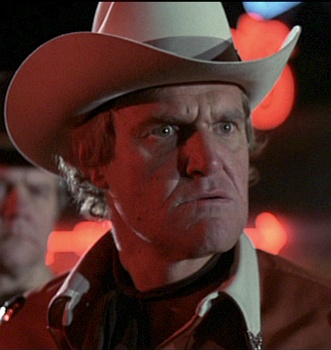
Guys like Charles Napier.

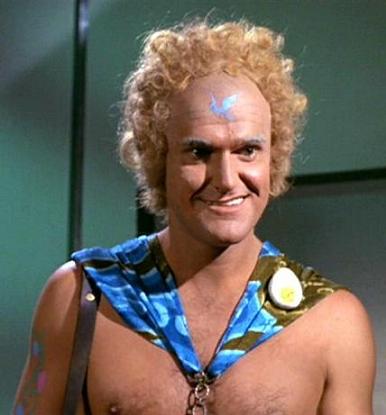
If you hadn’t already recognized him from the picture at the top of this blog, I would only have to say “You remember, Murdock, the guy who sent Rambo on his mission in ‘Rambo: First Blood Part II,’ or Tucker McElroy, the cowboy-hat-wearing guy in the RV from ‘The Blues Brothers,'” but I could name a couple dozen more as well.

Napier died the other day — the same day as Steve Jobs — and a few movie and TV websites have made note of his passing.

Napier, with his distinctive voice and square jaw, could have played good guys more often but usually played bad guys.

One of his earliest, silliest roles came in the original “Star Trek” TV series, in which the Enterprise crew encounters space hippies. Here’s Napier:

You gotta admire a guy who takes a role that requires him to look like that … and keeps coming back for more.

RIP, Charles Napier.

Steve Jobs, books and time’s passing

I heard about the passing of Apple visionary Steve Jobs just a little while ago and, of course, I heard the news through my iPhone. I imagine I’m one of millions of people who found out through one of Jobs’ many ideas-brought-to-life.

Then, after watching a few minutes of a TV special about Jobs, I settled in and finished a book. It was Craig Johnson’s “Death Without Company,” the second in his series about Wyoming lawman Walt Longmire.

I just closed the Johnson book — it’s good, and typical of the Longmire stories, which feel like Westerns even though they’re crime novels and, above all else, character studies — and feel philosophical. More so than usual.

Part of that is because of the tone of the book, which is all about death and friendship and family and long-forgotten passions rekindled. Part is due to the passing of Jobs, whose inventiveness changed things for a couple of generations of people.

It’s important, for some reason, to note that I read “Death Without Company” not on Jobs’ iPad or Amazon’s Kindle or even BN’s Nook but on paper. I don’t have a tablet or e-reader, at least not yet. I’m not rushing to get one, in great part because there’s something that feels so right about reading a book on paper. Hardback, paperback, whatever. The experience of opening a book and getting lost is one that I’ve loved since I was a grade-schooler. I’m positive that love will never pass. I’m pretty positive my devotion to the old-school book experience will likewise stick around.

Jobs was the kind of guy who was always moving ahead, always innovating. I found myself wondering tonight if he still read books — or newspapers, or magazines — on paper. Was that ever an important thing to him? Did it ever stop being important?

I’m not sure what I’m going to read next. I have only one of the Longmire books left. I might crack that open or I might dip into a book about the Civil War in an attempt to remedy my woeful ignorance about that period in our history.

Maybe I’ll start reading “Killing the Blues,” the latest in a series of books about small-town New England cop Jesse Stone. Jesse was created, you see, by Robert B. Parker, a longtime mystery author who passed away last year.

“Killing the Blues” exists because Parker’s wife chose a successor. Michael Brandman is continuing the series after Parker’s passing.

Parker, like Jobs, was a master at his own game. He’s gone now, like Jobs, and others will try to fill the void, like they will with Jobs.

Parker’s successors — because it’s hard to imagine a replacement — will continue his various series, hopefully with some success and artistic accomplishment.

Jobs’ successors — because it’s hard to imagine a replacement — will continue his work, hopefully with some success and artistic accomplishment.

Books will still be published. Incredible advances in technology will continue to be made.

And the world will keep on spinning, albeit perhaps diminished.
iPhoneography: More Halloween pics

It’s that time again: Time to look at some interesting, odd and creepy Halloween costumes and items of decor.

Let’s get started!

We’re gonna start small this time and go big.

I don’t know about you, but I have sticky eyeballs when I wake up many mornings. But if I want a bag of 30 of them, I know where to go: Target.

There’s something about a bloody handprint that’s downright creepy. But bloody, kid-sized handprints on a window. Yeggh.

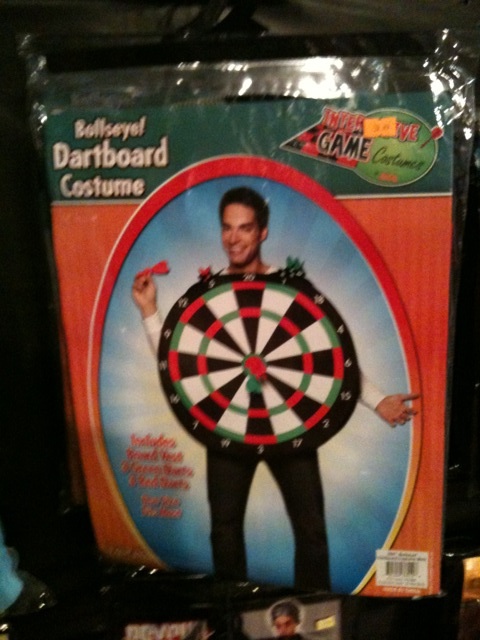
How about a costume that takes an ordinary item and makes it outsized? You can keep your banana costumes. For my money, you can’t top a costume that makes people want to throw sharp objects at you.

Everybody remembers that kid from school with a really big head. I think I know what happened to him. At any rate, I found his oversized skull.

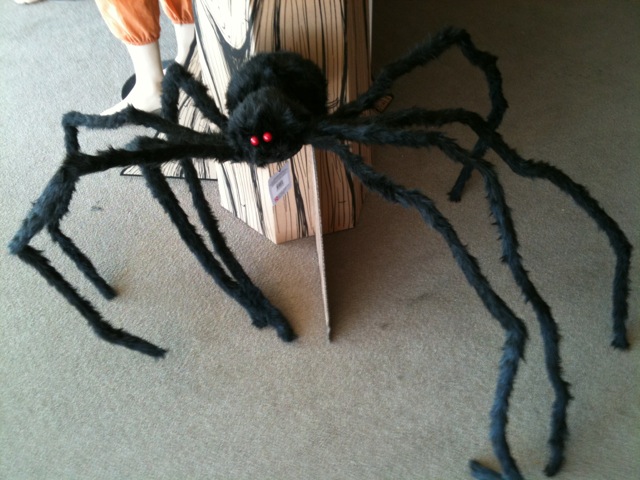
How about a big spider? If you saw this ottoman-sized arachnid crawling across the floor toward you, you’d want a comically large-sized newspaper or magazine handy.

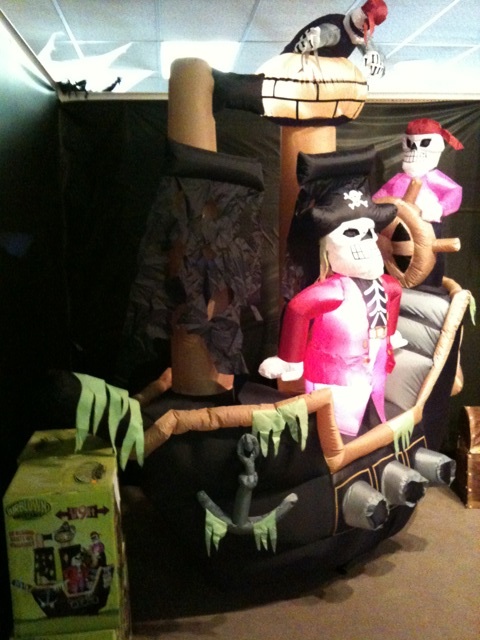
Last but not least, the ultimate Halloween version of a lawn inflatable. I don’t have any inflatables, but I love seeing them on lawns at Halloween and Christmas. I have a neighbor who even has a Thanksgiving inflatable.

This pirate ship, manned by skeletons, is the size of a mini-van.

That’s all for now. Next time, some cool and off-the-wall costumes for kids.

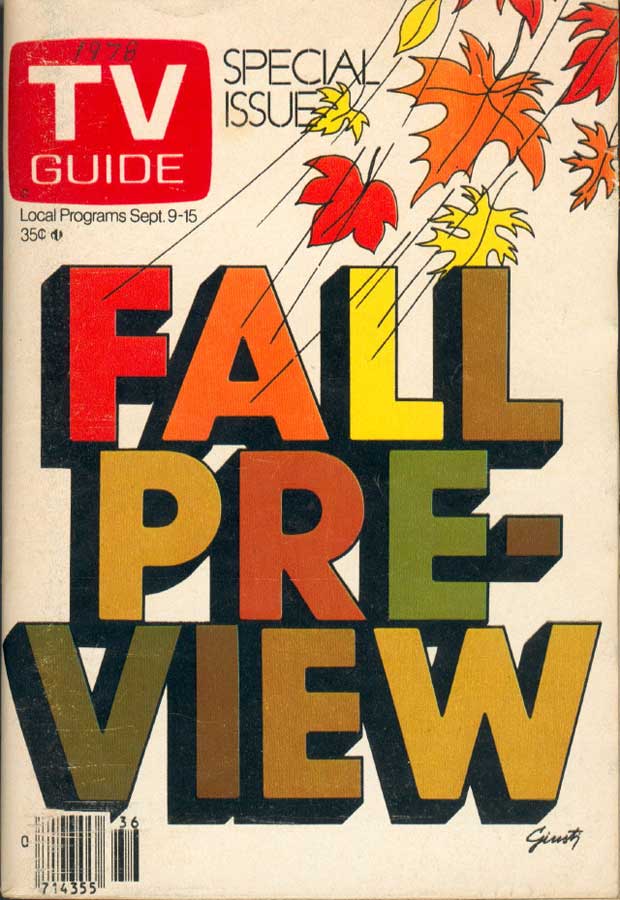
Fall’s not the same without TV Guide

I usually operate under the assumption that nobody who reads this blog grew up geekier than I did. Or at least you’re not willing to admit it.

But it took a special kind of geek to salivate over the TV Guide fall preview issue quite as much as I did.

Now when I was a kid and a teenager, I was a movie, sci-fi, book and TV geek. Unlike now. Ha.

The highlight of my week, at least many weeks, was Tuesday, when the new TV Guide came out.

My friend Jim and I went over each issue, inch by inch, increment of the day by increment of the day, checking out what was airing on the four or five channels we could see with our primitive TV antennas.

Sammy Terry’s “Nightmare Theater” was a highlight of each Friday night and the listings of Sammy’s two features that night was likewise a highlight of TV Guide. So was the listing for “American Bandstand” on Saturday. So were the Saturday morning cartoon listings.

We mapped out our entire week’s viewing well before the week began.

The best TV Guide of the year, of course, was the fall preview season. Besides the program listings that we scoured religiously were the articles and previews of new shows. “Battlestar Galactica?” Don’t know what it is, but I’ll give it a try. “Man from Atlantis?” Why not?

The TV Guide fall preview, with its colorful photos, snappy articles and — best of all, really — unsubtle ads was the social event of the year for geeks. If you considered a social event a digest-sized magazine that prompted you to spend hours on end sitting alone in front of a TV, that is.

I haven’t read TV Guide in years. I’m not sure a print version of the magazine is still published. I mostly know it now as a cable channel with low-rent programs and an annoying “crawl” of  listings. The online version of those listings is just as bad, maybe worse.

Somebody mentioned the other day that the fall TV season had begun, and I guess it has. But how can anyone tell without the fall preview issue of TV Guide on the coffee table?

Robot end of the world can’t quite top zombie finish

In the wake of the pirates vs. ninjas match-up (how did that come out, anyway?) comes another, even more intriguing face-off: Robots vs. zombies.

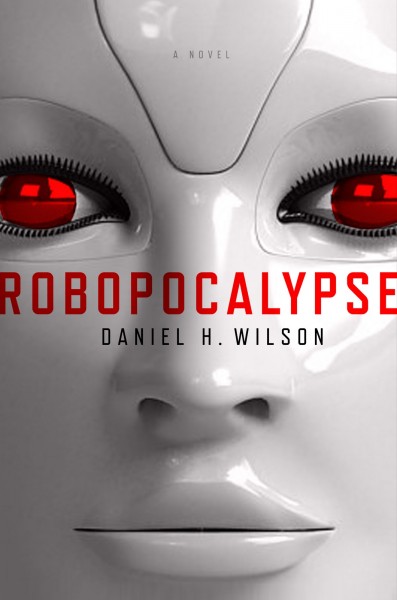
The thought comes to mind as I finish “Robopocalypse,” a recent novel by Daniel H. Wilson, a guy with a doctoral degree in robotics and a hell of an imagination.

There are no zombies in Wilson’s end-of-the-world and beyond — well, not really — but clearly “Robopocalypse” is shooting for the same pop culture impact as Max Brooks’ “World War Z.”

Both novels recount the end of the world. Brooks’ 2006 book is about how society breaks down when zombies begin to spread like a virus. Wilson’s story is a near-future tale about what happens when artificial intelligence emerges and decides it deserves to inherit the earth.

Both books employ the technique of alternating chapters telling the story from the points of view of diverse narrators. Brooks’ book rarely returned to the same characters as it jumped from India to the American west to the international space station.

Wilson’s book, however, follows a half-dozen storylines and that many groups of humans as they survive, elude and eventually fight back against the robot revolution.

In the future portrayed in the book, robots are much more commonplace in our society. Most cars are automated, so when Archon, the AI that leads the revolution, gives the order, they begin running down pedestrians. Robotic household helpers commit bloody murder and electronic peacekeeping robots turn on their armed forces comrades in Afghanistan.

Wilson’s idea of recurring narrators will probably make it easier for director Steven Spielberg to turn the book into a movie, a project that’s been announced but not yet begun. The fractured narrative POV of “World War Z” means that the movie version — now in the works — had to add a human narrator to appear throughout the story. In the movie, he’s played by Brad Pitt.

“Robopocalypse” is clever and often thrilling with a likable group of characters and some genuine suspense.

I have to say, though, that I preferred “World War Z” for a couple of reasons. Brooks’ novel isn’t afraid to let readers figure out things for themselves. Wilson’s book, narrated by a young soldier, over-explains what’s happening. Almost every chapter is filled with intriguing scenes and characters but ends with a narrated paragraph reiterating the importance of the developments we’ve just seen and those to come. They’re totally unneeded.

I’m also kind of surprised that a couple of the strongest plot twists and characters don’t happen a little earlier. They’re turning points, to be sure, but by holding them back, Wilson deprives us of some of the most engaging characters until the last few chapters.

Nevertheless, Wilson’s “Robopocalypse” is a very good sci-fi adventure. If you’ve read it and “World War Z,” you’ve read the best latter-day takes on the end of the world.

Family Circus been very, very good to me

One of the most enjoyable things about doing this blog for the past three months has been seeing what readers react to.

When I write about personal memories or experiences, people who I know, who find the blog through Facebook postings, read and respond.

When I write about pop culture touchstones, like Captain Action or Thingmaker, Internet search engines steer readers my way.

And then there’s the Family Circus newspaper comic strip.

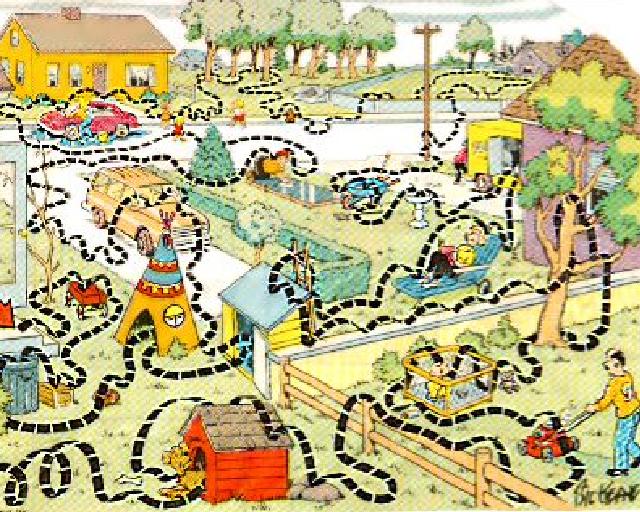
A few weeks back I mentioned new NASA photos of the moon and noted that the footprints and tracks of astronauts reminded me of those Family Circus panels where Billy — or was it Jeffy? — took some circuitous route home, symbolized by dotted lines throughout his neighborhood.

Here is the NASA photo:

And here is the Family Circus panel:

Well, Family Circus has its fans. They might not be quick to do Internet searches, but they will look up online references to the strip.

On Friday, this blog saw hundreds of page views sparked by Internet searches for “Family Circus Billy” or some variation on those words.

In online terms, hundreds of page views isn’t that many. In my day job, it’s typical for a story to get thousands of page views.

But for this little blog, hundreds of views is a big deal.

Seeing all those big numbers, I briefly flirted with the idea of turning this blog into an online shrine to the Family Circus.

But then I thought, what would I say about the Family Circus every day? How many times could I recap those classic “Not me!” panels?

So I decided to note the anomaly here and move on. Maybe I’ll never get those page views again.

Or maybe I’ll just do an occasional look at those “Ghostly grandparents watching over the kids” panels.