Monthly Archives: February 2012

‘Alcatraz’ probes deeper with ‘Paxton Petty’

After an episode last week that, for the first time, explored what happened when a decades-missing guard returned from … somewhere … Fox’s “Alcatraz” returned to its returning-prisoner-of-the-week format tonight with “Paxton Petty.”

Petty — like the other 300-plus Alcatraz prisoners and guards who disappeared in 1963, only to return in the present day without having aged a day — shows up in modern-day San Francisco and returns to his old hobby. In Petty’s case, that means planting and exploding land mines.

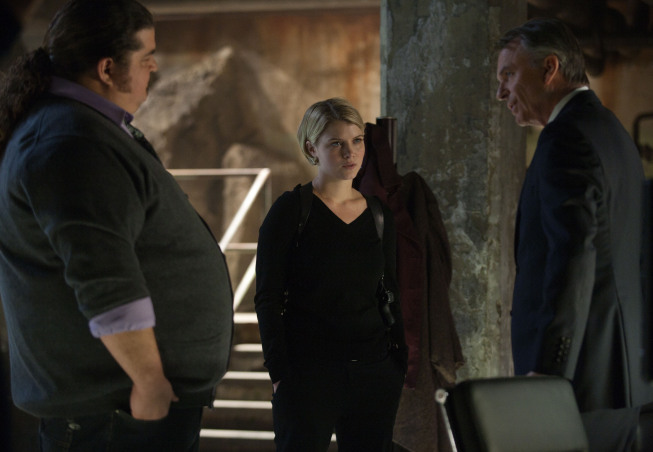
Houser (Sam Neill), Madsen (Sarah Jones) and Soto (Jorge Garcia) track down Petty with relative ease, but the twist this week is that Houser, head of the special task force tracking down the returning “sixty threes” and a San Francisco cop back in the day, gets captured by Petty and stuck on top of a land mine. Madsen and Soto must rescue him.

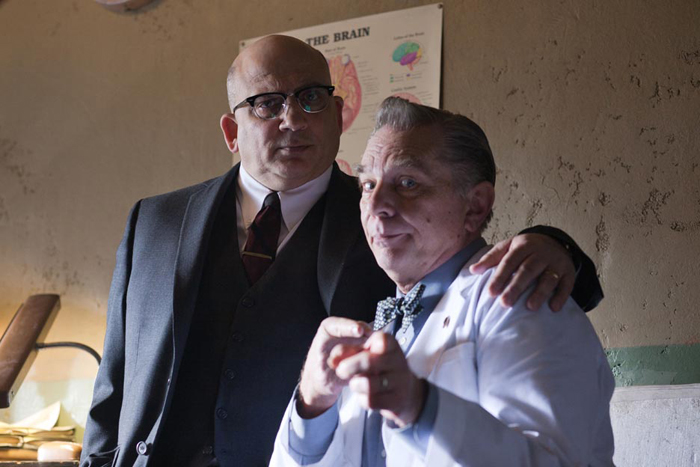
The show mythology subplot this week, though, is more intriguing. Dr. Lucy Banerjee (Parminder Nagra), a modern-day expert working on the case, has appeared in several flashbacks to the 1960s and the show seems to be implying that Banerjee — like the mysterious and sinister Dr. Beauregard (Leon Rippy) — was one of the missing “sixty threes” and has now returned.

The show is slowly building its mystery, teasing us with what Houser and other characters who bridge both eras know. Eventually we’ll know as much (or little) as Madsen and Soto.

“Alcatraz” has potential, and very well might be working toward the level of mind-teasing drama that “The X-Files,” “Lost” and “Fringe” eventually reached.

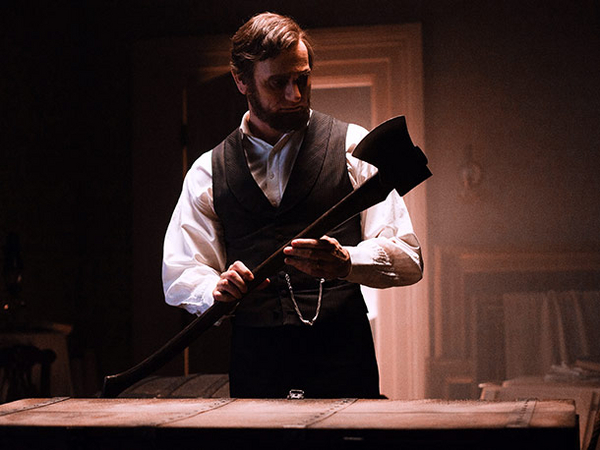
Trailer for ‘Abraham Lincoln: Vampire Hunter’ looks good

As previously noted in this blog, Seth Grahame-Smith’s “Abraham Lincoln: Vampire Hunter” is a fun book with a title that makes you roll your eyes.

The movie version is coming out this summer and a teaser trailer was released today.

Here’s a link to the trailer on Aint It Cool News.

So far, so good.

‘The Walking Dead’ reminds us of stranger danger

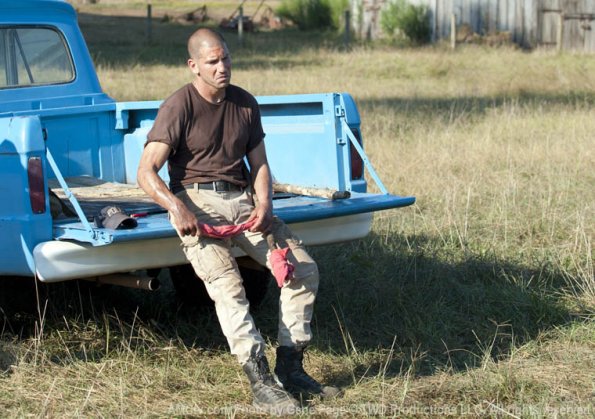
AMC’s “The Walking Dead” returned with its mid-season premiere tonight and emphasized that old zombie story truism: Other surviving humans can be more dangerous than walkers.

A lot of people complained when the first half of the hit show’s second season spent so much time on Herschel’s farm. I enjoyed the dramatic and soap opera aspects of the season — Lori’s unplanned pregnancy, Shane’s descent into madness, Glenn’s budding romance with Herschel’s daughter — but I was getting pretty restless too.

And somewhere in the back of my mind, I’m giving the show only so long to get off that farm and back on the road.

Tonight’s episode, “Nebraska,” showed the fallout from the end of the first half of the season. The band of survivors discovered that Herschel’s barn was full of walkers. Some of them were his family members, as Herschel mistakenly believed they might be cured.

Most horribly, Sophia, the long-missing daughter of Carol, was one of the walkers in the barn.

Truth be told, there was still a little too much talk in tonight’s episode, as the survivors cleaned up after the zombie massacre and Rick and Glenn went off to the nearby town to find Herschel, busy crawling into a bottle in what’s apparently the last intact bar in Georgia.

Aside from the zombie burying and zombie burning, not a lot happened until near the end of the episode, when two strangers show up.

There’s been a lot of online speculation that the two might be important characters for the rest of the season, but that’s not the case. They might spark some movement among the survivors, however, and that’s good.

The preview for next week’s episode showed that Rick and company run into friends of the strangers they confronted at the end of tonight’s episode, while a walker gets a little to close to Lori, who had an unfortunate accident tonight.

I’ll be tuning in again next Sunday, hoping that the remaining five episodes of the season get the survivors on the road again — at least long enough to get to their next destination.


King’s ’11/22/63′ does time travel right

Every science fiction author has tried his or her hand at a time travel story, sometimes more than once. Some do well, avoiding the cliches — what if I accidentally kill my own grandfather? — and others jump headfirst into the eddies and paradoxes of the time stream.

A couple of notable time travel stories — both made into movies, with vastly different results — are Ray Bradbury’s 1952 short story “A Sound of Thunder,” in which future big-game hunters use the available time travel technology to travel into the distant past to hunt dinosaurs, and Richard Matheson’s 1975 novel “Bid Time Return,” in which a lovestruck modern-day man wills himself into the past to meet an actress from an old photograph.
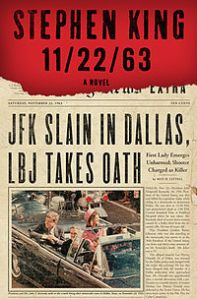
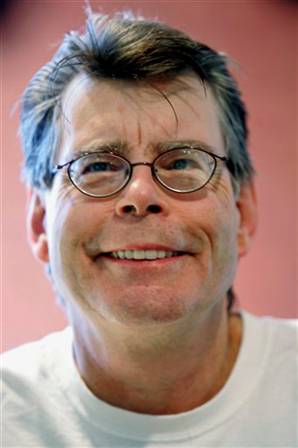
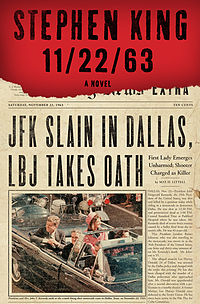
Stephen King’s latest book, “11/22/63,” has echoes of both stories — the former in that its protagonist worries what might happen if he goes back in time and changes history and the latter in that a love lost in time is a central theme.

In the afterward to his 800-plus page book, however, King says he thinks Jack Finney’s “Time and Again” is “the great time travel story.”

Finney’s book, about a time-traveling tourist of sorts, also seems to be an influence on King’s novel.

King tells the story of Jake Epping, a teacher from modern-day Maine who reacts with disbelief when a friend tells him he’s stumbled upon — literally — a doorway back into time. A time portal is hidden in a little-used storage closet in the back of a diner in a small Maine town and the diner’s owner, Al, wants Epping to complete a mission that he could not: Save John F. Kennedy from assassination.

It seems that Al discovers that the time portal goes back to the same day — indeed, even the same minute — in 1958. Al has been going back and forth for years, enjoying his visits to the past and, while he’s there, buying cheap ground beef and bringing it back to the future. His suspiciously inexpensive hamburgers aside, Al has become fixated on a plan to save JFK from Lee Harvey Oswald’s bullets that fateful day in Dallas in November 1963.

Since this is a King story and King is known for his acknowledgement of human mortality, something goes wrong: Al is dying from cancer and is, in fact, likely to die before he can complete his mission. You see, he’s already gone back to 1958 and lived for several years in the past, waiting for the right moment to stop Oswald or anyone else with plans to kill the president.

So Al recruits Jake, urging him to go into the past and save JFK. If Jake is successful, Al believes all of modern history will turn on a dime and the world will be greatly improved. Vietnam might end early, saving the lives of thousands; Bobby Kennedy and Martin Luther King Jr. might never be assassinated. The potential world-changing events are nearly endless.

Of course, Al is right, but not in the way he believes.

Jake, who takes some convincing, has another mission in mind as well. The school where he teaches employes a janitor who, in the course of an adult education class, writes a story about the harrowing night in October 1958 when his father wounded him horribly and killed his mother and siblings. Jake reads the paper and is haunted by it.

Since Jake will materialize in the past just a month before that happens, why can’t he stop the familial slaughter then head for Dallas?

King’s readers know that the author wouldn’t let his characters move as cleanly and easily through the events of the story as all that.

One of my favorite elements of “11/22/63” is King’s theory that the past doesn’t want to be changed. More than the dangers of changing the flow of history — and the book dramatically details those — Jake finds there’s real danger in trying to effect change in the time stream. If you try to make a little change, the past pushes back in a little way. Maybe you get a flat tire or the stomach flu.

If you try to make a big change — and what change could be bigger than saving Kennedy? — the hands of time pummel your ass.

King’s book, which makes 800 pages read more like 400, takes its time with its characters. The first section is about Jake’s efforts to save the lives of the janitor’s family in 1958. The second is about the years between that time and Kennedy’s assassination, when Jake lives, under a new identity, in a small Texas town. It’s during this time the stakes start getting higher. Jake not only begins to find out everything he can about Lee Harvey Oswald but also falls in love with a troubled young woman working at the school.

The final section of the book is a propulsive countdown to Kennedy’s arrival in Dallas, with Jake facing very long odds in his effort to change history.

King loads his book with wonderful plot points, from how Al and later Jake subsidize their stay in the past to little details about the period and the towns where the story takes place. He even finds time to make reference to “It,” his creepy novel about a killer clown in a small Maine town.

You’ve probably read and seen dozens of time travel stories and maybe even more than a few about the Kennedy assassination (the 1980s TV remake of “The Twilight Zone” had a good one, “Profile in Silver”).

But few in recent memory explore the concept as cleverly and with as much emotion as King’s latest novel.
 

Great sci-fi TV … and not so great (part one)

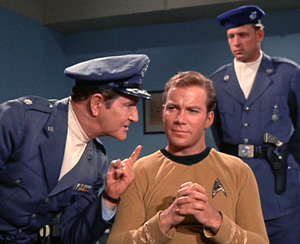
I was watching a few scenes of “Tomorrow is Yesterday,” a classic 1967 episode of “Star Trek,” the other week. My son looked up from his iPod during a fight scene.

“That is so cheesy,” he said, his voice dripping with good-natured scorn. “He didn’t even hit him.”

He was right. The on-screen fight scene between Kirk (William Shatner) and a group of military police officers didn’t rank up there with the most realistic screen pugilism ever. Kirk draws back, throws a right cross … and visibly misses the MP by a mile.

But still.

“Tomorrow is Yesterday” is a great episode of the original series and a great episode of TV science fiction.

Little more needs to be said about what made “Star Trek” as great and enduring as it is. But the exchange with my son made me think about the differences between good TV sci-fi and bad.

So, in a blog entry that will, with any luck, be recurring, a few thoughts on a good sci-fi TV series as well as one that’s not so good.

And yes, I have few doubts that even the series that I choose to pick on here have fans. And I’m a fan of some elements of even those shows, and I’ll cite those elements. But there’s no comparison between the great ones and the not-at-all-great-ones.

This time around: “Star Trek” vs. “Lost in Space.”

(Some of) what makes “Star Trek” great:

1. The show employed some of the greatest writers working in TV and science fiction in the 1960s, and they produced great scripts. Robert Bloch’s “What Are Little Girls Made Of” was an ultra-creepy tale of android love. Theodore Sturgeon’s “Shore Leave” showed that “Star Trek” mixed whimsy and suspense better than anyone. Frederic Brown’s “Arena” was adapted into a gripping episode featuring Kirk one-on-one with a man-sized lizard (hampered only by the makeup and costume limitations of the day).

2. Episodes were so good they were not only memorable for decades to come but provided fodder for sequels and remakes. “The Trouble with Tribbles” spawned a cottage industry in homemade fur balls — as well as enduring love — among fans. “Space Seed” created a memorable character in Ricardo Montalban’s Khan, who inspired the best of the “Star Trek” big-screen roles.

3. Episodes were as formulaic as much of what appeared on TV in the mid-to-late 1960s but transcended most of the competition to prove as lasting as anything ever on TV. Even with today’s mania for remaking old pop culture, only a handful of shows from the time — “Mission: Impossible” comes to mind — are still in the public mind. How’s that big-screen version of “The Virginian” coming?

4. The show was remarkably consistent to its characters. How many shows before, during and after were filled with characters who veered wildly between sensible and nonsensical, bold and mild, jokey and humorless depending on the plot contrivances of the week? Not “Star Trek.”

5. And speaking of characters: “Star Trek” creator Gene Roddenberry and the writers decided they needed a strong triangle of characters to lead the show, so they created man of action Kirk, cerebral Spock and emotional McCoy. Viewers could enjoy the interpersonal dynamic but the triangle also served the plot, with McCoy and Spock acting as antagonists, virtual angel and devil on Kirk’s shoulders, the voices of reason and emotional appeal.

6. Here’s a bonus: For all its space cowboy action, “Star Trek” was remarkably tolerant and progressive in its attitude toward humanity (aliens included) and the dignity of individuals. Why else would the show’s Federation have the Prime Directive, forbidding interference in less-developed cultures? (Okay, so they skirted that directive a few times. Or more than a few.)

(Some of) what makes “Lost in Space” far from great:

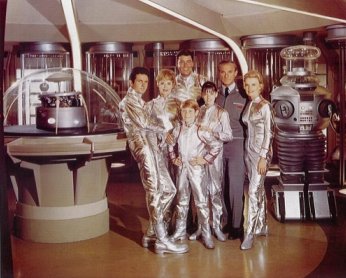
1. They bungled a good premise. A space-faring version of “Swiss Family Robinson,” the series could have shown in realistic (even for 1960s TV) manner the dynamics of a family separated from society and fending for itself. But except for a few episodes from the first, more serious season, the show lived firmly in the land of campy entertainment.

2. They let one character run away with the show. Not until Fonzie stole “Happy Days” a decade later did one character — Dr. Zachary Smith, a stowaway on the Jupiter 2 spacecraft — so come to dominate a series, to its detriment. Jonathan Harris — an enjoyable character actor — became more and more the central figure and the other characters faded into the (chintzy) background.

3. The other characters were one-dimensional. The team’s leader and literal father figure, John Robinson, was square and boring. Wife Maureen was usually inside puttering in the kitchen. Major Don West walked into camera range, threatened or insulted Smith, then stalked away.

4. The storylines. Stuck on a random planet for the first season (and then another for the second), the plots usually involved some improbable menace showing up, scaring Dr. Smith, threatening the Robinsons and then being defeated. Yawn.

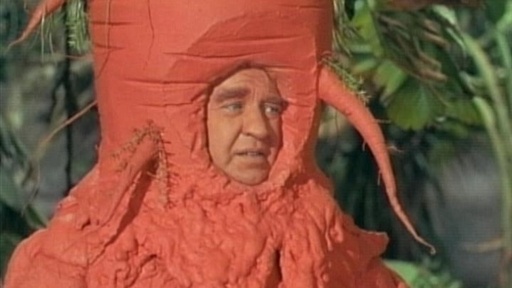
5. The budget/costumes/effects. Say what you will about the limitations of “Star Trek,” but “Lost in Space” reached the depths of “The Great Vegetable Rebellion,” with actor Stanley Adams in a carrot suit.

Case closed.

More next time.

Pop culture Mort Report

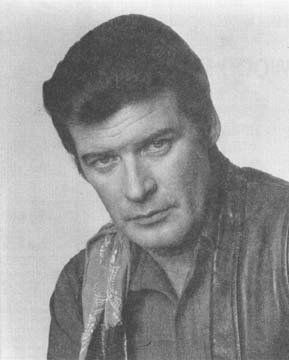
The recent death of Peter Breck, best known for his role as Nick Barkley in the 1960s western TV series “The Big Valley,” made me think about an occasional entry here making note of the passing of some pop culture — particularly geek pop culture — figures.

These won’t be weighty obituaries and don’t be surprised if important figures in the world of art or government aren’t included. I’ll just throw out a picture and a quick note of what they meant to me.

Breck was one of those dependable looking guys who populated 1960s TV series. “The Big Valley” was something of a gender-reveral “Bonanza” best known for employing Barbara Stanwyck late in her career as the matriarch of a ranch. Breck was the most gruff of the three sons on the show, the others being played by Richard Long and Lee Majors.

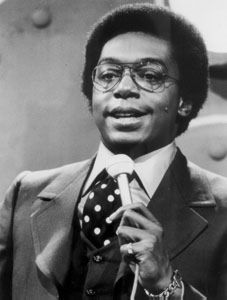
There’s been plenty of note of the passing of Don Cornelius and Ben Gazzara. Cornelius was best known for hosting “Soul Train,” the coolest and in many ways hottest of TV dance shows.

Gazzara was a Method actor best known for movies like “The Killing of a Chinese Bookie,” but pop culture fans know him as the detestable bad guy from the Patrick Swayze classic “Roadhouse.”

Nicol Williamson was another intense actor, this time of the British variety. He brought an offbeat touch to Sherlock Holmes in “The Seven Percent Solution.” Of course he will forever be remembered for his role as Merlin in “Excalibur.”

While we’re talking about Brits, how about Ian Abercrombie? He’s best known as Elaine’s boss on “Seinfeld.” I’ll remember him as a very good Alfred, the Wayne Manor Butler, on the short-lived “Birds of Prey” TV series.

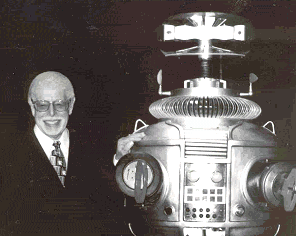
Then there’s Dick Tufeld, who is best known for providing the voice of the robot on the 1960s TV series “Lost in Space.” But Tufeld was a longtime announcer and voice-over talent, the kind of behind-the-scenes figure that made TV work.

The pop culture world was the better for their presence.

‘Lost Girl’ has a ‘Buffy” feel to it

There’s never really been an heir apparent to “Buffy the Vampire Slayer” as TV’s most clever supernatural drama. I’ve never gotten into the “Vampire Diaries” or “Supernatural” habit. “Buffy” and spin-off “Angel” were hard acts to follow.

So there’s something very enjoyable about discovering “Lost Girl,” a Canadian TV series that’s airing on SyFy, the former Sci-Fi Channel.

With the exception of “Alphas,” the “X-Men” style series about a group of super-powered government agents, I can’t abide much of what SyFy airs. Aside from a grab-bag of awful and intentionally awful movies, ghost-hunting shows and wrestling — the hell, SyFy? — there hasn’t been much there for me since “Battlestar Galactica.”

So after hearing TV experts like Maureen Ryan praising “Lost Girl,” I decided to check out the show.

“Lost Girl” is about a woman named Bo who works as a bartender and occasionally feeds, somewhat like a vampire, on assorted passersby. Bo, played by the striking Anna Silk, befriends Kenzi (Ksenia Solo), a young human grifter who is saved by Bo from a date rapist.

Bo saves Kenzi by feeding on the jerk, kissing him and sucking his life force out.

Bo and Kenzi are captured by agents of the Fae, supernatural creatures who have been living below the radar among human society for thousands of years.

The Fae tell Bo she’s a succubus, a super tough, super sexy predator. For Bo, abandoned by her parents as a baby, that explains a lot.

They also tell Bo that she must choose to join either the Light or the Dark Fae clans.

Bo proves herself in battle and wins the leverage to decline to join either group.

During the course of the early episodes, Bo and Kenzi move through a tough urban landscape, trying to avoid the Fae for the most part but being drawn into their battles.

The series has a straightforward, even flat look that reminds me more of “Law and Order” or some other police procedural than a supernatural series. The cast, led by the seductive Silk and the pert, spunky Solo, is totally unknown to me — hello from north of the border, eh? — but appealing.

The biggest surprise of the series is the tart, clever writing. Bo and particularly Kenzi are given more than a few sharp, funny lines. “Boy, you don’t know how to read women,” Bo tells one potential love interest. In another episode, a Will o’ the Wisp who seeks Bo’s help is a paunchy, slovenly type. “I struggle with my weight,” he acknowledges.

“Lost Girl” has been running for a couple of seasons on Canadian TV but has only just started on SyFy. It’s pretty cool to discover a sexy, funny series with more than a few episodes to air. If the show works out, it could be a longterm relationship.


‘Justified’ ‘Devil You Know’ brings back some favorites

When you’re playing with as enjoyable a cast of supporting characters as the writers of “Justified,” you can spread the attention around.

In “The Devil You Know,” the episode of “Justified” that aired on FX tonight, the great supporting cast of lowlife bad guys — Dickie Bennett, Dewey Crowe and Devil, the Boyd Crowder subordinate who took a cast iron skillet to the puss a few weeks ago, all have plenty to do.

Dickie and Dewey get broken out of prison — well, Dewey comes along for the ride — when a group of crooks want Dickie to lead them to a cache of money that belonged to Dickie’s beloved late mama, Mags Bennett.

Meanwhile, Devil decides he’s going to rebel against Boyd Crowder (Walton Goggins), the series’ wild card and strong suit. Devil learns, the hard way, that crossing Boyd in favor of Quarles — the slick new out-of-town crime boss who wants to muscle in on Kentucky crime — is a bad idea.

I haven’t mentioned Raylan Givens, the U.S. marshal and central figure of the show. He’s seen here tonight doling out some justice with his federal-issue vehicle and visiting Loretta, the youngest and smartest of the Bennett clan that dominated the show’s second season.

There’s also a nice scene with the marshals and Limehouse, the leader of a black community and his own prosperous criminal organization.

“Justified” is having a lot of fun this season, setting up a new pack of bad guys and strengthening old favorites like Boyd. It’s a lot of fun to watch.

‘Amazing Spider-Man’ has an amazing trailer

Just a couple of days after the commercial for “The Avengers” — “We have a Hulk” — became my favorite minute of the Super Bowl, along comes a spider.

Well, a Spider-Man anyway.

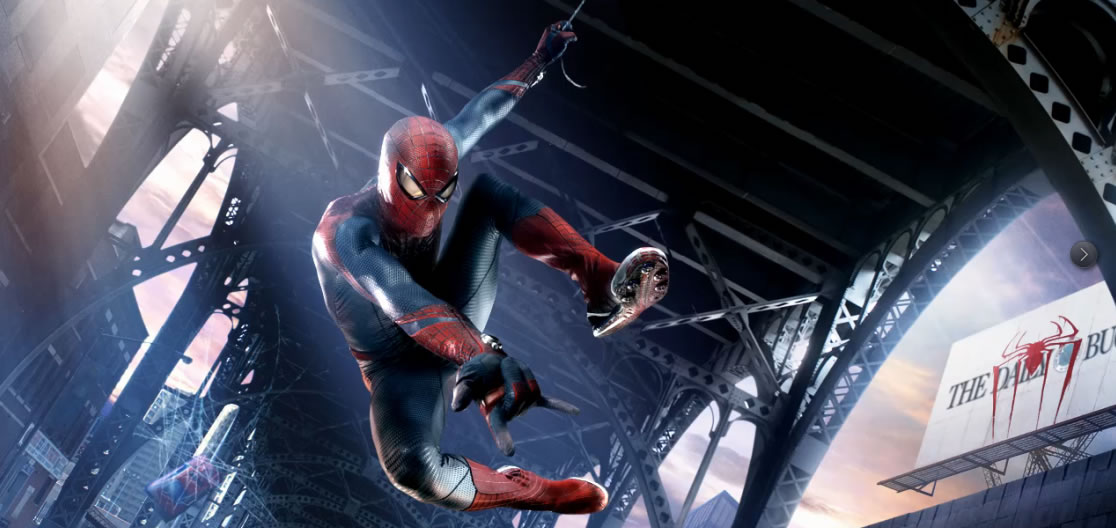
The trailer for this July’s “Amazing Spider-Man” debuted online today.

Maybe I’m getting to be a soft touch, but I wasn’t looking forward to this movie at all and the trailer sold me.

The Spider-Man seen in the trailer for Marc Webb’s reboot is a familiar one to Marvel Comics readers. He’s young and smart and, maybe most importantly, kind of a smart ass. The Spider-Man from the comics was — and is — a quipster, the kind of guy who is prone to lobbing insults and sarcastic remarks as often as he shoots webs or throws punches.

Admittedly, it’s not the equal of having Spidey insult the Kingpin, but the moment in the trailer when our hero makes fun of a thief’s outfit seems like vintage Spidey.

I liked Sam Raimi’s “Spider-Man” movies just fine (at least the first two) and I’m not sure we needed a reboot. Sony apparently thought otherwise, launching the remake in part to keep a handle on the big-screen rights.

And I’m not sold on the “mysterious origins” of Peter Parker and his parents. I almost wish they hadn’t remade Spidey’s origin at all, or had simply retold it over the opening credits.

But anyway. The trailer is dynamic enough, and visually pleasing enough, that I’m now looking forward to this, right along with “The Avengers.”

‘Alcatraz’ widens its mystery

I’ve got my fingers crossed.

Tonight’s “Alcatraz” — the Fox show about how 300 prisoners and guards disappeared from the island prison in 1963, only to reappear in the present without aging a day — took the show in a new direction, and that’s a good thing.

As intriguing as the first few weeks of the show have been, “Alcatraz” threatened to turn into “returning prisoner of the week.” A guy shows up in modern-day San Francisco, commits a crime, the team of investigators recognize him as one of the former prisoners, they track him, catch him and throw him in a creepy modern-day version of the prison, out in the woods somewhere.

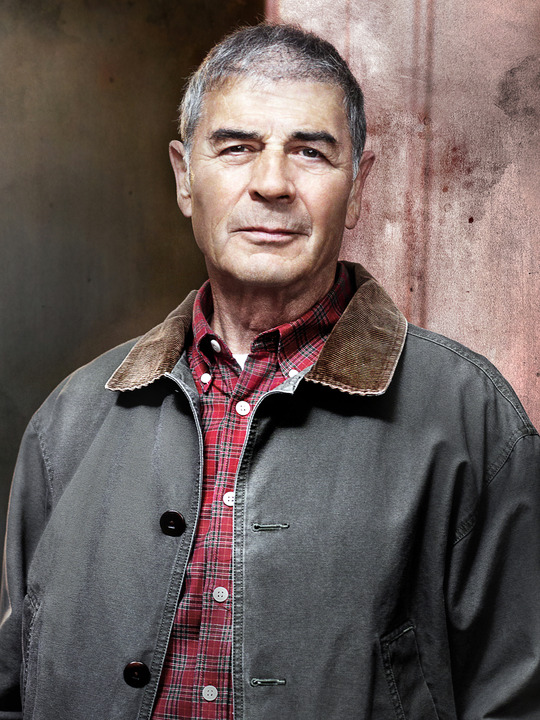
In tonight’s episode, “Guy Hastings,” the first returning guard shows up. Hastings is a good guy but initially seems as bad as the escaped prisoners, roughing up and kidnapping investigator Rebecca’s (Sarah Jones) beloved Uncle Ray (the equally beloved character actor Robert Forster).

Thanks to the change-up and an expanded role in the story for Rebecca’s grandfather, an Alcatraz returnee who’s up to something, the episode felt pretty fresh.

And the series benefits immeasurably from the presence of Forster, a veteran of B-movies and cult classics like “Jackie Brown.” It’s startling to see how Forster has aged — gracefully certainly — but his appealing mug and gravelly voice are reassuring as anything on TV right now.

The show has apparently been doing pretty well in the ratings and the producers have recently promised that future episodes will continue to mix things up, deviating from the prisoner of the week stories.

“Alcatraz” still has me hooked.