Daily Archives: March 4, 2012

Shocker ending for ‘Walking Dead’ ‘Judge, Jury and Executioner’

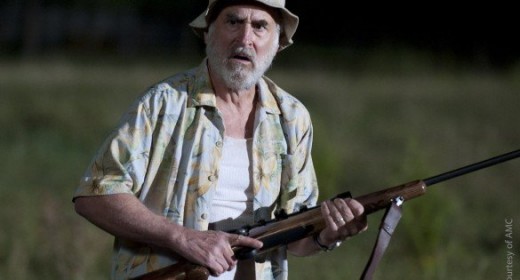
At some point in tonight’s episode of “The Walking Dead,” Daryl tells Dale, “The group is broken.” Dale, as the conscience of the group of survivors of the zombie apocalypse, doesn’t want to believe that’s the case.

Late in the episode, however, Dale echoes Daryl’s sentiments.

Tonight’s episode of AMC’s “Walking Dead,” “Judge, Jury and Executioner,” at first glance promised to be another talky, soap-operatic episode. Hershel gave Glenn his blessing in his relationship with his daughter. Dale appealed to the rest of the group for leniency for Randall, the hapless interloper they took prisoner. Andrea, who’s been closer to Shane than anyone recently, ultimately backed Dale’s stance.

But the episode was punctuated by a couple of notable moments:

Carl, Rick and Lori’s son, decided to go on a dangerous walkabout, encountering a zombie in a scene that provided some edge-of-the-seat suspense.

And the ending …

Spoilers ahoy!

After Dale makes an emotional appeal to spare Randall’s life in the show’s version of “Twelve Angry Men,” he succumbs to a random zombie attack out in a field on the periphery of the farm.

As Dale lays dying, Carl realizes the zombie who killed Dale is the one he encountered in the woods and couldn’t kill.

As if Carl didn’t have enough of a screwed-up future ahead of him.

Two more episodes remain in the season.

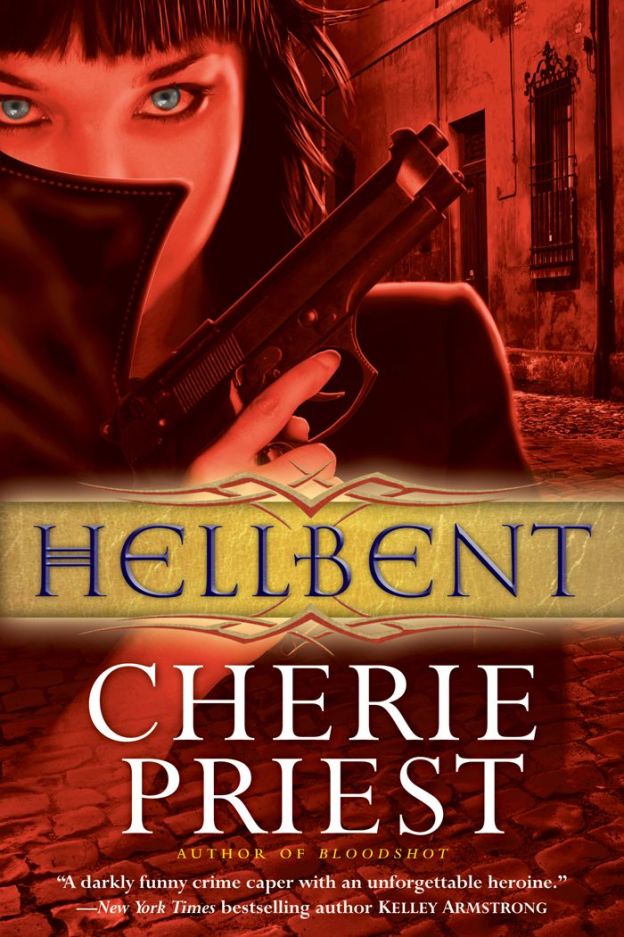
Cherie Priest says get ‘Hellbent’

I have to admit the “urban fantasy” genre was new to me. Or maybe it wasn’t, but I just never heard it called that. I gather it’s a genre of fiction that involves vampires and werewolves and things of that nature (emphasis on the “things” part) but instead of hanging out in Transylvania they’re duking it out in the streets of NYC or San Francisco.

I became a Cherie Priest fan through her “Clockwork Century” steampunk books like “Boneshaker,” which is being made into a movie.

But I decided to try Priest’s urban fantasy book “Bloodshot” and was impressed. Priest is a master at finding the right tone for the period of her stories. The steampunk books are set in the late 1800s and “Bloodshot” and its sequel, “Hellbent,” are modern-day urban fantasies (there’s that phrase again) featuring a vampire named Raylene Pendle.

Pendle wears a lot of hats (not literally, although we do find out a lot about her wardrobe) here. She’s a vampire, a master thief, a kick-ass fighter and someone who acknowledges her own “issues,” including a healthy dose of obsessive compulsive disorder.

I don’t mean the “check the stove, check the door, check the stove” type of OCD (all too familiar to me). Raylene is self-proclaimed OCD in her worries over planning her missions. She acknowledges she takes too much stuff when she’s about to knock over a stronghold and steal some artifact (for a price). But Raylene doesn’t get bogged down in details when a case heats up. She’s got the super strength and super speed of a supernatural being and not afraid to take risks.

In “Bloodshot,” Raylene found her solitary existence in a made-over warehouse in Seattle changed by a couple of young humans she protects as well as a blind vampire, Ian, and a Navy Seal/drag queen named Adrian. About Adrian: Strangely enough, the character works and is totally appealing. A lot of pop fiction characters have a sidekick and Adrian is like Spencer’s Hawk — only he knows how to apply makeup.

In “Hellbent,” Raylene takes on one task for pay — the retrieval of several artifacts that are offbeat, to say the least — and one (maybe two) tasks that are personal in nature — working to clear up Ian’s status with his old vampire “house” (read family) and looking for Adrian’s missing sister.

That’s a lot of plot strands already, but Priest introduces another to the mix: Her competitor for the artifacts is the ultimate version of a woman wronged: A middle-aged woman with her own mental illness who uses magic to get vengeance.

The storylines don’t jell as well as they should, but there’s an appealing quality to the unsettled nature of the plot. “Hellbent” feels like a book that’s building to something, but there’s a good resolution to the story at the end so readers won’t feel cheated.

Above all, Priest’s characters are winning. None are more so than Raylene herself, who is as likable as an undead killing machine can possible be. How likable is that? Pretty damn likable, as it turns out.

It’s impressive that Priest has created two book series that feel as different as her steampunk and urban fantasy books. They read as if they’re by different authors, although both have Priest’s knack for appealing characters.

And “Bloodshot” and “Hellbent” have something else: A funny, dangerous heroine who will, hopefully, grace the supernatural world with her presence again soon.

The Great Newspaper Comics Challenge Part 3

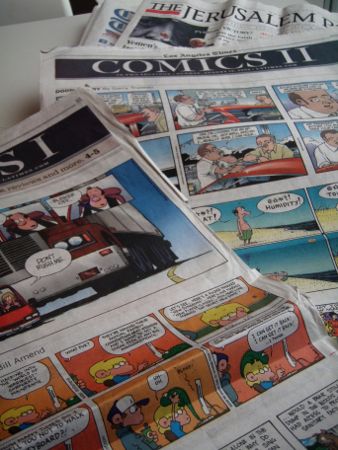
I’m way overdue for a look at the funny pages in this, an irregularly recurring look at newspaper comics.

The premise: The glory days of the newspaper comic ended with “Calvin and Hobbes” and “The Far Side,” but there’s still some good stuff out there. And if not good stuff, at least familiar. And you know the old saying: Familiarity breeds content. That was the old saying, wasn’t it?

In today’s Sunday strips:

“Garfield” talks about the weather. Seriously, this strip sums up my feelings about the transition from winter to spring. Standing outside, Garfield experiences sun, snow, rain, hail and wind. “I’m done with March,” he tells Jon.

Weather is the theme of the day. In “Classic Peanuts,” Linus grumbles about having to walk to school in the rain, worrying that he’ll catch  a cold. When he finally sneezes, he takes it as a sign to head for home. One more weather strip in my Sunday paper and I’ll take it as a sign the cartoonists collaborated like they do for those fabulous annual Arbor Day tributes.

“Pickles” actually has a pretty good joke that cat owners can relate to. Two people dispute the possibility that cats really care about people, noting that a neighbor with gourmet cat food could lure the cat away. “Muffin would never do that to me,” the lady says. “Would you Muffy?” The cat thinks — because cats don’t talk — “I’m doing it now. I actually belong to the lady down the street.” No weather.

In “The Wizard of Id,” campaign leaflets are tossed from a balloon and rain down on people below. Does that count as weather?

“Dilbert” features a robot with attitude that calls for a robot apocalypse. Does the end of the world count as weather? I’m sure the Weather Channel would claim it.

In “Hi and Lois,” one of the kids is sick and hopes he misses school. Hmmm. Counting “Peanuts,” maybe the real trend for today is childhood illness.

Meanwhile, Dagwood considers taking a nap at work.

In “Dennis the Menace,” Dennis and Joey try to hit Margaret with a snowball. I think that counts as weather.

In “The Family Circus,” Dad takes a nap and one of the kids gives him a teddy bear. Awwww …. and dammit. Now I think naps are the trend of the day.

“Non Sequitur” has the little goth kid complaining that it’s snowing when it should be spring. I think that settles the matter:

Weather: 6 (right? right?)

Kids too sick to go to school: 2

Grown men taking naps: 2.