Monthly Archives: March 2012

Cherie Priest says get ‘Hellbent’

I have to admit the “urban fantasy” genre was new to me. Or maybe it wasn’t, but I just never heard it called that. I gather it’s a genre of fiction that involves vampires and werewolves and things of that nature (emphasis on the “things” part) but instead of hanging out in Transylvania they’re duking it out in the streets of NYC or San Francisco.

I became a Cherie Priest fan through her “Clockwork Century” steampunk books like “Boneshaker,” which is being made into a movie.

But I decided to try Priest’s urban fantasy book “Bloodshot” and was impressed. Priest is a master at finding the right tone for the period of her stories. The steampunk books are set in the late 1800s and “Bloodshot” and its sequel, “Hellbent,” are modern-day urban fantasies (there’s that phrase again) featuring a vampire named Raylene Pendle.

Pendle wears a lot of hats (not literally, although we do find out a lot about her wardrobe) here. She’s a vampire, a master thief, a kick-ass fighter and someone who acknowledges her own “issues,” including a healthy dose of obsessive compulsive disorder.

I don’t mean the “check the stove, check the door, check the stove” type of OCD (all too familiar to me). Raylene is self-proclaimed OCD in her worries over planning her missions. She acknowledges she takes too much stuff when she’s about to knock over a stronghold and steal some artifact (for a price). But Raylene doesn’t get bogged down in details when a case heats up. She’s got the super strength and super speed of a supernatural being and not afraid to take risks.

In “Bloodshot,” Raylene found her solitary existence in a made-over warehouse in Seattle changed by a couple of young humans she protects as well as a blind vampire, Ian, and a Navy Seal/drag queen named Adrian. About Adrian: Strangely enough, the character works and is totally appealing. A lot of pop fiction characters have a sidekick and Adrian is like Spencer’s Hawk — only he knows how to apply makeup.

In “Hellbent,” Raylene takes on one task for pay — the retrieval of several artifacts that are offbeat, to say the least — and one (maybe two) tasks that are personal in nature — working to clear up Ian’s status with his old vampire “house” (read family) and looking for Adrian’s missing sister.

That’s a lot of plot strands already, but Priest introduces another to the mix: Her competitor for the artifacts is the ultimate version of a woman wronged: A middle-aged woman with her own mental illness who uses magic to get vengeance.

The storylines don’t jell as well as they should, but there’s an appealing quality to the unsettled nature of the plot. “Hellbent” feels like a book that’s building to something, but there’s a good resolution to the story at the end so readers won’t feel cheated.

Above all, Priest’s characters are winning. None are more so than Raylene herself, who is as likable as an undead killing machine can possible be. How likable is that? Pretty damn likable, as it turns out.

It’s impressive that Priest has created two book series that feel as different as her steampunk and urban fantasy books. They read as if they’re by different authors, although both have Priest’s knack for appealing characters.

And “Bloodshot” and “Hellbent” have something else: A funny, dangerous heroine who will, hopefully, grace the supernatural world with her presence again soon.
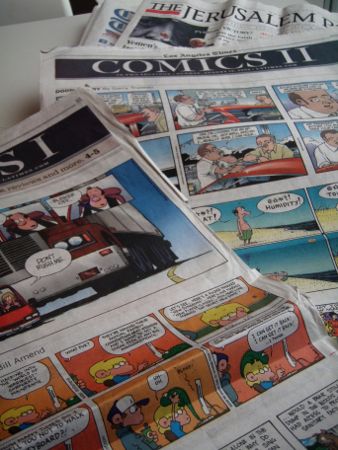
The Great Newspaper Comics Challenge Part 3

I’m way overdue for a look at the funny pages in this, an irregularly recurring look at newspaper comics.

The premise: The glory days of the newspaper comic ended with “Calvin and Hobbes” and “The Far Side,” but there’s still some good stuff out there. And if not good stuff, at least familiar. And you know the old saying: Familiarity breeds content. That was the old saying, wasn’t it?

In today’s Sunday strips:

“Garfield” talks about the weather. Seriously, this strip sums up my feelings about the transition from winter to spring. Standing outside, Garfield experiences sun, snow, rain, hail and wind. “I’m done with March,” he tells Jon.

Weather is the theme of the day. In “Classic Peanuts,” Linus grumbles about having to walk to school in the rain, worrying that he’ll catch  a cold. When he finally sneezes, he takes it as a sign to head for home. One more weather strip in my Sunday paper and I’ll take it as a sign the cartoonists collaborated like they do for those fabulous annual Arbor Day tributes.

“Pickles” actually has a pretty good joke that cat owners can relate to. Two people dispute the possibility that cats really care about people, noting that a neighbor with gourmet cat food could lure the cat away. “Muffin would never do that to me,” the lady says. “Would you Muffy?” The cat thinks — because cats don’t talk — “I’m doing it now. I actually belong to the lady down the street.” No weather.

In “The Wizard of Id,” campaign leaflets are tossed from a balloon and rain down on people below. Does that count as weather?

“Dilbert” features a robot with attitude that calls for a robot apocalypse. Does the end of the world count as weather? I’m sure the Weather Channel would claim it.

In “Hi and Lois,” one of the kids is sick and hopes he misses school. Hmmm. Counting “Peanuts,” maybe the real trend for today is childhood illness.

Meanwhile, Dagwood considers taking a nap at work.

In “Dennis the Menace,” Dennis and Joey try to hit Margaret with a snowball. I think that counts as weather.

In “The Family Circus,” Dad takes a nap and one of the kids gives him a teddy bear. Awwww …. and dammit. Now I think naps are the trend of the day.

“Non Sequitur” has the little goth kid complaining that it’s snowing when it should be spring. I think that settles the matter:

Weather: 6 (right? right?)

Kids too sick to go to school: 2

Grown men taking naps: 2.


‘Star Wars’ designer Ralph McQuarrie dies

The man who shaped the look of the “Star Wars” universe has died.

Ralph McQuarrie might not be a household name like Harrison Ford and probably isn’t as familiar to movie fans as “Star Wars” creator George Lucas.

But McQuarrie — born in Gary, Indiana, in 1929, died today — is responsible for the designs and images we think of when we think of the “Star Wars” films.

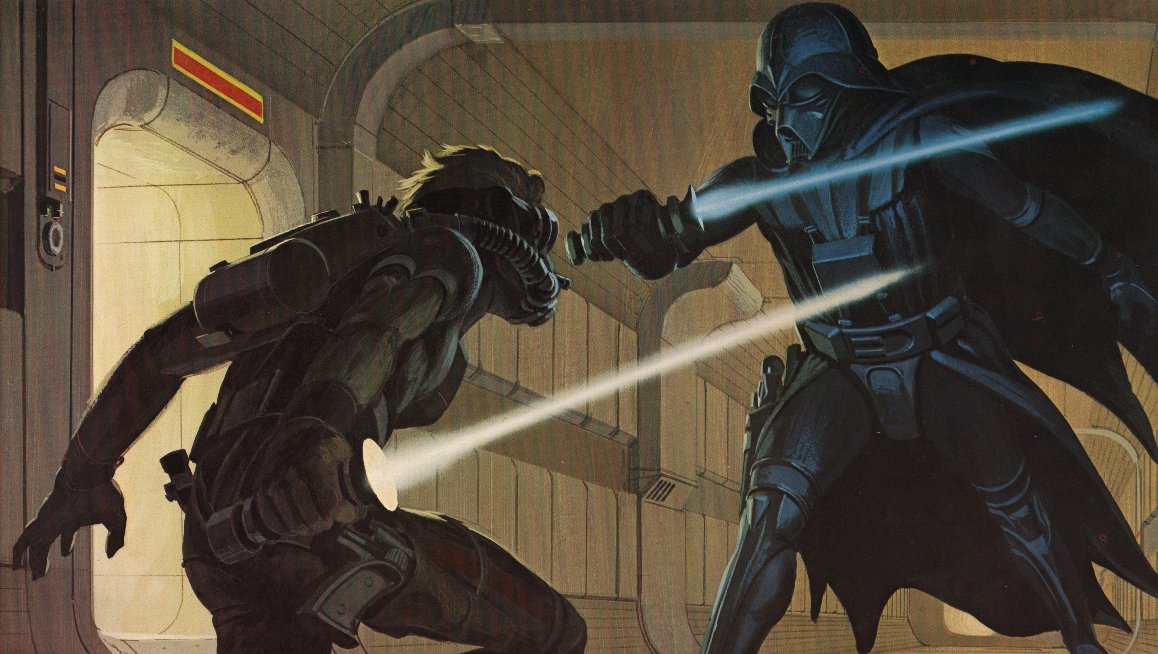
McQuarrie was chosen by Lucas to create concept art for the first “Star Wars” movie to help Lucas sell the idea to 20th Century Fox. McQuarrie painted the figures, weapons, ships and worlds used in the film. They are images indelible in the collective memory of movies and pop culture.

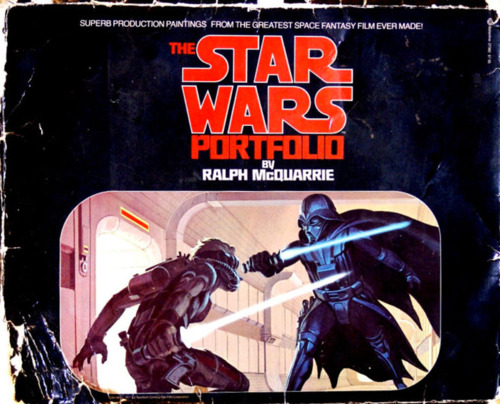
For fans like me, caught up in the imaginative world of “Star Wars” when the movie was released in 1977, McQuarrie’s “Star Wars Portfolio” was a must-have item that’s still on my bookshelf. I spent countless hours studying McQuarrie’s paintings.

The portfolio collected prints of the paintings of McQuarrie, showing the early looks of the characters. His design for Darth Vader is surely one of the most familiar figures from movies — ever.

What always fascinated me about McQuarrie’s designs was the little differences between the concept he visualized as the finished movie: Pointy ears on Chewbacca. Headbands and beards on some of the characters. Gender differences (as Lucas refined his story and characters). Characters other than Jedi using lightsabers.

McQuarrie painted designs for other films, including “Close Encounters” and “Cocoon,” for which he won an Oscar. “Star Wars” made him a legend.

McQuarrie and his talent will be missed.

‘The Avengers’ trailer: Is that Fin Fang Foom?

Okay, we’re plunging deep into geeky waters here.

A couple of days ago, Marvel released the latest trailer for “The Avengers.” The preview was a huge hit with fans — a record-setting 13.7 million views in its first 24 hours on iTunes — some of whom lay down their skepticism about the Joss Whedon movie thanks to the character moments and big action scenes included.

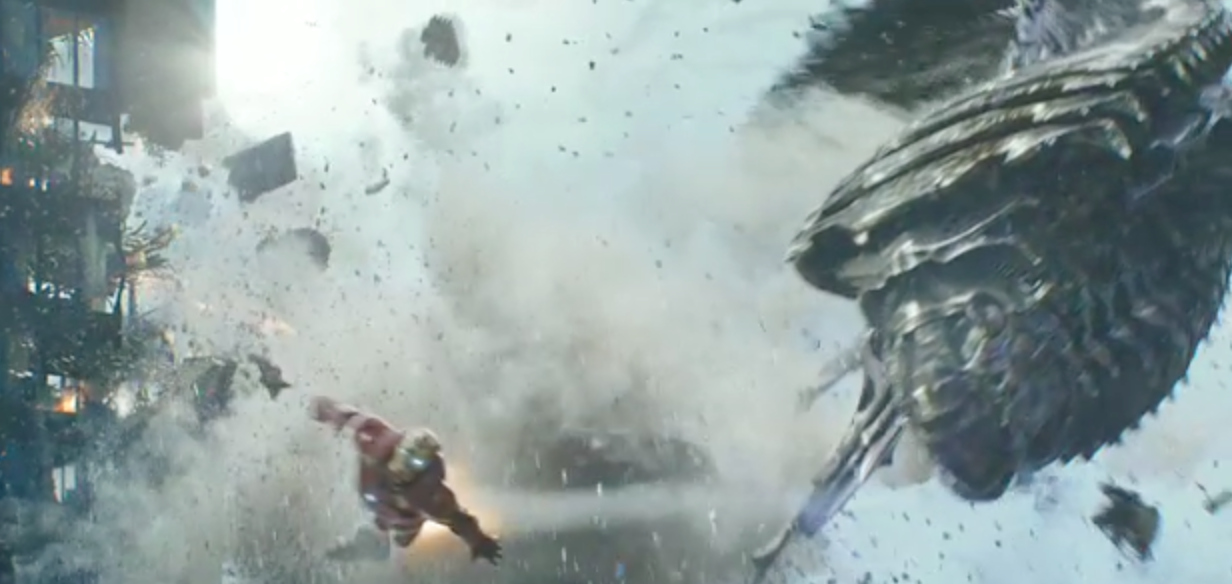
And what an action scene at the end of the trailer, as Iron Man is pursued through the concrete canyons of New York by a huge flying serpent thing.

There’s been a lot of speculation in the days since the trailer debuted online about just who or what the flying serpent is. Is it organic or mechanical? Is it a robot or a ship? (Some observers noted an earlier trailer showed alien warriors jumping from a ship that looked suspiciously like the serpent.)

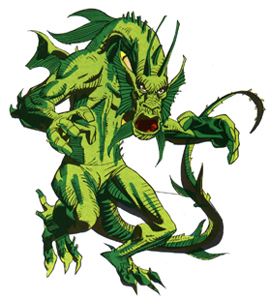
Some of the guesses in the wake of the trailer were particularly geeky, harking back to the early days of Marvel Comics. Could the serpent be Fin Fang Foom?

Let’s all say that together. Fin Fang Foom. Fun, isn’t it? Fin Fang Fun, as a matter of fact.

For all those people who have spent their lives somewhat closer to the heart of reality, an explanation of who (what?) Fin Fang Foom is:

Fin Fang Foom first appeared in Marvel Comics in 1961 as a sort of talkative Godzilla character, a dragon/snake/whatever that reappeared later, when Marvel specialized in superhero comics. Fin — if you’ll allow me to adopt a familiar, first-name basis — fought the Fantastic Four as well as Avengers Thor, Hulk and Iron Man.

Do I really think Fin Fang Foom is in “The Avengers?”

Well, no. Not really.

As over-the-top as a bunch of costumed superheroes might seem, a talking dragon monster might be perceived as a little too … preposterous, shall we say?

I’m guessing the flying snake thing in “The Avengers” is just a particularly eye-catching transport ship for the legions of creatures (Skrulls?) that the good guys will be fighting.

If I’m wrong and Thor blurts out, “By Odin’s beard! That is none other than Fin Fang Foom!” you’ll know geek culture has ascended to the highest halls of Hollywood.

And the “Fin Fang Foom” prequel movie will be, by that point, inevitable.

Hitting the convention floor

Tickets for San Diego Comic-Con International went on sale this morning and, as blogger supreme Mark Evanier tells us, were mostly gone within 90 minutes. When you consider that upwards of 120,000 people attend Comic-Con — which has become a geek mecca as well as the symbol of Hollywood’s newfound interest in geek culture — the pace of ticket sales is pretty remarkable.

I’ve never been to Comic-Con, which is held in San Diego, and I’m not sure that I ever will. As much as experiencing the unimaginable appeals to me, I’m not sure I’m up for that particular experience anymore.

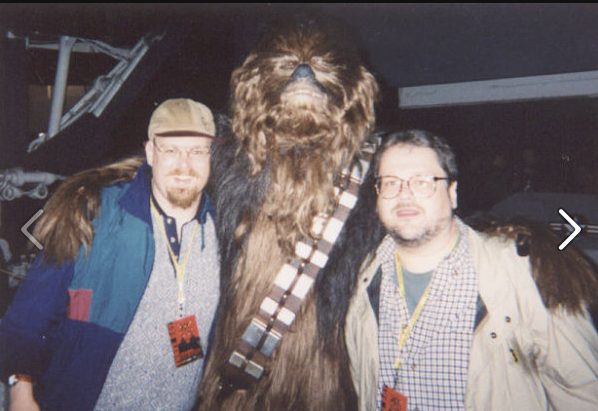
The photo above is of (left to right) my friend Andy, Chewbacca and me and was taken in the spring of 1999 at the first Star Wars Celebration, held in Denver. Andy was a Denver resident then and invited me out to experience the convention, which was in later years staged closer to home (for me) in Indianapolis.

Star Wars Celebration — particularly the later versions, held in the mammoth Indiana Convention Center — is as close as I’ve ever come to attending something of the size of Comic-Con.

If you’ve never attended a convention and you’re even a casual fan of science fiction books and movies, comic books and the like, you should try one, even if only for a day.

During my most active period of fandom, the late 1970s and the 1980s, my friends and I attended conventions all over the Midwest. Chicago, Indy, Cleveland, Columbus … we spent a lot of time on convention floors.

Much of that time included visits to the dealers room, where we bought movie posters, lobby cards, books, magazines, comic books and original art. As our bags got heavier, our wallets got lighter. But we didn’t mind.

Conventions can be overwhelming experiences — the growth of Comic-Con has prompted complaints in recent years — but they’re also fun and self-affirming. If you’ve ever thought you were the only person who truly appreciated “Doctor Who,” “Star Trek” or something much more obscure, conventions will open your eyes. Right in front of you, all around you, you’ll find thousands — sometimes tens of thousands — of other people who share your interest.

Sure, most of them will be standing in the autograph line in front of you, but hey, that’s just demonstrating shared interests, right?

After a decade of con attendance, I grew a little weary of the experience. There’s only so many times I’m willing to go elbow-to-elbow with some unwashed geek in a too-small T-shirt for the chance to get an autograph from Kenny Baker (R2D2 of “Star Wars,” of course).

But conventions remain the source of some of my favorite fandom memories.

I’ll never forget standing in line with Andy at the first Star Wars Celebration, which was held outdoors on a former military base. That spring, Denver was seeing some uncharacteristically nasty weather. It was raining and sleeting and, much to our surprise, Anthony Daniels (C3PO of “Star Wars”), a guest at the convention, walked up and down the line, making chit-chat with soggy fans.

Only at a convention.

Fudge you and frak her too

Okay, maybe it says something about the kind of day I’ve had, but tonight my thoughts turned to cursing.

Specifically, the kind of cursing people do in movies, suitable-for-radio songs and (especially) TV shows.

A recent example of what I’m talking about: The Cee Lo Green song “Forget You,” which isn’t really called “Forget You.” But thanks to the censored version — which probably gets more play than the uncensored version, except in strip bars — Cee Lo is a household name and star of a TV competition show.

In a time when bleeped expletives on TV are commonplace — and don’t take much effort to figure out — the made-up variety of cussing is a lot more entertaining.

So here’s a sampling of imaginative, imaginary cursing.

“Rassin-frassin-rassin …” Once-popular cartoon favorite Yosemite Sam, who appeared in 45 Warner Brothers shorts beginning in the 1940s, popularized this garbled style of cussing. Sam was kind of a daring character, really. Daffy Duck was a bitter little mallard but he didn’t swear. Just the fact that Sam muttered expletives in cartoons was testimony to how the Warner Brothers classics were made for adults as well as kids.

“Frak” and “Felgercarb.” In the original 1970s “Battlestar Galactica” series, characters routinely cursed by uttering “Frak.” We knew what what they meant. The 2000s revival of “Battlestar Galactica” brought “Frak” to a wider, hipper audience. Really, how cool was it when characters on other shows, including “Veronica Mars,” started exclaiming “Frak!”

“Felgercarb” — a euphemism for crap, according to the Battlestar Wiki — however, never caught on. Which makes sense, I guess. People could say crap on TV. They didn’t need a euphemism.

“Motherless goat of all motherless goats.” Don’t recognize it? That’s because it was uttered, in the original Chinese, on the much-missed Joss Whedon 2002 series “Firefly.” The series was set in a future in which China had a huge influence on human culture so, ideally, some of the best curses would be uttered in Chinese.

@%$#@! Okay, anyone who’s read comic strips and comic books recognizes what’s sometimes referred to as “cartoon cursing” or “comic strip cursing.” The fun part is that you can apply almost any string of curse words to it. And any random combination of top-row symbols.

“Oh, fudge!” One of my favorites. It’s from “A Christmas Story,” the 1984 classic that’s become a holiday season TV fixture. Fans remember that Ralphie blurts out “Oh fudge” when he drops a hubcap full of lug nuts. Except he doesn’t say fudge, of course.

Soapy mouth-washing-out ensues.