Monthly Archives: April 2012

‘Man Men’ gets naughty ‘At the Codfish Ball’

Tonight’s episode of “Mad Men” was called “At the Codfish Ball,” but it might as well have been called “The In-laws.”

Peggy, disappointed that her boyfriend, Abe, suggested they live together rather than get married, asks her mother over for a special dinner to announce their new living arrangements.

Instead of staying for dessert, Peggy’s mom gets up and leaves at the news. Heck, she even takes back the dessert she brought with her.

For all the change the series has been demonstrating as it marches through the 1960s, it was a pointed reminder that social mores had yet to change substantially and young women were expected to get married, or — as Peggy’s mom noted — get a cat. Then another cat. Then another cat. “Then you’re done.”

There was a similarly unpleasant undertone to the visit by Megan’s parents to the Draper household. Sure there were a few moments of lighthearted family fun, particularly when Sally and Megan and her mother went shopping and came home so Don could play Dagwood to Megan’s Blondie.
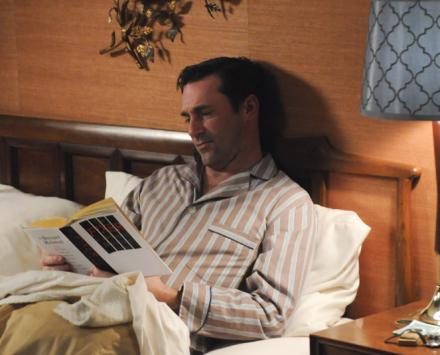
But most of the time the in-laws were visiting was filled with hate-filled French tirades between Megan’s parents.

Megan’s mother — played by Julia Ormond, who is, needless to say, too young to be playing Jessica Pare’s mother — livened thing up considerably at the ball that the family and Roger Sterling attended late in the episode.

After striking sparks with Roger, Megan’s mom accompanies him into a room down the hall from the ballroom. It is there they are spotted by Don’s young daughter, Sally (Kiernan Shipka) in a thoroughly compromising position. It’s another disillusioning moment for Sally and a shocking moment in the episode.

Random observations:

Roger’s one liners continue to be a highlight of the series. “Maybe Jesus was just pursuing the loaves and fishes account,” he notes during a discussion of motivations for good acts. John Slattery is at his most charming in this episode, partnering with Sally for the business gathering and jokingly calling her a “mean drunk” before giving her a Shirley Temple. And, needless to say, before giving her an eyeful by his antics with her sort-of-grandmother.

Joan (Christina Hendricks) gets the prize for best recovery of the episode. After observing that Peggy (Elizabeth Moss) isn’t wearing an engagement ring, Joan hears about Abe’s proposal and blurts out, “Shacking up?” before she recovers and convinces Peggy it’s really a romantic idea.

For the second time this season, “Mad Men” mines the “Twin Peaks” cast for guest stars. A few weeks ago it was Madchen Amick as Andrea, Don’s old fling.

Tonight Ray Wise, the actor who played Leland Palmer, murder victim Laura Palmer’s father on “Twin Peaks,” guest starred as a business executive who breaks some bad news to Don regarding the repercussions of his infamous ad about tobacco and smoking in The New York Times.

Which “Twin Peaks” vet will guest next? I’m holding out for Peggy Lipton.
The road to ‘The Avengers’ (part two)

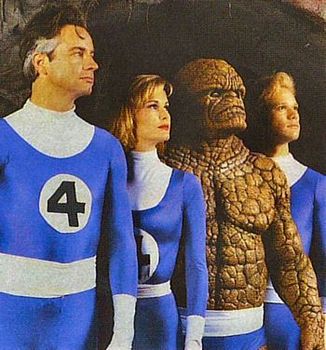
Sixty years after the “Captain America” serial debuted in 1944, another Marvel movie milestone occurred: The aborted release of “The Fantastic Four,” a low-budget movie (co-produced by the legendary Roger Corman). Made to perpetuate rights to Marvel’s first family, the movie was pretty bad. While the cast and crew apparently thought it would be released and a premiere was announced, the movie was shelved. Today it is legend to some and reality to others who have bought bootleg DVD copies at comic book conventions.

For a while it seemed like Marvel’s heroes were destined for low-budget life only. Then “X-Men” was a hit in 2000, followed by “Spider-Man” two years later. The characters, as well as the Fantastic Four, were sold off by Marvel to different companies, though. While Sam Raimi made two good “Spider-Man” films, “Fantastic Four” and its sequel were lackluster enough to make fans crazy. After decades of no big-screen adaptations, were Marvel’s heroes fated to live only through erratic, variable-quality movies?

And would fans never see a unified Marvel universe onscreen?

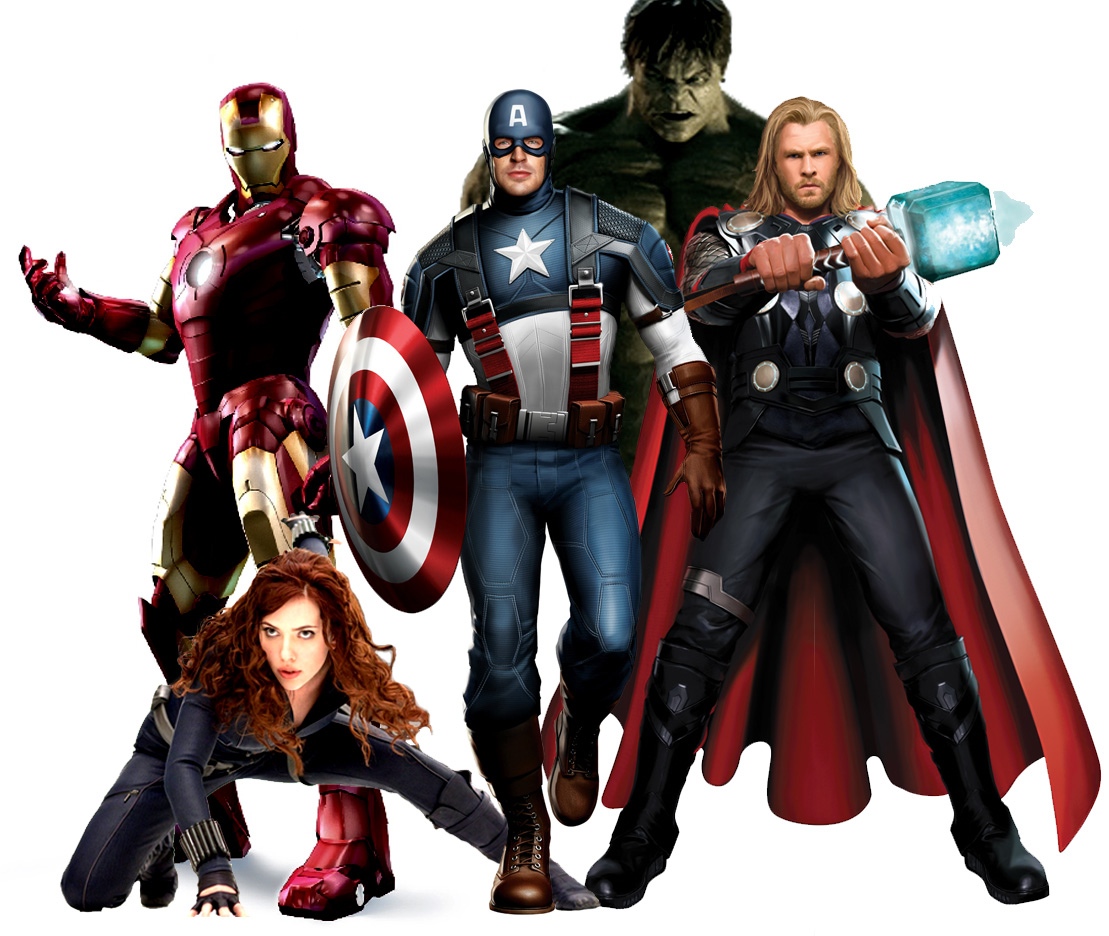
At some point, Marvel decided to take the best of the properties it still had film rights to — Iron Man, Captain America and other longtime Avengers stalwarts — and knit a coherent universe.

The “Yes!” moment came in 2008 with the release of “Iron Man.” Sure, before Jon Favreau’s movie there had been references to the larger world of Marvel characters, notably on computer screens in the “X-Men” movies. Fun “Easter eggs” maybe, but with no hope of follow-through.

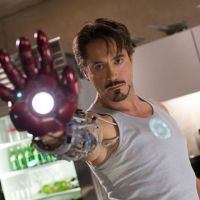
At the end of “Iron Man,” Tony Stark (Robert Downey Jr.) returns to his home and finds Nick Fury (Samuel L. Jackson) waiting for him. Fury tells Stark he’s not the only superhero in the world and tells him he’s there to talk about “the Avengers initiative.”

By that point, fans knew that Marvel had big plans for their universe. Soon, each movie would build toward “The Avengers.”

A long four years followed, but fans were rewarded with some fun movies. “The Incredible Hulk” in 2008 was, I thought, a terrific movie, with good Hulk action but also exciting scenes, including one in which soldiers pursue Bruce Banner (Edward Norton) through a South American slum.

The Hulk movie continued — even amped up — the Avengers foreshadowing. Spymaster Fury didn’t reappear but SHIELD was all over the movie, as it had been in “Iron Man,” and Downey Jr. appeared as Stark at the end. Maybe best of all were the references to the “super soldier” program that created Captain America, as Hulk’s nemesis the Abomination was created in part because of the same serum that, decades earlier in the comics, made Steve Rogers Captain America.

Between them, “Iron Man” and “The Incredible Hulk” made for a great one-two punch.

“Iron Man 2” dug deeper into SHIELD and the Marvel universe two years later. SHIELD was fully staffed by this point, with not only Fury and Agent Coulson returning but Natasha Romanov (Black Widow, played by Scarlett Johansson) showing up. Cap’s shield was even on hand, in Stark’s lab.

We found out why a year later, when the summer of 2011 brought fans “Thor” and “Captain America.”

The two movies almost felt like two chapters of one story. Although “Thor” took place in Asgard and the present day and “Captain America” took place in the 1940s (with a modern-day framing device) the movies integrated the Avengers building blocks. SHIELD agent Coulson and references to other characters, notably a veiled reference to Gamma scientist Bruce Banner, were sprinkled through “Thor,” while “Captain America” put the Red Skull in search of the Cosmic Cube, a treasure from the armory of Odin, Thor’s father.

The two movies didn’t have the impact of “Iron Man,” perhaps, because the earlier film took so many people by surprise. But “Thor” and “Captain America” are so strong, so entertaining and so thorough in their establishing of “The Avengers” that they exude confidence.

By this point, Marvel was confident enough of its plans to end the movies not only with surprise extra scenes but James Bond-style “Captain America will return in The Avengers” slides.

Even while DC Comics was floundering, releasing a half-hearted “Green Lantern” movie that clumsily introduced Amanda Waller, a Nick Fury surrogate, and couldn’t get “Dark Knight” director Chris Nolan to agree to let his Batman character exist in the same world as the rest of the Justice League, Marvel had established its world.

The long road led to “The Avengers.” The movie comes out this week. Early reviews are very positive, and Marvel seems confident enough to continue to build its movie universe.


The geek years of our lives: 1982

I’ve noted before in this space that 1977 was a pivotal year for movies. Two words: “Star Wars.”

But just as 1939 is a golden year for movie lovers, 1982 is a golden year for geeks. Maybe never before and maybe never since have so many milestone movies been released in a single year, many of them in the summer months alone.

I was reviewing movies that year — I had begun four years earlier and did it for another eight years, so it was prime moviegoing time for me — and even then I realized we were seeing something special.

As the 30th anniversary of this pivotal year rolls around, the Alamo Drafthouse Cinema is holding screenings of many of the movies. I can’t make those showings, but I’ll probably watch a few on disc. In the meantime, here’s my little look back.

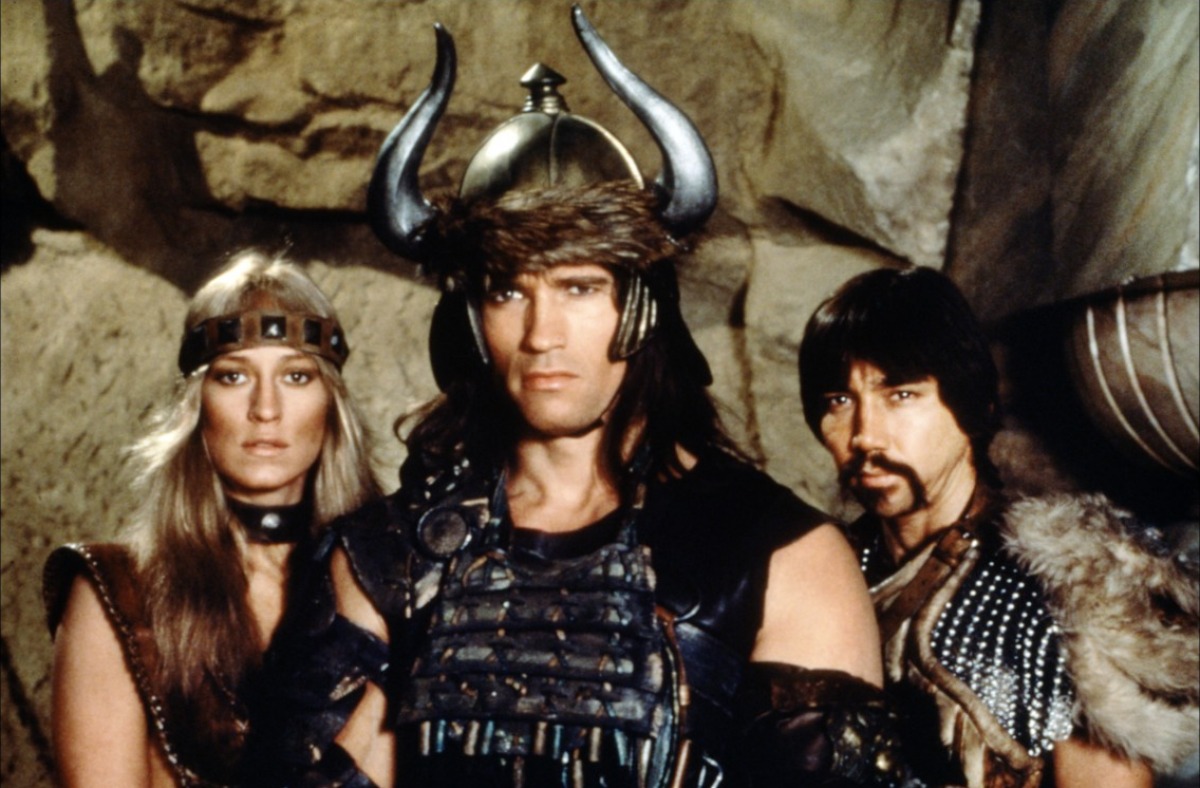
“Conan the Barbarian” — The Arnold Schwarzenegger movie was one of the first movies I saw through the press junket process, going to Chicago to see it and interview the cast and filmmakers. But even without that, I recognized the movie for what it was: The rare moment when Hollywood got the sword-and-sorcery genre right. There are some cheesy effects, to be sure. But the world of the pulp barbarian hero came to life.

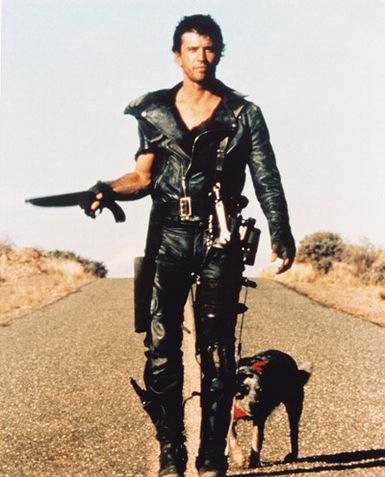
“The Road Warrior” — I had seen George Miller’s “Mad Max,” the dire action thriller starring Mel Gibson as a cop in a lawless land, but it was small in scope compared to “The Road Warrior.” Like “Conan,” “The Road Warrior” quickly defined its genre. All the elements were in place: A nihilistic hero with a heart; truly menacing bad guys; a varied and fascinating collection of good guys; stunts like movies had never seen before.

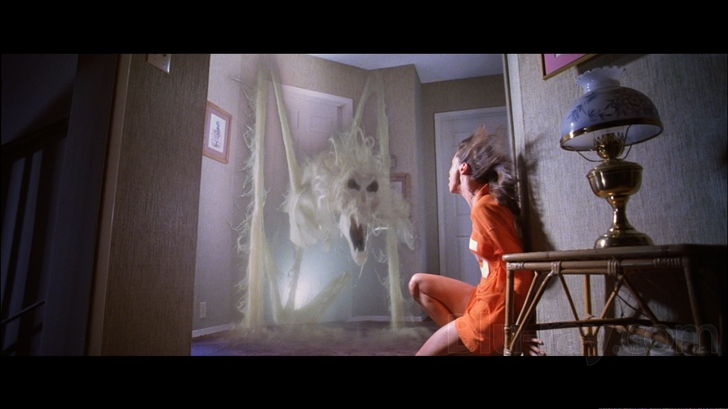
“Poltergeist” — This movie, directed by “Texas Chainsaw Massacre” director Tobe Hooper and produced by Steven Spielberg, was like the “Mirror Mirror” universe take on the suburban world given to us a few weeks later when director Spielberg released “E.T.” After decades of old dark house horror movies, the “haunted ranch house” tale told in “Poltergeist” seemed as fresh as could be.

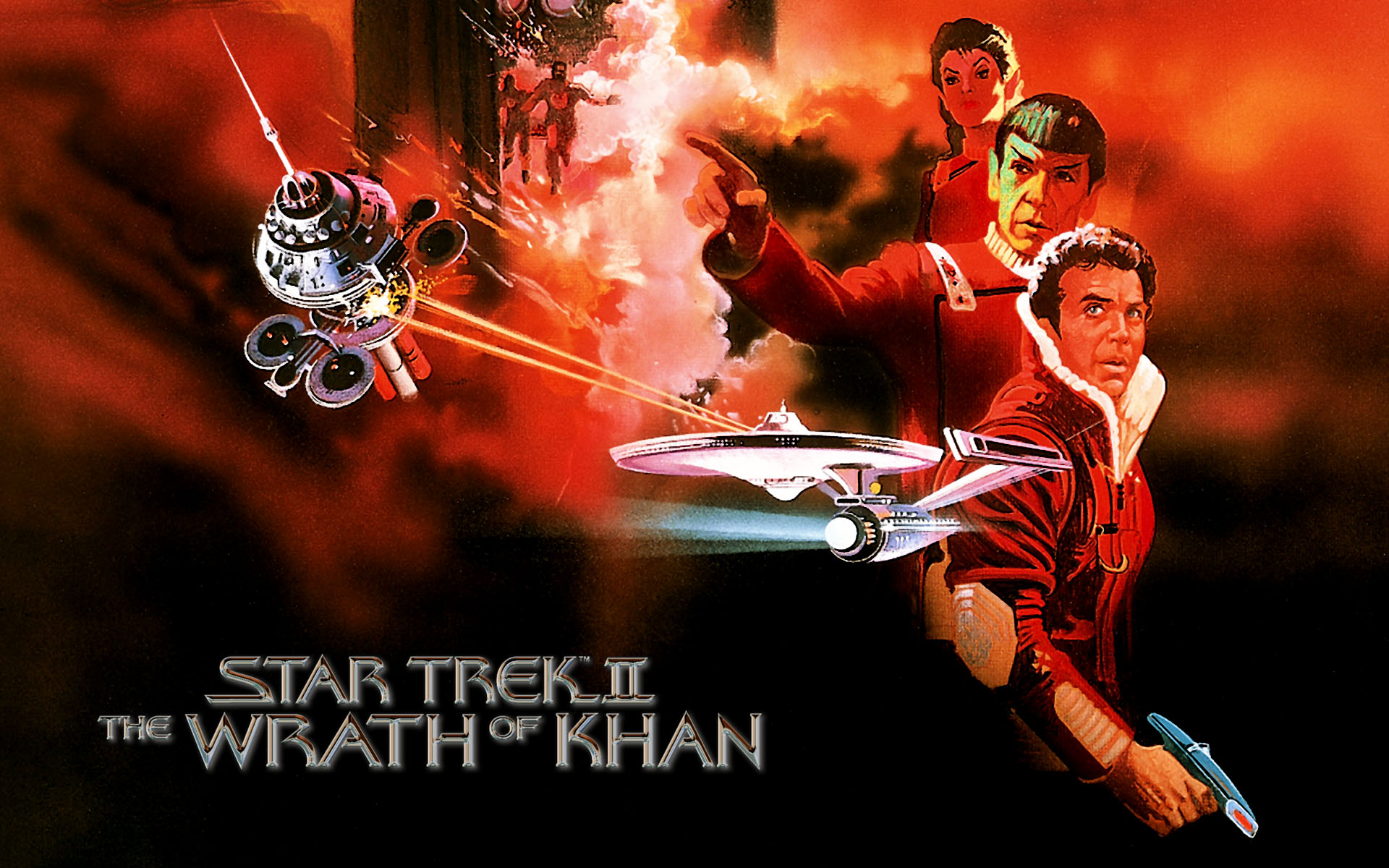
“Star Trek II: The Wrath of Khan” — While I really enjoyed the J.J. Abrams “Star Trek” reboot from a couple of years ago, the fact remains that Abrams, other moviemakers and all of fandom still believes that Nicholas Meyer’s take on Gene Roddenberry’s classic space opera is the one to emulate. And why not? Meyer brought a sharp military take to the familiar characters, pushed them through their paces in a quick-witted, thrilling plot, injected a ton of humor and tragedy and gave us one of the most heart-pounding climaxes ever. To this day, I remember the “Does Spock really die?” rumors before the movie opened, with fans eagerly anticipating/dreading the answer.

“E.T. The Extra-Terrestrial” — Sure the ending is marred by one of those “ohmygod he’s dead, no he’s not” resurrections. But time has probably dimmed our recollection of how simultaneously sweet and tart this movie is. The kids were cute but had realistic anti-sibling mean streaks, the mom (Dee Wallace. Sigh.) was a barely-hanging-in-there abandoned woman and E.T. himself was a great creation. It deserved to make a ton of money.

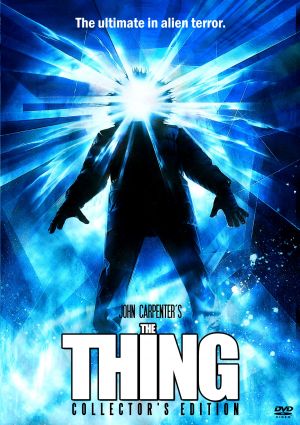
“The Thing” — Man, what a great horror flick. Director John Carpenter was on a roll with “Halloween,” “Escape from New York” and this, making him the most subversive director working and one of the most crowd-pleasing. Think about the endings to those movies for a minute: “Halloween” ended by establishing the boogeyman really existed. “Escape” ended with the protagonist, played by Kurt Russell, deciding “the hell with it” and destroying a tape that could save the world. And “The Thing” ended its cold and nightmarish story with a man versus alien creature showdown — featuring Russell and Keith David — that couldn’t have been more harsh.

The two last movies of the summer of 1982, “Tron” and “Halloween III,” were lesser lights, but how could they not be? “Tron” left enough of an impression to spawn a sequel nearly 30 years later. And “Halloween III” was a noble experiment that ultimately failed. Rather than try to top John Carpenter’s original, the movie’s producers went for a whole new story, about a fiendish plot to sacrifice millions of children with Halloween monster masks. “Three more days to Halloween!” was the earworm TV commercial jingle of the year. I just wish the movie had found an audience.

What a year.

The Great Newspaper Comics Challenge Part 11

It’s time for our weekly look at newspaper comics. Because surely the funnies didn’t stop being funny when ads for Camels ran alongside “Blondie and Dagwood.” Hey kids! Cigarettes!

“Classic Peanuts” finds Charlie Brown walking along after the little red-haired girl. Chuck is walking seven blocks behind her, fantasizing about what it would be like to walk along with her, go into her house with her, talk with her. Oh, Chuck. You’re cute and pathetic even when you’re being a stalker!

In “Baby Blues,” each parent wakes up with alarm in the middle of the night, accusing the other of scratching with nails. Turns out its Hammie down under the covers, hiding out from a monster in his room. “How did he get past your deadly toenails?” Dad asks. Too true!

Furthering understanding between couples everywhere, “The Wizard of Id” features the wizard’s wife complaining that he never listens to her. The wizard zaps her, freezing her in place, and goes out drinking with friends. He returns and zaps her back into motion again, where she continues her rant. “I love being a wizard,” he thinks. I think: This strip is going to be clipped and put on the billboards of couples counselors everywhere.

“Lio” and “Speed Bump” feature good sight gags. It’s book report day at school and Lio gets thrown out of class for choosing “The Exorcist” over “Winnie the Pooh” or “Goodnight Moon.” And in “Speed Bump,” it’s a road kill truck, rather than an ice cream truck, that draws all the vultures along a stretch of desert road.

“Hi and Lois” shows Lois beating her rugs with a broom because things “get so dusty over the winter.” Neighbor Thirsty’s wife borrows the broom and heads toward Thirsty, a murderous gleam in her eye. Too late for couples counseling here — call 911!

“Hagar the Horrible” tells us doctors play golf.

In “The Family Circus,” one of the kids takes Barfy for a walk. We’ve talked about this before, I’m sure, but Barfy? Really? Did they name the cat Spray Urine on Furniture?


The road to ‘The Avengers’

It’s been a long road to “The Avengers.”

Not just the four years since Samuel L. Jackson showed up at the end of “Iron Man” and freaked out fans — at least those who were sufficiently clued in to hang out in the theater until after the credits — by telling Robert Downey Jr. he wanted to talk to him about “The Avengers Initiative.”

There’s been a lot of anticipation since 2008, but considering the decades since Captain America was introduced in Marvel Comics (actually, Timely Comics back then), the past four years have been a breeze.

Here’s part one of a highly selective look at the road to “The Avengers” movie.

“Captain America Comics,” issue one, dated March 1941 but on stands months earlier, debuted as the world grew edgier about the war in Europe. The character — 98-pound patriot Steve Rogers, turned into Captain America through the Super Soldier experiment — was created by Joe Simon and Jack Kirby. Comics were a  huge deal back then, with far higher sales numbers than today, and Cap was a hit — especially with the punch he landed on Hitler’s jaw on the cover of one issue — and the movies beckoned.

“Captain America” the movie serial was released by Republic Pictures in 1944 starring Dick Purcell as Cap. But Cap wasn’t soldier Steve Rogers in this movie. He was a crime-fighting district attorney. And Purcell was kind of … egg-shaped. At least his head was. Cap continued in the comics but didn’t come back to the screen for decades and his fellow Avengers didn’t get their big-screen chance for an even long time.

The “Avengers” comic debuted in September 1963, the creation of Stan Lee and Jack Kirby, and — like Marvel’s other early team, The Fantastic Four — was a cool variation on DC’s happy family the Justice League. The Avengers bickered and fought among themselves — the lineup was constantly changing, which was one of the comic’s charms.

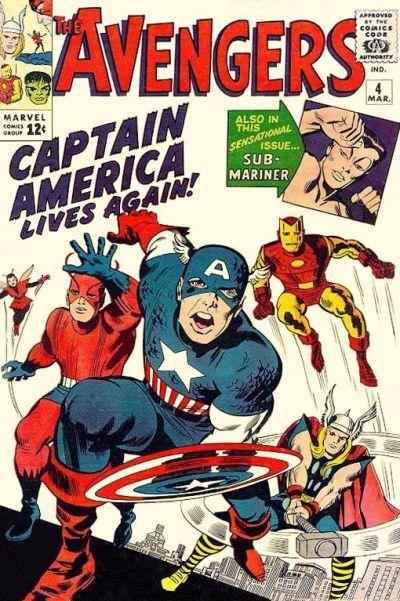
“Avengers” issue four marked a real turning point as Cap was discovered frozen in ice and thawed. While he joined the Avengers — and quickly became the team’s leader — he was an essentially tragic character. Most of the people he knew, with the exception of former commando Nick Fury, were dead. Most tragically, his World War II sidekick, James “Bucky” Barnes, had died in battle. Bucky would, amazingly, stay dead for decades to come.

In 1979, the first of two made-for-TV “Captain America” movies was made. The movies starred Reb Brown and seemed to be a bizarre attempt to cash in on Evel Knievel, the motorcycle stunt rider, since Brown spent more time on a bike than on two feet.

While he continued in the comics and, along with many other Marvel characters, showed up in various animated series, Cap didn’t return to the big screen until the 1990 Albert Pyun “Captain America” movie, starring Matt Salinger as Steve Rogers and Scott Paulin as the Red Skull, bizarrely changed from a Nazi to an Italian facist. Once you get beyond the novelty of seeing live-action images of Cap and the Skull, the move is pretty dreadful. Its low budget doesn’t allow for much action.

For years, attempts to bring Marvel characters to the screen fell by the wayside and it seemed as if fans would never see their favorite heroes in action.

Then Fox released Bryan Singer’s “X-Men” in 2000. The movie was a hit and the studio followed it up with films based on the Fantastic Four.

It was only a matter of time until Cap and the Avengers got their chance.

(More to come.)

‘Incredibly Strange Creatures,’ great memories

My companion, who is now long gone but shall remain nameless anyway, was itching to hit a zombie in the head with a baseball bat.

“If somebody comes at me, they’re gonna get it,” he said, showing me the baseball bat that was well-hidden under some blankets.

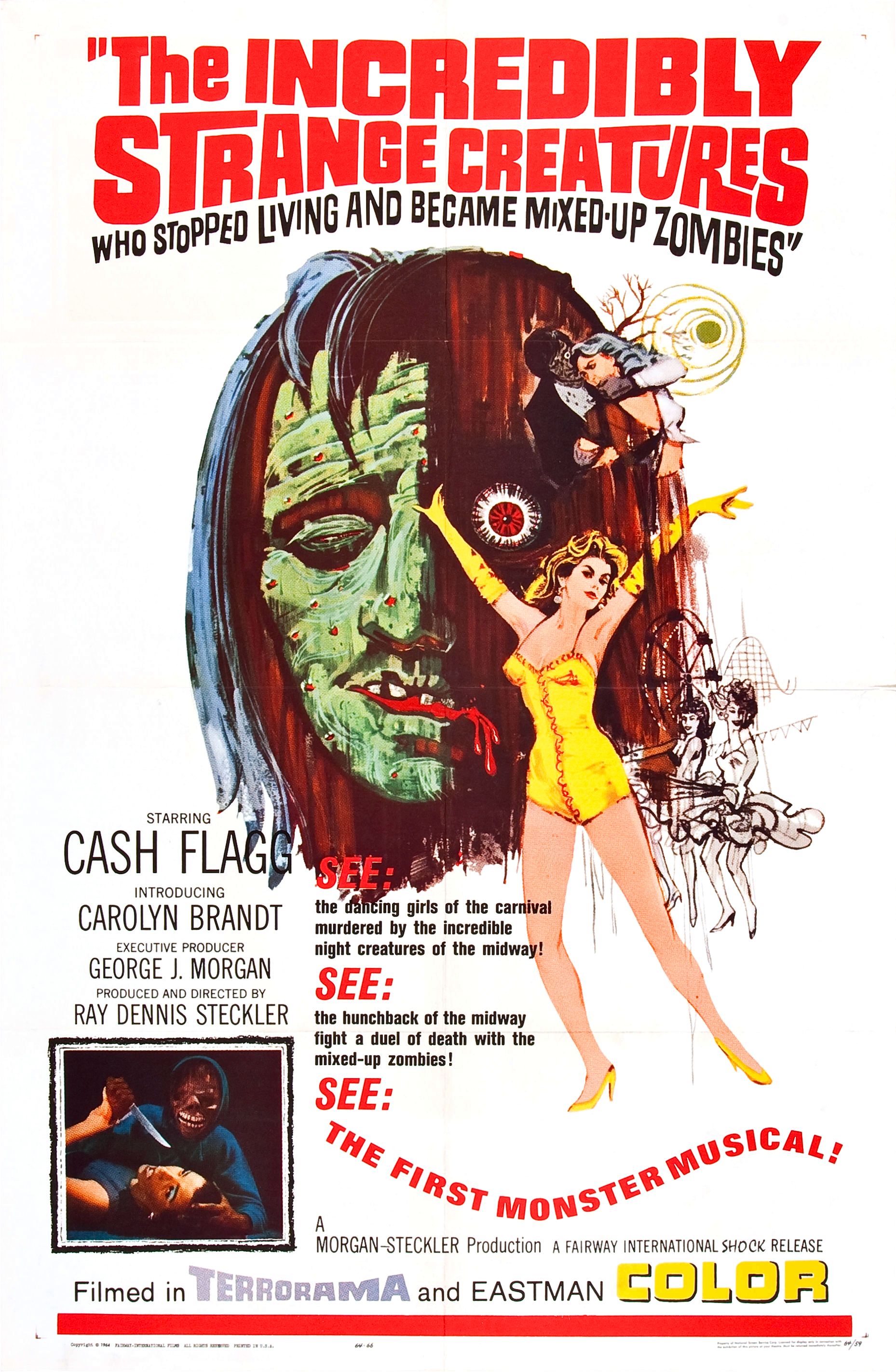
I don’t remember the year, but it must have been the late 1960s or early 1970s. The occasion was the re-release of “The Incredibly Strange Creatures Who Stopped Living and Became Mixed-Up Zombies.”

If you don’t remember this movie milestone, I’ll refresh your memory.

Ray Dennis Steckler was a maker of ultra-low-budget movies in the 1960s. He also acted in some of his movies, under the stage name Cash Flagg, probably because he could afford his salary.

In 1964, Steckler directed “Incredibly Strange Creatures,” which was released by Fairway International Pictures. Fairway released a handful of movies in the 1960s, including this and director Arch Hall’s “Eegah,” in which teenagers encountered a caveman. Of course. It was the 1960s and Hollywood had discovered what a potent box-office force teenagers could be. So teenagers were encountering everything from Frankenstein to giants to … well, you name it.

Fairway’s best-known movie was undoubtedly “Incredibly Strange Creatures,” in which teenagers encountered … not a caveman, but zombies at a carnival.

Stecker — er, Flagg — and other patrons of the carnival are hypnotized by a fortune teller and turned into crazed killers. For good measure, the fortune teller splashes acid on her unwilling slaves, giving them disfigured faces to match their murderous instincts.

By the end of the movie, the … well, sort of strange creatures had broken out of their cages and taken vengeance on their carnival captors.

That’s where my companion’s baseball bat came in.

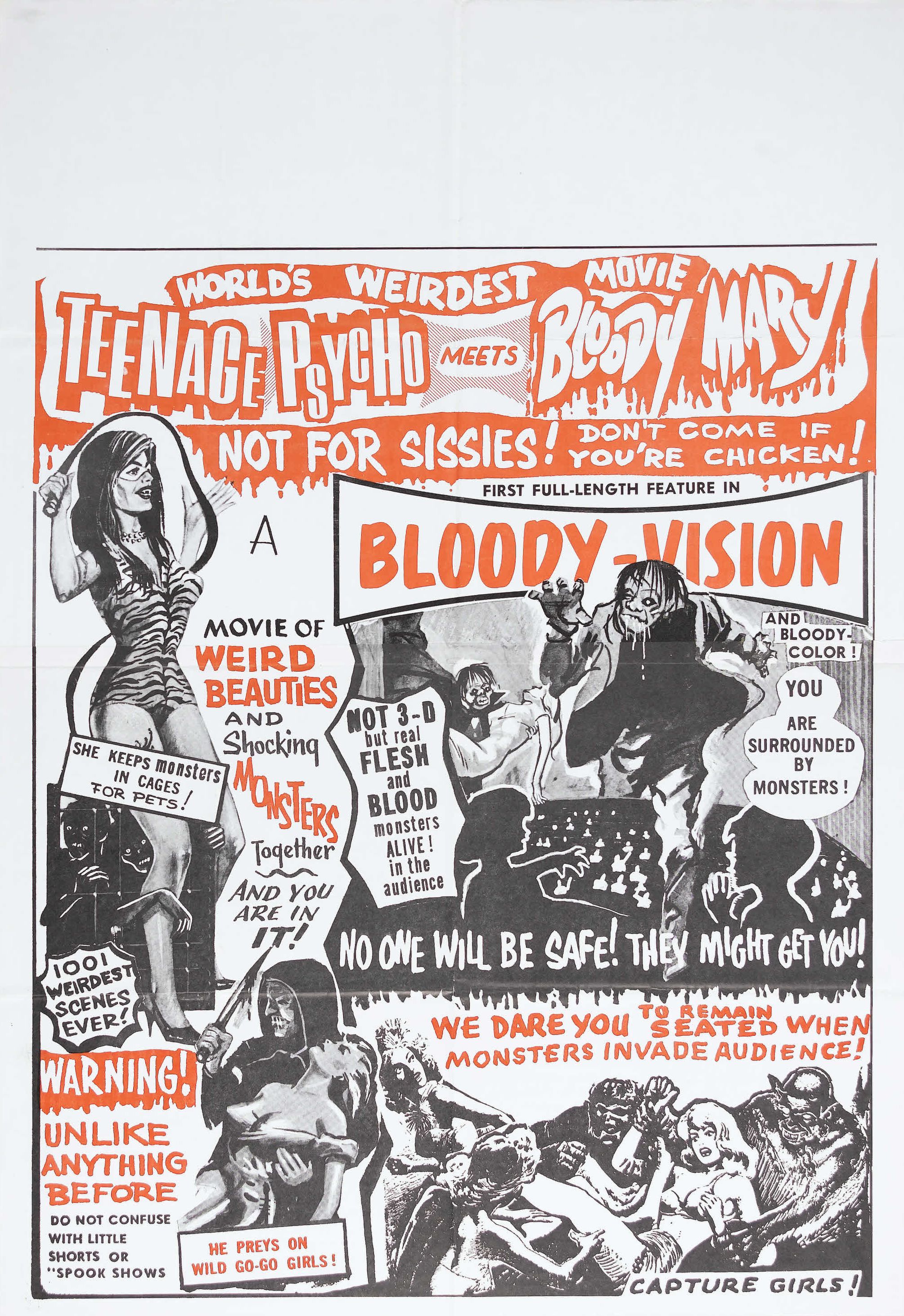
At some point during the surprisingly durable theatrical lifespan of the movie, either during its original release or its subsequent re-release as “Teenage Psycho Meets Blood Mary,” Fairway or someone had the ingenious idea of selling the picture by offering something that TV couldn’t compete with.

Not 3-D. Not Smell-O-Vision.

Real life zombies, running loose in the theater (or more likely, considering the low-budget nature of the movie) the drive-in.

Or, as the ads put it:

“Not for sissies! Don’t come if you’re chicken!”

“Not 3-D but real FLESH and BLOOD monsters ALIVE! in the audience.”

“NO ONE WILL BE SAFE! THEY MIGHT GET YOU!”

“We dare you to remain seated when monsters invade audience!”

In theaters where the movie played, the management made its ushers wear cheap monster masks and, in the scene when the monsters rebelled and broke loose on screen, the hapless theater employees would run up and down the aisles, screaming and frightening moviegoers.

Except for my companion, who had made up his mind to brain one of the zombies if this outbreak occurred.

Really, he understood that “real zombies” — stop and think about that phrase for a moment — would not be rampaging through the aisles of the drive-in.

But just in case …

Anyway, my memory of the movie is fairly dim all these years later. But my memory of that baseball bat and the threat of violence in the aisles remains vivid.

No, nobody got hit with a baseball bat that night. Zombies — in this case undoubtedly the teenage employees of the drive-in — did rampage, but none got close enough to us to warrant a good beating.

Thank goodness. Beating up teenage zombies with a baseball bat during a movie that’s been acclaimed as one of the worst of all time isn’t something you want on your record.


My movie role: Thug in a Batman fight

Did I ever tell you about the time I got beat up by Batman and Robin in a movie?

It was about 30 years ago and my circle of geek friends included Mark Racop, a Ball State University student from Logansport, Indiana, who was a fan of all things Batman. Racop did more with his fandom, however, than read comic books or sit around watching reruns of the 1960s “Batman” TV series, however.

Racop made Batman movies. And a Batcave. And, most impressive of all, Batmobiles.

My friends and I had flirted with movie-making a few times, writing and shooting a short thriller masterminded by my pal Brian McFadden. But Mark was serious as a heart attack about his desire to make Batman movies.

Now mind you this was before the 1989 Tim Burton “Batman” movie starring Michael Keaton. Nobody had put Batman on film since the 1960s and then it was the campy “Blam!” “Kee-runch” Batman.

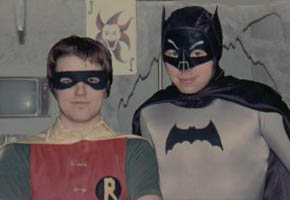
Mark enlisted a bunch of us to appear in “Eyes of the Cat,” a 45-minute Batman movie featuring himself as Batman — in costume quite like Adam West’s outfit from the TV series — and various other friends as Robin, Catwoman and assorted henchmen.

That’s where I came in.

Because Racop shot his movie over the course of months (maybe years), I was only in a few moments of the movie. I played Figgy Pudding, a thug rousted and roughed up by Batman and Robin. My friend Brian played Harry Beefmelons.

We spent a couple of days roughing each other up, throwing punches and working out our own fight choreography. It was a blast.

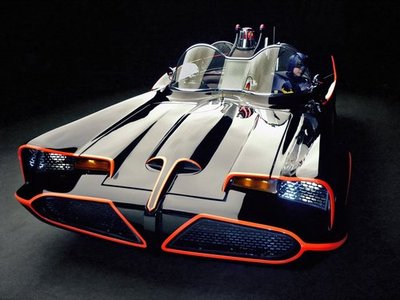
Mark went on to a number of enterprises, including his latest. His company, Fiberglass Freaks, is officially licensed by Warner Bros. and DC Comics to make and sell replicas of the 1960s Batmobile.

The Batmobile he had back in the day was one that he had cobbled together from a 1974 Monte Carlo and it was cool for a fan effort. The vehicles he makes today are gorgeous.

You can check out a webpage about “Eyes of the Cat” here. Sorry, no pics of me as Figgy Pudding.

And you can check out Mark’s custom superhero vehicle website here.

If you buy a Batmobile and decide to make a movie, I’d love to have a part. Maybe a speaking role this time.

‘Mad Men’ tunes in and turns on with ‘Far Away Places’

This season of AMC’s “Mad Men” is one of the most enjoyable — if hard to predict — because you never know what’s going to happen next. In any given episode, Don Draper might be choking an old fling — at least in the depths of a fever dream — or Lane Pryce might be handing young Pete a beat down.

In tonight’s episode, “Far Away Places,” the plot was appropriately odd and disjointed, especially considering all the sex, drugs and rock and roll.

The show continues its headlong plunge into the heart of the most turbulent part of the 1960s as Peggy (Elizabeth Moss, who is always wonderful) gets fed up with the Heinz beans people and insults them, much to everybody’s shock. So Peggy, who earlier had an argument with her boyfriend, decides to take in a matinee.

Peggy gets offered a joint by a guy (in very loud striped pants) in the theater and doesn’t react with dismay when he makes a pass. As a matter of fact, Peggy administers an “Animal House”-style handjob — minus the Greg Marmalard plastic gloves — right there in the theater.

Meanwhile, Roger (the likewise always wonderful John Slattery) and wife Jane (Peyton List) go to a party and partake of LSD. The middle part of the episode finds Roger and Jane tripping out. When they come around, Roger tells Jane he’s moving out, a decision based on her acid-inspired comments.

Also meanwhile, Don (Jon Hamm) and Megan (Jessica Pare’) go out of town on a trip to a Howard Johnson’s. It’s ostensibly to check out a client, but Don plans the same uncomfortable mixture of business and pleasure that he’s been practicing with Megan all season. When they get into a fight and Megan disappears, Don’s anxiety skyrockets.

To top it all off, Bert Cooper (Robert Morse) — who’s spent how many seasons wandering in the wilderness of the conference room? — administers a brisk slap across the face to Don. Bert calls him out on how little work he’s done lately. Holy crap!

Other highlights:

I’m enjoying the little glimpses of Ginsberg and his father (“I’m the original,” the elder Ginsburg tells Peggy) but I’m curious where the characters are going.

Has “Mad Men” been employing flashbacks? Tonight we get a glimpse of the past in Don and Megan’s Disney vacation with Sally and the little Draper boy, whatever his name is.

In the preview for next week, Roger says he’s had a life-changing experience. Does he mean the acid trip? At the end of tonight’s episode, he was pretty damn cheerful.

“Mad Men” continues to keep us guessing.

‘Itchy and Scratchy and Poochie:’ Totally in your face

Leave it to “The Simpsons” to have the final word on adding unwanted — and hated — characters to a TV show.

I’m talking about Poochie, the “proactive” and “totally in your face” canine added to the show-within-a-show, “Itchy and Scratchy,” in the eighth season of “The Simpsons,” way back in 1997 (!).

It was far from the “worst episode ever.”

As the show opens, Krusty the Clown and Rogers Meyers Jr., the creator of “Itchy and Scratchy,” are trying to re-invigorate the ratings for the show. A network type has the idea of adding a character because we’ve seen how well that works (Cousin Oliver on “The Brady Bunch,” any character Ted McGinley played on various sitcoms).

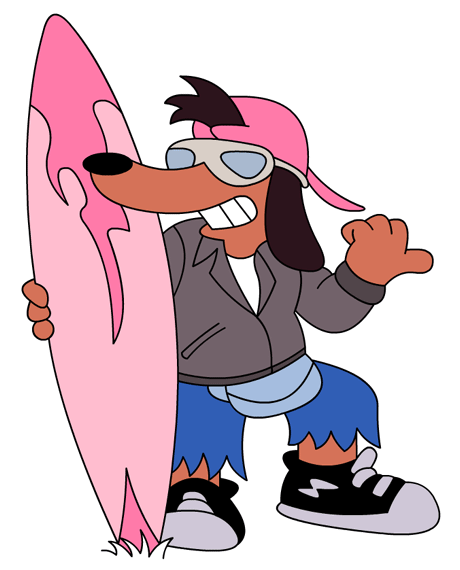
After a frustrating round of focus groups with kids who don’t know what they want, Meyers and company add Poochie, a dog. But not just any dog. He’s a “surfer dude,” complete with board, sunglasses and attitude.

Inevitably, Homer auditions for the role of Poochie’s voice and debuts in an episode in which Itchy and Scratchy pick Poochie up along the road on their way to a fireworks factory.

As Poochie raps and poses and dunks basketballs to heavy metal guitar riffs, the audience gathered in the Simpsons’ living room grows restless.

“When are they going to get to the fireworks factory?” a frustrated Milhouse whines.

The introduction of Poochie is a disaster, with even Kent Brockman weighing in, noting that kids won’t be sad when the canine is “put to sleep.”

Meyers decides to kill Poochie off on the cartoon, but Homer insists on recording a heartfelt bit of dialogue first.

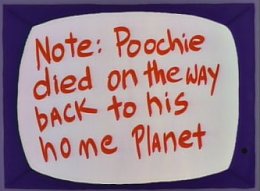
Meyers and the crew appear to be touched. But when the episode airs, instead of Homer’s moving words, Poochie simply announces he must return to his planet. The animation cel bearing his likeness is crudely pulled upwards and out of view.

Then a slide appears:

Ah, Poochie. We hardly knew ye.

Other highlights:

This was the episode that introduced the catchphrase “Worst. Episode. Ever,” intoned by Comic Book Guy. The show’s writers have some fun by having the geeky character declare he will be hurrying to the Internet to air his complaints.

Homer and the voice actress who performs Itchy and Scratchy make a personal appearance at the Android’s Dungeon. In a riff on the “Saturday Night Live” sketch in which William Shatner is asked insane questions about “Star Trek” episodes, a nerd in the audience asks about a mistake in an “Itchy and Scratchy” cartoon.

The show features a fun in-joke as the Simpsons also get a new character, Roy, who moves in with the family. By the end of the episode, Roy is out the door.

Troy McClure makes another appearance. The ham actor, voiced by the sadly missed Phil Hartman, also auditions for the voice of Poochie. “I’m Troy McClure. You may know me from such cartoons as ‘Christmas Ape’ and ‘Christmas Ape Goes to Summer Camp.'”


Maberry’s ‘Ghost Road Blues’ has some King in it

You’ve heard of Christmas in July? How about some Halloween in April?

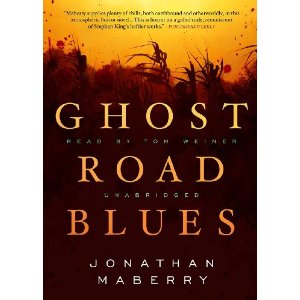
If that sounds good to you, I’ll recommend Jonathan Maberry’s “Ghost Road Blues.” It’s not a new book but it’s new to me. I sought out Maberry’s book because I enjoyed his zombie thriller “Dead of Night” and wondered what he could do with something on a grander scale.

With three books in the Pine Deep trilogy — “Ghost Road Blues” is the first — Maberry has written a story that, at least in the first volume, feels like something from Stephen King. With supernatural lurking in the shadows of a small town and all-too-human characters nearly outdoing the monsters for evil — even while an apocalypse draws near — “Ghost Road Blues” reads like some of King’s best, including “The Stand” and “Salem’s Lot.”

Best of all, it gave me a real feeling of Halloween approaching — without the actual onset of winter not far behind.

“Ghost Road Blues” takes place in the town of Pine Deep, Pennsylvania, in the weeks leading up to Halloween. The holiday is an important one because the town is famous for its over-the-top celebration of Oct. 31. The town attracts thousands of visitors from the eastern U.S. with its shops, restaurants, haunted hayrides and ghostly attractions.

Three characters are central to the novel: Crow, a former cop and recovering alcoholic who runs the hayride attraction and owns a holiday-themed store; Val, Crow’s lifelong friend and girlfriend; and Terry, another lifelong friend who’s also mayor of Pine Deep.

Into the mix this year comes a carload of drug dealers, thieves and killers led by Ruger, a mass murderer wanted by the authorities up and down the East Coast. Ruger and his cohorts end up in Pine Deep as they try to elude police.

Crow, Val and Terry have a lifelong bond because of something they experienced as children 30 years ago: A mysterious serial killer struck Pine Deep, killing Terry’s little sister and leaving all three survivors scarred.

Town vigilantes ostensibly killed the serial killer but in reality they killed a black drifter, the Bone Man, who was innocent. In fact, the Bone Man himself had earlier dispatched the killer.

What none of the players know: The killer from 30 years ago was the embodiment of evil and now he’s back, ready to begin where he left off.

“Ghost Road Blues” is nearly 500 pages long but rarely lets up. Crow and his friends are great, sympathetic characters and Maberry puts them through the wringer. It’s hard to imagine what he has in store for them in “Dead Man’s Song” and “Bad Moon Rising,” the remaining books in the trilogy.

Like King, Maberry draws some of his best characters from flesh-and-blood types, including Iron Mike Sweeney, a teenage monster movie fan who is befriended by Crow. Iron Mike, who prefers to live in a fantasy world in which he is a hero, is as lovable a character as you could ask for.

On the other hand, Iron Mike’s stepfather, Vic Wingate, is one of the most detestable characters I’ve read in a long time. Iron Mike lives in a fantasy world because Wingate is a brutal bully, abusing Mike and his mother.

But Wingate is something else as well. He’s the right-hand-man of the evil force, long believed dead, manipulating the modern-day players.

With its moody imagery of corn fields, pumpkins and lonely farms, “Ghost Road Blues” perfectly captures the macabre melancholy of small-town Halloween. It’s a genuine treat even well in advance of the ghostly holiday.