Monthly Archives: June 2012

Ant-Man, Guardians of the Galaxy: Marvel movie universe-building

Somebody asked me the other day if I planned to go see “The Amazing Spider-Man” next and I said, “Yeah, probably.” Right up until the time I saw Sam Raimi’s lackluster “Spider-Man 3” in 2007, my answer would have been much more emphatically positive about the cinematic adventures of the wall-crawling webslinger. The final Raimi film kind of burned me out on the character.

And the idea of rebooting “Spider-Man” yet again, with another origin story, no matter how overstuffed with a “mystery” about Peter Parker’s parents it might feature, makes me suddenly very, very tired.

So I have to say that while I’m sure I’ll see “The Amazing Spider-Man,” I’m not excited about it.

That’s also because I’ve been spoiled, frankly, by Marvel’s universe-building big-screen efforts.

The movie versions of “Fantastic Four” and “X-Men” are owned by Fox and “Spider-Man” is owned by Sony. That means that despite brief teases to the possibility of a cross-over like we heard earlier this year, those movie universes won’t mix with Marvel Films-owned and operated properties like “Iron Man,” “Thor,” “Captain America” and “The Avengers.”

So while I’m looking forward to “The Amazing Spider-Man” and “The Dark Knight Rises,” I’m more excited to see where Marvel goes next with its universe-building efforts.

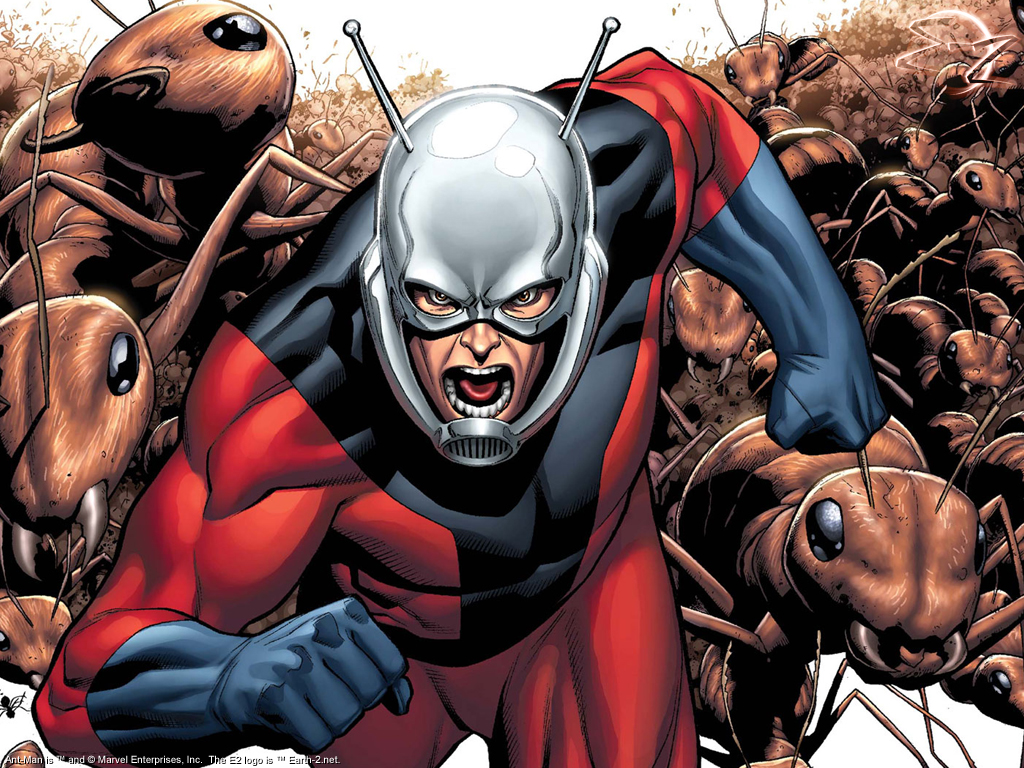
Rumors circulated in the past couple of days that the long-rumored “Ant-Man” character might end up in “Iron Man 3,” which comes out next May. I’m not sure how some people are authoritatively saying this when so much time remains for last-minute changes, but … well, it would be quite cool to see one of the original Avengers – not to mention his partner, Wasp – finally make the big screen.

Today online sites were lit up with suggestions, primarily drawn from Latino Review, that Marvel is going to release a “Guardians of the Galaxy” movie in 2014. Despite the fact that the characters are little-known outside of comics fandom – they’re even more obscure than “Iron Man” was before 2008 – the diverse group of cosmic adventurers would make for a huge expansion for the Marvel universe.

And as many online sources noted, the “Guardians” also makes sense because one of their regular antagonists is cosmic bad guy Thanos, who appeared in the mid-credits teaser at the end of “The Avengers.”

While my lifelong appreciation of “The Avengers” doesn’t necessarily carry over to “Guardians of the Galaxy” – I’m just not as familiar with them – I would be happy to see Marvel’s movies continue to expand the Marvel cinematic universe.

And I’ll dream of the day when Spidey will bump into Captain America and Iron Man during battle in the streets of New York.
‘The Avengers’ hits $600 million … and 27th place????

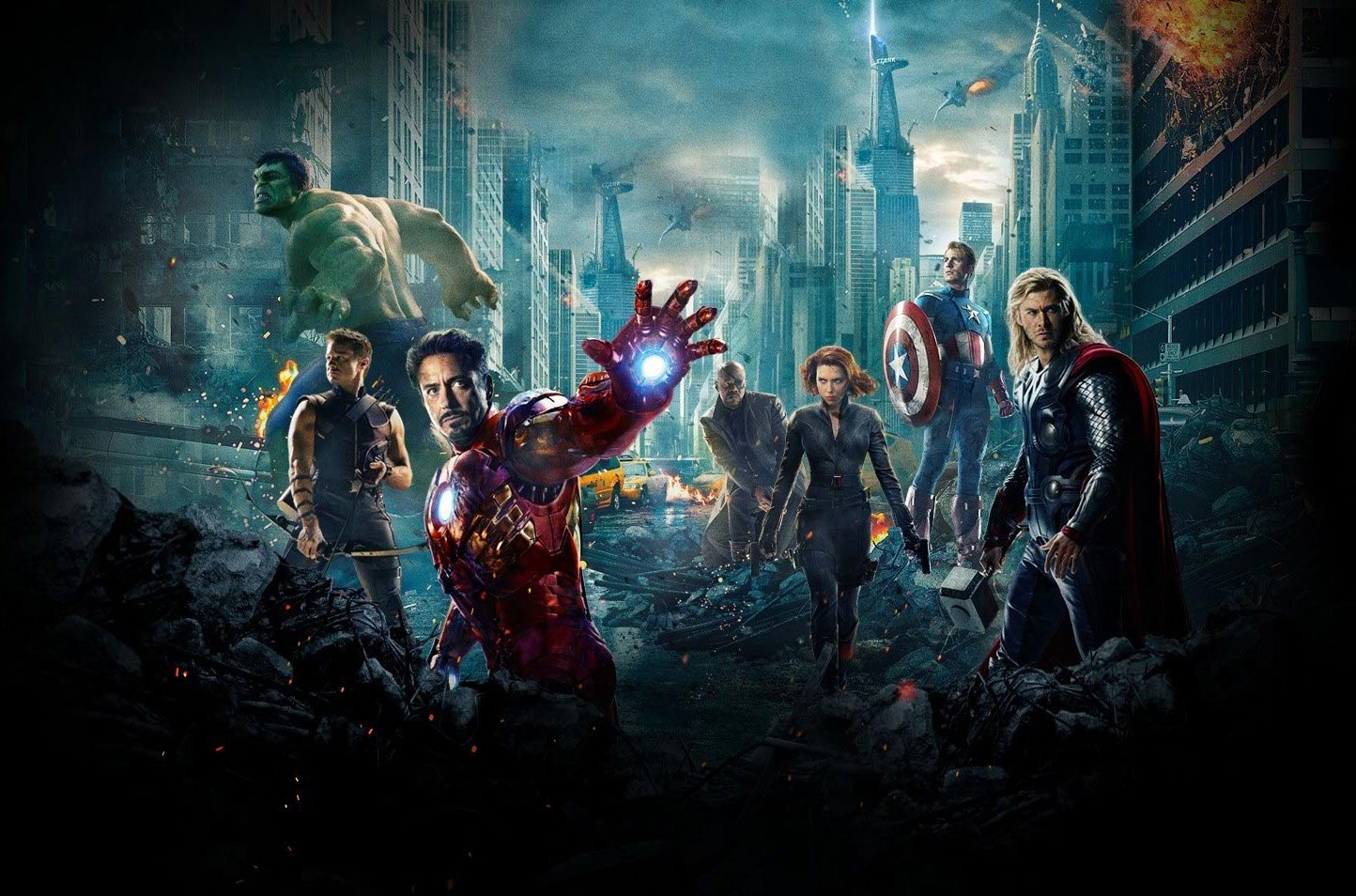
Although I only contributed the cost of a couple of tickets – so far – I was pleased to hear that Joss Whedon’s “The Avengers” passed the $600 million box office milestone this week.

That puts “The Avengers” in third place, behind James Cameron’s “Titanic” and “Avatar,” in terms of total box office haul.

“Titanic” has topped a cool billion, so I’m not sure “Avengers” will be able to reach that peak.

Each time a new box office threshold is crossed, of course, some history-minded person considers the increase, over the decades, of ticket prices.

Boxofficemojo.com’s list of movie box office – as adjusted for inflation – is pretty illuminating and also a little disheartening for movie lovers.

Considering that ticket prices were less than a quarter in 1939, how amazing is it that “Gone With the Wind” sold enough tickets (in its original release and subsequent re-releases) to still top the charts, with a an-adjusted-for-inflation take of $1.6 billion? That’s a paltry $198 million in unadjusted numbers.

On the Boxofficemojo list, “The Avengers” and its $600 million haul come in at 27th place.

Here are the top ticket sellers of all time via Boxofficemojo:

1 Gone with the Wind MGM $1,600,193,400 $198,676,459 1939^
2 Star Wars Fox $1,410,707,200 $460,998,007 1977^
3 The Sound of Music Fox $1,127,929,800 $158,671,368 1965
4 E.T.: The Extra-Terrestrial Uni. $1,123,486,300 $435,110,554 1982^
5 Titanic Par. $1,074,383,500 $658,672,302 1997^
6 The Ten Commandments Par. $1,037,520,000 $65,500,000 1956
7 Jaws Uni. $1,014,384,200 $260,000,000 1975
8 Doctor Zhivago MGM $983,152,800 $111,721,910 1965
9 The Exorcist WB $875,945,400 $232,906,145 1973^
10 Snow White and the Seven Dwarfs Dis. $863,280,000 $184,925,486 1937^
11 101 Dalmatians Dis. $791,344,600 $144,880,014 1961^
12 The Empire Strikes Back Fox $777,590,600 $290,475,067 1980^
13 Ben-Hur MGM $776,160,000 $74,000,000 1959
14 Avatar Fox $770,261,700 $760,507,625 2009^
15 Return of the Jedi Fox $744,950,500 $309,306,177 1983^
16 Star Wars: Episode I – The Phantom Menace Fox $715,276,800 $474,544,677 1999^
17 The Sting Uni. $706,011,400 $156,000,000 1973
18 The Lion King BV $705,680,400 $422,783,777 1994^
19 Raiders of the Lost Ark Par. $698,083,500 $242,374,454 1981^
20 Jurassic Park Uni. $682,750,300 $357,067,947 1993^
21 The Graduate AVCO $677,755,200 $104,931,637 1967^
22 Fantasia Dis. $657,704,300 $76,408,097 1941^
23 The Godfather Par. $625,066,700 $134,966,411 1972^
24 Forrest Gump Par. $622,081,300 $329,694,499 1994
25 Mary Poppins Dis. $619,200,000 $102,272,727 1964^
26 Grease Par. $609,596,100 $188,755,690 1978^
27 Marvel’s The Avengers BV $600,377,080 2012 1978^
28 Thunderball UA $592,416,000 $63,595,658 1965
29 The Dark Knight WB $588,314,100 $533,345,358 2008
30 The Jungle Book Dis. $583,544,900 $141,843,612 1967^

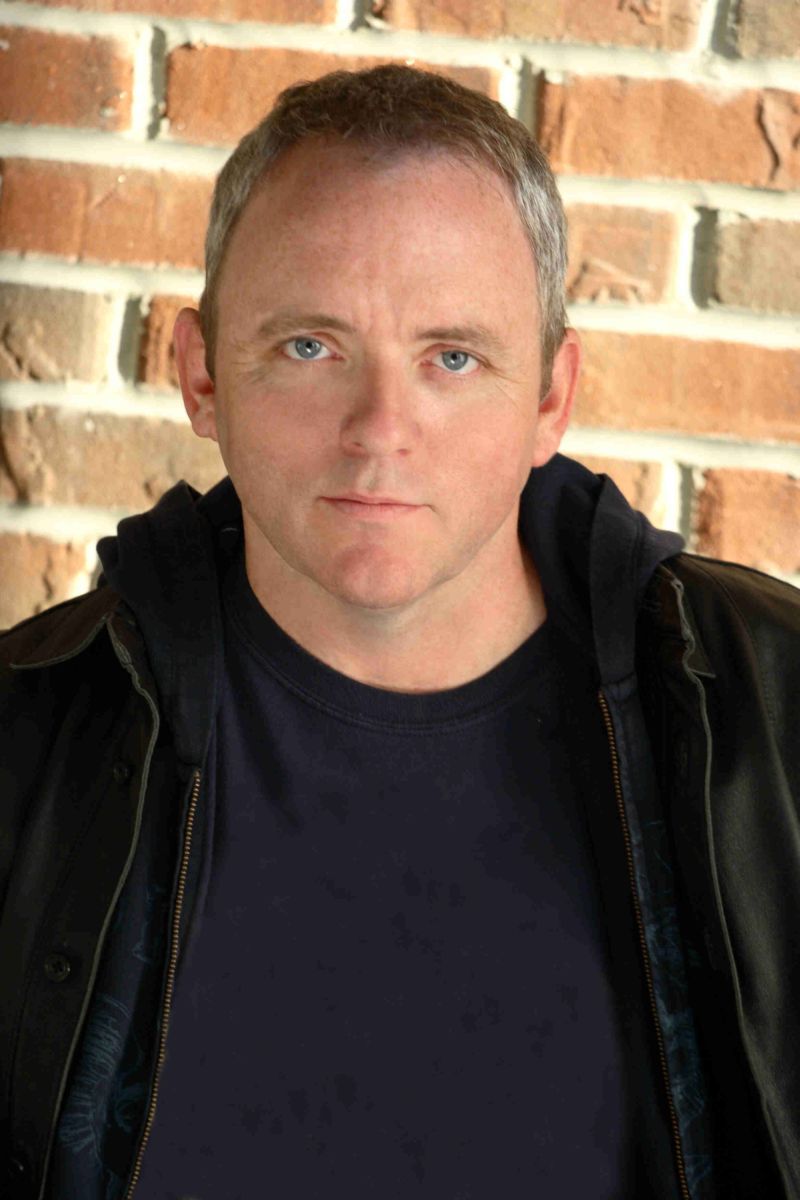
Favorite authors: Dennis Lehane wages ‘War’

I’m pretty relentless in my appetite for new books. When I was a kid, I would go back and read and re-read books by my favorite authors, including Ray Bradbury, Robert Heinlein and Kurt Vonnegut.

But these days I’m always trying new authors or devouring everything by a newly-discovered favorite like Craig Johnson or Ace Atkins.

But every year or so, I dip back into the work of Dennis Lehane.

Considering how damn dark much of Lehane’s work is, it’s hard to imagine how it could feel like comfort food to me, but it does. Not so much “Mystic River” or “Shutter Island,” although I liked those (the former quite a bit).

No. When I want to relive my favorite Lehane experience, I jump back into his series of novels about working-class Boston private investigators Patrick Kenzie and Angie Gennaro.

The fourth book in the Kenzie and Gennaro series, “Gone, Baby, Gone,” was made into a pretty good movie in 2007 by director Ben Affleck. Not all of the novel’s grim appeal made it onto the big screen, but quite a bit did.

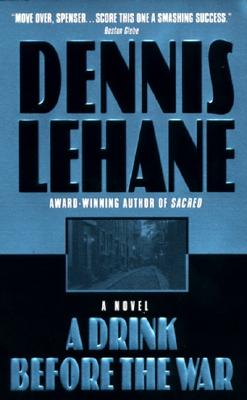
So now that I’m between new books to read, I’m starting the Kenzie and Gennaro series over again with the first, 1994’s “A Drink Before the War.”

If you’ve never read Lehane’s Patrick and Angie series, I’d highly recommend it. But you really have to read them from the beginning.

Lehane takes his characters, including not only the PI partners but their friends like Bubba, the former-Marine-turned-weapons-dealer-nutcase, through some pretty big – you might say dire – changes during the course of the series.

“A Drink Before the War” opens with Patrick and Angie working out of their customary office, the empty bell tower of a Boston Catholic church. Patrick is a smartass with a gooey center. Angie is a beautiful hellraiser with an awful home life.

The two accept a case working for some legislators and their toadies trying to find a statehouse cleaning woman who’s disappeared with some supposed “documents.”

Lehane gets to the nitty gritty quickly, touching on Patrick’s hellish childhood at the hands of his father, a now-deceased firefighter regarded as a homegrown Boston hero, and Angie’s regular beatings at the hands of Phil, her husband and Patrick’s childhood friend.

Patrick, of course, is deeply in love with Angie and seethes when he sees how Phil treats her. Patrick learned the hard way, though, about trying to intercede on Angie’s behalf.

The book manages to touch on class warfare, race relations and marital discord in a plot that’s liberally sprinkled with humor.

Make no mistake, however: Lehane’s vision of his characters is dark, dark, dark. Dark, I tells ya. It’s hard not to love Patrick and Angie and hard not to ache for the troubles that befall them.

But Lehane’s Kenzie and Gennaro books more than make the heartache worthwhile.

I’m planning to touch on the series here over the next few weeks. Pick up the series and follow along if you will.

But remember: Read them in order: “A Drink Before the War,” “Darkness Take My Hand,” “Sacred,” “Gone, Baby, Gone” and “Prayers for Rain.”

I can’t totally endorse Lehane’s 2010 return to the characters after more than a decade’s absence, “Moonlight Mile.” But we’ll get to that later.

Have fun!

The Great Newspaper Comics Challenge Part 18

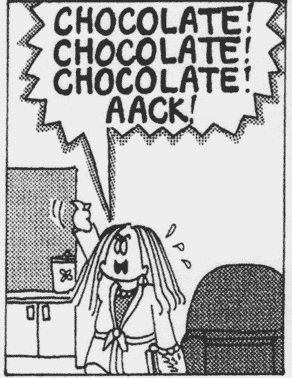
Here’s our regular look at what’s funny (or not) in the funny pages. Because Cathy left us wanting more chocolate and redundant lists of things.

“Classic Peanuts” shows Lucy walking past Linus, in I’ve-got-my-blanket-and-I’ve-tuned-out-the-world mode, and hearing music. She whips the blanket away and finds … Linus listening to what’s probably a transistor radio. We remember those, right? Okay, just tell your kids it’s a Walkman. What? Okay, tell your kids it’s a Discman. What? Okay …

“Pickles” made me laugh. Grampa’s head yields a lifetime of bumps and scars and stories, like when he fell down a flight of stairs, fell out of a shopping cart and got hit in the head with a monkey wrench. “That might explain a lot about Grampa,” the kid says to the dog.

My standards must be low today. “The Wizard of Id” made me laugh. The prisoner asks for “fresh” food and the guard brings him a cooked organic chicken. The chicken came from the farm of a friend, where “it spent its days running around in the sunshine.” The prison sobs. “I just realized I’m jealous of a dead chicken,” the prisoner says from his dank cell.

Often, “Lio” is weird. Sometimes funny too. Today an old man gets a coupon for a free scoop of ice cream. Excited, he runs outside, only to see Lio, remote control in hand, setting off a nuclear explosion with resulting mushroom cloud. Hmmm.

Great “Speed Bump” today. On stage is a rock band, thrashing and shouting lyrics, with an excited crowd watching. At the back of the crowd, an older man and woman. “I hear the morning church service is less contemporary,” he says.

And finally, “The Family Circus” gives us another reason to love the Keane kids. Mom is looking exhausted as she ushers the kids out of the room. “How come when Mommy gets tired WE have to go to bed!” one of the boys complains. “It’s not even that dark outside yet,” Dolly (that’s the girl, right?) says. You know what would make this panel 100 percent better? Eliminating that second line of dialogue. The first was punchline enough.


‘Abraham Lincoln: Vampire Hunter’ – the book was better

I wanted to like the movie version of “Abraham Lincoln: Vampire Hunter.” At least, I wanted to like it a lot more than I did.

Seth Grahame-Smith’s 2010 novel is one of my favorite books in the least couple of years. It is audacious and clever and plays it absolutely straight in telling the hidden history of our 16th president: Lincoln spent much of his life killing the monsters that took his mother away from him (and their comrades), gradually discovering that vampires are at the heart of the conflict tearing the nation apart and propelling it toward Civil War.

Grahame-Smith made vampires among the forces bolstering the Confederacy because of the ready-made sustenance slaves presented for the undead.

Laugh if you want at the outrageousness of Grahame-Smith’s story, but it worked. Lincoln was never treated as a ridiculous figure. And blaming vampires for some of the tragic turns of Lincoln’s life served the plot well.

So I had fairly high hopes for Timur Bekmambatov’s film, adapted by Grahame-Smith himself and starring Benjamin Walker as Lincoln.

My hopes persisted even after I saw footage that seemed to indicate the movie replaced the somber tone of the book’s story with over-the-top action scenes.

After seeing the movie today, I have to say the film gets some things right but goes dreadfully astray with others.

First, the good:

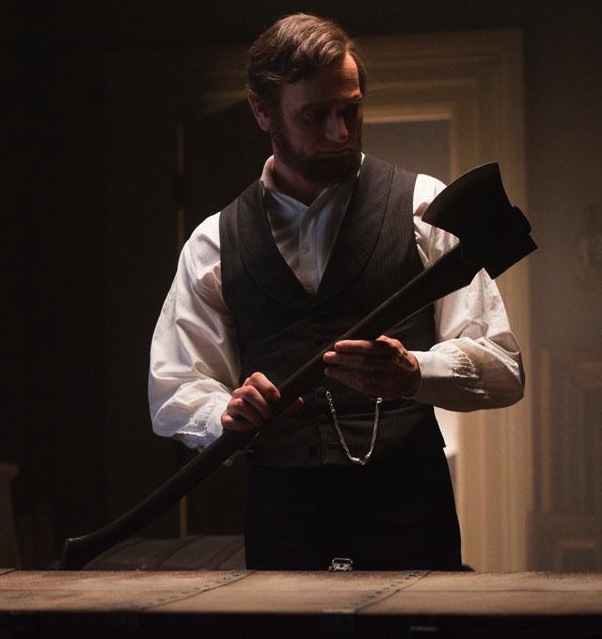
Lincoln’s character is spot on. Walker plays him with the absolute correct amount of gravitas and sorrow. Since much of the movie’s plot – like the book’s storyline – takes place before Lincoln gets to the White House, Walker is quite good as a young, athletic Lincoln, the rail-splitter who knew how to handle an axe.

The mysterious Henry. Dominic Cooper is good as Henry, Lincoln’s mentor in vampire-killing, who has some secrets of his own. In the book, there’s a real tension between the two as Lincoln wants to take revenge on the vampire who killed his mother and Henry strings him along, setting him up to meet and kill other vampires. There’s a bit of that tension in the movie (although not enough).

The tone. While the movie is infinitely flashier and more action-filled than the book, the sorrowful feel of the story – which matches the tragic events of Lincoln’s life – feels right.

The action. Although they were out of left field, two big action set pieces in the movie are quite fun. In one, Lincoln pursues his mother’s killer through a herd of wild horses. In the second, the heroes fight the bad guys on a moving train. There’s the perfect amount of collapsing train trestles and moments when people almost slip off the tops of rail cars.

What doesn’t work, with the biggest minus saved for last (spoilers when we get there):

The Black Best Friend. In the movie, Lincoln has a lifelong friend, William (Anthony Mackie), a free black man who joins in the fight against vampires. William has some very cool scenes and dishes out punishment to vampires about as well as Lincoln does. But the character, which didn’t exist in the book, feels shoehorned into the story.

So does the villain, Adam, played by Rufus Sewell. In the book, a conspiracy of Southerners, sympathizers and vampires make up Lincoln’s shadowy enemies. In the movie, most of the emphasis is placed on Adam, a 5,000-year-old vampire who’s part of the slaves-for-food plot but mostly seems like a character created to give Lincoln somebody to kill in the final reel.

The de-emphasized role of slavery. In the book, slavery and vampires go hand-in-hand. In the movie, the relationship – and the foul strengths vampirism brings to the Confederacy – feel like it’s fairly glossed over.

The final scene (spoilers!). In the movie, after Lincoln and Henry triumph over evil vampire Adam, Henry urges Lincoln to allow him to turn the president into a vampire so the two can fight evil together through eternity. Lincoln dismisses the idea and goes off to Ford’s Theatre and his destiny. Flash forward to present-day when Henry appears to foil a presidential assassination attempt.

That’s it?

How about this for an ending, right out of the book: After the war is won, vampire John Wilkes Booth shoots Lincoln in Ford’s Theatre. Henry tracks Booth and kills him. Henry returns to Lincoln’s side. Flash forward a century. Two distinctive men watch as Martin Luther King Jr. gives his “I have a dream” speech, the Lincoln Memorial nearby. The men are Henry and Lincoln.

Henry observes, “Some men are just too interesting to die.”

The finale of the book was so much better, so much stronger, that changing it, taking Lincoln out of it, very nearly ruined the movie for me.

If you haven’t read “Abraham Lincoln: Vampire Hunter,” you might like the movie’s enjoyably wild action scenes and its heartfelt portrayal of our most tragic president.

If you’ve read the book, the movie will leave you wondering what happened.

‘Metal Men’ movie in the works?

Here’s one for the true geeks: How’d you like to see a “Metal Men” movie?

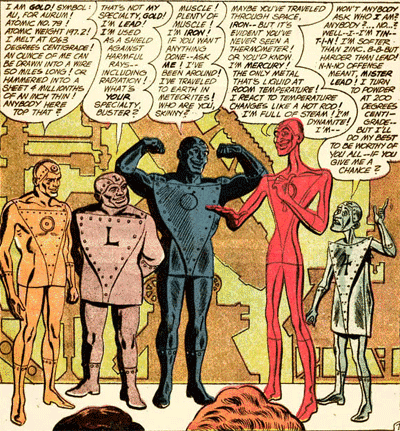
If you don’t remember the Metal Men, they were among the out-the-ordinary heroes of DC Comics in the Silver Age. In the 1960s, besides stalwarts like Superman and Batman, DC featured offbeat comics about oddball characters like the Doom Patrol and the Metal Men.

What was so odd about the Metal Men?

They were robots, named after elements like Gold, Iron, Mercury and Platinum, and had been created by a DC comics scientist, Will Magnus (from the Magnus: Robot Fighter comics).

Each of the Metal Men had not only the physical characteristics of their namesake metal but also, in weird ways, emotional characteristics. So Iron was not only heavy and durable but a pugnacious tough guy. Tin was skinny and pliable. Gold was sturdy and flexible.

Platinum was the only “female” member of the group. Not only was she called “Tina” but she had a crush on Magnus.

The comics helped some of us prepare for future chemistry lessons. Maybe more than our textbooks did.

News broke today on the Interwebs that “Men in Black” director Barry Sonnenfeld, who previously been rumored to be planning a 1960s-era DC Comics movie, was working on a “Metal Men” flick.

Considering that DC and Warner Bros have been struggling to get a “Superman” movie off the ground and hope to succeed with next year’s “Man of Steel,” and remembering the debacle that last year’s “Green Lantern” turned out to be, “Metal Men” might seem to be an odd choice. The characters aren’t first- or second-tier heroes. Maybe not even third tier.

But Sonnenfeld, if the rumors are true, must be pursuing the movie as something of a labor of love. So who knows? “Metal Men” might beat the Justice League onto the big screen and it might be far and away better than some of DC’s misfires.


RIP Victor Spinetti

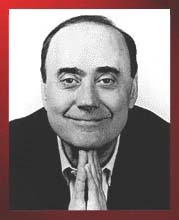
A moment of silence is in order for Victor Spinetti, a wonderful character actor who died Tuesday in London at age 82.

Spinetti was in a couple dozen movies and won a Tony Award for his stage work, but the longtime British character actor was best known for his work in three movies featuring The Beatles.

He played the TV director driven to distraction by the boys from Liverpool in “A Hard Day’s Night.”

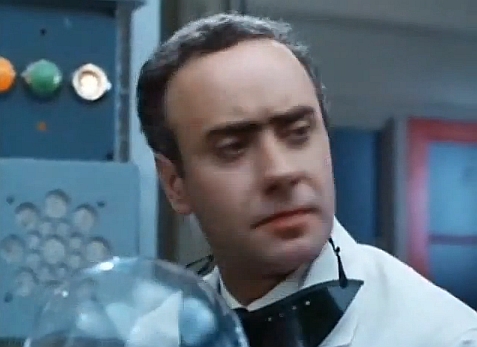
And he was the crazed scientist in “Help!”

Spinetti also appeared in “Magical Mystery Tour.”

He was partnered with fellow Brit Roy Kinnear in the Beatles films and also, in the 1980s, a music video for the Genesis spin-off band Mike and the Mechanics song “All I Need is a Miracle.”

Spinetti’s obits recall his recounting why he so often appeared in Beatles films. Spinetti said that George Harrison told him that if didn’t appear in their films, his “mum” wouldn’t go see them.


Unsung actors: RIP Richard Lynch

Richard Lynch is another of those Hollywood actors whose name you might not recognize. But once you see his face, you think, “Yeah! I know that guy!”

With Lynch, who died this week at his home in Palm Springs, California, there was another reason he was so memorable.

Some of the obits for Lynch, who was 76, note his scarred face. Some attribute it to injuries he suffered in an accident in the 1960s.

Whatever the cause of Lynch’s unusual looks, he used those, his Draco Malfoy-blond hair and his distinctive voice – a mixture of distinctive and gravelly – to make an impression on a generation of movie and TV fans.

For me, Lynch was best known for playing a vampire reborn in modern-day in the 1979 TV thriller “Vampire.” I didn’t know until I read his obits that the TV movie, which was made on the cheap but had an impressive cast and some nice visuals, was a pilot for a TV series. It would have been cool to see Lynch menacing the show’s heroes each week.

Lynch was also familiar to geeks for his role as the villain in the low-budget sword-and-sorcery flick “The Sword and the Sorcerer,” released in 1982.

He had an impressive TV resume that included guest appearances on shows ranging from “The Streets of San Francisco” to “The Bionic Woman” to “Starsky and Hutch” to “Galactica 1980” to “The Fall Guy.”

More recently he starred in a lot of low-budget horror films and appeared in the Rob Zombie “Halloween” remake.

Richard Lynch might not get included in the “In Memoriam” video shown at next year’s Academy Awards. But he’s the kind of memorable character actor that the movie and TV industry is built on.

New ‘Dark Knight Rises’ trailer piles on the thrills

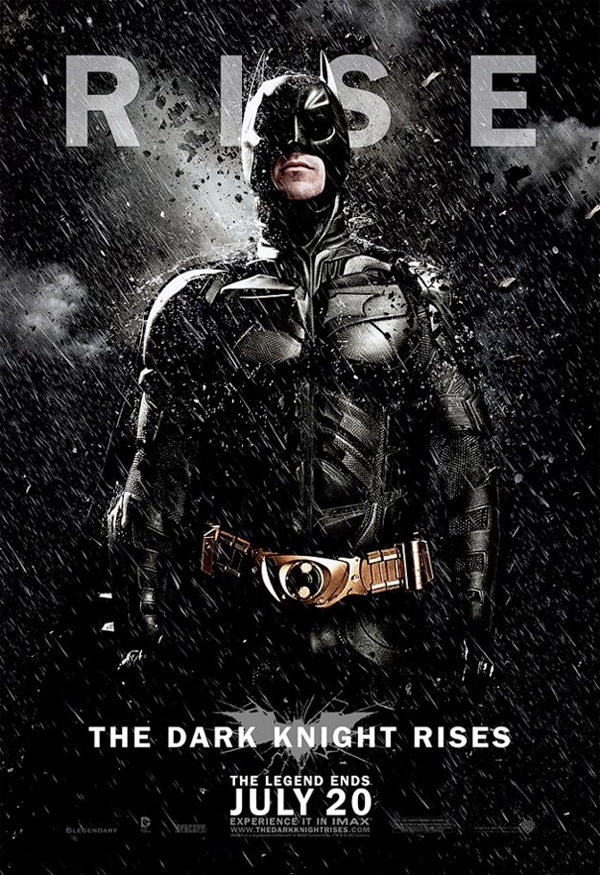
I’ve watched today’s new trailer for “The Dark Knight Rises” a few times now and I’m still trying to catch everything.

Lots of fleeting shots of Batman, Bruce Wayne, Catwoman (less of her than in earlier trailers, though) and especially Tom Hardy’s Bane.

And, interestingly enough, lots of shots of Joseph Gordon-Levitt’s mild-mannered police officer, including an interesting exchange with a boy at the beginning of the trailer.

I tells ya, somethin’ is up with JGL’s character. I threw out my half-baked theory a while back that the Gotham City cop becomes Batman in the movie — or at least fills in, Azrael-style, while Christian Bale’s Batman recuperates.

The movie comes out July 20, which seems like an absurdly long time from now.

‘Longmire’ the TV show vs the Longmire books

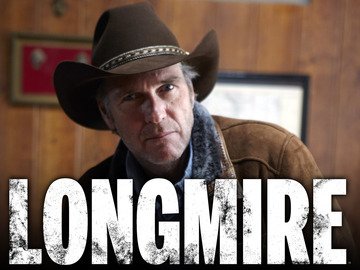
I’m a fan of Craig Johnson’s Wyoming-set mysteries about Sheriff Walt Longmire and the offbeat citizens of his county, so I’m more than willing to give A&E’s “Longmire” series, based on the character, a try.

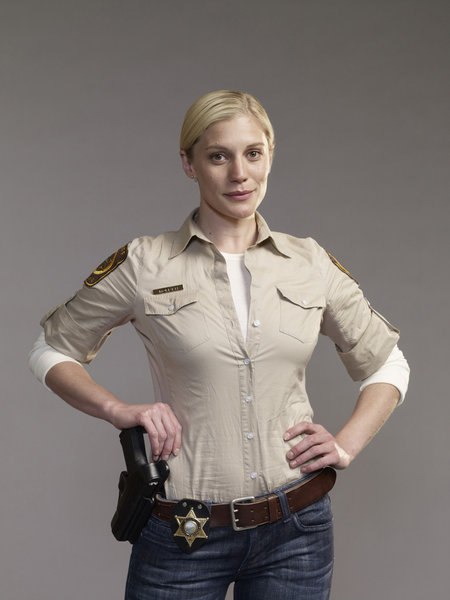
Robert Taylor is really growing on me as Longmire and Katee Sackhoff is ideally cast as Longmire’s deputy, Vic Morelli. Although the show was filmed in New Mexico, the stark, beautiful scenery works for me.

There are some important differences between “Longmire” and the Longmire books, however. Realizing they’re two different animals, I’m overlooking the variances for now.

But just for the record, here’s the most obvious divergences from Johnson’s books:

Cady, Longmire’s daughter. Cassidy Freeman is well-cast as Cady, the young lawyer who plays a central role in some of the novels. But the producers of the TV show made a choice by having Cady a resident of Wyoming rather than Philadelphia as she is in the books. That would appear to eliminate the Philly subplots (more on that next). It’s easier to have a long-distance character in novels than on a TV show, when viewers might wonder, “Why are there so many scenes in which two people talk on the phone?”

Philly: There’s a strong Wyoming/Philadelphia undertone to the books. Cady has a Philly law practice. Vic is from Philly. After the book in which Cady is injured and Walt and Henry Standing Bear go to Philly to find out what happened, Cady meets and falls in love with Vic’s brother, Philly cop Michael Morelli. I’m going to miss the Philly element of the TV series.

Natives: Several of the books, especially the newest, “As the Crow Flies,” have major plots and characters that revolve around the Cheyenne, Crow and other Native American nations represented in Wyoming and Montana. The most recent episode had Walt in a sweat lodge ceremony, an element of the latest book. I’d like to see a much greater representation of indigenous peoples in the books as well as …

The mystical. Almost from the beginning, the Longmire books have featured an undercurrent of the mystical as filtered through Native legends and beliefs. The mystical elements, including spirit guides of sorts who help Walt through tough spots, add a touch most other crime novels don’t have. I wish the series had more of this.

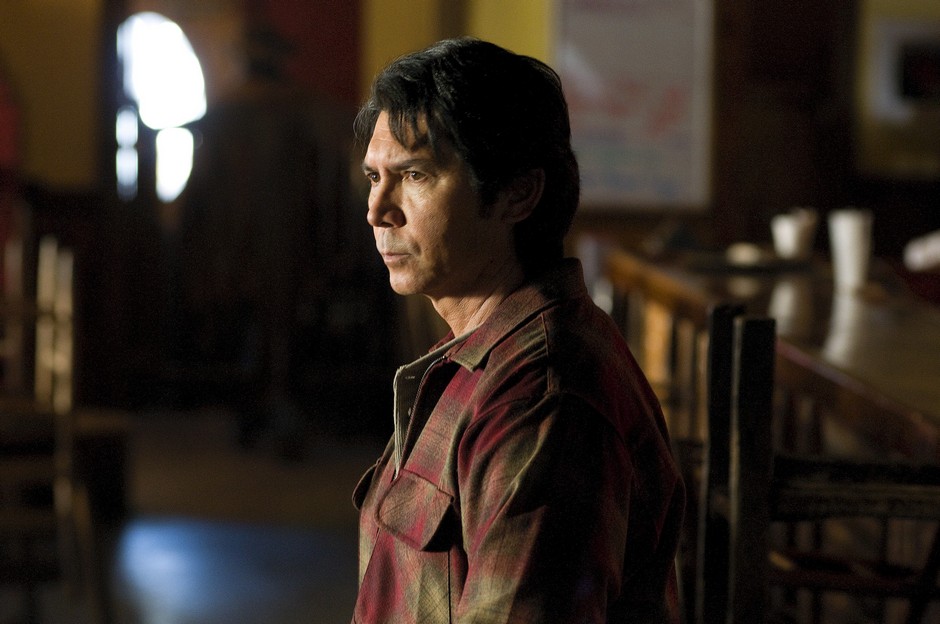
Which brings us to Henry Standing Bear. Lou Diamond Phillips is a very cool actor and he brings a familiar face to “Longmire.” But I’m not sold on him as the in-the-flesh representation of Henry Standing Bear, Walt’s lifelong Cheyenne friend and local bar owner.

I’ve noticed at least one, maybe two, moments in the series in which Walt seemed to doubt Henry, even wondering if he was up to something. That’s a different and not entirely welcome spin on the rock-solid relationship between the characters from the  books. And Phillips isn’t really physically right for role since Henry is such a huge figure. But Phillips is a nice presence and I’m willing to wait to see if he’ll establish himself in the part.

“Longmire” is a pretty good, if unsurprising, TV cop show so far. Here’s hoping it will grow to become even more.