Monthly Archives: September 2012

The Essential Geek Library: The Film Classics Library

It was 1974 and the videocassette recorder was, at least for home use, still on the distant horizon. If movie fans wanted to relive a favorite classic movie, they had few choices. The could wait for an art-house re-release. They could hope to catch it on late-night local TV.

Or they could buy Richard J. Anobile’s Film Classics Library.

Published by Avon and selling for the then-substantial price of $4.95, Anobile’s Film Classics Library was the closest thing to owning a copy of a favorite film that most of us fans could imagine … up until the time we could actually own a copy of a favorite film.

Looking back from the perspective of today’s instant access for movie fans – Want to see a movie? Pop in your disc. Watch it on On Demand. Stream it online. – Anobile’s books were ingenious and just what we needed back then.

Each movie was recreated in the pages of the oversize paperback through every line of dialogue and more than 1,000 frame blow-ups.

The books were, in a way, like comic books. Anobile took images and dialogue from the movies and reproduced them, in sequence, in such a manner that readers could relive the films.

Everything was included except for movement and audio. Opening and closing credits are included, as are lap dissolves and fades, which, Anobile noted, preserve the feel of the film.
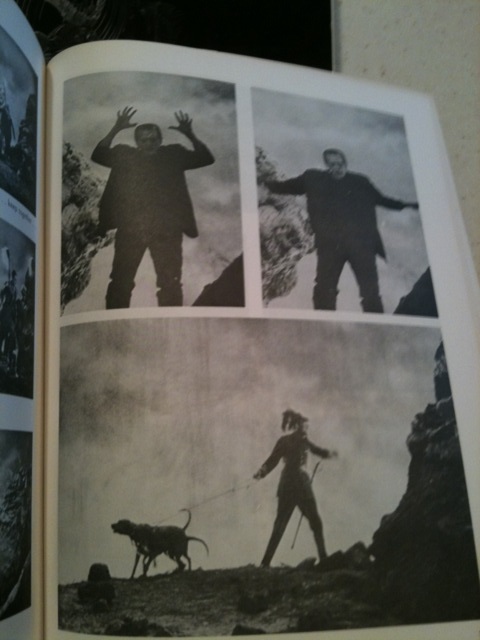
I spent hours of my adolescence studying these books, looking at the still shots and reading the dialogue.

I still own two of the entries from the series, covering James Whale’s “Frankenstein” and Alfred Hitchcock’s “Psycho.” I remember but don’t own Anobile’s recapturing of “Casablanca.” Checking around online today, it appears editions of “The Maltese Falcon” and Buster Keaton’s “The General” were also released.

A few other movies and TV shows, including “Star Trek,” received a similar treatment before the advent of VCRs. None of those later books could match the classic appeal of the FIlm Classics Library.
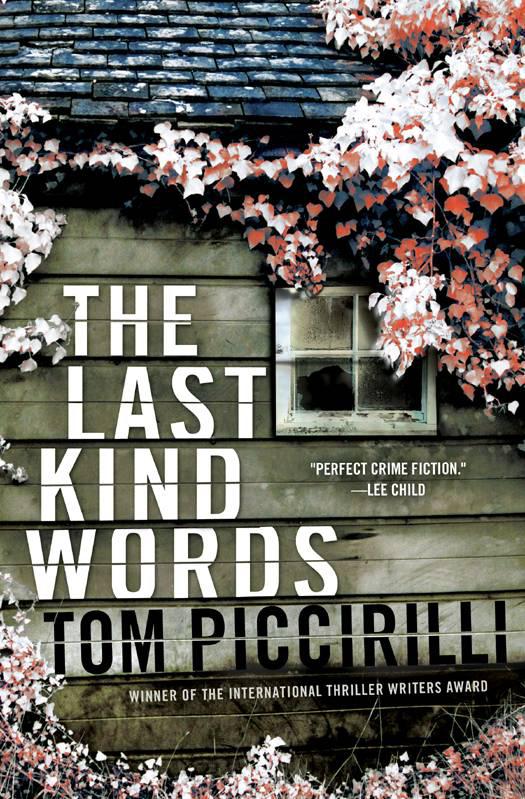
‘Last Kind Words’ mixes crime, family

Most crime novels are told from the point of view of the cops or a PI because that’s who we sympathize with. Author Tom Piccirilli’s “The Last Kind Words” is squarely in the corner of a Long Island, New York, family whose business has been, for generations, crime.

And you’ll find yourself sympathizing with them (at least most of them) and even rooting for them.

It helps that Piccirilli, author of several books, is such a solid writer and that he centers his book on Terry Rand, the youngest son in the family. Terry returns home after a five-year absence. He fled after his brother, Collie, went on a killing spree, shooting, stabbing and strangling several strangers one particularly horrific night.

The family finds Terry and lets him know that Collie wants to see him in the final days before he is executed.

Terry comes back and, reluctantly, returns to his old life and his family’s home. He’s reunited with his teenage sister, Dale; his mother and father, his grandfather and his two uncles.

Dale isn’t in the family business yet, although her current boyfriend is a mob wannabe. But his uncles, Mal and Grey, are still hustlers and card sharps. His father, Pinsch, is obsessed with his porcelain figurine collection but can’t resisting breaking and entering a house now and then. Terry’s long-suffering mom is caretaker for Shep, the family patriarch who, despite being nearly lost to dementia, is still the smoothest pickpocket around.

And then there’s Collie.

Collie has asked the family to contact Terry because of a bizarre twist from the night of the killing spree. In a prison visit, Collie tells a disbelieving Terry that he didn’t kill one of the eight people he was convicted of murdering. The killer is still out there and is still killing.

Terry must overcome his anger at his brother as well as the distance he’s put between himself and his family to try to arrive at the truth.

Plaguing Terry throughout the book: Is evil inherited? Sure, everyone in the family except for their mother and Dale is a thief, a pickpocket, burglar or scam artist. But does that make them evil?

And what pushed Collie over the edge? And could that madness affect other members of the family?

There’s an element of danger for the Rand family in a dogged cop who years ago pursued the family but, because of his own loneliness, has become something of a family member.

But the greatest threat to Terry comes from within himself and within the family.

Piccirilli’s sly sense of humor is an undertone in the book. If you noticed anything odd about the names of the family, Piccirilli gradually reveals that they’re all named after breeds of dog. (Terry’s name is Terrier, for example.)

“The Last Kind Words” is a terrific book. It’s steeped in cool noir, with bad guys and even badder guys.

Best of all, Piccirilli is working on another book about the Rand family. I’ll be reading it.