Monthly Archives: November 2012

First look at Tyreese in ‘The Walking Dead’

The first seven episodes of the third season of AMC’s “The Walking Dead” have blown past us at an alarmingly fast rate – especially when compared to the second season on Hershel’s farm.

So it’s startling that we’re already approaching the mid-season finale, this Sunday, when “Made to Suffer” airs.

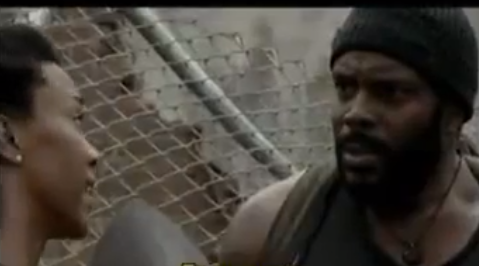
I’ll be looking forward to this one for a number of reasons, including the first appearance for Tyreese, a fan favorite character from the comics who’ll be played by Chad Coleman on the series.

Above is a screen grab from a Spanish-language trailer that purports to show Tyreese and a small group of survivors walking into what appears to be a demolished facility.

Here’s some questions we want to know:

What’s up with Tyreese and the other survivors? We know from the comics that Tyreese soon becomes a staunch ally of Rick. But it almost looks like they enter the prison after it’s been demolished and deserted.

If that’s the prison, what happened to it? We can’t forget that the Governor stole some National Guard equipment from an armory earlier in the season. Does he use it to attack the prison, which he had apparently considered impossible to clear of walkers?

What happens when Michonne takes the bag off the Governor’s walker daughter?
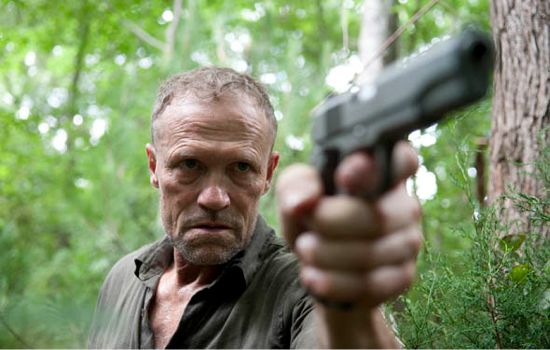
What happens when Merle and Daryl are reunited? Will they clash? Will they make peace?

What happens in the second half of the season, which begins early next year? Is the prison rubble? Will the Governor’s town of Woodbury survive? Will our heroes find themselves on the road again?

We’ll know some of those answers, maybe, this Sunday.
 

Goodbye Larry: Hagman was a class act

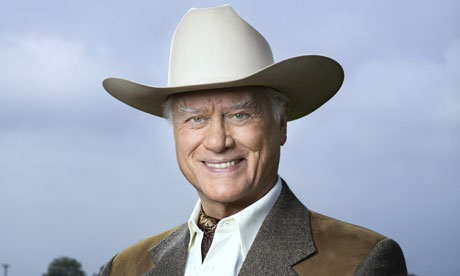
I had a lot of fun last summer watching the revival of “Dallas,” and most of that was because of Larry Hagman. Sure, the plots were fun and the rest of the cast – holdovers and newcomers – were better-than-might-be-expected.

But Hagman, with his devilish smile and crazy eyebrows, was the centerpiece of the revival just as he was in the original series.

The loss to the series and to entertainment in general is enough reason to mourn the passing yesterday of Hagman, who died at 81 after a battle with cancer.

Hagman was, by most accounts, a pretty good guy and someone who knew how lucky he was. He had a big hit with “I Dream of Jeannie” in the 1960s, a long-running hit with “Dallas” in the 1970s and 1980s and the revival last year on TNT. In between, he lived a comfortable life.

The best part about Hagman’s acting and persona was that he seemed to get the joke but never treated it as one. “Dallas” could have been camp and J.R. Ewing might have been a caricature of a villain. But that didn’t happen. And Hagman seemed to know what people wanted out of their favorite TV actor.

I’ve written about the new “Dallas” – which returns in January – and Hagman a few times in recent months.

First there was a look at what we wanted to see in the new series, then a reaction to the first-rate opener, then reviews of the next-to-last and final episode of the season.

Here’s to Larry Hagman, J.R. Ewing and “Dallas.” We’ll always love you.

Classic Thanksgiving: ‘WKRP in Cincinnati’

It wouldn’t be Thanksgiving without some acknowledgement of the most awesome Thanksgiving TV episode ever.

Yes, “Buffy the Vampire Slayer” and “Cheers” had some pretty doggone good Turkey Day episodes. But none could top the 1978 Thanksgiving episode of “WKRP in Cincinnati.”

If you’ve read this far, I don’t have to tell you that “WKRP” was a short-lived but wonderfully silly TV show about a Cincinnati radio station. The show – very similar in characters and execution to the movie “FM” – is a classic of quirky comedy.

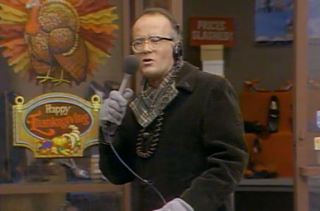
The Thanksgiving episode finds station owner Mr. Carlson (Gordon Jump) feeling a bit out of date with the new, young, trendy rock-and-roll tone and staff of the station.

So Carlson and ad sales guy Herb Tarlek (Frank Bonner) arrange a turkey giveaway. Of course, this isn’t a giveaway of frozen turkeys. They’re fresh turkeys. Really fresh.

As newsman Les Nessman looks on and delivers increasingly horrified narration, turkeys are tossed out of a helicopter.

Not surprisingly, they fall like “sacks of wet cement” to the parking lot below.

“As god is my witness, I thought turkeys could fly,” Carlson tells the station staff.

And a TV classic was born.

‘Dead Man’s Tunnel’ a railroad mystery

Sheldon Russell has written a series of books about Hook Runyon, a hobo-turned-yard-dog – a railroad detective – in the 1940s. The latest is “Dead Man’s Tunnel,” and I think I wanted to like it more than I did.

Russell has created a very pleasant character in Runyon, a one-armed investigator working in a thankless job as a railroad dick on a remote line in Arizona. He’s guarding the titular tunnel that was crucial to moving supplies for the war effort.

I say “was” because, as the book opens, the bomb has been dropped on Japan and the war is over. So why is guarding the rail line and tunnel so crucial? Why did a soldier on duty at the tunnel seemingly kill himself by standing in front of a speeding train? And why is everyone so secretive as Runyon tries to get answers to his questions?

I like Runyon even though I found some of the scenes in the book repetitive. I could have done with a few less hostile phone conversations between Runyon and his boss in railroad security, a little less sarcastic back and forth between Runyon and the owner of the scrap yard where Runyon makes his home.

I did really enjoy the wealth of railroad trivia Russell weaves through the story. I feel like I know a lot more about the subject after reading the book.

And Runyon, with his checkered past and his railroad caboose full of old books, is a great character. I’m hoping some of his other outings are better.


Classic TV: A Quinn Martin Production

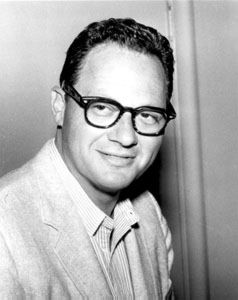
For most of us growing up in the 1960s and 1970s, the words were as familiar as the title theme music of our favorite shows: “A Quinn Martin Production.”

That phrase was usually intoned, in dramatic fashion, in the opening credits of producer Quinn Martin’s series. It was a convention that made his name recognizable even to people who didn’t pay attention to the names of Hollywood producers.

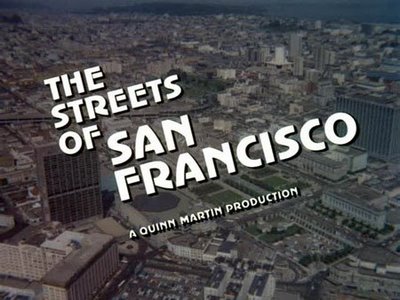
The list of TV series that Martin produced includes some of the best and most popular shows of their time, including “The Fugitive,” “The FBI,” “The Invaders” and “The Streets of San Francisco.”

In the 1970s, Martin’s productions seemed to center around the offbeat detectives of the day, including “Cannon” – featuring William Conrad as a portly detective not above bouncing bad guys into submission with his belly – and “Barnaby Jones,” featuring Buddy Ebsen as a senior citizen detective.

(You might remember that the odd detectives of the day included “Longstreet,” a blind detective, and “Ironside,” the wheelchair-bound detective.)

Martin’s shows feel kind of dated now. I’ve seen episodes of “Cannon” and “The Fugitive” recently and they’re pretty notable for embracing the TV conventions of the day, including endless transitions (long shots of cars tooling along Southern California roads, anyone?) between dialogue scenes and melodramatic music.

Of all of Martin’s shows, I was most partial to “The Invaders” – in which a man stumbles upon an alien invasion and must try to convince others what’s happening – and “Streets of San Francisco,” featuring Karl Malden and Michael Douglas as a veteran cop and his young maverick partner.

One of the most memorable things about the Martin series was the dramatic titles of the episodes.

Courtesy of the List of the Day webpage on Blogspot, a few Quinn Martin episode titles:

“To Ride a Tiger”

“Death is the Punchline”

“Shadow of Fear”

“Web of Deceit”

“See Some Evil, Do Some Evil”

The titles were parodied, years later, in the “Police Squad” series that led to the “Naked Gun” movies. In that Leslie Nielsen spoof, however, the titles on screen didn’t match those read by the narrator.

Martin died in 1987 at only 65 years old. Among his many distinctions at the time was having produced a series in primetime TV for each of 21 years from 1959 to 1980.

‘Skyfall” best Bond in years

In seeing the new James Bond adventure, “Skyfall,” today, I was struck by the thought that I don’t believe I’ve seen a movie that seemed so much like the first film in a series and so much like the last film in a series simultaneously.

I’ll tread lightly in the spoiler department here, have no fear, but let’s just say that director Sam Mendes debut in the Bond series – and Daniel Craig’s third outing as the durable British spy, marking his 50th year in movies – wraps up and reinvigorates the character at the same time.

The recent “Star Trek” remake left me with much of the same feeling. Although it featured a mostly new cast, the presence of so many familiar “Trek” elements – not to mention the presence of Leonard Nimoy as classic Spock – made the movie feel like a new beginning and a summation.

Much the same can be said of “Skyfall,” which opens with Bond and fellow agent Eve (her full name is withheld for obvious reasons by the end of the movie) in pursuit of an agent with the names of MI6 operatives working undercover in terrorist organizations.

After a chase through very familiar-to-moviegoers street markets, over rooftops and on top of  a moving train, Bond is lost and presumed dead.

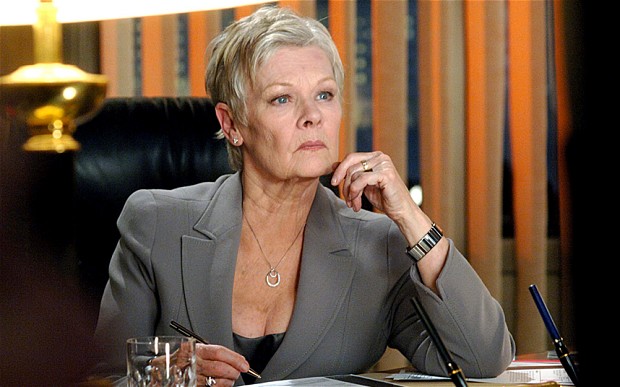
M (Judi Dench) mourns but has other matters to think about. There’s not only the list of agents’ names but someone seems to be targeting her for death.

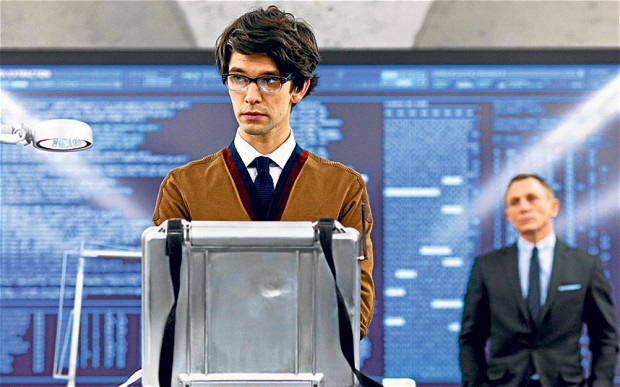
It is an attempt on M’s life that brings Bond back from an island hideaway. M sends him back to work, but not before he meets British intelligence official Mallory (Ralph Fiennes) and the new quartermaster, Q (Ben Whishaw), an impossibly young tech expert.

Before long, Bond finds that M’s tormentor is Silva (Javier Bardem), a former MI6 spy who feels he was abandoned in the field by M.

That’s one of the elements of “Skyfall” that seems most interesting. While Silva has some destructive plans and a bizarre lair on an abandoned city/island, he’s no Dr. Evil-style global extortionist. This is personal between Silva and M and it quickly becomes personal for Bond too.

As much of a feel as we get for M and her life and personality in “Skyfall,” we get the most personal look at Bond we’ve had since he fell in love and married in “On Her Majesty’s Secret Service.”

We learn the circumstances that propelled Bond into the spy game. We see his childhood home. And we see a transformation in Bond during the course of the movie.

I’m not sure if Craig is continuing in the role. It would be a shame if he and Mendes don’t come back for another entry. By the end of this movie, everything is in place for a truly stirring Bond follow-up.

Some random observations:

Rumors circulated that Mendes briefly considered asking Sean Connery to take a small but pivotal supporting role in the movie. He didn’t, and wisely so, thinking it would be too distracting to have a former Bond on hand. Albert Finney does a nice job with the part.

I really enjoyed the origin of the name Skyfall.

I don’t think I’ve seen a komodo dragon menace someone so effectively since “Jonny Quest.”

The movie’s action takes place in a couple of far-flung locales, as usual, but the best scenes are in steel-gray Britain and Scotland.

‘Last Resort’ canceled

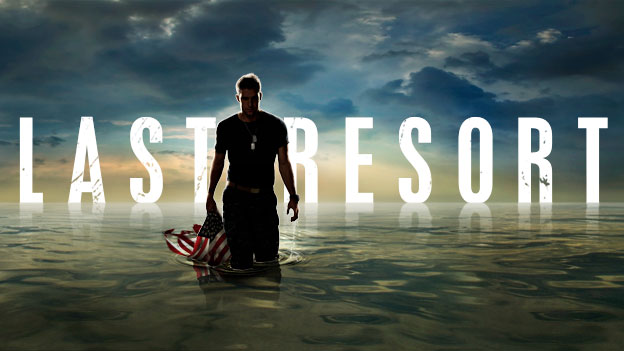
No real surprise here, but ABC today canceled “Last Resort,” the serial drama about a nuclear sub and its crew – led by captain Andre Braugher – who go on the run after their defiance of orders puts them in crosshairs.

“Last Resort had some strikes against it from its first episode:

The name was awful. Really, why in the world would you call a show about the mutinous crew of a nuclear submarine, taking refuge on an Indian Ocean island after being targeted for extermination by a U.S. government conspiracy, “Last Resort.” It sounds like the subtitle to a sequel to “Weekend at Bernie’s.”

It aired at 8 p.m. Thursdays. I know there are only so many timeslots, but why would ABC air an hour-long serial drama at 8 p.m., and opposite “Big Bang Theory,” a hit comedy that would appeal to the same audience as “Last Resort?”

Its mythology and storyline were probably too complicated for many viewers. We had the government conspiracy, the various players on the island, the conflict among the crew, the intrigue involving the D.C.-based defense contractor … Too much going on for viewers who prefer “investigators investigate crimes” for their hourlong TV fare.

I enjoyed “Last Resort” but didn’t lose my heart to it. I’ve been disappointed by the cancelations of too many series, including most of the hour-long dramas introduced in recent years – “Threshold,” “Flash Forward,” “Alcatraz,” etc – to capitalize on the success of “Lost.”

Apparently producer Shawn Ryan says the first 13 episodes will be completed and there will be some kind of resolution. I’ll be checking them out.


Classic horror movies: ‘Chamber of Horrors’

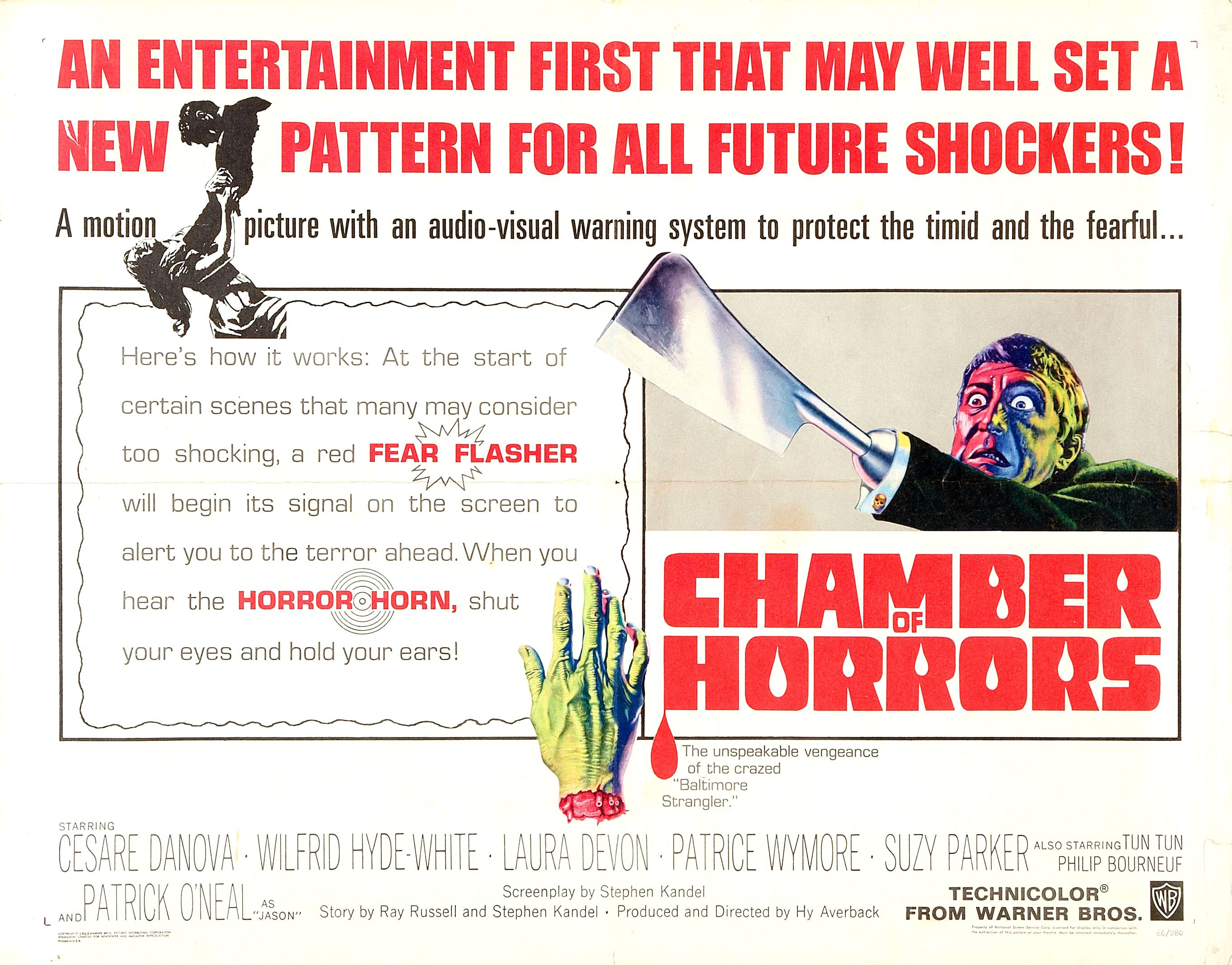
I first became acquainted with “Chamber of Horrors” sometime in the 1970s when it aired on TV. Which was ironic since the movie was made for TV in 1966 – it was even a pilot for a series, as the final “what adventure will we get into next time” scenes makes obvious – but was considered too gruesome for broadcast.

So “Chamber of Horrors” was released to theaters and with that release came the opportunity for a great gimmick.

Cesare Danova and Wilfred Hyde-White are the owners of a wax museum in Baltimore in the late 1800s. They are also amateur detectives, investigating killers who might be good displays for their gruesome House of Wax.

The run across a serial killer, Jason Cravatte (Patrick O’Neal, suave in a cast of suave actors), who would make a likely addition to their chamber of horrors.

If he doesn’t kill them first.

Cravatte is a fun Big Bad because of his gimmick. He’s missing a hand, so – like the villain from “Enter the Dragon,” only years before – he replaces the missing appendage with various murderous sharp objects.

To flesh – no pun intended – out the running time of the movie for theatrical release and amp up the gimmickry, the producers inserted the “Fear Flasher” and “Horror Horn,” visual and audio clues to tell audience members when they should close their eyes or turn away.

When Cravatte was about to chop off a body part, the screen would flash red and ungodly noises would begin blasting at the audience.

If we didn’t understand, narrator Wiliam Conrad explained things to us:

“Ladies and Gentlemen … The motion picture you are about to see contains scenes so terrifying, the public must be given grave warning. Therefore the management has instituted visual and audible warnings at the beginning of each of the FOUR SUPREME FRIGHT POINTS … the HORROR HORN and the FEAR FLASHER. The Fear Flasher is the visual warning. The Horror Horn is the audible warning. Turn away when you see the Fear Flasher. Close your eyes when you hear the Horror Horn.”

Of course, if you dared continue watching, you didn’t really see any gore. Not like the decapitations and amputations on your average episode of “The Walking Dead” today.

But it was a great gimmick.

Personally, I wish “Chamber of Horrors” had led to a TV series. It would have preceded “The Night Stalker” as an episodic horror series by several years and would have been a favorite of all us bloodthirsty movie and TV geeks from back in the day.

‘Oz the Great and Powerful’ trailer fascinates

I’ve watched the trailer for “Oz the Great and Powerful” a few times now and I’ll probably watch it again tonight. The preview for Sam Raimi’s return to Oz – with the backstory of the Wizard from Kansas and those sisters who become witches – is loaded with beautiful shots and glimpses of the movie.

Part of what’s fascinating is how the trailer for the film, starring James Franco, Mila Kunis, Rachel Weisz and Michelle Williams, exploits the visual iconography of the “Wizard of Oz” story.

Want proof? Check this out:

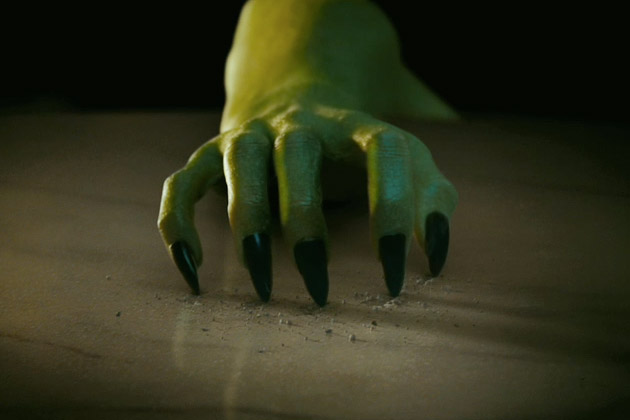
What about that image doesn’t remind you of Margaret Hamilton’s appearance as the Wicked Witch of the West?

Author L. Frank Baum’s “Oz” stories were all over the place not only in terms of the geography of Oz but also the stories and characters.

But the trailer, at least, sticks mostly to territory familiar to lovers of the 1939 Judy Garland movie as well as “Wicked,” the book and play that explores the lives of the witches before they were witches.

Random thoughts about the trailer:

I like the switch from small, black-and-white screen to widescreen, CGI-filled color. I’m guessing the movie follows the format of the 1939 film in that respect, but if not, at least the trailer creates a connection to the classic film by doing so.

The movie looks to be exploring the iconography of the books. The fragile little doll in the movie appears to be a resident of The Dainty China Country, from the first book.

There’s also plenty of familiar characters and imagery, including a healthy dose of Munchkins.

Is the flying monkey who accompanies the wizard comic relief? If so, that will contradict the nightmares of a few generations of little kids.

Who’s the wicked witch? I guess we’re to assume it’s one or both of the dark-haired sisters played by Kunis and Weisz. Or is it a character we don’t see until her appearance in that swirling red cloud?

We’ll know the answers to all our questions in March.


iPhoneography (and otherwise) Falls of the Ohio fossil beds

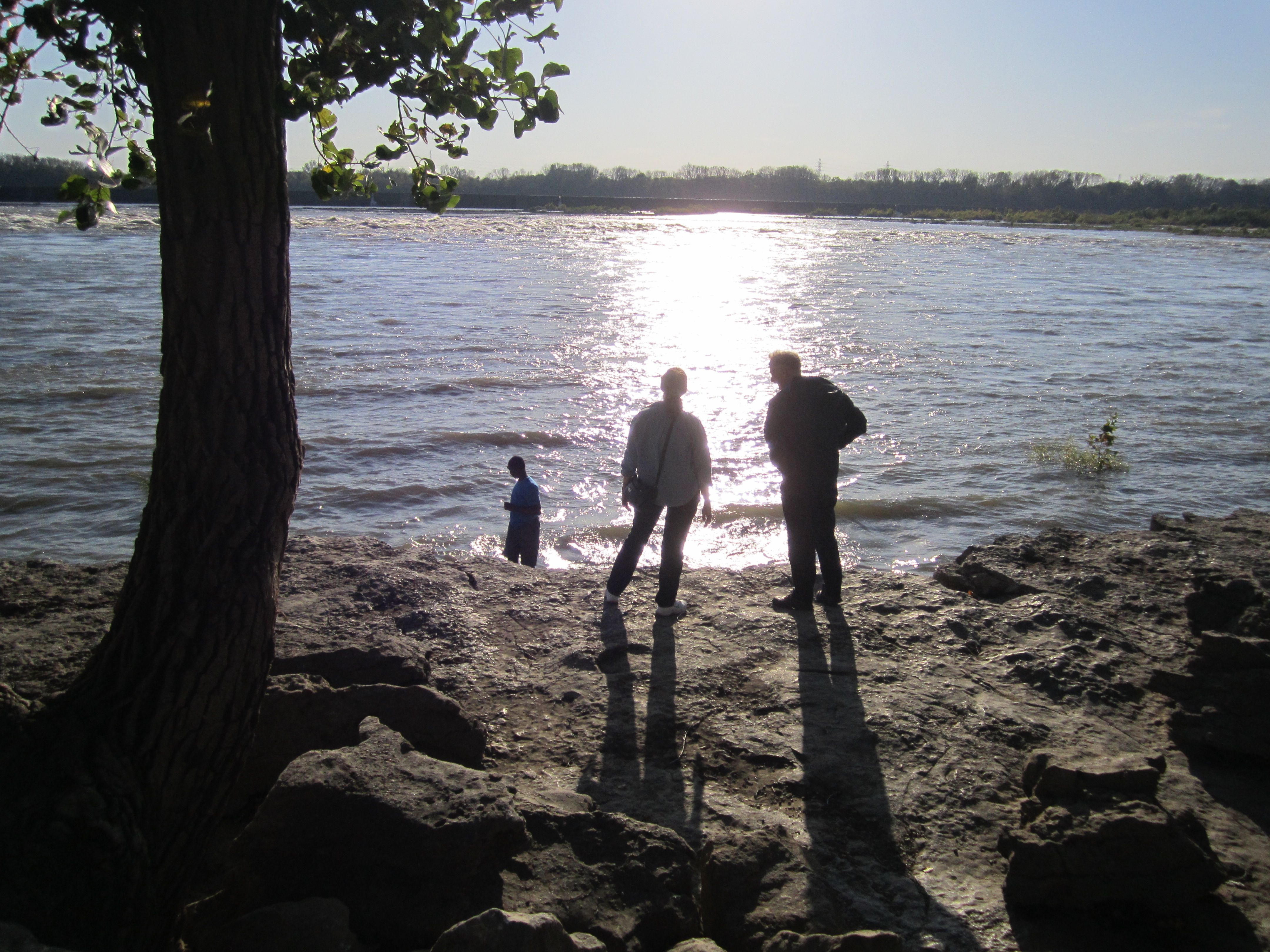
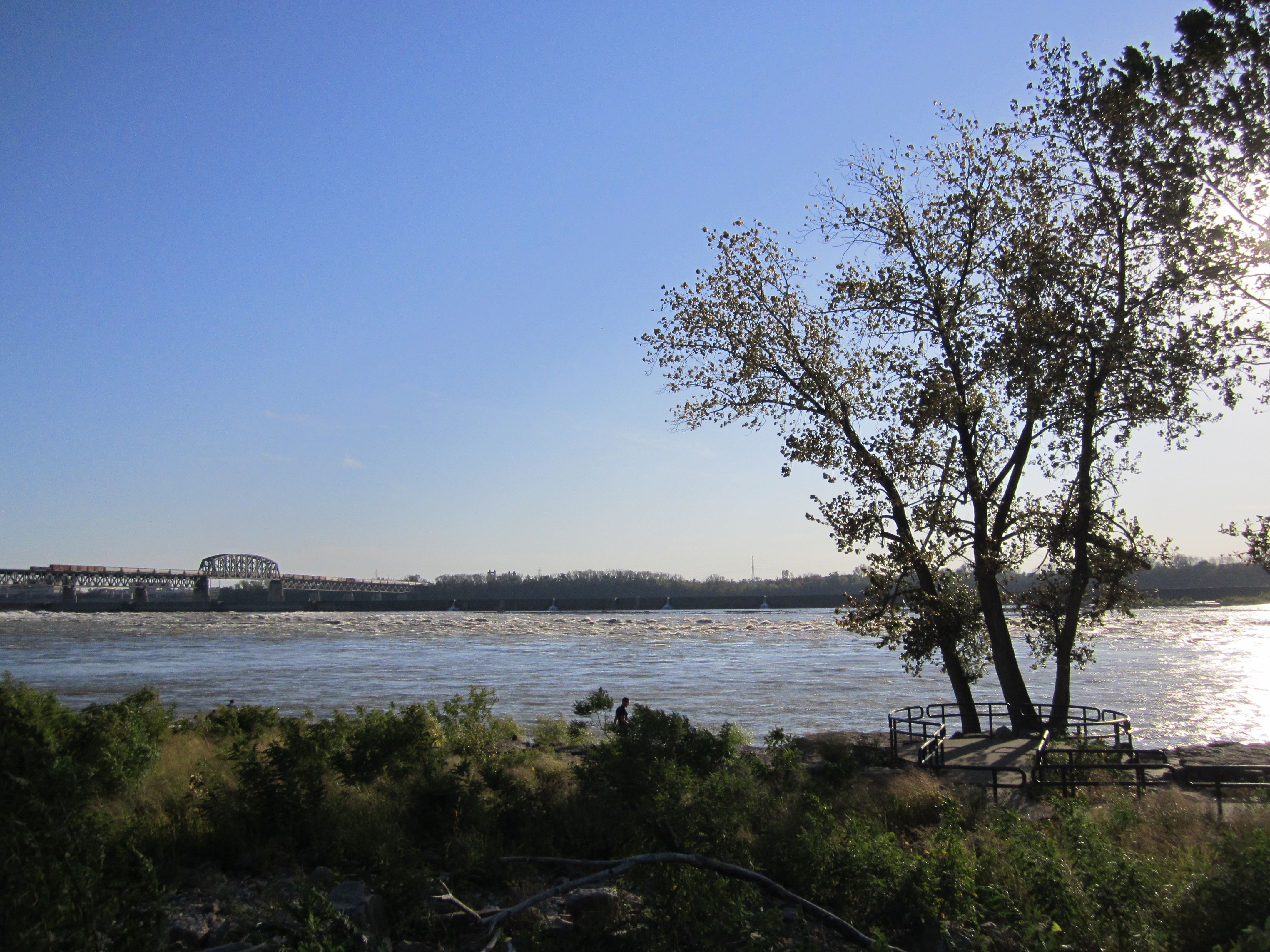
The Falls of the Ohio State Park, on the Indiana side of the Ohio River, is a beautiful place. The river runs between the park’s starkly modern interpretive center and downtown Louisville.

Along the river are 390 million year-old fossil beds dotted with millions of tiny animal and plant remains embedded into rock as well as tiny tidal pools full of water from the river.

There’s an otherworldly feel to the landscape, with driftwood piled high on the Indiana side and the locks of the river on the other.

I’ve been a couple of times now and here are a few pictures, iPhone photos and ordinary digital pics.

Above is a digital shot of sunset along the river.

I love the contrast of tidal pools and the city in the background.