
I think I’ll be live-Tweeting the season finale of “The Walking Dead” in a few minutes on my pop culture Twitter account, @Pop_Roysdon.
See you there.
I think I’ll be live-Tweeting the season finale of “The Walking Dead” in a few minutes on my pop culture Twitter account, @Pop_Roysdon.
See you there.

Maybe it’s laziness. Maybe it’s the lack of good subjects. Maybe it’s my winter fatigue. But I haven’t taken all that many iPhone photos lately and haven’t shared any here.

So I thought I would share a few that I took with my iPhone a couple of weeks ago.

We’re only just now getting out of the grip of winter, but to have a snow like this in March was out of the ordinary. So I thought a trip to Beech Grove Cemetery here in Muncie, Indiana, would make for some nice photos.
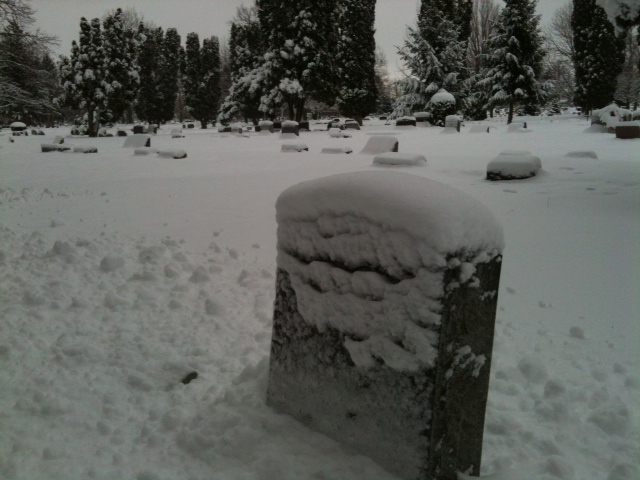
Regular readers know I love old cemeteries. They’re wonderful spots for photography.
Turns out they’re pretty good for wintertime pictures as well.
It’s that time of year. Some of my favorite shows are working toward their season finales, with just an episode or two left. I’m glued to the TV (well, not literally).
Here’s the best of the best:
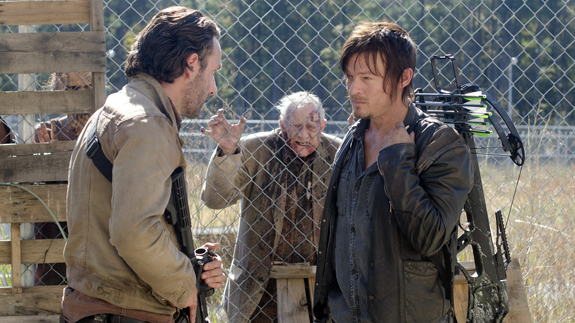
“The Walking Dead.” This season, the third, has been a big improvement over last year, which spent way too much time at Herschel’s farm. Much of the current season – which ends with the season finale Sunday night – has been split between the prison, where Rick and the other survivors have stopped, and the town of Woodbury, where the so-called Governor rules.
Pivotal events this season – the death of Lori, the birth of “Little Ass-Kicker,” the full acceptance into the group of Daryl Dixon, the return of Merle Dixon (the incomparable Michael Rooker) – seemed to come in the first half of the season.
In the second half of the season, its as if the showrunners decided to avoid the problems of season two by not repeating, over and over, scenes of the cast standing around and ruminating.
Instead, episodes have focused on small groups of characters. Like “Clear,” in which Rick, Carl and Michonne go back to Rick’s old sheriff’s station in search of weapons only to find that Morgan (Lennie James), Rick’s friend from the first season, has holed up in the town.
Morgan has lost his mind after losing his wife and son, and his madness and complete failure to cope with the post-apocalyptic world sent a message to Rick (Andrew Lincoln), who was spending too much time in Crazytown himself.

Other episodes focused on Daryl and Merle – ending tragically for the newly reunited brothers – and on Andrea and the Governor, both of whom came off as badasses.
I’ll be watching the season finale, “Welcome to the Tombs,” this Sunday.
Meanwhile, “Justified,” the FX show about Deputy U.S. Marshal Raylan Givens (Timothy Olyphant), continues to be one of the most clever and sarcastic shows on TV. The over-arching storyline of the season, ostensibly, was the 30-year-old mystery of thief Drew Thompson, but the story is less important than the parade of great characters we’ve been able to enjoy, ranging from the regulars – who have more to do this season – to great new faces like Constable Bob (Patton Oswalt).
“Justified” has always had some uneven moments, but this season has had some of the best episodes of the series to date. The season finale airs Tuesday night.
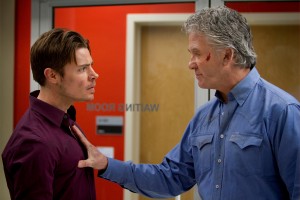
There’s another sort of pleasure to be had from “Dallas,” the continuation of the classic American soap opera about the Ewing clan of Texas.
The death of beloved actor Larry Hagman in November left the show in a tough spot mid-way through the second season: How to continue without J.R., a character who symbolized the show even as the real-life illness of Hagman reduced his presence in the new series.
The producers have handled Hagman’s passing well. On the show, J.R. died, the victim of a shooting, in Mexico. But the scripts have taken the mystery of J.R.’s death in a new direction, with Bobby (Patrick Duffy) and the younger generation of Ewings trying to figure out why J.R. was trying to find Pamela (Victoria Principal in the original series, who is apparently not returning).
J.R.’s presence still figures into the show and his death allowed for the return, even briefly, of classic “Dallas” characters like Gary Ewing, Val Ewing and Afton Cooper.
The show has five episodes remaining this season, so we can look forward to more Ewing scheming in the weeks to come.
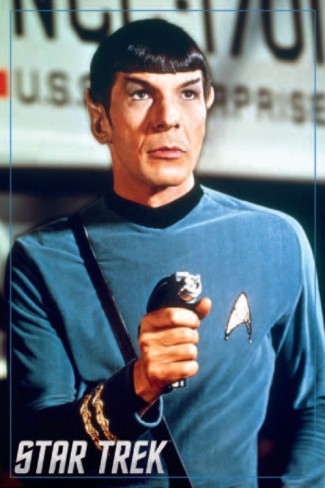
This poster adorned my wall and the walls of many other young fans of the original “Star Trek” series.
Leonard Nimoy as Spock, phaser in hand, shuttle craft in the background.
I don’t know much of the history of this image – a publicity shot from the original series – but by the time the series had blossomed into a fan phenomenon in the early 1970s, somebody was making a lot of money selling this poster.

Continuing a look at the images that were part of our childhood.
If you grew up in the 1960s, you dealt with a lot of these: Paper record album sleeves.
Ostensibly meant to protect the vinyl from getting scratched – I guess; what other reason would there be to have them? – the paper sleeves were like an extra layer of stuff to get through before you got to the music.
Did you place the paper sleeve, vinyl record inside, into the record album cover with the opening to the top? If so, you have to remove both the paper sleeve and album to play the record.
Did you insert the paper sleeve with the opening on the side, to coincide with the opening in the album cover? If so, you ran the risk of your precious vinyl sliding out prematurely and hitting the floor.
That’s the kind of thing we had to worry about back then. Oh yeah, and also nuclear war with the Soviet Union.

It wouldn’t be a “Star Trek” movie without some huge doubts and bitter recriminations. And that’s before the movie even opens.
The new trailer for “Star Trek Into Darkness,” due out in May, has lots of action: Kirk and Spock and Uhura and company tear around – and fly around – shooting guns and facing off with Benedict Cumberbatch as the villain, who a lot of people thought would be Khan but probably isn’t.
The complaints I’ve read so far online seem to be based on concerns the movie is too earthbound, that there’s not (at least immediately obvious from the trailers so far) a lot of spacecraft battle scenes that were never done better than in “Star Trek II: The Wrath of Khan.”
You know what? I’m okay with that. A lot of episodes of the original series and even long stretches of the movies were not set in space, but planet-bound. If it’s a good story, it’s a good story. Example: “Star Trek IV: The Voyage Home,” which plays out, for the most part, in 1980s San Francisco.

Random thoughts about the trailer:
The overwhelmingly dominant color palate is the ice-blue, steely look of a lot of modern thrillers. It does add to the foreboding effect.
“The man who did it is one of our top agents,” the Starfleet official played by Peter Weller says at one point. Cumberbatch – is that a Starfleet uniform he’s wearing? – would appear to be something other than Khan, newly reawakened from a centuries-long nap. Or is he?
Cumberbatch (“Sherlock”) looks cool as hell. But he’s awfully threatening-y, isn’t he? Maybe too much. Is this guy gonna break into monologuing? “I will walk over your cold corpses,” indeed.
The scene with the Star Fleet vessel piloted by Kirk slipping sideways through some canyon or other has ticked off people who think it’s a rip-off of “The Empire Strikes Back.” Well, it has been 32 years.
The Enterprise takes a beating, falling through the atmosphere and plunging into the bay. We’ve seen that before. In fact, in “Star Trek III,” it was entirely destroyed.

Alice Eve as Carol Marcus. Wonder why they put this shot in the trailer?

I wasn’t familiar with Kurt Andersen before I read “True Believers,” his recent decades-spanning novel. I didn’t know he’d written other books or hosted an NPR show or co-founded Spy magazine. For that last reason alone, Andersen should go down in the snark hall of fame.
But I wouldn’t have guessed any of those things, really, about Andersen from reading “True Believers.” Actually, I don’t think I would have guessed the author was male. The narrative voice of the story – a 60-something female lawyer, remembering her days as an earnest young girl and would-be political anarchist – is that authentic.
Andersen tells the story of Karen Hollander, aforementioned attorney and one-time-potential Obama nominee to the Supreme Court. As the story opens, Hollander tells the readers she’s working on an autobiography. But she teases that it’s unlikely to be the book that people who’ve seen her on TV talk shows would expect.
That’s because, as Hollander weaves her modern-day efforts to solve one mystery of her past, she recounts her time growing up in the 1950s and 1960s, her relationship with her liberal parents in the Chicagoland area and her two best friends, Chuck and Alex.
Karen, Chuck and Alex are fans of Ian Fleming’s James Bond novels, devouring them as they are published. Then they act out scenes that, if not really from the books, are in the spirit of the books.
The boys might play Bond and CIA operative friend Felix Leiter, for example, while Karen plays a female operative or femme fatale, like the narrator of “The Spy Who Loved Me.” They aren’t slaves to the stories and come up with their own funny variations. In one escapade, Karen mixes sugar into her Coke at a restaurant and cajoles a man at another table into sipping it to see if there’s anything wrong with it. Mission accomplished: Karen reports to the boys that she’s just poisoned James Bond.
As the three get older, inevitably, other considerations come into play. Karen and Chuck begin to see each other, leaving Alex feeling like the odd man out. As they go to college, other friends enter their small circle.
But they are fated to take on a mission that rivals any of their pretend-spy adventures. The socially conscious three decide to commit an act of protest – or domestic terrorism – that Karen finds haunts her even in the present day.
Andersen does a fine job moving back and forth from the adult Hollander’s investigation into secrets even she didn’t know from her college years to those years and the shocking plot the friends undertake.
“True Believers” is a – strangely enough – charming story, largely because of Andersen’s ability to write the smart, funny and vulnerable Hollander with such an authentic voice.
It won’t happen, and it probably wouldn’t be appropriate, but “True Believers” makes me wish Andersen would give us other adventures of Karen Hollander. She’s a brave and appealing character and I was sad to say goodbye to her at the end.
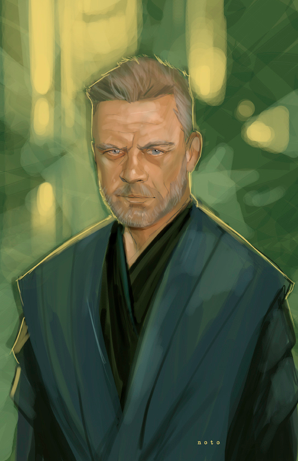
Okay, here’s a two-fer. Maybe it’ll make up for how lax I’ve been in postings lately.
We’ll, probably not. But they are, respectively, cool and interesting.
Above is artist Phil Noto’s imagining of a cool middle-aged Mark Hamill as a cool middle-aged Luke Skywalker.
If they could pull this off, I’d be happy.
Here’s Noto’s website with his beautiful art.
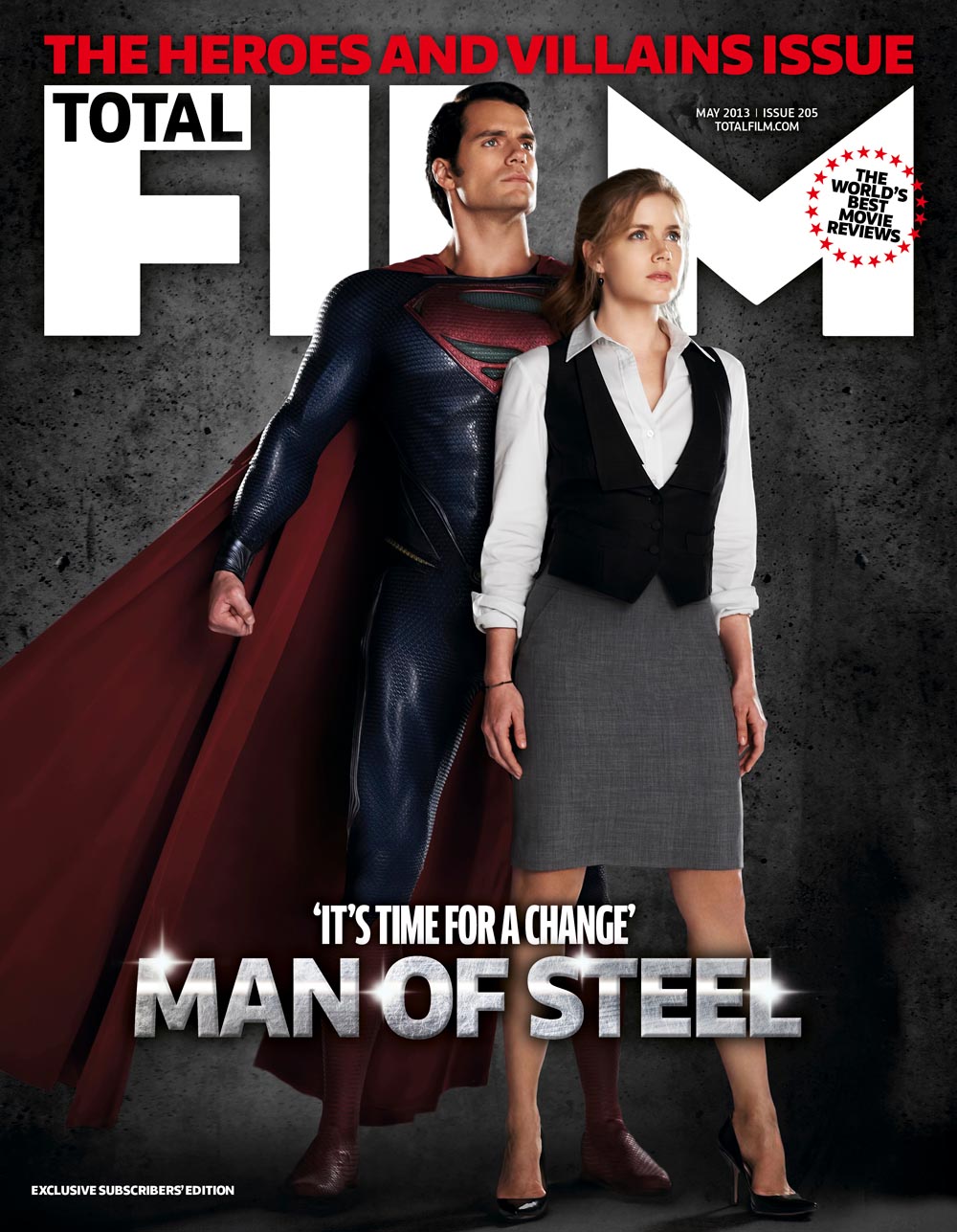
And here’s the cover of Total Film magazine with a look at Superman and Lois from “Man of Steel.”
I’ve read more positive things about the movie, which comes out in May, lately. We’ll see.
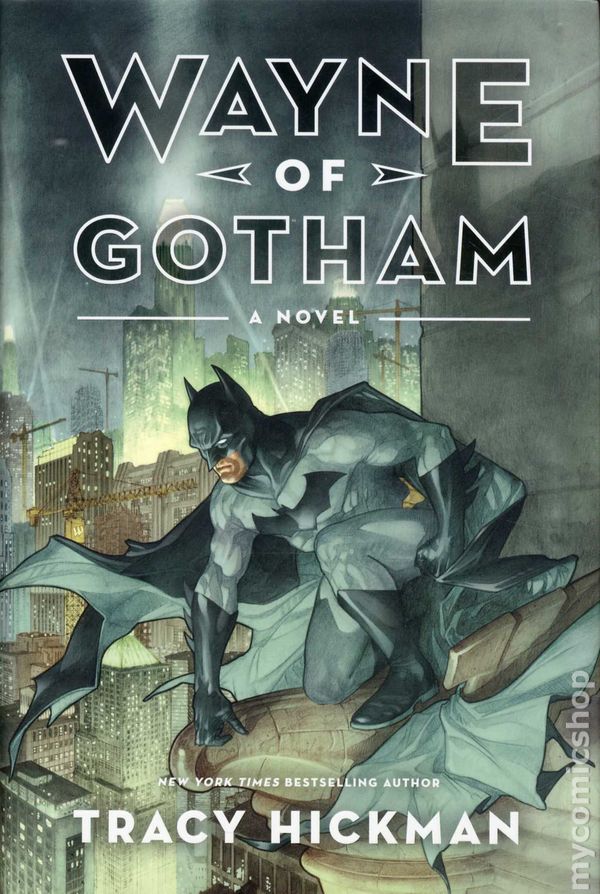
There’s a surprisingly long history of comic book superheroes appearing in novels, either hardcover or paperback. Some of us have shelves lined with prose treatments of our favorite heroes.
Having just read “Wayne of Gotham,” a recent novel by Tracy Hickman, I thought I’d make mention of a couple of notable ones.
First, “Wayne of Gotham.” Hickman’s story alternates between two time periods, the present day, as Batman tries to unravel a decades-old mystery, and the late 1950s, when his father, Gotham physician Thomas Wayne, dealt with a threat to his beloved city.
The 1950s storyline, of course, takes place several years before the events of the Batman comics that created the Dark Knight: Thomas and Martha Wayne are gunned down in an alley, while their young son watches, by a deadly criminal. Young Bruce Wayne devotes his life to fighting crime, as we all know, as Batman.
In Hickman’s book, chapters alternate between the present and the past, recounting a mystery that confronted both generations of Waynes.
In some ways, it feels like Hickman’s most daring decision is to depict an aging Batman who fights crime now with the help of high-tech devices. Sure, Batman still enjoys a good scrap. But he’s middle-aged and all those midnight battles have taken a toll on his body.
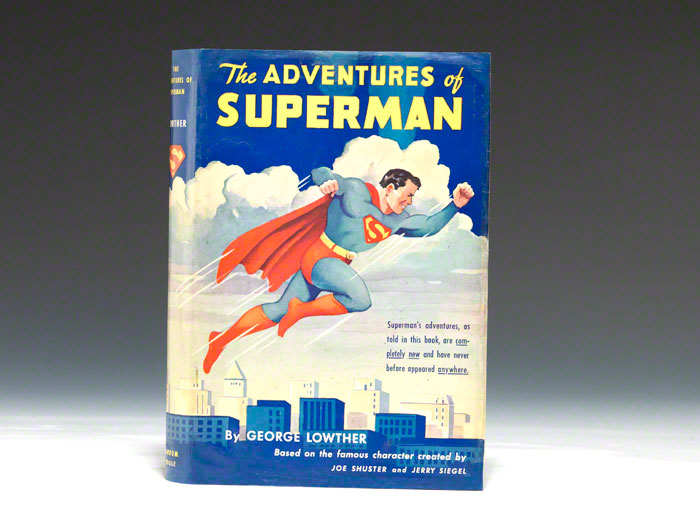
The granddaddy of all superhero books is George Lowther’s 1942 novel “The Adventures of Superman.” The character of Superman had been around for a few years by the time this hardback book was published, but the impetus for the book was no doubt the very popular “The Adventures of Superman” radio series. Lowther was a writer on the show as well as many others.
(Fun fact about Lowther, who died in 1975: He also wrote more than 40 episodes of “CBS Radio Mystery Theater,” the last of the widely heard radio dramas, in 1974 and 1975.)
Lowther’s Superman novel, which was reprinted in 1995, was the first novelization of a comic book superhero, of course, but also contributed to the mythology of the character, naming Superman’s parents on Krypton Jor-El and Lara, varying from the earlier Jor-L and Lora from the comics.
(Another fun fact: The radio series introduced several of the core Superman mythos concepts, including Kryptonite, that elemental remnant of Superman’s home planet that can be dangerous to him. Although the radio show is largely unheard these days – I have an audio cassette boxed set from 20 years ago – it contributed a lot to the character.)

Probably my favorite modern-day superhero novelization is “Enemies & Allies,” a 2009 novel by Kevin J. Anderson.
Set at the height of the Cold War in the 1950s, the novel recounts the early, uneasy meeting between Superman and Batman as they team up to battle Lex Luthor, who is stoking 1950s-era fears of nuclear war and alien invasion.
Anderson’s book is terrific. It’s a good treatment of vintage superheroics and is quite faithful to the feeling of mutual suspicion replaced by growing trust between Superman and Batman. I wish he’d come back to the characters.
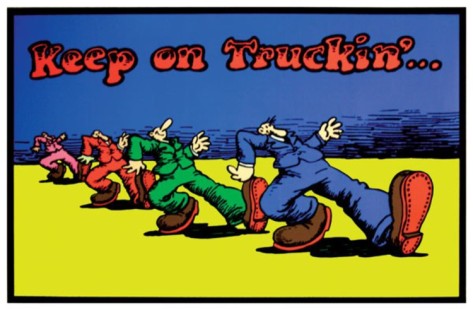
How many bedroom walls were adorned by Robert Crumbs’ “Keep on Truckin'” poster in the 1960s and 1970s?
All of the bedroom walls. At least in my world.
Crumb, of course, was the artist better known as “R. Crumb” who enlivened the pages of alternative and underground comics (comix) with crazy detailed scenes featuring big, meaty women.
His “Keep on Truckin'” poster is a classic of its kind and shows a series of Crumb’s offbeat men putting their best feet forward as they cross a flat landscape.
According to the Interwebs, the image originated in Zap Comix in 1968 but quickly became pirated, appearing on posters and T-shirts and every imaginable product offered to the counter-culture. Crumb spent part of the 1970s in court, trying to prevent copyright violations on his drawing, and his legal battles have stretched into recent years.
Most recently, he sued Amazon because the website used the drawing on its site for when a search bottomed out with no results.

Crumb has called the iconic drawing “the curse of my life.”
Crumb has his own offbeat sensibilities, obviously. Evidence of this: He reportedly turned down Toyota’s offer of $100,000 to use the art in advertising.
 keithroysdon