Monthly Archives: May 2013

‘Longmire’ kicks off second season closer to the target

longmire logo

As a fan of Craig Johnson’s series of crime novels about Wyoming Sheriff Walt Longmire, I was a little disappointed with the first season of the TV series version that aired on A&E.

You can catch up with what I thought here, but it boiled down to: Not enough of Johnson’s trademark mix of tall, dark and quiet heroes and quirky plots.

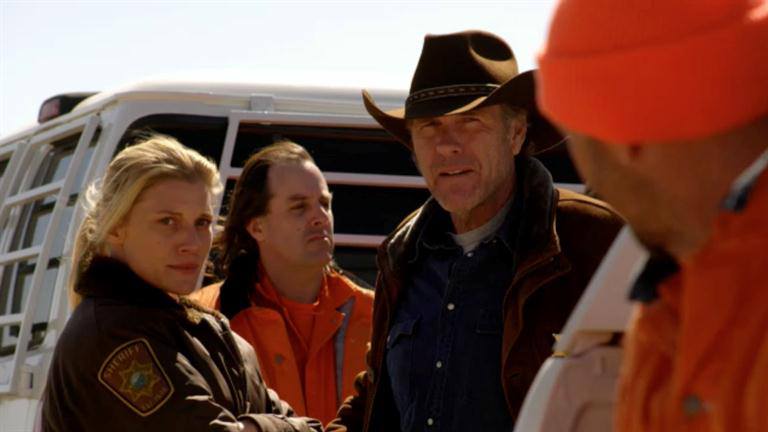
longmire and vic

Last night’s second-season debut, though, was closer to the target. The episode was based in part on a Craig Johnson book, “Hell is Empty,” which puts the sheriff in harm’s way as he transports a series of prisoners – including a man who killed a child several years ago – through his county and over a mountain … just in time for a blizzard.

The single hour of television couldn’t begin to capture all of Johnson’s straightforward plot and rich characters. But it came closer than any first-season episode.

The series is also coming closer to hitting the mark in the way it portrays Johnson’s characters. I’ve got to say I’m enjoying the heck out of Robert Taylor as Longmire, for whom “less is more” truly describes his spare speaking habit. Really, the less the writers give the sheriff to say the better – and not because Taylor’s not a good actor. He’s good, but he’s perfect with a long stare and grumble

I loved “Battlestar Galactica” vet Katee Sackhoff as Walt’s deputy – and is very tentative love interest the right way to describe her? – Vic Moretti from the moment she was cast and I’m still enjoying her.

Bailey Chase and Cassidy Freeman are quite good as Walt’s ambitious deputy and daughter, respectively.

I’m growing to like the terrific Lou Diamond Phillips as Henry Standing Bear, Walt’s longtime friend and confidant. Phillips is making questionable casting palatable.

One big plus for me with last night’s episode was an injection of the Native American mythos and mysticism that marks Johnson’s books. As Walt trudged through snow to track the prisoners, Henry and other figures – including an impressive owl – appeared to him. Thanks in part to Henry, spirit guides and the connection between the Wyoming characters and the earth are present throughout the books.

I’m still not convinced I’m buying the subplot about the death, before the show started, of Walt’s wife. She died from cancer in the books and, while her passing has left a huge shadow across Walt, it isn’t the stuff of an ongoing mystery.

I wasn’t sure I was going to check out “Longmire” this second season. The season premiere definitely encouraged me to come back for more.

‘Dragnet’ – Joe Friday on the job

dragnet the badge racket

I love “Dragnet.” Really.

The classic Jack Webb series – which ran in the 1950s and in the 1960s, although I’m really only familiar with the latter show – has long since become a touchstone for parody with Webb’s “just the facts, ma’am” writing, direction, casting and performances. But the show has a lot of virtues.

I’ve written about it as a LA travelogue before, for example.

Each half-hour episode quickly and concisely tells a story of crime and punishment in Los Angeles. Sure the show is ripe with silly hippie portrayals and overreaches in it’s messages. But Webb was master of the 30-minute (minus commercials) drama like no one since Rod Serling – and maybe no one since.

Still, it can be more than a little unintentionally funny.

I was watching an episode today – “The Badge Racket,” from September 1967 – in which Gannon (Harry Morgan) goes undercover at an LA hotel to catch a threesome blackmailing out-of-town businessmen. A bimbo barges into the businessman’s hotel room and then two guys, posing as cops, shake him down for money in lieu of telling the folks back home in Nebraska or Iowa or wherever.

As Gannon leaves the hotel with the crooks, Friday follows in a “loose” tail.

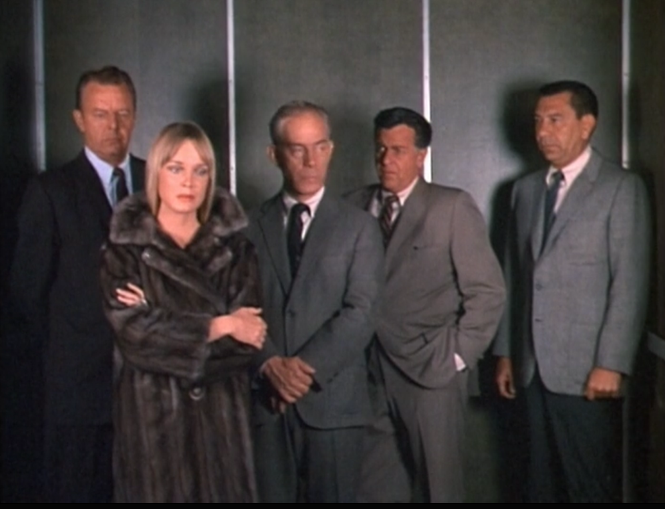
When they get to police headquarters – it’s all part of the crooks’ plan, so just go with it – Friday tightens that “loose” tail and is seen riding the elevator with them in a “don’t mind me, folks” moment.

dragnet the badge racket

The scene very nearly made me fall out of my chair laughing. I looked around online and was able to find a screen cap on the wonderful site dragnetstyle.blogspot.com.

Love it.

‘Criminal Enterprise’ a top-notch thriller

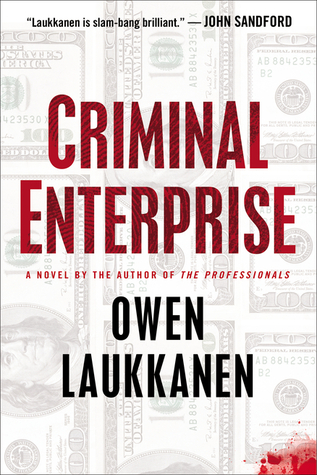
criminal enterprise owen laukkanen

Owen Laukkanen is just a couple of years into life as a published author of crime novels, but he’s already created one of the most enjoyable series in bookstores.

His two books – so far – about FBI agent Carla Windermere and Minnesota police investigator Kirk Stevens are immensely readable stories of cops and crooks.

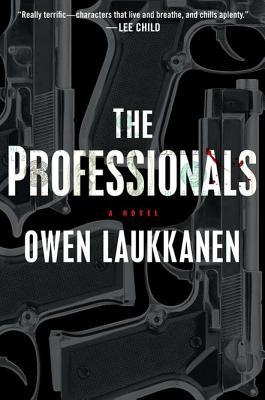
the professionals owen laukkanen

The first, “The Professionals,” would seem to be in the vanguard of books inspired by the Great Recession. Its criminal foursome are young people fresh out of school and unable to get hired. They decide to become professional kidnappers. Their modus operandi? Kidnap well-off but low-profile targets and ask $60,000 on the assumption that the kidnap victim’s family will easily be able to pay that small an amount. It works for a while but goes awry when they stumble upon the wrong target: A businessman connected to the mob.

In “Criminal Enterprise,” the central bad guy is Carter Tomlin, an accountant with a wife and kids who gets in over his head, financially, and decides to make money the old fashioned way: Bank robbery. Tomlin’s a different case than the four somewhat sympathetic anti-heroes of “The Professionals,” however: He not only enjoys the influx of cash from his robberies but gets off on the violence, particularly when committed in the company of his alterna-girl assistant and fellow robber.

Into the mix in both cases come Windermere, young and tough and an outsider in the FBI, and Stevens, happily married and settled into middle age and a long career in the Minnesota state police’s criminal investigations bureau.

The two cops, who end up working together by happenstance, are a good fit. Stevens balances out Windermere’s fiery demeanor with his cool calm.

Laukkanen doesn’t dip into the criminal world quite the way Elmore Leonard does, but his bad guys are compelling and relatable. Windermere and Stevens are the anchors of these books but Tomlin in the second book and the four kidnappers in the first book are absorbing characters. The author is working on the third book in the series, which is good news for fans of contemporary crime thrillers.


Cushing, Price and ‘Madhouse’

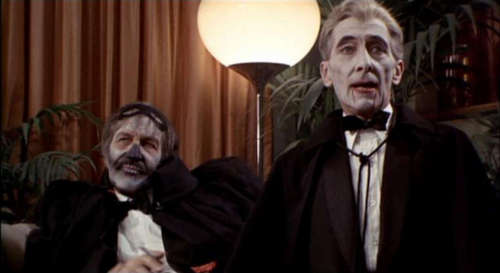
madhouse price cushing

Today, May 26, was the 100th anniversary of the birth of British actor Peter Cushing – best known in some quarters as Imperial Gov. Tarkin, who holds Darth Vader’s leash rather loosely in the 1977 classic “Star Wars” – so I marked the date by watching one of his later horror films, “Madhouse.”

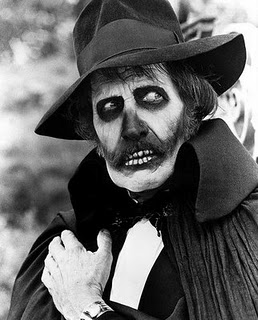
It isn’t a great role for Cushing, who died in 1994 after a long, distinguished and beloved career. He’s a supporting player to Vincent Price, who stars as Paul Toombes, an aging actor lured out of retirement to reprise his role as Dr. Death, anti-hero of a series of horror thrillers.

Released in 1974, “Madhouse” had the distinction of being the last movie Price made for American International Pictures, home of the classic adaptations of Edgar Allen Poe in which Price starred in the 1960s. The movie business was changing even by then and AIP was looking to replace Price with Robert Quarry, who was the third male lead here. Quarry had made a little splash as Count Yorga, a modern-day vampire, and it’s said AIP and producer Samuel Arkoff thought he, rather than Price, was the future.

But horror movies were about to see a huge change. Long the province of a particular breed of actor, like Price and Cushing, and director, like Roger Corman, and producer, like Arkoff, horror films were proven to be worthy of mainstream attention in 1973 when “The Exorcist” was a huge hit. Low-budget horror movies were still drive-in theater fare and would be for several years to come, but by the time “Madhouse” rolled around, people were looking for the new, the young and the shocking in their horror films.

madhouse price

“Madhouse” also held the distinction of being able to evoke the nostalgia, perhaps the last of its kind for its type of film, for earlier horror films. It could do this because of Price’s long-running screen presence. At various points, Cushing and Quarry screen some of Toombes’ earlier horror films, and they show scenes from some of Price’s films, particularly the Poe pictures conveniently (and inexpensively) owned by Arkoff and AIP. The presence of those clips led director Jim Clark to acknowledge former Price co-stars Basil Rathbone and Boris Karloff in the opening credits. It’s a nice gesture but also makes me wonder: Did Clark and Arkoff think the presence of those old-school names would add to the luster of “Madhouse?”

Cushing, whose role as Toombes’ longtime friend is so obviously an attempt to mislead that the final shot has someone referring to a red herring, might be a familiar face to legions of filmgoers from “Star Wars” but is best known to his many fans for his roles in British horror films made by Hammer studios beginning in the 1950s.

Cushing – whose fan club I belonged to in the 1970s and 1980s – sometimes played Dracula nemesis Van Helsing and sometimes played monster maker Dr. Frankenstein in the Hammer outings. He and cohort Christopher Lee always added a touch of class to every movie in which they appeared.

cushing tarkin star wars

Happy birthday, Peter.

‘The Walking Dead’ preview pic

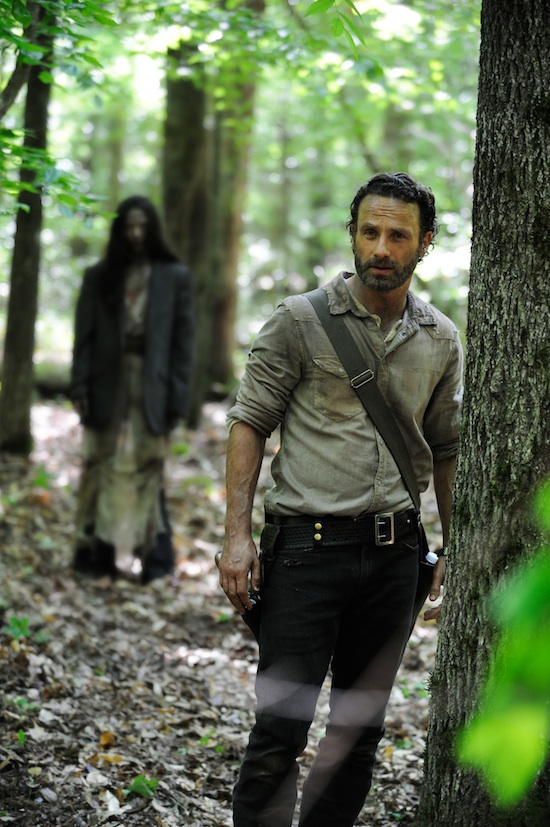
walking-dead-season four sneak

This photo has been out for a couple of days but I wanted to acknowledge that, yes, the new season of “The Walking Dead” is only – what – five months away?

Rick and his pal (above) will be there. I’m guessing you and I will too.

The show returns on AMC in October.

RIP actor Steve Forrest

steve forrest dallas

Longtime TV  fans remember actor Steve Forrest as Hondo in the 1975 series “SWAT.” But I fondly remember Forrest from a later role in “Dallas.”

The 1986 season of “Dallas” was one of the oddest during the show’s original run on CBS. In the previous season, Bobby Ewing (Patrick Duffy) was written out of the show … only to return in a season-ending cliffhanger. Bobby’s disappearance was explained as “only a dream” of Pamela.

In the season that followed, Forrest joined the cast as Southfork Ranch foreman Wes Parmalee, a grizzled good ole boy who took a liking to Miss Ellie.

In time, Ellie came to believe that Wes was actually her husband, Jock, a character written out of the show when actor Jim Davis died.

Eventually, the Ewing boys proved that Parmalee was not Jock and Parmalee confessed and wandered into the sunset.

It was a fun storyline, however, and Forrest was good in it.

Forrest died in the Los Angeles area at age 87.

‘Star Trek Into Darkness’ easter eggs

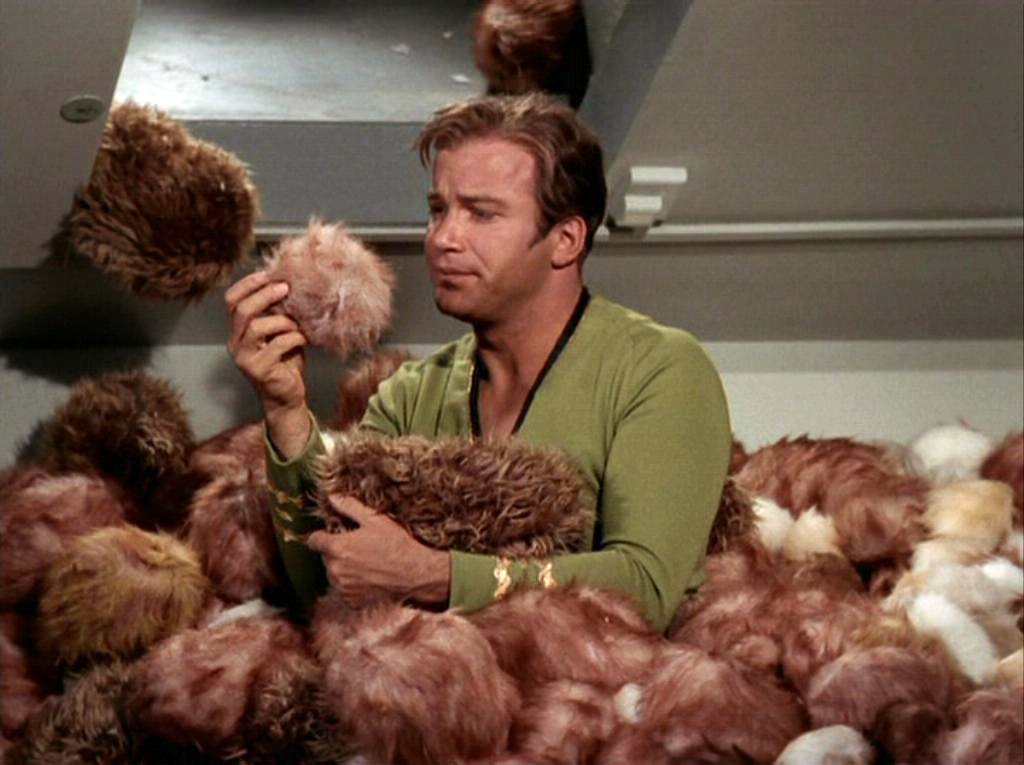
Kirk_surrounded_by_Tribbles

If you’ve seen “Star Trek Into Darkness,” you know that a lot of the plot revolves around events told, in a different manner, in an earlier “Star Trek” movie, “Wrath of Khan.”

I won’t go into that here – I touch on it in my review – but there’s more in the way of easter eggs than just those remake references.

william marshall richard daystrom

Daystrom. The meeting of Starfleet captains and admirals that’s interrupted by the attack by villain John Harrison (Benedict Cumberbatch) is to be held, Chris Pike tells Jim Kirk, at “Daystrom,” possibly a reference to the often-referenced Daystrom Institute. Richard Daystrom, as played by William Marshall, appeared in the original series episode “The Ultimate Computer” as the inventor of the title character, which (briefly) displaces Kirk in command of the Enterprise.

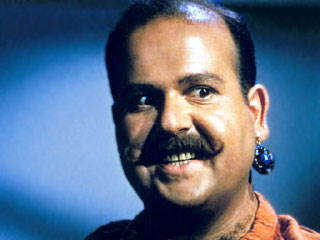
harry mudd

Mudd. There’s a throw-away reference to “the Mudd Incident,” undoubtedly a reference to Harry Mudd, the galactic con artist played by Roger C. Carmel who appears in two episodes of the original series.

Tribbles. There’s a tribble – the furry, prolific fan favorite creatures from the original series – that plays an important role in the movie. They’re from the original series episode “The Trouble with Tribbles.” Although the one in the movie looked even more sluggish than you might expect an ill tribble to look.

Christine Chapel. Carol, the blonde Starfleet officer played by Alice Eve, tells Kirk he’s gained a reputation with women and cites Christine Chapel, a nurse she knew. It’s obvious Kirk bedded her and doesn’t remember her. In the original series and movies, of course, Chapel is Dr. McCoy’s nurse and is played by Majel Barrett Roddenberry, wife of “Star Trek” creator Gene Roddenberry.

Section 31. In the later TV series, Section 31 is a top-secret division of Starfleet that handles investigations and special missions. It is name-dropped in “Into Darkness.”

There’s probably more that didn’t have to do with the new movie’s basis in “Wrath of Khan.” Spot any that I missed?

Into Darkness: ‘Star Trek’ past and present

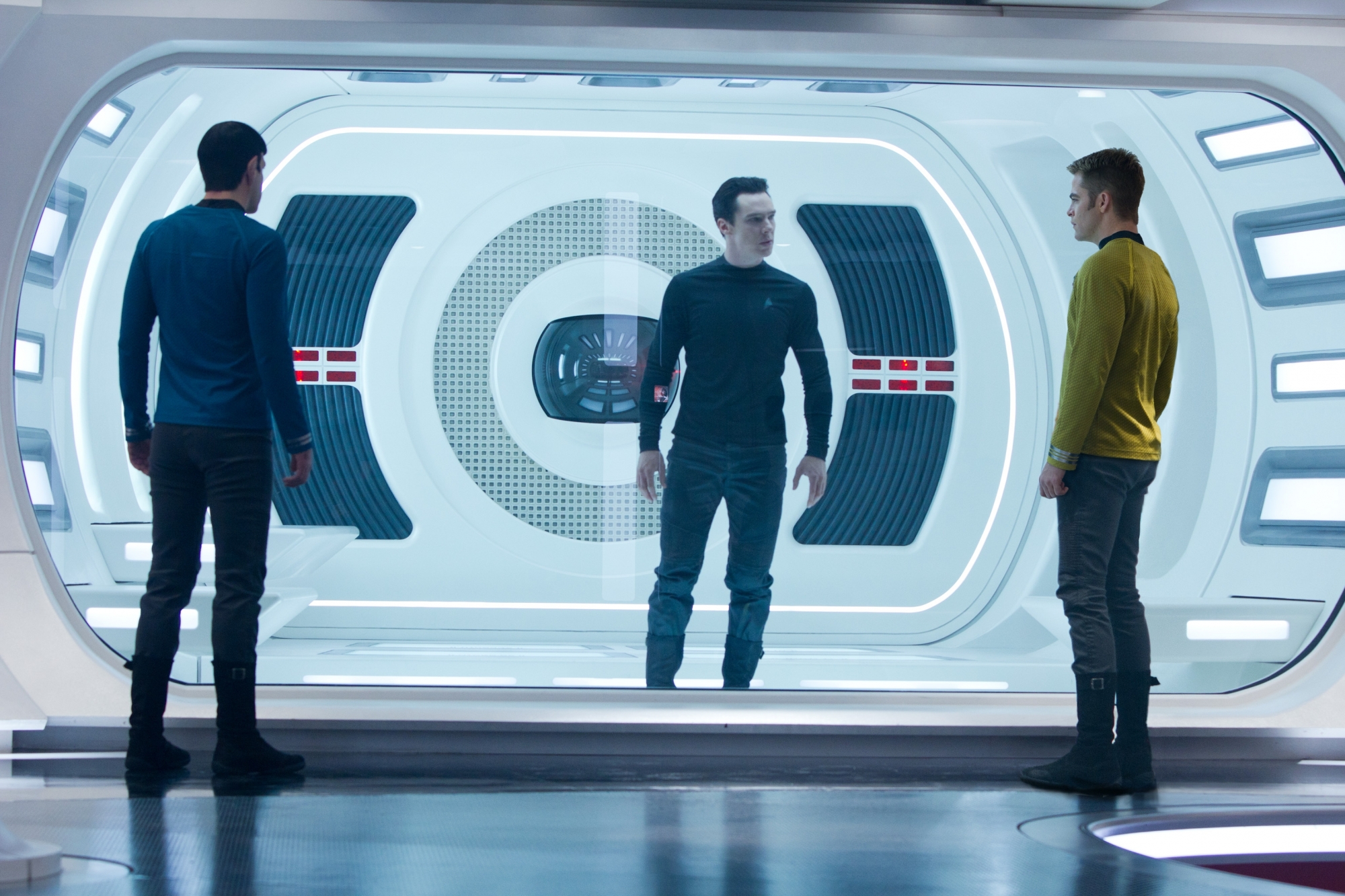
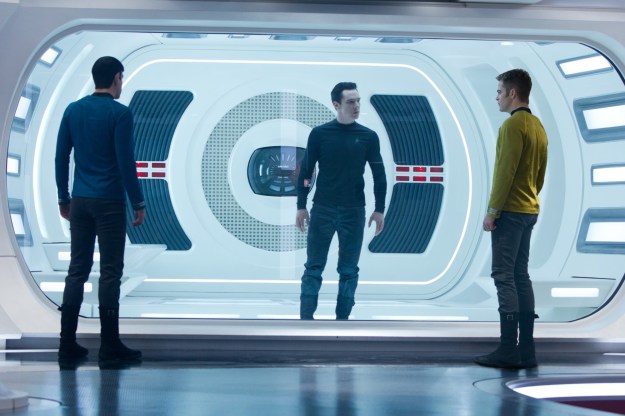
star trek into darkness brig

All weekend, I’ve been trying to find a way to express my feelings about “Star Trek Into Darkness,” the new J.J. Abrams follow-up to his 2009 reboot of the classic TV and movie series.

I really liked the 2009 movie and liked what Abrams did with it:  By rebooting the stories but putting his own stamp on them by playing havoc with the timeline, he made it all seem fresh. True, the movie lacked a compelling villain and took a while to get started, but it was a top-notch effort.

Almost the opposite is true of “Star Trek Into Darkness.”

I should say that I actually liked the  movie pretty well. This being the second film, no long set-up to establish the setting and characters was necessary. The cast has settled into their roles with ease. I could watch Zachary Quinto and Chris Pine play Spock and Kirk until they are as old as Leonard Nimoy and William Shatner.

And what a villain. I’m going to be venturing into spoiler territory here, so be warned. Okay? As “John Harrison,” Benedict Cumberbatch is one of the best “Star Trek” bad guys ever. Half-way through the film, when a captive Harrison announces that he is, indeed, Khan, it seemed perfect and gratuitous at the same time. Cumberbatch matched Ricardo Montalban for arrogant menace. But to what end? While I likewise could watch Cumberbatch play this dangerous but fascinating superhuman in a new movie every few months, there was nothing about the way the character was written that added meaning to the fact that he was Khan. He could have been your garden variety genetically superior bad guy.

In fact, Abrams’ and his screenwriters’ best creation is also, in some ways, their most pointless. The weight of history made the Khan character important in “Star Trek II: The Wrath of Khan.” This was a superheroic but tragic figure who had a reason to hate Kirk from – in the movie’s timeline – the captain having abandoned him 15 years before. In “Into Darkness,” Khan has a grudge against Peter Weller’s Starfleet admiral. And you know what? Weller’s Admiral Marcus was an asshole. In those scenes in which Khan was working with Kirk and Scotty to take Marcus down – and as much as I appreciated Kirk’s “I think we’re helping him” – I was actively rooting for Khan.

So much about “Into Darkness” seems overstuffed. My son observed after the movie, “It seemed like they were trying too hard.” He had just seen most of “Wrath of Khan” the night before and, while he’s not overly impressed with “Star Trek” in general, took note when “Harrison” introduced himself as Khan. But ultimately the shared plot and characters didn’t have much of an impact, on him or me.

“Into Darkness,” as fun and exciting as it is – and it is – seemed to be too laden with references and plot points and call backs to characters. We get the Prime Directive. Tribbles. All those cryogenic supermen (and not another single one gets thawed out). Carol Marcus, future mother (at least in the old movies/timeline) of Kirk’s son. And the whole sacrifice that doesn’t turn out to be a sacrifice at the end.
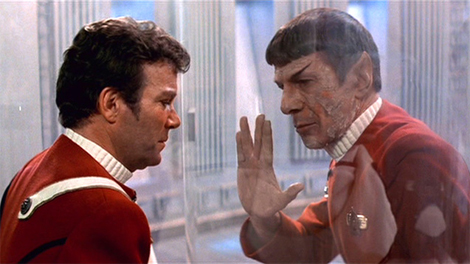
star trek II wrath of khan

I still remember going with a group of friends to see “Wrath of Khan” in 1982. We had been delighted to see “Star Trek: The Motion Picture” three years earlier but its leisurely pace (jeez, just dock the shuttle already) and uncharacteristic relationship between Kirk and Spock and McCoy – because of Spock’s efforts to purge his human traits – were disappointing. “Wrath of Khan” was like a rebirth.

And the suspense. Even in those pre-internet days, somehow we all knew the rumors that Spock might be killed off at the end of the movie. Director Nicholas Meyer even teased us when, early on, he has Kirk ask Spock, “Aren’t you dead?” after the training exercise.

By the time the end of the movie rolled around, and we saw Spock’s fate play out in front of us, we were deeply moved.

As affecting as the climax of “Into Darkness” was – and it was – it felt like just another plot twist. Yes, we knew that “E.T.” was going to come back from the dead when Elliott’s flower revived. Same with the tribble here.

I can’t say I didn’t like “Star Trek Into Darkness.” I did. I felt it hit all the right notes – albeit maybe a few too many – and was a great showcase for terrific actors – especially Cumberbatch and Quinto – and rousing action scenes.

But the movie didn’t improve on the original in the ways that really mattered.

Random observations:

As great as Quinto is as Spock, Pine equals him as Kirk. It was cool to see him, by the end of the movie, in the place where Shatner’s Kirk was when the series started.

I miss Bruce Greenwood’s Chris Pike already.

Does Zoe Saldana rock that ponytail or what?

Karl Urban is so good as Bones, I wish he had more to do in these movies. There’s just one scene where the Kirk/Spock/McCoy character triangle plays out as it did in the TV show and movies. I could have used more.

I was pleased there were so many space scenes in the movie, particularly since the trailers and commercials made it look like the plot revolved around urban (not Karl) action in London and San Francisco.

It was good to see Leonard Nimoy although his scene was perhaps the most gratuitous moment in the film if you don’t count Alice Eve showing off Carol Marcus’ “holy moley” figure. I didn’t mind either, but Nimoy’s scene in particular seemed pointless.
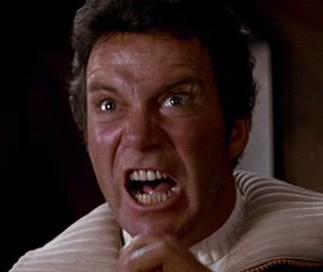
khan!!!!!!

Still no Shatner. I’ve come to accept that William Shatner will probably never appear in these movies. Apparently there was a nice Classic Kirk scene – mostly voice over, a holographic recording from beyond the grave – considered for the end of the first movie. I mourn that didn’t happen.
‘Avengers 2’ update: Quicksilver, Scarlet Witch planned

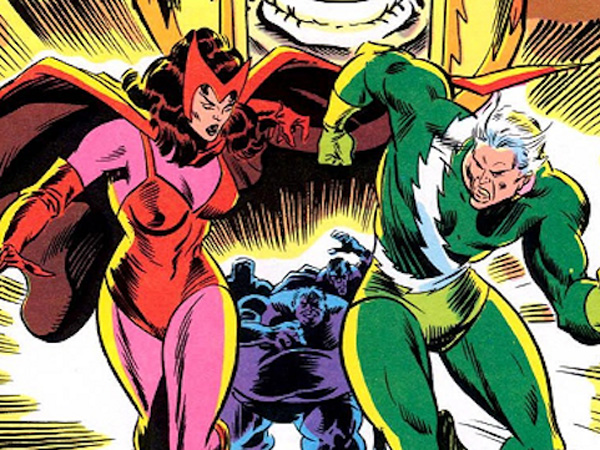
The_Avengers_2_quicksilver scarlet witch

So this is happening.

Joss Whedon, after having referred to wanting to add a “brother-sister” team to the mix in “The Avengers 2” or whatever the sequel will be called when it’s released in 2015, confirmed this week he was talking about Quicksilver and Scarlet Witch, early Avengers members, children of Magneto of “X-Men” fame.

Quicksilver, or Pietro Maximoff, is Marvel’s fastest mutant. Scarlet Witch, or Wanda Maximoff, has powers that appear magical. They’ve been villains at times but heroes more often than not.

If you remember way back in May 2012, I wrote about the online guessing game that began after Whedon wrote several mentions of SHIELD agent Phil Coulson’s cellist girlfriend into “The Avengers.”

Quint and other folks speculated that the reference was to Scarlet Witch because the character – and this is a point of contention – supposedly had some background as a cellist in the comics.

Why would that be interesting?

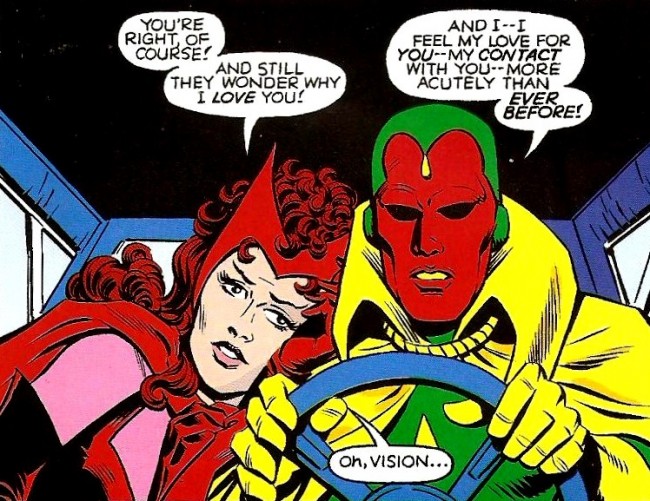
vision and scarlet witch

Well, because Coulson was killed off and we all hoped he would come back as the Vision, the android Avenger. Cause Vision and Wanda were a longtime couple in the comics.

Of course now Coulson’s come back, somehow, for this fall’s “Agents of SHIELD” TV series. So now we don’t know what to think.

Anyway, if the cellist references and Vision hints didn’t pan out, at least we have Whedon saying outright he plans to bring the two into the mix.

saoirse-ronan scarlet witch

Of course, they’re also talking about Saoirse Ronan as Wanda in the movie, and there’s just way too big an age difference between the young actress and Coulson actor Clark Gregg.

Even in Hollywood.

Oh, Vision.