Monthly Archives: August 2013

‘Orphan Black’ a fine thriller

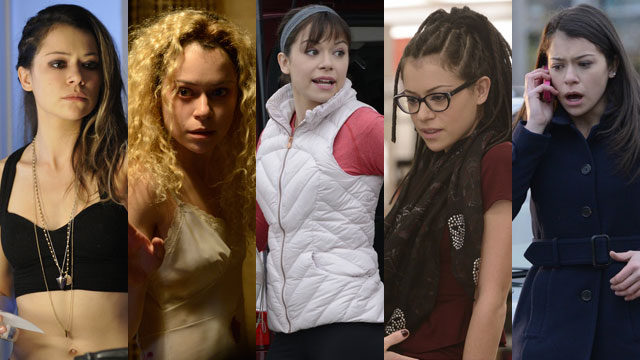
orphan black characters

In this day of online spoilers and instant reviews via Twitter or other social media, it’s rare that the world – and the geek world in particular – catches on to a new TV show only gradually. But that’s what happened with “Orphan Black.”

The U.S.-Canadian series aired the first of its 10-episode season on BBC America at the end of March. I’d heard good things about it, but with so many high quality cable series going on right now – “Mad Men” was still airing, as was “Justified” I believe – I thought I would have to catch up on it later. Only so many hours in the day and all that.

The buzz on the drama was consistent, however, and I’ve been working through the series since early spring.

And I’m happy to say the buzz was right on the money. The show is good and the star, Tatiana Maslany, is great.

If you haven’t heard – or been watching – by now, the series by Graeme Manson and John Fawcett focuses on Sarah Manning (Maslany), a woman living on the ragged edge of legality with her foster brother, Felix (wonderful Jordan Gavaris). Sarah’s young daughter. Kira, lives with Mrs. S (Maria Doyle Kennedy), Sarah and Felix’s foster mom.

Sarah’s disreputable side of life existence goes down the rabbit hole one day in the subway when she is horrified to see a woman commit suicide by walking off the platform in front of a train. What’s possibly more horrifying: The woman, a police detective named Beth, was a dead ringer for Sarah.

Sarah takes the dead woman’s purse and begins investigating her lookalike with an eye toward impersonating her long enough to clean out her bank account. This necessitates some hot kitchen counter sex with Beth’s boyfriend, Paul (Dylan Bruce) and encounters with Beth’s cop partner, dogged Art Bell (Kevin Hanchard).

Before long, though, Sarah (posing as Beth) discovers she had more than one lookalike. She meets Alison, a tightly wound suburban mom, Cosima, a free-spirited grad student, and – most terrifyingly – Helena, who seems to be an assassin.

As Sarah, aided by Alison and Cosima – and snarky Felix – investigate the mystery of their existence, they discover they’re clones, created and sent out into society with “monitors” – sometimes referred as “watchers,” which made me think of “Buffy” – who keep track of this twisted laboratory experiment.

As they try to avoid exposure by the police, assaults by Helena and the manipulations of the monitors, the “orphan” clones try to get to the central mystery of their lives: Why are they here?

Maslany has received a lot of entirely justified praise for her performance as the clones. Often acting opposite herself – composited later via special effects – Maslany brings ample personality to each: Tough and streetwise Beth, refined soccer mom Alison, smart and vulnerable Cosima, menacing Helena and others with smaller roles.

Like Maslany, the supporting cast – which includes Matt Frewer as a doctor and author with a role in the mystery – is really topnotch. Like “Lost Girl” – which I really enjoyed but found kind of repetitive – and “The Fades,” “Orphan Black is a next-generation version of “Buffy” with its core character – characters, in this case – of a strong young woman fighting to find answers to her own questions.

A second season of “Orphan Black” is coming in April 2014, but you’ve got time to catch up online, on demand or on disc. It’s a fun, often funny, often poignant thriller.
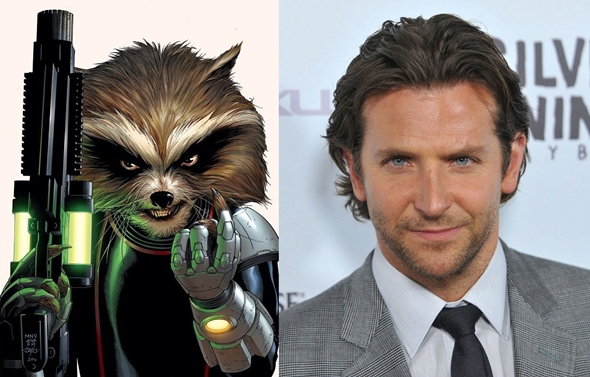
 

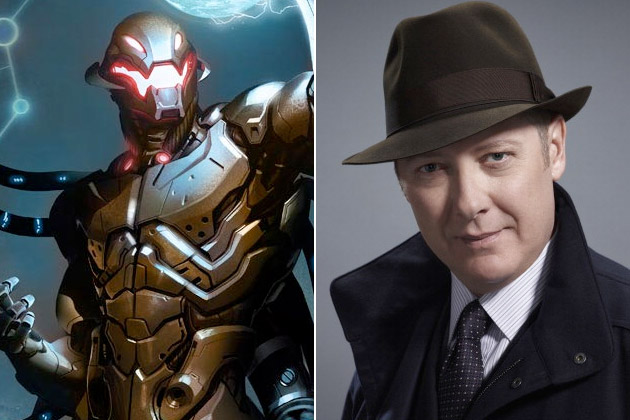
Cooper = Rocket. Spader = Ultron.

rocket raccoon sdcc shot

So this is happening:

cooper-rocket

And so is this:

ultron-spader

Bradley Cooper giving voice to Rocket Raccoon in “Guardians of the Galaxy.”

James Spader playing (voice? motion capture and CGI? costume with Willem DaFoe style headgear?) Ultron in “Avengers: Age of Ultron.”

Marvel, you crazy geniuses.

Appalachian mystery: ‘A Killing in the Hills’

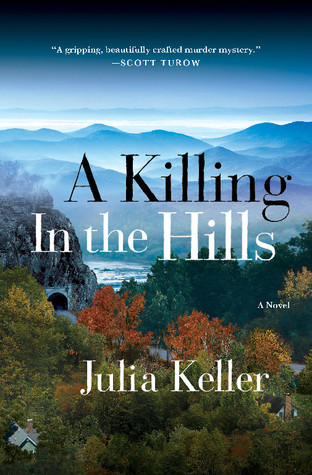
a killing in the hills julia keller

Julia Keller, a Pulitzer Prize-winning writer (who won for stories in the Chicago Tribune about an Illinois tornado and its effects on a small town), has begun an appealing new mystery novel series with “A Killing in the Hills” and its sequel, “Bitter River.”

So far I’ve read “A Killing in the Hills” and, as someone whose family hails from Appalachia, I recognized and appreciated the characters and situations in the book. It’s a world of good people and beautiful places poisoned by poverty, lack of education and the easy opportunity of drugs.

Set in a small West Virginia town, “A Killing in the Hills” introduces Bell (short, kinda, for Belfa) Elkins, a native of Acker’s Gap with a haunted past of childhood abuse who came back to town just a few years ago and was elected prosecuting attorney. Along with her ally, Sheriff Nick Fogelsong, Bell is pushing back hard at the illicit sale and abuse of prescription drugs, which have replaced meth and other illegally manufactured drugs in many towns.

Bell is trying to balance her long days as prosecutor with her role as mom to teenage daughter Carla. Bell’s two worlds collide when Carla, hanging out at a restaurant, sees the assassinations of three old men.

While Bell worries about her daughter and works with the sheriff to try to track down the killer, Carla does something incredibly wrong-headed but typically teenage: She realizes she has seen the killer before, at a drug-fueled party, and goes about trying to find him herself.

One element of the books that rings true is the animosity between Bell and Carla. The girl resents her mother and wants to flee Acker’s Gap to live with her father in D.C. When she decides to help solve the case, it’s almost like her decision is made to spite her mother.

Keller’s book rings true on other levels, too. Acker’s Gap will be familiar to anyone conversant with southern towns that didn’t have much to begin with but have lost even that in the plant closings and economic downturn of recent years. There’s not a lot to keep people in Acker’s Gap, and the people who do stay seem to be heading toward a dead end at quite a clip.

I thought I had the book’s central mystery figured out, but Keller surprised me. Maybe her resolution isn’t as likely as some would be, but it brings a nice bit of shock to the story, which had up to that point played out with greatly readable and realistically disheartening inevitability.

I’m up for another trip to Acker’s Gap.


‘Avengers’ animatics, ‘Man of Steel 2’ fan teaser trailer

man of steel 2 teaser trailer logo

Ah, what might have been.

And what might still be.

Part of the fun of being a movie fan is thinking about what our favorite movies might have looked life if things had gone in a slightly different direction. Not to mention what we wish future movies might look like. So there’s a lot of talk online about a look back at an almost-was and a look ahead at what-might be.

First, some video animatics – animated storyboards, basically – that were apparently produced for “The Avengers” show how some scenes might have come out differently if they’d been filmed as originally considered.

avengers animatic w wasp

Among the big changes: Hawkeye in a more traditional costume and the presence of Janet Van Dyne as the Wasp, one of the founding members of the Avengers in comics who hasn’t made her way into the Marvel movie universe yet.

The drawings in the animatics are credited to Federico D’Alessandro and, if accurate, show not only the Wasp in an early version of the story but a scene in which Tony Stark’s Jarvis is trash-talking the other Avengers behind their backs. Some online commenters have said it’s an early indication confirming rumors Jarvis might turn into artificial intelligence villain Ultron in time for “Avengers 2,” but I think it’s more likely it’s Loki was just yanking Iron Man’s chain.

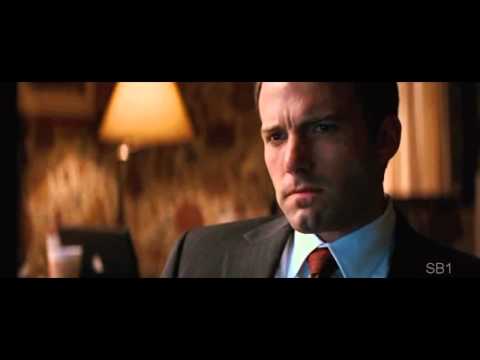
affleck man of steel 2 teaser trailer

The other fun stuff is a fan-made teaser trailer for “Man of Steel 2.” Using nicely edited clips from other movies and the TV series “Breaking Bad,” the fan trailer not only introduces Bruce Wayne (as played by Ben Affleck) and Superman/Clark Kent (Henry Cavill) to each other but shows us Superman’s Big Bad, Lex Luthor, in the person of “Breaking Bad” actor Brian Cranston.

It’s a pretty fun trailer. Cranston is an obvious choice for Luthor, of course – maybe too obvious – but the fake trailer’s creator should get hired cutting previews.


Great comic book covers: ‘Fantastic Four’ Annual 3

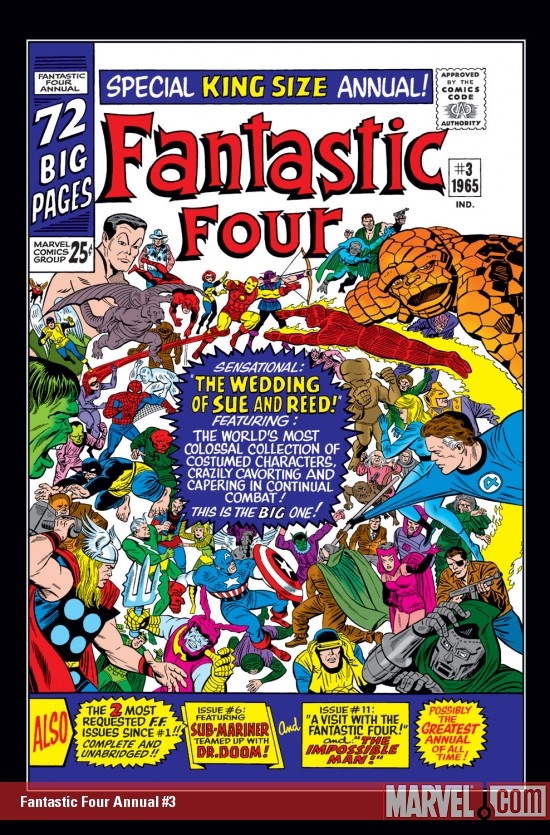
fantastic four annual 3 wedding

This is one of those covers that falls into the category of “I’m not sure it’s masterful art, but it sure is a landmark drawing.”

In the third “Fantastic Four” annual, Marvel took a step that comics publishers rarely take these days: They married two characters off.

Reed Richard and Sue Storm – Mr. Fantastic and the Invisible Woman – had been half the Fantastic Four for a couple of years and the comic book was already close to living up to the “world’s greatest comics magazine” slogan that Stan Lee had come up with. Along with Ben Grimm – the Thing – and Sue’s younger brother Johnny Storm – the Human Torch – the FF had already had some amazing adventures and fought foes like Dr. Doom and the Mole Man. (Okay, so Dr. Doom was a lot better than the Mole Man.)

But Reed and Sue hadn’t yet faced their greatest challenge: Not only getting married, but pulling off a wedding in the midst of a supervillain attack.

What better place for Lee and artist/co-writer Jack Kirby to stage the wedding than in the latest annual edition of “FF,” which – as you can tell from looking at the cover – offered 72 big pages for only a quarter. The page count and price were double their usual, but you had a feeling it would be worth it.

Annuals really felt like a big deal to me, the typical Marvel comics reader. I probably caught up with this issue sometime after the October 1965 release date, but it still felt like a milestone to me. So many pages of story, so much eye-popping art.

And why not? The cover alone – drawn by Chic Stone in the Kirby style – offered up an impossibly huge and dramatic selection of characters.

The practice of guest-starring superheroes was what made Marvel comics special and what’s made the last five years of Marvel big-screen movies so fun, and FF Annual 3 might have been the craziest crossovers yet.

Look at that cover: A bunch of Avengers. Spider-Man. Nick Fury. X-Men. And a whole bunch of bad guys.

Nuff said.

What we can expect from Ben Affleck’s Batman

superman_batman_public_enemies-13

Okay, so Warner Bros. announced on Thursday that Ben Affleck, star of “Daredevil” a decade ago and director of Oscar-worthy “Argo,” would play Batman in the “Man of Steel” sequel for director Zach Snyder and opposite Henry Cavil as Superman.

And yes, there was a lot of online freaking out about Affleck being cast.

I’m old enough to remember the doubters – I was one of them – when Michael Keaton was cast to play Bruce Wayne and Batman for Tim Burton’s 1989 “Batman.”

He’s a comic actor, they said about Keaton. His chin isn’t superheroic enough. This isn’t even a step up in casting from the campy 1960s TV series.

But Keaton worked, largely because Burton’s Batman was something we hadn’t seen very often: A serious superhero flick. I’d submit Keaton was the best part about that movie, far outshining Jack Nicholson as the Joker.

So what’s the knock on Affleck?

Um .. he’s made some movies that some people didn’t like?

ben affleck daredevil

Okay, Twitter, take a deep breath. Let’s move on to what happens next, namely, what can we expect from “Superman vs. Batman” or whatever the “Man of Steel” sequel will be called, particularly with Affleck’s casting?

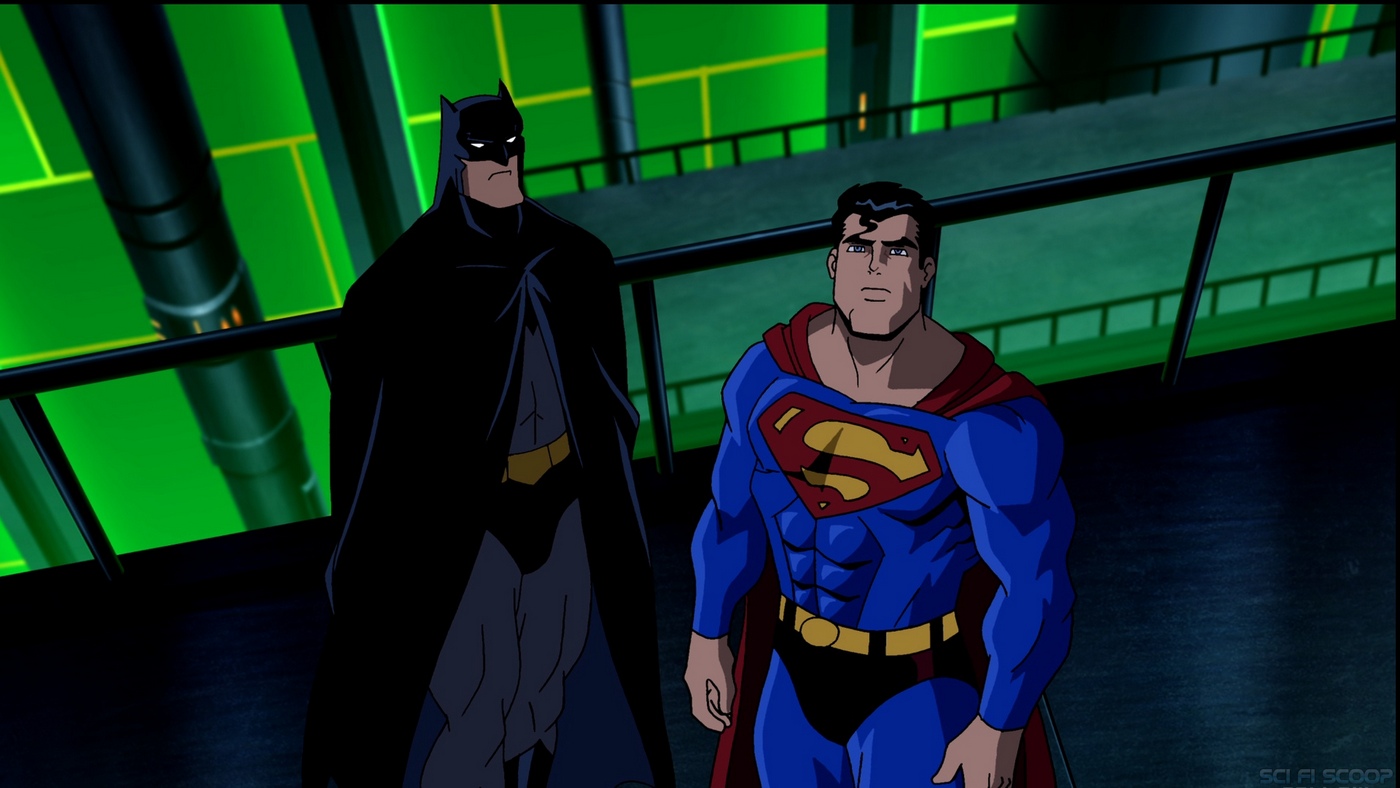
Batman is going to take the lead in the sequel. Depending on how long the movie takes place after “Man of Steel,” Superman still might be a green superhero. That means when the two icons meet, it’s likely Batman will have years of experience on Superman. Sure, Superman has super powers. But we’ve seen before that Batman is more than a match for Superman. Kryptonite shard, anyone?

They’ll clash at first. Besides this comic book trope being a standard development – remember the various Avengers fighting before they teamed up on Loki? – I’m betting Bruce Wayne and Lex Luthor will be in some kind of deal but Batman will be investigating Luthor. Superman might get involved when he sees Batman hanging around (literally) Metropolis and confronts him. Hey, I’m pretty sure this worked for DC animated universe stories.

They’re definitely building to a “Justice League” movie. I expect Batman to be the experienced leader when they make the “JL” movie and it’s likely Affleck will be in the cowl. Warner Bros. wouldn’t announce a new Batman for just one movie.

There’s a Robin in the future. You don’t have an experienced batman without a sidekick. Maybe Joseph Gordon-Levitt?

Snyder and Warner Bros. are casting older but not too old. Sure, Cavill is several years younger, but Affleck is just 41. Robert Downey Jr. was 43 for the first “Iron Man” movie.

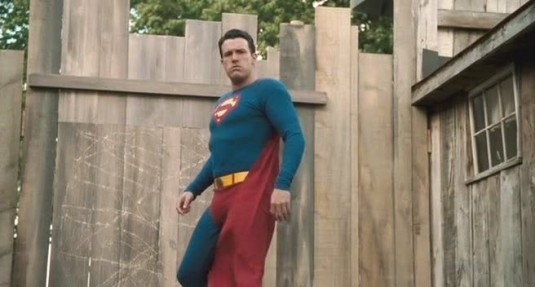
ben affleck as george reeves superman

It’ll be interesting to see how much influence Frank Miller’s “Dark Knight” stories have on the movie, although there have been plenty of good stories of the two iconic heroes and their relationship.

The end of the world as we know it: ‘The World’s End’

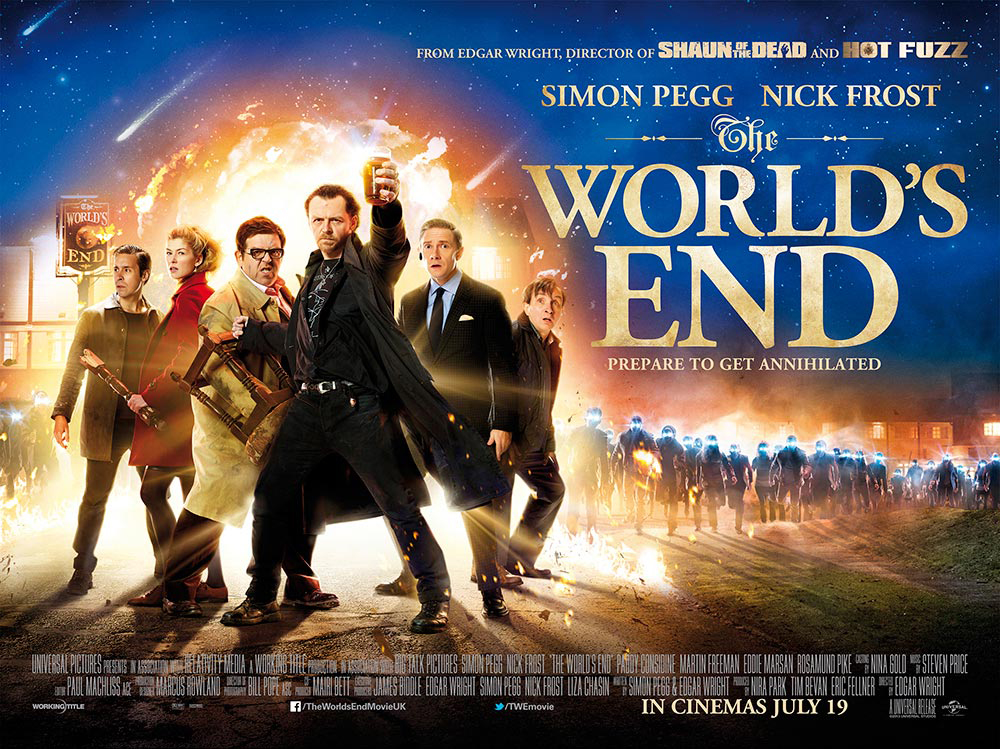
The-Worlds-End-poster

Edgar Wright, who might someday be known as the director of “Ant-Man,” has over the past decade given movie fans often-funny, often-touching glimpses into the lives of a few misfits and outcasts in the UK, from the dead-end zombie fighters of “Shaun of the Dead” to the small-town coppers of “Hot Fuzz.”

Now comes Wright’s “The World’s End,” which seems to cap this summer’s moviegoing (and end of the world-depicting) experience.

What Wright jokingly refers to as the third film in his “Cornetto” trilogy – named after a popular ice cream treat that shows up in all three movies, yes that’s how offbeat Wright’s humor is – is actually two movies in one: A “growing up is hard to do” reunion of old chums movie and an end-of-the-world comic thriller.

Needless to say, spoilers ahead if you haven’t seen the movie, which opened wide yesterday.

Two of Wright’s regular collaborators, Simon Pegg (Shaun as well as Scotty from “Star Trek”) and Nick Frost are among a group of friends who get together more than two decades after one of the most awesome but frustratingly incomplete nights of their lives: In 1990, before they went their separate ways and left their hometown of Newton Haven, they attempted an epic pub crawl that entailed drinking a pint at each of 12 pubs.

In fact, Pegg’s character, Gary King, only gets his four friends to join him by lying to them that the others have already agreed to meet to try to complete their challenge. That’s not enough for some, notably Andy (Frost’s character), who not only stopped drinking but holds Gary in contempt for his actions (only gradually revealed) that night. Andy comes along only after Gary tells him he needs the flashback to recover from the recent death of his mother.

Nevertheless, Pegg and cohorts played by Frost, Martin Freeman, Eddie Marsan and Paddy Considine return to Newton Haven and attempt the feat. Along the way, they run into Rosamund Pike as Freeman’s sister, who hooked up with Gary that night long ago.

The quest begins with a couple of disappointments for the hilariously self-centered Gary – played with gusto by Pegg – in that Andy no longer drinks and no one in their old town seems to remember them.

Those anomalies are resolved, however, when at one stop King impetuously confronts one of the townspeople and the fivesome is shocked to discover many of the residents of Newton Haven have been replaced by robots.

The rest of the movie plays out in a comic rush as the group of friends tries to get away without being absorbed and assimilated by the robots and their alien overlords – even while Gary, increasingly drunk, determined and frustrated, tries to complete the pub crawl.

Parts of “The World’s End” are laugh-out-loud funny and parts are poignant. There are some bizarre shock value special effects and a funny final encounter with the invaders who’ve turned Newton Haven into a bland lab experiment.

Driven by Pegg’s bravura performance and the propulsive “must get to the next pub” plot, “The World’s End” is a fun capper to Wright’s Brit-rich series of comedies.

Random observations:

Wright likes casting former James Bond actors in his movies. Timothy Dalton was in “Hot Fuzz,” while Pierce Brosnan is on hand here. I’m looking forward to Connery, Moore or Lazenby in “Ant-Man.”

The director gives us “call backs” to favorite moments in the earlier films, but none more obvious and beloved – it’s even in the commercials – than Pegg attempting to jump a fence.

It’s been a big summer for the end of the world, from “World War Z” to “This is the End” to this. It’s odd that the two more humor-inclined movies seemed to work best.

End of the world or not, “The World’s End” owes as much to “Invasion of the Body Snatchers” as to any other story.

Here’s a big spoiler alert, for discussion of the ending:

I was startled by it. When the little village of Newton Haven melts down thanks to the alien invaders and an electromagnetic pulse shoots out, the lights go out everywhere. I mean, around the globe. The final montage of scenes, narrated by Frost’s character, depicts the disparate members of the group living out their lives in the post-apocalypse. Most appropriately, Pegg’s Gary King is a wayfaring adventurer, moving across the wasteland as the now-teetotalling leader of a group of robotic duplicates of his friends’ younger selves. It feels like a climax that teases a sequel or spin-off film, but it’s really all we need to see to enjoy that premise.

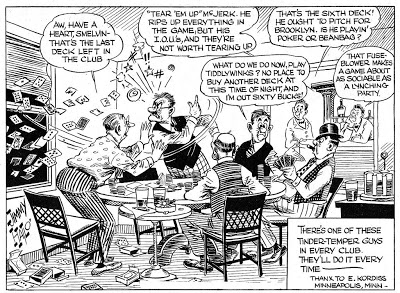
Classic comics: ‘They’ll Do It Every Time’

theylldoit

When I began reading newspapers in the 1960s, I was an exhaustive reader of newspapers. I was always the type of kid – and still am now, as an adult – who usually checked out every page of a book, every second of the credits of a TV show or movie and, yes, every story and ad and illustration in the newspaper.

It goes without saying that I studied newspaper comic books closely and was puzzled and fascinated by “They’ll Do It Every Time.”

Unlike “Peanuts” and strips from the time that felt contemporary, “They’ll Do It Every Time” felt like a holdover from an earlier day. And it was.

hatlo_1945

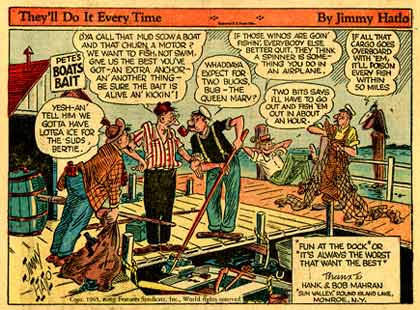
“They’ll Do It Every Time” was created in 1929 (!) by cartoonist Jimmy Hatlo, who first drew his complex, gag-filled strips first for William Randolph Hearst’s San Francisco papers. But by the time I was seeing the panel (rather than multi-panel strips) it appeared in more than 600 papers.

Stop and think about that for a moment.

I’m a lifelong lover of newspapers, and it’s where I have made my living. But while the influence of newspapers has moved from print to online in recent years and the heyday of newspaper comic strips ended with “Calvin and Hobbes” and “The Far Side,” it’s impossible to overstate the impact of a daily comic strip in the 1940s, 1950s, 1960s and 1970s.

Everybody, every member of the family, read the newspaper, or at least part of it.  And nearly every member of the family read the comics.

Hatlo’s comic entertained and puzzled me. With its sarcastic assessment of the foibles of mankind, the strip was, as the comic strip history website Hogan’s Alley noted, an early practitioner of observational humor.

hatlo tip of the hat

My favorite element of the strip was the Hatlo “Tip of the Hat” to a reader each time. Hatlo accepted ideas for strips, refined and expanded on them, and then thanked and credited the reader who gave him the idea.

It was unlike anything else in comics before or since and I thought it was fascinating.

Hatlo continued the strip until he died in 1963, so it’s likely the strips I saw were reruns or some done by his successors, Al Scaduto and Bob Dunn. Amazingly, the comic ran until February 2008.

‘SharkNado,’ ‘Ghost Shark’ and great exploitation movies

screamers advertisement

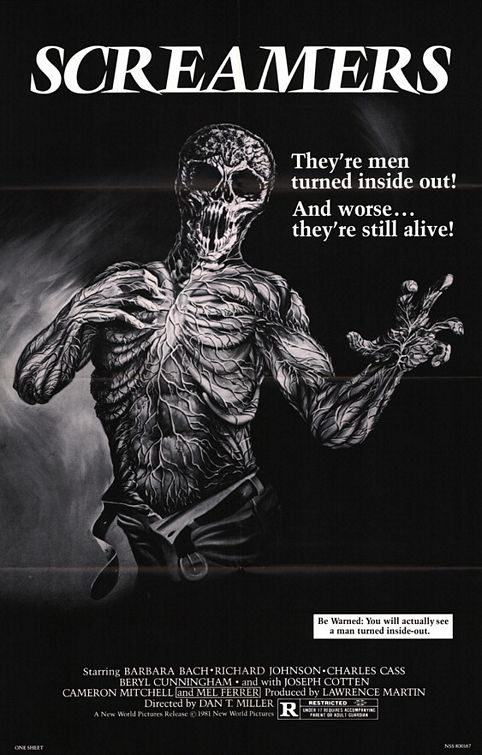
I still remember my expectations when I saw “Screamers” at a drive-in theater in 1981.

They were pretty damn low.

After all, “Screamers” was sold with the catchphrase “Be Warned: You Will Actually See a Man Turned Inside Out” on the poster. When a movie is sold on that kind of pitch alone you know it’s got problems.

When that scene doesn’t even happen in the movie, you know the suckers who paid admission have problems.

Anyway, “Screamers” – which was actually an Italian movie called “Island of the Fish Men,” made two years earlier, then released with some footage added by Roger Corman’s New World Pictures – was pretty weak stuff.

ghost-shark

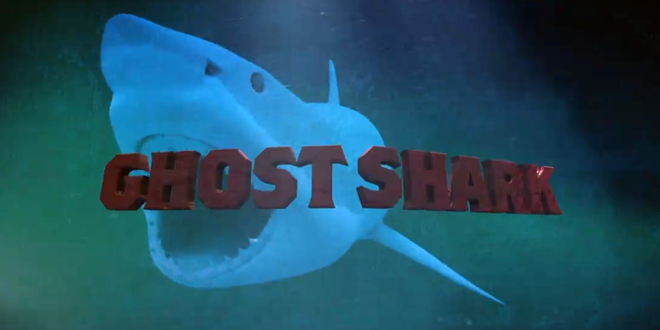
It’s appropriate that the universally liked Corman has, in recent years, produced cheap sci-fi movies for the SyFy channel, home of “SharkNado,” a huge hit on SyFy a few weeks back, and inspiration for “Ghost Shark,” which aired Thursday night. Neither were Corman productions but might have been. That’s because the mix of inspiration and desperation that went into the writing, filming and marketing of these movies was vintage Corman.

“SharkNado’s” best marketing tool was one that couldn’t have been planned or bought by SyFy. The Twitter reaction to the movie the evening it aired added greatly to the movie’s impact on the pop culture landscape.

When SyFy aired “Ghost Shark” – an inferior movie to “SharkNado” but one with some funny and audacious scenes – the channel seemed to try to prime the Twitter pump by superimposing lame “Tweets” in the upper left corner of the screen.

Didn’t work.

I often wonder how modern technology and social media who have affected the plots of movies that predated their invention. In the case of “Screamers” back in 1981, I can only imagine how my friends and I would have digitallly picked the movie apart there from our drive-in vantage point.

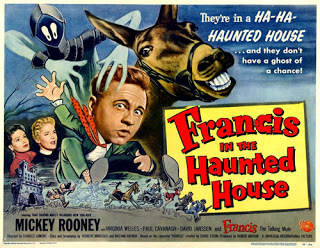
Movie classic: ‘Francis in the Haunted House’

francis in the haunted house poster

More than a half-century later, it’s hard to imagine a movie studio building a series of films around the exploits of a talking mule and his human sidekick.

Yet Universal, home of classic monsters and classic funny/scary movies, released seven pictures about Francis, an Army mule voiced by veteran character actor Chill Wills (in the first six) and accompanied by straight man Peter Stirling (Donald O’Connor in the first six flicks).

The movies were based on a book and were sent into theaters beginning in 1950 mostly as a post-war military comedy. Francis and Peter went to West Point, joined the WACs and the Navy. Inevitably, Peter got into some kind of jam, Francis dispensed wise-cracking good advice and nobody believed that the mule could talk. Until he did.

My introduction to the series was a 1960s showing on an Indy TV station of the last film in the series, “Francis in the Haunted House,” released in 1956.

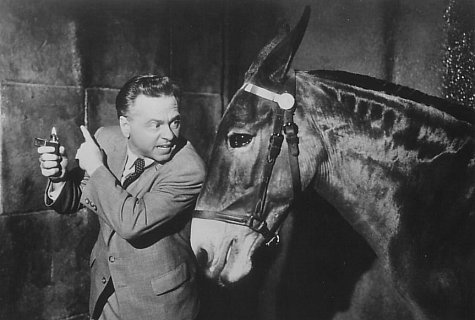
francis in the haunted house leads

My view is no doubt skewed by the fact that this, the first in the series that I remember seeing, had a different star – Mickey Rooney – and a different voice – veteran voice actor Paul Frees – replacing Wills as the voice of Francis.

But for a kid who grew up loving not only Universal monster films, including “Abbott and Costello Meet Frankenstein,” I found the mix of laughs and chills perfect.

In the movie, David Prescot (Rooney) meets Francis and, after the initial surprise at the fact this is a talking mule, they set off on an adventure. The two try to help a woman win her inheritance by staying in a supposedly haunted mansion.

In a formula that became familiar through “Scooby Do,” the haunting is being staged by crooks who want to win the mansion and Prescot is a patsy in more ways than one.

There is, however, a foe that Francis and Prescot can fight together: A ghostly knight on horseback.

It’s no doubt true that the Francis formula was more than a little tired by this point. O’Connor bailed from the series before this entry was made and was widely quoted as saying he knew it was time to go when the mule got more fan mail.

But there’s a lot of pleasure to be found in the final “Francis” movie. It’s perfect for “Abbott and Costello” fans.