Daily Archives: October 20, 2013

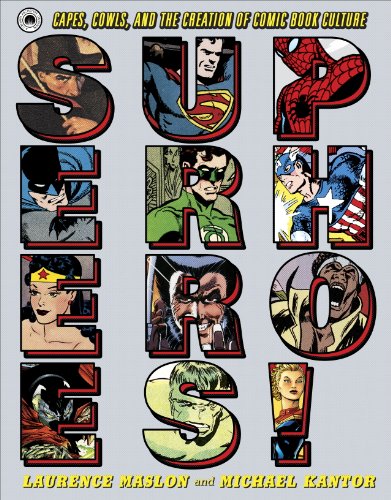
‘Superheroes: A Never-Ending Battle’ on PBS

SUPERHEROES-A-NEVER-ENDING-BATTLE

Truly the geeks have inherited the Earth: A three-hour documentary about comic books on PBS.

“Superheroes: A Never Ending Battle” played on PBS this week and is still available online (if you can put up with PBS.org’s wonky video player).

I didn’t see all of it when it aired last Tuesday – three hours is a big chunk of time – so I watched the unseen balance today online.

A lot of documentaries have been made over the years about comic books, superheroes and their creators. Because of the wealth of interviews, this one is among the best and most entertaining. Maybe that’s in part because the tone is no longer so defensive and “can you believe it?”  The tone is what it is because superheroes are such a big part of pop culture right now, a huge presence in video games, movies and TV shows. Even though a fraction of the number of comic books are sold today as were sold two or three generations ago, their influence on pop culture has never been greater.

The first hour traces the early history of comics, from the first newspaper strips, folded and stapled and re-sold by the father of the creator of MAD magazine, to the heyday of comics in World War II and the 1940s, when virtually every boy and most girls read comics.

Influences like pulp magazine heroes including The Shadow are cited and the origins of Superman and Batman – familiar stories for longtime fans – are told. Before the first hour has ended, Wonder Woman’s kinky origins are recounted. Acknowledgement is made of the less savory aspects of comics, particularly racist treatment of Japanese characters during World War II. The first hour ends with the 1950s campaign against superhero comics.

Besides the classy treatment and nice graphics, the best part of the show are the interviews with pioneers of the early days, including Joe Simon (co-creator, with Jack Kirby, of Captain America) and other artists and writers who got their start in the Golden Age but continued to work in the Silver Age.

Throughout the three-hour documentary, we’re treated to lively interviews with creators, experts and actors. They’re funny and witty and sometimes surprisingly still vital. I swear that great DC artist Neal Adams, one of the driving forces of the 1970s, looks 40 years old.
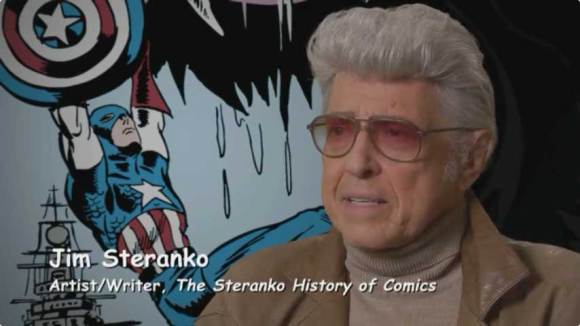
steranko


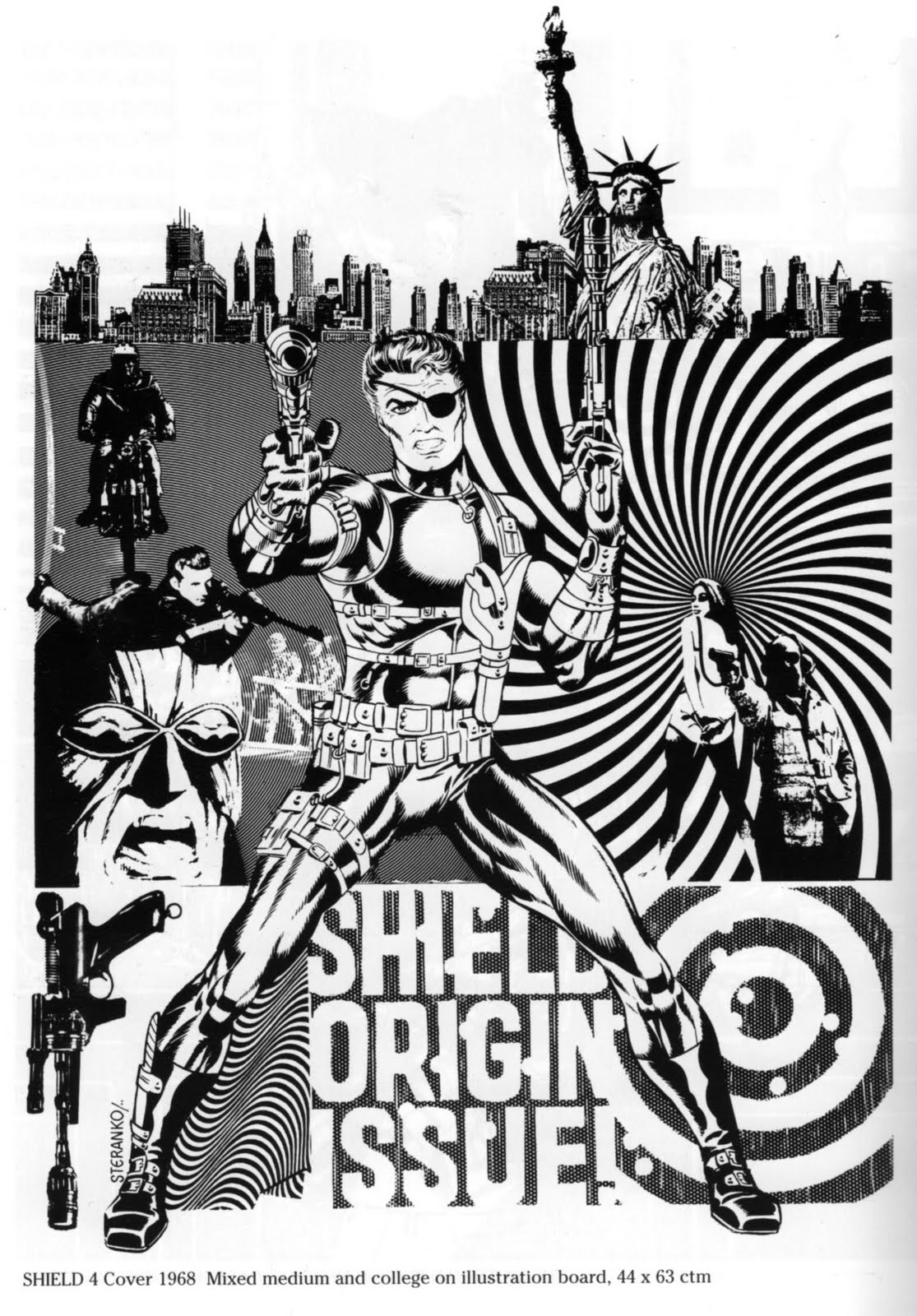
And “SHIELD” artist Jim Steranko, whose towering head of hair is now quite gray, displays his comic historian side.
steranko SHIELD

The second episode starts in the 1960s and the birth of modern-day Marvel Comics. The impact of comics on the larger world – including the campy 1960s “Batman” series – is explored and, rightfully so, called a “game-changer.” This seques into Steranko and the “pop art” era.

The ground-breaking moments of 1960s and 1970s Marvel – Peter Parker attending an integrated high school, the introduction of black heroes like The Black Panther and Luke Cage – are given their due. Likewise, DC’s experimental book teaming Green Arrow and Green Lantern, tacking injustice and racism, are cited, as are the Comics Code Authority-flouting campaigns against drugs.

The third hour is kind of a victory lap, noting the huge role in today’s pop culture that comic book characters play, particularly due to the big-budget, big-box office movie adaptations of the modern era. As “Spawn” creator Todd McFarlane says, “None of it is silly anymore.”
lynda carter

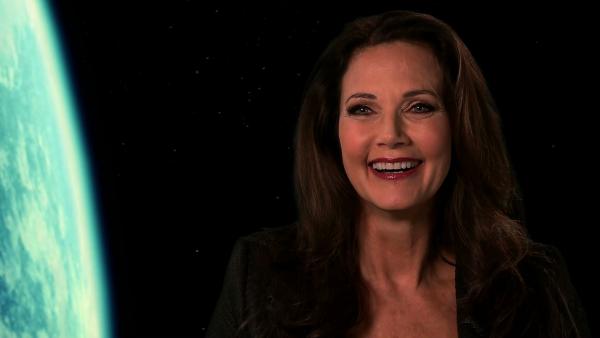
But one thing is certain: Lynda Carter still looks amazing.
Today in Halloween: ‘The Halloween Tree’

halloween tree bradbury cover

As a kid and young teen in the early 1970s, I counted among my favorite authors Ray Bradbury.

I loved Harlan Ellison and Robert Heinlein and Isaac Asimov, mind you, but Bradbury had a poetry to his prose that appealed to the young romantic in me. Heinlein was a funky libertarian and Asimov a mind-reeling intellectual and Ellison – Ellison! – was a cranky, spit-in-your-face rebel.

But Bradbury wrote small-town fantasy like no one ever had, and as a small-town kid with a mind and a heart for fantasy, I loved him.

It had been a while, though, since I’d read “The Halloween Tree,” and I was afraid I’d have the same experience I’ve had in going back to other works that I loved when I was young. Let’s just say I still haven’t managed to struggle my way back through “A Wrinkle in Time.”

I knew I had to re-read “The Halloween Tree” this October, though. And I’m relieved to say I still enjoyed its oddball, old-fashioned homage to Halloween.

I will say, though, that the book is incredibly dated. Considering it was published in 1972 – the year that I participated in an anti-Nixon mini-protest outside a school-adjacent polling place on election day – I’m kind of amazed it wasn’t too hokey and cheesy for me even back in the day.

I can’t imagine my son, reading it now, putting up with the earnest “Pipkin is the greatest boy who ever lived” stuff.

For better or worse, kids are more sophisticated today than we were. The boisterous love among 13-year-olds for their buddies, the “oh gosh” dialogue, the thought of boys disappearing into the Halloween darkness with a mysterious man … well, let’s just say all but the most poetic and artistic kid today would roll his eyes and think about all those parental warnings of “stranger danger.”

Which is too bad, in a way. But I think we’re safer in a savvier world.

But in Bradbury’s world, in a small Illinois town, a pack of eight 13-year-old boys costumed as archetypes like skeletons and witches and mummies goes out to trick-or-treat on Halloween night, worried about the whereabouts of their friend, Pipkin, and whether he will join them for trick-or-treating.

Before long, they discover the house with the Halloween tree – a towering growth with hundreds or even thousands of carved and lit jack-o-lanterns hanging on its branches – and the occupant of the house, Mr. Moundshroud, who takes them on a time-traveling adventure to not only find Pipkin but the origin of Halloween. It’s a journey that takes them from ancient Egypt to Europe to home in time for the midnight (!) finish to trick-or-treating.

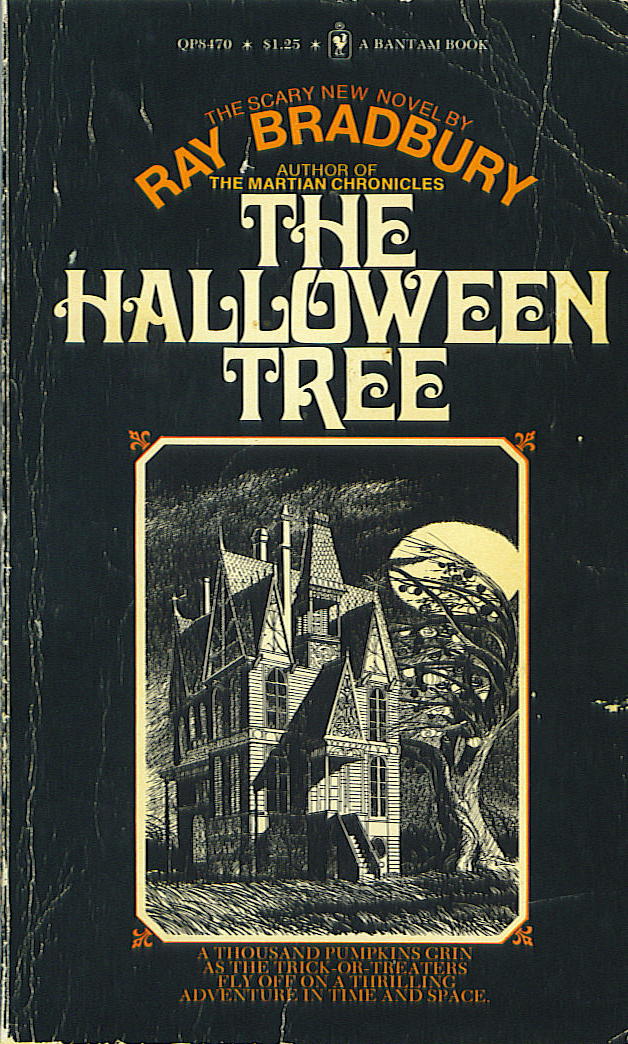
I remember loving “The Halloween Tree” when I was a kid and still have my original copy, in much better condition than the one at the top of this entry. It was not my favorite Bradbury, however, which might just be “Something Wicked This Way Comes.”

halloween tree bradbury mugnaini

If you’ve never read “The Halloween Tree,” you should, even if your tolerance for brave and poetic boys is low. Bradbury’s imagery is beautiful, and there’s another kind of great imagery, too: The drawings of artist Joe Mugnaini.

halloween tree house mugnaini

I used to love to draw, pencil or pen-and-ink drawings, and I can’t image the artistic talent and work that went into Mugnaini’s work. It’s simply beautiful.

mugnaini halloween tree

And a great accompaniment to Bradbury’s story.