Monthly Archives: November 2013

‘The Avenger’ is coming – the one you haven’t heard of

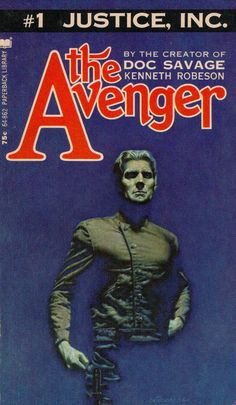
the avenger 1 justice inc

When the adventures of the 1930s pulp magazine hero The Avenger were reprinted in paperback in the early 1970s, they were right up my alley. I had already become a fan of the Doc Savage paperback reprints and the Avenger books were labeled as being by Kenneth Robeson, creator of Doc Savage.

I later found out that the stories – which originally appeared in Street and Smith pulp magazines from 1939 to 1942 – had actually been written, all those decades earlier, by Paul Ernst. Robeson was a Street and Smith “house name” that several action hero writers used. The Doc Savage books had been written by Lester Dent, to a great extent.

But the stories of The Avenger were so cool and so dire that it didn’t matter.

Like Doc Savage, the Avenger – originally a normal guy (if you call a wealthy world-traveler and adventurer normal) named Richard Henry Benson – fought crime with the help of a band of comrades and a healthy bank account.

But Benson/The Avenger drew his crime-fighting inspiration from the same dark well as Batman. Benson’s wife and daughter were brutally killed by gangsters.

Benson didn’t just take up the mantle of crimefighter. The shock of his family’s slaying was literally a shock to Benson’s system. His hair turned white. His eyes – somehow – turned pale. And Benson’s face froze. No longer could he voluntarily change his expression. His bleached face was described as like something out of a graveyard.

But Benson could suddenly mold his face, moving his jaw and nose and cheekbones and brow to resemble other people. With the help of makeup, colored contact lenses and wigs, Benson could now go undercover, infiltrating crime rings and mobs.
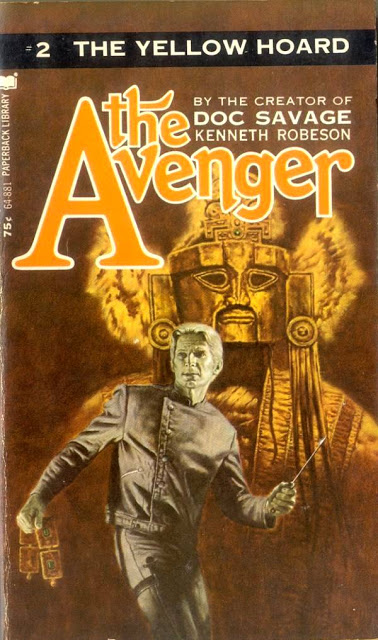
the avenger 2 the yellow hoard

Armed with his ghoulish visage and high-tech weapons – including a streamlined gun and knife set he called “Mike and Ike” – Benson brought criminals to justice.

I was fascinated by all this. By the time i was reading the Avenger stories in the early 70s I was familiar with Batman’s tragic backstory, of course. Richard Henry Benson’s was perhaps even stranger and more tragic in that it also left him disfigured … but he turned the handicap into a crimefighting tool.
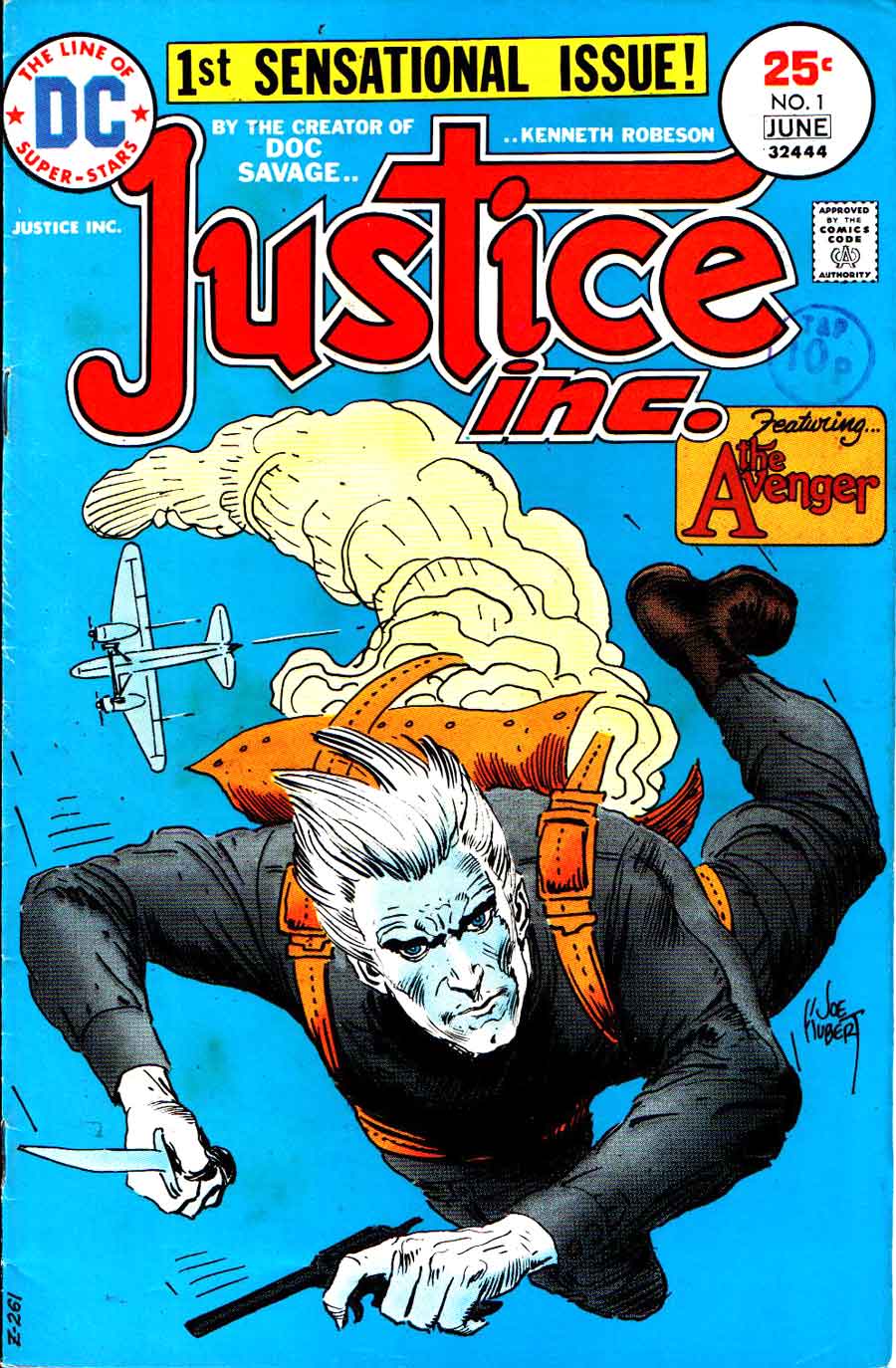
justice inc comic

The Avenger had a couple of changes at revival after the paperback stories were published. DC Comics – which in the early 1970s had revived another great pulp hero, The Shadow – published an Avenger comic book in 1975. No doubt because DC competitor Marvel had been publishing “The Avengers” for more than a decade, DC called its Avenger book “Justice Inc. featuring The Avenger.”
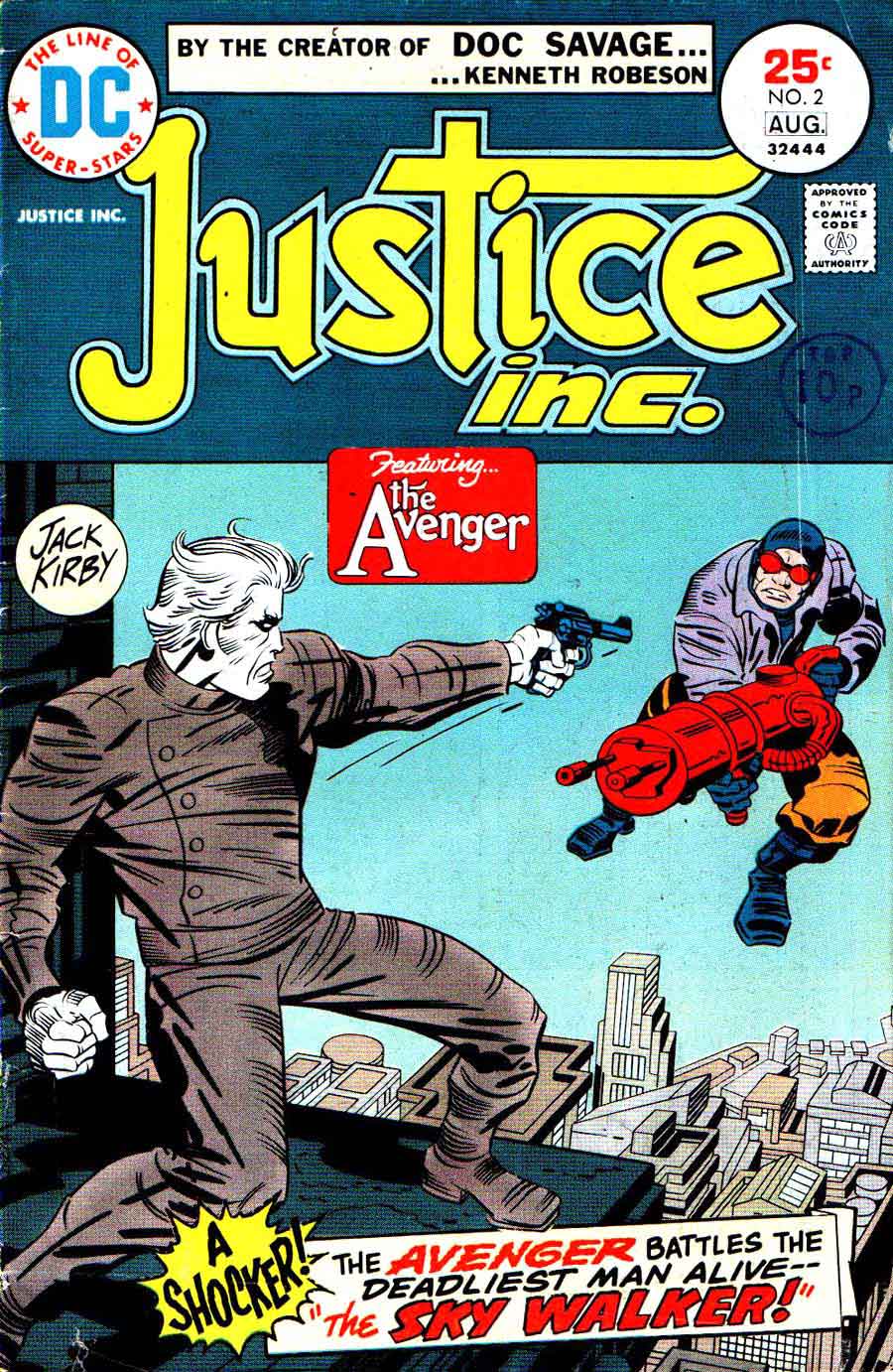
justice inc kirby cover

Jack Kirby even did some work on the comic.

Besides the nostalgia factor, I’m noting all this now because of the recent news that producers are developing, for The CW network, a new TV series version of The Avenger, with several changes, of course. Instead of Richard Henry Benson, the heroine is Alice Benson. The new Avenger has the same malleable features and the same undercover missions as she investigates the deaths of her parents (rather than spouse and child).

I’m guessing in light of Marvel’s big-screen “The Avengers” movie, the TV series will be called something else.

It’ll be interesting to see if the new series can capture the same feeling of an adventurer – an avenger – with nothing left to lose in a hell-bent pursuit of evildoers.
RIP comic book great Al Plastino

al plastino supergirl action 252

The comic book Golden Age was a simpler time and – as befits the name – a truly golden period of straightforward storytelling, plots and art.

Al Plastino, who passed away Nov. 25 at age 91, was responsible for some of the most golden Golden Age art, particularly in DC Comics and particularly with the Superman family of books and characters.

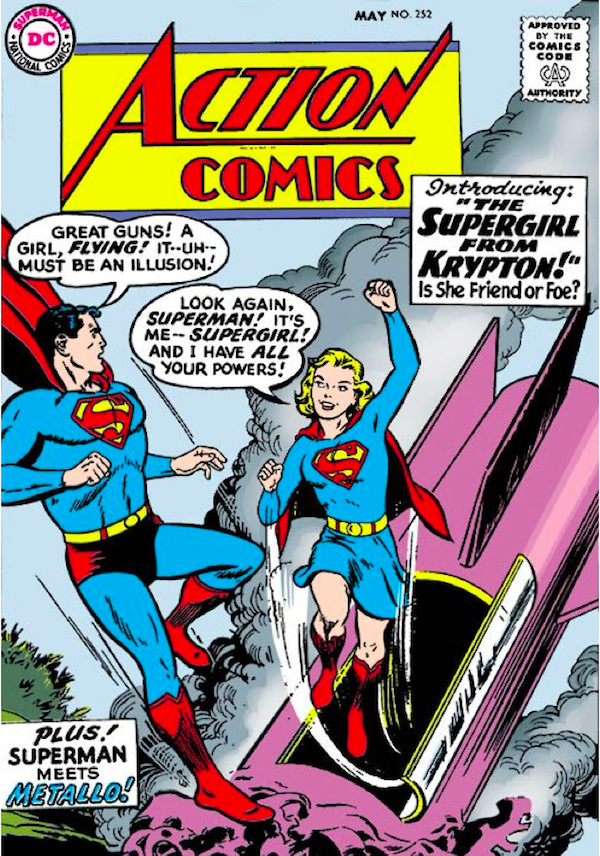
In 1959, in Action Comics 252, Plastino co-created with Otto Binder the character of Supergirl, Superman’s cousin who also survived the destruction of Krypton.

The debut of Kara, the Supergirl from Krypton, was on the charming cover above.

Classic shlock: ‘Superbeast’

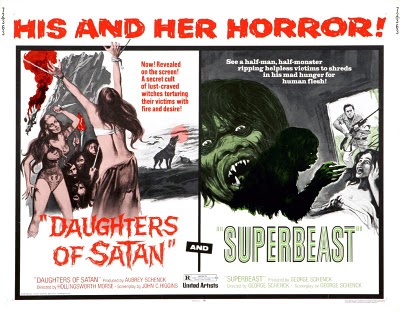
superbeast daughters of satan poster

Believe it or not, I’d never heard of “Superbeast” before I saw it among the free movies on the On Demand menu on my cable.

Okay, maybe that’s not all that hard to believe.

The movie was filmed in the Philippines as part of a subset of the movie industry I’ve always been interested in: Cheap exploitation movies filmed – or at least partially filmed – there for release to the US drive-in circuit. For a while there, note some biographies of legendary exploitation filmmaker Roger Corman, exploitation movies and especially exploitation movie trailers included prodigious amounts of Filipino footage of jungles and helicopters and girls firing machine guns. It’s all a little like the footage of chicks shooting machines guns in Quentin Tarantino’s “Jackie Brown.”

superbeast double bill

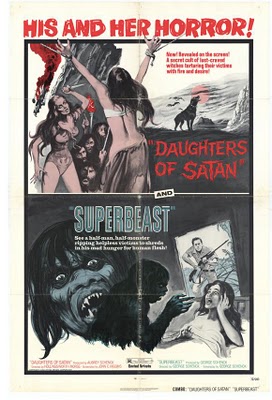
“Superbeast” was released in 1972 on a double-bill with “Daughters of Satan,” a thriller that starred future TV icon Tom Selleck. Selleck went on to greater things, but the same can’t be said for the male lead here, Craig Littler, who did have a stint in the Saturday morning kid’s show “Jason of Star Command.”

Considering the exotic locales in “Superbeast,” there’s a lot of travelogue material here, including trips down rivers with hippos and the like lying alongshore. All this footage serves to fill out the running time of the movie, which has a rather thin storyline.

“Superbeast” is another variation on a couple of well-remembered and much-exploited stories: “The Island of Dr. Moreau” and “The Most Dangerous Game.”

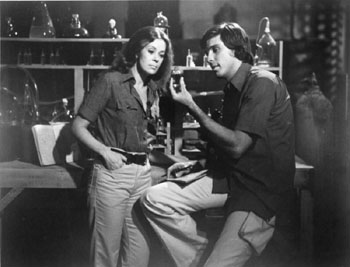
A doctor, played by Antoinette Bower, investigates mysterious goings-on in the jungle and finds lab experiments that turn men into half-men/half-animals.

But there’s really not a whole lot going on for the first half of the movie, except for the doctor waking up to the sounds of screams and gunshots. The doc finds out that the mutated results of these jungle experiments become targets for the mastermind behind it all, a hunter played by Harry Lauter.

Even this description makes “Superbeast” seem more action-packed and coherent than it is. It’s marked by the lazy lack of cleverness that is the ruin of many low-budget movies – and makes clever low-budget films seem even better by comparison. Rather than writing and shooting meaningful plot points, the filmmakers include lots of footage of people just wandering in and out of scenes.

superbeast

“Superbeast” tries to create shocks by including some real-life gore. There’s an autopsy scene using real footage and another with real organs in a jar. And “Superbeast” might be one of the few movies with exposition delivered via slide show. The movie has a real WTF moment when the female doctor dreams about having sex with one of the mutated natives.

After meandering through the plot for nearly 90 minutes, Litter goes all manimal and shows up in an immobile apeman mask. A struggle ensues and well, that’s pretty much it.

The movie even ends with a “huh?” freeze frame, as if to emphasize the futility of trying to find a coherent plot here.

“Superbeast” didn’t have a life much beyond those 1972 drive-in theaters, and that’s just as well.

Comic book odd: Um, you sure about that, Cap?

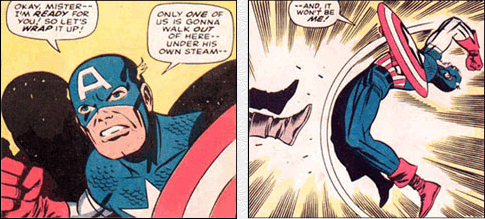
captain america blooper

Anybody’s who’s read this blog knows I love Captain America.

So this is one of my favorite comic book bloopers. I first saw it in a Marvel Comics “No Prize” collection a long time ago.

From “Tales of Suspense” 92, cover dated August 1967. Also in this issue, Iron Man returns to Vietnam.

‘Nuff said.

‘Doctor Who: The Five(ish) Doctors’

three doctors

This weekend was a celebration of all things Doctor Who for the 50th anniversary of the venerable British sci-fi series.

I really enjoyed “Day of the Doctor,” yesterday’s anniversary episode.

But if you haven’t seen it, I’ll urge you to watch “The Five(ish) Doctors,” a 30-minute film by Peter Davison, who played the fifth doctor.

In the clever and cameo-filled movie, Davison is joined by two other Doctor actors, Colin Baker and Sylvester McCoy, who scheme and plot to get into the anniversary episode.

These three actors display enormous good humor as they plot and bicker and connive to get into the historic episode.

It’s a funny Who-centric short film that’s also a great commentary on show biz.

Here’s the film.

‘Hunger Games: Catching Fire’ really sparks

hunger games catching fire

Somebody said that “The Hunger Games: Catching Fire,” the second in the series of four movies adapting author Suzanne Collins’ three books, is like “The Empire Strikes Back” for this series and in a way, they’re right.

I wouldn’t call the ending a cliff-hanger, actually. Like “Empire,” there is a resolution.

But “Catching Fire,” like Collins’ book, leaves some pretty big plot threads hanging. And they make us eagerly anticipate the resolution of the story even more.

I’ve noted before that that Collins’ clever and compulsively readable series starts off like a “Survivor”-style battle that demonstrates the cruelty of a totalitarian government but very quickly turns into a war story. By the time “Catching Fire” comes around the Hunger Games event itself is almost secondary to the growing protest by the oppressed citizens of Panem, the future USA, and the heavy-handed crackdown by President Snow and the government.

For 74 years, the government has enforced its rule and beaten down the citizenry – who dared try to overthrow the government three quarters of a century before – by taking two young people from each of the country’s 12 remaining districts and making them slaughter each other in a life-or-certain-death competition, called “The Hunger Games” because the name emphasizes the rewards for winning: A nice house back in your hometown and enough food to sustain your family. Not gold or glory. Just survival.

The way the games are portrayed, at least early in the books, is that they are a “gift” from the government, a not-so-gentle reminder of the price of revolt and “showcase” for the country’s best and bravest young people. It’s an ingenious plot point by Collins, as gifted a writer as any writing today.

The events of “The Hunger Games,” in which young District 12 contestants Katniss and Peeta not only survive but become an inspiration – much to the frustration of Snow – turn long-standing resentment of the government into a burgeoning revolt by the time of “Catching Fire.”

In the second novel and new movie, Katniss and Peeta are chosen, along with other previous Hunger Games victors, to participate in a special, 75th anniversary games – the Quarter Quell – pitting past champions against each other.

It’s an insidious plan. Katniss can either die or be molded into an unsympathetic competitor, willing to sacrifice her fellow champions, victors worshipped in their own districts.

The competition doesn’t come until half-way through “Catching Fire,” and it’s not portrayed with as much detail as the competition was in the first movie. That’s probably a wise move, since even if you haven’t read the book you’ll guess there’s something else afoot here. The new competitors, like Finnick and Johanna, have something up their spandex sleeves.

In some ways, I think “Catching Fire” is a better movie than “The Hunger Games,” which had the disadvantage of setting a lot of plot into motion but did have a shiny new world to show off. “Catching Fire” takes its time telling its story but doesn’t drag. It nicely expands on the storylines and characters and introduces new ones. And even though its ending – heck, maybe it is a cliffhanger – leaves you wanting more, it also leaves you feeling satisfied.

Once again, Jennifer Lawrence is great as Katniss. She’s roiling on the inside but calm on the outside through most of the movie, but the final shot – as she realizes the implications of everything that’s happened and a look of controlled fury appears on her face – is enough to boost audience expectations for “Mockingjay,” which will apparently be a two-movie adaptation of the final book.

Surely you know this by now, but “The Hunger Games” – although ostensibly a “young adult” book and movie series – is dark. Dark. Dark. And the story only gets darker in “Mockingjay.” It’s vivid, brutal and thrilling war fiction but war fiction nonetheless.


Classic horror: ‘Night of the Creeps’

night of the creeps poster

If I hadn’t seen it in theaters in 1986 – and numerous times on stone-age VHS tapes in the years that followed – I might think that “Night of the Creeps” was a modern-day spoof of low-budget 1980s horror/sci-fil flicks.

That’s because director Fred Dekker’s movie is so sarcastic, so canny, so knowing that it feels like a modern-day retro pastiche of cliches from movies of the time.

“Night of the Creeps” is very much an “everything plus the kitchen sink” kind of movie. The opening sequence, set in the 1950s, shows both a meteor landing and a homicidal maniac on Lover’s Lane. In black and white, yet.

Of course, the two calamities coincide and slug-like aliens from the meteor infect a body that is cryogenically preserved until it’s accidentally thawed out in 1986.

Before you can say “Nightmare on Frat House Row,” the alien slugs are turning people into zombies.

“Night of the Creeps” has even more than zombies and alien parasites. There are exploding heads, flame throwers, college nerds suddenly turned marksmen, topless coeds … even future Oscar bait David Paymer in a brief role as a morgue attendant who ends up slug infested. Yes, David Paymer.

There are so many funny moments in the movie, but maybe the first LOL moment – 20-some years before anybody knew what LOL meant – is when a young lover in the 1950s hears the beginning of a report on his car radio about an escape from the local institution for the criminally insane .. and clicks off the radio before the germane information.

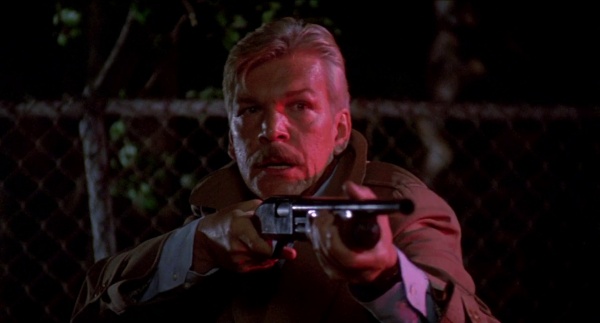
night of the creeps tommy atkins

Tommy Atkins, well-remembered for his roles in classic John Carpenter films like “The Fog” and “Escape from New York,” is great here. As student zombies head for the sorority house, Atkins – as a tough cop whose “thrill me” catchphrase is a wee bit overused – turns to the girls and says, “The good news is your dates are here. The bad news is … they’re dead.”

Dekker pays tribute – and provides Easter eggs for fans – in the names of his movie’s main characters, who bear the last names of such directors as David Cronenberg and George Romero. Heck, the university where all the creepy hijinks ensue is names after Roger Corman.

“Night of the Creeps” is a funny, clever horror spoof that’s got just the right amount of spoofery and just the right amount of horror.


Images of my childhood: The Farrah poster

Farrah_Fawcett_iconic_pinup_1976

It was 1976, so it was hardly my childhood. Images of my adolescence, maybe.

1976 was the year of the bicentennial, the year I first tried my hand at writing fiction.

And the year this poster, of Farrah Fawcett, graced my bedroom wall.

The Farrah poster legendarily sold about 20 million copies – at five or six bucks each – for Pro Arts.

And helped Farrah’s push toward TV stardom, which got an added kick the same year when the pilot for “Charlie’s Angels” aired.

‘The Well’ takes ‘SHIELD’ to ‘Thor’ territory

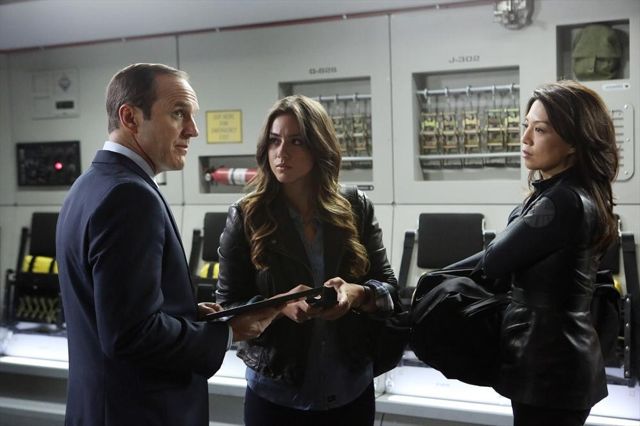
CLARK GREGG, CHLOE BENNET, MING-NA WEN

Tonight’s “The Well,” the eighth episode of “Agents of SHIELD,” tried and mostly accomplished its latest delicate task: Tying into the big-screen Marvel universe.

“The Well” was billed as a follow-up to “Thor: The Dark World,” but really the plot that drove the episode wasn’t so much a continuation of the current “Thor” sequel but a variation on the idea of humans coming into contact with Asgardian (alien) technology we’ve seen before.

That’s not to say “The Well” wasn’t entertaining – most episodes of the series are; they’re just … underwhelming – but its most interesting element was a little more exploration of the show’s least appealing character, the gruff and ultra-competent Agent Grant Ward.

In the episode, the team is in England, picking up the pieces (literally) left over from Thor’s battle in the current movie. Agent Coulson (Clark Gregg) consults with a Norse legends expert in Spain (played by Peter MacNicol) and unwittingly sets off a chase to recover portions of an Asgardian staff.

The staff – the weapon of an Asgardian berserker that’s been on Earth for centuries; so the Thor aftermath stuff is really only a way to get the expert involved – has been broken into three pieces. Each piece has the power to tap into the rage of the person holding it, increasing their strength.

A group of Nordic hate mongers (just go with it) gets first one, then two pieces and the race is on to stop them from getting the third and completing the berserker staff.

In the process, Ward (Brett Dalton) gets “infected” by touching the staff. Normally a slightly edgy, even standoffish guy, touching the piece of staff lets Ward’s rage turn him into a hostile bully. One important point, though: Ward recognizes the change and offers to bench himself. And Coulson – much like he’s given hacker Skye more than a few chances – keeps Ward in play.

The episode ends with a surprising encounter between Ward and Agent May (Ming Na Wen) and a Tahiti flashback for Coulson.

A couple of thoughts:

The show still isn’t as engaging as “Sleepy Hollow” or “The Blacklist,” but I’m enjoying it a bit more each week.

I’m ready for some real developments with Coulson’s resurrection.

I’m wondering how SHIELD itself will be portrayed by the end of this first season. By the time “Captain America: The Winter Soldier” comes out next spring, I’m wondering if SHIELD won’t be the bad guy in the whole Marvel universe picture and the agents we’ve (hopefully by then) come to care about will be like the “Angel” gang in Joss Whedon’s series of the same name, who were working for good in the evil law firm Wolfram and Hart.