
I’ll always have a fond spot in my heart for Vincent Price as Egghead in the “Batman” series.
Maybe it’s because of all the egg puns in “An Egg Grows in Gotham,” the 1966 episode that introduced the character.
Nah. It’s because: Vincent Price!
I’ll always have a fond spot in my heart for Vincent Price as Egghead in the “Batman” series.
Maybe it’s because of all the egg puns in “An Egg Grows in Gotham,” the 1966 episode that introduced the character.
Nah. It’s because: Vincent Price!
I could probably do a blog just about “Bud Abbott and Lou Costello meet Frankenstein.”
I mean a whole blog. Every entry.
But that would be monotonous, wouldn’t it?
So I thought I would do some research and write a little about the opening credits for the 1948 film.
You all know the story by now: Universal had teamed up most of its titular creatures before and, by 1948, decided to give them a humorous setting by combining them with vaudeville comics Bud Abbott and Lou Costello. The comic duo would go on to “meet” several monsters and monster types in several films that followed, and one of my personal favorites is “Meet the Mummy.”
But I wanted to note in particular “Meet Frankenstein,” in which they meet not only Frankenstein’s Monster but also Dracula and the Wolfman.
The movie is so much fun and not, as some would attest, denigrating to the classic creatures.
But I wanted to mention a couple of things that I either knew about the opening titles or found out recently.
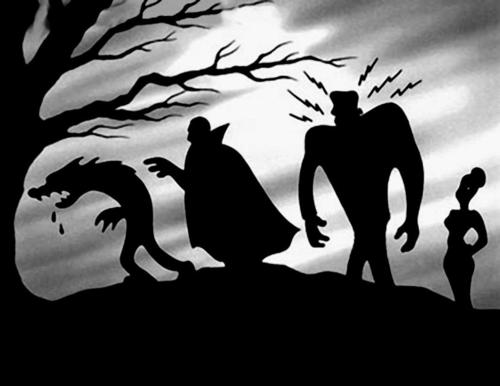
First, I should note that I saw that illustration above online recently and I was stumped. I knew I had seen it, but where?
Then in watching the sequence recently – and I watch it every chance i get, including each of its many airings on Svengoolie – I was charmed all over again by the opening titles.
I wish I could know what went through people’s minds when they saw these titles for the first time in a theater. Since the movie came out well before I was born, I never saw it in a theater. I saw it first on TV two decades after the movie debuted, and it was probably on Indy horror movie host Sammy Terry’s show.
The titles perfectly capture the funny/creepy nature of the movie, maybe as well as any movie of its time.
The brief animated sequence not only establishes Abbott and Costello – through their skeletons – as scaredy cats but also establishes the creatures.
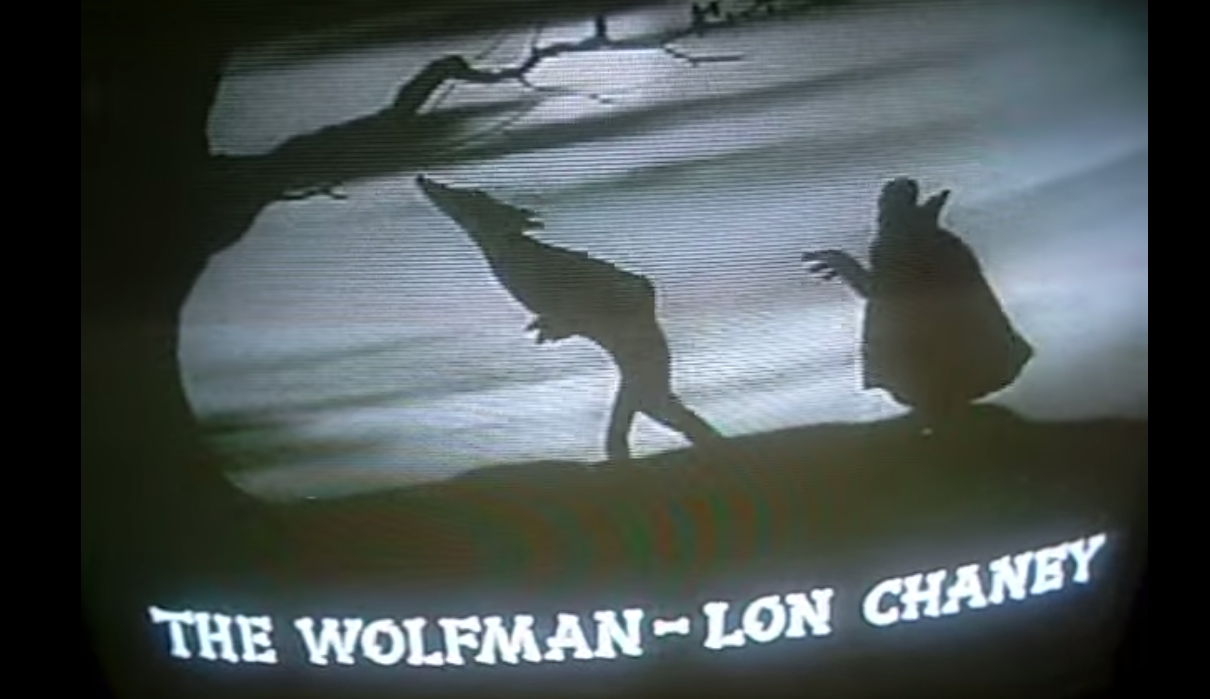
First Lon Chaney Jr. as the Wolfman.
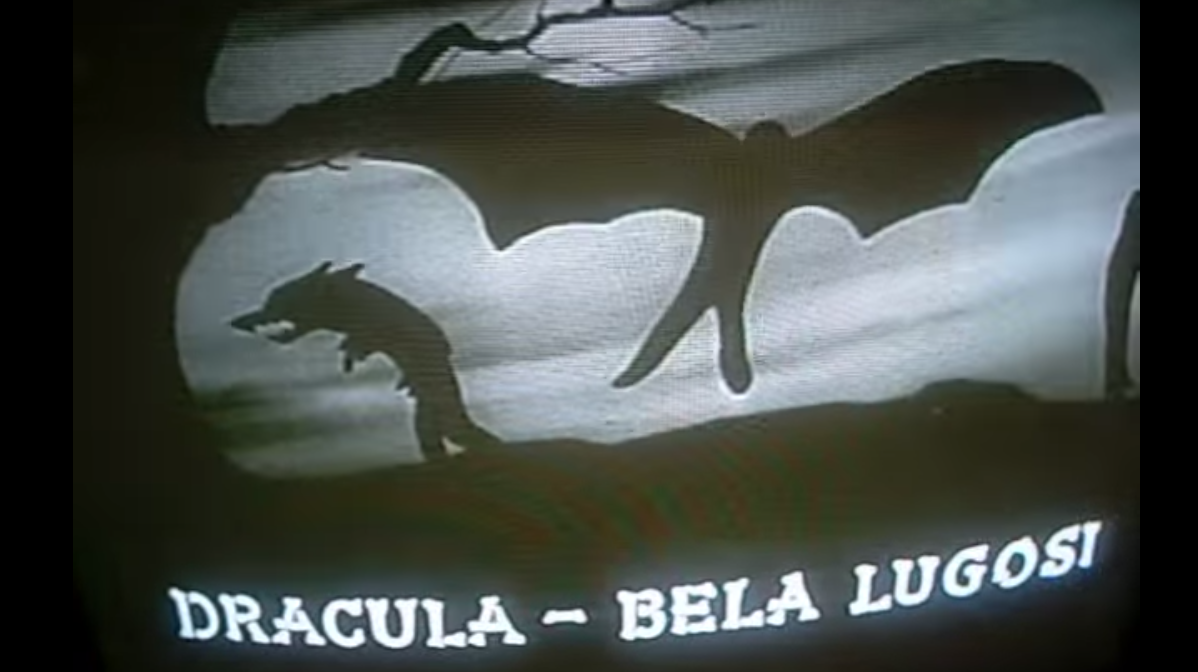
Then Bela Lugosi playing Dracula for only the second time.
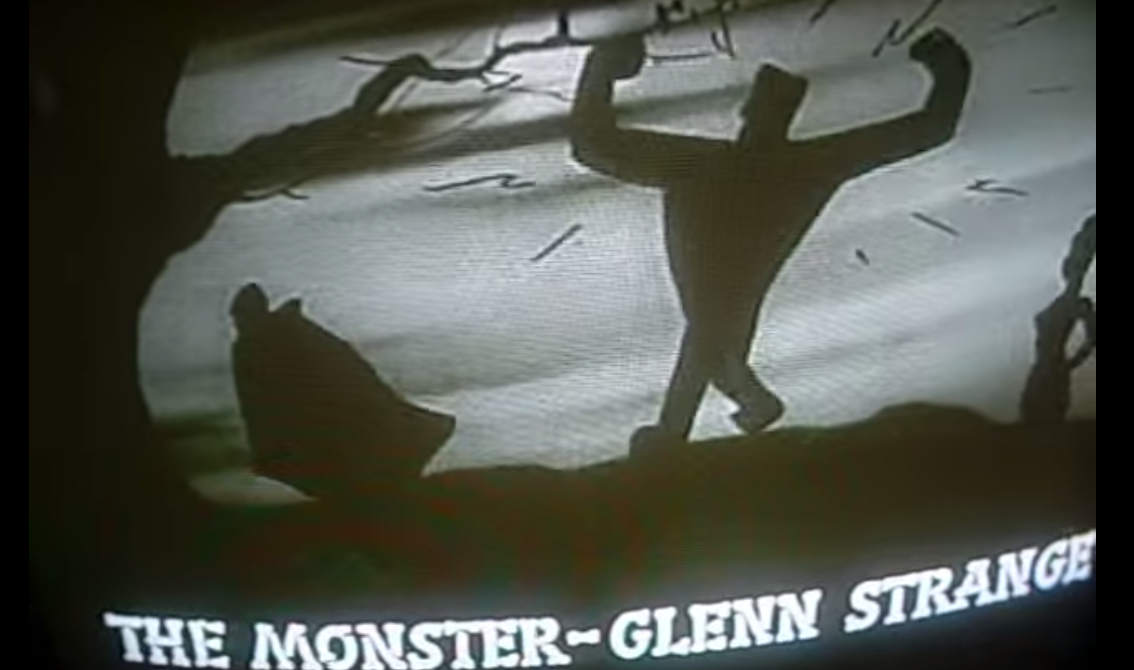
Then Glenn Strange as the monster.
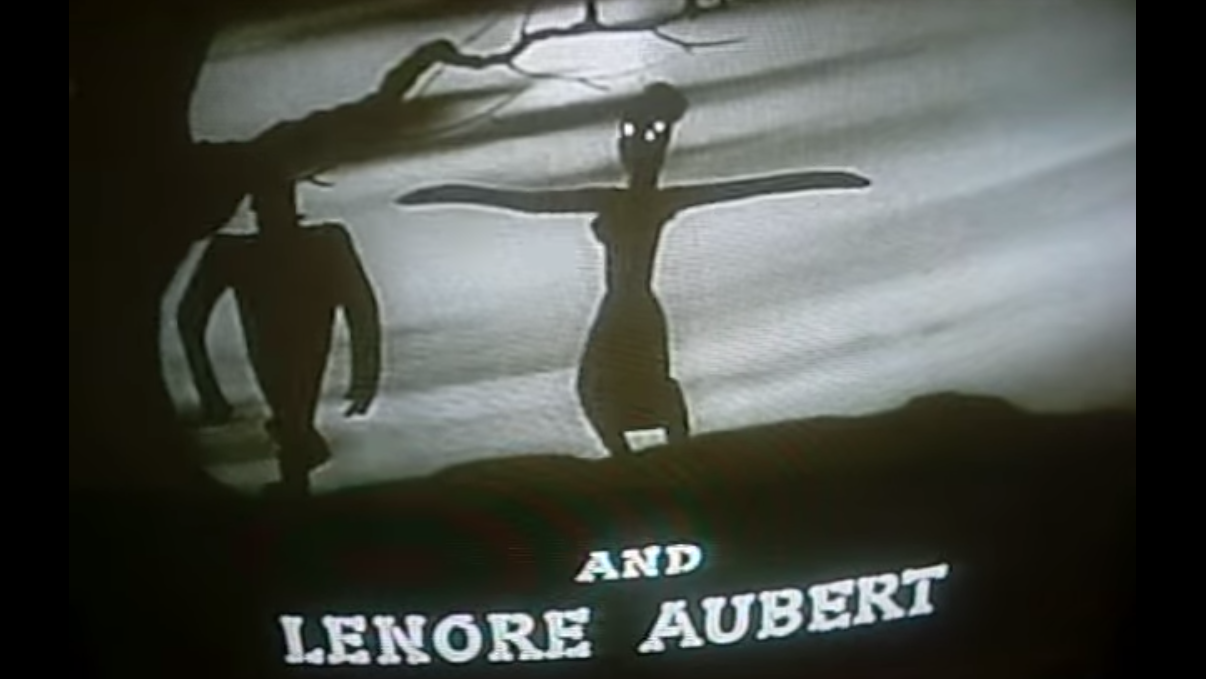
Then Lenore Aubert, whose character isn’t named in the titles but seems to suggest a svelte Bride of Frankenstein (which she is not in the movie, of course).
In looking up the opening titles on artofthetitle.com – which i can’t recommend too highly – i discovered that “Woody Woodpecker” creator Walter Lantz animated the opening titles. Further research indicates Lantz also animated the transformation of Lugosi’s Count Dracula to vampire bat form.
The titles are a piece of movie history, Universal monsters history and are perfect.
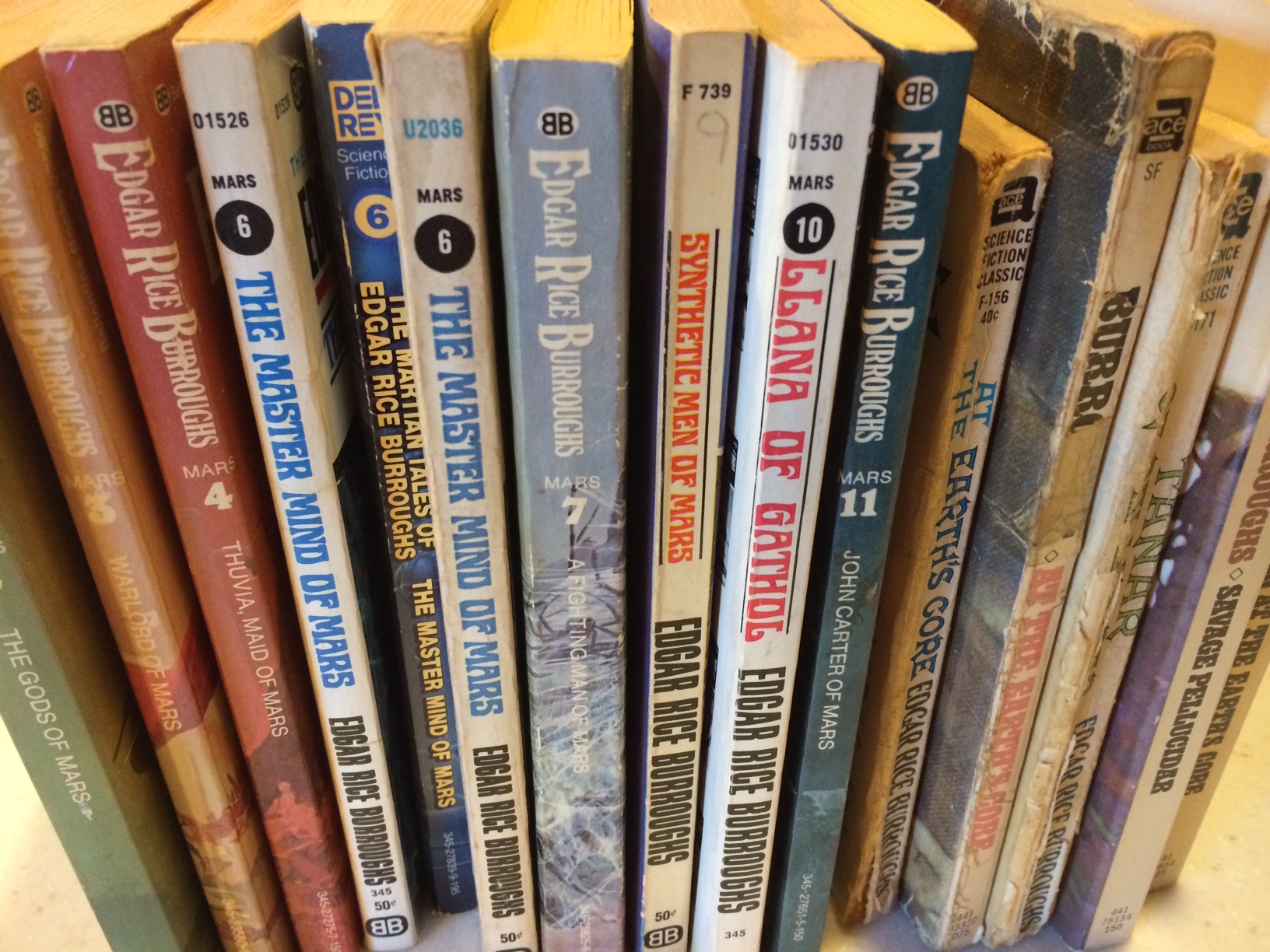
When i was a kid and young teen, I was a big fan of Edgar Rice Burroughs. I liked his Tarzan books, certainly, but I was crazy about his Pellucidar and Barsoom books.
For the uninitiated, the Pellucidar books were Burroughs’ series of books set “At the Earth’s Core,” while the Barsoom books were “A Princess of Mars” and others, including, “John Carter of Mars.”
This weekend, I only just got around to watching, on cable, “John Carter,” the 2012 Disney movie, directed by Andrew Stanton, writer of the “Toy Story” movies and director of, among others, “WALL-E.”
I didn’t go see the film in theaters three years ago. It’s fair to say that I was dissuaded by bad reviews. But I also didn’t want to see the stories that I loved handled ham-fistedly.
The photo above? Those are some of my Burroughs books – mostly Barsoom and Pellucidar books. I still have them. I’ve let some slip away including, strangely enough, the first, “A Princess of Mars.” But I read them all, back in the day.

I guess I should note that Stanton’s “John Carter” isn’t a terrible movie. It’s not even a bad movie. I’ve watched it in a couple of instances this weekend and was impressed by the effects and the scope. I like Taylor Kitsch pretty well as Carter, the Civil War veteran who inexplicably finds himself transported to Mars – there called Barsoom – and involved in a war.
I thought Viola Lynn Collins was pretty good as Dejah Thoris, the female lead and Martian princess herself, and Willem Dafoe good as the voice of Tars Tarkas, the giant, four-armed Martian friend of Carter.
Mostly, though, I came away from watching “John Carter” and thinking I’d seen it all before.
That’s not the fault of the story, of course. It’s a fault of the timing of Stanton’s movie.
There have been attempts to film the story – which started as a serial in 1912 and sparked 10 sequels through the early 1940s – before.
If the story is familiar, it’s because many stories, comics and movies have cherry-picked some of the tale’s highlights and used them. It’s hard to imagine how different the “Star Wars” movies might have been without the desert settings and lumbering, bestial threats of the Carter stories. I can’t imagine “Avatar” without the work that Burroughs did.
I don’t wish that “John Carter” had been made decades ago. A live-action movie without benefit of today’s special effects would have been disastrous.
But by the time “John Carter” came out in 2012, the movie had a “been there, seen that” feel to it that probably doomed it with audiences who didn’t know the story and settings pre-dated the first “Star Wars” movie by more than a half-century.
So “John Carter” was fine. The story and its trappings were probably a little out of date by the time the movie was made. Or maybe the audience was jaded. That includes me, by the way.
At any rate, the books are still all there, on my shelf, to enjoy sometime I’m inspired to make another trip to Barsoom.
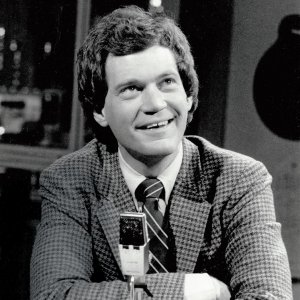
It was almost like a sickness.
For a few years in the 1980s, I stayed up every night and watched “Late Night with David Letterman” on NBC. But I didn’t just watch it. I also videotaped it.
And cut out the commercials.
That’s right. I was making my own commercial-free David Letterman video library.
I watched the show from its start just after 12:30 – following the Johnny Carson “Tonight Show” – until it went off an hour later. And, obviously, I loved the show enough to want to preserve it in that manner.
Letterman. Paul. Larry “Bud” Melman. All the rest.
The Alka-Seltzer suit. Dropping things off the tops of buildings. Interrupting other shows, like the bullhorn assault on the “Today” show.
My god, what fun.
Letterman, a fellow Hoosier who I remembered from his time on Indianapolis TV and – kinda – his time on my local radio station, had a masterful grasp of ironic comedy long before others followed. He was funny and absurd and disrespectful and everything anyone would want in a late-night talk show host.
I haven’t watched Dave in a while. The draw of “The Daily Show” and “The Colbert Report” was too great. Well, that and having to get up at 6 a.m. to deal with the demands of real life.
I’ve seen a little more of his show lately, since Dave’s departure was imminent. I wouldn’t have missed Bill Murray last night. And I’ll probably be watching tonight, for the final show.
Dave was ahead of his time and of his time. He was the late-night talk show host we deserved and needed. He ranked right up there with Carson in my book and always will.
So thanks, Dave, and so long.
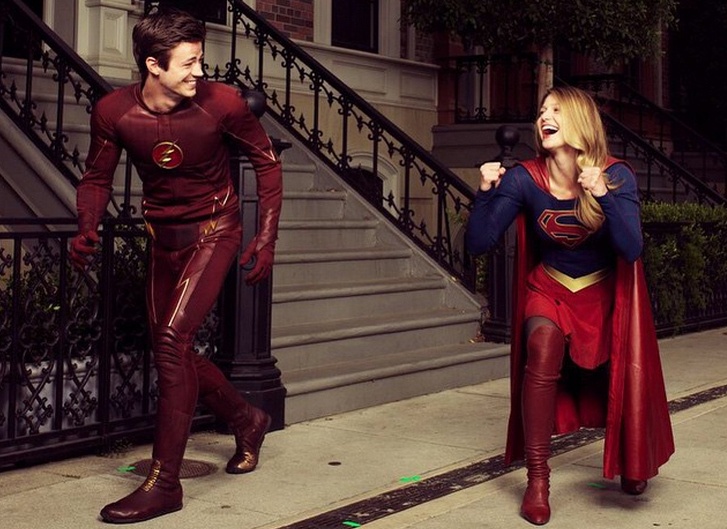
But seriously, could these two be any more adorable?
Grant Gustin and Melissa Benoist, from the “Flash” and “Supergirl” series, photographed for a Variety article about producer Greg Berlanti.
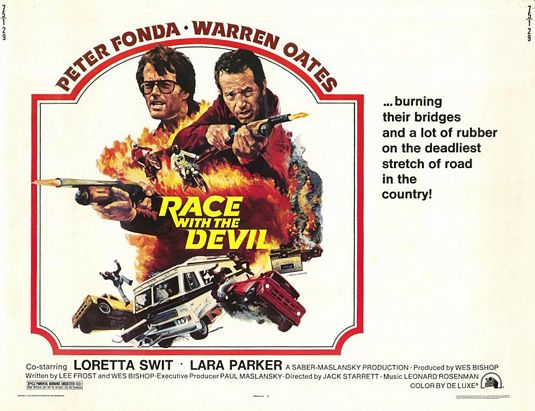
I’m thinking that the vehicular mayhem in “Mad Max: Fury Road” will top that in “Race with the Devil,” but I’m gonna just leave this here to encourage you to check out the latter film if you get a chance.
Directed by Jack Starrett, the 1975 thriller stars Peter Fonda, Warren Oates, Loretta Swit and the gorgeous Lara Parker as friends on an RV trip who stumble upon a Satanic ritual and human sacrifice in the middle of Texas.
Then the chase is on.
The leads are great and the wonderful character actor R.G. Armstrong plays the sheriff who won’t believe their story.
It’s a classic.
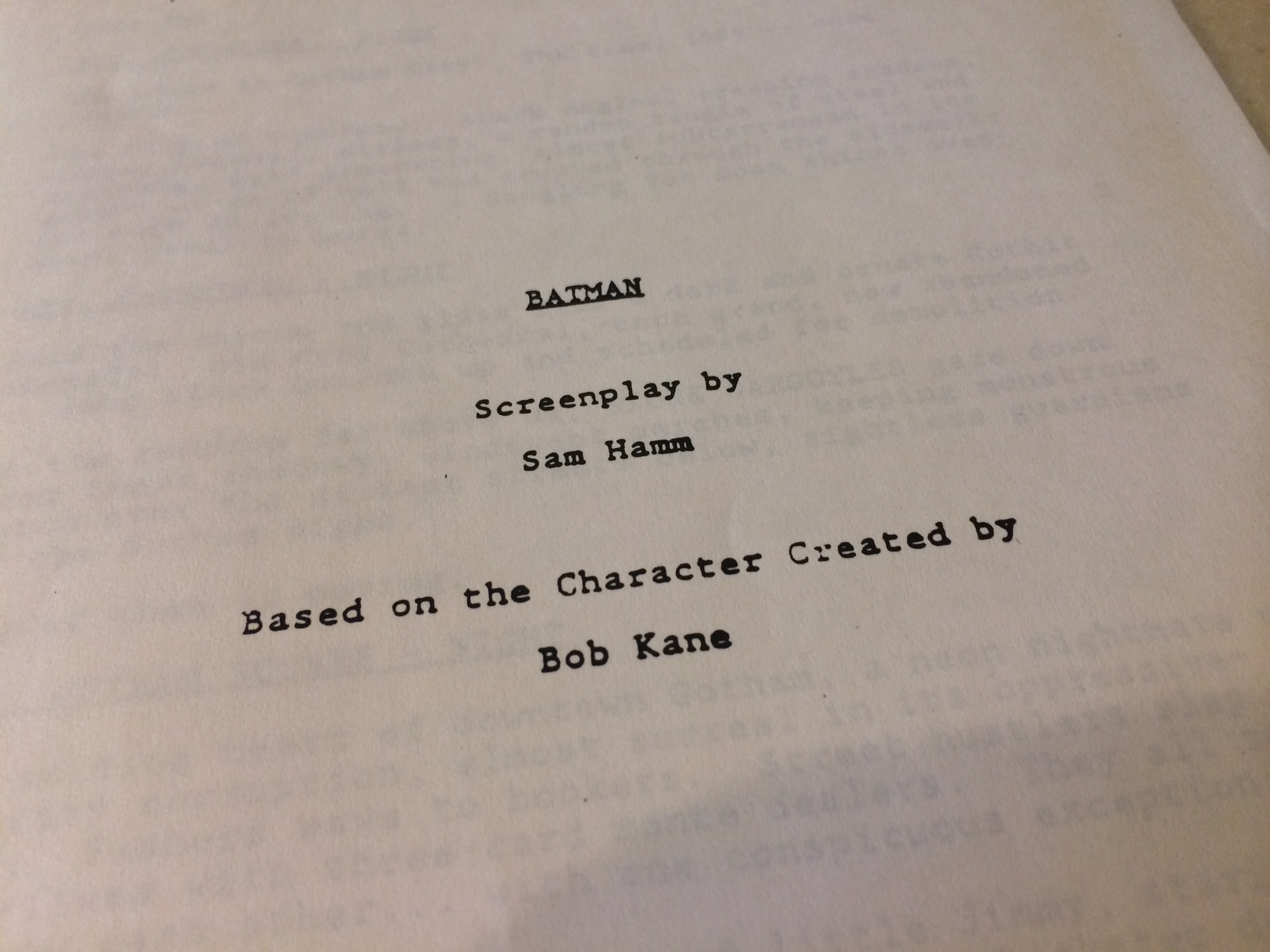
Last time I tried to write about Sam Hamm’s legendary script for Tim Burton’s “Batman” movie, I got a cease-and-desist note from Warner Bros.
We’ll see what happens this time.
It was the late 1980s and there was a lot of anticipation for Tim Burton’s “Batman” movie, planned for 1989 release. This was pre-Internet, remember, but the letters columns of genre magazines and newspapers devoted to the movie were full of opinions, pro and con, about the movie and Burton’s choice of Michael Keaton – an actor best known for comedy movies and, shall we say, not having the strong chin of a comic-book-movie actor – had set people on fire.
This was just a couple of decades after the Adam West-starring TV series. A decade earlier, the Richard Donner-directed, Christopher Reeve-starring “Superman” was a huge hit and Warner Bros. seemed to want to follow the same formula with Burton’s “Batman.” In other words, an unknown or unlikely choice as the hero bolstered by a big star as the villain.
Burton had those elements firmly in place with Keaton – who would go on to surprise many with his performance and presence – and Jack Nicholson as the Joker (the movie’s equivalent of “Superman” and its two big stars, Marlon Brando and Gene Hackman).
What was crucial and a total unknown at the time was the tone of the “Batman” movie. The Adam West series, beloved more today than at the time, was still fresh in people’s minds. Would Burton and Keaton and Nicholson turn their “Batman” into a spoof?
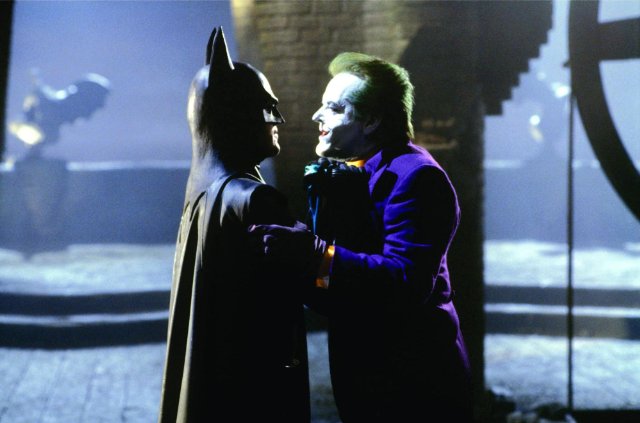
(That didn’t happen, of course. I still vividly remember seeing the movie on its opening weekend in 1989 on a trip to visit friends in Los Angeles. We stood outside the Chinese Theatre in a line that extended around the block and then waited only-a-little-impatiently for the movie to begin. The Chinese Theatre had a Bat Signal fired up and projected Batman’s chest symbol on the curtains before the movie began. We were not disappointed once we saw the movie.)
But at some point during all the anticipation and the aftermath, I came across a copy of a Batman script, written by Sam Hamm and noted, “Third Draft, February 29, 1988.” And yes, there was a February 29 that year.
I bought the screenplay at a sci-fi and comic-book convention within a few weeks of the movie’s release. As far as I knew then and know now, it was a legit Sam Hamm draft, one of several, done before the final script credited to Hamm and Warren Skarren.
Some of you might remember that there was a huge market for movie and TV scripts at the time. Today, you can do a Google search and find drafts of Hamm’s scripts online, in their entirety, going back to 1986. But back then, of course, you got your hands on a copy either through the mail order or at a comic book or sci-fi convention.
(There was a third source back then. During my regular tips to LA, I paid a lot of visits to a Hollywood Boulevard book store that sold scripts and movie stills. Most of the scripts, no doubt, came from studio functionaries or crew members who knew they could make a few bucks and clean off their desks by selling them to be resold.)
I got the Hamm script at a convention, though, although I honestly don’t recall now if it was in LA or here in the Midwest.
I really enjoyed the script and upon re-reading it today, I’m glad to see that it has held up nicely. There are some important differences between the script and the completed movie. One big difference is the late-in-the-movie introduction of Dick Grayson, who would go on to be Robin to Bruce Wayne’s Batman. Dick is out for vengeance after the Joker deliberately kills his parents – trapeze artists the Flying Graysons – when a chase with Batman encounters the Gotham City birthday parade familiar from the movie.
By the end of the script, Dick is under Bruce Wayne’s care and close to taking the first steps to becoming Robin.
The Bruce Wayne and Joker characters are different in Hamm’s script and I have to say I preferred them to the movie versions.
Joker – Jack Napier, underling to mobster Carl Grissom just like in the movie – is edgier, a dapper 30-something rather than Nicholson’s dapper 50-something. My biggest complaint with Burton’s “Batman” has always been that Nicholson was too old and simply not spry enough to be a credible physical match for Batman.
Bruce Wayne in the script isn’t the distracted billionaire he was in the movie either. Actually, the character is much more like the character as portrayed in the “Batman” animated series and Christopher Nolan’s Batman trilogy starring Christian Bale. He’s edgier and more dynamic. There’s a notable scene in the script – following the one in the movie where Joker and Bruce Wayne face off at Vicki Vale’s apartment – in which Wayne, clad in a suit and utility belt with a black stocking over his face – pursues the Joker across Gotham, stopping only to don the Batsuit after rendezvousing with Alfred along the chase route.
Batman is different too. He’s more tortured, if that’s possible, realizing that he played a role in creating the Joker in the first place. In the climactic struggle between Batman and the Joker in the belfry of Gotham Cathedral, Hamm implies that Batman considers the idea of ending his own life.
In a moment that surely inspired a similar scene in the Nolan movies, Bruce activates a sound-generating device that drives the bats in the cathedral into a frenzy. The bats ultimately make the Joker fall to his death.
Batman has also started the countdown on an explosive device on his utility belt and I swear Hamm makes it seem as if Bruce is considering ending it all.
The Joker has already plunged to his death by this point, disoriented by the bats and unable to reach his getaway helicopter.
“Six seconds remain. There is still time if he makes his choice now,” the script says about Batman.
“Surrounded by the flapping of leathery wings, his body working on pure adrenaline, he unbuckles the belt and HEAVES IT out into the darkness.”
The belt and bomb take out Joker’s helicopter.
But did you notice that part about Batman’s “choice?”
Much of the script is familiar from the movie. There’s the scene of Batman terrorizing street punks on a rooftop. There’s the charity benefit at Bruce Wayne’s house. Characters like Jim Gordon and reporter Alexander Knox are on hand, even though Knox briefly tries to blackmail Bruce Wayne – he knows Batman’s identity, just as Vicki Vale does – and is driven to do so by jealousy over Vale and her attraction to Wayne. Knox redeems himself by the end, however.
So at the time I first read Hamm’s script, I was settling into my newspaper career but still writing some freelance for other publications. I was a longtime admirer of Cinefantastique, the slick and intellectual magazine, founded in 1970, that covered the world of fantastic movies and TV. (It’s online only now, but I still have almost every issue in storage.)
I thought that a review of the original Hamm “Batman” script might be a good way to break into writing for Cinefantastique, so I wrote up a review and mailed it to them, along with my contact information.
Not long afterward, I got first a phone call and then a letter from a legal representative of Warner Bros.
How did I get a copy of the Sam Hamm script? Did I remember the name of the convention vendor that I bought it from (for something like $15)? Was I aware that, even though it wasn’t the version that was produced, it was still the property of Warner Bros? (Yes to the latter; it says “Property of Warner Bros” right on the title page.)
At the same time it seemed like overkill – remember, I was this about-30-year-old writer and longtime genre fan in Muncie. Indiana, who just wanted to get an article published in a national genre magazine – and I found it incredibly disappointing that Cinefantastique called Warner Bros. on me the minute they got my unsolicited article in the mail. I’m guessing they had their own copy of the script – if I could get one at a convention, anybody could – but chose not to write about it. At any rate, it was disappointing and I never looked at the magazine the same way after that.
I respected Warner’s demand that I not write about the script, however, and I haven’t – until today. I’m guessing the studio’s sensitivity about that particular script must have lessened nowadays when, thanks to the Internet, a half-dozen versions of the script are there for perusal.
Well, I’m guessing, anyway. I’ll let you know if I get another call from some lawyer in California.
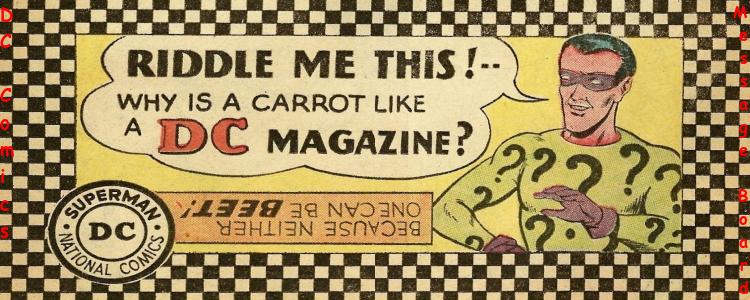
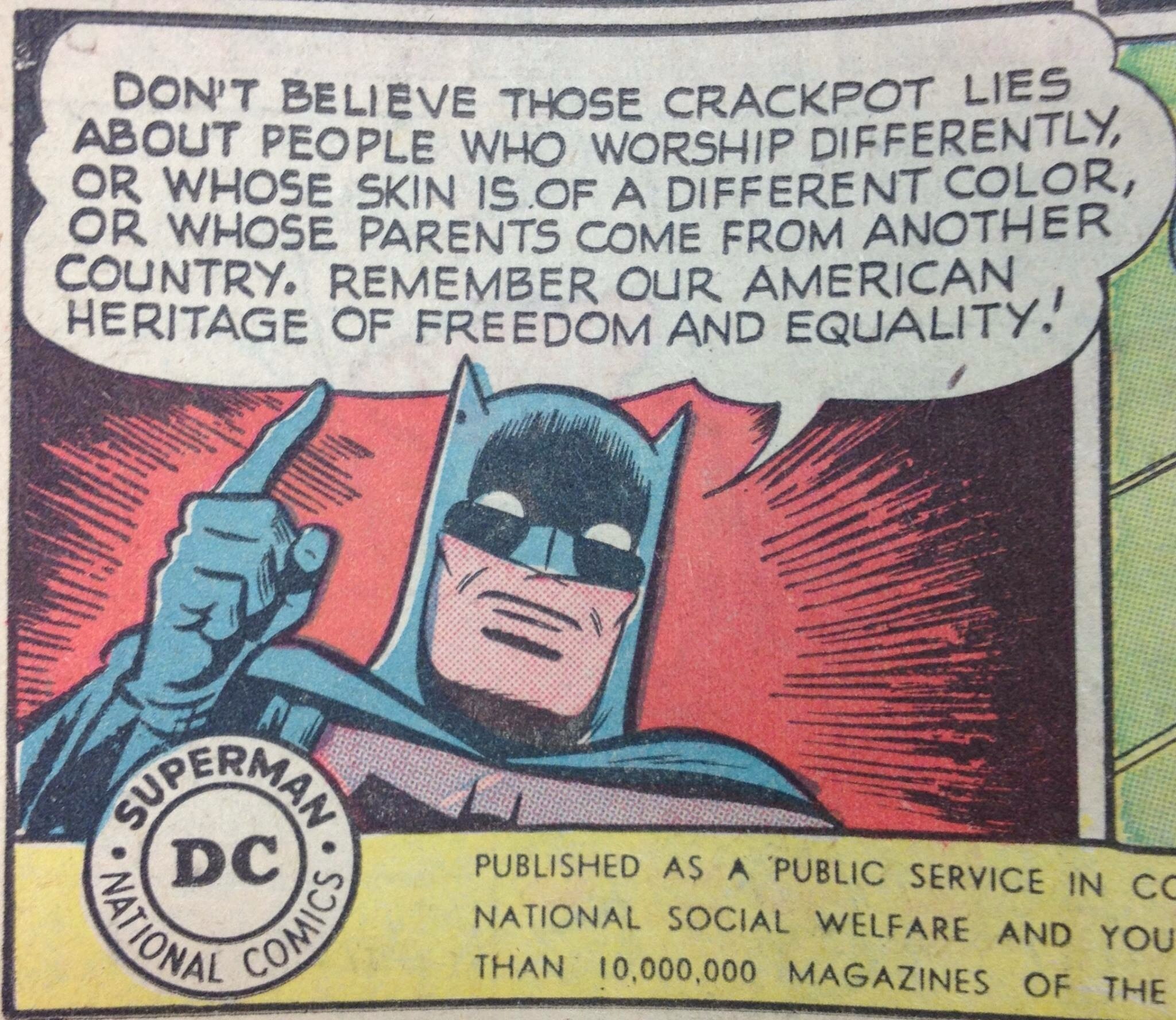
There’s a subset out there of Batman villains and bad jokes and there’s a tiny subset of Batman villains and bad vegetable jokes.
And then there’s this DC house ad from mid-century.
 keithroysdon