Monthly Archives: January 2024

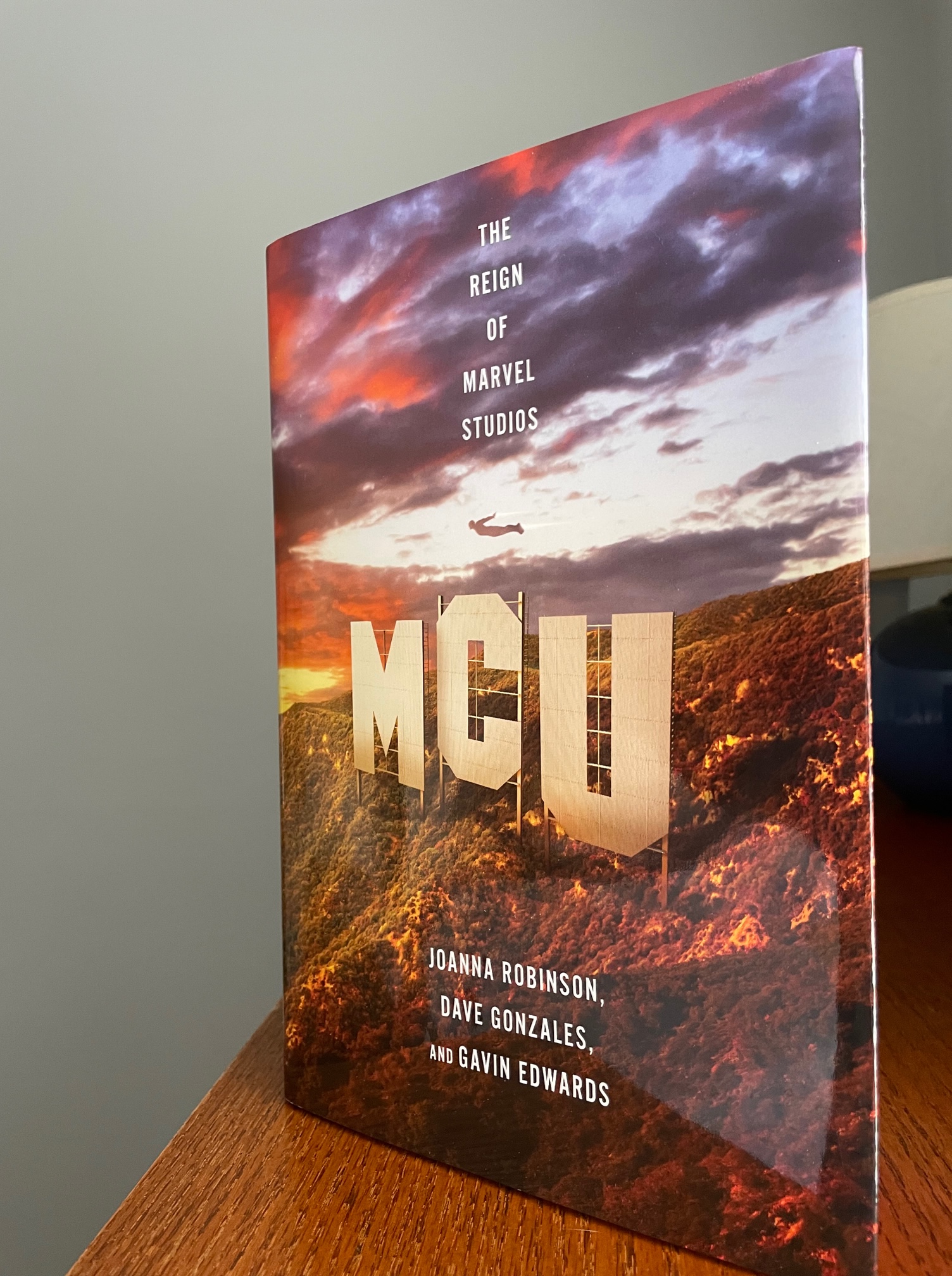
‘MCU’ has history, gossip and behind-the-scenes of Marvel movies

Since the modern Marvel Cinematic Universe – not counting the “X-Men” or “Spider-Man” movies of the 2000s – began in earnest with “Iron Man,” I’ve followed the development of the MCU with pretty keen interest.

Nevertheless, there are tidbits and pieces of intrigue and behind-the-scenes details of the movies in “MCU: The Reign of Marvel Studios” that I was never aware of or had forgotten. That makes the book must-reading for fans of the movies and, going back several decades, the Marvel comics of my youth.

“MCU” is written by Joanna Robinson, Dave Gonzales and Gavin Edwards and came out in October 2023, just as some of the MCU films were struggling or would soon struggle to find the audience previous films in the series found – and found so thoroughly that its easy to say that Marvel Studios had revolutionized Hollywood. DC and other companies tried to imitate Marvel – hence Universal’s abortive monster movie series – and created their own cinematic universe. None worked as well as Marvel’s effort, to a great extent because the Marvel characters and decades-long storylines are so strong but also because for much of the most successful part of its history, the MCU was overseen by producer Kevin Feige.

In the book – which the authors say initially received cooperation from the actors and filmmakers but lost access as the research process went on and the films became less well-received – Feige is portrayed as some kind of wunderkind, a creative producer who understood the characters created more than a half-century before. At least, Feige understood what was marketable about those characters, prominent and obscure, and their storylines.

Feige is a bit of a cypher to the world at large and that’s reflected in “MCU,” which paints him as a nice-enough guy who turned his knowledge of the Marvel history and the depth of its bench – a thousand characters or more to play with – into a series of films that became the closest thing to a sure thing in Hollywood in the past 20 years.

Most of the MCU films have been crowd-pleasers and money-generators and sometimes, as with films like “Black Panther,” won critical acclaim. Sometimes it seems as if Feige’s talents are to find good creative types – directors like Ryan Coogler and writers and directors like the Russo brothers – and let them loose. Other times, popular opinion is that Feige and Marvel – in its early days seen by executives simply as a toy delivery system – are seen as dominating and off-putting. The times they let directors have their heads and it worked out, the movies were great. The times they let directors have their heads and it didn’t work out, the directors were replaced early in production.

The “MCU” book feels pretty current. It slightly predated the release of “The Marvels” – really a pretty fun movie that was shunned by many Marvel fans – but it does touch on, in a bit of a rush, the period in the late 2010s and pandemic days when movies were delayed and delayed and Disney Plus series were hit and miss. (More hit than miss, at least in my opinion, and only in the first couple of years.)

I’m one of those Marvel fans who grew up reading the earliest “Fantastic Four” and “Avengers” comics as they were handed down to me by an older neighbor. I’m not a lifelong reader or collector, but I try to follow what’s going on.

Count me among those who never expected the characters and stories of my youth would be made into movies that were actually good, with clever scripts, great casts and special special effects.

“MCU” is a treat, filled with little behind-the-scenes tidbits – who was originally considered for which character, what decisions were made that probably helped or hindered the filmmakers – for those of us who have been around forever and those who came to the Marvel universe because of the movies.
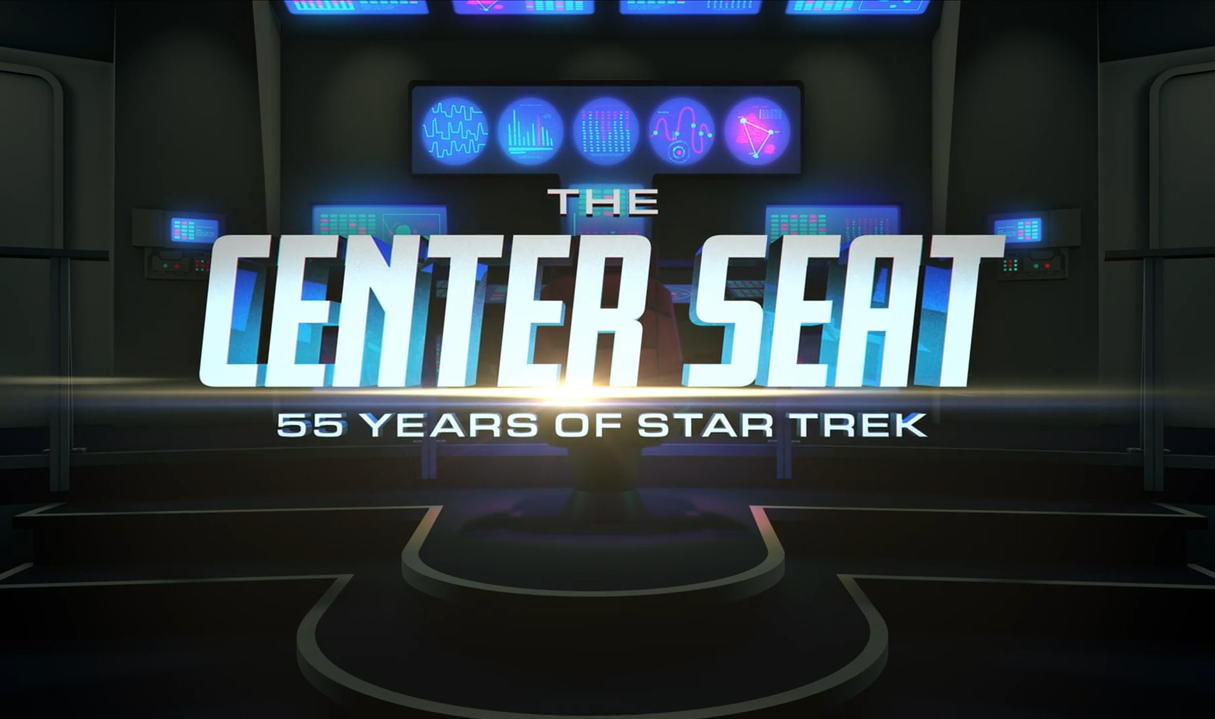
‘The Center Seat’ is a mostly-well-done ‘Star Trek’ history doc

If you’ve been a fan of “Star Trek” as TV series, movies and concept as long as I have, there’s probably not a ton of surprises in “The Center Seat: 55 Years of Star Trek.” But the 11-part documentary series, now streaming, is nevertheless mostly fun.

“The Center Seat” originally aired on the History Channel a couple of years ago – or at least three or four episodes aired. The rest never saw the light of day and the only on-demand episodes available were limited to those few episodes.

So it was cool to see the entire run of the show – which follows “Star Trek” from before “Star Trek” was even “Star Trek,” through the shows and movies and right up to and mostly including cursory looks at the current crop of shows in the franchise – appear on streaming services like Peacock and Amazon Prime Video. I reacquainted myself with the few episodes I’d seen and finished out the series.

Narrated by Gates McFadden, who has played Beverly Crusher since “Star Trek: The Next Generation,” the series is a little glib in the fashion of “documentary” series like “The Movies Who Made Us,” which are quick-cut, “funny” looks at films. With those type of shows, the interviews are edited into three-second sound bites juxtaposed with clips and images to create mirth.

“The Center Seat” doesn’t do as much of that as some of these pop culture docs and the substance of the series is the behind-the-scenes interviews and analysis of the series. Don’t look for sit-downs with William Shatner or Avery Brooks, but there is substantial footage of a mid-2010s interview with Leonard Nimoy.

And the series gives us a good picture of the role Lucille Ball, sitcom pioneer and Hollywood businesswoman, played in “Star Trek.”

‘Zorro’ and its curious subtitles

I’m enjoying the new “Zorro” series on Amazon Prime Video but it has prompted me to wonder about something: How do networks and streaming services create their subtitles and closed captions and why are they so different, sometimes, from the actual dialogue?

I’ve been watching most TV shows and movies with subtitles – when they’re available – for much of the past year now. Uneven sound mixes prompted me to do that, and while I still consider subtitles kinda distracting, they’re helpful in catching asides (as in series like “Star Trek: Strange New Worlds” with rapid fire, often humorously-phrased dialogue) or series like the wonderful “Derry Girls,” where subtitles are handy to catch all the jokes.

But in keeping an eye on subtitles, I’ve noticed they often vary from the actual dialogue on screen. I’ve wondered if subtitling was done from a script or literally just what the people who write closed-captions can make out. The number of times a caption includes the phrase “unintelligible” makes me think it’s the latter.

And now comes “Zorro,” a Spanish TV production acquired by Prime Video that is obviously dubbed. But here’s the odd thing: The subtitling/captions frequently don’t match the dubbed dialogue.

The dubbed dialogue will be something like “Quickly, we must go outside,” and the subtitle will read something like, “Hurry – we need to catch up!”

So, close in spirit but not in details.

Other than that, the most egregious case of dialogue and captions that don’t match, “Zorro” is good fun so far.

I’ve always been a “Zorro” fan, having caught the original 1957 series starring Guy Williams in reruns. I’ve always loved how the original Johnston McCulley stories – which debuted in 1919 and were adapted into movies ranging from the Douglas Fairbanks silent movie in 1920 to the 1988 film staring Antonio Banderas – clearly influenced the early elements of the Batman comics, including secret lair (often hidden behind a fireplace or bookcase) black horse/Batmobile, preference for dispensing justice in old California with a sword or whip versus a gun, etc.

The new Zorro/Diego de la Vega is played by Miguel Bernardeau, with Renata Notni as Lolita, his headstrong romantic interest and, most intriguingly, Dalia Xiuhcoatl as a Native warrior who trained to succeed the old Zorro, who is ostensibly killed in the series’ opening scenes, along with Diego’s father.

“Zorro” has a cast of familiar characters, played by striking actors, with some interesting twists and additions. I’ll keep watching, with one eye on the subtitles and an ear out for the unmatching dialogue.

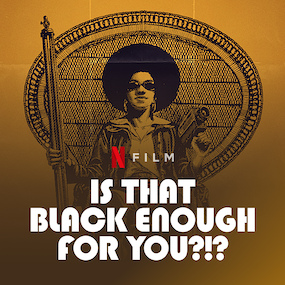
‘Is That Black Enough for You?!?’ a groundbreaking documentary about Black cinema

I don’t watch a ton of documentaries on streaming services, particularly those about entertainment and show business. Sometimes it feels like all those have turned into those usually-lame “making of” special features that accompany movies on disc.

That’s why “Is That Black Enough For You?!?” feels like such a revelation. Not only is it revelatory because of its subject matter – there’s a lot to say about Black filmmaking – but it feels like the rare recent entertainment industry documentary that comes from a place of knowledge and passion.

That’s because of Elvis Mitchell, the veteran writer and documentary maker who wrote and directed “Is That Black Enough For You?!?,” which I’m going to refer to, going forward in this blog post, as “Black Enough.” Mitchell is a scholar and deeply invested in the subject.

“Black Enough” – which takes its full title from a wry line from Ossie Davis’ “Cotton Comes to Harlem” from 1970 – is a 2022 Netflix original that escaped my notice until a couple of weeks ago, when I saw a reference to it in an article. (It would be cool if Netflix promoted the film a little more.)

Although the film is marketed as a movie about the period from 1968 to 1978, which included the so-called “blaxploitation” period of action-filled movies, romance films and horror flicks with Black actors and sometimes Black directors that reached audiences of all races, there’s a lot of history from before 1968, when stars like Sidney Poitier and Harry Belafonte – who gives one of his last interviews here – broke through.

We see not only many, many clips but get to enjoy interviews with Belafonte and others including Glynn Turman, Margaret Avery and Samuel L. Jackson

Especially gratifying is the movie’s observations about how Black directors, movie soundtracks and actors influenced so-called “mainstream” cinema: The movie recounts how Black films were copied in other, later films. And when I say “gratifying,” I note that it is not gratifying that so many good-to-great films with Black casts and Black moviemakers like Davis and Gordon Parks and Melvin Van Peebles and Pam Grier and Richard Roundtree and so many others were exploited by other films that stole their groundbreaking moves. But it is gratifying that this history is recognized.

Happily, “Black Enough” was nominated for an Emmy in the documentary film category, and although it didn’t win, the nomination might carry with it increased demand for viewing on Netflix. It’s well worth your 2.5 hours.