Since the modern Marvel Cinematic Universe – not counting the “X-Men” or “Spider-Man” movies of the 2000s – began in earnest with “Iron Man,” I’ve followed the development of the MCU with pretty keen interest.
Nevertheless, there are tidbits and pieces of intrigue and behind-the-scenes details of the movies in “MCU: The Reign of Marvel Studios” that I was never aware of or had forgotten. That makes the book must-reading for fans of the movies and, going back several decades, the Marvel comics of my youth.
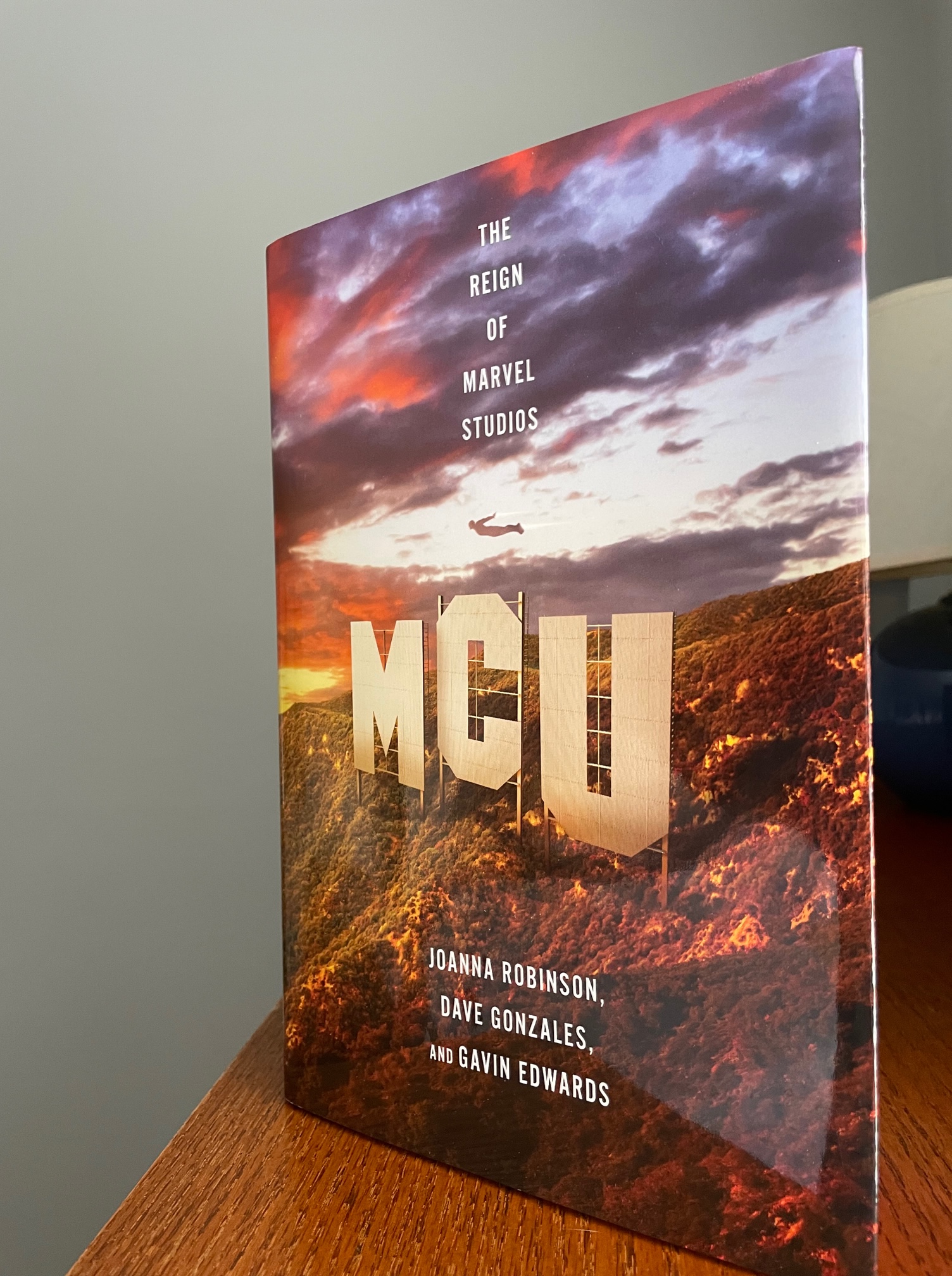
“MCU” is written by Joanna Robinson, Dave Gonzales and Gavin Edwards and came out in October 2023, just as some of the MCU films were struggling or would soon struggle to find the audience previous films in the series found – and found so thoroughly that its easy to say that Marvel Studios had revolutionized Hollywood. DC and other companies tried to imitate Marvel – hence Universal’s abortive monster movie series – and created their own cinematic universe. None worked as well as Marvel’s effort, to a great extent because the Marvel characters and decades-long storylines are so strong but also because for much of the most successful part of its history, the MCU was overseen by producer Kevin Feige.
In the book – which the authors say initially received cooperation from the actors and filmmakers but lost access as the research process went on and the films became less well-received – Feige is portrayed as some kind of wunderkind, a creative producer who understood the characters created more than a half-century before. At least, Feige understood what was marketable about those characters, prominent and obscure, and their storylines.
Feige is a bit of a cypher to the world at large and that’s reflected in “MCU,” which paints him as a nice-enough guy who turned his knowledge of the Marvel history and the depth of its bench – a thousand characters or more to play with – into a series of films that became the closest thing to a sure thing in Hollywood in the past 20 years.
Most of the MCU films have been crowd-pleasers and money-generators and sometimes, as with films like “Black Panther,” won critical acclaim. Sometimes it seems as if Feige’s talents are to find good creative types – directors like Ryan Coogler and writers and directors like the Russo brothers – and let them loose. Other times, popular opinion is that Feige and Marvel – in its early days seen by executives simply as a toy delivery system – are seen as dominating and off-putting. The times they let directors have their heads and it worked out, the movies were great. The times they let directors have their heads and it didn’t work out, the directors were replaced early in production.
The “MCU” book feels pretty current. It slightly predated the release of “The Marvels” – really a pretty fun movie that was shunned by many Marvel fans – but it does touch on, in a bit of a rush, the period in the late 2010s and pandemic days when movies were delayed and delayed and Disney Plus series were hit and miss. (More hit than miss, at least in my opinion, and only in the first couple of years.)
I’m one of those Marvel fans who grew up reading the earliest “Fantastic Four” and “Avengers” comics as they were handed down to me by an older neighbor. I’m not a lifelong reader or collector, but I try to follow what’s going on.
Count me among those who never expected the characters and stories of my youth would be made into movies that were actually good, with clever scripts, great casts and special special effects.
“MCU” is a treat, filled with little behind-the-scenes tidbits – who was originally considered for which character, what decisions were made that probably helped or hindered the filmmakers – for those of us who have been around forever and those who came to the Marvel universe because of the movies.
 keithroysdon