Category Archives: Buffy the Vampire Slayer

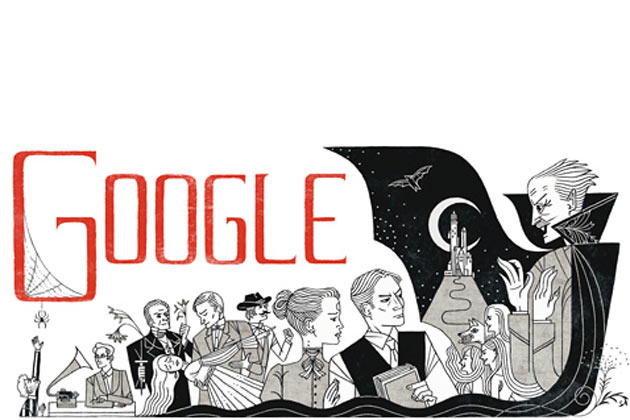
Lots at stake: Google’s ‘Dracula’ doodle

You don’t need me to tell you that Google comes up with some pretty fun and cool doodles.

Today’s doodle, marking the 165th birthday of “Dracula” creator Bram Stoker, is one of those.

And it’s inspired me to quickly try to re-read one of my favorite books.

Stoker’s “Dracula,” published in 1897, not only inspired a century (and counting) of adaptations, sequels, imitators and knock-offs, but sparked as many lurid daydreams and sweaty nightmares as any story ever.

I’ve got a nice stack of books on my night table right now. But the doodle reminded me of how much I loved Stoker’s book, how action-filled and suspenseful it is.

At least it’s that way in my memory from having read it last a few years ago.

So I’ll be dipping back into the book sooner rather than later and hoping to find the same gripping story I remember. I’ll share those thoughts with you when I do.


Today in Halloween: ‘Buffy the Vampire Slayer’

Considering what a clever show Joss Whedon’s “Buffy the Vampire Slayer” was, it shouldn’t be surprising that its treatment of Halloween would be exceptional.

More than a few series use “Halloween” as an easy holiday to hang an episode on. “Community” and “Roseanne” got some good laughs out of putting their characters into freaky costumes and situations.

But part of what made “Buffy” Halloween episodes special was the premise that Halloween was indeed different for the Scooby Gang and the rest of the people living on the Hellmouth.

Halloween, the characters note, is something of a night off for real-life creatures of the night and the people who battle them. Self-respecting vampires like Spike consider Halloween “amateur night,” kind of the way big drinkers feel about New Year’s Eve.

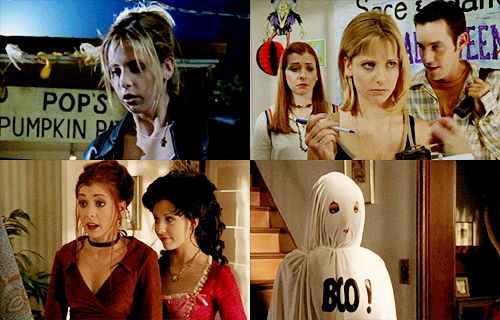
The series’ second-season episode, “Halloween,” finds Buffy, Willow and Xander going out in costume to trick-or-treat. What they don’t know is that the costumes are cursed and make the wearer adopt the traits of the outfits. Buffy’s old-timey lady costume turns her into a shrinking violet. Willow’s ghost costume turns her into … a ghost.

It’s a great episode, the first of three set on Halloween that the series featured.

Random observations:

Xander’s guise as a soldier – and his instant depth of knowledge about the ways of a warrior – are retained, in a way, after the episode ends. His skills come in handy in later episodes.

The episode introduces not only costume shop/chaos worshipper Ethan Rayne, an old frenemy of Giles, but gives an early indication of Giles’ past as much more than a stuffy old watcher.

We once again see Oz, Willow’s future significant other, as the series continues to tease us with important characters still to come.

Classic TV: ‘Community’ ‘Remedial Chaos Theory’

I’m not sure there’s anything on TV like “Community,” and that’s probably worked against the viewership of the show.

The NBC sitcom is about as atypical a situation comedy as anything airing now. The premise – a diverse group of misfits forms a family while attending a community college – isn’t novel.

But during its first three seasons, under the guidance of creator Dan Harmon, “Community” became something more.

There were inklings of the show’s inherent “different-ness” in the first season, certainly. But the first-season finale, in which the regulars and the large supporting cast wage war in an on-campus paintball match to win “priority status” for class registration, established the show as surely as “Prophecy Girl,” the first-season finale of “Buffy the Vampire Slayer,” established that series as one for the ages.

The paintball episode played, with furious and hilarious seriousness, like an action movie, “Terminator” by way of John Woo, with standoffs and ambushes and devilish double-crosses. All played against expectations.

My favorite moment is when off-kilter geek Abed (Danny Pudi) rushes up to snarky lawyer Jeff (Joel McHale) and intones, “Come with me if you don’t want paint on your clothes.” Fans of the “Terminator” movies recognized that line.

Throughout the second and third seasons, “Community” deepened its characters – a group that is frequently at each others’ throats but can’t live without each other – and raised the freak flag higher. An episode revolving around a game of Dungeons and Dragons was funny and touching.

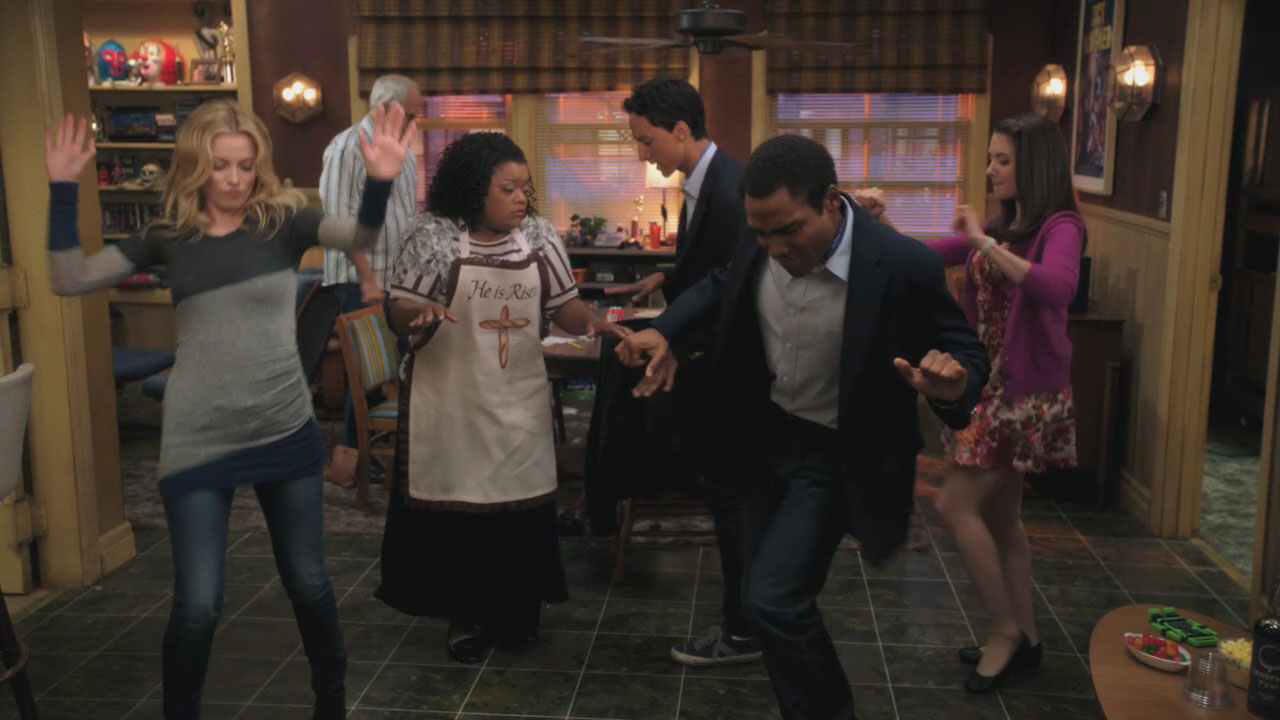
By the time “Remedial Chaos Theory” aired early in the third season, Harmon and the cast and crew knew they could get away with a lot. And they did. As the characters gathered at a housewarming party for roommates Abed and Troy (Donald Glover), they rolled dice to see who would go downstairs to meet the pizza delivery guy.

With each roll of the dice, another reality unfolded. Friendships ended, relationships began and lives were lost, for god’s sake. It was all funny and incredibly clever and mind-bending in a way precisely unlike any show on TV right now.

The show has mixed in a tremendous amount of geekery in a manner that’s less showy but more genuine than the amusing “Big Bang Theory.” After “Remedial Chaos Theory,” the series explored the other, “darkest timeline” and, with a nod to the “Star Trek” mirror universe, Troy and Abed donned Evil Spock-like goatees.

When “Community” returns on Oct. 19, it will be without Harmon, a creative man bounced from his own show, if we’re to believe his own account and those of others, over huge differences in temperament and people skills.

So I’m not sure what “Community” will be like when it returns. Will it be just a silly sitcom? Will it continue to defy expectations and conventions? We’ll know soon.

‘Buffy,’ ‘Angel’ and modern-day cable

“Buffy the Vampire Slayer” ran seven seasons and its spin-off show, “Angel,” ran a too-short five. Both aired on what were considered “mini” networks, The WB and The CW, but networks nonetheless with obligations to meet the standards of broadcast networks and bring in some semblance of traditional over-the-air ratings.

But we can only dream about how those Joss Whedon series as well as his “Firefly” and “Dollhouse” series might have faired if they had aired on channels that were decidedly off-network.

I’m thinking of TNT, FX, USA, AMC and A&E, channels – not networks, since networks are networks of stations, while cable channels have no physical presence out in the real world – that schedule, carry and nurture high-quality episodic drama.

Can you imagine “The Shield” or “Mad Men” or even “Falling Skies” on network TV?

I can’t. I can’t imagine those niche shows pulling enough viewers to stay on the air. “Firefly” sure didn’t.

I can’t imagine the networks allowing the creators of those shows to produce as few as 10 or 12 or 16 episodes per season, something that’s become routine with shows like “The Walking Dead” and “Breaking Bad.”

There seems to be less pressure without a 22-episode, big network season. Less expectation of Super Bowl-sized ratings. Less expectation of quickly meeting the 100-episode threshold for syndication.

With those shorter seasons, you can weed out the deadwood episodes. Okay, some of us were a little impatient with how long last season’s “The Walking Dead” spent on the farm. But it didn’t have to be that way. Look at last season’s “Mad Men” as an example. While the season had its critics, I thought almost every episode was riveting. Would that have been the case if the creators had been compelled to turn out twice as many episodes to fill out a network season?

Who doesn’t think “Smallville,” for example, would have been better with about a half-dozen fewer episodes per season and a little less filler? How about “Lost?”

There are some drawbacks. Out of sight, out of mind. “The Sopranos” and “Mad Men” took their time and sometimes a year or even more passed between seasons. It was torture but it made us look forward to their return even more. That trick wouldn’t work for every show, however.

And admittedly, there’s still less visibility on cable, at least for some audiences. We live in a world where the biggest ratings are still garnered by standard network fare like cops-and-robbers procedurals. We can take solace in knowing that we’re cooler because we know all about “Justified.”

So in my alternate reality TV word, “Buffy” and “Angel” and “Firefly” are still chugging along, well  into the double-digits in years on the air. They’re just airing fewer episodes and every episode is greeted with a sense of anticipation and celebration.

TV: What I’m watching, given up on and looking forward to

When I was a kid, besides going back to school and the run-up to Halloween, this time of year was a big deal for me because of the new fall TV season.

Yes, I was a TV geek.

I eagerly anticipated the fall season, which usually had at least one or two shows that I wanted to see. Besides, who could guess just how great “The Night Stalker” or “Planet of the Apes” (the TV series) might make the fall of 1974?

There’s less anticipation about the fall TV season nowadays because the TV year is so fractured – worthwhile series debut throughout the calendar year – and, speaking only for myself, I watch less TV.

Because I watch less TV, I try to make every random hour and half-hour count.

So here’s what I’m watching right now as well as what I’m anticipating, what I’ve given up on and what I’m worried about.

“Copper” is a BBC America series – the channel’s first original production – that just debuted last Sunday. It’s about cops in New York City in 1864. The city was a lawless place, full of casual cruelty to children and others who couldn’t defend themselves, and the police department wasn’t much better. Into the mix comes Kevin Corcoran (Tom Weston-Jones), an Irish-American veteran of the Civil War who has come back to the city to find his wife missing and his child dead. The series, which has a nice gritty tone, follows Corcoran as he investigates crimes – the murder of a child prostitute in the first episodes, for example – and patrols the grimy streets and brothels of the city.

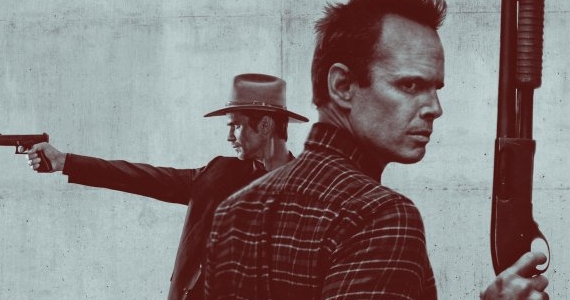
“Justified” is returning for a fourth season sometime in early 2013 and it’s likely that our favorite Kentucky-born-and-bred U.S. marshal, Raylan Givens, and his longtime friend and sometimes antagonist, Boyd Crowder, will find themselves up against some new lowlife. Timothy Olyphant and Walton Goggins lead a great cast.

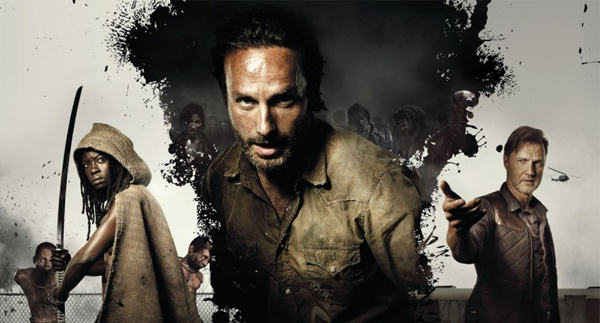
We don’t have to wait until next year to see “The Walking Dead.” The AMC series returns on Oct. 14 for its third season. The series will be split between the prison the survivors were near in the final episode of last season and the town of Woodbury, presided over by the Governor. The first eight episodes air this year, with eight more beginning in February.

I’m not sure when “Mad Men” and “Falling Skies” will be back – hopefully early in 2013 – but I’ll be watching the two very different series. Both came off solid seasons this year.

Few series have been as enjoyable in the past three years as NBC’s “Community,” an odd and offbeat show about a group of misfits who become friends in a study group at a second-rate community college. But I’m worried about “Community” this year after the departure of creator Dan Harmon. By most accounts a genius with people skills issues, Harmon got fired at the end of last season. The cast is great and the stories – complete with blanket forts, paintball apocalypses and genuinely nice character moments – are wonderful. But can the show survive without Harmon? Or will it become another kooky sitcom like “Scrubs?”

I’m not sure I’ll be around for a second season of “Longmire,” the A&E series based on Craig Johnson’s enjoyable series of mystery novels about a Wyoming sheriff. The show looked pretty good and the cast was fine, but the mysteries were mediocre. When the show did take a page from one of Johnson’s stories, as it did in the season finale, it didn’t bring the author’s charms.

I’m not sure I’m looking forward to anything on TV quite as much as a live-action Marvel Comics series set in the “Avengers” movie universe. Luke Cage? Daredevil? S.H.I.E.L.D? Where will creative genius and “Buffy the Vampire Slayer” mastermind Joss Whedon take this series? Wherever it is, I’m following.

The best part about TV is that, in any given season, some really terrific show can suddenly appear and make you glad you gave it a try. I’ve felt that way about every show on this list at one time or another.

Classic TV: ‘Buffy the Vampire Slayer’ episode ‘Restless’

“Restless” was the season finale of the fourth season of “Buffy,” airing in May 2000. The season had been an unusual one since it was the first that deviated from the high school setting of the show. Following the “Graduation Day” episodes of the previous season, Buffy and Willow went on to attend classes at U.C. Sunnydale, Giles was at loose ends before, in the following season, opening an occult shop and Xander kind of hung out, trying to find himself.

The season also featured a dramatic departure from past seasons by opening up the world of the Slayer to include “real world” supernatural elements, including what was in many ways the show’s most complex addition to its mythology, the Initiative, an underground (literally) government organization that captured and experimented on demons. It was the first absolute confirmation of Buffy’s “underground” status as the Slayer in a world in which the authorities – all the way to Washington D.C. – knew about vampires and demons.

The Initiative storyline had actually wrapped up in the previous episode, as the Scooby Gang defeated Adam, a Frankenstein-like monster created as an unauthorized offshoot of the program.

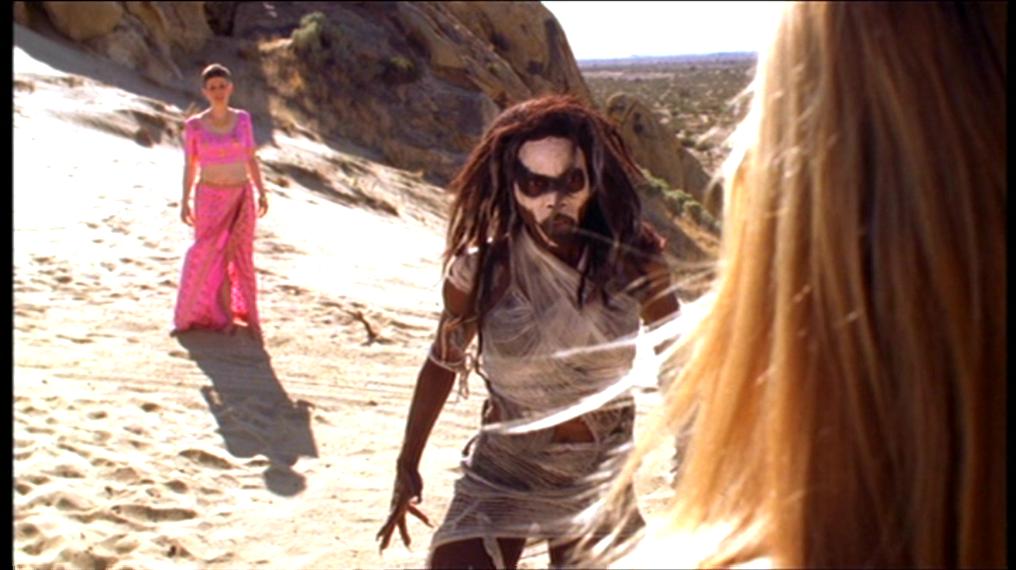
“Restless” took the form of a series of dreams sequences for Willow, Xander, Giles and Buffy in which each was stalked by the First  Slayer, a savage female proto-Buffy.

The dream sequences were perfect and spot-on, teasing viewers with suggestions of events that might come in the series. Who wasn’t intrigued by Spike’s declaration that Giles was teaching him to become a Watcher?

The episode also featured some faces from the past, including Seth Green as Oz, Phina Oruche as Giles’ girlfriend Olivia, Mercedes McNab as Harmony and Armin Shimerman as Principal Snyder.

Ultimately, “Restless” marked something of a departure for “Buffy” and for Buffy. Especially when the Slayer declared herself different from the slayers of old, demonstrating that the First Slayer and the conventions of the Watchers Council and past Slayers didn’t mean anything to her.

Random observations:

“Restless” was written and directed by series creator Joss Whedon a dozen years before he became a Hollywood sensation with “The Avengers.” Whedon imbued the episode with his trademark mix of thrills and humor.

The First Slayer isn’t the only thing primordial about this episode: Just before they fall asleep, the gang settles in to watch a movie on VHS!

Throughout the episode, a guy shows up and says something about cheese. Of all the odd moments in the episode that fans took as clues to the future, this one we felt we could laugh off.

The episode featured references to ongoing series developments, including Willow’s coming out. During her dream, Willow’s anxiety reached its peak when former flame Oz and current flame Tara snickered and smirked at her even as she succumbed to the First Slayer.

I love all the dream sequences, but Xander’s journey into an “Apocalypse Now”-style heart of darkness is hilarious.

The episode is peppered with references to characters and episodes past and future, including Faith the vampire slayer and Dawn, Buffy’s “little sister” introduced in the next season. You could even argue that Joyce’s appearance in a wall during Buffy’s dream sequence was a reference to her eventual death.

“Restless” is one of the great episodes of a great series.


Whedon to develop ‘Avengers’ universe TV show too

Well, duh.

In a perfect case of reverse-engineering, Disney and Marvel announced today that Joss Whedon, who got his start in TV and then directed “The Avengers” to good effect – and $1.5 billion in worldwide box office – will not only direct “Avengers 2” but oversee the development of the live-action TV series set in the “Avengers” movie universe.

It makes perfect sense, and some of the people reacting online tonight are sharing the same line of reasoning that had settled, like a fog, into my brain. Whedon, who made great TV series like “Buffy the Vampire Slayer,” “Angel” and “Firefly,” has moved on, we told ourselves. He’s not going back to TV after having directed one of the biggest movies ever.

Well, turns out that way of thinking was wrong, wrong, wrong.

Now I doubt we’ll get Joss Whedon, showrunner, or Joss Whedon, director, or much more than Joss Whedon, occasional screenwriter, on this series.

But the man knows how to make a TV series with wit, action and service to multiple characters.

Turns out that was the strength that made him so right for “The Avengers.”

So here’s to a happy, anticipatory “Well, duh.”

Joss Whedon will be helping create the “Avengers” universe live action TV series.

Of course.

‘Abraham Lincoln: Vampire Hunter’ – the book was better

I wanted to like the movie version of “Abraham Lincoln: Vampire Hunter.” At least, I wanted to like it a lot more than I did.

Seth Grahame-Smith’s 2010 novel is one of my favorite books in the least couple of years. It is audacious and clever and plays it absolutely straight in telling the hidden history of our 16th president: Lincoln spent much of his life killing the monsters that took his mother away from him (and their comrades), gradually discovering that vampires are at the heart of the conflict tearing the nation apart and propelling it toward Civil War.

Grahame-Smith made vampires among the forces bolstering the Confederacy because of the ready-made sustenance slaves presented for the undead.

Laugh if you want at the outrageousness of Grahame-Smith’s story, but it worked. Lincoln was never treated as a ridiculous figure. And blaming vampires for some of the tragic turns of Lincoln’s life served the plot well.

So I had fairly high hopes for Timur Bekmambatov’s film, adapted by Grahame-Smith himself and starring Benjamin Walker as Lincoln.

My hopes persisted even after I saw footage that seemed to indicate the movie replaced the somber tone of the book’s story with over-the-top action scenes.

After seeing the movie today, I have to say the film gets some things right but goes dreadfully astray with others.

First, the good:

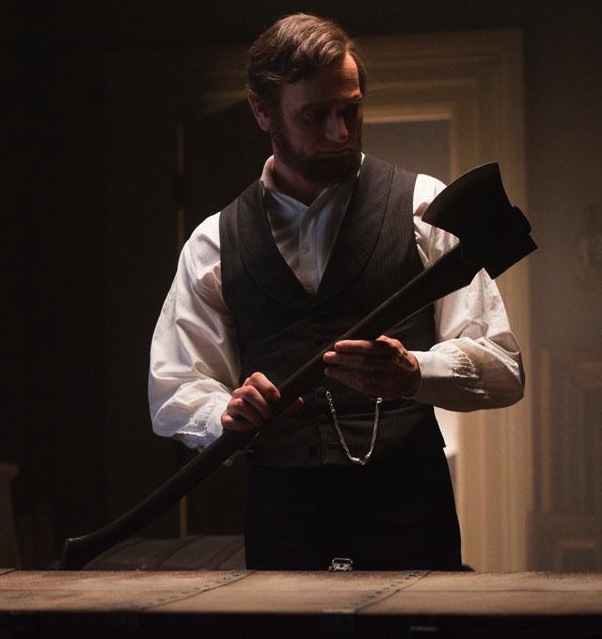
Lincoln’s character is spot on. Walker plays him with the absolute correct amount of gravitas and sorrow. Since much of the movie’s plot – like the book’s storyline – takes place before Lincoln gets to the White House, Walker is quite good as a young, athletic Lincoln, the rail-splitter who knew how to handle an axe.

The mysterious Henry. Dominic Cooper is good as Henry, Lincoln’s mentor in vampire-killing, who has some secrets of his own. In the book, there’s a real tension between the two as Lincoln wants to take revenge on the vampire who killed his mother and Henry strings him along, setting him up to meet and kill other vampires. There’s a bit of that tension in the movie (although not enough).

The tone. While the movie is infinitely flashier and more action-filled than the book, the sorrowful feel of the story – which matches the tragic events of Lincoln’s life – feels right.

The action. Although they were out of left field, two big action set pieces in the movie are quite fun. In one, Lincoln pursues his mother’s killer through a herd of wild horses. In the second, the heroes fight the bad guys on a moving train. There’s the perfect amount of collapsing train trestles and moments when people almost slip off the tops of rail cars.

What doesn’t work, with the biggest minus saved for last (spoilers when we get there):

The Black Best Friend. In the movie, Lincoln has a lifelong friend, William (Anthony Mackie), a free black man who joins in the fight against vampires. William has some very cool scenes and dishes out punishment to vampires about as well as Lincoln does. But the character, which didn’t exist in the book, feels shoehorned into the story.

So does the villain, Adam, played by Rufus Sewell. In the book, a conspiracy of Southerners, sympathizers and vampires make up Lincoln’s shadowy enemies. In the movie, most of the emphasis is placed on Adam, a 5,000-year-old vampire who’s part of the slaves-for-food plot but mostly seems like a character created to give Lincoln somebody to kill in the final reel.

The de-emphasized role of slavery. In the book, slavery and vampires go hand-in-hand. In the movie, the relationship – and the foul strengths vampirism brings to the Confederacy – feel like it’s fairly glossed over.

The final scene (spoilers!). In the movie, after Lincoln and Henry triumph over evil vampire Adam, Henry urges Lincoln to allow him to turn the president into a vampire so the two can fight evil together through eternity. Lincoln dismisses the idea and goes off to Ford’s Theatre and his destiny. Flash forward to present-day when Henry appears to foil a presidential assassination attempt.

That’s it?

How about this for an ending, right out of the book: After the war is won, vampire John Wilkes Booth shoots Lincoln in Ford’s Theatre. Henry tracks Booth and kills him. Henry returns to Lincoln’s side. Flash forward a century. Two distinctive men watch as Martin Luther King Jr. gives his “I have a dream” speech, the Lincoln Memorial nearby. The men are Henry and Lincoln.

Henry observes, “Some men are just too interesting to die.”

The finale of the book was so much better, so much stronger, that changing it, taking Lincoln out of it, very nearly ruined the movie for me.

If you haven’t read “Abraham Lincoln: Vampire Hunter,” you might like the movie’s enjoyably wild action scenes and its heartfelt portrayal of our most tragic president.

If you’ve read the book, the movie will leave you wondering what happened.

‘The Avengers’ delivers on four decades of fanboy dreaming

There’s little to be said regarding “The Avengers” that hundreds of reviews and a million online message board postings haven’t said already.

So I’ll say it anyway. “The Avengers” rocks.

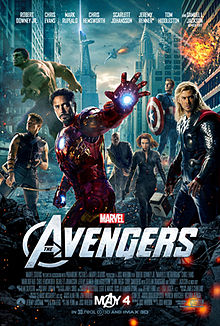
Writer/director Joss Whedon’s big-screen version of the Marvel comic — you’ve probably heard of it by now — seems to have broken our collective “Holy Jebus I’m so relieved” meter. Since Marvel published “Avengers” issue number 4 in March 1964, some of us have been waiting for this day with a mixture of anticipation and dread.

Right up until not long before 2008’s “Iron Man” introduced the concept of Marvel’s superhero team — created way back when as an answer to DC’s “Justice League” — to the movies with Nick Fury’s post-credits reference to “The Avengers Initiative,” most of us believed this would never happen. The odds just seemed too great that someone could get this all so right.

Over the decades, superhero movies had gotten bits and pieces of the comic book experience right: The first night Christopher Reeve’s “Superman” patrolled Metropolis; the slightly off-kilter emotional balance of Bruce Wayne and his alter ego in Tim Burton’s “Batman”; the concept of a tempestuous but effective super-powered fighting force in “X-Men.”

But more often than not, filmmakers proved they didn’t have what it takes.

Whedon ably demonstrated he could do heroic, tragic, funny and deprecatingly self-referential in his TV series “Buffy the Vampire Slayer,” “Angel” and “Firefly.” But to cap — pun only slightly intended — four years of Marvel movie foundation-building with one honkin’ big superhero slugfest seemed like more than anyone could manage.

And yet Whedon did it.

If you’re not familiar with the basic premise by now … I can’t imagine why you’re reading this. Suffice it to say that the heroes and supporting players of “Iron Man,” “The Incredible Hulk,” “Thor” and “Captain America” come together when Loki, Thor’s brother, makes a deal with the devil (spoilers later) to take over the Earth in exchange for the Tesseract — known as the Cosmic Cube in the comics — the source of infinite power introduced in “Captain America”  last year.

The first half of the movie finds the Avengers introducing themselves in Mighty Marvel style: Through a series of misunderstandings and moments of self-interest, they fight, bicker and fight some more, much to the exasperation of Fury (Samuel L. Jackson), the SHIELD spymaster who, we discover in this movie, has to answer to a (literally) shadowy group of superiors. And isn’t beyond manipulation.

The threat posed by Loki (Tom Hiddleton, in straight-on villain mode here) is great enough — an alien invasion force poised to devastate New York and, presumably, the planet — to convince the heroes to stop squabbling and work together. Iron Man (Robert Downey Jr.) turns his cool sarcasm down a few notches, Captain America (Chris Evans) learns how to be a leader even in the modern world, Thor (Chris Hemsworth) balances his love for his brother and his sense of guilt, Bruce Banner (Mark Ruffalo, in both human and Hulk guises) almost seems to revel in letting the beast off the chain and SHIELD agents Black Widow (Scarlet Johansson) and Hawkeye (Jeremy Renner) more than prove their worth as the non-superpowered members of the team.

(I have to say I haven’t understood those people, many of them ostensibly fans of comic books, who said they didn’t understand why Black Widow and Hawkeye would be members of the team considering their lack of superpowers and invulnerability. The Avengers comic has always included human beings — although highly skilled ones — as members. While the movie has great fight scenes involving Thor and Hulk and Thor and Iron Man and Cap, one of the most dramatic scenes involves Black Widow dealing with the onslaught of the Hulk and its aftermath.)

The second half of the movie finds the Avengers, spurred on by dire circumstances, facing off against not only Loki but his invasion force, made up of the Chitauri, Skrull surrogates from the comics.

If there’s a weakness about the movie it is that the Chitauri are nothing but cannon fodder, not unlike the legion of orcs in “Lord of the Rings” or stormtroopers/fighting droids in the “Star Wars” prequels. While the climactic battle that pits the Avengers against the Chitauri — and devastates half of New York, it seems — is beyond exciting, and scenes with the Avengers in battle against the alien invaders and their giant flying snake things — ask for them by name — are great, it all feels like an extended warm-up for something bigger.

Although it’s hard to imagine what could be bigger than this.

Other thoughts:

Hulk catch: Even if you’ve seen the many, many commercials and clips from “The Avengers,” there are entire sequences you haven’t even glimpsed yet. But I did regret that one of the trailers used the shot of Hulk flinging himself through the air and catching Iron Man as he fell, braking their descent by sliding down the side of a building. When the shot comes, late in the movie, I could anticipate it because I knew I hadn’t seen it yet.

Natasha and Boris — er, Clint: I really want to know more about Black Widow and Hawkeye. The movie doesn’t give them an outright romance, but there’s a lot of shared history there, so much so that they can even joke about it. I want to know all about the movie’s ostensibly “puny humans.”

Tony Stark and Bruce Banner: I loved how Whedon matched up the story’s resident eggheads. They share a lab and a skepticism of SHIELD’s motivations and even ride off into the sunset together at the end. How about making Iron Man/Hulk team-up movies?

Cap’s leadership: Since the fourth issue of  “The Avengers” comic, Captain America has been the team’s leader. There have been many moments of self-doubt for this man out of time. But Steve Rogers is a natural born leader of men. The movie establishes that in a scene in which he barks out orders to some NYC cops who wonder why they should obey his directives. Cap then smoothly demolishes some Chitauri, causing the cops to quickly turn and begin following his orders.

More Pepper: I didn’t realize Gwyneth Paltrow had as prominent a supporting role in “The Avengers” as she does. She and Downey are perfect together. I want a scene or two with her in every “Avengers” sequel.

That’s not creepy at all: SHIELD agent Phil Coulson (Clark Gregg) has had nice supporting parts in several of the Marvel movies. Whedon gives him great stuff here, including a funny scene in which he professes his fanboy love for Cap. “I watched you when you were sleeping,” Coulson says before realizing how stalkerish that sounded. “I was present when you were unconscious .. from the ice,” he quickly adds.

Whedon brings the funny: The whole movie is full of funny quips and scenes like that one.  The guy knows when to ratchet up the action and when to leaven it with humor.

Whedon undercuts expectations. Some people fault Whedon with being too self-referential and jocular, but his sense of humor is perfect for a movie that could be ridiculous. That’s what the final credits scene is about. Finally, after four years of Marvel movies, Whedon came along and played with the audience’s expectations about Marvel’s patented “surprise” extra scenes following the end credits. And he did so in a style familiar to any Whedon watchers.

Spoilers ahead:

3

2

1

What you’ve heard about the two “Avengers” credits scenes is true. Partway through the end credits, the mysterious figure backing Loki’s invasion is revealed, although non-fans might not recognize Thanos, the Marvel Comics god of death. It sets things up nicely for a sequel.

And the scene at the very end — showing the exhausted heroes having a bite to eat in a battle-scarred New York restaurant, while an employee tries to sweep up in the background — is quintessential Whedon.
‘Cabin in the Woods’ a fun thrill ride

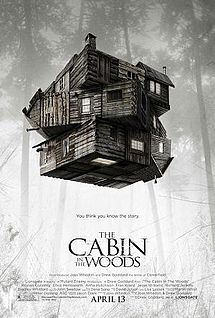
A lot of people are comparing “The Cabin in the Woods,” the new thriller, to other movies that simultaneously exploited, explored and expanded on horror film themes, notably “Scream.”

But besides being better than “Scream,” “Cabin” reminds me more of a grown-up and bloody “Monsters Inc.,” the Pixar animated movie about a company that specializes in giving kids nightmares with monsters under their bed and in their closet.

Since I didn’t see “Cabin” until a week after it opened, I’m going to assume anyone reading this has either seen the movie or heard the basic story by now. So there might be some spoilers ahead. I won’t spoil the ending, though.

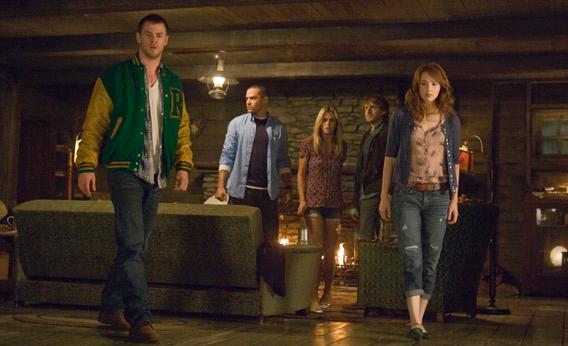
“Cabin” was written by “Avengers” director and “Buffy the Vampire Slayer” creator Joss Whedon and directed and co-written by Drew Goddard. On the surface, it plays like a “Friday the 13th” throwback: A group of college students — a jock, a stoner, a brain, a shy girl and a slut — go to a remote cabin to party.

From the very start, though, the audience knows something else is going on. The group is being monitored by office monkeys/scientists in a war room-style bunker. Not only are the watchers seeing everything that happens as the five get to the cabin; they’re manipulating the players and events. Gas is pumped through vents that prompts the partiers to behave in particular ways. A mild electric shock runs through the handle of a knife to make the person holding it drop it.

A few spooky things happen in the cabin — not the least of which is the uncharacteristic behavior of the five — but the movie shifts into high gear when they venture into the cabin’s basement and find hundreds of old and obscure items, including a necklace, reels of film, a studded metal ball (more than a little reminiscent of the mechanical nightmare box from the “Hellraiser” movies) and a diary of the former occupants of the cabin.

The partiers choose — and seal — their fate when they become engrossed in the diary, even reading aloud a passage in Latin. It is here when the movie seems most like “Scream,” as the stoner warns against reading the words aloud. He’s seen enough movies to know what might happen.

Before long, the long-dead cabin occupants have crawled out of their graves and begun stalking the teens.

Of course, it is the lab scenes that set “Cabin” apart from the “Evil Dead” films. We quickly find out that the lab workers are monitoring the goings-on at the cabin — as well as other sites around the world — and causing terror and mayhem. The reason? They’re servants of the ancient, Lovecraftian gods, the old ones, that once dominated the earth. And they know that bad things will happen if those gods aren’t appeased by their sacrifice.

The lab workers are also the source of much of the film’s humor, which is as crass and mean-spirited as it is funny. The scientists, led by Bradley Whitford and Richard Jenkins, are cold-hearted (mostly) and unfeeling as they must be. Their jobs are to stage modern-day human sacrifices. There’s no room for bleeding hearts here — except for the ones being ripped out on the lab’s monitors.

It’s hard to imagine, given the ending, how a sequel to “Cabin” could happen, but I guess a prequel is possible. What’s more likely is the Internet will fill up with speculation/fan fiction set in the world in which “Cabin” takes place that will fill in the backstory of the lab and its workers, how their system was set up and maintained and how it otherwise interacted with the outside world. Do the lab workers commute? Is the lab government-sponsored?

The lab workers, who also include Amy Acker and Tom Lenk from Whedon’s “Buffy” and “Angel,” are perfectly cast and always believable.

The archetype young people offered up for sacrifice are likewise terrific. The movie was made a couple of years ago and sat on the shelf not because of its quality but because its original studio, MGM, was having money problems. Since then, Chris Hemsworth (who plays the jock) has become a star as the Marvel comics character “Thor.” He’s got a big summer between this and “The Avengers.” Hemsworth is good and he and his four co-stars — Kristin Connolly, Anna Hutchison, Jesse Williams and Fran Kranz — are well-cast and play their parts perfectly. Kranz, who was in Whedon’s “Dollhouse” TV series, is very Shaggy-reminiscent as the stoner.

Random thoughts:

The sterile, underground labs and monster holding cells of “Cabin” reminded me of the Initiative, the secret military experiment from the fourth season of Whedon’s “Buffy.” Only instead of stocking a compound full of monsters to kill teenagers, the Initiative captured monsters to experiment on them.

Another “Buffy” echo: “Cabin” builds on the idea of thousands of years of human sacrifice to appease evil. Of course in “Buffy,” the Slayers and Watchers were created, thousands of years ago, to fight evil.

I hope someone’s working on a detailed analysis of the whiteboard in the war room that contained all the monsters and scenarios. I tried to read as much of it as I could and caught some of the other threats like “Kevin” — a Jason stand-in, possibly? — but I would love to see everything that was up there.

Do you think the monsters in the movie were supposed to be real in their world? Or were they created, “inspired” by old horror tales and movies? Or does — as one clever person I know suggested — “Cabin” take place in the same world as all those old horror movies, finally taking us behind the scenes of Jason, Michael Myers, Freddy and all the rest?

“Cabin” is, for those with strong hearts and stomachs, cool, geeky fun. Maybe best of all, it made me want to re-watch “Buffy” episodes and some favorite recent horror movies.