Category Archives: classic TV

‘Sherlock’ runs with the pack in ‘The Hounds of Baskerville’


Since it was published in serialized form in 1901 and 1902, Arthur Conan Doyle’s “The Hound of the Baskervilles” has become one of those touchstone Sherlock Holmes stories. As much as everybody knows (often wrongly) that Holmes was a “difficult” genius and that John Watson was always a step behind him, everyone knew that Holmes took on a huge, mysterious hound in this Conan Doyle novel.

So the makers of “Sherlock,” the BBC production airing on PBS’ “Masterpiece Mystery” series, had to do an adaptation and had to do something different.

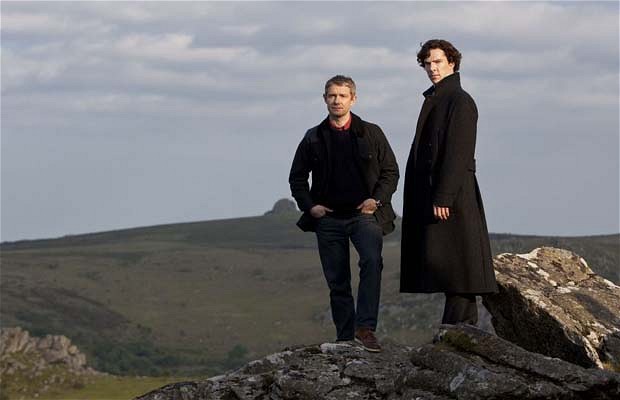
In “The Hounds of Baskerville,” the second of three “Sherlock” episodes in this season, Holmes (Benedict Cumberbatch) and Watson (Martin Freeman) take on the case of Henry Knight, who remains traumatized by seeing his father killed by a huge hound 20 years before. The two venture into the English countryside, specifically to the Baskerville military research base, to find out if giant glowing dogs with red eyes really do exist.

In the process, they have brushes with Sherlock’s brother Mycroft (the top-level British intelligence agent) and even James Moriarty, the warped genius who has become Sherlock’s nemesis. The ending of tonight’s episode forecasts the return of Moriarty next week.

Of course, Holmes and Watson also have the misfortune of running into that hound — as well as a couple of levels of conspiracy.

A few thoughts about the episode:

I loved that Holmes at one point notes that the CIA has a top-secret facility in Liberty, Indiana. That’s just down the road from me and I can assure you that if the Company has set up shop there, it’s pretty well hidden. Made me wish, for a moment, that they had chosen Muncie like everyone from “Tom Slick” to “The Simpsons” to “Hudsucker Proxy” to “Angel” has.

Not that there’s anything wrong with that: Not for the first time in the run of the series, someone mistakes Holmes and Watson for a couple. Cute.

Watson mockingly refers to Holmes as “Spock” after a scene in which Holmes is shaken by his failure to keep his emotions in check. Comparisons between the two have always been made and “Star Trek” episodes have obliquely referred to Spock’s ancestor Holmes (possible, as Trek fans know, because Spock’s mother is human). But for a joke that trumps all, Cumberbatch plays the bad guy in the now-in-production “Star Trek” movie sequel.

This Sherlock turns to cigarettes when he’s bored and anxious between cases, and not a seven percent solution.

Tonight’s episode had the misfortune of airing in the US following a couple of successful movies that had similar elements. The Baskerville hound looked a bit too much like the “mutts” in “Hunger Games,” while the idea of mind-altering gas released into outdoor settings echoed “Cabin in the Woods.”
 

‘Sherlock’ returns with ‘Scandal in Belgravia’

One of the unexpected pleasures of TV in the past couple of years — along with “The Walking Dead” and a handful of other shows — has been “Sherlock,” Steven Moffat’s modern-day updating of Arthur Conan Doyle’s Victorian-age detective Sherlock Holmes.

There have been so many — hundreds — of stage, film and TV adaptations of the Conan Doyle books and short stories in the past century years that it’s hard to imagine crowning one as the best, particularly one that takes such liberties with the content of the canon. But “Sherlock,” a BBC production airing on PBS’ “Masterpiece” series (with two more installments to come May 13 and 20) is certainly near the top of the list.

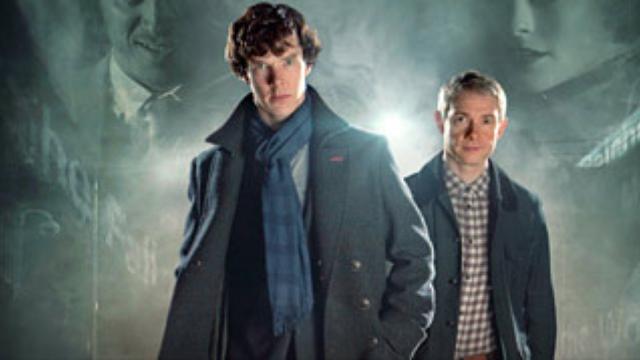
In the series, set in the present day, Holmes (Benedict Cumberbatch) and Watson (Martin Freeman) forge the offbeat relationship familiar to readers of the original stories. Holmes is a brilliant consulting detective, Watson a physician and soldier. Each man is troubled in some respects. Watson is recovering from physical and spiritual wounds suffered in Afghanistan while Holmes is, for all his British intellect and wit, a stranger in a strange land.

The updated series uses original Conan Doyles stories (and titles; tonight’s episode is a take-off on “A Scandal in Bohemia”) as jumping off points, mixing in high-tech touches along with Holmes’ old-school detective work. In other words, for every scene in which Holmes deduces someone’s life story by observing stay hairs on their pants or scuffs on their shoes, there’s another scene in which Holmes or one of the players is texting on their smartphone. Just as Conan Doyle’s original writing had Watson publishing stories about his exploits with Homes — much to Holmes’ bemusement — in the new series, Watson writes a popular blog about the detective.

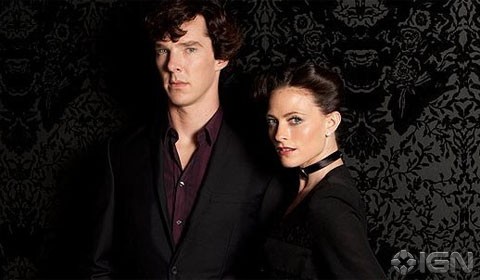
Tonight’s episode, like the 1891 original, introduced Irene Adler, a woman who is Holmes’ equal in sheer, cool intellect. In “Sherlock,” Adler is a high-society dominatrix who, as the  episode opens, is being sought for the compromising photos of a member of the royal family on her cell phone.

Adler is, as fans know, “The Woman,” the female who greatly intrigued Holmes, who was very likely his perfect match … if not for her habit of lawbreaking.

In “Belgravia,” we get some choice “Sherlock” scenes, as Holmes stays one step ahead of the police and the bad guys even as he struggles to keep up with Adler.

All the key ingredients to the “Sherlock” series are here: Holmes and Watson’s fond verbal jousting; landlady Mrs. Hudson; even Holmes’ nemesis James Moriarty. The opening of the episode resolves the standoff between Holmes and Moriarty from the end of the first season.

“Sherlock” revels in its modern-day ingenuity — the use of technology and London’s cool blue exteriors give the series a properly detached feel — as much as it encourages us to focus on Holmes’ never-out-of-style intensity.

Cumberbatch and Freeman are among the best portrayers of Holmes and Watson ever. Cumberbatch gets a showy role but Freeman — soon to star in “The Hobbit” with Cumberbatch providing the voice of the dragon Smaug — is an understated delight.

“John Hamish Watson. Just in case you’re looking for baby names,” Watson mutters at some point when Holmes and Adler are striking sparks.

And what an Alder Lara Pulver is. I love Rachel McAdams, who plays Adler in the current Robert Downey Jr. Holmes movies. But Pulver makes McAdams look like the high schooler she played in “Mean Girls.” Pulver, who matches Cumberbatch in cheekbones and ivory skin, is gorgeous and dangerous. She’s utterly believable as “the woman” in Holmes’ life.

Next week, “Sherlock” takes on “The Hound of the Baskervilles.” I’ll be watching.

‘Mad Men’ tunes in and turns on with ‘Far Away Places’

This season of AMC’s “Mad Men” is one of the most enjoyable — if hard to predict — because you never know what’s going to happen next. In any given episode, Don Draper might be choking an old fling — at least in the depths of a fever dream — or Lane Pryce might be handing young Pete a beat down.

In tonight’s episode, “Far Away Places,” the plot was appropriately odd and disjointed, especially considering all the sex, drugs and rock and roll.

The show continues its headlong plunge into the heart of the most turbulent part of the 1960s as Peggy (Elizabeth Moss, who is always wonderful) gets fed up with the Heinz beans people and insults them, much to everybody’s shock. So Peggy, who earlier had an argument with her boyfriend, decides to take in a matinee.

Peggy gets offered a joint by a guy (in very loud striped pants) in the theater and doesn’t react with dismay when he makes a pass. As a matter of fact, Peggy administers an “Animal House”-style handjob — minus the Greg Marmalard plastic gloves — right there in the theater.

Meanwhile, Roger (the likewise always wonderful John Slattery) and wife Jane (Peyton List) go to a party and partake of LSD. The middle part of the episode finds Roger and Jane tripping out. When they come around, Roger tells Jane he’s moving out, a decision based on her acid-inspired comments.

Also meanwhile, Don (Jon Hamm) and Megan (Jessica Pare’) go out of town on a trip to a Howard Johnson’s. It’s ostensibly to check out a client, but Don plans the same uncomfortable mixture of business and pleasure that he’s been practicing with Megan all season. When they get into a fight and Megan disappears, Don’s anxiety skyrockets.

To top it all off, Bert Cooper (Robert Morse) — who’s spent how many seasons wandering in the wilderness of the conference room? — administers a brisk slap across the face to Don. Bert calls him out on how little work he’s done lately. Holy crap!

Other highlights:

I’m enjoying the little glimpses of Ginsberg and his father (“I’m the original,” the elder Ginsburg tells Peggy) but I’m curious where the characters are going.

Has “Mad Men” been employing flashbacks? Tonight we get a glimpse of the past in Don and Megan’s Disney vacation with Sally and the little Draper boy, whatever his name is.

In the preview for next week, Roger says he’s had a life-changing experience. Does he mean the acid trip? At the end of tonight’s episode, he was pretty damn cheerful.

“Mad Men” continues to keep us guessing.

‘Itchy and Scratchy and Poochie:’ Totally in your face

Leave it to “The Simpsons” to have the final word on adding unwanted — and hated — characters to a TV show.

I’m talking about Poochie, the “proactive” and “totally in your face” canine added to the show-within-a-show, “Itchy and Scratchy,” in the eighth season of “The Simpsons,” way back in 1997 (!).

It was far from the “worst episode ever.”

As the show opens, Krusty the Clown and Rogers Meyers Jr., the creator of “Itchy and Scratchy,” are trying to re-invigorate the ratings for the show. A network type has the idea of adding a character because we’ve seen how well that works (Cousin Oliver on “The Brady Bunch,” any character Ted McGinley played on various sitcoms).

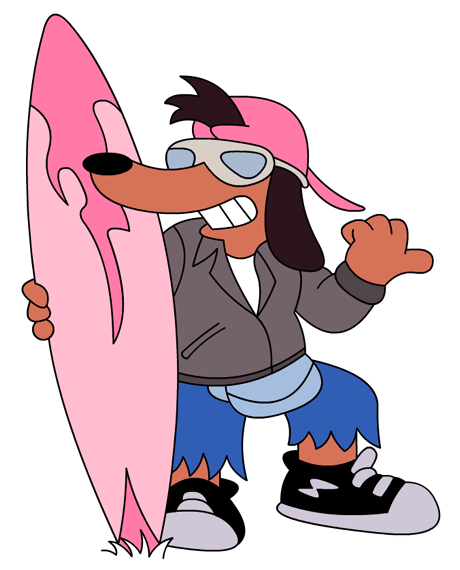
After a frustrating round of focus groups with kids who don’t know what they want, Meyers and company add Poochie, a dog. But not just any dog. He’s a “surfer dude,” complete with board, sunglasses and attitude.

Inevitably, Homer auditions for the role of Poochie’s voice and debuts in an episode in which Itchy and Scratchy pick Poochie up along the road on their way to a fireworks factory.

As Poochie raps and poses and dunks basketballs to heavy metal guitar riffs, the audience gathered in the Simpsons’ living room grows restless.

“When are they going to get to the fireworks factory?” a frustrated Milhouse whines.

The introduction of Poochie is a disaster, with even Kent Brockman weighing in, noting that kids won’t be sad when the canine is “put to sleep.”

Meyers decides to kill Poochie off on the cartoon, but Homer insists on recording a heartfelt bit of dialogue first.

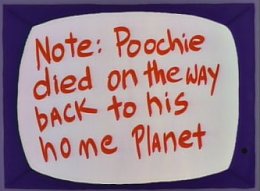
Meyers and the crew appear to be touched. But when the episode airs, instead of Homer’s moving words, Poochie simply announces he must return to his planet. The animation cel bearing his likeness is crudely pulled upwards and out of view.

Then a slide appears:

Ah, Poochie. We hardly knew ye.

Other highlights:

This was the episode that introduced the catchphrase “Worst. Episode. Ever,” intoned by Comic Book Guy. The show’s writers have some fun by having the geeky character declare he will be hurrying to the Internet to air his complaints.

Homer and the voice actress who performs Itchy and Scratchy make a personal appearance at the Android’s Dungeon. In a riff on the “Saturday Night Live” sketch in which William Shatner is asked insane questions about “Star Trek” episodes, a nerd in the audience asks about a mistake in an “Itchy and Scratchy” cartoon.

The show features a fun in-joke as the Simpsons also get a new character, Roy, who moves in with the family. By the end of the episode, Roy is out the door.

Troy McClure makes another appearance. The ham actor, voiced by the sadly missed Phil Hartman, also auditions for the voice of Poochie. “I’m Troy McClure. You may know me from such cartoons as ‘Christmas Ape’ and ‘Christmas Ape Goes to Summer Camp.'”


Saying goodbye to Jonathan Frid

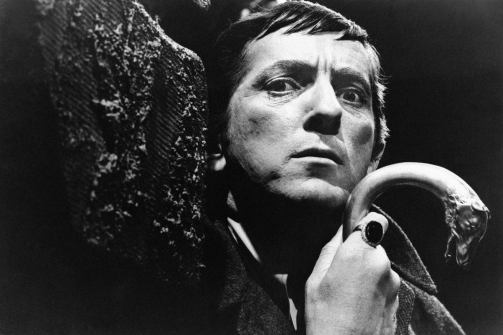
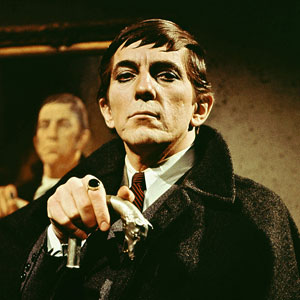
One of the pop culture icons of my childhood is gone. It was announced today that Jonathan Frid died April 13 in his home in Canada. He was 87.

Frid was, of course, Barnabas Collins on the classic supernatural daytime drama “Dark Shadows.”

His death came just a few weeks before the May 11 release of the Tim Burton, Johnny Depp big-screen version of the venerable soap. Frid, along with other regulars from the TV series, appears in the movie, which is pitched as a much more light-hearted take on the gothic drama.

“Dark Shadows” aired late afternoon weekdays from 1966 to 1971. Frid didn’t join the cast until several months in, however, when groundskeeper Willie Loomis (John Karlen) accidentally released him by opening his coffin.

I’ve noted before that the show was a special one for me. I came home from elementary school every day, sat down at the coffee table in my living room and watched the show while I did my homework.

My deepest appreciation for the series, however, came when it aired in syndication years later. Then I recognized all the tricks and treats the series contained: Wild storylines that involved not only vampires like Barnabas but witches, werewolves and ghosts and even time travel.

“Dark Shadows,” like many soaps at the time, was videotaped with little room for error or fixing of same. Actors would sometimes forget their lines or bump into furniture or doors while making a dramatic exit from a scene. I loved the show anyway.

I still remember with bitter disappointment watching the last episode. This was 1971, of course, before the Internet and news of show business — particularly a geeky daytime drama — was hard to come by.

The final episode reflected an effort to tie up loose ends. The last storyline for the show had all the actors playing their ancestors in the past. Near the end of the episode, bite-type neck wounds are inflicted on someone. Is a vampire loose at Collinwood?

But the voice-over narration contradicted that ominous development and predicted a happy ending for Bramwell Collins, played in this storyline by Frid:

There was no vampire loose on the great estate. For the first time at Collinwood the marks on the neck were indeed those of an animal. Melanie soon recovered and went to live in Boston with her beloved Kendrick. There, they prospered and had three children. Bramwell and Catherine were soon married and, at Flora’s insistence, stayed on at Collinwood where Bramwell assumed control of the Collins business interests. Their love became a living legend. And, for as long as they lived, the dark shadows at Collinwood were but a memory of the distant past.

The words had an element of finality to them and I suspected the worst. The following Monday I tuned in and, sure enough, the show was not on.

My disappointment was massive. I even wrote a letter to the Indianapolis TV station that aired the show, asking if it would return. I don’t recall getting an answer.

“Dark Shadows” — all 1,200-plus episodes — is now available on DVD for the enjoyment of fans.

I’m leery of what Burton and Depp have done with the remake, but I’ll probably see it.

And if he does indeed appear in the movie, Frid will be a welcome sight.

So I’ll mourn his passing and enjoy my memories of my afternoons with Barnabas and family and all the enjoyment Jonathan Frid gave me over the years.

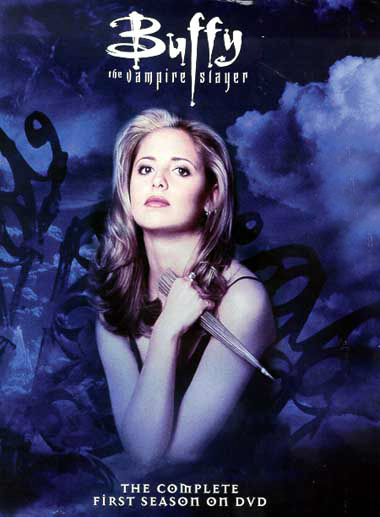
‘Night of the Comet,’ ‘Buffy,’ Black Widow: Butt-kicking heroines

With “The Avengers” coming up on May 4, it’s interesting to note that one of the first clips from the movie officially released, a couple of weeks ago, was one of Black Widow, the non-superpowered, female member of that particular boys club, easily escaping from some bad guys and demolishing them in the process.

It’s a pretty good action scene, if mild compared to what we’ve subsequently seen involving Thor, Iron Man and particularly the Hulk.

But there was some nice symmetry to the clip’s release considering that “The Avengers” was directed by Joss Whedon, creator of “Buffy the Vampire Slayer.”

There’s been some backlash to Whedon’s signature use of petite female characters as ass-kicking heroines, including Buffy and other slayers from that series and “Angel” as well as River, the programmed killing machine in “Firefly.”

But it’s interesting to note that Whedon has cited in at least one interview “Night of the Comet” as one of the influences on the creation of “Buffy” the lame movie and terrific 1997-2003 TV series.

Not long after the series ended, Whedon told IGN:

So, you know, when I hit on Buffy the Vampire Slayer, it was right around the time when Revenge of the Bimbos, or Attack of the Killer Bimbos or something – there were a lot of movies coming out that were proto-silly ’50s style titles. They were on the video store shelves. I worked at a video store. I would watch them, and I’d be like, “You know what? This is just another bimbo movie. These women aren’t empowered at all. They just made up a funny title.” I was like, “I would like to make a movie that was one of these crappy, low-budget movies, that like the Romero films, had a feminist agenda, had females in it who were people, and had all the fun, all the silliness. Night of the Comet was a big influence. That actually had a cheerleader in it. With a title that would actually make people take it off the video store shelves, because it has to sound silly and not boring. 

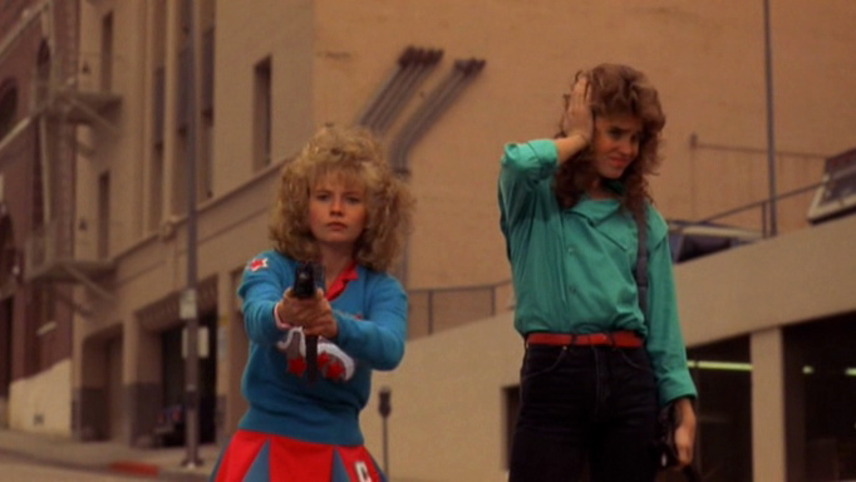
“Night of the Comet,” released in 1984, was the story of two Southern California teenagers, sisters Regina (Catherine Mary Stewart), known as Reggie, and Samantha (Kelli Maroney), known as Sam, who survive the end of the world, brought on by global exposure to a comet that reduces most of the world’s population to red dust and turns the rest into zombies.

Reggie and Sam, after a moment of shock and loss, quickly set out to survive in the post-apocalyptic world and connect with other survivors.

Although they’re teenagers — and the movie was released during the “Valley Girl” craze — Reggie and Sam are level-headed, even matter-of-fact, about the end of the world. There’s the customary all-you-can-shop scene, played to “Girls Just Want to Have Fun,” set at the mall, but George Romero’s “Dawn of the Dead” succumbed to the same idea a few years earlier.

And even though Sam is a cheerleader, the sisters are hardly pushovers. Raised by a career military man, the two quickly find supplies — although Sam is scornful of Reggie’s choice of automatic weapon, noting, “Daddy would have gotten us Uzis” — and are more than capable of defending themselves and other, less capable strays they come across.

Director Thom Eberhardt’s movie is amiably low-budget. You know they filmed the deserted downtown L.A. street scenes on a Sunday morning, for example, and you admire their ingenuity.

Whedon — who I’m pretty sure is an outspoken feminist — is a fan of empowered women. Even if they’re five feet tall and a hundred pounds. As long as they can wield a mean Uzi, kung-fu vampires into the afterlife or hold their own with the likes of Captain America and the Hulk, Whedon believes that size doesn’t matter — and neither does gender.

Madchen Amick fans assemble!

What do actress Madchen Amick, the newspaper comic panel “The Family Circus” and the giant flying snake thing from the previews for “The Avengers” have in common?

They’re pretty much the most popular topics I’ve written about in this blog.

Since early this week, when I followed up on my “Mad Men” review with an entry noting that Andrea, the old fling of Don Draper who showed up on Don’s doorstep — and under his bed, choked to death, in his fever dream — was played by Amick, hundreds of readers have checked out the blog.

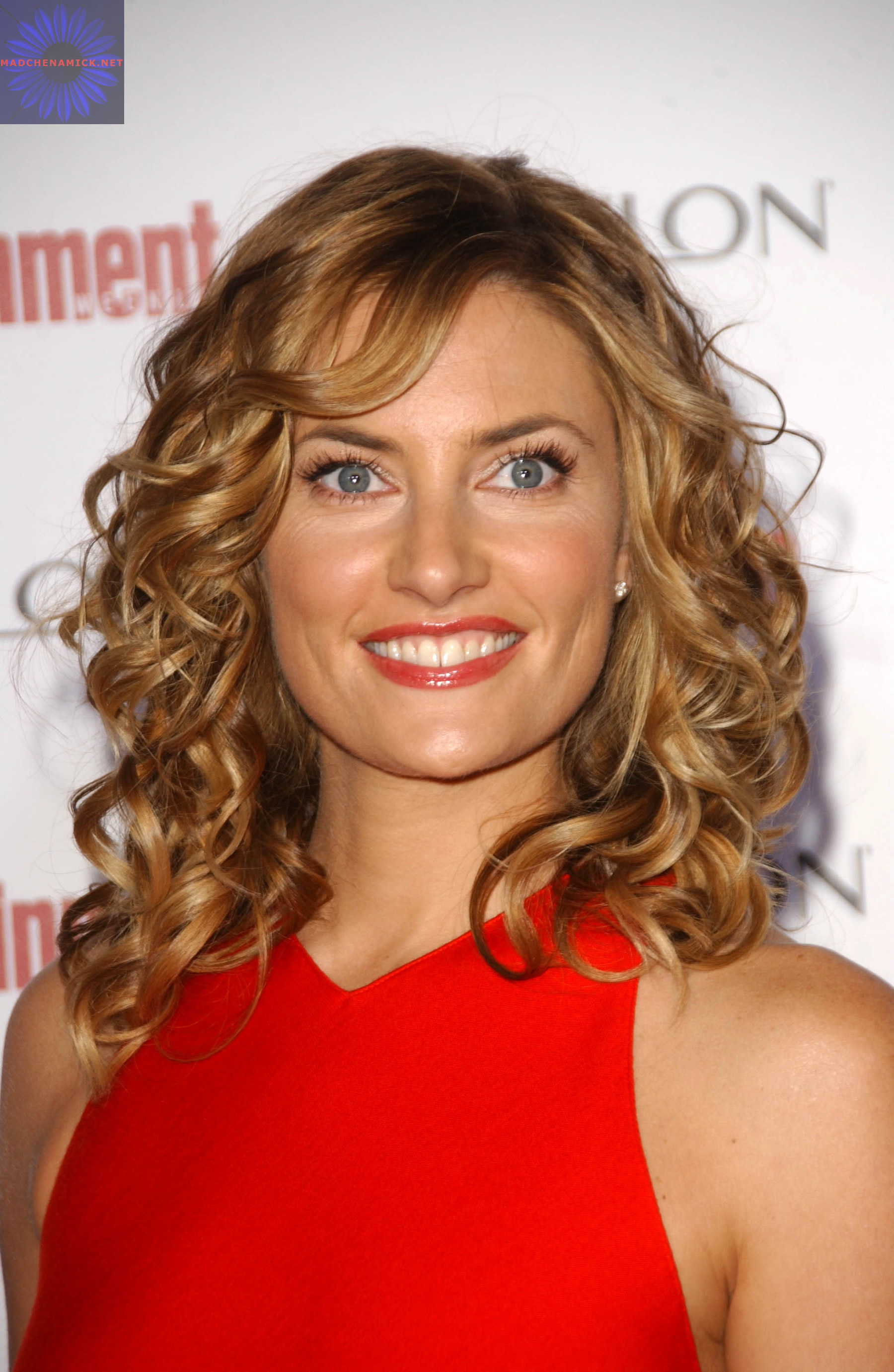
So, in the spirit of cheap plays for page views, I wanted to note the popularity of Amick, best-remembered for most of us as diner waitress Shelly in the cult classic TV series “Twin Peaks.”

I also wanted to note that most sources online appear to agree that Amick, born in 1970 according to her IMDb entry, looks pretty amazing.

It doesn’t take much Googling to determine that clips of Amick, particularly in a bikini from the cable TV series “Californication,” are out there.

Go ahead and Google. I’ll wait.

Anyway, Madchen Amick is now forever enshrined in this blog’s hall of fame, along with Billy, Jeffy and the the rest of the Keane comic strip family as well as the Leviathan or whatever flying beastie the Avengers will face.

Now if there was only some way to get Madchen Amick, the ghostly grandparents from “The Family Circus” and the flying snake thing from “The Avengers” all into the same blog item.

Hmm.

Madchen Amick all choked up in ‘Mad Men’s’ ‘Mystery Date’

Last night’s “Mad Men,” besides giving the characters — and viewers — the creeps over the Richard Speck mass murders, presented me with a real brain-teaser:

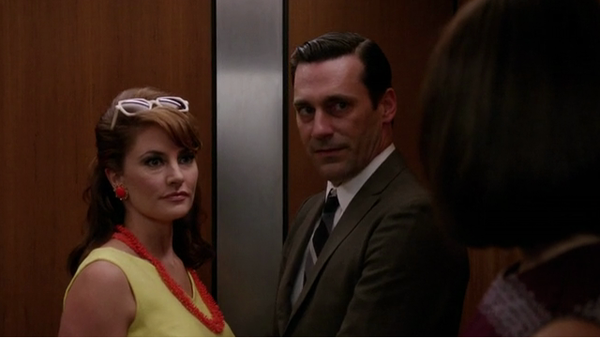
Who played Andrea, the old flame of Don Draper who showed up in an elevator and, later, in Don’s flu-induced fever dreams in the episode called “Mystery Date?”

The actress looked undeniably familiar but I missed her name in the credits.

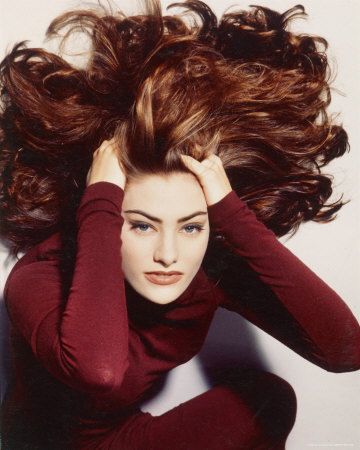
Today I discovered the actress was Madchen Amick, one of the most memorable young actresses on TV two decades ago.

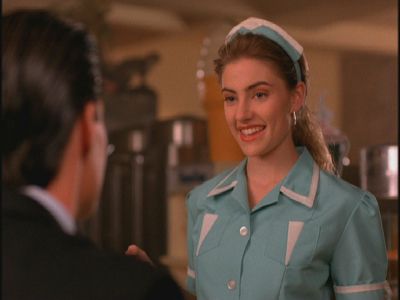
Amick played Shelly Johnson, the high school girl and waitress in “Twin Peaks,” the cult TV mystery series that aired in 1990 and 1991.

Considering the nightmarish stuff of “Twin Peaks,” it’s perfectly appropriate — somehow even fitting — that Amick played Andrea. In last night’s macabre episode, Andrea encountered Don on an elevator and immediately went into purring seductress mode … until Don introduced his wife, Megan, who was standing some distance away.

Later, Andrea showed up and offered herself to Don, whose weakened condition on account of the flu apparently didn’t extend to the bedroom.

When Andrea, getting out of bed, told Don that she expected a return visit, he became enraged and choked her to death, stuffing her body under his and Megan’s bed before passing out again.

When Don woke up, however, Megan was there … and the encounter with Andrea never happened.

Part of the fun of seeing Amick again was that I haven’t seen her on TV a lot in the past two decades. According to her biography, she’s worked pretty steadily, with roles in everything from the “Fantasy Island” reboot to “Dawson’s Creek” to “CSI: NY.”

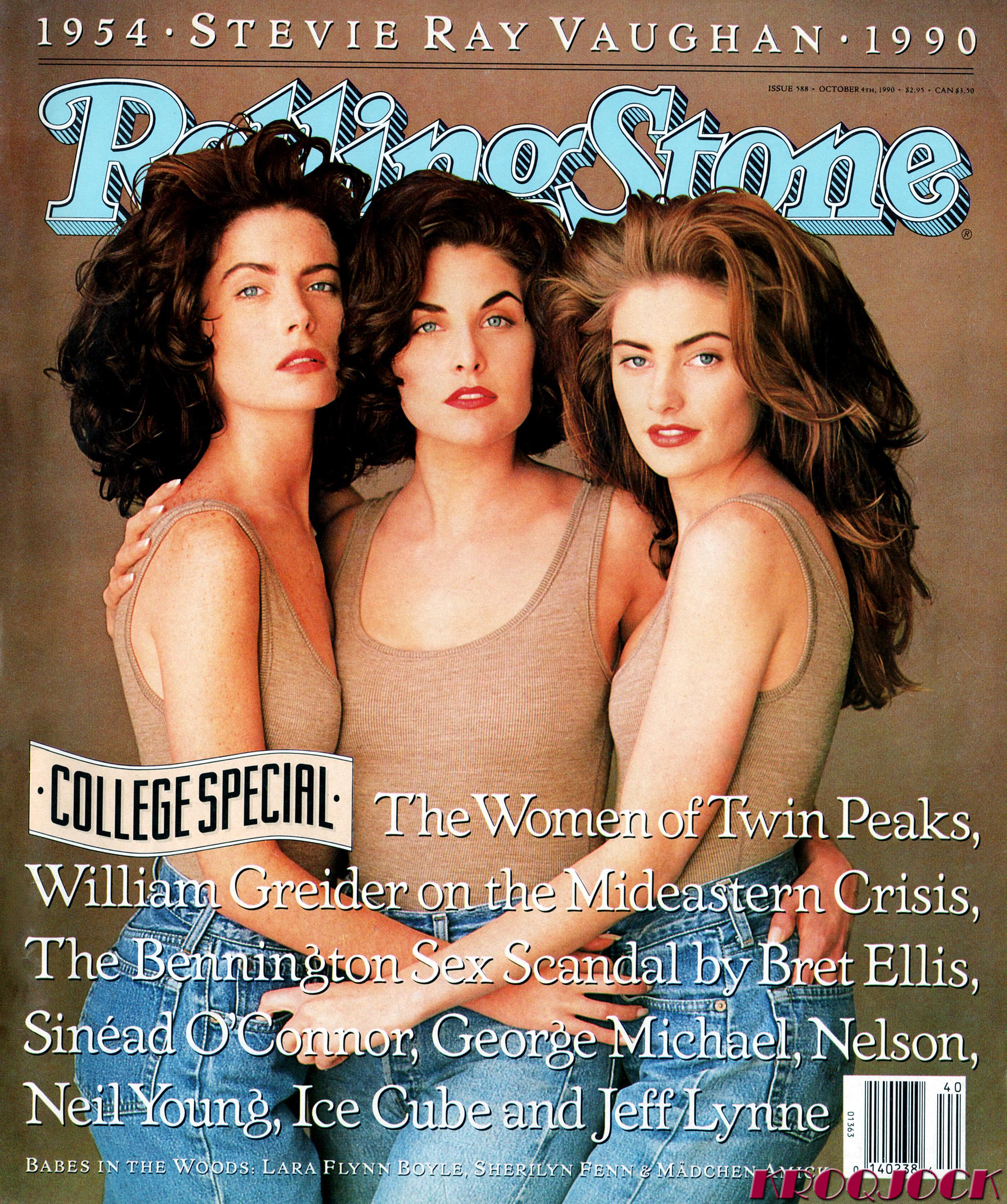
Who can forget this famous 1990 Rolling Stone magazine cover, with Amick and “Twin Peaks” co-stars Sherilyn Fenn and Lara Flynn Boyle?

That’s a lot of hair. But Amick looks great.

If Andrea indeed isn’t stuffed under the Drapers’ bed, maybe Amick will pay a return visit to “Mad Men” this season. Although some have theorized that Don’s hallucinatory choking of Andrea symbolized his efforts to leave his past behind and be faithful to Megan, I’ll believe Don has become monogamous when I see it.

Classic TV: Nikki and Paulo of the ‘Lost’ episode ‘Expose’

In the tradition of Cousin Oliver on “The Brady Bunch” — unwanted characters added to a hit TV show — we present Nikki and Paulo, the attempt by the producers of “Lost” to add some fleshed-out background characters during the third season of that series.

According to Internet legend, the producers of the show — about airline crash survivors fighting to survive mysterious happenings on a Pacific island — were asked about the mostly nameless other survivors of the crash, usually seen in the background as the major characters play out the storyline of the week.

So they added, gradually at first, Nikki (Kiele Sanchez) and Paulo (Rodrigo Santoro). Extremely easy on the eyes — even among the good-looking cast of “Lost” — the couple seemed like a good way to add some depth to the cast.

But even though fans had asked for more about the background characters, turns out most people didn’t like the modern-day equivalent of elevating “third red shirt from the left” on classic “Star Trek” to supporting character status.

Backlash on Internet sites was quick and brutal. Santoro in particular had the misfortune of being dubbed “Takes A Shit Guy” on Ain’t It Cool News in reference to a scene in which he comes out of a bathroom, flushing sounds behind him, in one of the secret science stations discovered on the island.

So the producers made a funny and canny move: They explored, through trademark “Lost” flashbacks, the backstory of Nikki and Paulo … in the same episode in which they killed them off.

Written by Edward Kitsis and Adam Horowitz,” “Expose” — the 14th episode of the third season — revealed that Nikki was an American actress who had been working on a TV show called “Expose” in Australia before boarding the flight. Paulo was the chef of the show’s producer.

The two — led by the ruthless Nikki — poisoned the producer and stole millions of dollars in diamonds before boarding the Oceanic Air flight home.

As the episode revealed, Nikki and Paulo were desperate to find the diamonds, hidden in a suitcase that was dropped somewhere inland when the plane broke up over the island, and had spent much of their weeks and months on the island looking for it.

Since it’s well known there is no honor among thieves, the two ended up meeting a harsh end. In the opening minutes of the episode, Hurley, Sawyer and the others find the two paralyzed — they assume they’re dead — and proceed to bury them. And they do bury them — alive, unknowingly.

How’s that for harsh? If “The Brady Bunch” had Cousin Oliver skateboard in front of a moving van, it still might not have topped this.

I loved “Lost” pretty much right up until the final episode, when it seemed obvious the producers were not going to pay off on many of the nifty teasers and red herrings they had planted through the show.

But I have no complaints about their handling of Nikki and Paulo, and “Expose” is one of the most clever ways of getting rid of unwanted characters I can imagine. Viewed years after the fact, the episode is a time capsule and love letter to the series, bringing back characters who hadn’t been seen since early in the series, “previewing” characters in flashbacks we hadn’t yet met and providing great lines to characters like Sawyer, whose attitude about the two summed up the feelings of many viewers:

“Who the hell are Nikki and Paulo?”


‘Anchorman’ and the ‘uncomfortable’ comedies

Will Ferrell appeared on “Conan” the other night, flute in hand, to insult the show’s host, play flute with the band and, oh yeah, announce that he’s making a sequel to the 2004 comedy “Anchorman: The Legend of Ron Burgundy.”

Actually, if you buy the schtick, Ferrell himself didn’t appear. It was Burgundy, with his burnt orange blazer and 1970s haircut (really, in what time period did Ferrell’s TV news parody take place?), the pride of San Diego newscasters.

I’ll probably see the “Anchorman” sequel, either in theaters or on disc. I liked the original “Anchorman” pretty well and have more of an appreciation for it each time it plays on cable TV, which is pretty much all the time, alternating with “The Shawshank Redemption” and “Iron Man.”

But there’s no doubt that I squirmed about as often as I laughed while I was watching “Anchorman.”

Ferrell’s movie, directed by Adam McKay, is part of a genre of comedy in movies and TV that I call “uncomfortable” comedies. They’re not outrageous, go-for-the-gut comedies like “The Hangover” or “Bridesmaids,” although there are some uncomfortable moments in those hits. The really, truly uncomfortable comedies have as many awkward moments as funny ones.

When Farrell talks to his dog or spouts off bizarre threats and insults, you can’t help but think, “Are we supposed to laugh here?”

I’m not sure where the awkward comedies began. For much of the past four decades, there have been awkward sketches on “Saturday Night Live,” but I’m not sure all of those were intentional. I’m thinking the origins were a little more foreign than that.

“The Office.” Beginning in 2001, Ricky Gervais masterminded a British workplace comedy shot in realistic, mockumentary style. The U.S. version, starring master of awkward comedy Steve Carrell, began about four years later. Carrell and a handful of other actors, including Jack Black, Seth Rogen and a few more, are as adept at making us squirm and fidget as they are at making us laugh.

The U.K. version of “The Office” was actually predated by a show that, while it had uncomfortable moments, was best known for giving us this new generation of uncomfortable actors. “Freaks and Geeks,” which lasted a single golden season beginning in 1999, featured Rogen, Jason Segel and others. This tale of high-school losers is greatly missed, although I’ve had few more uncomfortable viewing experiences than watching Segel serenade his unrequited crush.

Some of the cast and creators of “Freaks and Geeks,” the latter including Paul Feig and Judd Apatow, have gone on to turn the awkward comedy into box-office gold with movies including, in Apatow’s case, “Anchorman,” “40-Year-Old Virgin” and “Saving Sarah Marshall.” Some of them also teamed on “Undeclared,” another late, lamented comedy series that ran for a single season beginning in 2001. The tale of lovable losers at college — instead of high school, as in “Freaks and Geeks” — felt like a sequel to “Freaks and Geeks” and even featured Rogen, although as a different character.

One of the best and most outrageous awkward comedies of recent years is “Borat,” Sasha Baron Cohen’s 2006 mockumentary — a style that lends itself to awkward comedy, as in “The Office” — about a crude faux-Eastern European journalist touring the United States. Part of what made “Borat” one of a kind was how Cohen seemed to fool the people around him into thinking he was legit.

A latter-day awkward moments comedy is “Portlandia,” an Independent Film Channel series featuring Fred Armisen. The show makes fun of a truly cool but oddball city, Portland, Oregon, with its artistic pretensions and offbeat characters. I tried to like “Portlandia” and might give it another try. But the show was filled with a few too many awkward silences and too few genuine laughs for me.

Maybe I’m just too awkward for it.