Category Archives: classic TV

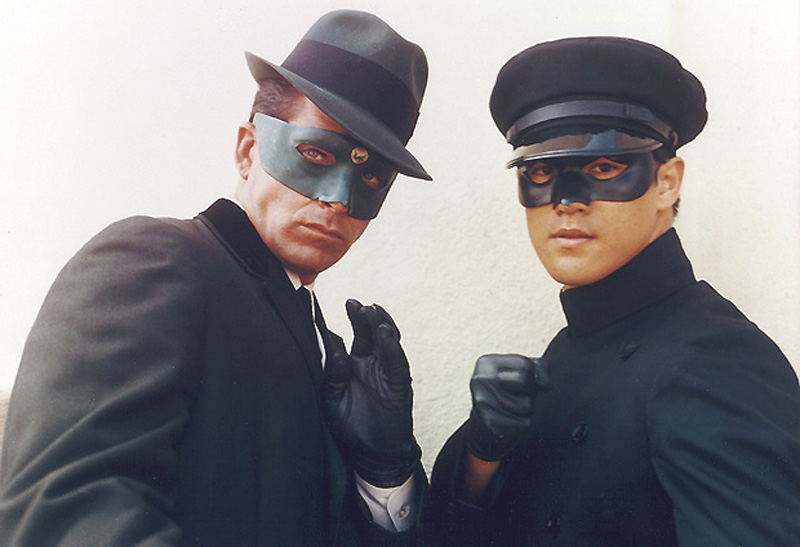
‘The Green Hornet’ still carries a sting

In a recent blog item about “The Lone Ranger,” I noted the relationship between that radio (and later TV and movie) vigilante and “The Green Hornet.” It’s the kind of geeky stuff I just can’t get enough of.

So I thought I would return to the subject of “The Green Hornet,” one of the coolest masked vigilantes this side of Gotham City.

Nostalgia channel MeTV had a mini-marathon of the 1966 “Green Hornet” series tonight, so seeing a couple of  episodes of the show prompted me to mention a few notable elements of the series.

The Green Hornet and Kato were outlaws. This aspect of the show was way ahead of its time. Sure, there was a random episode or two of the campy “Batman” series in which the Penguin or somebody framed Batman as a bad guy. But “The Green Hornet” was considered a criminal by the police and public. Of course he was a good guy, but he shared a bad PR agent with Spider-man.

The show’s opening theme was the coolest. Rimsky-Korsakov’s “Flight of the Bumblebee” was an inspired choice for theme, and cool jazzman Al Hirt performed a blisteringly hot version. The theme was so cool that Quentin Tarantino used it in “Kill Bill” decades later.

The show wasn’t campy. “Batman,” by the same producer, was a huge hit but still leaves a sour taste in some fans’ mouths because of its campy “Biff! Pow! Only cross the street when you have a walk signal” feel. “The Green Hornet” wasn’t campy or silly. It was a straight tale of cool good guys busting mobsters.

Bruce Lee. Van Williams might have starred as newspaper publisher Britt Reid and the Green Hornet, but Lee — soon to become an international star — was frosty cool as Kato, the Hornet’s sidekick and chauffeur.

Martial arts. Sure, the show wasn’t as accomplished in showcasing the prowess of Lee and his fists of fury as modern-day series would be. Fight choreography back then just wasn’t as elaborate as it is today. But there’s no mistaking Lee’s skills.

Newspaper love. Reid was the publisher of a Los Angeles newspaper. While his vigilante activities might have been a little too participatory for journalism purists, Reid’s fearless crime-busting was something to which budding reporters like me could aspire. Besides, how many shows besides this one and “Lou Grant” routinely took place in a newspaper office, with shots of papers running through presses?

“The Green Hornet” lasted only one season, but the show is still watchable today, maybe even more so than “Batman.”

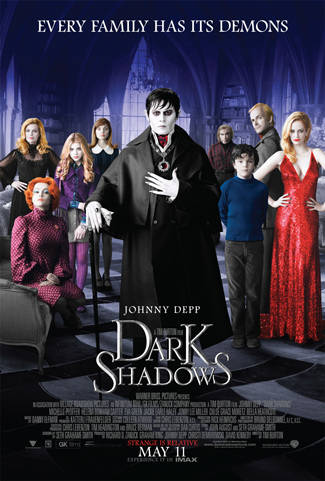
“Dark Shadows’ gets a trailer. Ohhhkay.

Should we or should we not be surprised that director Tim Burton and star Johnny Depp have turned “Dark Shadows” into a campy comedy?

Burton and Depp have teamed for a series of movies that have varied wildly in quality and reception by fans and critics. The idea of them teaming for “Dark Shadows,” the big-screen version of the fondly remembered 1960s daytime supernatural soap, set off the expected alarm bells.

Would the movie be ghoulish and straight-faced or campy and over the top?

With the release of the “Dark Shadows” trailer, I think we know the answer.

The basic premise of the show is translated into the movie’s plot. Barnabas Collins (Depp) is cursed by a witch in the 1700s and buried for two centuries. He is dug up in 1972 and joins his descendants in his gothic ancestral home.

In the series, anti-hero Collins (played by Jonathan Frid) mostly overcame his impulses to kill and fought the forces of evil.

In the movie, it appears that Barnabas is reunited with his family only to have to fight off some … corporate takeover attempt by Angelique, the witch who cursed him 200 years earlier.

The plot appears to revolve around Barnabas’ attempts to resist the romantic intentions of Angelique (Eva Green) in a series of scenes that involved groovy period music and … a disco ball of death?

“Dark Shadows” was unlikely to be a full-on supernatural soap opera in its big-screen incarnation. And honestly, while the original show has fans — including me — they won’t make up the bulk of the movie audience. To succeed, “Dark Shadows” has to sell tickets to millions of people who weren’t even born when the show went off the air.

But it remains to be seen if Burton and Depp have produced a funny, shocking hit like “Beetlejuice” or the latest in a string of oddball movies like “Charlie and the Chocolate Factory” and “Alice in Wonderland.”

The movie opens May 11.

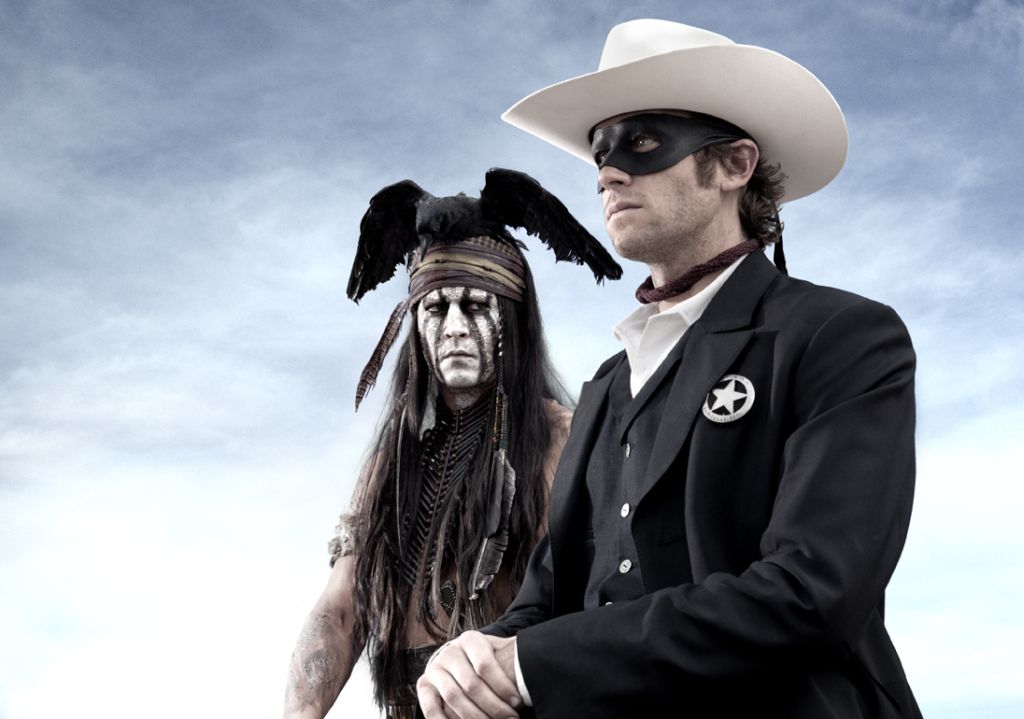
Johnny Depp as … Tonto? New ‘Lone Ranger’ image

This is not your grandfather’s Tonto.

Today’s release of the first image from the new Gore Verbinski “Lone Ranger” movie has a few people doing double takes.

And it no doubt has some longtime fans of the radio and TV Masked Rider of the Plains and his Faithful Indian Companion perplexed.

I’m willing to wait and see if this new take on the Lone Ranger and Tonto will be a hit or a miss on the order of “The Green Hornet” (coincidentally a descendant of the Lone Ranger. But that’s a story for another time) remake.

I grew up on reruns of the “Lone Ranger” TV series, like a lot of late Boomer boys. I was born well after the show ended its run in 1957, but by the mid-1960s the half-hour Western adventure series was an after-school staple in TV syndication.

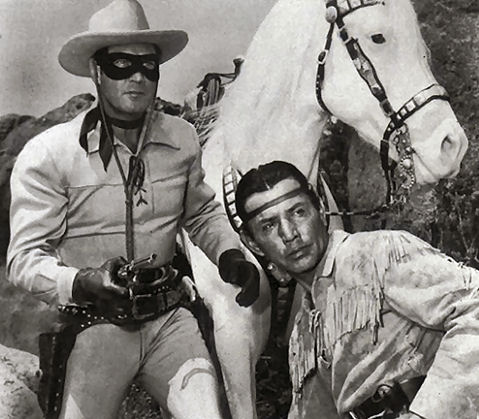
I even got to meet Clayton Moore, who played the Lone Ranger during most of the TV series, in the early 1980s when he was making personal appearances in wrap-around sunglasses instead of a mask. Moore had been appearing in public as the Lone Ranger for years after the show ended and Jack Wrather, who owned the rights to the character, sued to prevent Moore from wearing the mask.

When Moore appeared at Ball State University here in Muncie, I covered it for The Muncie Evening Press.

It was hard not to be touched — and a bit amazed — by this earnest man, whose greatest role had typecast him, but who was still turning out for 50 or 100 people at a time in cities all over the country, demonstrating his quick-draw skills (all the while advising kids on gun safety) and talking about the Lone Ranger creed:

I believe…

  • that to have a friend, a man must be one.
  • that all men are created equal and that everyone has within himself the power to make this a better world.
  • that God put the firewood there, but that every man must gather and light it himself.
  • in being prepared physically, mentally, and morally to fight when necessary for that which is right.
  • that a man should make the most of what equipment he has.
  • that ‘this government of the people, by the people, and for the people’ shall live always.
  • that men should live by the rule of what is best for the greatest number.
  • that sooner or later…somewhere…somehow…we must settle with the world and make payment for what we have taken.
  • that all things change but truth, and that truth alone, lives on forever.
  • in my Creator, my country, my fellow man.

Moore was one of a kind. I’d be surprised if Armie Hammer, in the new movie, erases any longtime memories of the original actor.

As for Johnny Depp and Jay Silverheels …

Silverheels, who died in 1980, played a character who I’m sure many consider undignified today, even though, as sidekicks go, he was hardly the laughingstock that Watson was to Sherlock Holmes in old Basil Rathbone movies. Silverheels’ Tonto was a brave, intrepid companion to Moore’s Texas Ranger character. And yes, he was definitely the secondary character.

It’ll be interesting to see what Depp does with the character. The look, as seen in this photo, is a variation — to say the least — from Silverheels’ buckskin-and-headband style. I honestly can’t comment on the makeup or the bird, but I’m guessing there’s a historical basis for their addition to the costume.

I’m more worried about Depp’s vow to make Tonto the more dynamic, more interesting of the two characters. Armie Hammer is no Seth Rogen — Hammer, from “The Social Network,” was set to play Batman in the “Justice League” movie that got canned a few years ago — but I’m worried the plan for “The Lone Ranger” is to make Tonto as cool as Kato and the Ranger as bumbling as Rogen’s Hornet.

Here’s hoping the movie doesn’t take a (silver) bullet.


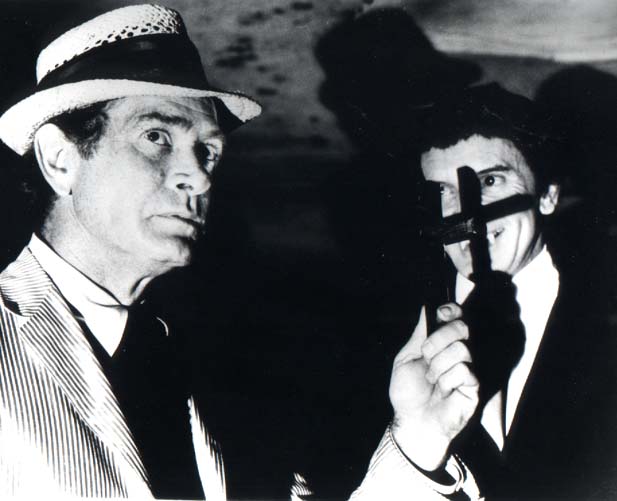
Classic TV: ‘The Night Stalker’

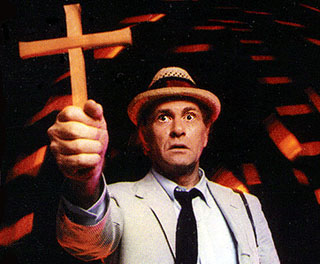
I noted here a couple of days ago the news that director Edgar Wright (“Shaun of the Dead”) and actor Johnny Depp were close to collaborating on a big-screen movie version of “The Night Stalker,” the 1970s TV movies/TV series that starred Darren McGavin as intrepid reporter Carl Kolchak, who pursued big bylines, splashy headlines and … monsters.

The possibility of a remake prompted me to break out my DVD of the original 1972 TV movie “The Night Stalker” and give it yet another viewing.

“The Night Stalker” is one of my favorite TV movies, heck, one of my favorite movies. I saw it when it originally aired, when I was all of 12 years old, and loved it then. I love it now.

Despite the fact that … gulp … 40 years have passed, the movie is rock solid. The elements of the story that are dated now only serve to give it a time capsule, slice of life feel.

With its lean 70-minute running time, the movie — produced by “Dark Shadows” creator Dan Curtis, directed by journeyman TV director John Llewellyn Moxey, written by the great Richard Matheson (“The Incredible Shrinking Man,” “I Am Legend”) based on a book by Jeff Rice — drags only near the very end, when McGavin spends a little too much time skulking around an old dark house.

Most of the movie is a dark-humored, action-filled, bitterly realistic take on newspapering, crime and big-city politics. In fact, it’s one of the best movies ever made about newspaper reporting. Kolchak is egotistical, insulting to his competition, intolerant of his bosses, dismissive to the public and resistant to authority. He is a classic newspaper reporter.

Kolchak, a reporter for a Las Vegas newspaper, narrates the plot, which unfolds in flashback. As the story proper begins, Kolchak is grumbling about being called back from vacation by his editor, Tony Vincenzo (the blustery, ill-tempered Simon Oakland) to cover what looks like the routine murder of a female casino worker.

Kolchak has, more so than many less realistic reporters in movies and TV shows, a fully-developed set of sources, both high and low, and one within the medical examiner’s office tells him the victim lost a lot of blood.

Before Kolchak can even consider that odd detail, another dead woman is found, also drained of blood.

The scenes set at crime scenes in “The Night Stalker” are some of my favorites. Inevitably, Kolchak shows up — sometimes right behind the police, including the nasty-tempered sheriff played by Claude Akins, sometimes even before the police show up.

Kolchak talks to cops and witnesses and in general has free run of these crime scenes. It’s a running gag that was probably unlikely then and is outlandish today, but they are fun scenes to watch.

Bodies, all drained of blood, keep turning up and one woman goes missing when, about halfway through the movie, Kolchak’s girlfriend, casino worker Gail Foster (Carol Lynley) suggests that maybe the killer really is a vampire. Kolchak scoffs at the idea but begins to read the old books Gail gives him.

Eventually, Kolchak tells the authorities — who barely tolerate his presence at press conferences, another realistic touch — that they won’t capture the killer unless they consider the possibility he might be a vampire.

I’m not sure that in the early 1970s a real-life coroner, police chief, sheriff and prosecuting attorney would call as many press conferences as the characters do in this movie, but they’re also fun scenes as Kolchak gets the cops and officials all riled up with his questions. The time capsule element of the press conference scenes is that officials expect the reporters to cover up the grisly, panic-inducing details of the murders. Now, of course, the press conferences would be live-streamed online and the reporters would have been tweeting all along. (Which is why officials today wouldn’t call this many press conferences.)

Besides the crime scene and press conference scenes, “The Night Stalker” boasts some pretty cool action scenes. Although there are a few scenes where Atwater, as vampire Janos Skorzeny, stalks his victims, there’s surprisingly little horror in the movie. Instead we get action scenes with a real sense of the unreal, as Kolchak and the cops come upon Skorzeny’s trail only to have the vampire kick their asses and escape.

The movie’s ending, with the authorities ensuring that Kolchak’s story won’t be told, is as downbeat and dark as anything on TV at the time or since. Ultimately, Kolchak has only the satisfaction of knowing he’s a good reporter to keep him warm at night.

McGavin — a dozen years later immortalized as the dad in “A Christmas Story” — has the right mix of schmoozer and attack dog that a reporter needs. Oakland is wonderful as that TV show cliche, the boss who yells.
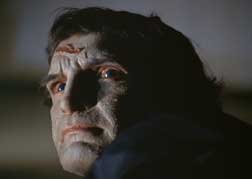
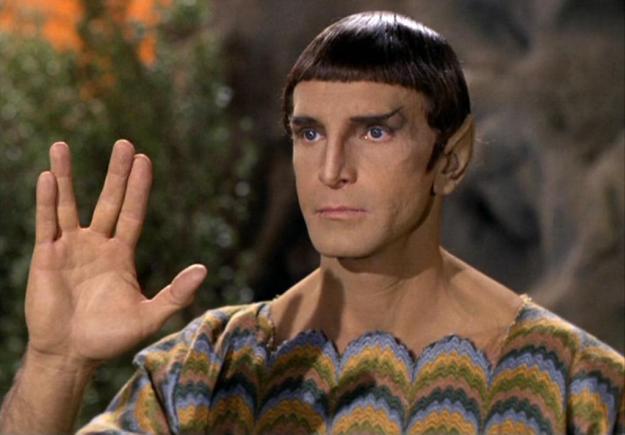
Atwater, who died only a few years after the movie aired, is terrific as the vampire. He makes a big impression without a word of dialogue. Atwater’s most significant other role was as Vulcan leader Surak on a single episode of “Star Trek.”
The movie was the highest-rated TV movie of its time and prompted a sequel, “The Night Strangler,” a year later, and a weekly series, “Kolchak: The Night Stalker,” two years later. Both the sequel movie and TV series were fine, but they couldn’t match the original.
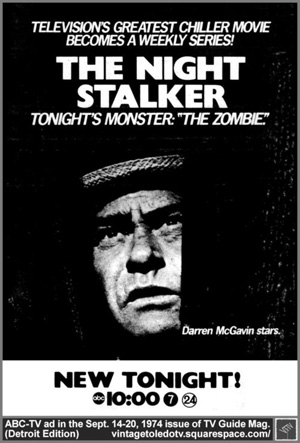
“The Night Stalker” influenced a generation of young fans of the horror genre who went on to pay tribute in a variety of ways. Perhaps the best known homage to the Kolchak concept was “The X-Files,” with FBI agents pursuing mysteries and monsters each week. McGavin even appeared on “The X-Files” as a retired FBI agent.

If Wright and Depp do a modern version of Kolchak — or even one set in the 1970s — they might do a terrific job. I’ll be shocked, though, if they can top the original, which is a classic of its kind.
Where JK goes, we’ll follow

Here’s an admission: I still haven’t read “Harry Potter and the Deathly Hallows.”

Considering the the last book in the series came out in 2007 and I loved J.K. Rowling’s series about the boy wizard and his friends, that seems kind of strange, I know.

I’ve seen the movie version of course and found it a very satisfying ending to Rowling’s series.

Something has kept me from reading the final book, though. Sure, part of it is the press of other books to read. I eagerly move from book to book and, despite my intention of going back and re-reading some classics from the past, I’ve been more interested in moving on, relentlessly on, to the next new book.

Part of it might be that once I’ve read “Deathly Hallows” the series will be over. That’s a finale and finality I don’t look forward to.

I’ve enjoyed what Rowling did with her characters and her story over the past decade-and-a-half. I don’t think I could name another writer who has maintained an entire series of books with the same integrity and consistency — brilliant consistency.

Most of us can’t imagine how hard a task Rowling took on … and completed.

Word came out today that Rowling’s next book will be published by Little, Brown. No title yet, no hint of the story, not even a publication date.

Just the revelation that the book will be aimed at adults.

For the next few months, there’ll be a lot of speculation about what Rowling has written (for she almost certainly has finished the book by now, or mostly). There’s some suggestion that Rowling was working on a crime novel in the years since “Deathly Hallows” was completed.

Oh man. I am so there.

Crime novel or not, Rowling’s new book will find a reader in me.

She’s more than earned her reputed billion dollars. She’s earned millions of readers, helped revitalize the publishing industry, jump-started books for young adults and made a new generation of people so eagerly anticipate a new book that they will turn out at bookstores at midnight.

I’ll be there for Rowling’s new book, as will millions of other readers.

Heck, I might even get ready for her new one by going back and reading “Deathly Hallows.” Finally.

Wright, Depp to team on new ‘Night Stalker?’

Ever feel that mixture of eager anticipation and dread, that feeling that runs up your spine and messes with your brain when you’re thinking about something that could be so good, so cool … if it just doesn’t get screwed up?

That’s what I felt this afternoon when I heard that Johnny Depp and Edgar Wright, the genius director of “Shaun of the Dead” and “Hot Fuzz,” were teaming up to make a big-screen version of “The Night Stalker.”

If you’re not familiar with it, “The Night Stalker” was a 1972 TV movie that starred character actor Darren McGavin as Carl Kolchak, a hard-charging newspaper reporter who — thanks to his willingness to buck authority and his his inability to kowtow to his bosses — has drifted from newspaper to newspaper, city to city, in search of steady work.

He’s at a paper in Las Vegas when a series of gruesome showgirl murders gets his attention. He starts covering the story and, much to the horror of city officials and the chamber of commerce, discovers not only that a serial killer is at work … the killer is a vampire (played to truly creepy, alien effect by Barry Atwater).

The movie unfolded like a modern-day police procedural, with Kolchak arriving at crime scenes and irritating the cops when he isn’t hanging out in the morgue. It builds to a genuinely suspenseful climax in which Kolchak takes things into his own hands … only to find himself run out of town by officials worried about the story’s impact on tourism.

Masterful writer Richard Matheson wrote the movie based on a terrific book by author Jeff Rice.

“The Night Stalker” was the highest-rated TV movie of its time and sparked not only a 1973 sequel, “The Night Strangler,” but a 1974 series, “Kolchak: The Night Stalker.”

In the series, which ran only one season, Kolchak worked out of a Chicago news service, frustrated the same boss (the blustery Simon Oakland), and kept running into monsters. The best episodes featured a zombie and a vampire who was one of the victims from the original movie.

News of the remake doesn’t fill me with quite the same level of anticipation and dread that I feel for the Tim Burton/Johnny Depp “Dark Shadows.” Maybe because Burton, a genuine artist who seems to have lost the ability to make a coherent movie, isn’t associated with this.

Maybe because, as much as I liked “Dark Shadows,” it isn’t the equal of “The Night Stalker” in my book. If Burton makes “Dark Shadows” an unwatchable mess, that’ll be a loss. If Wright screws up “The Night Stalker,” I’ll be in mourning.

Wright — who has also been working on a movie of the Marvel Comics character Ant-Man, a member of The Avengers — seems well-suited to the mixture of humor and horror that a proper adaption of “The Night Stalker” would need.

But I really would dearly love it if a “Night Stalker” movie was really good, spawning a new generation of fans and renewing attention for the original ABC movies and TV show.

‘The Simpsons’ marks 500 episodes

“The Simpsons” reached its 500th-show milestone tonight, in case you’ve been living off the grid for a while now and haven’t heard.

As has been the case since the mid-90s, the episode was pretty hit-and-miss. There were some funny moments, but all too often in recent years the show seems to trade clever for crude. (More on that later.)

The plot: The entire town of Springfield, tired of the antics of Homer and the clan, decides to exile them from town. The Simpsons leave Springfield and stumble across some folks “living off the grid” and decide to give it a try.

There were some nice touches. The opening credits ended with a montage of hundreds — maybe 500; I sure couldn’t count them all — opening credits couch gags.

The show, as it often does, took a shot at its network home.

Midway through the show, the newly off-the-grid Simpson family recreated their opening credits at their new rural location. The family assembles in the living room and, instead of watching TV, they’re watching a fox sleeping on a rock.

“I’m sick of watching Fox,” Homer complains.

The episode also contained what might be the dirtiest joke I’ve ever heard on TV.

When someone acknowledges that Springfield is full of jerks, Lenny (I think it was Lenny) says, “Want me to spray some of my Jerk Off on you?”

Other good jokes:

Moe, the proprietor of Moe’s Tavern, sets up shop in a cave. The name: Moe’s Cavern.

Chief Wiggum’s acknowledgement: “I’m not the sharpest pencil in the … pencil thing.”

Great sci-fi TV … and not so great (part one)

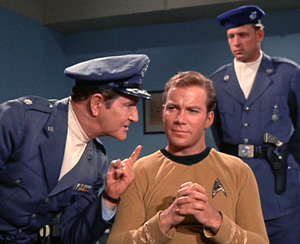
I was watching a few scenes of “Tomorrow is Yesterday,” a classic 1967 episode of “Star Trek,” the other week. My son looked up from his iPod during a fight scene.

“That is so cheesy,” he said, his voice dripping with good-natured scorn. “He didn’t even hit him.”

He was right. The on-screen fight scene between Kirk (William Shatner) and a group of military police officers didn’t rank up there with the most realistic screen pugilism ever. Kirk draws back, throws a right cross … and visibly misses the MP by a mile.

But still.

“Tomorrow is Yesterday” is a great episode of the original series and a great episode of TV science fiction.

Little more needs to be said about what made “Star Trek” as great and enduring as it is. But the exchange with my son made me think about the differences between good TV sci-fi and bad.

So, in a blog entry that will, with any luck, be recurring, a few thoughts on a good sci-fi TV series as well as one that’s not so good.

And yes, I have few doubts that even the series that I choose to pick on here have fans. And I’m a fan of some elements of even those shows, and I’ll cite those elements. But there’s no comparison between the great ones and the not-at-all-great-ones.

This time around: “Star Trek” vs. “Lost in Space.”

(Some of) what makes “Star Trek” great:

1. The show employed some of the greatest writers working in TV and science fiction in the 1960s, and they produced great scripts. Robert Bloch’s “What Are Little Girls Made Of” was an ultra-creepy tale of android love. Theodore Sturgeon’s “Shore Leave” showed that “Star Trek” mixed whimsy and suspense better than anyone. Frederic Brown’s “Arena” was adapted into a gripping episode featuring Kirk one-on-one with a man-sized lizard (hampered only by the makeup and costume limitations of the day).

2. Episodes were so good they were not only memorable for decades to come but provided fodder for sequels and remakes. “The Trouble with Tribbles” spawned a cottage industry in homemade fur balls — as well as enduring love — among fans. “Space Seed” created a memorable character in Ricardo Montalban’s Khan, who inspired the best of the “Star Trek” big-screen roles.

3. Episodes were as formulaic as much of what appeared on TV in the mid-to-late 1960s but transcended most of the competition to prove as lasting as anything ever on TV. Even with today’s mania for remaking old pop culture, only a handful of shows from the time — “Mission: Impossible” comes to mind — are still in the public mind. How’s that big-screen version of “The Virginian” coming?

4. The show was remarkably consistent to its characters. How many shows before, during and after were filled with characters who veered wildly between sensible and nonsensical, bold and mild, jokey and humorless depending on the plot contrivances of the week? Not “Star Trek.”

5. And speaking of characters: “Star Trek” creator Gene Roddenberry and the writers decided they needed a strong triangle of characters to lead the show, so they created man of action Kirk, cerebral Spock and emotional McCoy. Viewers could enjoy the interpersonal dynamic but the triangle also served the plot, with McCoy and Spock acting as antagonists, virtual angel and devil on Kirk’s shoulders, the voices of reason and emotional appeal.

6. Here’s a bonus: For all its space cowboy action, “Star Trek” was remarkably tolerant and progressive in its attitude toward humanity (aliens included) and the dignity of individuals. Why else would the show’s Federation have the Prime Directive, forbidding interference in less-developed cultures? (Okay, so they skirted that directive a few times. Or more than a few.)

(Some of) what makes “Lost in Space” far from great:

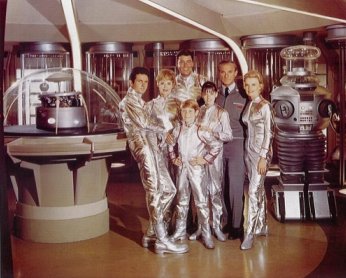
1. They bungled a good premise. A space-faring version of “Swiss Family Robinson,” the series could have shown in realistic (even for 1960s TV) manner the dynamics of a family separated from society and fending for itself. But except for a few episodes from the first, more serious season, the show lived firmly in the land of campy entertainment.

2. They let one character run away with the show. Not until Fonzie stole “Happy Days” a decade later did one character — Dr. Zachary Smith, a stowaway on the Jupiter 2 spacecraft — so come to dominate a series, to its detriment. Jonathan Harris — an enjoyable character actor — became more and more the central figure and the other characters faded into the (chintzy) background.

3. The other characters were one-dimensional. The team’s leader and literal father figure, John Robinson, was square and boring. Wife Maureen was usually inside puttering in the kitchen. Major Don West walked into camera range, threatened or insulted Smith, then stalked away.

4. The storylines. Stuck on a random planet for the first season (and then another for the second), the plots usually involved some improbable menace showing up, scaring Dr. Smith, threatening the Robinsons and then being defeated. Yawn.

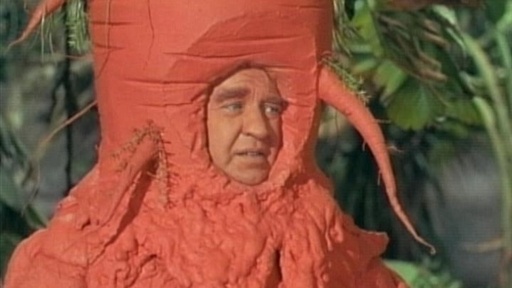
5. The budget/costumes/effects. Say what you will about the limitations of “Star Trek,” but “Lost in Space” reached the depths of “The Great Vegetable Rebellion,” with actor Stanley Adams in a carrot suit.

Case closed.

More next time.

Pop culture Mort Report

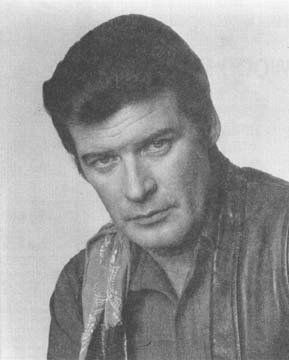
The recent death of Peter Breck, best known for his role as Nick Barkley in the 1960s western TV series “The Big Valley,” made me think about an occasional entry here making note of the passing of some pop culture — particularly geek pop culture — figures.

These won’t be weighty obituaries and don’t be surprised if important figures in the world of art or government aren’t included. I’ll just throw out a picture and a quick note of what they meant to me.

Breck was one of those dependable looking guys who populated 1960s TV series. “The Big Valley” was something of a gender-reveral “Bonanza” best known for employing Barbara Stanwyck late in her career as the matriarch of a ranch. Breck was the most gruff of the three sons on the show, the others being played by Richard Long and Lee Majors.

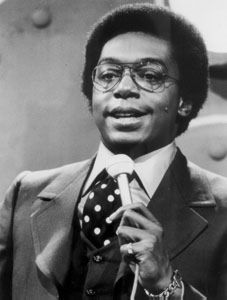
There’s been plenty of note of the passing of Don Cornelius and Ben Gazzara. Cornelius was best known for hosting “Soul Train,” the coolest and in many ways hottest of TV dance shows.

Gazzara was a Method actor best known for movies like “The Killing of a Chinese Bookie,” but pop culture fans know him as the detestable bad guy from the Patrick Swayze classic “Roadhouse.”

Nicol Williamson was another intense actor, this time of the British variety. He brought an offbeat touch to Sherlock Holmes in “The Seven Percent Solution.” Of course he will forever be remembered for his role as Merlin in “Excalibur.”

While we’re talking about Brits, how about Ian Abercrombie? He’s best known as Elaine’s boss on “Seinfeld.” I’ll remember him as a very good Alfred, the Wayne Manor Butler, on the short-lived “Birds of Prey” TV series.

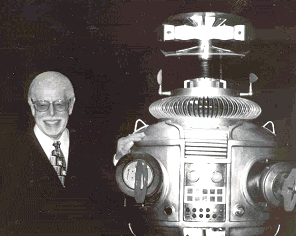
Then there’s Dick Tufeld, who is best known for providing the voice of the robot on the 1960s TV series “Lost in Space.” But Tufeld was a longtime announcer and voice-over talent, the kind of behind-the-scenes figure that made TV work.

The pop culture world was the better for their presence.

‘Alcatraz’ developing key mythology?

True fans don’t have to be reminded, unfortunately, of TV series that loaded up on their own mythology only to disappoint fans before the end.

How bizarre was it that “The X-Files” — once one of my favorites shows — spent several seasons establishing that FBI agent Mulder’s sister had been taken by aliens … only to throw all that out the window with a late-in-the-series revelation that Samantha Mulder was kidnapped by a plain old human killer?

How inexplicable was it that “Lost” — once one of my favorite shows — spent several seasons laying out what seemed to be an intricate backstory for the island and its occupants … only to ignore most of it, explain the rest away and, most mind-bogglingly of all, prove its early Internet critics right by declaring in the final episode that the characters we had grown to love had been hanging out in limbo after all.

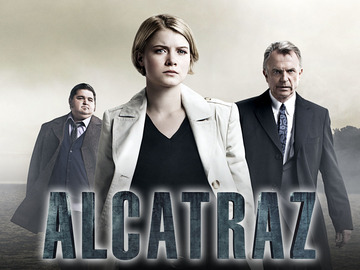
So upon watching “Alcatraz” tonight, I found myself hoping that the series’ makers really do have the key to the mystery they’re developing.

If you haven’t watched this show, which aired its fourth installment in three weeks tonight, the basic plot is that more than 300 prisoners and guards disappeared from the island prison of Alcatraz in 1963. They’re reappearing in modern-day San Francisco, they haven’t aged a day and most seem to be on some kind of quest. Not to mention that they’ve returned to their old habits of bank robbery, kidnapping and murder.

Tonight’s episode, “Cal Sweeney,” introduced a bank robber whose objective seems to be an old-fashioned key. It’s the second of these keys that have shown up. Now they’re in the hands of federal investigator Hauser (Sam Neill) running the inmate recovery project.

I’m really hoping there’s some meaning to the keys, just like I’m hoping there’s some meaning to investigator Rebecca Madsen’s (Sarah Jones) discovery that her grandfather was a convict and is now roaming the present.

As for researcher Diego Soto (played by lovable “Lost” grad Jorge Garcia)? I’m just enjoying his amiable presence.

The show is teasing us with several little mysteries, including characters who seem to be represented in both time periods.

But if those keys mean something now … they damn well better mean something later.

Or Samantha Mulder’s ghost just might step out of that flying saucer and open up a can of suspension of disbelief.