Category Archives: classic TV

‘I Want My MTV’ book a fun look behind-the-scenes

Most of us remember what we were doing on or shortly after Aug. 1, 1981.

We were watching MTV, of course.

The channel’s first decade — when music videos, many of them awful, ruled the airwaves and VJs like J.J. Jackson and (sigh) Martha Quinn were our best friends — is chronicled in “I Want My MTV,” the recent book by Craig Marks and Rob Tannenbaum.

The two have compiled the definitive oral history of the channel, which was one of the biggest gambles in TV history. Who could have imagined, more than 30 years ago, that teens and young adults would watch a channel devoted to music videos 24 hours a day?

Not to mention that a lot of the videos sucked.

The book is stuffed with interviews about the early days of the channel, when only a handful of videos were available; the complaints that helped get more videos from black artists on the air; the advent of Michael Jackson on MTV; and the behind-the-scenes of the channel’s daily struggles. To say that the channel’s executives, staff, artists and video crews were drug-fueled is an understatement. Maybe one of the greatest of all time.

A couple of anecdotes were especially amusing.

Many of the videos now considered classics were very off-the-cuff. The director of the memorable ZZ Top videos like “Sharp Dressed Man” and “She’s Got Legs” just happened to have the inspired idea of putting the Texas blues band in the background in favor of Playboy models.

And the video for Bill Squier’s “Rock Me Tonight” gets special treatment in a chapter about how bad it was and how it pretty much destroyed the rocker’s career.

If you don’t remember the video — and I wish I could embed it here (I’m looking at you, WordPress) — it featured Squier prancing around a loft apartment and tearing his shirt off.

The book carries the MTV story into the early 90s, when the channel began airing the first “Real World” season and began shifting its focus from music videos to reality and lifestyle programming.

Theres a lot to get through here, and the authors probably include a few too many anecdotes about channel executives snorting cocaine and too few anecdotes about the on-air personalities and musicians. But if you were a fan of MTV in its heyday, the book’s worth a look.
Horror classic: ‘Salem’s Lot’

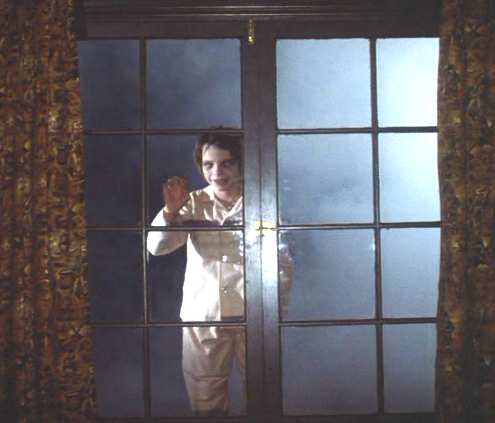
Who can forget the moment in “Salem’s Lot” when the little boy, lost in the woods and turned into a vampire, comes scratching at his brother’s window, whispering to be let in? Ralphie Glick floats into the room amid wisps of fog, hovering close to his brother. And then —

The 1979 TV-movie version of Stephen King’s classic 1975 novel about vampires infesting a small town in Maine holds up pretty well despite the intervening three decades (!).

Sure there’s a lot about “Salem’s Lot” that looks dated now. Most of it is cosmetic, though, including the hairstyles and clothing, particularly that of lead actor David Soul (“Starsky and Hutch;” I half expected him to break into “Don’t Give Up on Us, Baby”).

But director Tobe Hooper, who had made “A Texas Chainsaw Massacre” just five years before and hadn’t yet directed “Poltergeist,” did a good job of translating King’s book into TV-friendly images.

King’s book came out as the author’s career was beginning to get red hot. He had published “Carrie” the year before and the five years that followed “Salem’s Lot” could be considered the best five years any writer could hope to have: “The Shining,” “Night Shift,” “The Stand,” “The Dead Zone” and “Firestarter” were all published before 1980. Pretty mind-boggling.

King’s protagonist, Ben Mears, is a haunted man who comes back to the small town of ‘Salem’s Lot — short for Jerusalem’s Lot — to work on a book. Very quickly he realizes there’s something wrong about the town. He had a nightmarish vision there when he was a child. Is there something inherently evil about a place, he wonders?

Just as Ben comes back to ‘Salem’s Lot, the mysterious Kurt Barlow and Richard Straker open an antiques store. Barlow is, of course, a vampire and Straker is his human helper.

The TV version takes some liberties with characters, condensing some and omitting others entirely. Yet it still works.

Watching the show in recent days, I was struck by how dark (not just dimly lit, but that too) the story is.

I also marveled at how much Bonnie Bedelia, playing Susan, the female lead, looks like current-day ingenue Kristen Stewart. Bedelia is first here, then Stewart.

“Salem’s Lot” is probably available online or on disc if you want a pleasant trip back to vintage horror.

I watched it on VHS tape, all the while hoping the 30-year-old tape didn’t break or shred.

Horror doesn’t get much more vintage than that.

Svengoolie: Reunion with an old ghoul friend

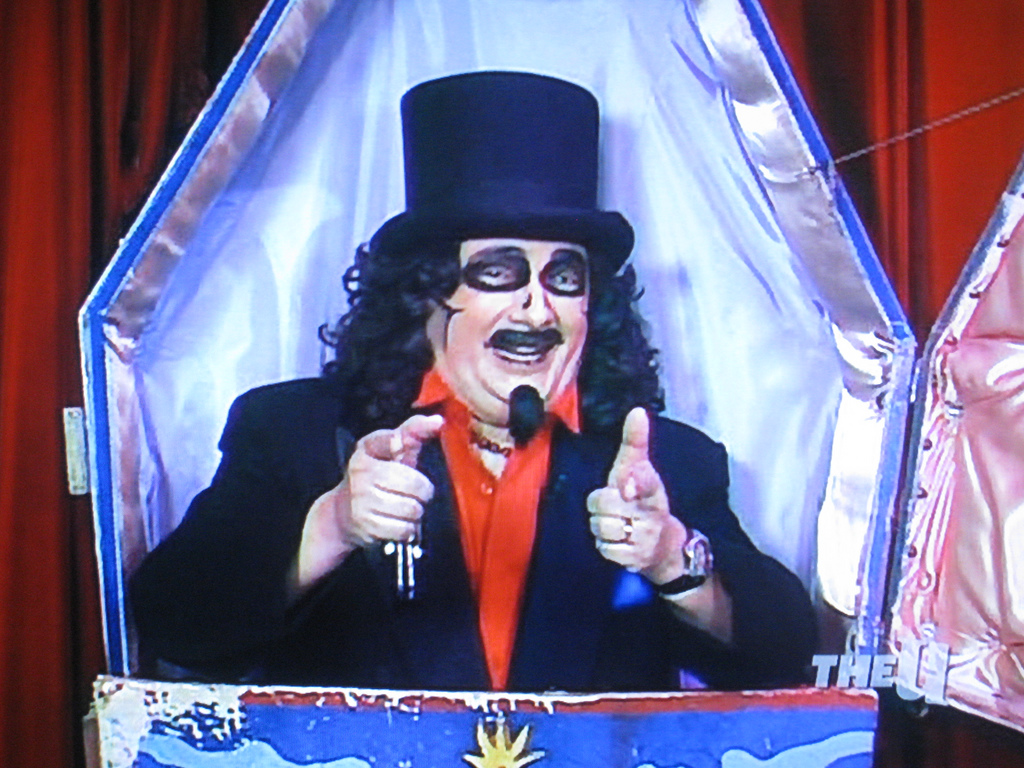
Like a lot of people in Central Indiana, I grew up watching “Sammy Terry” late Friday nights on Channel 4. Sammy, whose son has lately taken up the mantle of corny horror movie host — at least on special occasions — was a fixture of most of our childhoods.

My misspent young adulthood, however, was spent in the company of Svengoolie.

For those who aren’t familiar with him, Svengoolie was a longtime horror movie host on Chicago TV station WFLD. The Sven that my friends and I were familiar with was played, for much of the 1980s, by Rich Koz, the second actor to play the part of the hippie ghoul and horror movie host.

Koz, in Svengoolie drag, would present classic (and not-so-classic) horror movies during his Saturday night show. My friends and I tuned in every week, snacks and beverages at hand, to enjoy the movies and Koz’s irreverent approach to them.

Our love for Svengoolie was so great that, when we heard that WFLD was being dropped from the local cable channel lineup in the mid-1980s, we sent him a telegram — kids, that’s the pre-Internet version of email — that he read on the final show that we could see.

My local cable lineup recently added MeTV, a nostalgia channel, and Svengoolie is right there, on Saturday nights, hosting — and making fun of — classic movies.

Last Saturday he aired “House of Frankenstein,” the 1944 Universal gem featuring not only Frankenstein and Dracula and the Wolf Man but a hunchback assistant.

Koz is older and has put on a few pounds — unlike the rest of us, who have remained young and svelte — but the show is snarky, campy good fun just like it was … holy crap, nearly 30 years ago.

Thirty years? That would make Koz and Svengoolie a classic showing classics. Hopefully for the viewing pleasure of classic old geeks.


More Johnny Depp in ‘Dark Shadows’

I’m not sure what to expect from Tim Burton’s big-screen version of the classic 1960s Dan Curtis daytime drama “Dark Shadows.” Burton’s recent movies have too often been weird for weird’s sake, I think.

But I loved the supernatural soap opera when I was growing up and will probably see Burton’s version, starring Johnny Depp as Barnabas Collins, when it comes out May 11.

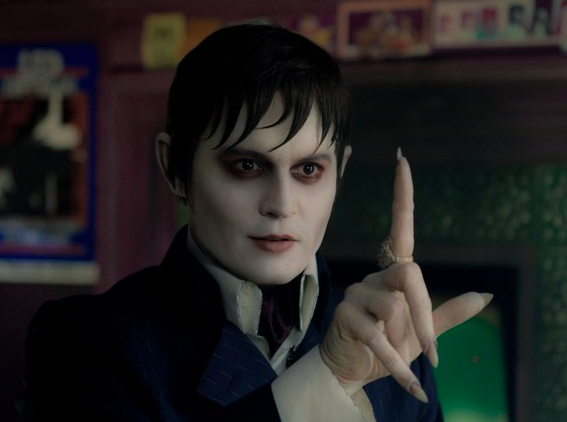
I’m also fascinated by how Depp looks as Barnabas. We’ve gotten a few glimpses so far and Depp doesn’t even look like himself in some.

The clearest look we’ve gotten yet is the one above.

Crazy. We’ll see in a few months.

‘Justified’ returns tomorrow night

Oh yeah. The coolest show on TV is back.

“Justified,” the crime drama based on Elmore Leonard’s writings about small-time Kentucky criminals and the U.S. marshal opposing them, returns Tuesday night on FX.

Timothy Olyphant is back as Raylan Givens, the slow-simmering marshal, as is Walton Goggins as Boyd Crowder, Raylan’s longtime friend, sometimes nemesis, sometimes ally.

FX has given us an idea about what to expect this season:

“In Season 2, Deputy US Marshal Raylan Givens (Olyphant) squared off against criminal matriarch Mags Bennett (the part for which Margo Martindale won an Emmy Award). The end of Season 2 brought about the end of the Bennett family’s hold over Harlan County and the return of Raylan’s old nemesis/friend Boyd Crowder to the criminal life. This season, Boyd and his crew will find they aren’t the only ones making a play to rule the Harlan underworld. Now Raylan finds himself facing off against dirty politicians, hidden fortunes, a mysterious man named ‘Limehouse’ and an enterprising and lethal criminal from the Motor City.”

The Motor City? Will Raylan run afoul of “The Detroit Connection?” (Sorry, inside joke.)

Even though this is the third season, you won’t be missing anything if you’re just jumping into the show.

Check it out, Tuesday night on FX.

‘The Simpsons’ approaching 500th episode

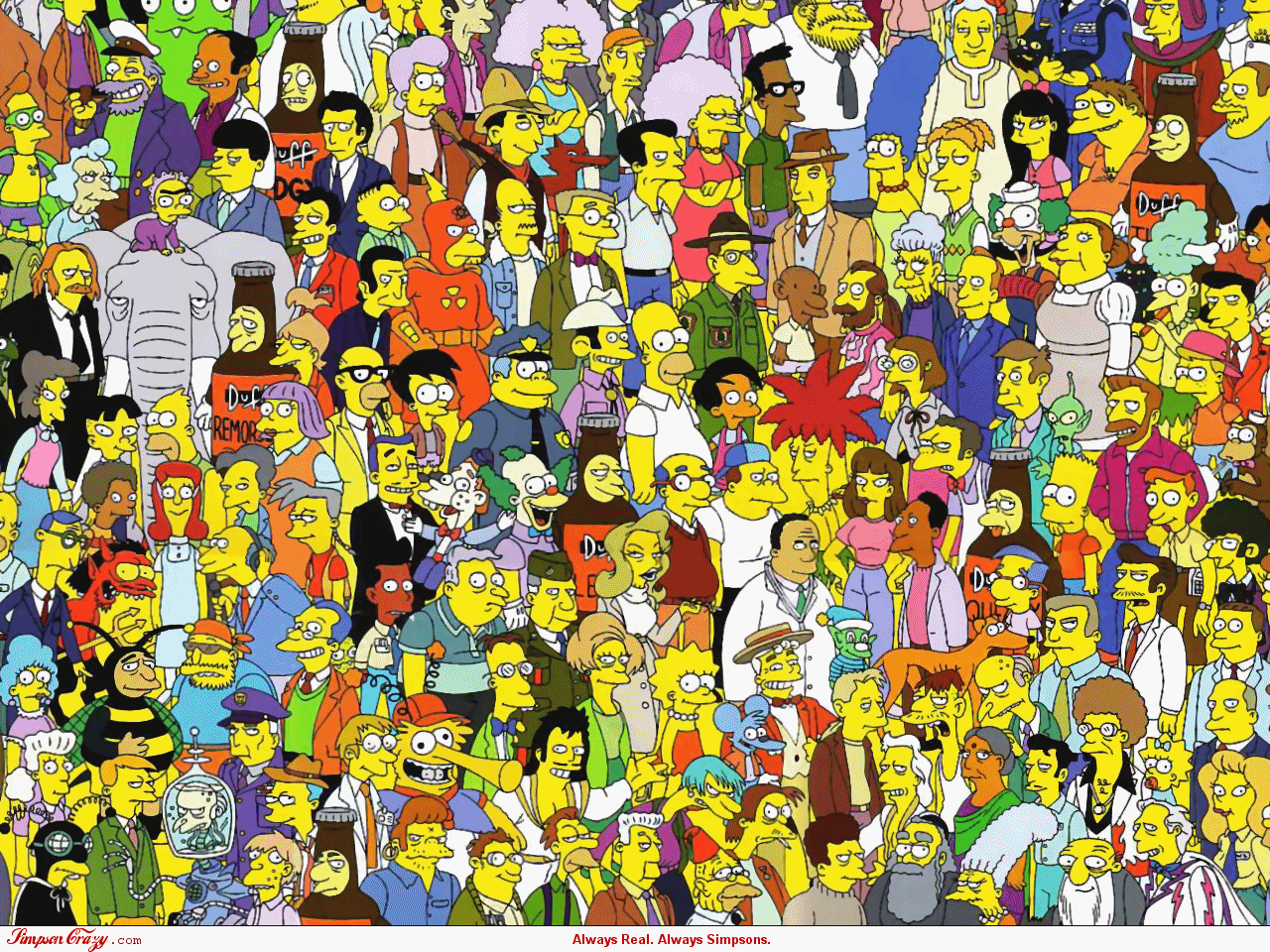
We’ve been watching a lot of episodes of “The Simpsons” in my household lately. Not new episodes, but classics from old DVD collections.

My son has discovered the show and is currently obsessively watching the fifth season which, I’m startled to realize, aired several years before he was born.

I haven’t watched “The Simpsons” in years. As I’ve noted previously in this blog, I think the show ran out of steam somewhere around the 10th season. The few episodes I’ve seen in the past decade seemed cheap and obvious.

The fifth season, currently in “play all” mode at my house, was a whole different story.

Consider this: Bill Clinton was president and “Buffy the Vampire Slayer” was still just an awful movie and had not yet become a classic television series.

But “The Simpsons” was at a creative peak.

The episodes of that fifth season included:

“Homer’s Barbershop Quartet,” in which Homer, Apu and Skinner form a chart-topping pop music group and even beat Dexys Midnight Runners for the Grammy award. Don’t worry, Homer assures, we haven’t hear the last of them.

“Cape Feare,” in which Sideshow Bob gets out of jail and vows revenge on Bart. It all ends up at Terror Lake, where Bob finally catches up with his tormentor … after stepping on dozens of rakes.

“Homer Goes to College,” in which Homer thinks the mean old dean from “Animal House” is typical of college administrators.

“Bart’s Inner Child,” in which a self-help guru advises the town of Springfield to “be like the boy,” “Boy Scoutz N the Hood,” in which Homer ruins a perfectly good father-and-son rafting trip and Ernest Borgnine proves himself more than a match for a bear, “Bart Gets an Elephant,” which introduces Stampy; and so many more.

“The Simpsons” is quickly becoming one of the longest-lived shows on TV, despite threats that come up every few years when the wonderful voice cast asks for a raise and Fox says the show isn’t making enough money to be able to afford it.

The show’s 500th episode is set to air Feb. 19 and I might tune in. I want to enjoy the show like I did when acid-washed jeans were all the rage. I’m afraid both are cultural icons whose time has passed, though.

About those ‘Starving Artists’

So when I’m sick I watch more TV than I normally do, and since I’ve been watching a couple of nostalgia TV channels recently added to our cable lineup, I’ve seen some cheap commercials, including ones for those house slippers you heat in your microwave.

(Slippers in the microwave? The hell?)

Anyway, the last couple of days, every commercial break has been broken up by ads for the latest “Starving Artists” sale.

I remember commercials for these sales when I was a kid. Inevitably, the sales were held over a weekend at a fairgrounds or motel and featured the work of “professional artists” but were selling for as low as a few dollars.

Most memorably, the sales offered “sofa-sized” paintings. A few years ago they were less, of course, but now these behemoths of art are going for $49.99.

I’ve never been to one of these sales. I don’t have a lot of art on my walls, but what is there is something meaningful to me. Hand-me-down favorites from relatives, or pictures or prints bought at a significant time. Couple of movie things too.

So I didn’t feel the need to go snap up some landscapes that looked, frankly, as if they were painted by unprofessional artists. Or maybe the artists are professionals but are so weakened by hunger that their technique is impaired.

But being the curious sort, I decided to look on the Internets for info about the sales.

I didn’t find much. A couple of sites featured columns that theorized the paintings are mass produced in China. Some say they’re done on an assembly line in sweatshop-style conditions, with artists standing for 14 hours at a time, painting the same tree and then passing the painting along to the next artist, who paints a hillside or ocean.

Perhaps entirely appropriately, the online pieces about the starving artists sales appear to crib from each other.

It’s not surprising that online “writers” steal from each other and post verbatim or nearly word-for-word versions of the same story.

But it’s pretty comical when you’re reading stories about mass-produced art and most of them end with:

“Now that you know the inside scoop on the starving artists sales, don’t you think that your $50 would be better spent on a good pencil sketch by a student artist at your local college or university? I certainly do.”

It’s good to know that the starving artists have comrades online.

Whatever happened to pudding pop culture?

Here’s another of those books that I wish I had written, not because it’s a great work of literature but because somebody had to do it and really, it looks like it was ridiculously easy.

“Whatever Happened to Pudding Pops?” written by Gael Fashingbauer Cooper and Brian Bellmont, might have been a years-long labor of love by the authors. Truthfully, it looks and reads like it took about a week to put together.

Not that there’s anything wrong with that.

Seriously, the authors’ bite-sized bits of pop culture history — the book is subtitled “The lost toys, tastes and trends of the 70s and 80s” — is the print equivalent of VH1’s addictive “I Love the 80s” series and its many spinoffs.

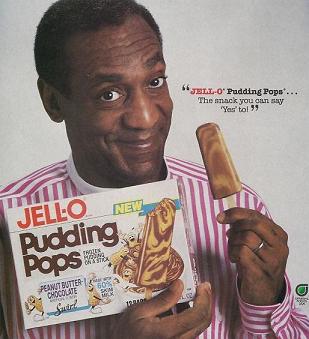
They’ve taken a few dozen topics — lawn darts, Judy Blume, John Hughes movies, and the title snack, pitched by favorite TV dad Bill Cosby — and turned out a couple hundred words on each. Pudding Pops were revived in 2004 but just weren’t the same, the authors say. I’ll have to take their word for it.

There’s not a lot of there there, if you know what I mean. And I can’t imagine actually buying this book — about the size of an old issue of TV Guide; how’s that for nostalgia? — for the $12.95 price.

But in the grand tradition of books you read in the bathroom, it’s fun enough.

‘Dragnet’ as L.A. travelogue

It’s been 20 years since the last time I was in Los Angeles. I was a pretty regular visitor for a while, in the late 1980s and early 1990s, when my friend Brian had recently moved from Indiana to work in the movie business.

But by the time I visited L.A. the first time, I felt like I already knew it. Thanks to Jack Webb.

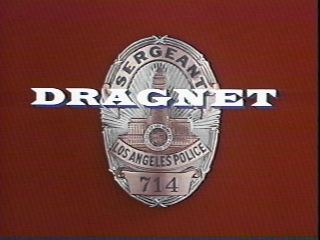
Webb, the decidedly non-flashy writer, director and actor best known for the police procedural radio and TV series “Dragnet,” made me feel like I knew the sprawling Southland.

“This is the city, Los Angeles, California,” Webb intoned at the opening of each episode of the late 1960s “Dragnet” revival. From watching “Dragnet” I knew not only that L.A. had three million residents — a number that boggled the mind of a kid living on a farm between Muncie and Cowan —  but I also picked up the names and some of the geography of the show.

During a typical episode, Webb would salt his narration and dialogue with the names of southern California communities like Reseda and streets like Wilshire and Olympic boulevards.

Webb, who strived for no-frills, matter-of-fact acting as well as straightforward directing, tantalized me with his look at Los Angeles. “Dragnet” — along with “Adam-12” and “Emergency” — portrayed a city where anything could happen, thanks to those three million people.

Webb gets some ribbing now for his at-times over-the-top endorsement of authority over non-comformity, but he filled out the cast of his shows with an offbeat repertory company of actors and actresses playing the equally offbeat denizens of the city.

With its sunny front yards, wide streets and hills on the horizon, Webb’s Los Angeles created a vision of the city in my mind that was comforting when I visited years later. From Olvera Street — the city’s oldest neighborhood — to the Farmer’s Market to the hills where the Hollywood sign looms, L.A. seemed like a second home to me.

Can new ‘Dallas’ recapture the magic?

I’m not saying my friends and ever did this, but you could turn the old “Dallas” series into a pretty good drinking game.

During much of the original run of the series, which appeared on CBS on Friday nights from 1978 to 1991, my friends and I made watching the primetime soap a part of our “getting into the weekend” ritual. Before we would go out to a movie — often a midnight show — or otherwise fritter away our lives, we would gather at a friend’s house and watch the latest exploits of J.R., Bobby and the other Ewings.

Again, I’m not saying we did this, but you could get pretty hammered if you took a drink of some beverage every time one of the Ewings did. It was a given that the minute J.R. or Jock or Bobby or Sue Ellen — especially Sue Ellen — walked into the living room at Southfork Ranch, they would head for the bar tucked up against one wall. They would pour themselves a drink and settle in for some talk about the oil “bidness” or the latest family intrigue.

The show was a ratings sensation, of course, and its impact was global. I visited a friend in Vancouver, Canada in 1984 and talked to people who — kind of jokingly, kind of seriously – thought “Dallas” was an accurate depiction of the typical American family.

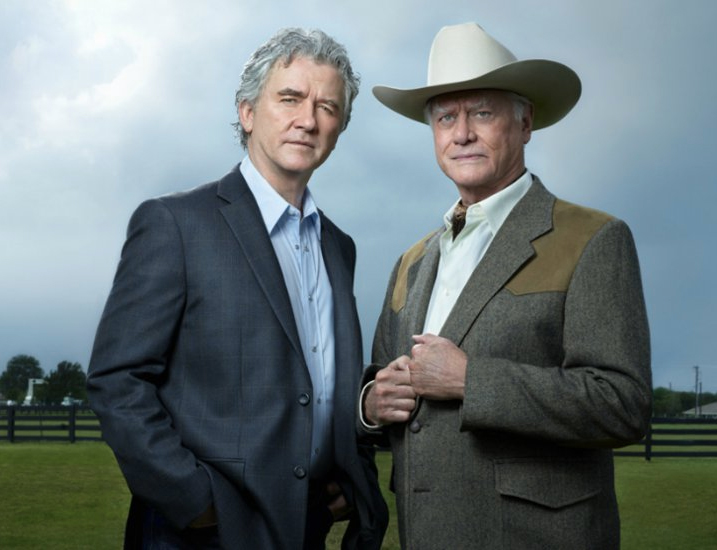
I’m looking forward to seeing TNT’s “Dallas” revival series next summer. Many of the actors will be back, not just Patrick Duffy and Larry Hagman, but favorites like Linda Gray as Sue Ellen and Steve Kanaly as Ray Krebbs, family patriarch Jock Ewing’s illegitimate son.

Of course, much of the focus will be on actors playing John Ross and Christopher, the children of J.R. and Bobby. I wish we could see some obscure favorites like Val and Gary Ewing and Punk Anderson. And we need to see a trip to the Cattlemen’s Club for lunch at least a couple of times.

I’ll be watching “Dallas” next summer. I won’t be playing a drinking game, even though I’m hoping the sudsy action sends the Ewings to the bar frequently. And I’m hoping the show is enough fun to entertain a new generation of fans.