Category Archives: classic TV

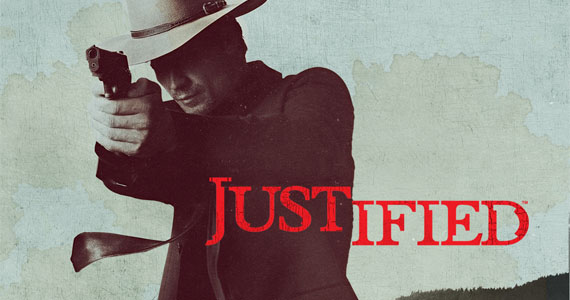
Counting the days to ‘Justified’

Jan. 17 can’t come quickly enough.

I’m not wishing for the depths of winter. (In fact I’m a little SAD about it.)

But since Jan. 17 brings the third season of “Justified,” I’ll put up with the wintertime blahs.

If you haven’t watched the first couple of seasons of FX’s “Justified,” you should. Go ahead. I’ll wait.

Back? Okay.

The series, about a tough U.S. marshal who gets disciplined for killing a bad guy in Miami by being sent back to his home territory of Kentucky, is typical in many ways of the more adult cable TV series airing on FX and AMC like “Mad Men,” “Breaking Bad,” “Sons of Anarchy” and “The Walking Dead.” “Justified” has “grown up” language and violence, but like those other shows, the draw is the characters and plots.

Based on stories by crime writer Elmore Leonard, “Justified” centers on Raylan Givens (Timothy Olyphant), the cop who is less than thrilled to be back in Kentucky. And who can blame him? Givens is back in the mix with his father, an aging crook, his ex-wife, the hapless but hot Winona (Natalie Zea) and, best of all, longtime friend and antagonist Boyd Crowder (the excellent Walton Goggins, from “The Shield”).

Raylan and Boyd have a long history. They grew up together and worked in the coal mines together but parted ways after that. By the time of the first episode, when the quietly disgruntled Raylan comes back to the town of Harlan, Boyd is the head of a white supremacist group and fond of blowing stuff up: Churches, cars, banks, you know.

But the relationship between Raylan and Boyd — the best thing about the show — is complicated. The two have a real bond that Raylan can’t ignore even as he works to link Boyd to crimes plaguing Harlan.

As the series has progressed, Raylan found Boyd at his side more often than he found him in his face. The characters are great antagonists but as complex as real-life friends would be.

The show has a real feel for danger and violence. Not just from the meth-heads and petty criminals that populate the backwoods but from Raylan and Boyd. Raylan is wry and smooth but there’s a reason Winona describes him in the first episode as the angriest man she ever met.

The first season revolved around the cat-and-mouse relationship between Raylan and Boyd, while season two introduced a great character, Mags Bennet, a small-town Ma Barker with a brood of scary sons.

I don’t know what to expect when the new season begins. Promotional clips have shown Raylan and Boyd working together and at each other’s throats. With this duo — one of the best on TV — I wouldn’t have it any other way.

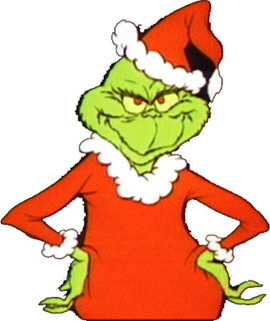
You’re a fine special, Mr. Grinch

I’m ready for your close-up, Mr. Grinch.

A few weeks ago in this blog I noted an early — very early — showing of “How the Grinch Stole Christmas,” the beloved 1966 animated special adapting the holiday tale by Dr. Seuss.

While I’m not a stickler for “no Christmas before Thanksgiving,” it seemed a little early.

Well, what a difference a few weeks makes.

The classic, animated by Chuck Jones, has at least a couple of airings before Christmas. TV Guide says the special will air Dec. 7 on Cartoon Network, followed by a repeat showing on Dec. 10, also on CN.

I think three weeks before Christmas is about right for watching the Grinch.

Now there is something you should keep in mind. It’s possible both these airings are in half-hour time slots. Since the special is about 26 minutes long, beware the possibility that the show might be edited or even time-compressed, which allows an entire show to air in a shorter period of time by speeding it up. Unfortunately, this might mean that the show would sound more like “How Alvin and the Chipmunks Stole Christmas.” Seriously, I can’t watch episodes of “Friends” on cable TV because they’ve sped up the show so much.

Of course, the reason modern-day airings of classic TV shows are sped up (or edited) is because TV shows are routinely stuffed with more commercials now than in decades past.

Sometimes networks or cable channels air these once-half-hour shows uncut in hour-long slots and add some extras.

And of course, there’s an easy way to watch the Grinch or Charlie Brown learn the true meaning of Christmas without benefits of modern-day tampering: Watch them on DVD.

But there’s something about the communal experience of watching Christmas specials when they’re airing. Facebook was dotted with people commenting on an airing of “Rudolph the Red Nosed Reindeer” the other night.

Oh, and in case I forget: If you want to watch a modern-day Christmas classic, catch “Olive the Other Reindeer,” airing Dec. 10 on Cartoon Network. It’s a great show, based on a sweet book. I’ll try to come back to the subject of “Olive” sometime before that airing.

‘The Muppets’ make a heart-felt return

I was a bit outside the demographic for “The Muppet Show” when it aired in the late 1970s. I was in high school, so I was too old to be one of the show’s fervent kid viewers.

I was however, a show business nut. I was the kid, you might remember, who read Sammy Davis Jr.’s autobiography from my school library.

I could appreciate the show on several levels: Its silly jokes, its vaudeville style, its love of … show all appealed to me.

The guest stars were kind of dumbfounding. Mark Hamill from “Star Wars” one week, Gene Kelly the next.

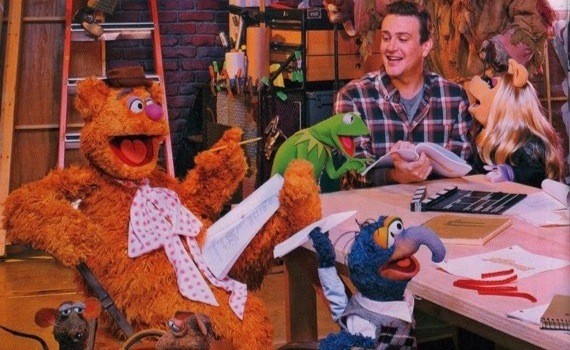
So I had nothing but high hopes and good thoughts for “The Muppets,” the new movie starring Kermit the frog, Miss Piggy, Amy Adams and Jason Segel, the wonderfully awkward actor from such cult exercises as “Freaks and Geeks” and “Saving Sarah Marshall.”

Segel, apparently, was a Muppets fan growing up and despite his reputation for making R-rated comedies was given the opportunity by Disney — the studio that has owned the Muppets for much of the time since creator Jim Henson’s untimely death but has never seemed to know what to do with them — to guide a potential revival.

Segel plays a sweet, kind of clueless guy — his specialty — who, along with girlfriend Adams, helps his brother Walter — a Muppet in felt construction but a human in every other respect — meet the Muppets. Once they meet Kermit and learn that an evil oil magnate — played with relish and mustard by Chris Cooper — plans to demolish the old Muppet studio, they decided to put on a show to save the day. (And if that sounds like something out of an old Judy Garland/Mickey Rooney movie, rest assured that Rooney even makes an appearance.)

Ultimately, the movie is about the strengths of friendship and loyalty, but before the moral is lightly delivered there are plenty of celebrity cameos — Jack Black chief among them — and jokes, ranging from typical Fozzy Bear groaners to clever, meta references. (One of those comes early on, when Kermit appears ready to stop the plot in its tracks, prompting Adams to say, “This is going to be a really short movie.”)

Random thoughts upon watching the movie:

• Adams, next set to star as Lois Lane in the upcoming Superman movie, is adorable but downright womanly compared to the slight young actress who played the part in “Superman Returns.” That’s not a bad thing, but an interesting choice.

• I’m surprised the movie approached the idea of whether the Muppets are too old-fashioned to appeal to young, jaded audiences in such a head-on manner.

• Those bald, round-headed Muppet infants still creep me out.

“The Muppets” seemed like an odd choice for Segel to make, but Disney made a great decision in putting the franchise’s revival effort in his hands and those of director James Bobin. I hope the franchise goes on forever.


‘Community’ deserves to live

If you’re not watching “Community” … why not?

If you pay attention to the comings and goings of TV shows, you might have heard that NBC has put its Thursday night comedy, “Community,” on hold for the foreseeable future. Maybe the show will come back after the first of the year. Maybe not until spring. Who knows?

Chances are this news doesn’t mean much to you. By virtue of the fact that “Community” is in danger of being canceled, it’s pretty obvious that the ratings are the suck.

So here’s a plea: Check the show out. It airs tonight — in just a few minutes, actually — but is available on demand and online.

Maybe an uptick in ratings will help convince NBC to put the show back on the air.

Why is “Community” worth saving?

Well, it’s funny, for one thing. But more than that, it’s offbeat. It is not your typical, laugh-track driven comedy.

Case in point: The recent third season episode “Remedial Chaos Theory,” in which the cast — misfit students at a community college — roll the dice to see who will answer the door when pizza is delivered and find themselves exploring several alternate realities. Any episode that includes a “fake goatee” nod to “Star Trek” without ever quite ‘fessing up to it gets my vote for funny and innovative.

Or the first-season episode about a campus-wide paintball game in which the participants quickly degenerated into cutthroat competitors. The episode mined every possible action movie cliche for big laughs.

Or the episode where the group manned a Kentucky Fried Chicken-themed spaceflight simulator. Or the episode that’s animated like an old Christmas special. Or the fake clip show!

Don’t be put off by what some might consider the oddball cast and plots. It’s a comedy about disparate types thrown together by circumstance, like “Friends” or “Seinfeld,” and it’s funny. And the cast is wonderful: Joel McHale, Chevy Chase, Danny Pudi and the adorable Alison Brie to name a few.

Here’s hoping “Community” gets a second chance. Like the “alternative realities” episode, there’s got to be a few possibilities left in the show’s future.


‘The Walking Dead’ flashes back

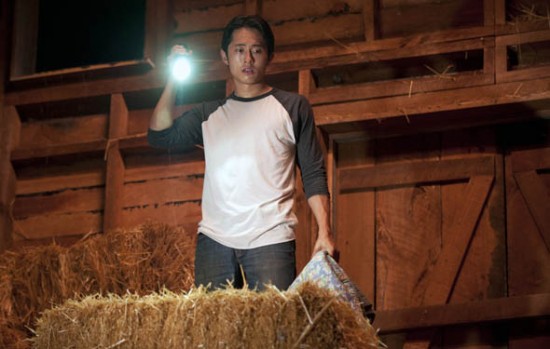
I don’t think any episode of AMC’s post-zombie-apocalypse series “The Walking Dead” has reminded me of Stephen King’s classic “The Stand” quite as much as tonight’s installment, “Chupacabra.”

Sure, it’s impossible for any end-of-the-world-and-after story to do anything but remind us of King’s epic. But tonight’s adaptation of Robert Kirkman’s comic book series had a couple of moments that evoked King’s masterpiece.

Spoilers ahead.

The episodes opens with a flashback to the early days of the zombie apocalypse as Shane, Lori and other survivors are stuck on the highway, watching in horror as the military drops napalm on a city — Atlanta, I’m guessing — to knock down an infestation of “walkers,” the show’s term for reanimated dead. The moment reminded me not only of “The Stand” but also “World War Z” and “The Strain,” two modern classics of the apocalypse.

But the moments most reminiscent of “The Stand” came when Daryl, the show’s new unlikely hero, is scouring the woods for a missing girl. He takes a tumble, ends up injured and gets a hallucinatory pep talk from an unlikely source: His brother Merle (Michael Rooker), the murderous racist from the show’s first season.

As Merle — whose return was teased in previews for this episode — taunts and insults Daryl into getting up and out of his predicament, a couple of echoes of “The Stand” came to mind: Nick Andros appearing to simple-minded Tom, telling him how to save injured Stu Redman, and also the internal battle going on inside Harold Lauder. In “The Stand,” Harold could turn bad or good and he struggles with his soul and his conscience before making a fateful and explosive decision. We haven’t yet seen what Daryl decides.

The episode also showcased the growing tension between Rick and Shane — who don’t yet know that Lori is pregnant and one of them is the father — and a freaky finale in which Glenn discovers the secret behind the peaceful farm in which they’ve taken shelter.

There are a lot of complaints online about the pace of “The Walking Dead,” but I’m enjoying it. Moments like those tonight, with Rick and Shane recalling their high school years and then debating the finer points of every-man-for-himself, and Merle’s brief appearance, are keeping me happy.

How early the “Grinch” stole Christmas

I don’t want to sound too Grinch-like about this, but all the Halloween candy isn’t eaten yet and “How the Grinch Stole Christmas” is already on TV.

The 1966 animated adaptation of Dr. Seuss’ story is justifiably a classic. The great Chuck Jones animation. The wonderful narration by Boris Karloff. The singing of Thurl Ravenscroft. Max!

But, really TBS? Showing the Grinch on Nov. 5?

I don’t mind the “Christmas creep” — the early onset of Christmas music, decorations and more — as much as some people. I’m not one of those purists who says there’s no place for Christmas shopping or Santa Claus before Thanksgiving.

But Nov. 5?

If you’re perfectly okay with this but missed tonight’s airing, TBS is reportedly showing the special again on Nov. 13.

Maybe I’ll be ready for it by then.


Halloween horror: ‘Walking Dead’ rocks, ‘Simpsons’ sucks

Here we are, on the eve of Halloween, and various movie channels are having marathons, ranging from the classics on TCM to later, lesser “Halloween” movies on AMC.

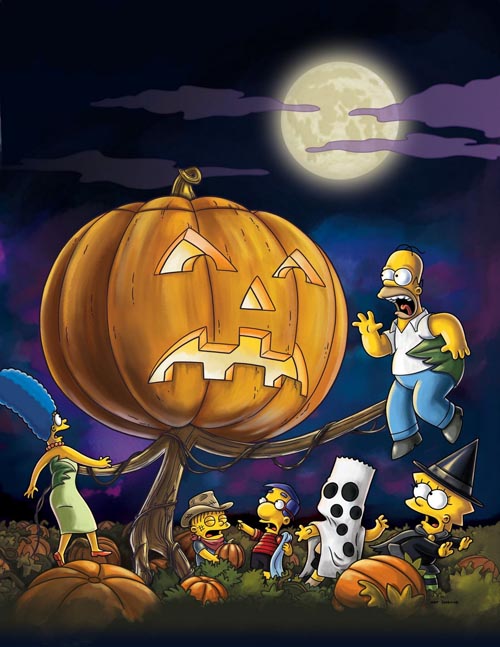
Into the mix comes the latest episode of “The Walking Dead” on AMC and the latest installment of “Treehouse of Horror” on “The Simpsons” on Fox.

First, let’s make short work of “The Simpsons.”

After being a zealous fan of the show for its first 10 seasons or so — we just re-watched “Mr. Plow” on DVD the other week — I fell out of love with “The Simpsons.” A dozen years ago, the show seemed to lose most of its creative edge. Maybe you really can’t do 500 episodes of a TV series and expect it to continue to be good. Duh.

Tonight’s “Treehouse of Horror,” the show’s annual Halloween special, had a couple of funny moments but overall was pretty lame. Judging by tonight’s episode, the show has traded pointed, harsh humor and wonderful characters for cheap and crude laughs. When a joke revolves around the similarity of the words tentacles and testicles, you know the show is spinning its wheels.

On the other hand, “The Walking Dead” continues to feature some of the most gripping — as in gripping the arms of my chair — suspense on TV.

As the survivors of a zombie apocalypse take refuge on a remote farm, where their injured are treated by the kindly resident veterinarian, tensions external and internal build. Watching Shane, the conflicted deputy, make a stomach-rolling choice tonight made me wonder where the producers are going with the character.

The show is, of course, all about characters and choices. Tonight’s episode saw some discussion of a point that I’ve been expecting for a while now: What if your reaction to the end of the world was not to fight to survive, but to opt out?

If characters are considering putting themselves out of their misery on “The Walking Dead,” might it be too much to hope that Fox would consider euthanasia for “The Simpsons?”

Again, duh. After wrangling over salaries, the talented vocal actors on the show recently signed for two more seasons. There’s simply too much money to be made for Fox to consider leaving any on the table.

‘Buffy the Vampire Slayer: Graduation Day’

At the close of “Graduation Day,” the final episode of the third season of “Buffy the Vampire Slayer,” the character Oz, the laconic werewolf, observes that their band of monster slayers had survived. No, not another epic battle with a demon. They had survived high school.

The 1999 episode — which aired months after it was originally supposed to because some panicked TV executives thought the plot was uncomfortably similar to the just-happened Columbine school massacre — marked a high-water point for the series.

In our household, we’ve made it a habit of re-watching episodes of “Buffy,” which aired for seven seasons and pre-dated the recent “Twilight”-inspired vampire craze. (And topped it in every way except for notoriety. But I digress.) Before the series was available on DVD, we watched old VHS tapes from original airings.

So, in a Halloween frame of mind, we were thinking tonight about what to watch and decided on “Graduation Day.”

If you’ve never seen “Buffy” — maybe you were put off by the deliberately ironic title, or the earlier but vastly inferior movie — you really should. As created by Joss Whedon, the series is about a typical California teenager, worried about school, friends and dating.

Buffy Summers, quite reluctantly, finds herself proclaimed as “the chosen one,” the one-girl-in-a-generation selected to battle vampires and other demons. In a tradition dating back thousands of years, as the show eventually explained, the slayer — endowed with near-superhuman power and a knack for killing vampires — is all that stands between us and the creatures lurking out there in the darkness.

Surrounding herself with a core group of friends — Xander, whose love for Buffy was unrequited, Willow, the nerd-girl pal who grew into one of the most complex characters on TV, Cordelia, the vain rich girl, and Giles, the school librarian who turned out to be a member of the Watchers Council, the group that oversees the slayers.

By the third season, Buffy (played with appealing vulnerability by Sarah Michelle Gellar) had saved the world more than a few times as she balanced the demands of school, her increasingly concerned mom and her relationship with Angel, the vampire with a soul who fought on the side of right. As played by David Boreanaz, Angel went on to star in his own spin-off series.

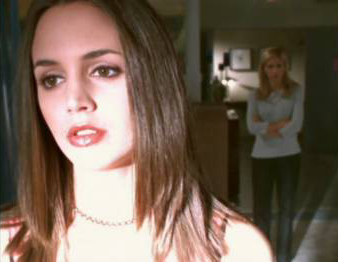
With graduation in the wings, Buffy’s life was complicated by the appearance of Faith (Eliza Dushku), a slayer with few of the moral complexities and doubts that plagued Buffy. By the end of the season, Faith had changed from ally to enemy and was helping the plans of the town’s mayor (the priceless Harry Groener) in his plan to transform into a huge, snake-like demon.

And eat all the newly-minted graduates.

The episode was funny and poignant and, as the series always did, defied expectations. Faith and the mayor had the kind of complex, caring relationship that the villains of most series would not. Angel took advantage of Buffy — even if it was against his will — alienating her friends.

Maybe “Graduation Day” wasn’t the scariest choice for pre-Halloween viewing. Like most “Buffy” episodes, the show was less about vampires and demons and more about the everyday horrors we all face: alienation, loss and heartache.


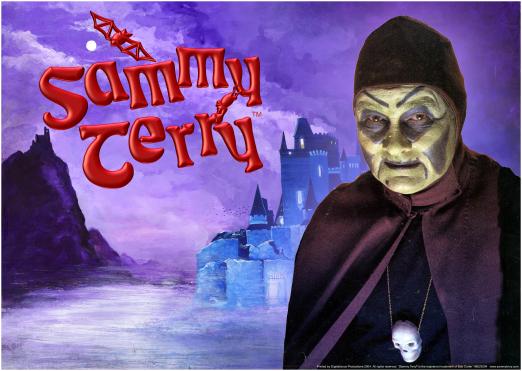
It’s Sammy Terry time

Two weeks from tonight is Halloween. It’s a night for tricks and treats, as they said on the old “Peanuts” special, and it’s Sammy Terry’s night.

With just two weeks to go, I was afraid time would get away from me and I wouldn’t write about the Indianapolis TV horror movie host before it was too late. So here are my Sammy memories, a little early.

I’ve talked to Sammy in phone interviews a few times and met him once. It was the mid-1980s and I did a story about Sammy for the newspaper. I spoke with Bob Carter, Sammy’s mild-mannered, music-store-owning alter ego, over the phone in advance of an appearance at Muncie Mall and then met him when he was putting on his makeup at the mall before going on stage.

An earlier interview with Sammy remains one of my most nightmarish newspaper experiences. I wasn’t working full-time at the paper yet so I went to the office to make the long-distance call — remember those? — and took along a tape recorder and suction-cup-type recording device to attach to the phone.

I had used it before but this time something — the way I connected it to the phone, the florescent lights — fouled up the recording. I didn’t know until after I ended the conversation, of course, and was panicked when I couldn’t hear anything but a low hum on the tape when I tried to listen to it.

I wondered for a moment about calling Sammy back, but I decided not to. Instead, I sat down and furiously scribbled notes of everything I could remember from the interview. The resulting article was pretty lackluster and had virtually no quotes.

The later interview, before his Muncie appearance, went much more smoothly. Nothing notable, really, but Carter — who spoke in normal tones but whose voice was instantly recognizable as the TV ghoul who had presented classic monster movies and scared a couple of generations of  Central Indiana kids to death — was friendly and modest.

By the 1980s, Carter had a lot of great stories. He claimed to have invented the Kentucky Fried Chicken slogan “finger lickin’ good” during a live commercial, and who’s to say he did not? He talked about how the company that donated the casket from which he rose at the start of each show IN NO WAY wanted to be identified or credited because of potential complaints from the families of customers.

Carter was a pro long before this point, having done the show on WTTV Channel 4 since the early 1960s. He was gracious to a young journalist who was also a fan.

When my friends Jim and Derek and I went to meet him at Muncie Mall, he let us come into a back room while he applied his makeup and even posed for a picture right before going on stage at center court, where he delighted a lot of parents and kids — and probably scared a few too.

These days, Carter’s son is appearing as Sammy Terry. The younger version was in Muncie back in September and is probably making a few bucks — and making a lot of people smile.

More power to him. And more power to the original.

Pleasant nightmares, Sammy.

Richard Matheson: More than just ‘Real Steel’

The Hugh Jackman-starring robot boxing movie “Real Steel” is at the top of the box-office charts this weekend, just where it deserves to be. The movie features the “X-Men” star as a washed-up boxer who takes custody not only of his 11-year-old son but also a sparring partner robot literally pulled out of a junkyard.

In this future U.S., humans don’t box anymore but robots do. Their fight-to-the-death bouts are the logical extension, in some ways, of the current bloodsports enjoyed by many fans. The dad and son’s faith in each other and their  battlin’ robot pays off, of course.

The most enjoyable element of all this, to me, is that the movie is based on “Steel,” a short story from 1956 written by Richard Matheson. The story was previously adapted — with a lot less high-tech wizardry — on the classic TV series “The Twilight Zone.”

Matheson, born in 1926, is enjoying some renewed interest as a result of the movie. There’s this good interview at aintitcool and just the mention of the octogenarian writer’s body of work is enough to send geeks tripping through decades of favorite movies and TV shows.

Putting aside that Matheson wrote some wonderfully creepy short stories, like “Born of Man and Woman,” and terrific novels, like “I Am Legend,” if you just consider the number of good movies that had been made from his stories — “Omega Man” and “I Am Legend,” “Stir of Echoes” and “The Incredible Shrinking Man” to name a few — you’ve got a source of big-screen inspiration that might be second only to Philip K. Dick (“Bladerunner”).

But the TV shows and TV movies Matheson wrote. Oh my.

“Nightmare at 20,000 Feet” for “The Twilight Zone.” “Trilogy of Terror,” famous for its segment about a tribal doll come to murderous life. And “The Night Stalker,” one of the greatest combination horror movies/cop dramas/newspaper movies ever.

Yeah. Oh my.

I enjoyed “Real Steel” today, but I’ve been thankful for Richard Matheson’s talents since I was a kid.