Category Archives: classic TV

Mission ‘Veronica Mars’

veronica_mars third season cast

As much as I enjoyed “Serenity,” the big-screen follow-up to Joss Whedon’s cult classic TV series “Firefly,” it didn’t set the world on fire at the movie box office. So it’ll be interesting to see how “Veronica Mars” does when the former UPN and CW show comes to the big-screen on March 14 courtesy of a Kickstarter campaign.

I’ll be there, no doubt, and I know a few other fans of the series – which aired for three years ending in 2007 – but was a decade ahead of its time – will be, too.

But it’s hard to imagine the movie will be a box-office success. And you know what? That’s okay.

“Veronica Mars” was nothing more than a cult series during its three seasons on TV. And while I wish it had been a hit and was still on the air, those of us who watched it then loved it.

Like “Buffy the Vampire Slayer” and a few other cult classics, “Veronica Mars” probably suffered from airing just a little before the prevalence of social media, especially when paired with TV watching. It’s pretty common now to see people live-tweeting “The Walking Dead” or “Game of Thrones” or, before its finale, “Breaking Bad.” “Veronica Mars” would have greatly benefited from that kind of love, which can turn a small cult show into a big cult show.

If you haven’t watched it, I urge you to seek it out, online or streaming or on demand or on disc. Because “Veronica Mars” was almost certainly the smartest, darkest, hippest, snarkiest and most downright appealing show to mix noir crime drama with a coming-of-age story.

In the Rob Thomas-created series, Veronica (played by Kristen Bell) and her father, County Sheriff Keith Mars (Enrico Colantoni) live in Neptune, California. Veronica is part of the high school in crowd when her world is torn apart: Her best friend Lily Kane (Amanda Seyfried) is murdered. After Keith pursues Lily’s father, a software millionaire, for the killing and the case falls through – a more “perfect” suspect is arrested and confesses to the crime – Keith is thrown out of office by Neptune’s vengeful upperclass. Veronica is exiled by her crowd and, on a fateful night, is given a date-rape drug and assaulted.

If “Veronica Mars” sounds dark, it is. But it’s lightened not only by the way Keith and Veronica deal with their outlier status – Keith opens a detective agency, Mars Investigations, and Veronica helps out in the office but takes on her own cases at school – but the tone of the series is slyly, ironically funny.

Not that the series could help but be darkly funny with a cast that included not only Bell and Colantoni but Jason Dohring as Bell’s sometimes antagonist/often boyfriend Logan. Logan was the “bad boy” that so many fans loved to see Veronica with.

The series walked a delicate balance between high school and college heartbreak – Veronica found out what it was like to be an exile in teen society – with real noir crime stories about missing persons, assault and murder.

Bell was always believable as the resourceful young woman who often put herself in danger but never came across as a superhero. In fact, it was her vulnerability – and her realistic and loving relationship with her father – that gave the heroine, who could be hard-edged, a lot of heart.

“Veronica Mars” had its finger on the pop culture pulse, including when Veronica adopts the expletive “frak” from the contemporary “Battlestar Galactica” series and when “Buffy” creator Joss Whedon, a big fan of the series, stopped by for a cameo.

Thomas’ eye for casting the series’ many supporting and recurring roles was second to none. Besides Seyfried, who went on to a movie career, small roles were played by cult-y actors from Ken Marino as Keith’s rival PI Vinnie Van Lowe to Krysten Ritter as Gia.

If the “Veronica Mars” movie isn’t a huge hit – or even, hard to imagine, isn’t very good – that’s too bad. But the series will always be the series and it will always be good.

New: ‘Veronica Mars’ movie poster

veronica-mars-movie-poster

So this is cool.

Here’s the poster for the “Veronica Mars” movie, due out March 14.

Funded by a very successful Kickstarter campaign, the Rob Thomas movie, featuring Kristen Bell in the now-grown-up role of the cult favorite high-school-and-college-sleuth, should be a treat for fans of the short-lived series.


Remembering TV legend Curley Myers

Harlow Hickenlooper Curley Myers

A friend and co-worker told me today that Curley Myers had died on May 18, 2013, and I instantly felt a pang of regret that I didn’t realize this figure from my childhood had passed at age 93.

Gerald “Curley” Myers, if you’re much younger than me or the name doesn’t ring a bell, was an accomplished guitar and banjo player and musician, born near Lebanon, Indiana, on April Fool’s Day, 1920. Maybe fate intended that birthday to signify the wacky role that Mr. Myers would play nearly 40 years later, when he became TV sidekick to Indianapolis kids’ show host Harlow Hickenlooper.

Hickenlooper, with his bedraggled straw hat and striped coat, was always the flashier of the twosome, singing a goofy version of “Happy Birthday” to live audiences and viewers of his show, which ran from 1960 to 1972. Harlow and Curley were as important a pair of TV icons for many of us here in Central Indiana as Sammy Terry was.

Hickenlooper – Hal Fryar in real life – is still with us and still and making appearances. He had some kind words to say about his former sidekick on his website:

“Curley was a great instrumentalist, singer and personality. Curley and I never had a cross word between us in all the years we worked together at WFBM-TV Channel 6 in Indianapolis. I cannot imagine having another friendship like ours.

 Harlow”

While Harlow was the headliner, Curley was the homespun heart of the show. Not that the kids’ show – which aired on WFBM Channel 6 and featured not only the antics of Harlow but TV airings of Three Stooges shorts – was Curley’s only claim to fame. Curley’s musical talents were very real. From the 1930s on, Curley was part of country music groups like the Hoosier Ramblers, reaching millions of heartland music fans through stations like WLW and WLS.

After the Hickenlooper show was canceled in 1972, Curley semi-retired from music, holding down a day job and still playing for the listening pleasure of fans now and then, according to Hillbilly-Music.com.

The tributes from Curley’s friends and fans, posted on his obituary on the Goodwin Funeral Home (in Frankfort, Indiana) website are touching.

The “Ole Buckaroo Buddy” was loved by generations of fans.

Classic TV: ‘Angel’ ends with drama and class

angel finale not fade away

I’m not sure, to tell you the truth, how much time Joss Whedon, Jeff Bell and others behind the scenes on “Angel” had to prepare for the end of the series. The way writer/producer David Fury tells it, Whedon had asked the WB network for early word on renewal for a sixth season – the fifth season was drawing a bigger viewing audience than the fourth – and wanted to play ahead. But the network decided to cancel the show in February 2004.

The final seven episodes of the season’s full order of 22 were still to air, and while most of those were undoubtedly written, in production or even finished by that February announcement, the final handful of episodes feel like they’re building to something – either one of the most genuinely satisfying season climaxes ever or one of the most genuinely satisfying series finales ever.

As readers know, I rewatched a couple of late-fifth-season episodes on a whim recently. Then another couple. And before I knew it, we had rewatched the final nine episodes.

First, a word about what that means.

My concentrated TV-watching time is pretty limited, considering work and family demands. It seems like a lot of time for reading more than an article in Time or Entertainment Weekly or watching a random episode of a series just isn’t available. Because of that, I’ve got a to-read list a mile long. And I’ve got a to-watch list that includes all of “Breaking Bad” and the last episode of “The Sopranos,” for god’s sake. Plus a lot of other worthy stuff.

So sitting down and watching the last nine episodes of “Angel” in just a few days’ time? That was pretty extraordinary.

I’ve noted recently that while the series was uneven at times early on, the final season – with the partners in Angel Investigations being put in charge of evil Los Angeles law firm Wolfram & Hart – was consistently good if not great.

The core characters were sharp and the actors played their hearts out. Characters like Harmony and Lindsay contributed great support. Cameos and references tied the series’ final hours to the greater “Buffy” and “Angel” universes.

The final episodes – following the tragic classic “A Hole in the World” and followups “Shells” and “Underneath” – set the wheels in motion for the finale.

In “Origin,” the adoptive parents of Angel’s son Connor come to Wolfram & Hart with questions after the teenager turns out to be superhuman. The deal that a desperate Angel made the previous season – to give Connor a happy life – begins to unravel.

“Time Bomb” finds Illyria, the ancient god who simultaneously destroyed and possessed the beloved Fred in “A Hole in the World,” posing more of a threat to the team … and, unexpectedly, a potential ally.

The most light-hearted episode of this final stretch, “The Girl in Question,” finds Angel and Spike in Italy, ostensibly trying to recover the body of the head of a demon clan but truthfully dealing with overwhelming jealousy after Buffy begins dating the Immortal, a perfect nemesis of the two for more than a century. It’s a shame Sarah Michelle Gellar didn’t return for a quick moment as Buffy, but the episode as written focuses on Angel and Spike and their lame attempt to “move on” after the woman in their life was no longer in their life.

And “The Girl in Question” also gave us some bittersweet moments, as Fred’s parents visit and Illyria impersonates Fred and fools them. It’s a charade that horrifies Wesley … or so he says.

During the final episodes, the series set Angel up as a potential bad guy, finally working toward the goals of the supernatural senior partners in Wolfram & Hart and making inexplicably hard-hearted choices. It’s a role that David Boreanaz had played well before, of course: A moment of true happiness puts Angel’s soul in a bottle and he reverts back to his evil incarnation of Angelus.

The episode “Power Play” brought Spike, Wesley, Gunn and even Illyria out of the realm of suspicion of Angel and into direct confrontation.

Not much more can be said about “Not Fade Away” that hasn’t been said since the “Angel” series finale aired on May 19, 2004. I’m kind of dumbfounded to realize that it will soon be a decade since the finale.

A lot of series – really good series – have aired in the past decade and some of them ended in a manner that either pleased fans (“Breaking Bad”) or confused and even outraged them (“Lost”).

But while the ending of “Angel” is left somewhat open-ended, it remains one of the most satisfying series finales ever for me.

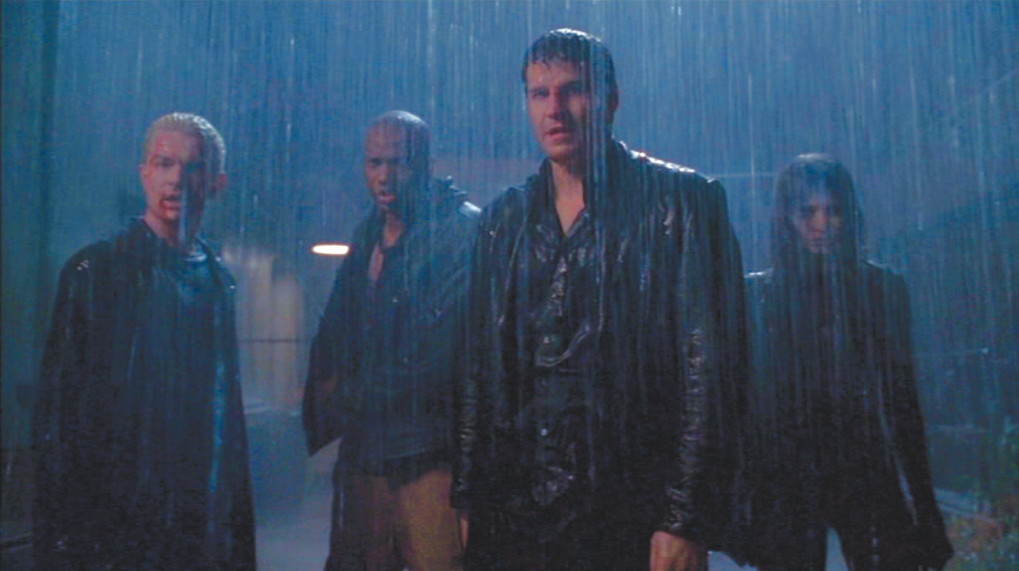
Angel and his team – acknowledging that they have no real hope of striking a painful blow to the senior partners in Wolfram & Hart – decide to take out their representatives on earth, the Circle of the Black Thorn. Angel has been acting cruelly and – well, evilly – to ingratiate himself with the Circle, which is made up of demons either in disguise – one is a U.S. senator – or blatantly, openly evil.

In a finale that feels, in some ways, like an “Ocean’s 11” or “Magnificent Seven” plot variation, the team – including Lorne, the musical demon, and Lindsay, the former Wolfram & Hart lawyer – takes on the Circle with an aim of achieving Angel’s goal of destroying it.

(After a final afternoon of saying goodbyes and achieving goals, that is. Spike finally performs his poetry onstage and Gunn spends time helping Anne, the inner-city youth shelter director whose character goes all the way back to the early days of “Buffy.”)

The final showdown is suspenseful and heartfelt, as the team takes its revenge on the demon circle, saves a baby and loses at least two of its members.

angel not fade away wesley illyria

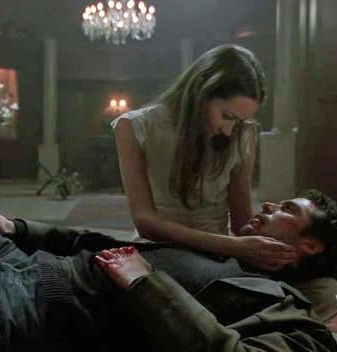
In one of the most effecting moments on the entire series, Illyria comforts a dying Wesley by appearing to him as Fred one last time.

The final scene finds the survivors in a back alley behind the Hyperion, the old hotel where they were headquartered for a season or two. Angel and Spike had predicted that the senior partners would reign hell down on them for their acts. As an Orc-like army approaches and a dragon dips menacingly overhead, our heroes prepare for one final battle.

And black-knight-turned-white-knight Angel, sword in hand, is ready to meet the dragon.

Watching the last few episodes of “Angel” again recently left me acutely feeling the loss of the series. A part of me wishes that we were still watching “Angel,” which would be in the middle of a 15th or 16th season by now.

Part of me wishes that the widespread view embrace of horror/sci-fi TV that’s brought a long life to “Buffy” and “Angel’s” successors, like “Supernatural” and “Vampire Diaries” and “American Horror Story,” had been present when the uncle, the forefather, of those latter-day shows had been around.

Because I’d love to have seen the outcome of that battle with the dragon. And everything that came next.

‘Angel’ season five – ‘Shells’ and “Underneath’

angel shells illyria

I didn’t expect to be rewatching – no less reviewing here – the last handful of episodes of “Angel,” the “Buffy the Vampire Slayer” spinoff that was, in some seasons, superior to “Buffy.”

But after watching “Smile Time” and the devastating “A Hole in the World,” we decided to rewatch a couple more episodes.

“Shells” is a continuation of “A Whole in the World,” in which lovable Fred (Amy Acker) is possessed by Illyria, an Ancient One looking to re-enter our world and rebuild its former kingdom.

angel illyria

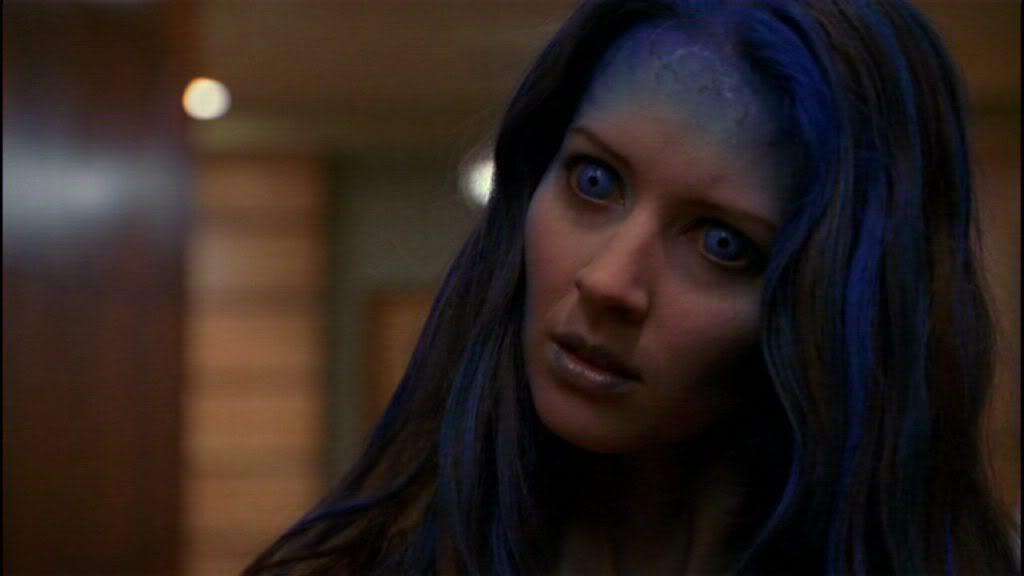
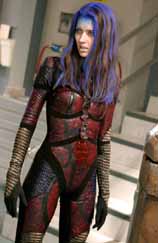
While Angel, Spike, Gunn and Lorne continue to look for a way to reach an apparently impossible goal – re-infusing Fred’s soul into her body, now a blue, ambulatory but holy-moly-she-looks-good-in-blue-skin home for Illyria.

Illyria, meanwhile, plans to call forth her demon minions … but is in for an unpleasant surprise. With no undead army to command, she turns to Wesley, still morose over Fred’s death, to give her a reason for continuing to exist on this plain.

angel underneath

In “Underneath,” the plot points that will drive the rest of the season – and the series – are introduced. Duplicitous Eve, the former liaison to Wolfram & Harts’ senior partners, tells our heroes where they can find Lindsay, whose help they’ll need to defeat the apocalyptic plans of the senior partners.

Introduced was Adam Baldwin – so great as Jayne on “Firefly” a few years later – as Marcus Hamilton, the new liaison to the senior partners who will, ultimately be the surrogate Big Bad later in the season.

There’s no huge revelation or plot turning point in “Shells” and “Underneath.” They feel like mopping-up and setting-up episodes, in a way, continuing the origin of Illyria and setting up the final conflict. But damned if they aren’t strong hour-long fantasy dramas, deepening the characters we already know, returning favorites like Lindsay and making us love Amy Acker even more than we thought we could before.

The five episodes to come give us the return of Connor – a much more liable character than he was previously – and even Buffy, in a way.

“Angel” was overshadowed, in some ways, by “Buffy” during much of its run. But with the final season of “Buffy” over before season five of “Angel” began, it felt like all the stars aligned just at the right moment, giving us our only contact with the Buffyverse and great, beloved characters at their moments of truth.

Classic TV: ‘Angel’ – ‘A Hole in the World’

angel a hole in the world

Was there ever a stronger season of series TV than the fifth and final season of “Angel?”

Okay, maybe you can make arguments for peak seasons of “Lost” or “Breaking Bad,” or going way back, the first season of “Star Trek.”

But the fifth season of “Angel” – in which the stalwart heroes of Angel Investigations are put in charge of Wolfram and Hart, the Los Angeles law firm that represents evil on Earth – has to rank right up there.

The first season or two of “Angel” – which debuted in October 2003 as a spin-off of “Buffy the Vampire Slayer” – were uneven, with real highs and lows as vampire-with-a-soul Angel moved from Sunnydale to LA and began fighting crime. The best episodes gave off a real Batman vibe, with Angel fighting evil by night, jumping from rooftops and traveling through tunnels under the city. The worst episodes made it seem like “Buffy” mastermind Joss Whedon didn’t quite know what to do with star David Boreanaz and his supporting heroes like Wesley (Alexis Denisof) and Cordelia (Charisma Carpenter).

But despite a few mis-steps, “Angel” gradually built to a stronger series that was not only about the supernatural forces at work on Earth but also the flawed heroes who stood between us and the demon world.

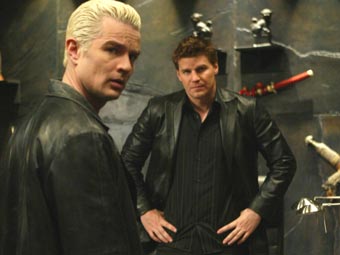
By the fifth season, “Buffy” co-star James Marsters had joined “Angel” as Spike, the charismatic “bad boy” vampire and antagonist to Angel. Everything clicked. Boreanaz and Marsters were almost co-leads and Denisof, J. August Richards and the lovely Amy Acker – joined later by Andy Hallett as showbiz demon Lorne – were as solid a cast as any show on TV in the 2003-2004 season.

angel smile time

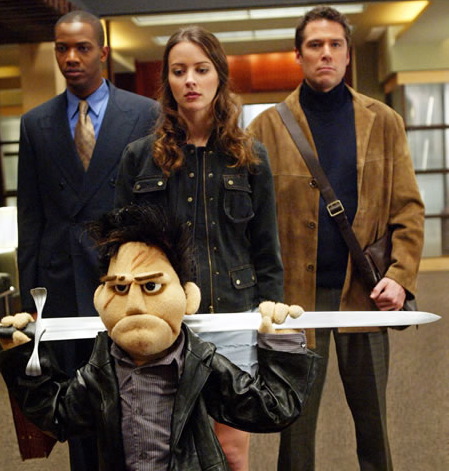
By the episode “Smile Time,” in which the Angel gang took on demonic puppets – and Angel found himself turned into a puppet – the show had hit a perfect mix of drama, soap opera and character comedy.

Then Whedon – more recently writer/director of “The Avengers” – hit us hard in the heart with “A Hole in the World.”

For several seasons, Acker had been the series’ secret weapon. An adorable genius, Fred had been the object of affection of half the cast, including both Wesley and Gunn (Richards). By this episode, she had picked up another admirer, nerdy Wolfram scientist Knox.

Although the romance between Fred and Gunn had been dramatically interesting, Wesley and Fred were destined to be together. They finally realized their full romantic potential in “A Hole in the World,” and – true to the Joss Whedon School of Romance in Drama – were soon to be split asunder. It’s the old “fall in love, get hit by a bus” theorem that I’ve referred to before.

Fred is infected by spores from an ancient sarcophagus in the Wolfram lab. Very quickly, it’s determined – in a whipsmart scene in which Lorne, who reads people’s thoughts and future by hearing them sing, hears Fred singing a few notes – that Fred is dying inside as Illyria, an ancient demon, hellbent on returning to Earth, reshapes her as its vessel.

Wesley comforts Fred, Gunn over-compensates for his inadvertent role in Fred’s condition and Angel and Spike head for Great Britain to find the Deeper Well, a literal “hole in the world” from which Illyria sprang.

There’s a tremendous “band of brothers” feel to the group that works feverishly to save Fred’s life and Whedon not only writes a devastating finale to Fred’s story but elevates an already great season.

Because there’s a price to be paid for the hubris and ambition of the players in this story and Fred pays it.

What’s extraordinary about the story is that, even while it brings Fred’s existence to an end, it continues her story as Illyria and gives Acker a totally different acting challenge.

The fifth season of “Angel” continued to one of the best series finales ever, one that was perfect and satisfying and yet made you want more at the same time.

But the season peaked with “A Hole in the World,” leaving a hole in viewers hearts.

Classic TV: “Dragnet: The Christmas Story’

dragnet the christmas story tree

Every TV series – well. most of them, anyway – does a Christmas episode. Sometimes they’re “very special” episodes. It’s too much for TV writers and producers to resist, really: Do a heartwarming episode for the holiday, usually adapting Dickens’ “A Christmas Carol.” As they said, in reference to another subject, on “Buffy the Vampire Slayer,” It is an opportunity to “hug and cry and learn and grow.”

But not Jack Webb, no ma’am. When the creator of “Dragnet” does a Christmas story, he does one that’s to the point and – even though it has some sentimental moments – full of sharp edges.

I just rewatched “The Christmas Story” episode of “Dragnet,” which also proved that when Webb had a story he liked, he stuck with it. Webb wrote the script originally for his “Dragnet” radio series and the version of TV’s “Dragnet” that aired in the 1950s.

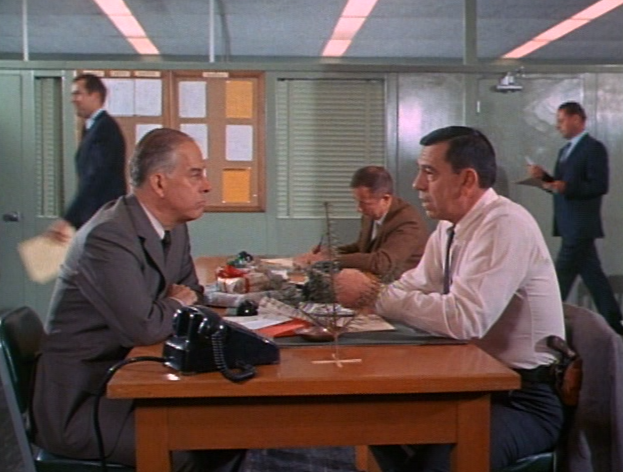
I watched the version – called “The Big Little Jesus” originally but retitled “The Christmas Story” by this time –  that aired on NBC in December 1967. This was the color version of “Dragnet” and the one that co-starred Harry Morgan as Bill Gannon, the partner to Webb’s LAPD Detective Joe Friday.

“Dragnet” reveled in the everyday police cases that Webb believed made the Los Angeles Police Department the best law enforcement agency in the world. “The Christmas Story” was a perfect example of that.

A San Fernando Valley church reports  on Christmas Eve that its Baby Jesus statute is missing from its Nativity display. Friday and Gannon question the priest about who might have been able to get into the church to steal it. Friday seems surprised when the priest says the church is open 24 hours a day. “So any thief could get in?” Friday asks the priest, who replies that the church especially wanted thieves to make their way to the altar.

Friday and Gannon promise the priest they will try to have the Baby Jesus statue back before 6 a.m. Mass on Christmas morning.

The detectives pursue a couple of leads, including a visit to an offbeat seller and, apparently, re-buyer, of religious statues. They also talk to a couple of altar boys, including Barry Williams, who would within two years be playing Greg Brady on “The Brady Bunch.”

Ultimately the cops are pointed toward a down-on-his-luck parishioner who, it’s assumed, stole the statue. But it’s obvious he did not, and Webb makes Friday’s frustration at the dead end briefly palpable.

The mystery, such as it was, is solved without any participation, other than as observers, by the cops. As Friday and Gannon go back to the church to tell the priest they failed, a little boy comes in, pulling a red wagon. In it, of course, is the Baby Jesus statue. The boy, whose family attends the church, had told the infant that if he got a red wagon for Christmas he would give it the first ride. The boy got the wagon from local firemen, who fix up broken toys for poor children in the neighborhood, which explains why he had the wagon early enough to pinch Baby Jesus from the manger.

“The Christmas Story” was, after all, a very special episode of “Dragnet.”

Random observations:

The conversation between Friday and Gannon that opens the episode acknowledges, for the first time I remember really, that Friday has a girlfriend. I’m sure this was touched on at other times in the series, and it’s well-established that Gannon is married, But it’s a nice touch, and the ensuing conversation about proper presents for a wife or girlfriend adds a bit of personality to the characters.

I also love that the Christmas tree that Gannon brings to the office and plops down on the work table he shares with Friday looks like an even more pathetic version of Charlie Brown’s tree, as seen in the animated special two years earlier.

It’s a nice bit of business for Friday and Gannon to get more time to work on the theft by asking their captain – who had wanted them on another case – to call the priest himself and tell him they wouldn’t be returning the stolen Baby Jesus in time for Christmas.

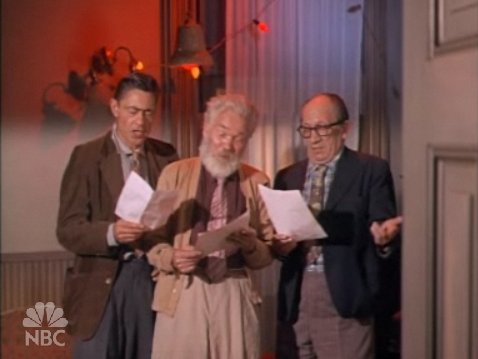
And this, the choir from the hotel for down-on-their-luck men:

dragnet the christmas story choir

Classic TV movie: ‘The Norliss Tapes’

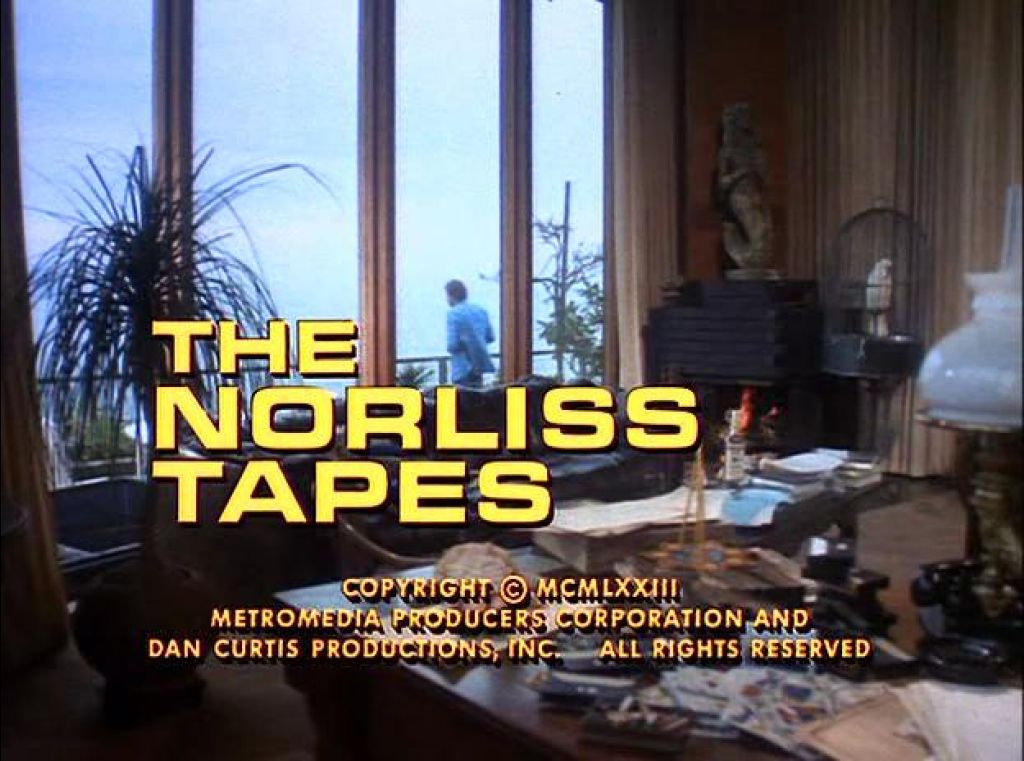
norliss tapes title card

“The Norliss Tapes” is one of those TV movies best remembered for its freaky, scary moments.

It seems it scared the hell out of a lot of kids back in the day. I know it made an impression on me.

The movie, which aired in 1973, was pretty clearly inspired by the success of “The Night Stalker” a year earlier. The two movies shared a premise – a writer investigating the undead – and Dan Curtis, the producer of “The Night Stalker,” produced and directed here.

“The Norliss Tapes” is no “Night Stalker,” however. But it’s a pretty good scare-fest.

The story begins with David Norliss, a writer with a contract to write a book exposing phony psychic phenomena, talking to his publisher and sounding bleak. Norliss (played by David Thinnes of “The Invaders” fame) recounts – via audio cassettes – how he found it easy to debunk mystics and psychics … but then he got caught up in the story of Ellen Cort (Angie Dickinson). Cort tells Norliss that she’s been attacked by – and she subsequently shot – a particularly strange intruder in her home: Her late husband Jim.

the norliss tapes creature

The storyline plays out not unlike “The Night Stalker,” with seemingly random murders by a supernatural being running counterpoint to the mystery of the apparently resurrected Jim Cort. The plots tie together, of course. As a matter of fact, there’s not a lot of mystery or subtlety, as Cort – freaky eyes and blue skin prominently displayed – is clearly the attacker.

Norliss begins investigating the possibility that Cort – whose body rests peacefully in his family crypt – is getting up and attacking people in the dead of night. And what about that mysterious Egyptian ring Cort was wearing?

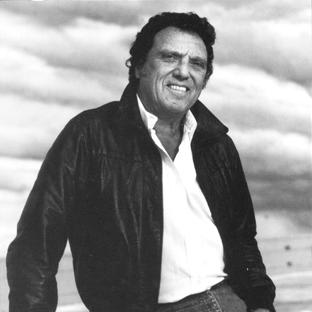
dan curtis

Director Curtis was the man behind groundbreaking supernatural TV shows like “Dark Shadows” and “The Night Stalker,” and “The Norliss Tapes” shows that. The movie has a style and a music soundtrack familiar to fans of those shows. Robert Cobert, a Dan Curtis regular creative partner, was the composer of the score here.

Some cast members of “The Night Stalker” even recur here, including Stanley Adams as a witness and Claude Akins as a gruff sheriff who’s only too happy to keep a lid on spooky happenings.

Michelle Carey, a gorgeous 1960s and 1970s actress with a breathy, throaty voice, plays Ellen Cort’s sister and a friend of Norliss.

Keep watching through the end credits: There’s a recapping series of  scare scenes, ala “The Night Stalker,” among the credits.

Today in Halloween: Yvonne Craig

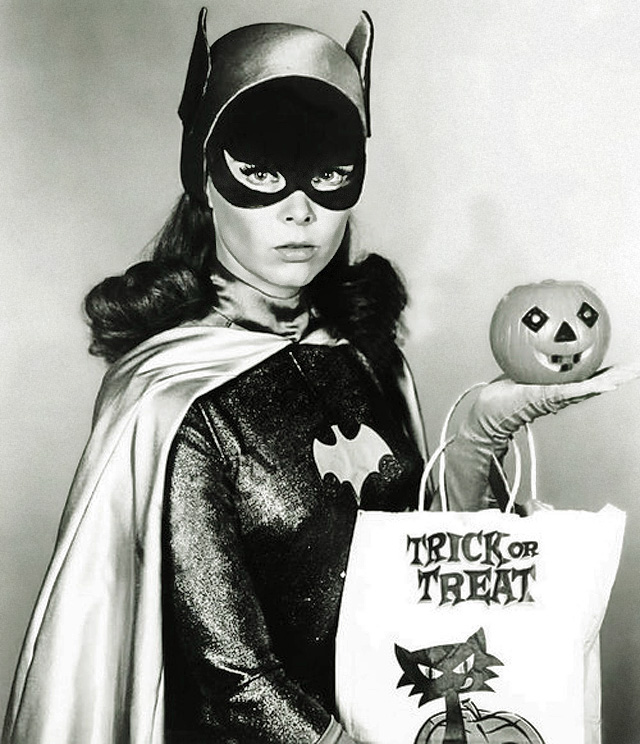
batgirl yvonne craig trick or treat

This installment of Today in Halloween comes all the way from the fall of 1967.

Yvonne Craig has been added to the “Batman” series in its third season, playing Batgirl.

By most accounts, executives thought the addition of Batgirl would attract more young girls to the series, although I think it’s more likely that Craig brought more adolescent boys and men to the TV.

Anyway, something during that fall of 1967, this photo of Craig with a little pumpkin and trick-or-treat bag was released.

Why? We don’t know.

Why is it here now? Yvonne Craig, of course.

Today in Halloween: AMC has a little bit of Fear Fest left

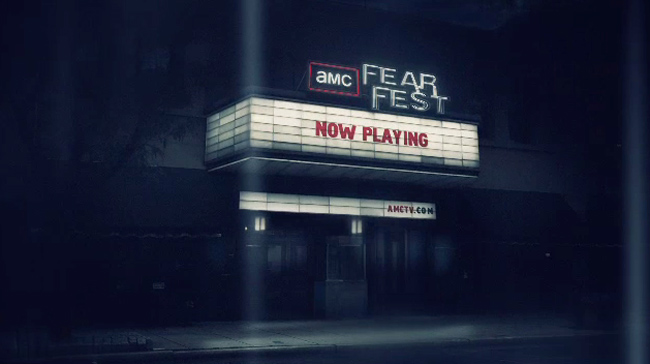
amc fear fest

You know, I’m a big fan of today’s AMC. What’s not to like? “The Walking Dead,” “Mad Men,” “Breaking Bad.”

But this time of year I miss the old AMC, the all-movie network that couldn’t really compete with Turner Classic Movies … except for the last couple of weeks of October, when AMC programmed virtually non-stop horror movies.

From the old Universal Monsters classics to Hammer horrors, AMC made me want to sit in front of my TV 24-7.

Well, a lot of the classics have fled elsewhere – I’m guessing TCM – and there’s a preponderance of “Friday the 13th” and “Halloween” movies during the final two weeks of October on AMC now.

But that’s okay. Cause you can never see John Carpenter’s classic “Halloween” too many times. And none of us have seen the offbeat “Halloween 3” often enough.

And yes, I’ll stop and check out a “Friday the 13th” movie, if only long enough to determine if it’s the one with Kevin Bacon.

There are a few schedules online for AMC’s lineup this year. True, too many of the timeslots are filled with inferior stuff.

But beginning with a “Walking Dead” marathon over the weekend leading up to the new season premiere at 9 p.m Sunday and great movies like “Slither” on tap, AMC will still give us some Fear Fest this year.