Category Archives: classic TV

Unsung actors: Roger C. Carmel

He’s one of those “Hey, I remember that guy!” actors. Roger C. Carmel was featured in many, many TV series in the 1960s and 1970s. According to his IMDB page, he guest-starred in everything from “The Dick Van Dyke Show” to “The Munsters” to “The Man from U.N.C.L.E.” and “Hogan’s Heroes” to “Batman” playing “guest villain” Colonel Gumm.

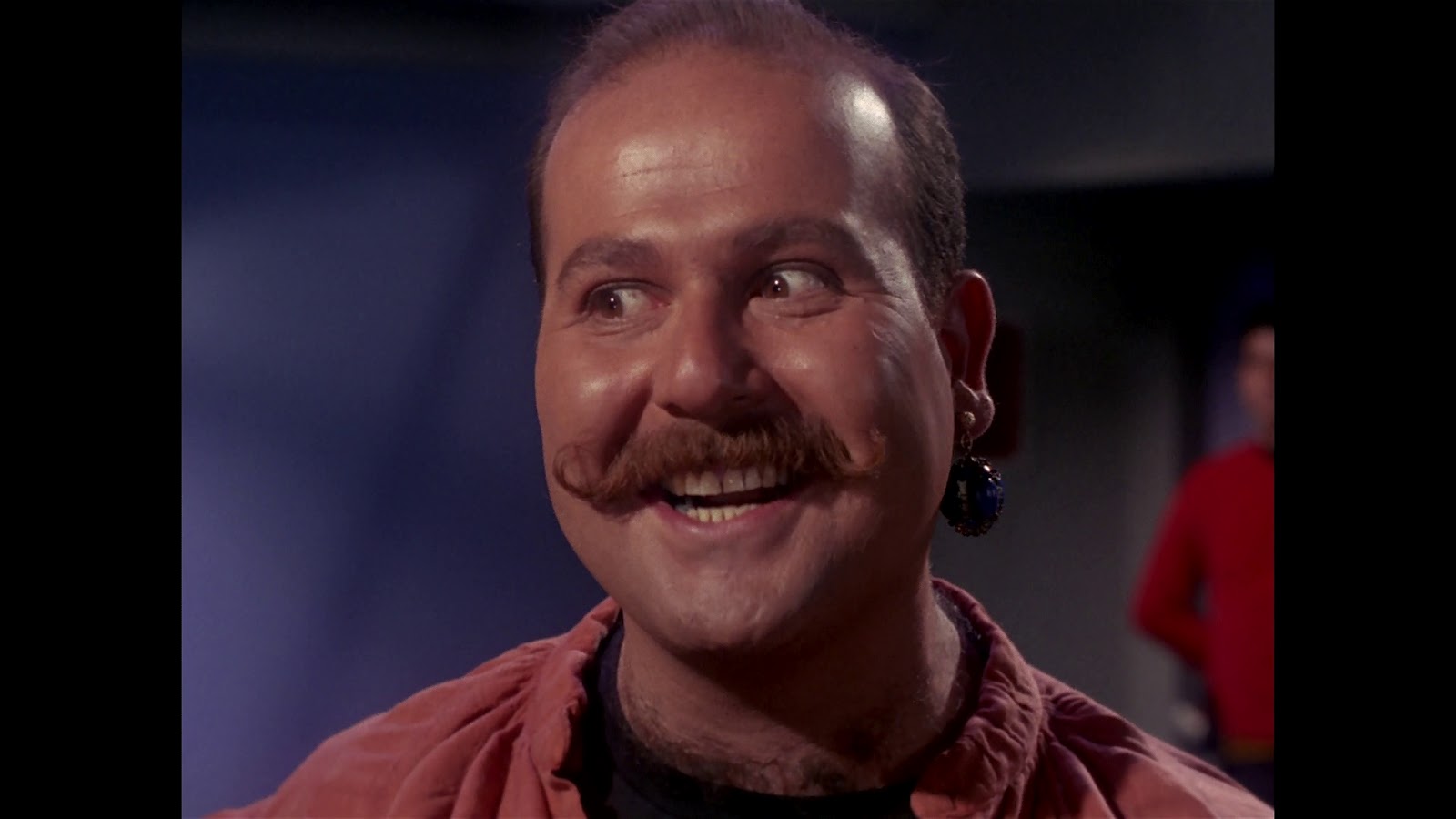
But Carmel, who died at age 54 in 1986, was best known for two roles. He co-starred in “The Mothers-In-Law,” a 1960s sitcom starring Kaye Ballard and Eve Arden and produced by Desi Arnaz, and he guest-starred in two episodes of the original “Star Trek” series.

Carmel played Harcourt Fenton Mudd, a galactic hustler and con man who shows up in the first season episode “Mudd’s Women,” a fairly straight story about transporting what are, in effect, mail-order brides. But he is probably best remembered for reprising the Mudd role in “I, Mudd,” a second-season episode that finds the Enterprise crew arriving on a remote planet (is there any other kind?) where Mudd is the ruler (and prisoner) of a race of androids.

In the second episode, the tone is much lighter and Carmel plays Mudd with his trademark flamboyance. The effect was appropriate for a returning and not-very-threatening villain.

Carmel provided the voice for Mudd in an episode of the 1970s animated “Star Trek” series. There’s an online reference to plans for him to play the role once more in “Star Trek: The Next Generation,” in the first-season episode “The Neutral Zone,” in which three people from the past are revived from suspended animation. It’s a neat Hollywood tale and maybe it’s even accurate.

Carmel, who provided voices for a number of animated TV series in his final years, passed away before he had a third chance to meet the Enterprise crew.

Classic TV: Paul Dixon and his show

Here’s one from the wayback machine for us Midwesterners: Cincinnati-based broadcaster Paul Dixon was the toast of the airwaves in the tri-state area in the 1960s and early 1970s.

Dixon’s show – which aired each morning on Channel 13 in Indianapolis – was a truly goofy local talk and variety show that revolved around Dixon, a self-styled dirty old man, and regulars like singers Bonnie Lou and Colleen Sharp.

One of the things that most appealed to me, as a kid and young adolescent, was just how naughty the Dixon show seemed.

As juvenile and silly as it was – and you can’t get much sillier than a wedding for rubber chickens or a middle-aged man parading around dressed like a baby – the show had a decidedly off-color edge.

Dixon would compliment his nearly-always-exclusively-female audience on their looks, following that up with checking out the miniskirt-wearing front row with a pair of binoculars and declaring himself the “mayor of Kneesville.”

He would then choose a “winner” – usually a  young Cincy housewife – and slip a garter onto her thigh, followed by a “knee tickler,” some faux jewel bauble that would hang below the hem of her skirt. Thus, tickling her knee.

The whole process involved as much good-natured groping of the audience member as was probably allowed on TV at the time.

Not to be forgotten: The T-shirt giveaway that entailed “Paul Baby” helping a woman into a tight shirt, donned over her clothes, that ended up looking like standing-up groping.

For a lot of us kids, watching on sick days or during the summer, it all seemed like forbidden stuff. It sure as heck wasn’t run-of-the-mill daytime TV.

Dixon’s show aired on WLW-TV in Cincinnati from 1955 until shortly following his death in December 1974.

While other local shows might have emulated Dixon’s oddball charm, it’s hard to imagine they duplicated it.

And Dixon’s shadow was long. David Letterman, who has traditionally been as gracious as can be about the type of pioneering Midwestern broadcasters who came before him, like Johnny Carson, spoke to the Cincinnati Enquirer in 1997 and cited Dixon’s influences on his offbeat comedic choices, repeatedly maintaining that Dixon was funnier than he was.

That’s not really the case. But Dixon was truly an original.


Classic TV: ‘Community’ ‘Remedial Chaos Theory’

I’m not sure there’s anything on TV like “Community,” and that’s probably worked against the viewership of the show.

The NBC sitcom is about as atypical a situation comedy as anything airing now. The premise – a diverse group of misfits forms a family while attending a community college – isn’t novel.

But during its first three seasons, under the guidance of creator Dan Harmon, “Community” became something more.

There were inklings of the show’s inherent “different-ness” in the first season, certainly. But the first-season finale, in which the regulars and the large supporting cast wage war in an on-campus paintball match to win “priority status” for class registration, established the show as surely as “Prophecy Girl,” the first-season finale of “Buffy the Vampire Slayer,” established that series as one for the ages.

The paintball episode played, with furious and hilarious seriousness, like an action movie, “Terminator” by way of John Woo, with standoffs and ambushes and devilish double-crosses. All played against expectations.

My favorite moment is when off-kilter geek Abed (Danny Pudi) rushes up to snarky lawyer Jeff (Joel McHale) and intones, “Come with me if you don’t want paint on your clothes.” Fans of the “Terminator” movies recognized that line.

Throughout the second and third seasons, “Community” deepened its characters – a group that is frequently at each others’ throats but can’t live without each other – and raised the freak flag higher. An episode revolving around a game of Dungeons and Dragons was funny and touching.

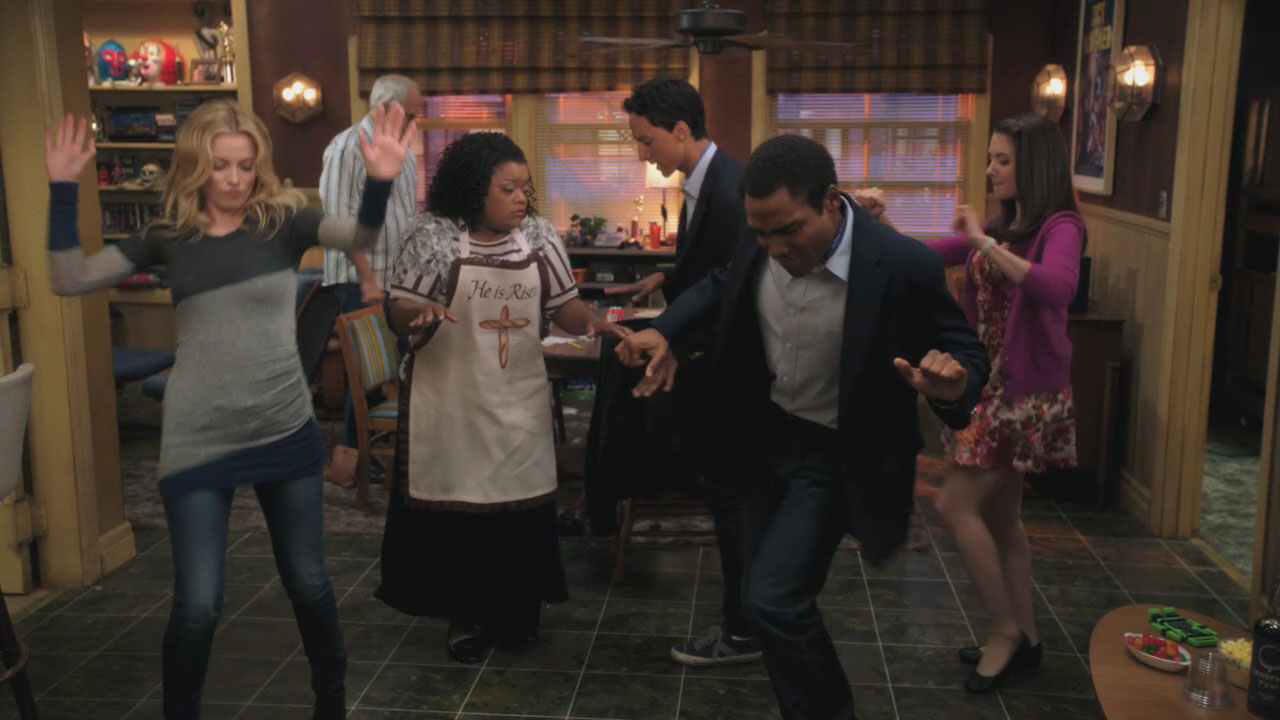
By the time “Remedial Chaos Theory” aired early in the third season, Harmon and the cast and crew knew they could get away with a lot. And they did. As the characters gathered at a housewarming party for roommates Abed and Troy (Donald Glover), they rolled dice to see who would go downstairs to meet the pizza delivery guy.

With each roll of the dice, another reality unfolded. Friendships ended, relationships began and lives were lost, for god’s sake. It was all funny and incredibly clever and mind-bending in a way precisely unlike any show on TV right now.

The show has mixed in a tremendous amount of geekery in a manner that’s less showy but more genuine than the amusing “Big Bang Theory.” After “Remedial Chaos Theory,” the series explored the other, “darkest timeline” and, with a nod to the “Star Trek” mirror universe, Troy and Abed donned Evil Spock-like goatees.

When “Community” returns on Oct. 19, it will be without Harmon, a creative man bounced from his own show, if we’re to believe his own account and those of others, over huge differences in temperament and people skills.

So I’m not sure what “Community” will be like when it returns. Will it be just a silly sitcom? Will it continue to defy expectations and conventions? We’ll know soon.

‘Buffy,’ ‘Angel’ and modern-day cable

“Buffy the Vampire Slayer” ran seven seasons and its spin-off show, “Angel,” ran a too-short five. Both aired on what were considered “mini” networks, The WB and The CW, but networks nonetheless with obligations to meet the standards of broadcast networks and bring in some semblance of traditional over-the-air ratings.

But we can only dream about how those Joss Whedon series as well as his “Firefly” and “Dollhouse” series might have faired if they had aired on channels that were decidedly off-network.

I’m thinking of TNT, FX, USA, AMC and A&E, channels – not networks, since networks are networks of stations, while cable channels have no physical presence out in the real world – that schedule, carry and nurture high-quality episodic drama.

Can you imagine “The Shield” or “Mad Men” or even “Falling Skies” on network TV?

I can’t. I can’t imagine those niche shows pulling enough viewers to stay on the air. “Firefly” sure didn’t.

I can’t imagine the networks allowing the creators of those shows to produce as few as 10 or 12 or 16 episodes per season, something that’s become routine with shows like “The Walking Dead” and “Breaking Bad.”

There seems to be less pressure without a 22-episode, big network season. Less expectation of Super Bowl-sized ratings. Less expectation of quickly meeting the 100-episode threshold for syndication.

With those shorter seasons, you can weed out the deadwood episodes. Okay, some of us were a little impatient with how long last season’s “The Walking Dead” spent on the farm. But it didn’t have to be that way. Look at last season’s “Mad Men” as an example. While the season had its critics, I thought almost every episode was riveting. Would that have been the case if the creators had been compelled to turn out twice as many episodes to fill out a network season?

Who doesn’t think “Smallville,” for example, would have been better with about a half-dozen fewer episodes per season and a little less filler? How about “Lost?”

There are some drawbacks. Out of sight, out of mind. “The Sopranos” and “Mad Men” took their time and sometimes a year or even more passed between seasons. It was torture but it made us look forward to their return even more. That trick wouldn’t work for every show, however.

And admittedly, there’s still less visibility on cable, at least for some audiences. We live in a world where the biggest ratings are still garnered by standard network fare like cops-and-robbers procedurals. We can take solace in knowing that we’re cooler because we know all about “Justified.”

So in my alternate reality TV word, “Buffy” and “Angel” and “Firefly” are still chugging along, well  into the double-digits in years on the air. They’re just airing fewer episodes and every episode is greeted with a sense of anticipation and celebration.

TV: What I’m watching, given up on and looking forward to

When I was a kid, besides going back to school and the run-up to Halloween, this time of year was a big deal for me because of the new fall TV season.

Yes, I was a TV geek.

I eagerly anticipated the fall season, which usually had at least one or two shows that I wanted to see. Besides, who could guess just how great “The Night Stalker” or “Planet of the Apes” (the TV series) might make the fall of 1974?

There’s less anticipation about the fall TV season nowadays because the TV year is so fractured – worthwhile series debut throughout the calendar year – and, speaking only for myself, I watch less TV.

Because I watch less TV, I try to make every random hour and half-hour count.

So here’s what I’m watching right now as well as what I’m anticipating, what I’ve given up on and what I’m worried about.

“Copper” is a BBC America series – the channel’s first original production – that just debuted last Sunday. It’s about cops in New York City in 1864. The city was a lawless place, full of casual cruelty to children and others who couldn’t defend themselves, and the police department wasn’t much better. Into the mix comes Kevin Corcoran (Tom Weston-Jones), an Irish-American veteran of the Civil War who has come back to the city to find his wife missing and his child dead. The series, which has a nice gritty tone, follows Corcoran as he investigates crimes – the murder of a child prostitute in the first episodes, for example – and patrols the grimy streets and brothels of the city.
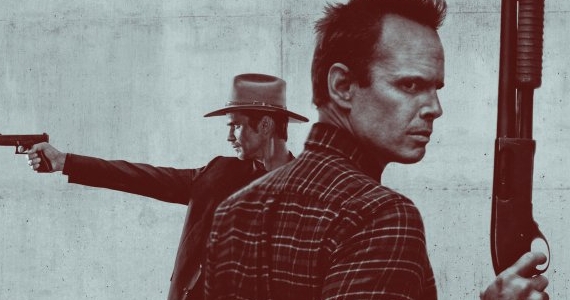
“Justified” is returning for a fourth season sometime in early 2013 and it’s likely that our favorite Kentucky-born-and-bred U.S. marshal, Raylan Givens, and his longtime friend and sometimes antagonist, Boyd Crowder, will find themselves up against some new lowlife. Timothy Olyphant and Walton Goggins lead a great cast.

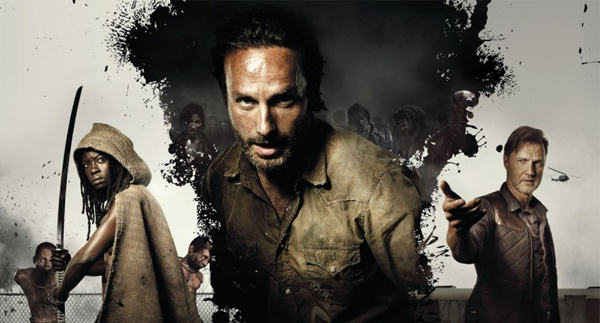
We don’t have to wait until next year to see “The Walking Dead.” The AMC series returns on Oct. 14 for its third season. The series will be split between the prison the survivors were near in the final episode of last season and the town of Woodbury, presided over by the Governor. The first eight episodes air this year, with eight more beginning in February.

I’m not sure when “Mad Men” and “Falling Skies” will be back – hopefully early in 2013 – but I’ll be watching the two very different series. Both came off solid seasons this year.

Few series have been as enjoyable in the past three years as NBC’s “Community,” an odd and offbeat show about a group of misfits who become friends in a study group at a second-rate community college. But I’m worried about “Community” this year after the departure of creator Dan Harmon. By most accounts a genius with people skills issues, Harmon got fired at the end of last season. The cast is great and the stories – complete with blanket forts, paintball apocalypses and genuinely nice character moments – are wonderful. But can the show survive without Harmon? Or will it become another kooky sitcom like “Scrubs?”

I’m not sure I’ll be around for a second season of “Longmire,” the A&E series based on Craig Johnson’s enjoyable series of mystery novels about a Wyoming sheriff. The show looked pretty good and the cast was fine, but the mysteries were mediocre. When the show did take a page from one of Johnson’s stories, as it did in the season finale, it didn’t bring the author’s charms.

I’m not sure I’m looking forward to anything on TV quite as much as a live-action Marvel Comics series set in the “Avengers” movie universe. Luke Cage? Daredevil? S.H.I.E.L.D? Where will creative genius and “Buffy the Vampire Slayer” mastermind Joss Whedon take this series? Wherever it is, I’m following.

The best part about TV is that, in any given season, some really terrific show can suddenly appear and make you glad you gave it a try. I’ve felt that way about every show on this list at one time or another.
Unsung actors: Jonathan Banks

Who’s badder than Jonathan Banks? Nobody.

He’s one of the coolest yet most unsung actors in Hollywood.

Banks is enjoying a little limelight in a recurring role in the hit series “Breaking Bad” these days, but for years he was best known as the creepy henchman of the bad guy … or, infrequently, the offbeat good guy.

Amazingly, Banks’ TV resume goes back to the mid 1970s and appearances on everything from “Barnaby Jones” to “The Waltons” to “Little House on the Prairie!” In the latter, according to IMBD, he played Jed in a 1980 episode.

His career in movies really took off in 1982, however, with his role as a doomed cop in “48 Hours.” He’s a cohort of Nick Nolte’s cop character who gets killed off early.

Two years later, Banks played what I think of as his best henchman role in “Beverly Hills Cop.” He’s the guy who kills Eddie Murphy’s friend at the beginning of the movie and he’s the guy who gets tossed into a buffet table at a tony private club.

Banks brought a dead-eyed menace to the role that sticks with me 30 years later.

For four years beginning in 1987, Banks had his best TV role (sorry, but I haven’t seen him in “Breaking Bad” yet) as federal agent Frank McPike in “Wiseguy.” As McPike, Banks was gruff and no-nonsense as the “handler” for Ken Wahl’s Vinnie Terranova, a federal agent who goes deep undercover in criminal organizations.

Banks’ McPike is the guy who, with more than a little attitude, pulled Terranova’s butt out of the fire during the run of the series. When Wahl left the show, McPike shepherded his replacement.

Here’s to Jonathan Banks, tough guy first class.

RIP William Windom of ‘Star Trek’

One obituary I saw today for William Windom referred to the actor, who died at age 88, as a “comedic actor,” and there’s something to that, of course.

But for me and many others in geek culture, William Windom will always and forever be Commodore Matt Decker from the classic “Star Trek” original series episode “The Doomsday Machine.”

Windom played Decker, a friend of William Shatner’s Jim Kirk and captain of the Federation starship Constellation. In this second-season episode, the Enterprise finds the wreckage of the Constellation floating in space as well as its distraught captain.

The Constellation has been targeted by a mile-long planet killing robot ship, a conical structure that fires energy blasts and absorbs matter as food. Think of it as a less chatty version of Galactus.

Windom is by turns weepy, hysterical, sneaky and imperious as the captain who will use any tool at his disposal – including the Enterprise, liberated from Kirk and Spock – to kill the Doomsday Machine.

Windom was among the strongest guest-stars the original series ever had. Sure, he had his moments that were a bit … overplayed … but most of his performance is subtle and heartbreaking.

“The Doomsday Machine” was written by science fiction author Norman Spinrad. It has one of the great “Star Trek” climaxes as Kirk tries to fly the battered Constellation down the throat of the planet killer.

Windom’s career ranged from “The Twilight Zone” to “Night Gallery” to “Murder, She Wrote,” and was one of the most dependable character actors on TV for a couple of decades.

Here’s to Windom, one of our favorites.


Must-read TV: A look at NBC’s heyday

For a decade and a half, NBC was a primetime TV powerhouse with a line-up of shows – most of them on Thursday nights – that rivaled anything on TV at the time. “Cheers,” “The Cosby Show,” “E.R.,” “Frasier”  and “Mad About You” were among the huge hits.

Warren Littlefield wasn’t the writer or star of any of those shows, but he was an NBC executive, rising to the role of president of entertainment programing from 1993 to 1998. As such, he was one of the network “suits” involved in decisions made behind the scenes on all those shows plus others like “Friends.”

In “Top of the Rock: Inside the Rise and Fall of Must-See TV,” Littlefield presents excerpts from interviews with the writers, producers, directors and stars of some of the network’s most memorable shows. Although a few people – like “E.R.” star George Clooney – are notable by their absence from this oral history, Littlefield includes comments and memories from Jerry Seinfleld, Jason Alexander, Noah Wyle and most of the “Friends” cast among many others.

There are a lot of intriguing anecdotes here and some pretty funny memories, especially from people like Seinfeld and Alexander.

Littlefield’s book isn’t the equal of “I Want My MTV” or the similar oral history of “Saturday Night Live” from a few years back. It’s just not as comprehensive. But it offers some good backstory.

Some things I didn’t know, or had forgotten if I ever knew, until I read Littlefield’s book:

The script for the two-hour pilot of “E.R.” was really, really old. People interviewed estimate the script was at least 20 years old when it was reworked by Michael Crichton around 1993. One sign of its age: At one point, characters are watching a Boston Celtics game and a player who retired in 1965 is name-checked.

Kelsey Grammer’s drinking and drugging was a huge problem during “Cheers.” It’s also one retold with some humor here as interviewees note that Grammar might pick up a hitchhiker and make the guy his assistant.

Casting almost-was stories abound. Here they include Terry Hatcher for the eventual Helen Hunt role in “Mad About You” and Lisa Kudrow for the Peri Gilpin role in “Frasier.”

NBC scuttled a two-hour Bob Hope special to pay for four more “test” episodes of “Seinfeld.” Someone had to tell Bob. I’m surprised, retrospectively, that Hope was still doing NBC specials by 1989.

The people behind “Cheers” were really, really pissed when Shelley Long left the show but saw the show get a new lease on life with Kirstie Alley. I think they got a better deal.

Littlefield enjoyed actor Bob Balaban’s parody of him so much on “Seinfeld” that he had Balaban play him at a network meeting. Ha!


Classic TV: ‘Buffy the Vampire Slayer’ episode ‘Restless’

“Restless” was the season finale of the fourth season of “Buffy,” airing in May 2000. The season had been an unusual one since it was the first that deviated from the high school setting of the show. Following the “Graduation Day” episodes of the previous season, Buffy and Willow went on to attend classes at U.C. Sunnydale, Giles was at loose ends before, in the following season, opening an occult shop and Xander kind of hung out, trying to find himself.

The season also featured a dramatic departure from past seasons by opening up the world of the Slayer to include “real world” supernatural elements, including what was in many ways the show’s most complex addition to its mythology, the Initiative, an underground (literally) government organization that captured and experimented on demons. It was the first absolute confirmation of Buffy’s “underground” status as the Slayer in a world in which the authorities – all the way to Washington D.C. – knew about vampires and demons.

The Initiative storyline had actually wrapped up in the previous episode, as the Scooby Gang defeated Adam, a Frankenstein-like monster created as an unauthorized offshoot of the program.

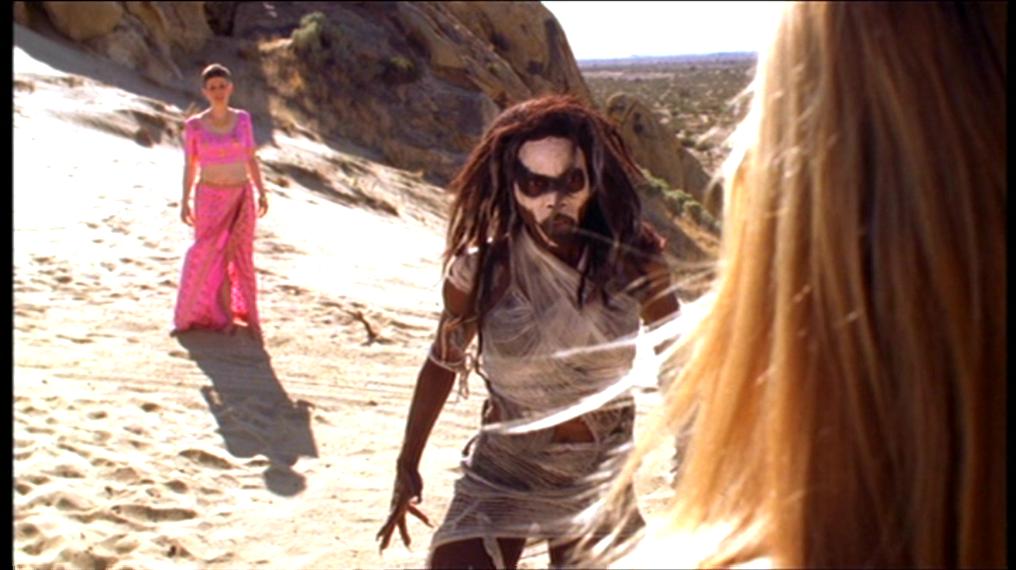
“Restless” took the form of a series of dreams sequences for Willow, Xander, Giles and Buffy in which each was stalked by the First  Slayer, a savage female proto-Buffy.

The dream sequences were perfect and spot-on, teasing viewers with suggestions of events that might come in the series. Who wasn’t intrigued by Spike’s declaration that Giles was teaching him to become a Watcher?

The episode also featured some faces from the past, including Seth Green as Oz, Phina Oruche as Giles’ girlfriend Olivia, Mercedes McNab as Harmony and Armin Shimerman as Principal Snyder.

Ultimately, “Restless” marked something of a departure for “Buffy” and for Buffy. Especially when the Slayer declared herself different from the slayers of old, demonstrating that the First Slayer and the conventions of the Watchers Council and past Slayers didn’t mean anything to her.

Random observations:

“Restless” was written and directed by series creator Joss Whedon a dozen years before he became a Hollywood sensation with “The Avengers.” Whedon imbued the episode with his trademark mix of thrills and humor.

The First Slayer isn’t the only thing primordial about this episode: Just before they fall asleep, the gang settles in to watch a movie on VHS!

Throughout the episode, a guy shows up and says something about cheese. Of all the odd moments in the episode that fans took as clues to the future, this one we felt we could laugh off.

The episode featured references to ongoing series developments, including Willow’s coming out. During her dream, Willow’s anxiety reached its peak when former flame Oz and current flame Tara snickered and smirked at her even as she succumbed to the First Slayer.

I love all the dream sequences, but Xander’s journey into an “Apocalypse Now”-style heart of darkness is hilarious.

The episode is peppered with references to characters and episodes past and future, including Faith the vampire slayer and Dawn, Buffy’s “little sister” introduced in the next season. You could even argue that Joyce’s appearance in a wall during Buffy’s dream sequence was a reference to her eventual death.

“Restless” is one of the great episodes of a great series.