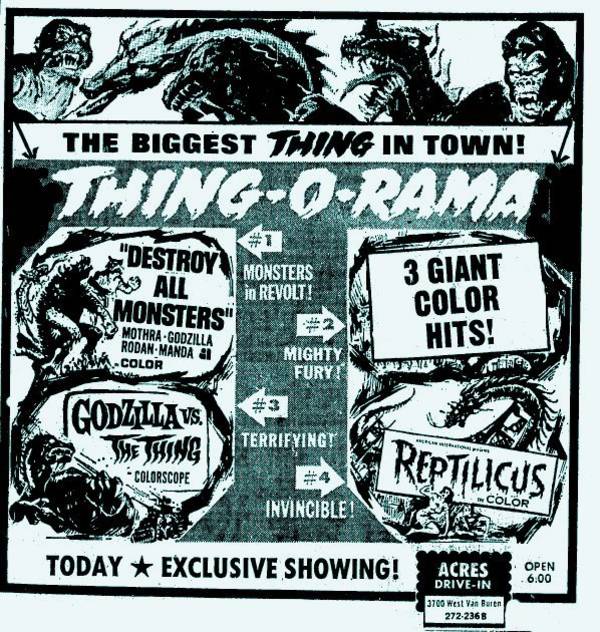
Just because.
Just because.

A while back I was inspired to begin this recurring look at the poster art of 1970s movies after seeing the throwback-style poster for “Captain America: The Winter Soldier.”
Movies don’t get any groovier than “Coffy,” the 1973 blaxploitation flick starring Pam Grier in the title role. And the poster does justice to the movie’s storyline.
After her younger sister is hooked on drugs, Coffy, a nurse, sets out to kill as many drug dealers as possible.
It’s a pretty straightforward plot.
If you’ve never looked at it, check out the oddly-written Wikipedia page for the movie, complete with plot recap.
“Coffy uses her sexuality to seduce her would-be killers,” indeed.
And good lord, what an impression Grier made on a lot of us.

See what I mean?
In the final years of his life, before his death at age 81 in February 1969, Boris Karloff had become a beloved figure in movies and TV. The man who played Frankenstein’s monster in 1931 continued working for decades, ensuring himself a place in entertainment history not only with his early work but with vocal performances aimed at children and the entire family, as in “How the Grinch Stole Christmas” in 1966.
Although he was in frail health late in life, Karloff continued working, turning out four movies that were released in 1968 alone. One was “Targets,” a poignant drama in which Karloff played a veteran horror movie actor whose fate is intertwined with a modern-day horror, a murderous sniper.

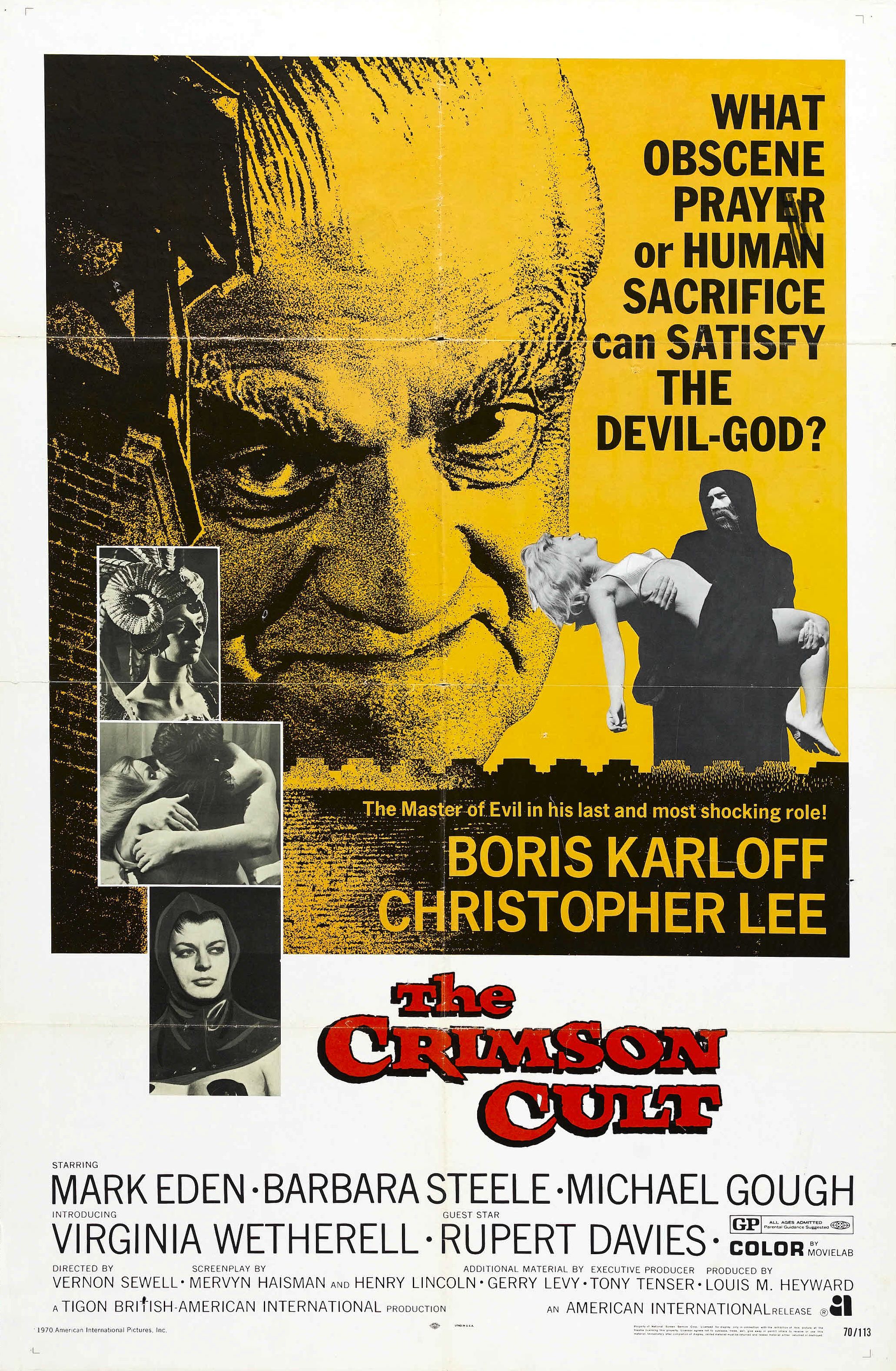
1968 also saw the release – at least in the United Kingdom; the U.S. release came in 1970 – of “Curse of the Crimson Altar,” known in the U.S. as “The Crimson Cult.”
This movie’s plot is familiar to those who remember “The Wicker Man” and other movies about cults that thrive in small-town England: An outsider comes to town looking for his missing brother. Little does he know that the lord of the manor who welcomes him into his home is the leader of a crazy cult (is there any other kind?) that worships a long-dead witch. The crusty local professor is able to help provide some clues, but it’s only a manner of time until our hero is trussed up in a dungeon, waiting to be sacrificed.
Mark Eden is fair to middling as the hero, but the reason for this movie to exist are the headliners who draw from two generations of horror film superstars.
Karloff plays Professor Marsh, the witchcraft expert, and Christopher Lee is Morley, the leader of the cult. Karloff is frail here, spending much of his time in a wheelchair. But his voice is as rich and strong as it was at any time in his career and he brings a touch of class to the movie.
Lee is likewise good as the cult leader, although anyone hoping to see him invoking demons and sacrificing virgins had better look elsewhere. Lee skulks through his mansion, urbane and threatening by turns, but the cult scenes for the most part look like they could have been shot anytime and anywhere. Except for the presence of Eden in a couple of them, the cult scenes look like they could have been shot years and miles apart from the rest.
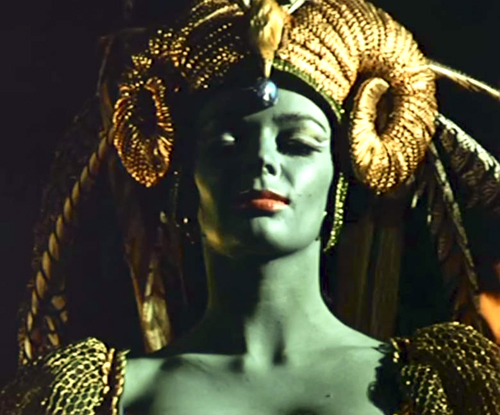
At least those scenes are presided over by Italian horror superstar Barbara Steele. Steele’s painted green here, for some reason – more witchlike? – but looks great.
The movie has many of the loony elements you’d expect from a movie about sinister witch cults released in 1968: A witch (that’s a given), a cult (well …) human sacrifices in a dungeon, implements of torture, women in pasties with whips (!) and guys in, well, I’m not sure how to describe these outfits. Maybe leather onesies with the arms cut out?
Random observations:
The movie, upon release in the U.S. by American International Pictures, was rated “GP,” the forerunner to PG. And while it’s hard to believe now, the movie shared one quality with other PG-rated movies of the 1970s and even 1980s: Nudity. It’s not much more than you can see on some cable TV shows right now, but if a PG or even PG-13 movie came out today and contained nudity, people would go nuts.
Likewise, the movie features scenes of “wild and groovy” parties, complete with dancing girls in mini skirts and people painting each other. In retrospective, the scenes come off like something from an “Austin Powers” movie.
Although Karloff comes off all gruff and sinister – and he’s Boris Karloff, after all, the original Frankenstein’s monster – he’s on the side of the angels here. Despite the looming, grimacing visage in some of the movie’s posters.
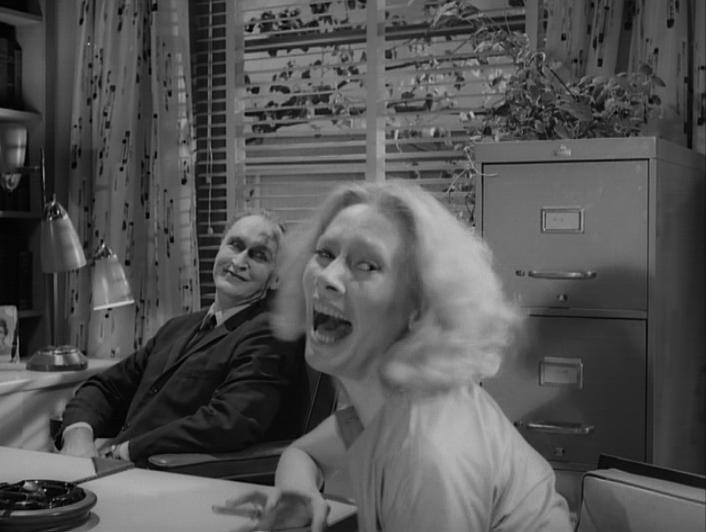
“Carnival of Souls” represented, until just recently, another of the few holes in my movie-watching experience.
Between late-night and weekend afternoon TV airings in my youth (hello, “Francis the Talking Mule”) and rampant cable and home video watching in the 1980s and 90s, I had caught up on many movies that came out before my time, movies that played in theaters in the 20s, 30s, 40s, 50s and 60s.
But I hadn’t seen “Carnival of Souls” until just the other day, when I watched it on one of those multi-movie, public domain collections of horror films.
And I thought it was pretty good. It’s effective and creepy and fairly innovative for its time.
The movie, which is in the public domain and thus shows up on many home video collections of horror films, was released in 1962 and reportedly made by director Herk Harvey for $33,000.
The movie shows its bigger-than-it-has-any-right-to-be budget in its first scene. Two carloads of teenagers (?) drag race and one goes over the side of a bridge … and you actually see the car go off the bridge and into the water, not just impressions of movement and shocked expressions on faces.
Church organist Mary Henry (Candace Hilligoss) is the only survivor of the car that went into the river. Understandably rattled, Henry begins seeing a white-faced man peering at her through windows and in darkened corners.
When she’s introduced to an abandoned amusement park, she is drawn to the haunted place, a gathering place for ghosts.
The movie plays out like an episode of “The Twilight Zone,” but that’s okay. As plots go – no spoilers here, even after a half-century – the story for “Carnival of Souls” is spooky and effective.

Hilligoss, who made only one other film – “The Curse of the Living Corpse,” in 1964 – is pretty good in the movie. She’s sharp-edged and not particularly likable yet still manages to evoke our feelings of sympathy and curiosity. And she’s striking.
Speaking of striking: The movie’s visually quite stark and eye-catching. The black and white cinematography helps, but Harvey found great locations and let them well.
Random observations::
Raza Badiyi is listed as assistant director. He is really Reza Badiyi, who worked for another 40 years or so and directed the “Out of Mind, Out of Sight” episode of “Buffy the Vampire Slayer” in 1997, featuring an invisible girl. According to his IMDB page, he also shot the famous curling wave for the credits of “Hawaii Five-O.”
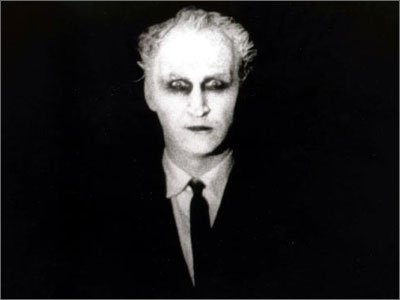
There’s lasting scare value to the scenes in which Hilligoss suddenly sees a white-faced figure looming toward her. The ghostly apparition is played by director Herk Harvey.
Department of unhelpful information, from the dialogue: “Hysteria won’t solve anything. Now control yourself!”
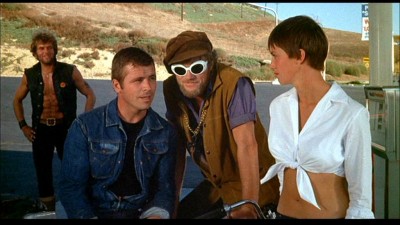
Tom Laughlin is not as well known as Peter O’Toole, certainly, but Laughlin made his own mark on the movie business. He died today at 82.
Laughlin was probably best known for creating the character of Billy Jack, a pacifist who unleashed his deadly martial arts moves when he was pushed … too … far.
Laughlin played Billy Jack in four movies: “The Born Losers” in 1967, “Billy Jack” in 1971, “The Trial of Billy Jack” in 1974 and “Billy Jack Goes to Washington” in 1977. He was ultra-recognizable with his close-cropped hair and blue jean jacket. He was also the guy usually laying waste to a bunch of heavies.
Although the movies were pretty straightforward vigilante fantasies, Laughlin, who also directed, was credited with pioneering modern-day marketing techniques and releasing some of his films himself when big studios spurned them.
Laughlin ran for president – yes, president – in 1992, 2004 and 2008.
Last year I wrote about going to see “The Born Losers” at the drive-in. Here’s that entry.

Kenneth Tobey was one of those actors who, when he appeared on screen in anything from the classic sci-fi horror film “The Thing from Another World” to the TV series “I Spy,” you just felt like everything was under control.
Tobey, who was born in 1917 and died in 2003, was a character actor in films like “The Howling” who occasionally got to play the lead, as in his 1950s series “Whirlybirds,” about helicopter pilots.
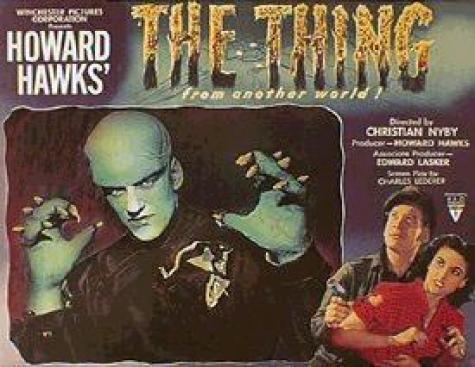
Tobey is one of my favorite actors in one of my favorite movies, “The Thing from Another World.”
In the classic 1951 Howard Hawks production, Tobey played Captain Patrick Hendry, who quickly took control of a remote installation in danger from a fearsome alien (James Arness).
Hendry is low-key and no-nonsense and you had the feeling Tobey was likewise.
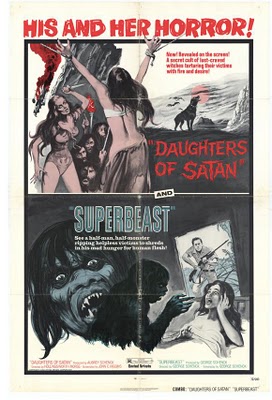
Believe it or not, I’d never heard of “Superbeast” before I saw it among the free movies on the On Demand menu on my cable.
Okay, maybe that’s not all that hard to believe.
The movie was filmed in the Philippines as part of a subset of the movie industry I’ve always been interested in: Cheap exploitation movies filmed – or at least partially filmed – there for release to the US drive-in circuit. For a while there, note some biographies of legendary exploitation filmmaker Roger Corman, exploitation movies and especially exploitation movie trailers included prodigious amounts of Filipino footage of jungles and helicopters and girls firing machine guns. It’s all a little like the footage of chicks shooting machines guns in Quentin Tarantino’s “Jackie Brown.”
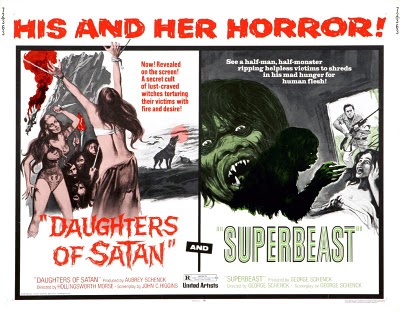
“Superbeast” was released in 1972 on a double-bill with “Daughters of Satan,” a thriller that starred future TV icon Tom Selleck. Selleck went on to greater things, but the same can’t be said for the male lead here, Craig Littler, who did have a stint in the Saturday morning kid’s show “Jason of Star Command.”
Considering the exotic locales in “Superbeast,” there’s a lot of travelogue material here, including trips down rivers with hippos and the like lying alongshore. All this footage serves to fill out the running time of the movie, which has a rather thin storyline.
“Superbeast” is another variation on a couple of well-remembered and much-exploited stories: “The Island of Dr. Moreau” and “The Most Dangerous Game.”
A doctor, played by Antoinette Bower, investigates mysterious goings-on in the jungle and finds lab experiments that turn men into half-men/half-animals.
But there’s really not a whole lot going on for the first half of the movie, except for the doctor waking up to the sounds of screams and gunshots. The doc finds out that the mutated results of these jungle experiments become targets for the mastermind behind it all, a hunter played by Harry Lauter.
Even this description makes “Superbeast” seem more action-packed and coherent than it is. It’s marked by the lazy lack of cleverness that is the ruin of many low-budget movies – and makes clever low-budget films seem even better by comparison. Rather than writing and shooting meaningful plot points, the filmmakers include lots of footage of people just wandering in and out of scenes.
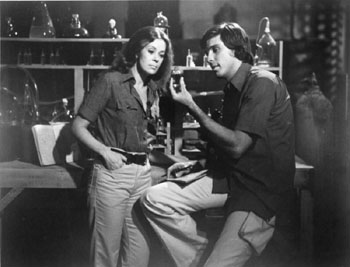
“Superbeast” tries to create shocks by including some real-life gore. There’s an autopsy scene using real footage and another with real organs in a jar. And “Superbeast” might be one of the few movies with exposition delivered via slide show. The movie has a real WTF moment when the female doctor dreams about having sex with one of the mutated natives.
After meandering through the plot for nearly 90 minutes, Litter goes all manimal and shows up in an immobile apeman mask. A struggle ensues and well, that’s pretty much it.
The movie even ends with a “huh?” freeze frame, as if to emphasize the futility of trying to find a coherent plot here.
“Superbeast” didn’t have a life much beyond those 1972 drive-in theaters, and that’s just as well.

If I hadn’t seen it in theaters in 1986 – and numerous times on stone-age VHS tapes in the years that followed – I might think that “Night of the Creeps” was a modern-day spoof of low-budget 1980s horror/sci-fil flicks.
That’s because director Fred Dekker’s movie is so sarcastic, so canny, so knowing that it feels like a modern-day retro pastiche of cliches from movies of the time.
“Night of the Creeps” is very much an “everything plus the kitchen sink” kind of movie. The opening sequence, set in the 1950s, shows both a meteor landing and a homicidal maniac on Lover’s Lane. In black and white, yet.
Of course, the two calamities coincide and slug-like aliens from the meteor infect a body that is cryogenically preserved until it’s accidentally thawed out in 1986.
Before you can say “Nightmare on Frat House Row,” the alien slugs are turning people into zombies.
“Night of the Creeps” has even more than zombies and alien parasites. There are exploding heads, flame throwers, college nerds suddenly turned marksmen, topless coeds … even future Oscar bait David Paymer in a brief role as a morgue attendant who ends up slug infested. Yes, David Paymer.
There are so many funny moments in the movie, but maybe the first LOL moment – 20-some years before anybody knew what LOL meant – is when a young lover in the 1950s hears the beginning of a report on his car radio about an escape from the local institution for the criminally insane .. and clicks off the radio before the germane information.
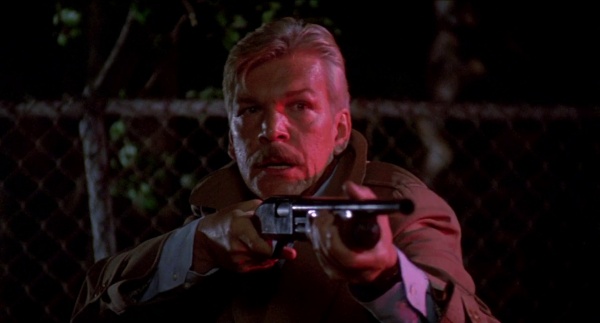
Tommy Atkins, well-remembered for his roles in classic John Carpenter films like “The Fog” and “Escape from New York,” is great here. As student zombies head for the sorority house, Atkins – as a tough cop whose “thrill me” catchphrase is a wee bit overused – turns to the girls and says, “The good news is your dates are here. The bad news is … they’re dead.”
Dekker pays tribute – and provides Easter eggs for fans – in the names of his movie’s main characters, who bear the last names of such directors as David Cronenberg and George Romero. Heck, the university where all the creepy hijinks ensue is names after Roger Corman.
“Night of the Creeps” is a funny, clever horror spoof that’s got just the right amount of spoofery and just the right amount of horror.
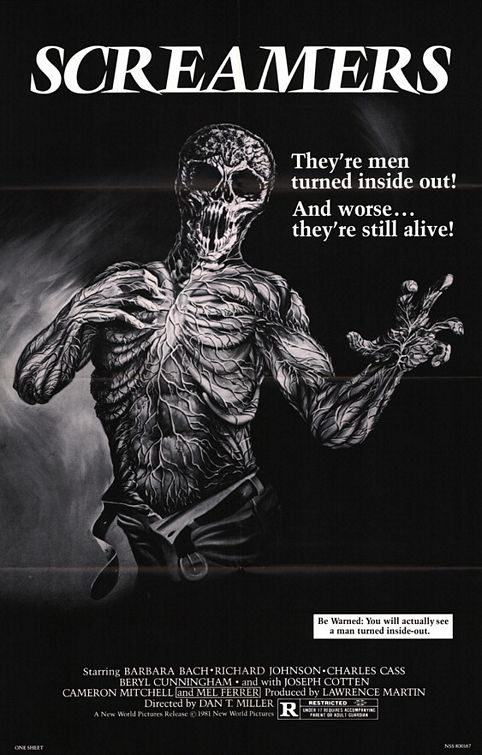
I still remember my expectations when I saw “Screamers” at a drive-in theater in 1981.
They were pretty damn low.
After all, “Screamers” was sold with the catchphrase “Be Warned: You Will Actually See a Man Turned Inside Out” on the poster. When a movie is sold on that kind of pitch alone you know it’s got problems.
When that scene doesn’t even happen in the movie, you know the suckers who paid admission have problems.
Anyway, “Screamers” – which was actually an Italian movie called “Island of the Fish Men,” made two years earlier, then released with some footage added by Roger Corman’s New World Pictures – was pretty weak stuff.
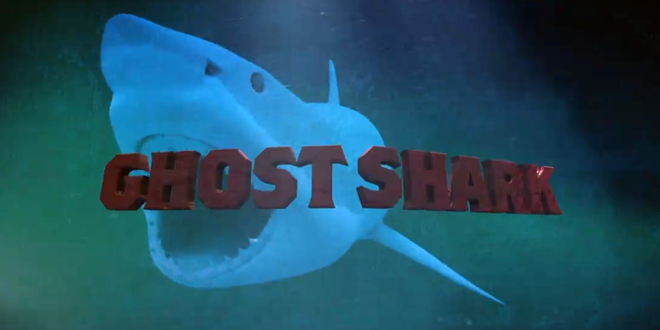
It’s appropriate that the universally liked Corman has, in recent years, produced cheap sci-fi movies for the SyFy channel, home of “SharkNado,” a huge hit on SyFy a few weeks back, and inspiration for “Ghost Shark,” which aired Thursday night. Neither were Corman productions but might have been. That’s because the mix of inspiration and desperation that went into the writing, filming and marketing of these movies was vintage Corman.
“SharkNado’s” best marketing tool was one that couldn’t have been planned or bought by SyFy. The Twitter reaction to the movie the evening it aired added greatly to the movie’s impact on the pop culture landscape.
When SyFy aired “Ghost Shark” – an inferior movie to “SharkNado” but one with some funny and audacious scenes – the channel seemed to try to prime the Twitter pump by superimposing lame “Tweets” in the upper left corner of the screen.
Didn’t work.
I often wonder how modern technology and social media who have affected the plots of movies that predated their invention. In the case of “Screamers” back in 1981, I can only imagine how my friends and I would have digitallly picked the movie apart there from our drive-in vantage point.
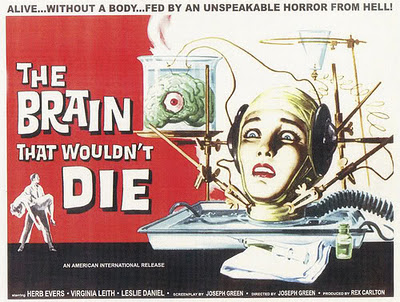
Believe it or not, I hadn’t seen “The Brain That Wouldn’t Die” in its entirety until just recently.
It is, after all, one of those classic schlocky horror movies, those cult drive-in classics, that everybody is familiar with even if you haven’t seen it. It was the first Mike Nelson “Mystery Science Theater 3000,” for pete’s sake.
Yet I managed to never see more than random clips until I sat down to watch it on DVD the other day.
And what a treat.
Filmed in 1959 but not released until 1962, the movie’s original title was “The Head That Wouldn’t Die,” who was probably more accurate.
The movie stars Jason Evers – a familiar face from the “Star Trek” series episode “Wink of an Eye” – as Dr. Cortner, an arrogant surgeon who is secretly experimenting, Frankenstein-style, on creating life after death. He’s been saving random body parts and assembling a creature that’s kept in the laboratory closet downstairs in his family’s summer home.
Early in the movie, even Cortner’s surgeon father criticizes his lack of humility and unpleasant ambitions.
Then Cortner and girlfriend Jan are in a auto accident and Jan is decapitated. Jan is beheaded in the kind of car crash that is usually found in low-budget movies: Lots of shots of the car careening along a country road, then quickly approaching a guard rail. The crash itself isn’t seen. Neither is Jan’s head, which Cortner wraps up in his sportcoat and rushes from the scene (with as much footage of him running, bunched up jacket in his arms, as there are shots of the car speeding down the road).
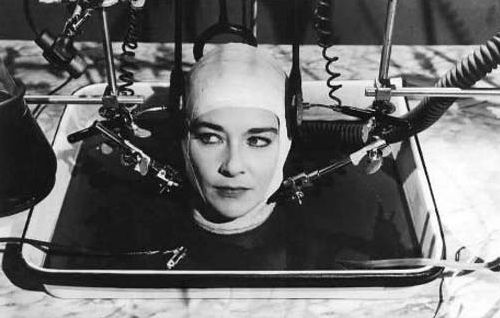
So Cortner put’s Jan … in a pan … at least her head … in his basement lab. Then he begins scouting out a replacement body.
The movie certainly seems to have inspired scenes in “The Re-Animator,” with its head in a pan motif. And “Jan in the Pan” is apparently the nickname for the female lead once she’s … in a pan.

Every cheap horror movie needs a monster and a woman’s head in a pan just wasn’t going to cut it. Hence … the stitched-together monster in the closet.
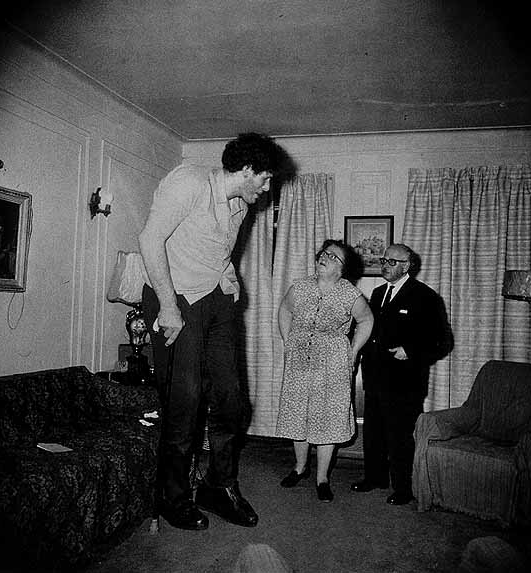
The creature, the result of Cortner’s previous experiments, is played by seven-foot, six inch Eddie Carmel, subject of a photo by renowned photographer Diane Arbus that depicts Carmel as “The Jewish Giant at Home with His Parents.”
As Cortner goes to a burlesque house to pick out a new body for Jan, he doesn’t seem like a tortured soul looking to save his girlfriend. He seems to be enjoying the view a little too much.
Adding to the overall aura of sleaze: Two dancers get into a catfight, boobs jiggling. Cut to drawings of two cats and a dubbed meow.
Jan, meanwhile, wakes up – well, her head wakes up – and she immediately begins talking to the still-unseen monster in the closet, talking up their mutual need for revenge.
There’s some choice dialogue:
“An operating room is no place to experiment.”
“Very well. The corpse is yours.”
Said during operation: “I’ve been working on something like this for weeks.” Well, tons of research then.
“I love her too much to let her stay like this.” Well, a disembodied head in a pan, yeah.
“The line between scientific genius and obsessive fanaticism is a thin one.”
“Horror has its ultimate … and I’m that.”
And cackling by Jan in the pan. Lots of cackling.
The end credit slide on the copy that I watched still had the original title: “The Head That Wouldn’t Die!”
 keithroysdon