Category Archives: End of the world

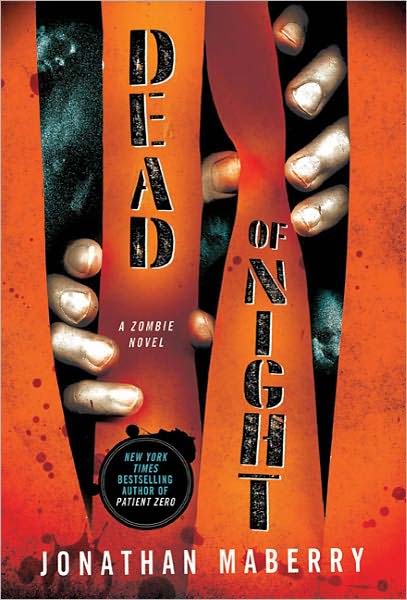
Cops and zombies: Jonathan Maberry’s ‘Dead of Night’

Shambling and slow as they might be, we just can’t get away from zombies.

There’s “The Walking Dead” on TV — the biggest hit on cable — and “World War Z,” the movie version of Max Brooks’ terrific book and starring Brad Pitt, to come out later this year.

And there’s Jonathan Maberry’s “Dead of Night.”

Maberry is a writer of suspense fiction, comic books and thrillers that take their cue from biological warfare and the queasy possibilities of modern-day laboratory horrors.

In “Dead of Night,” Maberry does a couple of things I’ve not seen in a zombie book before.

He gets inside the mind of a couple of zombies — yeesh — giving readers a feel for the zombie perspective.

And, most interestingly and importantly, he approaches the possibility of a zombie apocalypse from the perspective of small-town cops dealing with its early stages.

Think about it: Most zombie books and movies, even if they have a small-town or isolated setting, include characters who know the big picture.

While Maberry’s story has those characters, it follows, especially early on but throughout the book, the street-level shock troops dealing with the beginning of the end of the world.

Maberry’s small-town Pennsylvania cops and TV reporters don’t know, at least for a while, that a plague of zombies has broken out. They only know that a couple of people have been killed, in grisly fashion, and that a couple of bodies have disappeared. A suspect is on the loose, but it takes a while for them to realize that the suspect and the missing corpse are one and the same.

The characters try to puzzle this out but thankfully never seem oblivious to the mayhem developing around them. As a matter of fact, there’s nothing like a previously dead body attacking you to change your perspective.

“Dead of Night” is a well-written thriller with appealing, made-for-cable-TV characters and situations.

The ending is open just enough to allow for a sequel. I don’t know if Maberry is planning one, but I’m ready to rejoin the zombie hordes if it happens.

‘Walking Dead’ adds action in ‘Trigger Finger’

Okay, that was more like it.

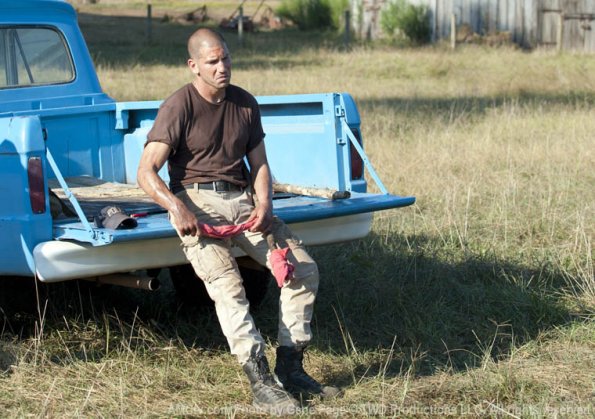
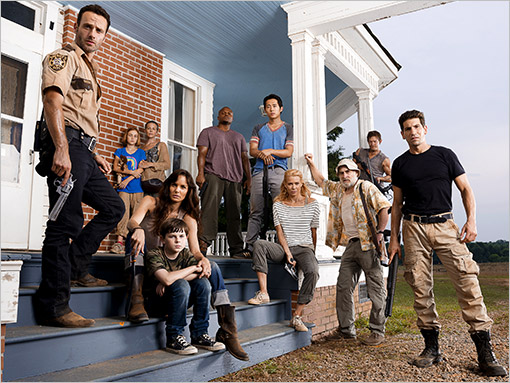
Tonight’s episode of “The Walking Dead” on AMC, “Trigger Finger,” liberally mixed action with the soap opera storylines we’ve become accustomed to so far in this, the second season of the zombie apocalypse show.

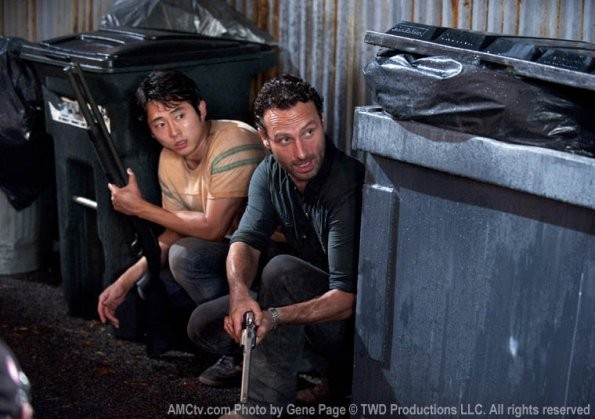
A follow-up to last week’s episode, in which Rick and Glenn went to town to find Hershel, only to meet — and in Rick’s case, kill — two dangerous human types, “Trigger Finger” opened as the companions to the interlopers from last week gathered outside the saloon and, for a while, kept our heroes pinned down by gunfire.

Meanwhile, Shane went off to find Lori, who crashed her car last week and found herself fighting off a walker attack this week.

The episode had the kind of action that too many episodes haven’t featured this year, including the opening gunfight between the good guys and the new and mysterious bad guys. The stand-off was complicated by the arrival of zombies and a serious injury for one of the interlopers. Rick decides to take the injured stranger back to the farm, which further antagonizes Shane.

I’m getting the sinking feeling that the remaining few episodes of this season will be spent on Hershel’s farm. The static nature of the farm setting — and the stories told so far this year — has been a sore point with fans, me included.

But — and this is a very big but — if the remaining episodes have the same mix of action and suspense and character drama as tonight’s “Trigger Finger,” I’ll keep watching.

On the interpersonal relationships front, Shane spilled the beans about Lori’s pregnancy and and Lori cautioned Rick that Shane believes that Lori and the baby are his … and very well might kill Rick to take what he believes he’s entitled to.

Also tonight, Glenn froze in action and dealt with the aftermath and Andrea and Shane seem to be drifting further away from the core of the group. And Daryl seems intent on pushing Carol away.

One thing I’d like to see: More to do for T-Dog. He’s barely in the series anymore.

Best thing about tonight’s episode: The new, improved, man of action Hershel. If we’re gonna hang out with him all season, I’m glad he’s capable of being more than a soft-spoken old scold.

Gruesomest thing about tonight’s episode: Lots of zombie chowing down, plus a grisly fence impalement.

What was ‘The Walking Dead’ whisper?

Here’s one for fans of the AMC series “The Walking Dead” as we wait for another new episode — the second in the latter half of the second season — to premiere Sunday night.

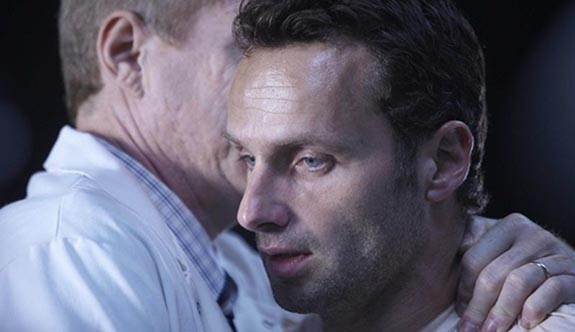
What did Dr. Jenner, the scientist at the Centers for Disease Control, whisper in Rick’s ear near the end of the final episode of the first season?

If you remember, the survivors of the zombie apocalypse made their way to the CDC at the end of the first season but abandoned it when Dr. Jenner, the last remaining scientist, became despondent and decided to blow stuff up real good.

Before Rick led the survivors out, Jenner whispered something in Rick’s ear.

The Associated Press asked Andrew Lincoln, who plays Rick, about the whisper.

Lincoln — who maintains he knows what the whisper was intended to be, but says he hasn’t even told his wife — hints that the whisper was not good news.

“This is a scientist who seemingly held all the cards to what this epidemic is about and I do think, you know, you would imagine he would have something of value to say on that matter,” Lincoln told the AP. “Well, he chose to kill himself.”

Well.

A friend, co-worker and fellow “Walking Dead” devotee of mine, Mark, says he believes the doctor whispered the word “Airborne,” which would not be good news for the survivors.

Having read some, but not all, of the comics upon which the show is based, I don’t know if the whisper was a part of the storyline or if it has been revealed.

I’ve heard other speculation about the whisper, including “No cure.” Also a dark scenario.

Lincoln indicated that the answer would be revealed this year.

As long as the doctor didn’t whisper, “Stay on the farm forever,” I’m good with whatever happens.

Mort Report: Severin and Hinzman

A quick note of remembrance for two pop culture figures who died recently:

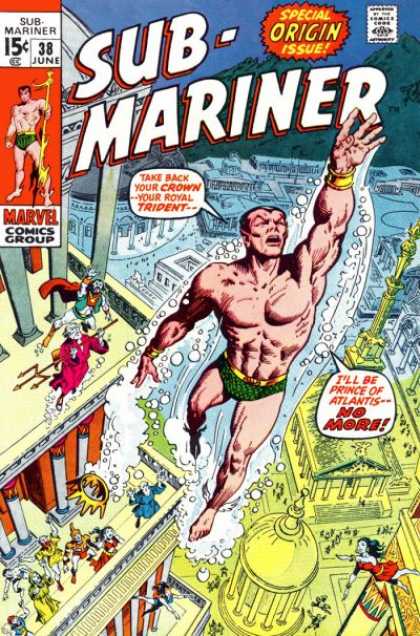
As a compulsive credits reader, I loved looking at 1960s and 1970s Marvel comics, in part because Marvel actually credited the writers, artists, inkers and letterers who worked on each issue but also because the company’s style was to give each a funny nickname like Stan “The Man” Lee.

So I got accustomed to seeing the name John Severin on a lot of Marvel comics. (I don’t remember his specific nickname, but I’m guessing it was something like “Joltin’ John Severin” since “Jazzy John Romita” was taken.)

Severin was never a star artist like Jack Kirby or Jim Steranko but he had a long career. Obits published following his death in the past week at age 90 note that he drew Mad and other EC publications in the 1950s, drew some great Marvel comics in the 1960s and was a staple at the humor magazine Cracked for years after.

The other death of note is that of Bill Hinzman, who died earlier this month at 75.

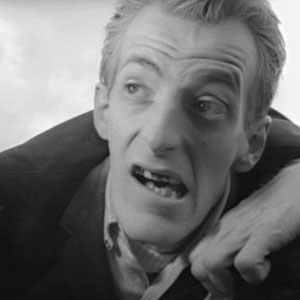
You probably don’t know Hinzman’s name, but he was one of the most recognizable faces in modern-era horror movies. He played the graveyard zombie, the first seen in George Romero’s 1968 classic “Night of the Living Dead.”

“They’re coming to get you, Barbra,” was said about Bill Hinzman.

Pop culture was the better for their careers.

‘The Walking Dead’ reminds us of stranger danger

AMC’s “The Walking Dead” returned with its mid-season premiere tonight and emphasized that old zombie story truism: Other surviving humans can be more dangerous than walkers.

A lot of people complained when the first half of the hit show’s second season spent so much time on Herschel’s farm. I enjoyed the dramatic and soap opera aspects of the season — Lori’s unplanned pregnancy, Shane’s descent into madness, Glenn’s budding romance with Herschel’s daughter — but I was getting pretty restless too.

And somewhere in the back of my mind, I’m giving the show only so long to get off that farm and back on the road.

Tonight’s episode, “Nebraska,” showed the fallout from the end of the first half of the season. The band of survivors discovered that Herschel’s barn was full of walkers. Some of them were his family members, as Herschel mistakenly believed they might be cured.

Most horribly, Sophia, the long-missing daughter of Carol, was one of the walkers in the barn.

Truth be told, there was still a little too much talk in tonight’s episode, as the survivors cleaned up after the zombie massacre and Rick and Glenn went off to the nearby town to find Herschel, busy crawling into a bottle in what’s apparently the last intact bar in Georgia.

Aside from the zombie burying and zombie burning, not a lot happened until near the end of the episode, when two strangers show up.

There’s been a lot of online speculation that the two might be important characters for the rest of the season, but that’s not the case. They might spark some movement among the survivors, however, and that’s good.

The preview for next week’s episode showed that Rick and company run into friends of the strangers they confronted at the end of tonight’s episode, while a walker gets a little to close to Lori, who had an unfortunate accident tonight.

I’ll be tuning in again next Sunday, hoping that the remaining five episodes of the season get the survivors on the road again — at least long enough to get to their next destination.


King’s ’11/22/63′ does time travel right

Every science fiction author has tried his or her hand at a time travel story, sometimes more than once. Some do well, avoiding the cliches — what if I accidentally kill my own grandfather? — and others jump headfirst into the eddies and paradoxes of the time stream.

A couple of notable time travel stories — both made into movies, with vastly different results — are Ray Bradbury’s 1952 short story “A Sound of Thunder,” in which future big-game hunters use the available time travel technology to travel into the distant past to hunt dinosaurs, and Richard Matheson’s 1975 novel “Bid Time Return,” in which a lovestruck modern-day man wills himself into the past to meet an actress from an old photograph.
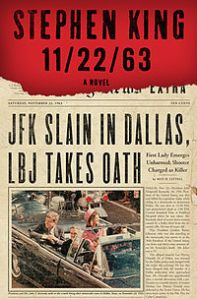
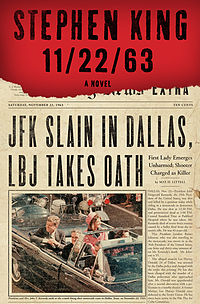
Stephen King’s latest book, “11/22/63,” has echoes of both stories — the former in that its protagonist worries what might happen if he goes back in time and changes history and the latter in that a love lost in time is a central theme.

In the afterward to his 800-plus page book, however, King says he thinks Jack Finney’s “Time and Again” is “the great time travel story.”

Finney’s book, about a time-traveling tourist of sorts, also seems to be an influence on King’s novel.

King tells the story of Jake Epping, a teacher from modern-day Maine who reacts with disbelief when a friend tells him he’s stumbled upon — literally — a doorway back into time. A time portal is hidden in a little-used storage closet in the back of a diner in a small Maine town and the diner’s owner, Al, wants Epping to complete a mission that he could not: Save John F. Kennedy from assassination.

It seems that Al discovers that the time portal goes back to the same day — indeed, even the same minute — in 1958. Al has been going back and forth for years, enjoying his visits to the past and, while he’s there, buying cheap ground beef and bringing it back to the future. His suspiciously inexpensive hamburgers aside, Al has become fixated on a plan to save JFK from Lee Harvey Oswald’s bullets that fateful day in Dallas in November 1963.

Since this is a King story and King is known for his acknowledgement of human mortality, something goes wrong: Al is dying from cancer and is, in fact, likely to die before he can complete his mission. You see, he’s already gone back to 1958 and lived for several years in the past, waiting for the right moment to stop Oswald or anyone else with plans to kill the president.

So Al recruits Jake, urging him to go into the past and save JFK. If Jake is successful, Al believes all of modern history will turn on a dime and the world will be greatly improved. Vietnam might end early, saving the lives of thousands; Bobby Kennedy and Martin Luther King Jr. might never be assassinated. The potential world-changing events are nearly endless.

Of course, Al is right, but not in the way he believes.

Jake, who takes some convincing, has another mission in mind as well. The school where he teaches employes a janitor who, in the course of an adult education class, writes a story about the harrowing night in October 1958 when his father wounded him horribly and killed his mother and siblings. Jake reads the paper and is haunted by it.

Since Jake will materialize in the past just a month before that happens, why can’t he stop the familial slaughter then head for Dallas?

King’s readers know that the author wouldn’t let his characters move as cleanly and easily through the events of the story as all that.

One of my favorite elements of “11/22/63” is King’s theory that the past doesn’t want to be changed. More than the dangers of changing the flow of history — and the book dramatically details those — Jake finds there’s real danger in trying to effect change in the time stream. If you try to make a little change, the past pushes back in a little way. Maybe you get a flat tire or the stomach flu.

If you try to make a big change — and what change could be bigger than saving Kennedy? — the hands of time pummel your ass.

King’s book, which makes 800 pages read more like 400, takes its time with its characters. The first section is about Jake’s efforts to save the lives of the janitor’s family in 1958. The second is about the years between that time and Kennedy’s assassination, when Jake lives, under a new identity, in a small Texas town. It’s during this time the stakes start getting higher. Jake not only begins to find out everything he can about Lee Harvey Oswald but also falls in love with a troubled young woman working at the school.

The final section of the book is a propulsive countdown to Kennedy’s arrival in Dallas, with Jake facing very long odds in his effort to change history.

King loads his book with wonderful plot points, from how Al and later Jake subsidize their stay in the past to little details about the period and the towns where the story takes place. He even finds time to make reference to “It,” his creepy novel about a killer clown in a small Maine town.

You’ve probably read and seen dozens of time travel stories and maybe even more than a few about the Kennedy assassination (the 1980s TV remake of “The Twilight Zone” had a good one, “Profile in Silver”).

But few in recent memory explore the concept as cleverly and with as much emotion as King’s latest novel.
 

Yes, more pop culture on Twitter

You know what the world needs even more than a blog about pop culture, with an emphasis on the fun, geeky and goofy?

A Twitter feed about pop culture, with an emphasis on the fun, geeky and goofy.

I’ve been on Twitter for my job for a couple of years now and I love the 140-character-at-a-time, headlines-and-links nature of Twitter. It is, in many ways, the most direct way of communicating on the Interwebs.

So I’ve decided to start a pop culture Twitter account.

If you’re so inclined, check it out at @Pop_Roysdon on Twitter.

Writers to read: Chuck Hogan

Chuck Hogan is one of those writers whose fame is slowly growing but whose name might draw a blank stare even from avid readers of crime novels and thrillers.

Chuck who?

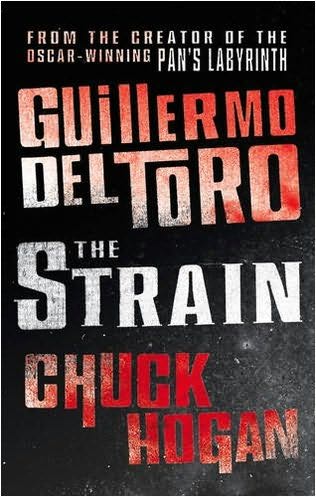
Hogan co-wrote, with Guillermo Del Toro, the trilogy of end-of-the-world books that began with “The Strain.”

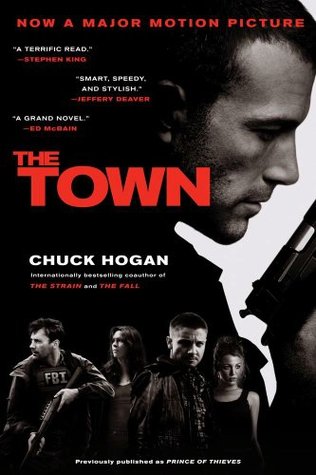
He also wrote the gritty thriller “Prince of Thieves,” the story the Ben Affleck/Jeremy Renner thriller “The Town” was based on.

Oh, that Chuck Hogan.

I’ve been making my way through Hogan’s novels, in no particular order. As proof of that, I’ve just finished his first book, “The Standoff,” published in 1994.

The downbeat story of a deeply troubled FBI hostage negotiator, the sheriff of a small Montana county and a black federal agent, all of whom are thrown into a dangerous situation thanks to a standoff with a white supremacist holed up, along with family members, in a small mountain cabin.

When a local judge mistakenly orders an eviction notice be served on the mountain man — who has a good supply of guns to back up his racist, government-hating paranoia — dominos begin falling. Shots are fired, reinforcements are called in and the people of a nearby town start taking sides. Unfortunately, they take the side of the racist cabin-dweller.

Hogan throws a few twists into the story, but the book is a straightforward and ultimately dark thriller.

The story is interesting in part because of the time in which it was published. The federal standoffs at Waco and Ruby Ridge had occurred but the Oklahoma City bombing had not. Mention of the World Trade Center — the scene of an earlier, traumatic hostage situation that left troubled agent John Banish literally and figuratively scarred — seem eerie.

Hogan isn’t a showy writer. The “Strain” trilogy with its end-of-the-world theatrics isn’t typical of his work.

With that series complete, I’m hoping that Hogan gets back to the mean streets and meaner protagonists of his best thrillers.


Here’s a little teaser for ‘The Walking Dead’

Yes, yes, I know that you know: I’m looking forward to the return of “The Walking Dead” on AMC on Feb. 12.

Here’s hoping the second half of this second season of the show has the fun character conflict that marked the first half of this season — plus lots of zombie goodness.

Because WordPress still won’t let me post videos, for some reason, here’s a link to the short but exciting teaser trailer for the show’s mid-season return.

It’s not the end of the world

I’ve been on an “end of the world” kick lately, mostly subconsciously.

Not just looking forward to the return of “The Walking Dead” on Feb. 12, but enjoying “The Fades,” the new series on BBC America, and anticipating the movie version of “World War Z” this fall. Anticipation mixed with dread, actually, considering all the changes they’ve apparently made to the great Max Brooks episodic novel.

I didn’t get into the latest end-of-the-world opus I tried, however. I stopped reading David Moody’s “Autumn,” the first in a multi-book series, after I realized the glacial pace its end-of-the-world-through-the-flu-with-zombies story. Checking out the fourth book online, I noticed it said it took place something like 40 days into the story. No thanks. I’ve had enough of the glacial pace of “The Walking Dead” to do me for a while.

I was also a little disappointed in “The Night Eternal,” the third book in “The Strain” trilogy by Guillermo del Toro and Chuck Hogan. The series started strong with the original 2009 book about a plague of vampires threatening the world and the second book, “The Fall,” was pretty good if dire. By the time of the third book, things were pretty bleak and it’s no surprise that bad things happen to some characters you liked pretty well.

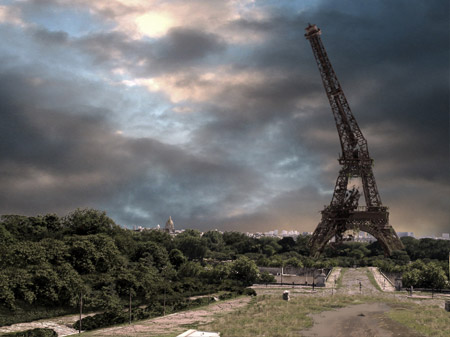
So I’ll happily make do with the return of “The Walking Dead” and the occasional glimpse of History’s “Life after People.” That series, which looks at the deterioration of the world’s landmarks after the end of humanity, is fascinating and forlorn.

And there’s always another reading of “The Stand.”