Category Archives: End of the world

‘The Fades’ is creepy fun

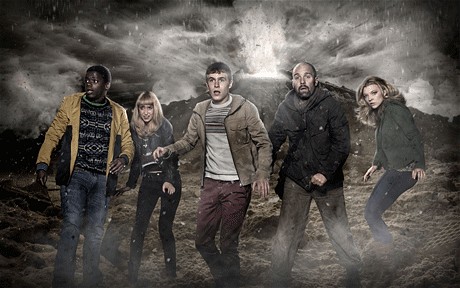
If “The Fades,” a new supernatural series on BBC America, seems a little familiar, it’s no wonder. After all, it’s about a teenage outcast who discovers the ability to detect and battle supernatural creatures. The teen is aided by dorky friends and mentored by an adult monster-hunter.

Sound like “Buffy the Vampire Slayer?” Well, yes and no.

Paul, the British teen at the center of the series, is no Buffy Summers. He’s not especially heroic. He wets the bed.

But “The Fades” very well might take the “Buffy” premise and turn it into its own brand of good, creepy fun.

The show, which has been airing in the UK for a while but just debuted on BBC America (the first episode is still available for free On Demand; the second episode airs this Saturday), does employ the same kind of pop culture references that Buffy enjoyed. At some point, after Paul explains to dorky friend Mac that he’s able to see Fades — once-human walking corpses — Mac says he’s heard it before, in “The Sixth Sense.”

Mac becomes a believer, however. And Paul already has support from Neil, a disheveled middle-aged “Angelic” — living people like Paul who can see Fades — in his efforts to figure out what’s going on.

Among the mysteries: What is the violent, ultra-creepy Fade that’s attacking Angelics? And why does Paul have visions of an ash-filled global apocalypse?

The first episode of “The Fades” had a lot of intriguing ideas (although I confess I might have missed a few in the rapid-fire, Brit-accented dialogue) and some genuinely spooky scenes, especially those in a vast abandoned building.

I’m looking forward to seeing where “The Fades” goes next.

Zombies from A to … well, Zombie

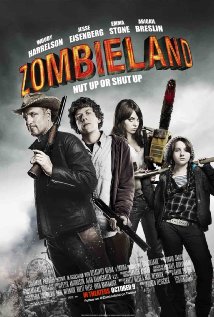
Maybe it’s because it’s Sunday night and I’m missing “The Walking Dead.” Maybe it’s because “Zombieland” is on TV.

But zombies are on my mind tonight.

What is it about zombies that make them ideal fodder for spooky fiction? Maybe it’s because they’re so inexorable, shambling toward us — or sprinting, in some movies. Maybe it’s because they are — or were, at least — us.

Maybe it’s because they’re fun.

Zombies have lurked around the edges of pop culture for much of the past century, first popping up in Depression-era stories, usually set in Caribbean countries.

The 1932 movie “White Zombie,” starring Bela Lugosi, popularized the idea of the zombie as a glassy-eyed, stiff-gaited creature, usually controlled by a voodoo master. Zombies became staples of cheap monster movies for decades … until another cheap monster movie changed everything.

In 1968, George Romero and a handful of investors released “Night of the Living Dead” and set the tone for zombie flicks for years to come.

The black-and-white film, with its cheap gore and shockingly downbeat ending, wasn’t topped for another decade and then only by Romero himself.

“Dawn of the Dead” came out in 1978 and succeeded on so many levels. The film, in eye-popping color, featured explicit gore — the film was released unrated to avoid an “X” — and biting social commentary as survivors and zombies alike flocked to the shopping mall for a comforting reminder of the past.

The movie was such a hit that imitators and rip-offs followed, including 1979’s “Zombie,” a European shocker that was marketed in some countries as a sequel to “Dawn of the Dead.” “Zombie” featured the first shark vs. zombie underwater fight. First and, probably, only.

In 1985, “Return of the Living Dead” gave us a real change-up. While Romero continued to make (only sometimes effective) sequels to “Night” and “Dawn,” the co-holders of the rights to his 1968 movie made the first of a series of flaky, crazy, gory zombie pics. Famous for moments including reanimated medical specimens and zombies calling for “more paramedics,” “Return” was the most fun you could have with zombies. At least for a few years.

An often-overlooked zombie movie was “The Serpent and the Rainbow,” a Wes Craven movie starring Bill Pullman in a story loosely based on real-life researcher Wade Davis. The 1988 film is offbeat and effective and finds as many chills in the bloody politics of Haiti as in the walking dead.

Beginning with 2002’s “28 Days Later,” and remakes of “Night of the Living Dead” and “Dawn of the Dead,” zombies started getting nimble, fast and, in many ways, scarier. All of a sudden, zombies didn’t shamble slowly across a sunny graveyard. They ran like hell at us. It was freaky.

By the time “Zombieland” rolled around in 2009, the trends of fast zombies and gruesome and funny zombie deaths were fodder for a great movie. A small group of survivors travels across the country, looking for Twinkies and trust and finding Bill Murray — in one of modern cinema’s great cameos — and an abandoned amusement park. Well, not totally abandoned, of course.

With “The Walking Dead” comic book and TV series and Max Brooks’ great 2006 book “World War Z” — being made as a movie starring Brad Pitt — zombies are riding a crest of popularity right now. Zombie costumes were huge this Halloween. They were cheap to make and, after decades of watching zombies in movies and on TV, everybody knows how to pretend to be a zombie, right?

I love me some good vampire stories, particularly “Dracula” and “Buffy the Vampire Slayer.” But zombies are the monster of the moment, maybe improbably, and that popularity doesn’t show any signs of slowing down.

And neither do those damn zombies.
‘The Walking Dead” reveals ‘Secrets’

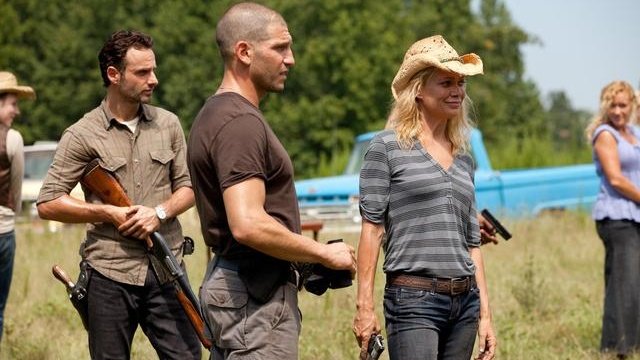
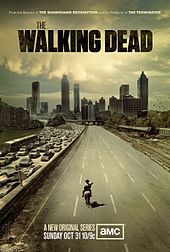
AMC’s post-zombie-apocalypse series “The Walking Dead” moved into full-on soap opera mode tonight, and that was fine by me.

As a matter of fact, except for a couple of zombie scenes, you could almost mistake tonight’s installment for an episode of “Knot’s Landing.” There was even a suburban cul de sac.

But seriously, folks: As we’ve noted already this second season, the drama in this show revolves around the people. What happens when Daryl’s brother Merle returns and finds out his little brother has become a good guy? What happens when Rick finds out Lori was shacked up with Shane in the first days of the zombie apocalypse? What happens when Shane pops his cork and starts killing people?

We found out the answer to one of those questions tonight and maybe it wasn’t surprising. If you’re struggling to deal with the continued existence of you and your ragtag band of survivors, you probably learn to shrug, move on and worry about a lot of small stuff later.

Not that there wasn’t plenty of personal drama going on. With a title like “Secrets,” you can bet that a few were spilled.

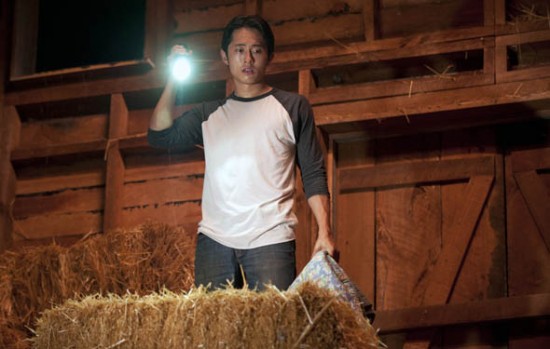
My favorite character, once again, was Glen, who continues not only to be a capable guy when you’re dealing with the walking dead but also a go-to comic character. As a young guy entrusted with too many secrets, Glen started burbling: Walkers in the barn. Lori’s pregnant. I’m making it with the farmer’s daughter.

The secret of the walkers in the barn was as poignant as it was wrong-headed. Made me want to slap everybody concerned. And yet, at the same time, I understood.

With all the character drama, maybe it didn’t seem like there was time for zombies. But there were a couple of good walker moments. The makers of the series know how to make our skin crawl with a well-timed zombie attack.

Next week’s episode is the “mid-season finale,” AMC says, which means that we won’t see new episodes until February. I’m hoping it’s going to be a doozie.

‘The Walking Dead’ flashes back

I don’t think any episode of AMC’s post-zombie-apocalypse series “The Walking Dead” has reminded me of Stephen King’s classic “The Stand” quite as much as tonight’s installment, “Chupacabra.”

Sure, it’s impossible for any end-of-the-world-and-after story to do anything but remind us of King’s epic. But tonight’s adaptation of Robert Kirkman’s comic book series had a couple of moments that evoked King’s masterpiece.

Spoilers ahead.

The episodes opens with a flashback to the early days of the zombie apocalypse as Shane, Lori and other survivors are stuck on the highway, watching in horror as the military drops napalm on a city — Atlanta, I’m guessing — to knock down an infestation of “walkers,” the show’s term for reanimated dead. The moment reminded me not only of “The Stand” but also “World War Z” and “The Strain,” two modern classics of the apocalypse.

But the moments most reminiscent of “The Stand” came when Daryl, the show’s new unlikely hero, is scouring the woods for a missing girl. He takes a tumble, ends up injured and gets a hallucinatory pep talk from an unlikely source: His brother Merle (Michael Rooker), the murderous racist from the show’s first season.

As Merle — whose return was teased in previews for this episode — taunts and insults Daryl into getting up and out of his predicament, a couple of echoes of “The Stand” came to mind: Nick Andros appearing to simple-minded Tom, telling him how to save injured Stu Redman, and also the internal battle going on inside Harold Lauder. In “The Stand,” Harold could turn bad or good and he struggles with his soul and his conscience before making a fateful and explosive decision. We haven’t yet seen what Daryl decides.

The episode also showcased the growing tension between Rick and Shane — who don’t yet know that Lori is pregnant and one of them is the father — and a freaky finale in which Glenn discovers the secret behind the peaceful farm in which they’ve taken shelter.

There are a lot of complaints online about the pace of “The Walking Dead,” but I’m enjoying it. Moments like those tonight, with Rick and Shane recalling their high school years and then debating the finer points of every-man-for-himself, and Merle’s brief appearance, are keeping me happy.

Halloween horror: ‘Walking Dead’ rocks, ‘Simpsons’ sucks

Here we are, on the eve of Halloween, and various movie channels are having marathons, ranging from the classics on TCM to later, lesser “Halloween” movies on AMC.

Into the mix comes the latest episode of “The Walking Dead” on AMC and the latest installment of “Treehouse of Horror” on “The Simpsons” on Fox.

First, let’s make short work of “The Simpsons.”

After being a zealous fan of the show for its first 10 seasons or so — we just re-watched “Mr. Plow” on DVD the other week — I fell out of love with “The Simpsons.” A dozen years ago, the show seemed to lose most of its creative edge. Maybe you really can’t do 500 episodes of a TV series and expect it to continue to be good. Duh.

Tonight’s “Treehouse of Horror,” the show’s annual Halloween special, had a couple of funny moments but overall was pretty lame. Judging by tonight’s episode, the show has traded pointed, harsh humor and wonderful characters for cheap and crude laughs. When a joke revolves around the similarity of the words tentacles and testicles, you know the show is spinning its wheels.

On the other hand, “The Walking Dead” continues to feature some of the most gripping — as in gripping the arms of my chair — suspense on TV.

As the survivors of a zombie apocalypse take refuge on a remote farm, where their injured are treated by the kindly resident veterinarian, tensions external and internal build. Watching Shane, the conflicted deputy, make a stomach-rolling choice tonight made me wonder where the producers are going with the character.

The show is, of course, all about characters and choices. Tonight’s episode saw some discussion of a point that I’ve been expecting for a while now: What if your reaction to the end of the world was not to fight to survive, but to opt out?

If characters are considering putting themselves out of their misery on “The Walking Dead,” might it be too much to hope that Fox would consider euthanasia for “The Simpsons?”

Again, duh. After wrangling over salaries, the talented vocal actors on the show recently signed for two more seasons. There’s simply too much money to be made for Fox to consider leaving any on the table.

‘The Walking Dead’ rides a zombie wave

The zombies are among us.

Actually, they are us.

Zombies — a mainstay of published fiction and movies, both gripping and cheesy, for decades — are pretty hot for a bunch of moldering, shambling flesh-eaters.

I talked to the owner of a local costume shop the other week who said that zombies appear to be the hottest Halloween costumes this year. (There’s that “they are us” thing.)

Max Brooks’ clever and gripping “World War Z” is being made into a film starring Brad Pitt, the latest in a long string of movies dating back to Bela Lugosi in “White Zombie.” One of my personal favorites, “The Serpent and the Rainbow,” gave a macabre “real life” feel to the walking dead.

Oh yeah, the walking dead. Or more precisely, “The Walking Dead.”

You may not be inclined to sit down and watch the AMC series version of Robert Kirkman’s comic book “The Walking Dead.” I wasn’t sure if the series, the first season of which debuted about a year ago, was going to work.

But it has. The second-season premiere last week drew more than 7 million viewers — a record for AMC, the channel that has given us “Mad Men” and “Breaking Bad.”

If all those viewers come back tonight, despite last week’s grisly and impromptu zombie autopsy and rumors of troubles among the behind-the-scenes writers and producers, it’s a testimony to our love of zombies.

Now “The Walking Dead” isn’t in the same league, for me at least, as the FX rural crime drama “Justified” or the aforementioned “Mad Men.” It’s no “Lost,” although we can all hope “The Walking Dead” avoids that show’s pitfalls.

But there’s something compelling about “The Walking Dead.”

Clear back to George Romero’s “Night of the Living Dead” and its great sequel, “Dawn of the Dead,” it was pretty obvious that the heart of any good zombie tale was the people — the living, breathing, non-shambling people — it focused on.

It’s easy to say that “The Walking Dead” is a metaphor for modern life, the same way “Dawn of the Dead” was a commentary on our culture and a chance to see some poor schmuck’s guts get torn out.

But it’s not just the commentary on friendship and family and the willingness to fight the futility of life that makes “The Walking Dead” worthwhile. The characters are compelling. You want them to live. You want them to escape with their limbs and minds intact.

Even as you wonder how they possibly can.

As I watched last week’s season opener, I wondered how the kid characters in the show could possibly avoid post traumatic stress disorder or any number of waking nightmares after what they’ve experienced at a very young age. How can any of the adults, for that matter?

So while followers of Kirkman’s comic books know there are a lot of miles and a lot of twisted and twisty plot developments to come, most of us can just enjoy the show’s unfolding story.

One moldering, shambling moment at a time.

Robot end of the world can’t quite top zombie finish

In the wake of the pirates vs. ninjas match-up (how did that come out, anyway?) comes another, even more intriguing face-off: Robots vs. zombies.

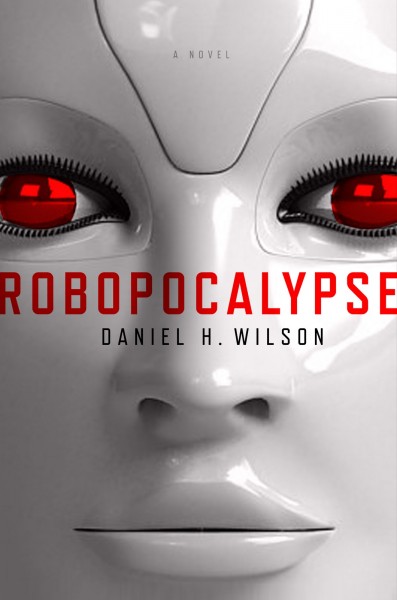
The thought comes to mind as I finish “Robopocalypse,” a recent novel by Daniel H. Wilson, a guy with a doctoral degree in robotics and a hell of an imagination.

There are no zombies in Wilson’s end-of-the-world and beyond — well, not really — but clearly “Robopocalypse” is shooting for the same pop culture impact as Max Brooks’ “World War Z.”

Both novels recount the end of the world. Brooks’ 2006 book is about how society breaks down when zombies begin to spread like a virus. Wilson’s story is a near-future tale about what happens when artificial intelligence emerges and decides it deserves to inherit the earth.

Both books employ the technique of alternating chapters telling the story from the points of view of diverse narrators. Brooks’ book rarely returned to the same characters as it jumped from India to the American west to the international space station.

Wilson’s book, however, follows a half-dozen storylines and that many groups of humans as they survive, elude and eventually fight back against the robot revolution.

In the future portrayed in the book, robots are much more commonplace in our society. Most cars are automated, so when Archon, the AI that leads the revolution, gives the order, they begin running down pedestrians. Robotic household helpers commit bloody murder and electronic peacekeeping robots turn on their armed forces comrades in Afghanistan.

Wilson’s idea of recurring narrators will probably make it easier for director Steven Spielberg to turn the book into a movie, a project that’s been announced but not yet begun. The fractured narrative POV of “World War Z” means that the movie version — now in the works — had to add a human narrator to appear throughout the story. In the movie, he’s played by Brad Pitt.

“Robopocalypse” is clever and often thrilling with a likable group of characters and some genuine suspense.

I have to say, though, that I preferred “World War Z” for a couple of reasons. Brooks’ novel isn’t afraid to let readers figure out things for themselves. Wilson’s book, narrated by a young soldier, over-explains what’s happening. Almost every chapter is filled with intriguing scenes and characters but ends with a narrated paragraph reiterating the importance of the developments we’ve just seen and those to come. They’re totally unneeded.

I’m also kind of surprised that a couple of the strongest plot twists and characters don’t happen a little earlier. They’re turning points, to be sure, but by holding them back, Wilson deprives us of some of the most engaging characters until the last few chapters.

Nevertheless, Wilson’s “Robopocalypse” is a very good sci-fi adventure. If you’ve read it and “World War Z,” you’ve read the best latter-day takes on the end of the world.

New life for “The Stand?”

More than 30 years down the road, I still vividly remember the thrill of reading Stephen King’s “The Stand.”

I was already a fan of King by 1978, when the book came out, having read “Carrie” and “Salem’s Lot” and “The Shining.” I admired “Carrie” for the writing exercise that it was — pieced together from newspaper articles and journal entries and what-have-you — but was genuinely creeped out by “Salem’s Lot” and “The Shining.” These were the real deal: Scary tales by a talented writer. We’re not talking hack stuff here. How many of us cringed even as we eagerly anticipated what we would find behind the door to Room 237 in “The Shining?”

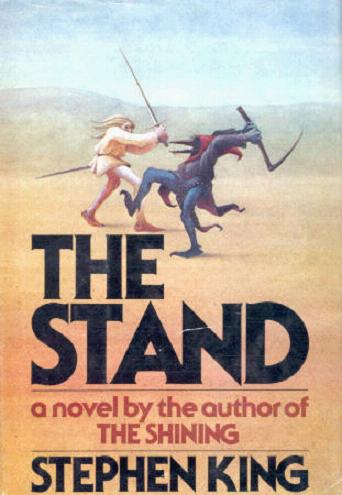
So I was expecting a lot from “The Stand” but not quite sure exactly what. There was that strange cover on the hardback, for instance.

But when I dug into the book, boy oh boy. King’s tale of the end of the world and the real battle that begins after was everything I wanted from a novel: Great if flawed good guys like Stu and Larry and Frannie; a frightening bad guy in Flagg who surrounded himself with bullies and hoods, just as you would expect to happen in real life; characters like Harold whose fall from grace propelled the plot to new heights even as you wanted them to be redeemed.

Somebody, somewhere, has written the definitive article or thesis on all the book’s influences on the pop culture that followed it, and I won’t attempt to do that here. But how many books and TV shows (including my beloved “Buffy the Vampire Slayer”) were able to go where they went because King had gone there first?

There was a pretty good TV miniseries adaptation of “The Stand” in 1994 featuring Gary Sinise in a damn-near-perfect portrayal of Stu Redman.

So it’s with a mixture of anticipation and dread that I read Hollywood is making a big-screen version of “The Stand.” It’s comforting knowing that Steve Kloves and David Yates, who wrote and directed the most recent “Harry Potter” films, are tentatively scheduled to make the movie (or movies).

I thought Stanley Kubrick horribly bungled the movie version of “The Shining,” but Kloves and Yates just might pull this off.

And even if they don’t, as the author himself  is fond of noting, “The Stand” will still be there, on my shelf, ready for the next time I want to jump into King’s post-apocalyptic world.