Category Archives: favorite books

Classic comics: ‘Fantastic Four’ Galactus Trilogy plus one

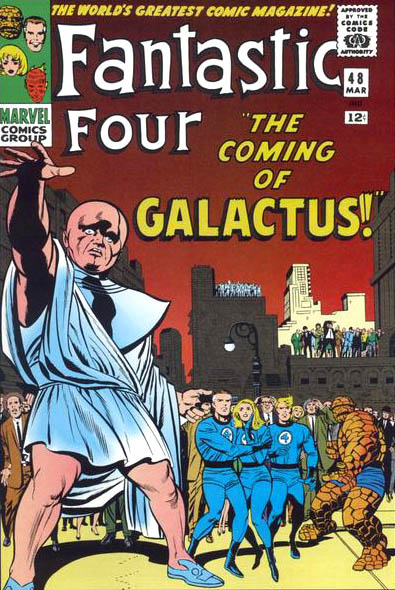
fantastic four 48

Has there ever been a greater run of creative energy in comics than the four issues of Fantastic Four that begin with issue 48?

Geeks know that particular issue kicks off what has become known as the Galactus Trilogy. The three-issue series, written by Stan Lee and drawn by Jack Kirby and released in the spring of 1966, launched the Marvel Comics universe into the universe, literally, by expanding the role of “cosmic” characters like the Watcher and introducing the Silver Surfer and Galactus.

If you’ve seen the second “Fantastic Four” movie, you’ve seen a somewhat lackluster version of the story that played through issues 48, 49 and 50. For the purposes of ground-breaking drama and cosmic feel, I’m also throwing the next issue into this review as well.

The story, for those who don’t remember, follows the FF back to New York after they’ve had an encounter with the Inhumans at their isolated fortress.

The mood is somber. Johnny (the Human Torch) has been separated from his girlfriend, Crystal, one of the Inhumans, after the mysterious beings retreated behind an impenetrable barrier. Ben (the Thing) is dealing with the horrified reactions of New Yorkers who spot his rocky visage and feeling sorry for himself. Reed (Mr. Fantastic) has withdrawn into his lab. And Sue (the Invisible Woman) is complaining that Reed isn’t paying enough attention to her. Yes, I know. It was the 60s and women didn’t fair so well in comics. The treatment of Sue makes her out to be a fairly humorless harpy.

Anyway, the FF return to New York and find a series of strange happenings, including fire and boulders filling the sky from horizon to horizon. They quickly learn it is the work of the Watcher, the other-worldly observer of the Earth who isn’t supposed to get involved in the planet’s travails. But in this case he’s trying to hide Earth from the Silver Surfer, who, he explains, is the herald of Galactus, fearsome eater of planets. The Surfer finds suitable planets for Galactus to consume.
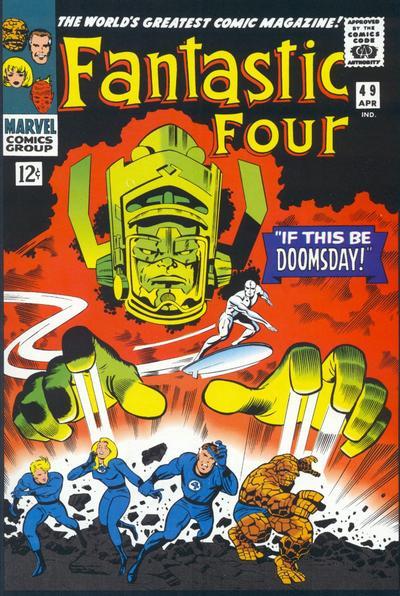
fantastic four 49

The FF battle the Surfer, who falls from the top of the Baxter Building and, coincidentally, into the apartment of Alicia Masters, Ben’s blind girlfriend.

As Galactus arrives and begins erecting the machinery of Earth’s destruction on top of the Baxter Building, Alicia helps the Silver Surfer learn the value of the people Galactus is about to kill. And the Watcher sends Johnny on a galaxy-spanning quest to find a weapon that can stop Galactus.
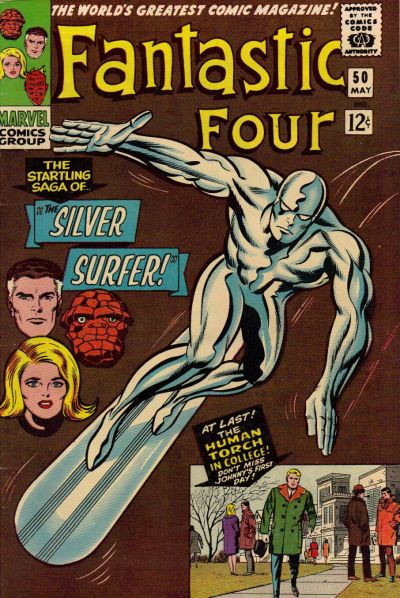
fantastic four 50

There’s a lot of plot, a lot of dialogue and a lot of action in these three issues. Lee and Kirby had a curious habit of beginning and ending plots in the middle of an issue, so Galactus is foiled before issue 50 ends and we get a hint of the next story – as well as Johnny’s first day at college.
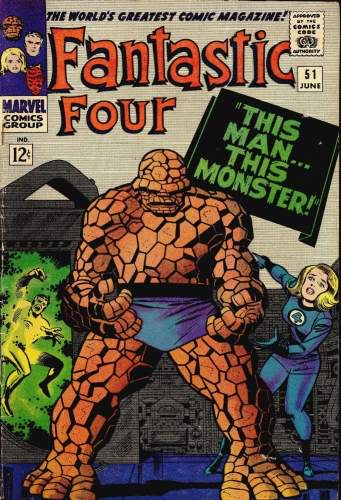
this man this monster

Issue 51 follows the Galactus trilogy with a story that is both cosmic and personal and remains one of my favorites to this day. “This Man, This Monster” lets Ben Grimm (and readers) wallow in his grotesque appearance and substantial self-pity as he wanders the streets of New York in the rain. He encounters a man who takes him home, drugs him and hooks him up to machinery that causes Ben to revert back to his human form. The man – whose identity we never learn – gains the appearance and strength of the Thing. His plan is to infiltrate the FF and destroy Reed Richards, a man whom he considers a hated rival.

Reed is in the middle of an experiment, traveling to a cold and hostile parallel world and, thinking the stranger is Ben, asks him to hold his lifeline. The man does so, overwhelmed by not only the daring and brilliance of Richards but also the trust placed in the Thing.
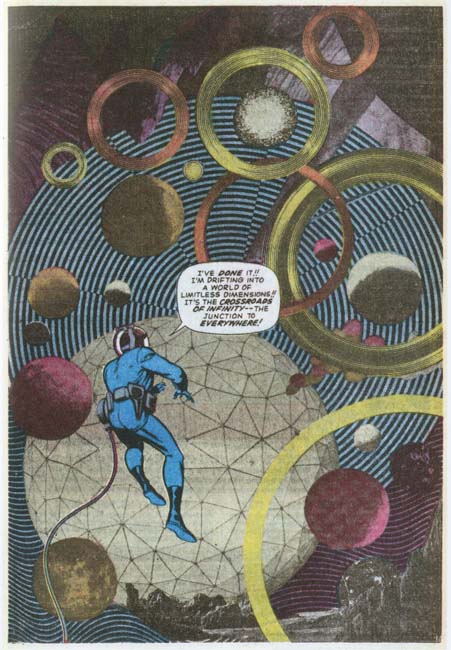
this man this monster pop art

Something goes wrong, of course, and Richards is lost in the parallel dimension. The stranger, with all of the Thing’s strength, goes in after Reed. Ultimately the man sacrifices himself to save Reed. When the stranger’s life is lost, Ben reverts to his Thing form. The timing is, as usual, awful for Ben. He had been standing at Alicia’s door, ready to share his life-changing news with her.
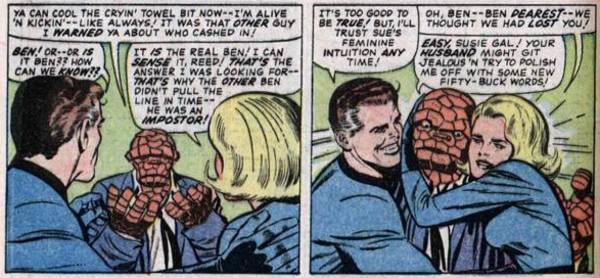
this man this monster reunion

The bittersweet ending: Ben returns to the Baxter Building to find Reed and Sue mourning his loss. They’re overjoyed by his return, an affirming moment for Ben.

Tribute should also be paid to inker Joe Sinnott and letterers S. Rosen and Artie Simek, who made Kirby’s pencils come to life. Has the Thing ever looked better than during this period? I don’t think so.

Someday it would be cool to see a full-blown big-screen movie version of the Galactus trilogy, not the half-baked version we saw a few years ago. (Galactus as a cloud. Hrmmph.) Maybe someday we will.
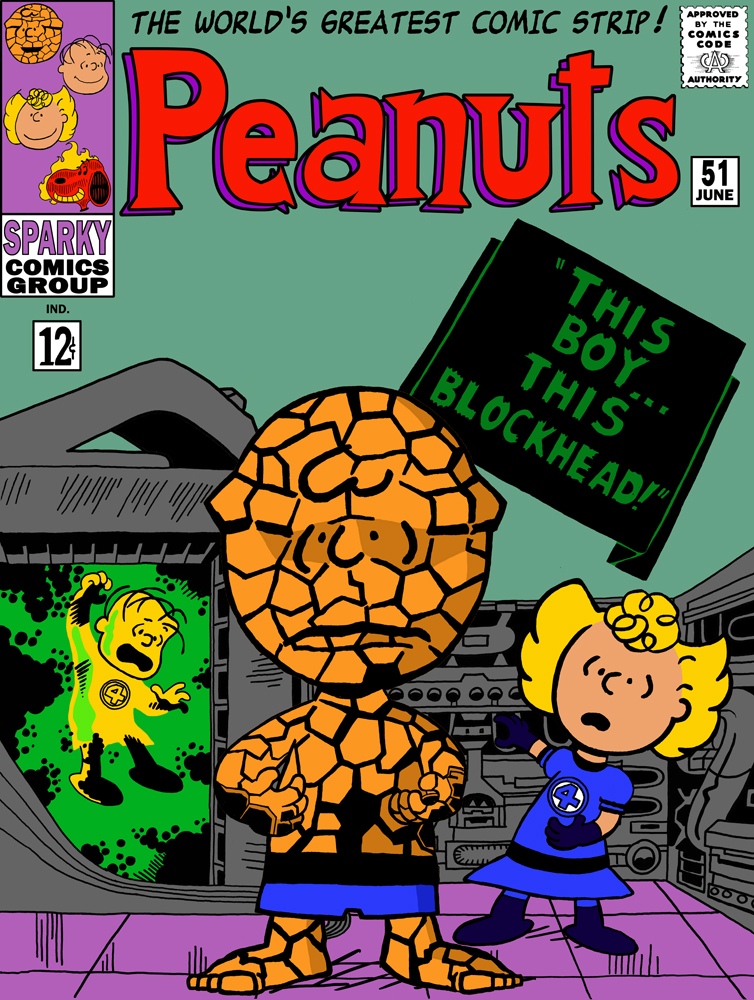
This Boy This Blockhead by jess harrold

By the way: The pop-culture impact of “This Man, This Monster” remains strong, as you can see from Jess Harrold’s art above.

My favorite books of 2012

gone girl

I really, really did read something other than mysteries and crime novels in 2012. Let’s see, I read the … hmmm. I read the oral history of MTV. I’m reading that new history of Marvel Comics right now.

But most of my reading has, in recent years, revolved around the murder and mayhem genres. That’s after a lifetime of reading science fiction and fantasy, a genre I still like to explore once in a while.

So this list skews heavily to crime novels and mysteries. But if you’re looking for a good read, you’ll find a few here.

My favorite book I read in 2012 was undoubtedly Gillian Flynn’s “Gone Girl.” The story of a seriously screwed up marriage and what happens after the wife goes missing, “Gone Girl” was a huge hit and is being made into a movie. You’ve probably read it by now, but if you haven’t, it’s worth seeking out. Be aware: There’s a twist in the middle. And if you’re married, it will have you seriously examining your relationship.

the last kind words

One of the best surprises of the year for me was “The Last Kind Words” by Thomas Piccirilli. The story revolves around three generations of a family that’s always been on the shady side of the law. What happens when one brother comes home just before the other is due to be executed makes for a gripping read.

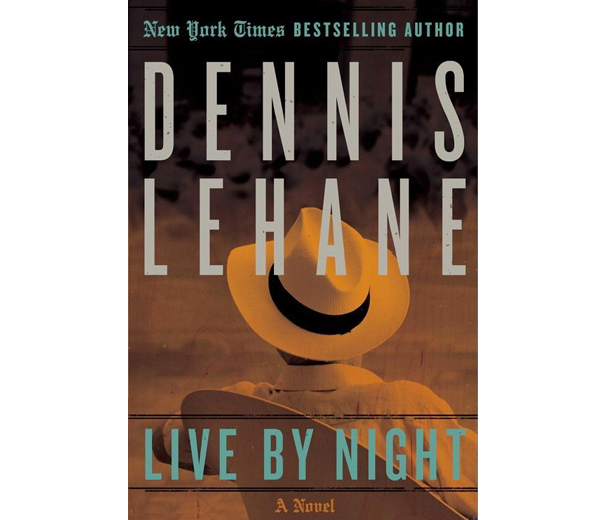
Families and crime are also the stuff of “The Prophet,” Michael Koryta’s mix of “Friday Night Lights” and a murder mystery and “Live By Night,” Dennis Lehane’s continuing exploration of a mid-20th century Boston family whose members straddle both sides of the law.

Lehane’s early works are among my favorite books of all time, and 2012 featured new work by some of my other favorite crime fiction authors, including “As the Crow Flies,” Craig Johnson’s latest tale of Wyoming sheriff Walt Longmire; Lee Child’s “A Wanted Man” and other Jack Reacher tales; “Spilled Blood” by Brian Freeman; “The Drop,” the latest Mickey Haller/Harry Bosch story from Michael Connelly; and “Taken,” another story about L.A. private eyes Elvis Cole and Joe Pike, from Robert Crais.

If you haven’t read anything by Josh Bazell, I highly recommend “Beat the Reaper” and his newest, “Wild Thing,” two books that follow a former mob doctor in hiding. The latest features a story about a search for a Bigfoot/Loch Ness-type creature as well as a guest appearance by political pin-up girl Sarah Palin. Seriously.

Ben H. Winters gave us the first of three books set in the waning days of the Earth. “The Last Policeman” features a cop trying to solve a homicide at a time when the world is going to hell and nobody else cares. I’m looking forward to the rest of the trilogy.

And we’ve noted the passing of legendary crime fiction writer Robert H. Parker. His estate has chosen a couple of writers to continue some of his series and Ace Atkins did an admirable job with a new Spenser story, “Lullaby.” Atkins’ tale was the equal of later-day Parker and that’s a good thing.

Tom Cruise makes a good ‘Jack Reacher’

jack-reacher-tom-cruise

I noted yesterday I hoped to see “Jack Reacher,” the movie adaptation of Lee Child’s wandering troubleshooter character. I did see it and wanted to share a few thoughts.

I was as skeptical as anyone when Paramount announced that Tom Cruise would be playing Reacher. He’s nearly a foot shorter than Child’s ex-MP, maybe 80 pounds lighter and not nearly as ape-ishly ugly as Reacher in the books.

But Cruise does a good job of essaying the terse confidence and quiet physicality of Reacher in the movie. Although I thought a few times about the difference in appearance, I was pleased overall with Cruise’s presence and performance.

As fans of the book “One Shot,” from which the plot of “Jack Reacher” was taken, know, director Christopher McQuarrie is fairly faithful to the book. After former Army sniper James Barr is arrested for killing several people with a high-powered rifle, he asks for Jack Reacher. The police are stumped, however: Reacher has no home, no ID, no good way of being tracked.

At about that time, Reacher shows up, unannounced, having seen news accounts of the killing spree. The cops think he’s there to defend his former military cohort. But Reacher, convinced that Barr killed several civilians in the Middle East, believes the man is guilty.

Reacher is persuaded to work as an investigator for Barr’s defense attorney (Rosamund Pike) and slowly begins to unravel a plot that ensnared Barr.

Fans of the book will notice a few characters are missing. Happily, one of the best characters from the book, a shooting range owner and Reacher ally named Cash, is in the movie and is played by a wry Robert Duvall. He’s good and adds a bit of humanity to Reacher, who as a character can be so superhuman he can be, well, unreachable.

That’s part of the fun of Child’s books, however. Reacher is such a capable, lethal, smart soldier that it’s fun to watch him tear his way through opponents.

Random observations:

Lee Child has a cameo in the movie. He’s the desk sergeant giving Reacher back his passport, toothbrush and cash – familiar to fans of the books as pretty much all Reacher carries with him – when Reacher is released from jail.

Although the book is set in Indiana – in a made-up city – the movie’s setting is Pittsburgh. Wonder why the change?

The movie is true to the tradition of Reacher taking a bit of punishment. And of people being horrified by his wounds. What Reacher doesn’t say, however: “You should have seen the other guy.”

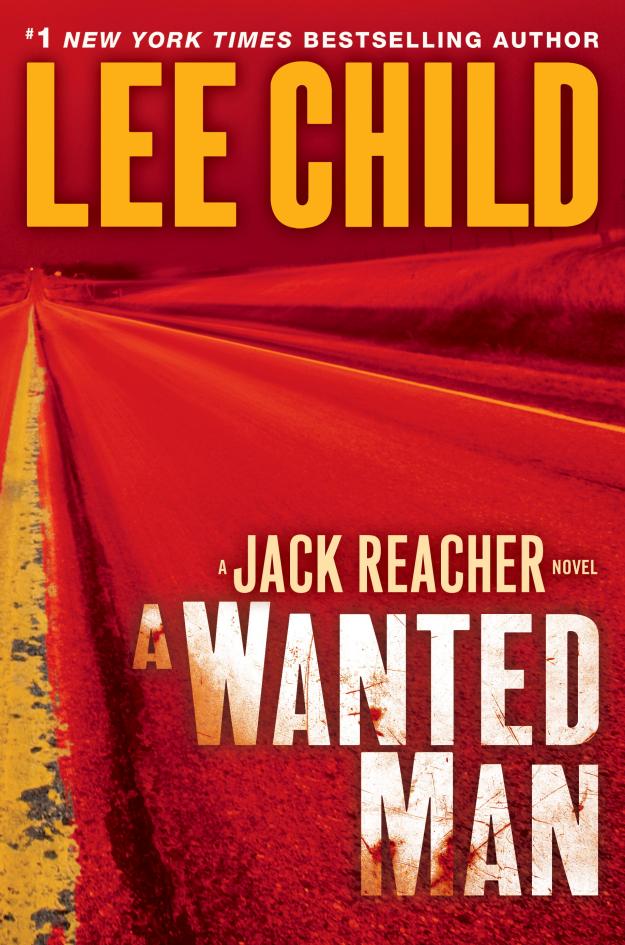
Reacher returns in ‘A Wanted Man’

lee child a wanted man

This is something of a Lee Child weekend. The Tom Cruise movie “Jack Reacher,” the big-screen adaptation of Child’s book “One Shot,” opened in theaters. I hope to see it and will let you know what I thought.

But first, I’m finally getting around to sharing my thoughts on “A Wanted Man,” the 17th (!) Jack Reacher novel written by Child, a British author who has met with curious success by writing about an ex military cop who wanders the interstate highways and back roads of the U.S.

A quick introduction, if you don’t know the Reacher character: Reacher is a former military police officer who has decided to give up house and home and regular employment and travel, by foot and bus and hitchhiking, the United States. From book to book, carrying only an old passport, an ATM card and a toothbrush, Reacher goes where the flow of traffic takes him.

He’s unencumbered by a house, family or even suitcase. He simply buys new clothes every couple of days as he ambles.

Inevitably, like Lassie and the Hulk, the ambler finds himself drawn into other people’s problems. And because he’s six-feet-five and a trained killing machine, he’s usually able to solve said problems.

In recent books Reacher’s been in the West, traveling slowly back to the greater D.C. area to meet a woman he’s had some dealings with. In “A Wanted Man,” Reacher gets a ride from two men and a woman traveling East.

Which is no small accomplishment since the ape-like Reacher looks supremely scruffy, with duct tape over his latest broken nose and sporting worn and bloody clothing.

But the threesome that picks him up isn’t worried about that. Reacher quickly finds that the two men are looking for more people to join them so they can escape the scrutiny of the law. And the woman is feeling especially desperate because she’s a kidnap victim.

The book is divided between the low-key but menacing car ride and its aftermath, as Reacher works with a reluctant federal agent to try to save the woman.

There’s government plots and double identities scattered through the book and an opportunity for the dryly funny Reacher to show off his combat skills.

“A Wanted Man” is good Lee Child Reacher fiction but maybe not the best. I’ve enjoyed some of his more recent stories of Reacher against a corrupt town or family a bit more. But good Lee Child is always a fun and entertaining read.

Let’s hoping it makes for good moviegoing too.


‘Oz the Great and Powerful’ trailer fascinates

I’ve watched the trailer for “Oz the Great and Powerful” a few times now and I’ll probably watch it again tonight. The preview for Sam Raimi’s return to Oz – with the backstory of the Wizard from Kansas and those sisters who become witches – is loaded with beautiful shots and glimpses of the movie.

Part of what’s fascinating is how the trailer for the film, starring James Franco, Mila Kunis, Rachel Weisz and Michelle Williams, exploits the visual iconography of the “Wizard of Oz” story.

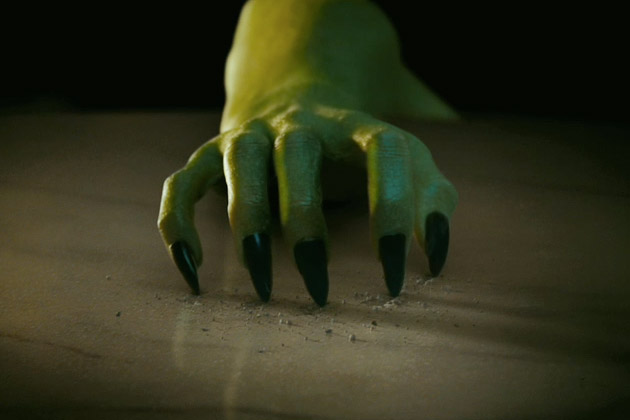
Want proof? Check this out:

What about that image doesn’t remind you of Margaret Hamilton’s appearance as the Wicked Witch of the West?

Author L. Frank Baum’s “Oz” stories were all over the place not only in terms of the geography of Oz but also the stories and characters.

But the trailer, at least, sticks mostly to territory familiar to lovers of the 1939 Judy Garland movie as well as “Wicked,” the book and play that explores the lives of the witches before they were witches.

Random thoughts about the trailer:

I like the switch from small, black-and-white screen to widescreen, CGI-filled color. I’m guessing the movie follows the format of the 1939 film in that respect, but if not, at least the trailer creates a connection to the classic film by doing so.

The movie looks to be exploring the iconography of the books. The fragile little doll in the movie appears to be a resident of The Dainty China Country, from the first book.

There’s also plenty of familiar characters and imagery, including a healthy dose of Munchkins.

Is the flying monkey who accompanies the wizard comic relief? If so, that will contradict the nightmares of a few generations of little kids.

Who’s the wicked witch? I guess we’re to assume it’s one or both of the dark-haired sisters played by Kunis and Weisz. Or is it a character we don’t see until her appearance in that swirling red cloud?

We’ll know the answers to all our questions in March.


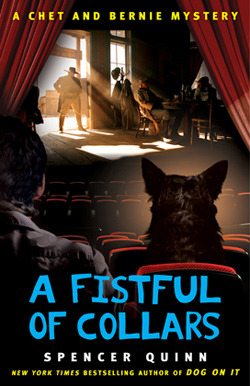
‘Fistful of Collars’ fetches Chet back to readers

Spencer Quinn, as Stephen King has said, speaks fluent dog.

Quinn – a pseudonym for a writer who is no doubt still somewhat surprised to have become a best-selling writer of mysteries from a dog’s point of view – has written five books now about Chet the dog and his master, Bernie Little, operator of a one-man-and-one-dog private detective agency in a sleepy suburb of L.A.

More surprising than the success of the series is that the books are narrated by Chet, the “100-plus-pounder” who flunked out of K-9 school when he got a little too enthusiastic.

Enthusiasm is Chet’s strong point, along with tail-wagging, biting perps when necessary and recounting the cases he and Bernie take on.

If you think the Chet and Bernie books are too cutesy by far – cutesy beyond the clever names, including the latest, “A Fistful of Collars” – you’re wrong. What they are is an enjoyable exercise in narrative style, relying on a somewhat unreliable narrator who gets distracted by errant hot dogs and sometimes falls asleep during long discussions of the finer points of his and Bernie’s latest case.

The new book isn’t one of my favorites, with a cast of Hollywood characters – Chet and Bernie are hired to babysit a big movie star – I couldn’t bring myself to care about.

But the book does have Chet and Bernie and equally dependable Susie, Bernie’s girlfriend. And that’s enough for a fun read.

If you’re a dog lover, you can’t go wrong with these funny, witty stories.

The Essential Geek Library: ‘A Pictorial History of Horror Movies’

As a young science fiction and horror movie fan, I watched every movie I could see, a challenge sometimes in those pre-home video days. So I spent endless hours checking out books about the genre. I’m noting a few of them here in this recurring space.

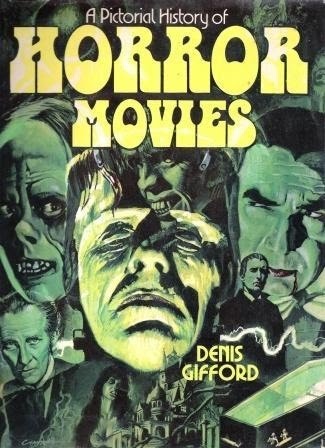
If Famous Monsters of Filmland was my favorite magazine, Denis Gifford’s “A Pictorial History of Horror Movies” was my standard reference, my bible.

Gifford’s book, published in 1973, was a scholarly but loving look at several decades of horror movies.

Gifford, a British writer of comic books and books about pop culture, apparently amassed what was considered one of the biggest collections of British comic books in existence.

But it’s his love for and knowledge of horror movies that endears him to me.

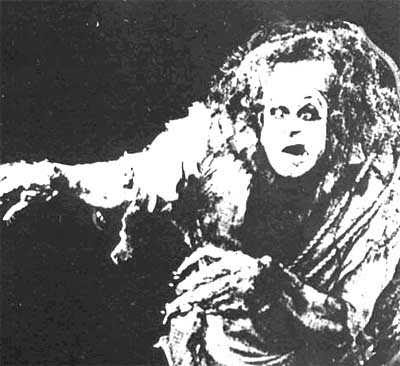
His book truly lived up to its name. “Pictorial History” is loaded with vintage photos from horror films from the 1920s to the 1970s. Even before I saw some movies, Gifford’s look at them gave me a good visual frame of reference. Some movies, like the silent version of “Frankenstein,” are completely represented in my mind by the pictures included in Gifford’s book.

As a young man who loved to draw, I would study those stills and try my hand at reproducing them with pencil and paper.

And Gifford’s book didn’t discriminate. He included movies from the Universal classics to low-budget movies made here and abroad.

Gifford passed in 2000. I’m hoping he knows what a milestone he left for all of us fans. I’m guessing he knew.

As a side note, by the way, the hardcover cost only a few dollars in 1973. In doing research for this, I found it for sale online as high as $199. I showed that to my son, who said, “You should sell it!” Never.

Lehane’s ‘Live By Night’ a good gangster tale

I’ve long declared my love for author Dennis Lehane’s hard-boiled, heart-on-his-sleeve Boston crime novels, especially his series based on private investigators Patrick Kenzie and Angie Gennaro.

I was less fond of Lehane’s “The Given Day,” a look at the troubled Coughlin family of Boston in the 1910s. Father Tom was a crooked cop whose sons got into no end of cops-and-robbers misadventures.

So I didn’t know what to expect from “Live by Night,” Lehane’s follow-up that takes up the story of Joe Coughlin, the son who decided to pursue a career as an outlaw – in reality, gangster – in 1920s Boston.

Joe Coughlin is an appealing protagonist, despite his life of crime and because of his moral code. He steals, sure, but there are lines he won’t cross.

Unfortunately for Joe, one line he will cross is the common sense barrier that might have kept him from hitting on the girlfriend of a prominent Boston gangster.

Just when it looks like “Live by Night” will be a standard tale of cops and crooks on the streets of Boston, Lehane gives the plot a twist. Joe ends up in prison, his father ends up a piteous figure and, before we’re done, the action takes us to rough-and-tumble Tampa and Havana.

“Live By Night” has some good characters and a slightly episodic plot. Antagonists slide in and out of the story in a manner that ultimately really does make sense, even if it doesn’t seem to at the time.

Lehane has a great ear for cops and bad guys, even those from generations ago.

“Live By Night” is good crime fiction, good drama and a bittersweet look at family, love and damn bad luck.

Lots at stake: Google’s ‘Dracula’ doodle

You don’t need me to tell you that Google comes up with some pretty fun and cool doodles.

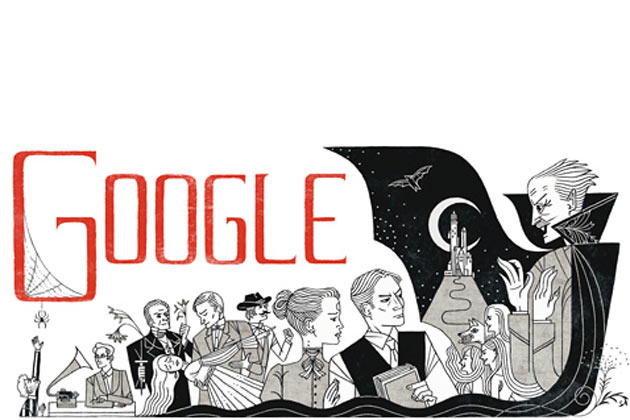
Today’s doodle, marking the 165th birthday of “Dracula” creator Bram Stoker, is one of those.

And it’s inspired me to quickly try to re-read one of my favorite books.

Stoker’s “Dracula,” published in 1897, not only inspired a century (and counting) of adaptations, sequels, imitators and knock-offs, but sparked as many lurid daydreams and sweaty nightmares as any story ever.

I’ve got a nice stack of books on my night table right now. But the doodle reminded me of how much I loved Stoker’s book, how action-filled and suspenseful it is.

At least it’s that way in my memory from having read it last a few years ago.

So I’ll be dipping back into the book sooner rather than later and hoping to find the same gripping story I remember. I’ll share those thoughts with you when I do.


‘The Strain’ coming to TV

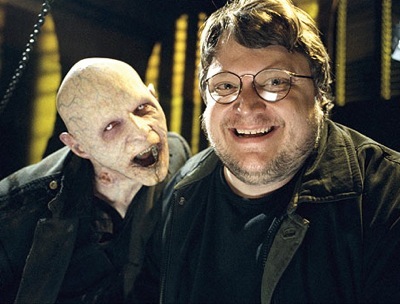
This is not surprising news: “The Strain,” the end-of-the-world-through-vampires trilogy of books written by Chuck Hogan and Guillermo Del Toro, is being turned into a TV series for FX.

It’s not surprising because “The Strain” trilogy – “The Strain,” “The Fall” and “The Night Eternal” – was originally conceived as a television series. And as a filmmaker and the guy who was tasked with bringing The Hulk to TV, Del Toro thinks and writes in a TV-friendly style.

But the news is interesting and could be good news for fans of the books. Or, at least, fans of the first book and elements of the second and third.

When “The Strain” came out in 2009, I thought it was one of the freshest and grimmest takes on vampire storytelling in years. The story plays out like a contagion thriller, with a scientist from the Centers for Disease Control, a World War II concentration camp survivor and an exterminator – yes, an exterminator – taking on a secretive vampire infestation of New York City.

The book’s plot is fun and the characters enjoyable, but the best part was the variation on vampire lore: The monsters were not sparkly dreamboats but pale, scary creatures with bloodsucking stingers that shot out several feet to snare victims. The heroes used some standard vampire-slaying tools but also used high-tech stuff like ultraviolet flashlights.

As good as the first book was, though, the succeeding volumes missed the mark with me. Maybe it was how dark they were. Maybe it was that it seemed Hogan and Del Toro painted themselves into a corner by going way, way too far too quickly.

At any rate, I’ll be interested to see what kind of show Del Toro and showrunner Carlton Cuse of “Lost” put on.

Here’s hoping they don’t go too far too fast.