Category Archives: favorite books

The essential geek library: ‘Cult Movies’ by Danny Peary

Back in the old days, everything you wanted to know about movies and TV shows and comic books – their makers, their history, their detractors, their weird variations – wasn’t available for perusal at the click of a mouse.

No, children, we had books back then, and they were wonderful resources.

For a few decades, I amassed a collection of books about movies and TV and comics. They were my encyclopedias, my Bibles. I read and re-read them, memorizing facts and committing the photographs to memory.

So I thought I would occasionally mention some of these books here for you. Maybe you’ve got your own copies. Maybe you can find them in used bookstores or on Amazon. Maybe some will still be in print.

Danny Peary’s “Cult Movies” is a good place to start. Published in 1981 and subtitled “The Classics, the Sleepers, the Weird and the Wonderful,” Peary’s book lives up to its name. The dozens of movies he writes about in the first book (three volumes total were published) range from beloved classics like “The Wizard of Oz” to still-at-the-time controversial films like “The Texas Chainsaw Massacre” to “2001” to “Vertigo.”

Peary devotes three or four pages to each movie. He lists the cast and key creative positions and gives a synopsis. He then goes into detail about what made the movies cult films.

Peary tells how director George Romero made “Night of the Living Dead,” from its hardscrabble production to its difficult distribution to its reception by audiences and critics.

He has real insight into the movies he covers.

“Pessimistic and unsentimental, ‘Living Dead’ is so effective because it is totally without pretension,” he notes. “It works on basic fears: unrelenting terror, monsters, darkness, claustrophobia. ‘Aliens’ attack us on American soil; protectors, even blood relations, turn on one another.” He notes how the black and white photography, a side effect of its low budget, made it more effective in some ways (anyone see the recent black-and-white presentation of the pilot for “The Walking Dead?”) but worked against it (Columbia Pictures wouldn’t distribute the film because it wasn’t in color) in others.

Peary, who is still actively writing, although not books about movies, brings the right amounts of reverence and criticism to these great but oddball movies. He and his books are what every modern-day movie and pop culture blogger aspires to be.
Grimm P.I. Tales: The early work of Dennis Lehane

A decade ago, “Mystic River” became a best-selling, highly praised novel for its author, Dennis Lehane, and changed the way the public perceived him – and maybe the way he perceived himself.

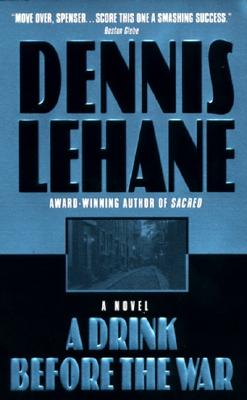
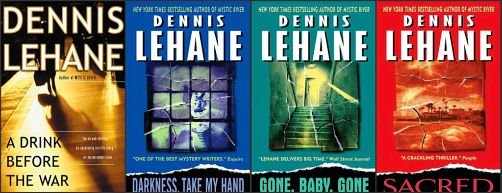
His previous books, revolving around the Boston private investigator duo of Patrick Kenzie and Angie Gennaro, were met with awards and acclaim. The first, “A Drink Before the War,” won the Shamus Award, one of the highest accolades for published mysteries. But the acclaim that greeted “Mystic River” elevated Lehane out of the ranks of typical crime novel writers.

Too bad.

While I liked “Mystic River” and, to some extent, “Shutter Island,” which came out two years later, in 2003, it is Lehane’s early work, the gritty and often downbeat series of novels about Kenzie and Gennaro, that remain my favorites.

A few weeks ago I mentioned that I was indulging in my irregular habit of re-reading the Patrick and Angie books. Along with other summertime reading, I’ve re-read the first three books in the series and thought I’d give you a quick rundown.

By all means, if you read the books – and they’re very rewarding, if very dark – read them in order.

“A Drink Before the War,” published in 1994, opened the series in fine form with Kenzie and Gennaro running their PI office out of a borrowed bell tower in a Catholic church in the blue-collar Dorchester neighborhood. Yes, I know, it sounds gimmicky, like something out of a TV show, and there’s a bit of a formula feel to the setup.

But “A Drink Before the War” is anything but a predictable, feel-good story, as Kenzie and Gennaro are hired by a group of politicians to find a statehouse cleaning lady who’s disappeared with some important documents.

Before long, the two find that everything isn’t what it seems, of course. Class and race tensions thoroughly permeate the action.

The book introduces not only the PIs but the cops in their neighborhood, the criminals – including Bubba, lifelong friend of Patrick and Angie and one of the most dangerous men to walk the streets of Boston – and Phil, Angie’s husband.

While Patrick is a smart ass not unlike Robert Parker’s Spenser – albeit with a dark, dark background – Angie is a complicated character. Phil is a wife-beater. He was once one of Patrick’s closest friends. Now Patrick has to tread lightly around Angie’s awful marriage out of fear of what might happen. Angie, like many victims, doesn’t know how or even seem to want to break free from her hellish life. Patrick has learned the hard way that he can’t interfere.

Before the book ends, Patrick and Angie will jump into harm’s way to right wrongs and expose the truth.

If “A Drink Before the War” seemed dark, the second Lehane book, 1996’s “Darkness, Take My Hand,” proved to be even more so.

When a sadistic killer begins plying his trade around their neighborhood, Patrick and Angie find themselves drawn into a mystery that dates back decades, to separate but equally unholy alliances among killers and among neighborhood vigilantes.

Unlike many crime thrillers, “Darkness, Take My Hand” emphasizes the toll that fear and violence takes on the lives of people who live with it every day.

The story climaxes in one of the most harrowing showdowns I’ve ever read.

Lehane’s third Kenzie and Gennaro story, “Sacred,” is probably the weakest of the original series of books but still a good read. Published in 1997, “Sacred” finds Patrick and Angie hired to find the missing daughter of one of New England’s richest men. It’s a departure from their typical story of Boston’s meanest streets and, to its debit, really could be about any male-female private eye partnership.

I haven’t yet dipped back into Lehane’s fourth book and the best-known of his non-“Mystic River” books, “Gone, Baby, Gone.” The 1998 book – made into a pretty good movie in 2007 by director Ben Affleck – might be Lehane’s best. I’ve read it several times and I’m looking forward to reading it and its 1999 follow-up, “Prayers for Rain,” in the coming weeks. When I do, I’ll note it here.

I’ll also talk about how Lehane’s writing goals seemed to change after “Mystic River” was a hit in 2001 and why his work has been very different since.


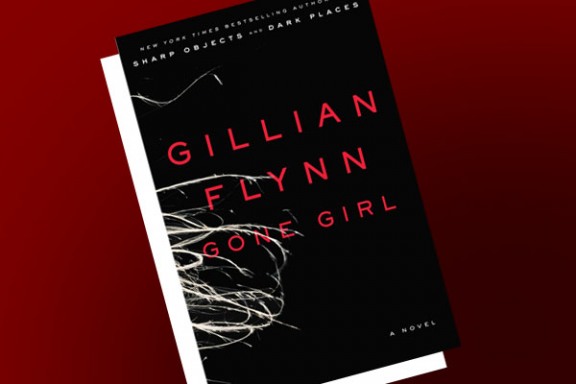
‘Gone Girl’ a twisted tale of marriage

I almost stopped reading “Gone Girl” less than halfway through the book.

It’s not that Gillian Flynn’s thriller, about a married woman who disappears and the growing shadow of suspicion that falls on her husband, isn’t well-written or absorbing.

It’s that Flynn, a former Entertainment Weekly writer, painted dual portraits of the husband and wife that were so sharp, so true-to-life, that they were pretty damn uncomfortable.

We’ve all seen this story played out too many times on tabloid TV: Pretty young woman goes missing. Husband seems oddly unmoved. As the police narrow their focus on him as a “person of interest,” he gets a high-profile lawyer. A loud-mouthed TV show host begins what amounts to a public crusade to convict the husband in the court of public opinion.

I almost didn’t have the heart to finish “Gone Girl.” But I kept going and was rewarded with a neat thriller that pulled me in and held me captive until the twisted ending.

Flynn tells the story of Nick and Amy Dunne, young marrieds who lost their jobs in the New York City media (thanks, Internet!) and moved back to his hometown in Missouri.

Nick seems to be a typical boy-man. He’s charming and good-looking but has never grown up. In NYC he ignores his wife and hangs out with buddies, drinking and flirting with women in bars. Back home in Missouri he takes care of his dementia-addled father and runs a bar with his twin sister, Margo (Go for short).

At the beginning of the book, Amy goes missing. At first it looks like she’s been kidnapped, maybe by one of the desperate men put out of work at the town’s only big industry.

But then the police turn their attention and their investigation toward Nick, who begins behaving oddly and outright lying to police.

Interspersed with chapters in the wake of Amy’s disappearance are her diary entries, over a period of several years, that seem to paint a picture of a troubled young woman. Among her troubles: The growing distance between her and her husband and Nick’s increasingly hostile behavior.

I was getting a little tired of Nick’s duplicity and Amy’s insipid second-guessing, but a little less than halfway through the book, Flynn throws readers a nice curve that very nearly turns the second half of the book into a completely new story. No spoilers here. Suffice it to say that, despite – or because of – a conclusion that is quite troubling, Flynn has written a terrific thriller.

Actress Reese Witherspoon is, according to news reports, going to produce a movie version with a screenplay written by Flynn. No word on whether Witherspoon will play Amy but I guess she’d be right for the part.

I’ve already cast Lizzy Caplan as Go. In my head at least.

“Gone Girl” hits so many notes perfectly. The tension between Nick and Amy’s parents after she disappears. The tactics of police investigators (“We want to help you, Nick”) and flashy, high-profile defense attorneys. Best of all is Flynn’s portrait of the Nancy Grace-style TV host, although after creating the character Flynn doesn’t do that much with it.

Flynn has scored a publishing sensation with “Gone Girl” and, if handled the right way, the movie could be a thriller to appeal to grownups.

One caveat: If you’re about to get married or are already married, “Gone Girl” will have you wondering about not only the little quirks of your relationship but the intent of the person on the other side of the bed from you. Flynn’s book is that good and that unsettling.

Favorite authors: Dennis Lehane wages ‘War’

I’m pretty relentless in my appetite for new books. When I was a kid, I would go back and read and re-read books by my favorite authors, including Ray Bradbury, Robert Heinlein and Kurt Vonnegut.

But these days I’m always trying new authors or devouring everything by a newly-discovered favorite like Craig Johnson or Ace Atkins.

But every year or so, I dip back into the work of Dennis Lehane.

Considering how damn dark much of Lehane’s work is, it’s hard to imagine how it could feel like comfort food to me, but it does. Not so much “Mystic River” or “Shutter Island,” although I liked those (the former quite a bit).

No. When I want to relive my favorite Lehane experience, I jump back into his series of novels about working-class Boston private investigators Patrick Kenzie and Angie Gennaro.

The fourth book in the Kenzie and Gennaro series, “Gone, Baby, Gone,” was made into a pretty good movie in 2007 by director Ben Affleck. Not all of the novel’s grim appeal made it onto the big screen, but quite a bit did.

So now that I’m between new books to read, I’m starting the Kenzie and Gennaro series over again with the first, 1994’s “A Drink Before the War.”

If you’ve never read Lehane’s Patrick and Angie series, I’d highly recommend it. But you really have to read them from the beginning.

Lehane takes his characters, including not only the PI partners but their friends like Bubba, the former-Marine-turned-weapons-dealer-nutcase, through some pretty big – you might say dire – changes during the course of the series.

“A Drink Before the War” opens with Patrick and Angie working out of their customary office, the empty bell tower of a Boston Catholic church. Patrick is a smartass with a gooey center. Angie is a beautiful hellraiser with an awful home life.

The two accept a case working for some legislators and their toadies trying to find a statehouse cleaning woman who’s disappeared with some supposed “documents.”

Lehane gets to the nitty gritty quickly, touching on Patrick’s hellish childhood at the hands of his father, a now-deceased firefighter regarded as a homegrown Boston hero, and Angie’s regular beatings at the hands of Phil, her husband and Patrick’s childhood friend.

Patrick, of course, is deeply in love with Angie and seethes when he sees how Phil treats her. Patrick learned the hard way, though, about trying to intercede on Angie’s behalf.

The book manages to touch on class warfare, race relations and marital discord in a plot that’s liberally sprinkled with humor.

Make no mistake, however: Lehane’s vision of his characters is dark, dark, dark. Dark, I tells ya. It’s hard not to love Patrick and Angie and hard not to ache for the troubles that befall them.

But Lehane’s Kenzie and Gennaro books more than make the heartache worthwhile.

I’m planning to touch on the series here over the next few weeks. Pick up the series and follow along if you will.

But remember: Read them in order: “A Drink Before the War,” “Darkness Take My Hand,” “Sacred,” “Gone, Baby, Gone” and “Prayers for Rain.”

I can’t totally endorse Lehane’s 2010 return to the characters after more than a decade’s absence, “Moonlight Mile.” But we’ll get to that later.

Have fun!

‘Abraham Lincoln: Vampire Hunter’ – the book was better

I wanted to like the movie version of “Abraham Lincoln: Vampire Hunter.” At least, I wanted to like it a lot more than I did.

Seth Grahame-Smith’s 2010 novel is one of my favorite books in the least couple of years. It is audacious and clever and plays it absolutely straight in telling the hidden history of our 16th president: Lincoln spent much of his life killing the monsters that took his mother away from him (and their comrades), gradually discovering that vampires are at the heart of the conflict tearing the nation apart and propelling it toward Civil War.

Grahame-Smith made vampires among the forces bolstering the Confederacy because of the ready-made sustenance slaves presented for the undead.

Laugh if you want at the outrageousness of Grahame-Smith’s story, but it worked. Lincoln was never treated as a ridiculous figure. And blaming vampires for some of the tragic turns of Lincoln’s life served the plot well.

So I had fairly high hopes for Timur Bekmambatov’s film, adapted by Grahame-Smith himself and starring Benjamin Walker as Lincoln.

My hopes persisted even after I saw footage that seemed to indicate the movie replaced the somber tone of the book’s story with over-the-top action scenes.

After seeing the movie today, I have to say the film gets some things right but goes dreadfully astray with others.

First, the good:

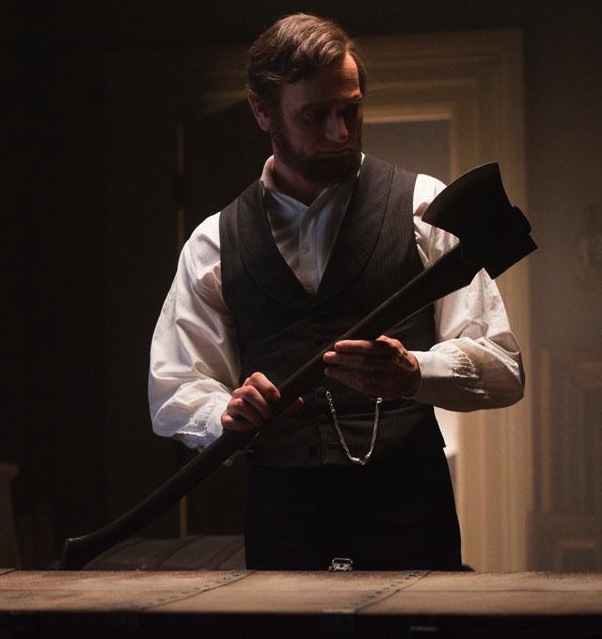
Lincoln’s character is spot on. Walker plays him with the absolute correct amount of gravitas and sorrow. Since much of the movie’s plot – like the book’s storyline – takes place before Lincoln gets to the White House, Walker is quite good as a young, athletic Lincoln, the rail-splitter who knew how to handle an axe.

The mysterious Henry. Dominic Cooper is good as Henry, Lincoln’s mentor in vampire-killing, who has some secrets of his own. In the book, there’s a real tension between the two as Lincoln wants to take revenge on the vampire who killed his mother and Henry strings him along, setting him up to meet and kill other vampires. There’s a bit of that tension in the movie (although not enough).

The tone. While the movie is infinitely flashier and more action-filled than the book, the sorrowful feel of the story – which matches the tragic events of Lincoln’s life – feels right.

The action. Although they were out of left field, two big action set pieces in the movie are quite fun. In one, Lincoln pursues his mother’s killer through a herd of wild horses. In the second, the heroes fight the bad guys on a moving train. There’s the perfect amount of collapsing train trestles and moments when people almost slip off the tops of rail cars.

What doesn’t work, with the biggest minus saved for last (spoilers when we get there):

The Black Best Friend. In the movie, Lincoln has a lifelong friend, William (Anthony Mackie), a free black man who joins in the fight against vampires. William has some very cool scenes and dishes out punishment to vampires about as well as Lincoln does. But the character, which didn’t exist in the book, feels shoehorned into the story.

So does the villain, Adam, played by Rufus Sewell. In the book, a conspiracy of Southerners, sympathizers and vampires make up Lincoln’s shadowy enemies. In the movie, most of the emphasis is placed on Adam, a 5,000-year-old vampire who’s part of the slaves-for-food plot but mostly seems like a character created to give Lincoln somebody to kill in the final reel.

The de-emphasized role of slavery. In the book, slavery and vampires go hand-in-hand. In the movie, the relationship – and the foul strengths vampirism brings to the Confederacy – feel like it’s fairly glossed over.

The final scene (spoilers!). In the movie, after Lincoln and Henry triumph over evil vampire Adam, Henry urges Lincoln to allow him to turn the president into a vampire so the two can fight evil together through eternity. Lincoln dismisses the idea and goes off to Ford’s Theatre and his destiny. Flash forward to present-day when Henry appears to foil a presidential assassination attempt.

That’s it?

How about this for an ending, right out of the book: After the war is won, vampire John Wilkes Booth shoots Lincoln in Ford’s Theatre. Henry tracks Booth and kills him. Henry returns to Lincoln’s side. Flash forward a century. Two distinctive men watch as Martin Luther King Jr. gives his “I have a dream” speech, the Lincoln Memorial nearby. The men are Henry and Lincoln.

Henry observes, “Some men are just too interesting to die.”

The finale of the book was so much better, so much stronger, that changing it, taking Lincoln out of it, very nearly ruined the movie for me.

If you haven’t read “Abraham Lincoln: Vampire Hunter,” you might like the movie’s enjoyably wild action scenes and its heartfelt portrayal of our most tragic president.

If you’ve read the book, the movie will leave you wondering what happened.

Watch and worry: World War Z, Robopocalypse and Abraham Lincoln: Vampire Hunter

There’s a special feeling of dread among some of us when our favorite books get adapted into movies.

How many times have we been disappointed when books we loved were turned into mediocre movies? Sure the books are still there, untouched — with the exception of maybe a new cover for marketing purposes — and ready to read again and again. But a stinker of a movie adaptation puts a cloud over the original book, at least in my mind. Can’t help it.

So it’s with varying mixtures of excitement and dread — I’m looking at  you, Brad Pitt — that I’m anticipating these three movie adaptations of some recent favorite books.

“Abraham Lincoln: Vampire Hunter” comes out Friday (June 22) and I don’t have any real reason to worry that the movie, directed by Timur Bekmambetov and written by Seth Grahame-Smith, the author of the novel, will be anything but good.

But I’m a little worried about the public and critical reaction to the movie.

“Abraham Lincoln: Vampire Hunter” is a terrific book, a serious-minded fantasy that postulates the 16th president as a vampire-slaying action hero from an early age. The book details how Lincoln, spurred on by the death of his mother at the hands of a vampire, dedicates his life to slaying them. He has help on his quest from a mysterious mentor and soon discovers that vampires are closely allied to Confederate forces and slavery is feeding the vampire plague (literally).

But like “Buffy the Vampire Slayer,” “AL:VH” has a facetious-sounding title that is as likely to inspire snickers as interest. I’m hoping for the best that the movie plays it as straight as the book.

Further into the future comes the movie adaptation of “Robopocalypse,” Daniel H. Wilson’s 2011 science fiction novel about the rise of artificial intelligence and the threat it poses to humanity.

Wilson’s book takes readers from the early days of AI self-awareness to the final battle, on the tundra of the frozen north, that saves humanity. It’s a fantastic story – in every sense of the word — but Wilson makes it all seem perfectly believable.

Director Steven Spielberg is supposedly in line to film “Robopocalypse” for release some time in the next couple of years.

“Robopocalypse” has the kind of plot and reader-friendly narrator that Max Brooks’ novel “World War Z” does not.

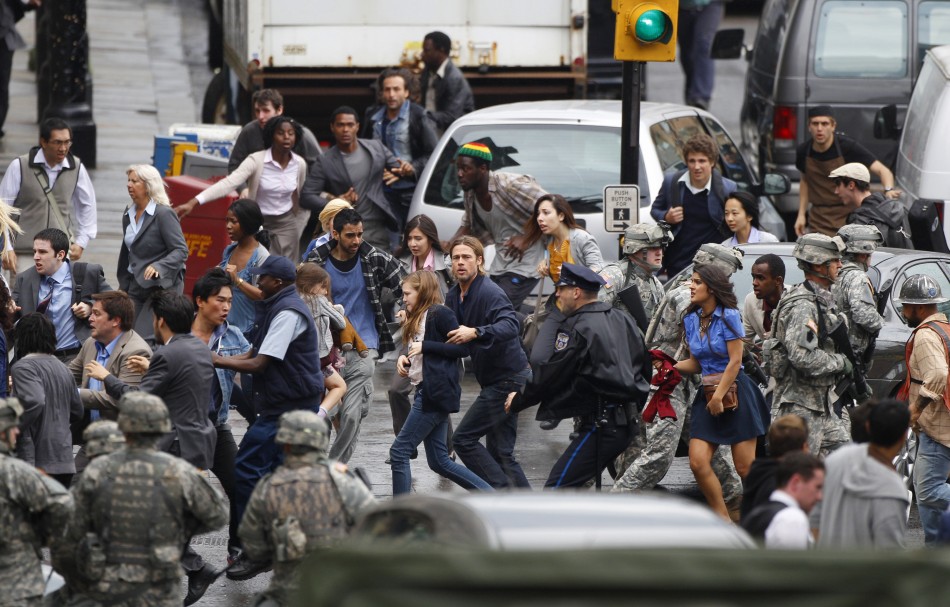
While “World War Z” is one of my favorite recent science fiction/horror novels, it only takes one reading to understand that it might be hard to film. It is an episodic story that rarely repeats characters and flashes from place to place on the globe, telling the story of how the planet is overrun by zombies and how humans fight back.

“World War Z” is a clever and exciting read and, considering the popularity of zombie fiction right now (especially “The Walking Dead”), is probably a natural for a big-screen adaptation.

But early on in the making of the movie, directed by Marc Forster and starring Brad Pitt, warning signs started going off.

First of all, the episodic nature of the book left no room for a character like the one Pitt plays. If the book was faithfully adapted, no character would have more than a few minutes on screen, as his or her story unfolded.

Then suggestions of the movie’s plot — a race against time around the world to stop a zombie apocalypse — made it clear that the movie’s story had little to do with the book.

Now the movie has been pushed back from a December 2012 release to summer 2013, writer Damon Lindloff (“Lost”) has been brought in to rewrite portions of the script with an eye toward re-filming portions of the movie, the bulk of which has already been shot.

Of course, this means that the budget is ballooning.

I’m hopeful that the makers of “Abraham Lincoln: Vampire Hunter” will get it right. We’ll know soon, anyway. We won’t know until 2013 how badly “World War Z” is screwed up (because I’m increasingly certain that it will be). And we’ll see how Spielberg does with “Robopocalypse.”

Craig Johnson’s old sheriff ‘Longmire’ in books, TV

For a grizzled old sheriff in a small Wyoming county, Walt Longmire is getting a lot of attention lately.

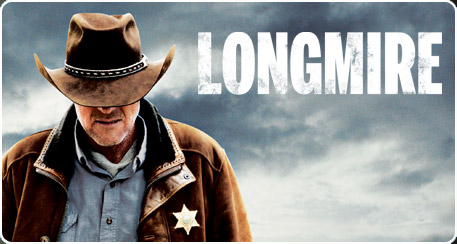
“As the Crow Flies,” author Craig Johnson’s latest novel about Longmire, came out a few weeks ago and “Longmire,” a new weekly series about the character, debuts tonight on A&E.

It’ll be interesting to see how A&E does with the series. Robert Taylor plays Longmire and, in the few clips I’ve seen, looks like he might be a good fit for the character, a laconic modern-day cowboy who’s a dogged detective but wears his heart on his sleeve.

As the series of books opened, Longmire was still recovering from the death, from cancer, of his beloved wife. His daughter, Cady (played by Cassidy Freeman in the A&E series) is an attorney in Philadelphia trying to help her father get back on track. Longmire’s lifelong friend, Henry Standing Bear (Lou Diamond Phillips in the series) is not only his anchor but his backup when dealing with the dangerous types — meth makers, murderous backwoodsmen, escaped convicts — that drift through the county.

A big part of the series is its spirituality. Not in the organized religion sense, but in Longmire’s discovery of the Native American beliefs of Henry and his fellow Cheyenne people as well as the Crow and other nations that populate the area.

The tie between Longmire’s small-town policing and the world of the reservation is especially strong in “As the Crow Files,” Johnson’s latest book. Longmire and Henry investigate the death of a young Native woman who fell from cliff while they watched. Her infant was clutched in her arms and survived the fall. Now Walt and Henry have to piece together who would push a woman and baby off a cliff and why.

At the same time, Walt is preparing for Cady’s upcoming Wyoming marriage to Michael Moretti, brother of Vic Moretti (ideally cast with Katee Sackhoff of “Battlestar Galactica” fame), Walt’s tempestuous deputy, a former Philly cop.

As in all the Longmire books, there’s an undercurrent of humor. Walt and Henry and Vic are dryly funny characters.

Besides the humor, there’s a somber feeling to Longmire as well as the aforementioned spirituality. Henry’s beliefs, which might come across as mysticism to some, gradually seem more plausible to Walt, who gets spiritual guidance at just the right time in many of the novels.

The A&E series, which seems intended to appeal to the type of audience that likes “Justified,” the FX series about a Kentucky lawman, might do a good job capturing the character-heavy drama of Johnson’s stories. It’s hard to imagine how it will capture the humor and spirituality. We’ll see tonight.


Atkins takes over for Parker with ‘Lullaby’

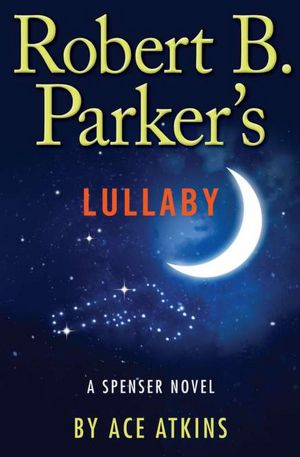
Maybe the greatest compliment that I can give Ace Atkins is that “Lullaby,” his debut taking over the reigns of Robert B. Parker’s Spenser crime novel series, reads link vintage Parker.

Parker had been turning out books featuring Spenser, the boxer-turned-private-eye, since the Vietnam War and straight up until his death in January 2010. Parker told stories about Spenser, his longtime girlfriend Susan Silverman and Spenser’s dangerous cohort Hawk in a relaxed but muscular style that mixed hard-boiled action, genuinely funny witticisms and relaxed, likable characters.

Atkins — one of two writers taking over a couple of Parker series — is an accomplished author on his own. He’s written a series of crime novels that take place in the steamy modern-day south.

With “Robert B. Parker’s ‘Lullaby,'” Atkins has continued the Spenser series with all of the wit and a little more effort than Parker was putting into the books at the end.

Spenser is hired by Mattie, a tough Boston 14-year-old whose drug addict mother was killed four years ago. A neighborhood mook is serving time in prison for the murder but Mattie — hardened beyond her years and raising her younger siblings with no help from an alcoholic grandmother — is convinced that someone else killed her mother. She saw some goons push her mother into a car a few hours before her death.

With Mattie frequently insisting on tagging along, Spenser and Hawk shake down the Boston underworld, top to bottom, looking for the real killers. The good guys take their lumps but there’s little doubt of the outcome.

Most of the Spenser supporting cast is here, from cops Quirk and Belson to loyal hoodlum Vinnie, even gym owner Henry and Pearl the Wonder Dog.

Atkins gets it right when it comes to Parker’s portrayal of Spenser’s style: The PI pushes and pushes and waits for some lowlife to come unglued.

I’m very glad the Parker estate chose Atkins to continue the Spenser series. In just his first outing, he’s found the style that Parker fans have appreciated for decades. And he just might have improved on recent Parker outings.


Elvis (Cole) lives in ‘Taken’

Sherlock Holmes and John Watson. Spenser and Hawk. There are some pretty amazing duos in crime fiction. I’d put Elvis Cole and Joe Pike right up there with the best of them.

Cole and Pike, the creations of crime novel author Robert Crais, return in “Taken,” Crais’ latest book about the cool Los Angeles detective and wiseguy Cole and his man-of-few-words-but-lots-of-deadly-action partner Pike.

Crais has played change-up a bit in recent books, sometimes concentrating more on Pike and less on Cole. In “Taken,” the author splits the story pretty evenly between Cole and Pike with a little attention paid to Jon Stone, Pike’s equally deadly but much more flamboyant associate.

As usual, Cole is a practical but noble example of the classic “knight for hire” crime novel character. Here he’s hired by a LA businesswoman to find her college-age daughter. Cole quickly determines that the daughter and her boyfriend have been taken by ruthless criminals who prey on human traffickers and the undocumented immigrants they smuggle into the country.

The twist in the story is that Cole himself gets taken by the bad guys and it’s up to Pike and Stone to get him back.

Crais, like Robert B. Parker did with his Spencer books, makes his protagonists immensely likable. Although Pike is quiet and mysterious, Cole is a flippant hero, needling the bad guys in his efforts to push them into mistakes.

It’s hard to imagine that Crais has been writing about Cole and Pike since 1987. He’s written 15 books about the two as well as some stand-alone novels that have fed into his series.

While the last few books haven’t had the punch of the first several, Crais has deepened our understanding of Cole and Pike — particularly Pike — and fleshed out their personalities. While the books might not carry the emotional weight of the early entries in the series — especially now that Cole’s relationship with attorney Lucy Chenier seems to be on the back burner — they’re still absorbing, entertaining reads and time spent with familiar characters.


‘Sherlock’ runs with the pack in ‘The Hounds of Baskerville’


Since it was published in serialized form in 1901 and 1902, Arthur Conan Doyle’s “The Hound of the Baskervilles” has become one of those touchstone Sherlock Holmes stories. As much as everybody knows (often wrongly) that Holmes was a “difficult” genius and that John Watson was always a step behind him, everyone knew that Holmes took on a huge, mysterious hound in this Conan Doyle novel.

So the makers of “Sherlock,” the BBC production airing on PBS’ “Masterpiece Mystery” series, had to do an adaptation and had to do something different.

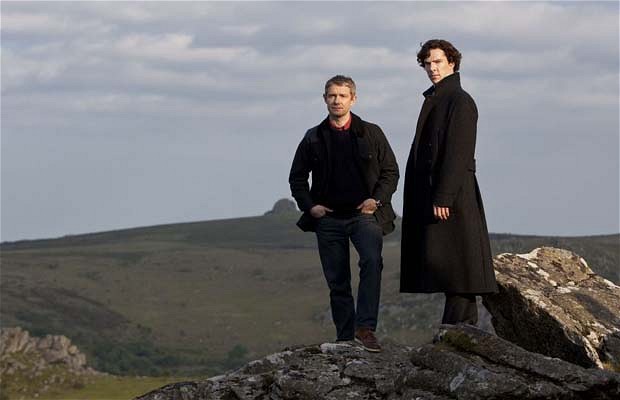
In “The Hounds of Baskerville,” the second of three “Sherlock” episodes in this season, Holmes (Benedict Cumberbatch) and Watson (Martin Freeman) take on the case of Henry Knight, who remains traumatized by seeing his father killed by a huge hound 20 years before. The two venture into the English countryside, specifically to the Baskerville military research base, to find out if giant glowing dogs with red eyes really do exist.

In the process, they have brushes with Sherlock’s brother Mycroft (the top-level British intelligence agent) and even James Moriarty, the warped genius who has become Sherlock’s nemesis. The ending of tonight’s episode forecasts the return of Moriarty next week.

Of course, Holmes and Watson also have the misfortune of running into that hound — as well as a couple of levels of conspiracy.

A few thoughts about the episode:

I loved that Holmes at one point notes that the CIA has a top-secret facility in Liberty, Indiana. That’s just down the road from me and I can assure you that if the Company has set up shop there, it’s pretty well hidden. Made me wish, for a moment, that they had chosen Muncie like everyone from “Tom Slick” to “The Simpsons” to “Hudsucker Proxy” to “Angel” has.

Not that there’s anything wrong with that: Not for the first time in the run of the series, someone mistakes Holmes and Watson for a couple. Cute.

Watson mockingly refers to Holmes as “Spock” after a scene in which Holmes is shaken by his failure to keep his emotions in check. Comparisons between the two have always been made and “Star Trek” episodes have obliquely referred to Spock’s ancestor Holmes (possible, as Trek fans know, because Spock’s mother is human). But for a joke that trumps all, Cumberbatch plays the bad guy in the now-in-production “Star Trek” movie sequel.

This Sherlock turns to cigarettes when he’s bored and anxious between cases, and not a seven percent solution.

Tonight’s episode had the misfortune of airing in the US following a couple of successful movies that had similar elements. The Baskerville hound looked a bit too much like the “mutts” in “Hunger Games,” while the idea of mind-altering gas released into outdoor settings echoed “Cabin in the Woods.”