Category Archives: favorite books

‘Sherlock’ returns with ‘Scandal in Belgravia’

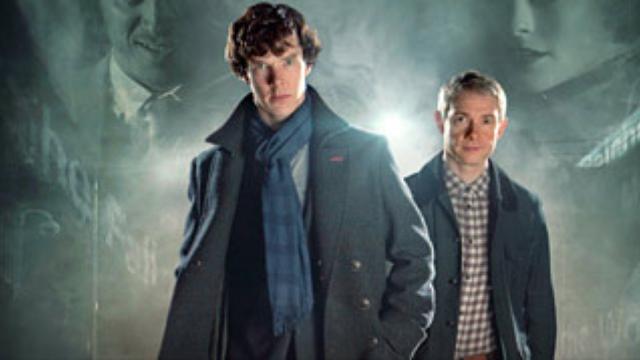
One of the unexpected pleasures of TV in the past couple of years — along with “The Walking Dead” and a handful of other shows — has been “Sherlock,” Steven Moffat’s modern-day updating of Arthur Conan Doyle’s Victorian-age detective Sherlock Holmes.

There have been so many — hundreds — of stage, film and TV adaptations of the Conan Doyle books and short stories in the past century years that it’s hard to imagine crowning one as the best, particularly one that takes such liberties with the content of the canon. But “Sherlock,” a BBC production airing on PBS’ “Masterpiece” series (with two more installments to come May 13 and 20) is certainly near the top of the list.

In the series, set in the present day, Holmes (Benedict Cumberbatch) and Watson (Martin Freeman) forge the offbeat relationship familiar to readers of the original stories. Holmes is a brilliant consulting detective, Watson a physician and soldier. Each man is troubled in some respects. Watson is recovering from physical and spiritual wounds suffered in Afghanistan while Holmes is, for all his British intellect and wit, a stranger in a strange land.

The updated series uses original Conan Doyles stories (and titles; tonight’s episode is a take-off on “A Scandal in Bohemia”) as jumping off points, mixing in high-tech touches along with Holmes’ old-school detective work. In other words, for every scene in which Holmes deduces someone’s life story by observing stay hairs on their pants or scuffs on their shoes, there’s another scene in which Holmes or one of the players is texting on their smartphone. Just as Conan Doyle’s original writing had Watson publishing stories about his exploits with Homes — much to Holmes’ bemusement — in the new series, Watson writes a popular blog about the detective.

Tonight’s episode, like the 1891 original, introduced Irene Adler, a woman who is Holmes’ equal in sheer, cool intellect. In “Sherlock,” Adler is a high-society dominatrix who, as the  episode opens, is being sought for the compromising photos of a member of the royal family on her cell phone.

Adler is, as fans know, “The Woman,” the female who greatly intrigued Holmes, who was very likely his perfect match … if not for her habit of lawbreaking.

In “Belgravia,” we get some choice “Sherlock” scenes, as Holmes stays one step ahead of the police and the bad guys even as he struggles to keep up with Adler.

All the key ingredients to the “Sherlock” series are here: Holmes and Watson’s fond verbal jousting; landlady Mrs. Hudson; even Holmes’ nemesis James Moriarty. The opening of the episode resolves the standoff between Holmes and Moriarty from the end of the first season.

“Sherlock” revels in its modern-day ingenuity — the use of technology and London’s cool blue exteriors give the series a properly detached feel — as much as it encourages us to focus on Holmes’ never-out-of-style intensity.

Cumberbatch and Freeman are among the best portrayers of Holmes and Watson ever. Cumberbatch gets a showy role but Freeman — soon to star in “The Hobbit” with Cumberbatch providing the voice of the dragon Smaug — is an understated delight.

“John Hamish Watson. Just in case you’re looking for baby names,” Watson mutters at some point when Holmes and Adler are striking sparks.
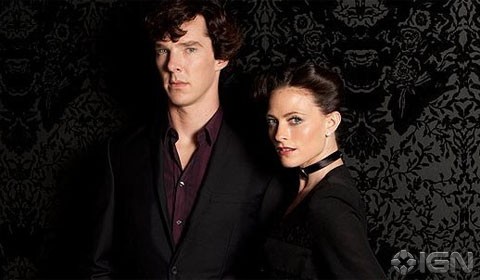
And what an Alder Lara Pulver is. I love Rachel McAdams, who plays Adler in the current Robert Downey Jr. Holmes movies. But Pulver makes McAdams look like the high schooler she played in “Mean Girls.” Pulver, who matches Cumberbatch in cheekbones and ivory skin, is gorgeous and dangerous. She’s utterly believable as “the woman” in Holmes’ life.

Next week, “Sherlock” takes on “The Hound of the Baskervilles.” I’ll be watching.
Waiting patiently for Sheriff ‘Longmire’

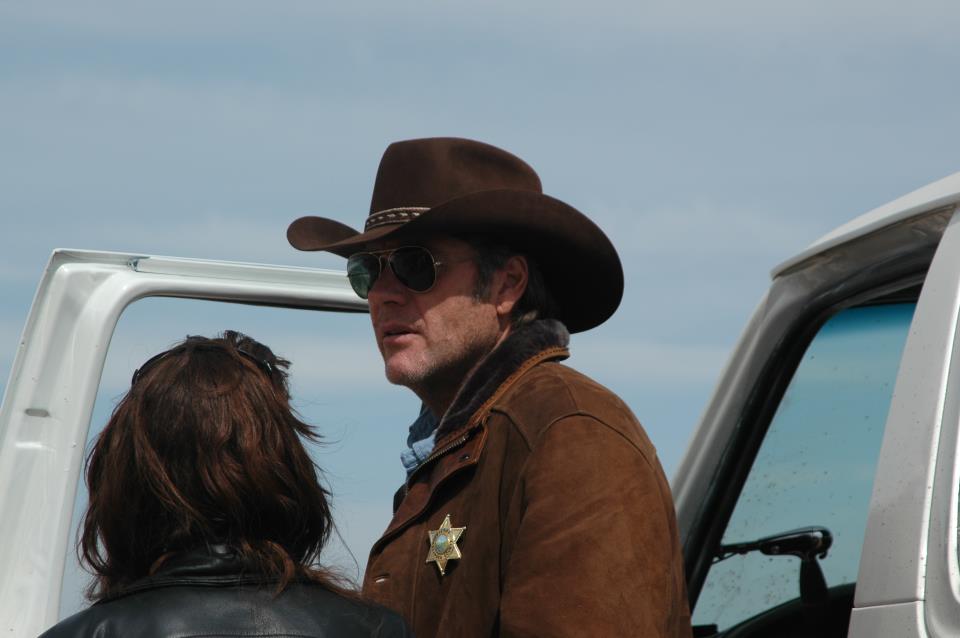
One of my favorite mystery novel series right now is Craig Johnson’s Walt Longmire series, which follows the sheriff of a sparsely populated Wyoming county as, slowly and sometimes painfully but with dry humor, he recovers from the cancer death of his wife and keeps the peace.

Johnson’s Longmire is a tough guy with a soft heart. He’s no spring chicken — Longmire and his native buddy, Henry Standing Bear, served in Vietnam together — but he’s rough and ready. Longmire is more than capable of dealing with the kooks and criminals that pass through his county.

His vulnerability is his heart. Longmire worries — with good reason — about his smart and independent daughter, Cady, and tries to figure out his relationship with Victoria Moretti, his imported-from-back-east deputy who is as rough-edged as she is tempting.

The books have their fair share of action, often involving the inhospitable Wyoming terrain and a group of surly bad guys. But the Longmire stories won’t be mistaken for “Die Hard.” Longmire can defuse a situation as handily as he can brawl his way out.

In light of the success of cable TV series like “Justified,” A&E announced last year that it would turn Johnson’s Longmire books into a series. “Longmire” debuts June 3.

I hope they get the show right. Robert Taylor seems a little too young to play Longmire, and Lou Diamond Phillips will have to convince me he is Henry Standing Bear. Katee Sackhoff couldn’t be more perfect as Vic Moretti, though. Sackhoff has the perfect mix of sex appeal and hot-headedness to play Vic.

I’ve read all of Johnson’s books and I’m looking forward to the next, “As the Crow Flies.”

And I’m looking forward to — if a little anxious about — the TV version.

‘Hunger Games’ casting prompts racist rants

I know that you can’t judge a society by its worst members. And you sure as hell can’t guarantee that just because you liked a book, movie or TV show that everybody else who liked it will be as tolerant as you.

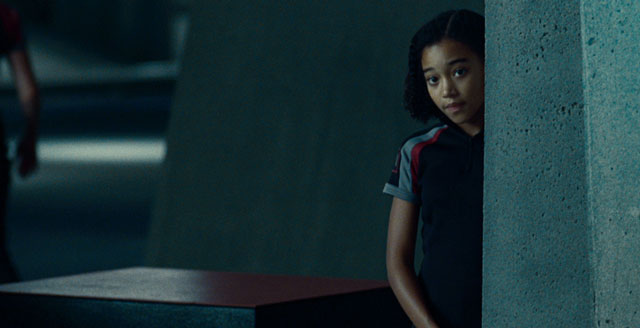
So why does it hurt so much that a group of racist idiots are ranting about the casting of black actors in the movie version of “The Hunger Games?”

The story broke wide on the website Jezebel. Under the headline “Racist Hunger Games Fans Are Very Disappointed,” writer Dodai Stewart notes that a tumblr, “Hunger Games Tweets,” collected Twitter comments about the movie and snared a few that were, to put it mildly, racist.

I’ll only quote a couple here.

“why does rue have to be black not gonna lie kinda ruined the movie,” one idiot pecked out.

“why is rue a little black girl? Stick to the book DUDE” is another.

Let’s put aside the fact that author Suzanne Collins, in describing Rue and fellow District 11 tribute Thresh, notes they have dark brown skin.

Let’s put aside that the DUDES who made “The Hunger Games” movie stuck to the book. DUDE.

Why would it matter how the characters were cast? Doesn’t some diversity in casting — and in creating the characters of Collins’ original novel — enhance believability? Otherwise, are we supposed to assume there are no black people in the future?

Maybe that’s the Twitter writers’ fantasy, but it’s plainly not Collins’ and it’s not mine. Or most of us, hopefully.

Time for one last tweet:

“Kk call me racist but when i found out rue was black her death wasn’t as sad #ihatemyself” one person wrote.

Two things to note about that tweet:

We hate you too.

And you left off the third “K” at the beginning of your Tweet. DUDE.

‘The Hunger Games’ goes to war

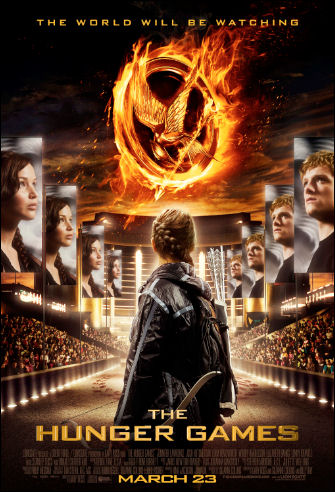
“The Hunger Games” — both Suzanne Collins’ book trilogy and the Gary Ross movie adaptation of the first novel, which opened Friday — is harsh stuff. There’s violence, some of it bloody. And yes, in the tradition of lit classics like “Lord of the Flies,” there’s physical violence involving children. Kids killing kids.

But imagine the opening half hour of “Saving Private Ryan” without its graphic depiction of the storming of Omaha Beach. You can’t, because that heart- and gut-wrenching scene — while taken from real life, rather than Collins’ deftly accomplished fiction — set the tone for all that followed. The stakes were high, the scene told us.

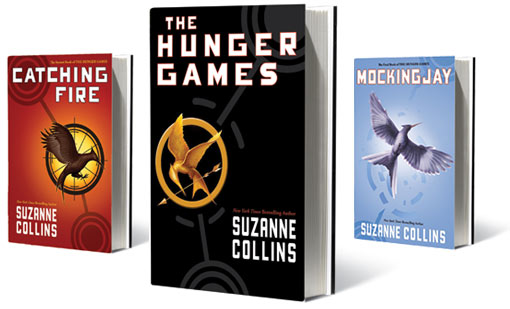
And even though the movie adaptation of the first of Collins’ best-selling young-adult novels — “The Hunger Games,” “Catching Fire” and “Mockingjay” — takes place in an imaginary future world, the stakes for its characters are just as high.

And they’re pretty high for readers of Collins’ books and viewers of Ross’ movie, too.

Much has been made about how violent the books and movie are and if that’s appropriate for the young adult audiences for which they were intended. But I can’t imagine a better message for young people than the idea at the core of Collins’ stories: Freedom is worth any cost.

But enough of philosophy. The movie from director Ross (“Pleasantville” and “Seabiscuit”) is a very good adaptation of Collins’ story. Maybe as good as could have been hoped for.

If you’ve read this far you probably know the story, but here’s a quick recap. The story is set in a future America called Panem. Seventy-four years have passed since a rebellion among the country’s 13 districts. The controlling Capitol punished the districts — aside from wiping one of them, 13, off the map — by instituting the Hunger Games. The name comes from the state of poverty most of the country’s citizens live in. While the citizens of the Capitol live in luxury, eating well, dressed and made up in florid, frivolous style, the people of the districts live an impoverished existence, scrambling to find enough to eat even as they produce the coal or grain used to feed the rich of the Capitol.

In each year’s Hunger Games, each of the 12 remaining districts are forced to offer up two Tributes, teenagers to do battle to the death in a specially-built arena for the televised amusement of the nation. Most years, the professional athlete/warriors from the wealthy districts win the Hunger Games.

The citizens of District 12, in what used to be the coal-mining countryside of Appalachia, are accustomed to their state, although some, like Katniss Everdeen (Jennifer Lawrence) and Gale (Liam Hemsworth) defy the Capitol by crossing the boundary fence and hunting in the forests nearby. It is here that Katniss sharpens her archery skills.

When the Reaping — the day the Tributes are chosen — comes for the 74th time, Katniss’ young sister, Prim, is chosen. Katniss volunteers herself as a substitute and, along with baker’s son Peeta (Josh Hutcherson), is chosen as District 12’s contestants in the annual bloodbath.

Katniss and Peeta travel to the Capitol with Haymitch (Woody Harrelson), District 12’s only living winner from past Hunger Games. Haymitch is to be their mentor in the games, giving them advice and securing sponsors, whose help can be vital because they can provide water, food or medicine.

If “The Hunger Games” drags at all, it is during the first half, as Katniss and Peeta prepare for the games. Even though the training and build-up to the competition is interesting, the story shifts into a higher gear when the games begin.

Katniss and Peeta find themselves competing against 22 other Tributes, including the brutal and well-trained professionals. They also build alliances, Peeta with those stronger competitors (at first) and Katniss with an endearing young Tribute named Rue (Amandia Stenberg).

The games go by quickly, literally in a blur during the fighting, when Ross’ camera work is a little too jostled for my tastes.

But the quiet moments — Katniss and Rue, Katniss and Peeta, Katniss trying to survive — are perfect and capture the tone of Collins’ story.

Since the story is all about control and manipulation — the Capitol portrays the Hunger Games as an annual reminder of the rebellion, and it is that, but it is also a way for evil President Snow (Donald Sutherland) to punish the districts — Collins had an ingenious idea to make teenagers the principals. Teens are all about rebelling against control and authority, of course.

The movie features a couple of hints about what is to come in the later books — and movies, considering “The Hunger Games” made $20 million in Thursday midnight showings and another $65 million or more on Friday, according to the Hollywood Reporter — especially in scenes of a riot in one of the districts watching the competition.

But while “The Hunger Games,” book and movie, stand on their own, they’re better as part of a trilogy, a story that tells of the events that change this future society forever.

Ross’ movie expands the story somewhat — including behind-the-scenes control room moments and shots of Haymitch wooing sponsors — and unfortunately limits some aspects, particularly the bonding between Katniss and Rue.

But it’s hard to imagine a better effort to capture the story, characters and spirit of “The Hunger Games.”


Josh Bazell’s ‘Wild Thing’ is funny and brutal

A couple of years ago, Josh Bazell made a big impression with his first book, “Beat the Reaper,” a funny and brutal crime novel about Pietro Brnwa, a former mob family member who went into the witness protection program. Brnwa went through medical school and had settled into a big-city hospital job when his past — in the former of mobsters looking for him — caught up with him.

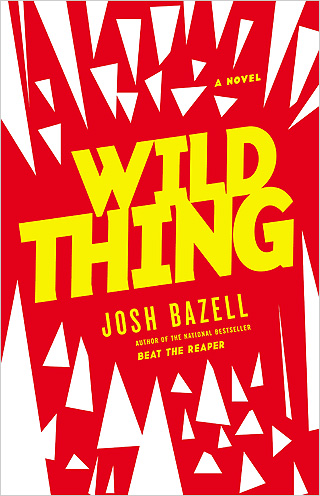
Brnwa is back in Bazell’s sequel, “Wild Thing,” one of the most unusual and rewarding crime novels I’ve read this year.

It works chiefly because Bazell’s sense of humor is as sharp as his sense of justice. The book is harsh — although there’s no moment to equal the scene in “Beat the Reaper” when Brnwa performs impromptu surgery on himself — but also laugh-out-loud funny.

As the book opens, Brnwa is working as a cruise ship physician. For the most part, he’s treating the downtrodden crew for bad teeth and venereal diseases. And he’s looking over his shoulder for any members of the mob family that’s hunting him.

Then Brnwa gets a message from a contact offering him an offbeat but lucrative job: Brnwa would represent a billionaire — the 14th-richest man in the United States — on a hunting trip in the wilds of Minnesota.

It seems that the billionaire wants to know if a lake monster is living in the waters of a remote Minnesota lake, feeding on the occasional swimmer. Brnwa’s scientific background as well as his ability to take care of himself against even supernatural odds makes him a strangely apt choice.

Accompanied by the billionaire’s resident paleontologist, Violet Hurst, Brnwa heads for the northern lake country.

A pleasantly teasing relationship quickly develops between Brnwa and Violet, but the real fun in the book is the group they accompany on the lake monster expedition. There’s a couple of low-grade celebrities, some outdoorsy types and one real-life political figure whose presence lends a bizarre reflection of reality to the story and leaves little doubt about Brnwa’s politics.

I won’t reveal the real-life special guest here — nor will I solve the mystery of the lake monster — but her appearance ably demonstrates the funhouse nature of Bazell’s book. The political figure, that is. Well, and the lake monster too.

One of the most interesting things about the book is the extensive use of footnotes. I don’t remember this from “Beat the Reaper,” but it adds a new level of humor here as Bazell comments and elaborates on his own story.

Part of the fun in this book is also the packaging. The inside front-and-back covers are line drawings that appear to show Brnwa and Violet in a series of adventures: getting chased by a tiger, outrunning a volcano, eluding a werewolf, being waterboarded. The illustrations look like nothing so much as the kind of drawings that decorated old-time Hardy Boys books.

The drawings were just larks, no doubt, inspired ideas that tip the reader off that Bazell’s sense of humor is offbeat.

But I’d be happy if Bazell wrote further adventures of Brnwa and Violet. And I’d love to see them take on that werewolf.

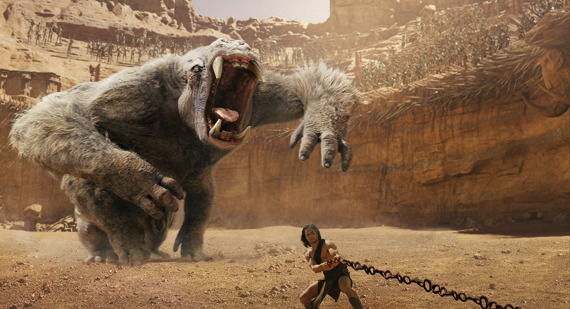
‘John Carter’ leaves Hollywood wondering what happened

The box-office performance of Disney’s “John Carter” this weekend has left some Hollywood observers wondering what happened. The movie adaptation of the century-old Edgar Rice Burroughs tale pulled in only about $30 million in ticket sales, not enough to beat “The Lorax” in its second weekend.

My money didn’t contribute to the “John Carter” take, but more on that in a minute.

The New York Times featured a good analysis of why John Carter didn’t do well and is highly unlikely to recoup its $250-million-plus costs, but the article boils down to too much indulgence by director Andrew Stanton (who made Pixar’s classics “Finding Nemo” and “Wall-E”), a badly handled marketing plan and too little interest on the part of moviegoers for the story from the creator of Tarzan.

Maybe the movie will do well overseas. Maybe it will be considered an overlooked classic.

I’ll be able to judge the latter better when I see it. I didn’t see “John Carter” this weekend, even though the Burroughs tales were among my favorites when I was a kid, because the movie had very limited non-3-D showings locally.

I’m convinced that 3-D has become as much of a liability as a draw for some moviegoers, including me. The movies I want to see more than anything else in the next few weeks, “The Hunger Games” and “The Avengers,” will no doubt play in 3-D but I’ll probably have to seek out a theater in which to watch them in good old 2-D.

I’ve heard too many bad reports about how dark and murky 3-D movies can be as they’re projected in our standard movie theaters. “Thor,” a very fun movie, was apparently almost unwatchable in some theaters.

Other moviegoers no doubt think the $3-or-more surcharge for 3-D is also unwelcome, and it is, until 3-D projection is perfected.

In the meantime, movies that cost too much, don’t have a very good marketing campaign, don’t have enough broad appeal and can’t entice people to put up with 3-D projection will suffer. It happened with “Green Lantern” and I think it happened with “John Carter.”


Libraries I have loved

I spent about an hour at my current favorite library this afternoon, picking up a couple of books and reading a magazine. It was as familiar and comforting as my house.

Libraries have been a part of my life for as long as I’ve been able to read. I have an unwieldy collection of books in my household, including a few that belonged to me as a kid. But the majority of reading materials I grew up on — not including comic books — were borrowed from libraries.

It’s not news to anyone that libraries are as important to our society as armories or banks or schools or factories. Libraries are where our history, our knowledge, our pleasure, our thoughts, our fantasies live.

But while a great library can be a private library — the kind of wall-to-wall, floor-to-ceiling bookshelves I have always wanted — the greatest libraries are public libraries.

It’s the library’s pool of shared art, knowledge, ideas and stories, truly available to everyone, that makes a community complete.

Here are a few of my favorites:

Cowan School library: When I was old enough to read more than basic kids books, my school library was the center of my reading universe. I devoured as diverse a bunch of reading materials as I could: Bullfinch’s Mythology, books about great horses like Man o’ War, showbiz biographies, history, hardcover collections of newspaper comic strips, current news magazines.

At Cowan’s library I learned to love the card catalogue and figured out the mysteries of the Dewey Decimal System.

Cowan’s library, shared by elementary and high school alike back in those days, was small even in my memory. But librarian Lois Jeffers and her staff kept students endlessly amused and informed. And she maintained summer hours so I could check out a stack of Hardy Boys books every week.

Grace Maring Library, South Madison Street, Muncie (above): I didn’t live in Muncie and didn’t have a library card, but my cousin had one and we spent some pleasant days in this beautiful old library. The building still exists although it hasn’t housed a library for more than a decade. It still holds a lot of memories, though.

Carnegie Library, downtown Muncie (top): I probably spent more time in this beautiful library than any other. I haunted this library on a regular basis when I was working as a freelance writer in the early 1980s. In the days before the Internet and frequent updates on the entertainment world on TV, issues of Variety were the resource for news about the industry, so I spent a lot of time looking at Variety’s listings of new movies going into production, release dates and so on.

And there was no better place to do it than Carnegie, with its gunmetal blue stacks, ornate ceiling and semi-comfortable seats around a collection of wide, flat tables. I loved settling in to read about movies and TV from an insider’s perspective in a library that was the closest thing to a movie library setting.

Bracken Library, Ball State University, Muncie: Bracken supposedly was designed to look like stacks of books. I’ve never quite been able to figure that out. But it’s a good university library and has great resources, including a great collection of old photos and newspaper archives.

I’ve explored a few other libraries to a limited extent, including the stuffed facility in downtown Asheville, North Carolina. And of course there’s no fictional library more beloved than the Sunnydale High School library overseen by Rupert Giles in “Buffy the Vampire Slayer.”

Luckily, I’ve never been in a real-life library that’s built over a Hellmouth like in “Buffy.” But as “Buffy” fans know, nobody ever checked anything out of Giles’ library anyway. Except maybe a crossbow.

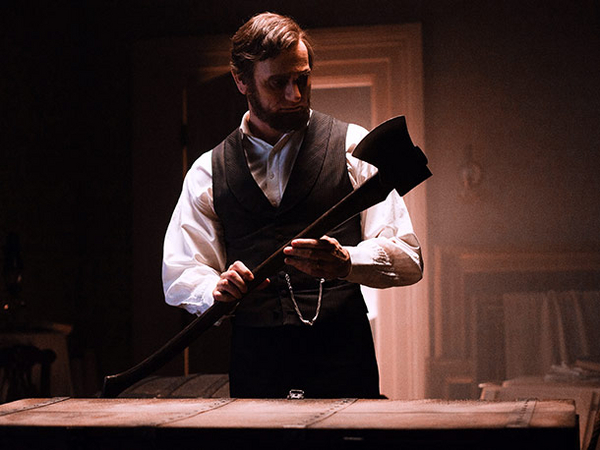
Trailer for ‘Abraham Lincoln: Vampire Hunter’ looks good

As previously noted in this blog, Seth Grahame-Smith’s “Abraham Lincoln: Vampire Hunter” is a fun book with a title that makes you roll your eyes.

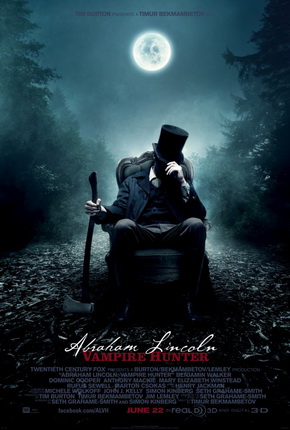
The movie version is coming out this summer and a teaser trailer was released today.

Here’s a link to the trailer on Aint It Cool News.

So far, so good.

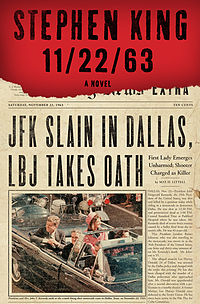
King’s ’11/22/63′ does time travel right

Every science fiction author has tried his or her hand at a time travel story, sometimes more than once. Some do well, avoiding the cliches — what if I accidentally kill my own grandfather? — and others jump headfirst into the eddies and paradoxes of the time stream.

A couple of notable time travel stories — both made into movies, with vastly different results — are Ray Bradbury’s 1952 short story “A Sound of Thunder,” in which future big-game hunters use the available time travel technology to travel into the distant past to hunt dinosaurs, and Richard Matheson’s 1975 novel “Bid Time Return,” in which a lovestruck modern-day man wills himself into the past to meet an actress from an old photograph.

Stephen King’s latest book, “11/22/63,” has echoes of both stories — the former in that its protagonist worries what might happen if he goes back in time and changes history and the latter in that a love lost in time is a central theme.

In the afterward to his 800-plus page book, however, King says he thinks Jack Finney’s “Time and Again” is “the great time travel story.”

Finney’s book, about a time-traveling tourist of sorts, also seems to be an influence on King’s novel.

King tells the story of Jake Epping, a teacher from modern-day Maine who reacts with disbelief when a friend tells him he’s stumbled upon — literally — a doorway back into time. A time portal is hidden in a little-used storage closet in the back of a diner in a small Maine town and the diner’s owner, Al, wants Epping to complete a mission that he could not: Save John F. Kennedy from assassination.

It seems that Al discovers that the time portal goes back to the same day — indeed, even the same minute — in 1958. Al has been going back and forth for years, enjoying his visits to the past and, while he’s there, buying cheap ground beef and bringing it back to the future. His suspiciously inexpensive hamburgers aside, Al has become fixated on a plan to save JFK from Lee Harvey Oswald’s bullets that fateful day in Dallas in November 1963.

Since this is a King story and King is known for his acknowledgement of human mortality, something goes wrong: Al is dying from cancer and is, in fact, likely to die before he can complete his mission. You see, he’s already gone back to 1958 and lived for several years in the past, waiting for the right moment to stop Oswald or anyone else with plans to kill the president.

So Al recruits Jake, urging him to go into the past and save JFK. If Jake is successful, Al believes all of modern history will turn on a dime and the world will be greatly improved. Vietnam might end early, saving the lives of thousands; Bobby Kennedy and Martin Luther King Jr. might never be assassinated. The potential world-changing events are nearly endless.

Of course, Al is right, but not in the way he believes.

Jake, who takes some convincing, has another mission in mind as well. The school where he teaches employes a janitor who, in the course of an adult education class, writes a story about the harrowing night in October 1958 when his father wounded him horribly and killed his mother and siblings. Jake reads the paper and is haunted by it.

Since Jake will materialize in the past just a month before that happens, why can’t he stop the familial slaughter then head for Dallas?

King’s readers know that the author wouldn’t let his characters move as cleanly and easily through the events of the story as all that.

One of my favorite elements of “11/22/63” is King’s theory that the past doesn’t want to be changed. More than the dangers of changing the flow of history — and the book dramatically details those — Jake finds there’s real danger in trying to effect change in the time stream. If you try to make a little change, the past pushes back in a little way. Maybe you get a flat tire or the stomach flu.

If you try to make a big change — and what change could be bigger than saving Kennedy? — the hands of time pummel your ass.

King’s book, which makes 800 pages read more like 400, takes its time with its characters. The first section is about Jake’s efforts to save the lives of the janitor’s family in 1958. The second is about the years between that time and Kennedy’s assassination, when Jake lives, under a new identity, in a small Texas town. It’s during this time the stakes start getting higher. Jake not only begins to find out everything he can about Lee Harvey Oswald but also falls in love with a troubled young woman working at the school.

The final section of the book is a propulsive countdown to Kennedy’s arrival in Dallas, with Jake facing very long odds in his effort to change history.

King loads his book with wonderful plot points, from how Al and later Jake subsidize their stay in the past to little details about the period and the towns where the story takes place. He even finds time to make reference to “It,” his creepy novel about a killer clown in a small Maine town.

You’ve probably read and seen dozens of time travel stories and maybe even more than a few about the Kennedy assassination (the 1980s TV remake of “The Twilight Zone” had a good one, “Profile in Silver”).

But few in recent memory explore the concept as cleverly and with as much emotion as King’s latest novel.


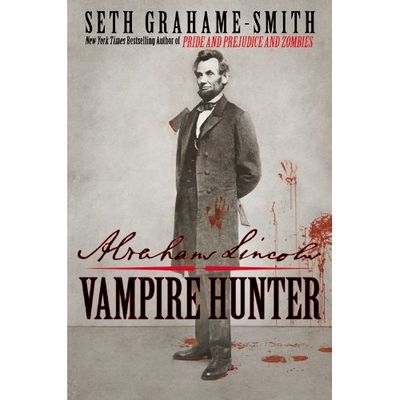
‘Abraham Lincoln, Vampire Hunter’ a great read

Trust me on this one.

“Abraham Lincoln, Vampire Hunter” is a terrific book.

I know. That title. “Abraham Lincoln, Vampire Hunter” might be the best-executed (no pun intended) work of fiction with the cheesiest title since “Buffy the Vampire Slayer.”

It might be easy to confuse Seth Grahame-Smith’s 2010 novel with the author’s own “Pride and Prejudice and Zombies” or other historical fiction/horror fiction mashups. It’s not that at all.

Grahame-Smith’s book is a fantastic (literally) but well-told story based on the premise that Lincoln, the Midwestern farm boy and rail-splitter who grew up to be the country’s 16th president, waged a secret battle against vampires for most of his life.

In the book, Lincoln learns that his mother’s death was at the hands of a vampire after his father failed to repay a debt. The future president discovers that areas of the still-young country are rife with vampires.

The novel’s best conceit? Vampires are a huge part of the Confederacy, which slaves traded in part so they can be used to feed vampires.

Young Lincoln learns much from Henry, a mysterious, all-knowing stranger who befriends him and then trains him in the art of vampire killing. Needless to say, Henry has a secret.

The book has been made into a movie written by the novel’s author. It comes out in June.

The novel treats Lincoln and Henry, as well as the story itself, with grace, reserve and dignity. There’s not a hint of camp. Lincoln is just as tragic a figure in the book as he was in real life.

Sure, it’s bizarre to think of our nation’s greatest president hunting and beheading vampires. There’s a shock value to the title that the story can’t match.

“Abraham Lincoln, Vampire Hunter” is as preposterous-sounding as can be. But it’s a fast-paced, witty tale told well.