Category Archives: favorite books

Writers to read: Chuck Hogan

Chuck Hogan is one of those writers whose fame is slowly growing but whose name might draw a blank stare even from avid readers of crime novels and thrillers.

Chuck who?

Hogan co-wrote, with Guillermo Del Toro, the trilogy of end-of-the-world books that began with “The Strain.”

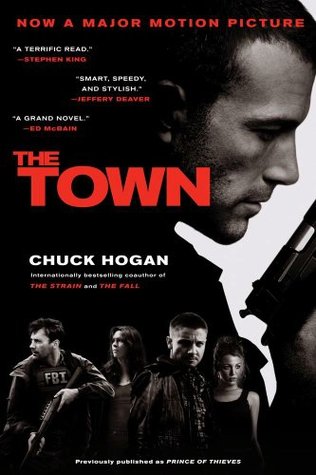
He also wrote the gritty thriller “Prince of Thieves,” the story the Ben Affleck/Jeremy Renner thriller “The Town” was based on.

Oh, that Chuck Hogan.

I’ve been making my way through Hogan’s novels, in no particular order. As proof of that, I’ve just finished his first book, “The Standoff,” published in 1994.

The downbeat story of a deeply troubled FBI hostage negotiator, the sheriff of a small Montana county and a black federal agent, all of whom are thrown into a dangerous situation thanks to a standoff with a white supremacist holed up, along with family members, in a small mountain cabin.

When a local judge mistakenly orders an eviction notice be served on the mountain man — who has a good supply of guns to back up his racist, government-hating paranoia — dominos begin falling. Shots are fired, reinforcements are called in and the people of a nearby town start taking sides. Unfortunately, they take the side of the racist cabin-dweller.

Hogan throws a few twists into the story, but the book is a straightforward and ultimately dark thriller.

The story is interesting in part because of the time in which it was published. The federal standoffs at Waco and Ruby Ridge had occurred but the Oklahoma City bombing had not. Mention of the World Trade Center — the scene of an earlier, traumatic hostage situation that left troubled agent John Banish literally and figuratively scarred — seem eerie.

Hogan isn’t a showy writer. The “Strain” trilogy with its end-of-the-world theatrics isn’t typical of his work.

With that series complete, I’m hoping that Hogan gets back to the mean streets and meaner protagonists of his best thrillers.


High Priest(ess) of steampunk

Steampunk is kind of heard to explain.

Remember the rivet-covered, steam-powered flying saucers and such in the old 1960s “Wild, Wild West” TV series? Or the giant mechanical spider in the awful big-screen adaptation of the series, starring Will Smith?

Wait, let’s back up. I’m not sure anybody wants to remember that widescreen nightmare.

Anyway, steampunk — and the genre of fiction that bears that name — is, for the most part, a fanciful recreation of the latter half of the 1800s and early 1900s. Cowboys ride horses and use six-shooters and people travel on trains, but dirigibles are commonplace, people with missing limbs brandish elaborate false appendages and coal-or-steam-or-pedal-powered engines of destruction are the latest weapons of war.

Enter Cherie Priest.

Priest is a blogger and author of several works of fantastic fiction that falls into the “urban fantasy” category, where vampires and werewolves clash with criminals in big-city settings. I’m going out on a limb somewhat there, because I’ve just started reading one of Priest’s urban fantasy books, “Bloodshot,” so I’m not exactly sure what her books in that genre are all about.

But I can speak authoritatively about her steampunk books.

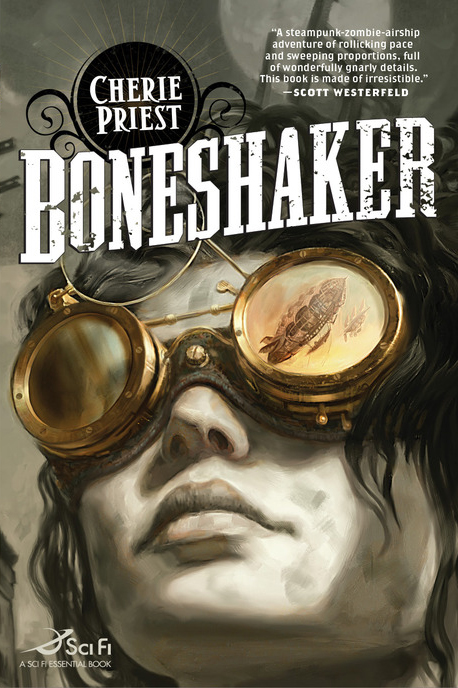
Priest isn’t the only person writing steampunk right now, certainly, but she’s one of the top practitioners. And her “Clockwork Century” series is not to be missed.

Priest’s steampunk series is set in the American 1880s, but one that’s markedly different from what we find in history books.

For one thing, the Civil War is dragging on. The battle between the North and South has been prolonged by the meddling of other parties, most notably the Republic of Texas, whose oil wealth and martial might — symbolized by the Rangers — have mustered on the side of the Confederacy.

Motivated by war and the profits to be had, inventors and captains of industry have pushed the 19th century’s technology and perfected lighter-than-air ships, trains bristling with armament, submarines and, most impressively, walking suits of armor.

Priest’s characters — many of them strong women, including a widow searching for her son in a ravaged city landscape, a nurse trying to make her way across country to find her father and a New Orleans madam eager to help the North and shake loose the bonds of the Confederacy — move through her plots in a matter-of-fact manner, wielding a gun or feminine wiles with equal skill.

Oh, and did I mention the zombies?

Yes, Priest has complicated matters by creating a wave of the walking dead — or rotters, as they’re called in their place of origin, Seattle.

In “Boneshaker,” Priest explains how the zombies were created. A drilling machine released a toxic gas from the bowels of the earth under Seattle. Much of the city’s population fled. Others turned into rotters, shambling through the streets in search of human flesh. Others Seattle-ites fled to the underground beneath the city, where they live in tunnels safe from the toxic gas because of an intricate series of tubes and pumps.

If they go topside, they must wear gas masks to avoid turning into rotters. And they must be on guard not only from the zombies but the criminal element that thrives in the city.

In “Dreadnought,” we get our first glimpse of how the zombie plague is spreading. Drug makers and dealers are distilling the gas and turning it into “sap,” a highly addictive substance that eventually turns its users into the walking dead. The title refers to an especially deadly war train on which much of the story unfolds.

In “Ganymede,” the addiction has spread to New Orleans, which is a hotbed of Civil War intrigue thanks to a missing submarine and efforts to get it in the hands of the Union.

One of the most fun elements of Priest’s books is how she weaves characters through all her stories. The protagonist of “Boneshaker” is a supporting player in “Ganymede,” while the nurse and a Texas Ranger from “Dreadnought” show up in “Ganymede.”

Priest is a nimble writer. If you’re worried that her books would be written in a pseudo-Victorian-era style, don’t be. While her characters are not anachronisms, they have enough modern sensibilities to be completely relatable.

The books are fun, fast reads. (One of my few quibbles can be blamed on my aging eyes. The print in the paperback editions is sepia-toned. It might be appropriate to set the mood for the period in which the stories take place, but it makes it a bit hard to read.) Priest keeps the plot moving and throws in just enough twists and turns to surprise the reader.

Priest announced some big news right around the end of November. “Boneshaker” has been  acquired for adaptation as a movie. It’s probably not surprising, considering how hot zombies are right now, with “The Walking Dead” a hit on TV and in comics and “World War Z” coming out later this year.

Besides, who can resist the pitch — included in the announcement — that “Boneshaker” was like “Jules Verne meets ‘Resident Evil?'”

Movies are tricky things. Sometimes they completely miss the flavor of the books on which they’re based. Sometimes they get everything right.

Priest’s steampunk stories — and more of them are on the way — are as entertaining as any movie adaptation could be. Don’t wait for the big-screen version.

‘Dragon Tattoo’ does the research

Who knew research nerds were so sexy? Not to mention so dangerous?

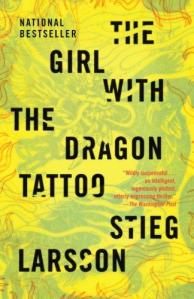
Well, everybody who has read Stieg Larsson’s “The Girl with the Dragon Tattoo” trilogy, I suppose, or those who’ve seen the original Swedish film adaptations or the new movie version of the original novel in the trilogy.

I guess it’s easy enough to say that all detectives — from Sherlock Holmes to Batman — are characters who do a lot of research because, after all, that’s what investigating is all about.

But Larsson’s characters, Lisbeth Salander and Mikael Blomkvist, spend more time scanning old photographic contact sheets, reading corporate histories, perusing personal scrapbooks and, of course, tap-tap-tapping on the keyboards of their laptops than any of their written word or big-screen contemporaries.

The thought occurred to me today after seeing David Fincher’s big-screen, big-budget adaptation of Larsson’s first book, starring Daniel Craig as Blomkvist and Rooney Mara as Salander.

Anyone who’s read the books or seen the earlier movies knows there’s a reassuring and even kind of humorous pattern of activity in the stories, much of it centering on Salander, the emotionally and socially estranged but brilliant investigator who helps Blomkvist, a discredited journalist, probe the long-buried secrets of a rich family.

Salander spends much of Larsson’s books smoking, buying frozen pizzas from convenience stores and riding her motorcycle. Blomkvist drinks enough coffee to float all of Sweden.

But seeing the movie today emphasized how much time the two spend poring over everything from the Bible to old newspaper archives to Google search results.

I should note that I’m a fan of Larsson’s books at the same time I recognize their shortcomings. Completed before the author’s untimely death in 2004, the books have taken on a life of their own, selling 15 million copies in the U.S. alone.

There’s some clunky moments in the stories, to be sure, and maybe that’s from the editing or translation. But the compelling characters and ingenious plots more than make up for it.

Blomkvist is, as has been noted elsewhere, a somewhat passive character. I think some people don’t realize, though, that Larsson’s background as a journalist probably contributed to that. Blomkvist is a social crusader and risk-taker — not only in his amorous personal life, but in his professional life too — but, like good journalists, is more of an observer than an agitator. His role, even when people are shooting at him, is to probe rather than instigate. Can you imagine how unlikely a reporter he would be if he pushed and provoked like Robert B. Parker’s Spencer?

But Salander … man, what a character Larsson has created.

If you haven’t read the books or seen the original movies, the new movie won’t give you too many clues to her background. But suffice it to say, Salander survived an incredibly abusive upbringing and traumatic events — both of her own making and at the hands of authorities — than wouldn’t be survivable by many people.

She lives in self-exile in the midst of bustling Stockholm, relating to most people sideways, out of the corner of her eye. In fact, it’s remarkable when, late in the movie, Salander trusts and likes Blomkvist enough to look at him head-on.

That’s not to say that Salander is a pliable character. Because she likes to disappear into the background doesn’t mean that she’s a pushover. After being brutalized by her government guardian, she lashes back in a most satisfying manner. Throughout the stories, Salander takes things into her own hands, achieving revenge and righting wrongs. She has a fierce personal code and protective streak and has the tools to back it up. One of the pleasures of the trilogy is seeing Salander unleash her fury. A small woman, she launches herself into a fight, devastating her opponents. Larsson called it “Terminator mode,” and while it might be as cliche as it is unlikely, it’s thrilling.

The new movie — which, of course, is not for younger audiences, considering the sex and violence quotient — necessarily telescopes some of Larsson’s story. Blomkvist’s troubles are given a thumbnail treatment and there’s little of the admittedly yawn-inducing thumbsucking over the operations of his investigative magazine. I really didn’t need more discussions of which staffer would take over which role if Blomkvist left. If the second book, “The Girl Who Played with Fire,” gets made into a movie, some of that internal magazine stuff will be necessary since two staffers from the magazine figure into the plot.

There’s a moment with Craig’s Blomkvist makes a joke about losing track of the members of the divisive Vanger family. Who can blame him? They’re all old and either Nazis or worse — yes, that’s possible — and mercifully off-screen for most of the movie, and that’s a good thing.

The movie doesn’t shy away from the book’s sexual, violent and sexually violent overtones. Really. Don’t go if you’re squeamish.

Craig, normally so take-charge and headlong as James Bond, is good as the journalist who isn’t really an action hero. When he gets rescued by Mara’s Salander, it’s believable.

Mara — like Noomi Rapace, who played Salander in the Swedish film versions — is very good as the damaged Salander. She’s appropriately spiky but vulnerable.

There’s been speculation that the box-office returns for “The Girl with the Dragon Tattoo” haven’t been good enough to warrant a sequel. That’s too bad in a way, because I’d like to see what Fincher, Craig and Mara do with “The Girl Who Played with Fire,” because it’s my favorite of the three books. If they don’t make another movie, though, that’s okay. The book is still there, right on my shelf, ready to take me back to the cold and barren world of Salander and Blomkvist.

 

Michael Connelly’s ‘The Drop’ has twists and turns

Michael Connelly, a Los Angeles newspaper reporter turned writer, has become something of a brand name among authors of crime novels. Connelly, who seems as cool as his star characters, Harry Bosch and Mickey Haller, could probably say how many New York Times bestsellers he’s written. Not that he needs to. For many readers, all they need to know is that Connelly is the guy who wrote “The Lincoln Lawyer.”

That book, about street-smart Los Angeles defense attorney Haller, has had a few sequels now and been turned into a pretty good movie. The success of the Haller books almost threatens to eclipse Connelly’s best and most accomplished character, L.A. police detective Bosch.

That might be because Bosch is anything but cuddly. The son of a murdered prostitute, the tough Vietnam veteran is nearing the end of his law enforcement career as “The Drop,” Connelly’s latest novel, begins.

The title refers to a process through which LAPD cops can pick their “drop” date, or retirement date, and Bosch — worried that he’s losing his skills as well as losing an opportunity to connect with his 15-year-old daughter — puts in for his. He signs up for retirement and looks at a little more than two years on the force.

Bosch, a veteran of the LAPD’s homicide squad, is currently working on cold cases for the department and applies himself to each new cold case — usually sparked by a DNA hit or some other fresh development — with the same single-minded drive he brought to new homicides.

Bosch and his often-callow partner, David Chu, are handed a cold case that seems impossible: A DNA match from a 20-year-old murder points to a local man as a suspect. But the the man was only eight years old at the time of the slaying. The suspect is a sex offender, but how could he have been involved in the homicide when he was still a child?

The title also refers to the fatal fall suffered by an L.A. man who happens to be the son of Bosch’s old nemesis, Irvin Irving, a police bureaucrat turned city council member. Bosch clashed with Irving on earlier cases, so why would the councilman ask Bosch to investigate his son’s death? Is Bosch being set up to prove that a case that looks like a suicide was really a homicide?

Bosch is his typically blunt, laser-focused self in “The Drop” and, while the cop’s personality makes him fascinating it also, truthfully, makes him kind of hard to like. Granted, I’d want a cop of Bosch’s demeanor investigating the slaying of a loved one. But I wouldn’t want to be his partner or superiors or pretty much anybody around, because Bosch is really, really good — despite his concerns that he’s losing his touch — and doesn’t hesitate to steamroller over anyone that stands between him and closing a case.

In his recent books, Connelly has mixed his wide-ranging L.A. cast, with Bosch appearing in Haller books and Haller appearing in Bosch books. There’s little of that going on here. Fans of Haller will enjoy a late-in-the-book reference to one of the best characters from those stories, though.

“The Drop” is, like most of Connelly’s work, the kind of story that almost demands you read it quickly once you’ve begun. The story, thanks to Harry Bosch’s driven personality, propels itself forward. It’s a fast-moving read with a development near the end that feels more like a lurch than a twist. But Bosch isn’t thrown for a loop. He goes with the twist and brings readers — happily and willingly — along.

‘The Affair” shows how Reacher became Reacher

There’s something very pure about Lee Child’s Jack Reacher crime dramas. Almost as pure as Robert Parker’s Spencer books. Reacher is an ex military police officer who drifts around the country, helping people. Kinda like Lassie and the Hulk.

Child’s Reacher books have shown us how the protagonist handled everything from small-town bullies to government conspiracies. They’ve inspired a movie adaptation to star Tom Cruise, who is miscast. Reacher is a stoic giant of a man. Cruise … isn’t. So I guess we’ll see how that all turns out.

But one thing Child hasn’t done until now is tell us how Reacher became Reacher.

“The Affair,” Child’s most recent Reacher novel, flashes back to 1997, just a few months before the events of Child’s first Reacher story.

Reacher is still an Army MP, still taking orders from superior officers, even when they’re not really superior. And considering Reacher is a perfect physical specimen, an expert marksman, a man with an unerring internal clock and a deadly moral code, who would be considered superior?

As the book opens, Reacher is assigned to go to a town near a Mississippi military base, ostensibly to solve the murder of a young woman from the town but in reality to put a damper on the investigation. High stakes are involved, of course. Reacher’s most likely suspect is the son of a senator who has a taste for townies.

Reacher must balance the demands of the investigation, his own growing sense that his Army career is over, his affair with the town’s beautiful female sheriff and the usual assortment of bad guys who find themselves overmatched in battles of brains or brawn with Reacher.

Child’s books could feel predictable and too safe. I remember a moment in one of the later books when the bad guys broke Reacher’s nose and left him in a basement. It was the only real physical harm that I remember ever being inflicted on Reacher, and it was only momentary: Reacher quickly re-set his broken nose (in a painful scene that made me wince) and then decimated the thugs.

But Child has a knack for making the Reacher stories just right. Maybe it’s his capable, no-frills writing. Maybe it’s the detestable bad guys that Reacher takes on, or his likable allies. Maybe it’s Reacher himself, who is as amiable as he is deadly.

It will be interesting to see where the prolific author goes with this series. It would seem that this prequel tells us all we need to know about Reacher’s genesis and the previous book seemed to take him in a new direction, contemplating a romantic rendezvous of some substance.

Like a lot of other readers, I’ll be eager to see where Reacher ends up next.


Christmas favorites: ‘Santa Calls’

There are a lot of classic Christmas books and many of them are very familiar and much-beloved. But if you’re looking for an offbeat Christmas book for kids, check out “Santa Calls.”

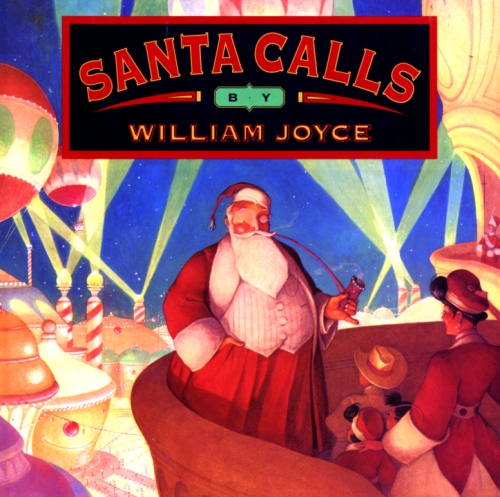
The picture book by William Joyce tells the story — in tongue-in-cheek manner — of Art, a boy living in Texas in the early 1900s. Art is an inventor and self-styled adventurer who, along with his pal Spaulding, finds a mysterious crate. The box includes the makings of an early airship and, improbably, an invitation to come to the North Pole and find Santa.

Of course, much to Art’s dismay, his tag-along little sister, Esther, talks her way into the adventure.

The three kids find themselves involved in a wild and wooly battle, defending Santa and the North Pole against an evil queen. Art and Spaulding lead the fight and little Esther, much to Art’s surprise, proves her mettle.

The story and Joyce’s writing reminds me of old pulp stories and the ending — and the secret behind Santa’s call to arms — made me misty-eyed.

“Santa Calls” has become a favorite in our household. It’s a terrific and unexpected Christmas present.

Paperback reader — for now, anyway

I don’t have any memory of the first paperback book I bought. But I have many memories of the paperbacks I’ve loved.

Sitting in the school cafeteria reading Stephen King. Becoming lost in “The Hobbit” and “Watership Down.” Finding myself transported to another time with Edgar Rice Burroughs. Expanding my consciousness with Ray Bradbury, Harlan Ellison and Hunter S. Thompson.

While I’ve read some of my favorite authors and their stories in other mediums, the paperback will always be the format through which I solidified my love of books.

My first few paperbacks cost about 60 cents. Because I don’t buy as many paperbacks anymore — yes, this is another of those “I’m part of the problem” posts — I’m startled to see how much mass market paperbacks and trade paperbacks cost now. Nevertheless, I still buy them. My copies of “Girl with the Dragon Tattoo” and “Girl Who Played with Fire” are in paperback, as is “Devil in the White City” and others.

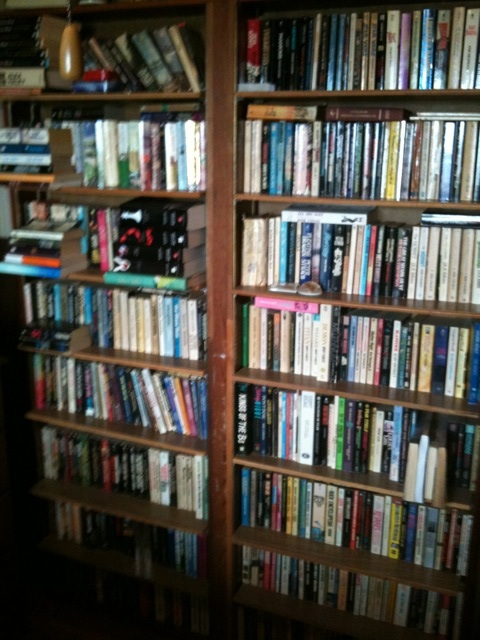
The photo above is of a homely bookshelf, tucked away in a spare bedroom in my house. It’s ugly as sin, the result of some cobbling-together my dad and I did 30 years ago. But it’s the home to most of my paperbacks. Dean Koontz and Robert Heinlein and John Varley and other favorites live there.

I love paperbacks.

So it was disheartening but inevitable to read the Crain’s New York Business article, “Trade paperbacks no longer worth the paper,” which notes that, with the rise of e-books, the publishing industry is pondering the future of paperbacks.

Paperbacks — specifically trade paperbacks here, but mass market paperbacks too, I’m sure — aren’t selling very well anymore. Sales were down 18 percent in recent months, even while e-book sales are up 8 percent. Electronic books are now 20 percent of sales for major publishers, notes the article, which was linked to on Twitter by publishing industry expert Sarah Weinman.

My point here is not to bury e-books — I’m for anything that promotes and perpetuates the reading of books — but to mourn the loss of paperbacks, if it comes to that.

The Crain’s article quotes a couple of people who say that trade paperbacks could be gone within a few years. Mass market paperbacks could follow, I suppose.

I can’t turn back the hands of time or reverse the flow of progress and wouldn’t want to do either. But I can’t help thinking, as we’re swept along in the current of change, about all the things that get lost along the way.

Used bookstores. The traditional platform for new authors. The cheap, fast read. The 10 cent paperback box at rummage sales, home of a million good stories.

Going, going …


Mysteries not for the faint-hearted

Chelsea Cain’s mysteries are not for the weak of heart, and that’s not just a play on the “heart” element of most of their titles: “Heartsick,” “Sweetheart” and “Evil at Heart.” Cain’s tales of a Portland, Oregon cop and the love of his life — a beautiful female serial killer — are often filled with grisly, bloody moments.

At one point in the books, serial killer Gretchen Lowell takes police detective Archie Sheridan captive and, besides carving a heart in his chest, removes his spleen, for pete’s sake.

But gore isn’t the point of Cain’s books. And it’s an afterthought in her latest Archie Sheridan book, “The Night Season.”

Although Gretchen Lowell — nicknamed “The Beauty Killer” not because she is beautiful but because of the gruesome nature of her killing style — is a presence in this book (don’t worry, I won’t spoil how), Cain’s latest novel is really about Sheridan and the core of supporting characters the author has built up around him.

There’s Susan Ward, a newspaper reporter trying to survive the upheaval in her industry as well as encounters with homicidal maniacs; Henry Sobol, Archie’s partner on the force and a rock in his life; and a cast of characters that, four books into the series, feels as familiar and beloved as any in fiction right now.

Sheridan is an enormously flawed man. His infatuation with Lowell in the earlier books cost him his marriage and nearly his life. Far more realistically than might be expected for a thriller series, the books emphasize the toll that Sheridan’s bad decisions and his noble intentions have taken on him.

But readers who, in the past, might have thought Sheridan was a little too close to the edge might be happy to know that in the latest book, the only edge he’s in danger of stepping over is the banks of the swollen Willamette River.

Torrential rains have flooded the river and threaten Portland, and Susan Ward finds herself pursuing a new story: The discovery of a skeleton that might be left over from 1940s flooding that wiped out a small section of the city.

Meanwhile, Sheridan and Sobol and crew realize they’re dealing with more than a series of accidental drownings due to floodwaters. They are, in fact, dealing with a serial killer, one whose weapon of choice might seem over the top but is nonetheless pretty cool.

While Susan and Archie pursue their investigations, they’re thrown together and endangered — like the rest of the city of Portland — by the ever-rising floodwaters.

I’m glad I wasn’t reading “The Night Season” during our own winter thaw/spring rains. Cain vividly portrays the unrelenting rain, the tumultuous river and the dangerous nature of floodwaters. It made me want to check my crawlspace for rising water.

Carrying on Robert B. Parker’s legacy

Me and Robert B. Parker go way back.

Sometime 20 years ago or more I bought a paperback copy of Parker’s “Taming a Seahorse” at a used book store and discovered his tough and smart Boston private eye Spenser. As written in spare — increasingly so, as the years went by — style by Parker, Spenser was a former boxer, former cop and intellectual “thug” who, like classic private eye heroes before him, took on hopeless cases and lost causes.

Spenser wasn’t a highly deductive detective. He was more likely to start pressuring peripheral players in a crime until they crumbled and pointed fingers at the Big Bad behind the scenes. Part of what was appealing, besides Spenser’s moral code, was his unwillingness to give up.

Spenser and another character created by Parker, Jesse Stone, have a lot in common. Sure there’s the series of CBS TV movies about Stone, a small town New England police chief (played on TV by Tom Selleck, who’s too old for the part but plays it to perfection). They share some of the same supporting characters but most importantly they share the same stick-to-it-iveness. Once Stone takes up a cause, be it an abused teen or victims of a sinister goon, he never gives up.

Parker, unfortunately, was mortal, unlike his best heroes, and died in January 2010. I was afraid his books and characters would die with him.

So far we haven’t heard about any other authors continuing Parker’s Sunny Randall books, or his series about stoic cowboys. But Parker’s estate and publishers have announced that a good mystery writer, Ace Atkins, will continue the Spenser novels with a new one to be published next year.

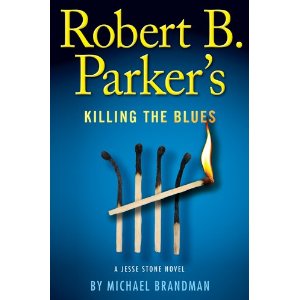
And Michael Brandman, one of the men behind the Jesse Stone TV movies, was chosen to continue the Stone books.

I wasn’t certain I would enjoy Brandman’s take, which is called “Robert B. Parker’s Killing the Blues.” But I read it this week and believe Brandman is the perfect guy to continue Stone’s advantures.

Right off the bat, Brandman makes some choices that vary from those Parker would make. He gives us a few sparing glimpses inside Stone’s mind, something Parker would pretty much only do when Stone, an alcoholic and troubled man, talked to his therapist.

Brandman also takes us — even more sparingly, thank goodness — into the head of one of Stone’s antagonists, a felon who comes seeking revenge because Stone, drunk and angry at his then-wife, had pistol-whipped the man years before. Stone’s past comes back with a vengeance in this book.

“Killing the Blues” has a lot going on, from the revenge-seeking felon to mobsters operating a murderous car theft ring to a molesting teacher to mean girls at the local high school in Stone’s picture-postcard town, Paradise.

Brandman balances it all quite well. Maybe as good as Parker at the top of his form. Maybe even better.

I’m looking forward to seeing what Ace Atkins will do with Spenser, but I’m sold on Brandman’s continuation of the Jesse Stone books. I can’t help but think Parker would approve too.

A man ahead of his time

Charles Fort blew my mind. For a guy who died nearly 30 years before I was born, that’s no small accomplishment.

Fort was a New York resident, born in 1874, who collected odd bits of information.

If a man was reported to have burst into flames in his New York apartment, Fort made note of it. If the man’s burned body was found in an un-singed armchair in his equally untouched living room, that was even better fodder for Fort.

How about a rain of frogs? Fort was all over it.

For a couple of decades, Fort scrutinized newspapers and scientific journals and haunted libraries and museums, looking for reports of disappearing people and objects that appeared in places they didn’t belong.

Fort collected these strange tidbits in a series of books, including “Lo!” “Wild Talents” and “The Book of the Damned.”

The books were reprinted in paperback in the 1960s and early 1970s, when I — like other fans of what became known as Fortean phenomena — discovered them.

It’s possible, I think, to draw a line from Fort’s oddball reports to classic TV shows like “The Night Stalker” and “The X Files,” and certainly Fort’s bread and butter, baffling happenings and unexplained events, are the stuff of modern-day shows like “Fringe.”

So it’s appropriate and perhaps inevitable that Fort would be the the subject of a movie. Robert Zemeckis, who directed the “Back to the Future” movies as well as animated films like “The Polar Express,” is bringing Fort to the big screen.

Zemeckis sees Fort as something of a real-life Ghostbuster, according to recent news stories. I don’t recall Fort ever reporting busting any ghosts or getting slimed, but considering that all modern movies must be boiled down to a pitch like “It’s ‘Twilight’ meets ‘Star Trek,'” I guess it’s as good a comparison as any. It’ll be interesting to see how Hollywood treats Fort.