Category Archives: favorite books

Steve Jobs, books and time’s passing

I heard about the passing of Apple visionary Steve Jobs just a little while ago and, of course, I heard the news through my iPhone. I imagine I’m one of millions of people who found out through one of Jobs’ many ideas-brought-to-life.

Then, after watching a few minutes of a TV special about Jobs, I settled in and finished a book. It was Craig Johnson’s “Death Without Company,” the second in his series about Wyoming lawman Walt Longmire.

I just closed the Johnson book — it’s good, and typical of the Longmire stories, which feel like Westerns even though they’re crime novels and, above all else, character studies — and feel philosophical. More so than usual.

Part of that is because of the tone of the book, which is all about death and friendship and family and long-forgotten passions rekindled. Part is due to the passing of Jobs, whose inventiveness changed things for a couple of generations of people.

It’s important, for some reason, to note that I read “Death Without Company” not on Jobs’ iPad or Amazon’s Kindle or even BN’s Nook but on paper. I don’t have a tablet or e-reader, at least not yet. I’m not rushing to get one, in great part because there’s something that feels so right about reading a book on paper. Hardback, paperback, whatever. The experience of opening a book and getting lost is one that I’ve loved since I was a grade-schooler. I’m positive that love will never pass. I’m pretty positive my devotion to the old-school book experience will likewise stick around.

Jobs was the kind of guy who was always moving ahead, always innovating. I found myself wondering tonight if he still read books — or newspapers, or magazines — on paper. Was that ever an important thing to him? Did it ever stop being important?

I’m not sure what I’m going to read next. I have only one of the Longmire books left. I might crack that open or I might dip into a book about the Civil War in an attempt to remedy my woeful ignorance about that period in our history.

Maybe I’ll start reading “Killing the Blues,” the latest in a series of books about small-town New England cop Jesse Stone. Jesse was created, you see, by Robert B. Parker, a longtime mystery author who passed away last year.

“Killing the Blues” exists because Parker’s wife chose a successor. Michael Brandman is continuing the series after Parker’s passing.

Parker, like Jobs, was a master at his own game. He’s gone now, like Jobs, and others will try to fill the void, like they will with Jobs.

Parker’s successors — because it’s hard to imagine a replacement — will continue his various series, hopefully with some success and artistic accomplishment.

Jobs’ successors — because it’s hard to imagine a replacement — will continue his work, hopefully with some success and artistic accomplishment.

Books will still be published. Incredible advances in technology will continue to be made.

And the world will keep on spinning, albeit perhaps diminished.
Robot end of the world can’t quite top zombie finish

In the wake of the pirates vs. ninjas match-up (how did that come out, anyway?) comes another, even more intriguing face-off: Robots vs. zombies.

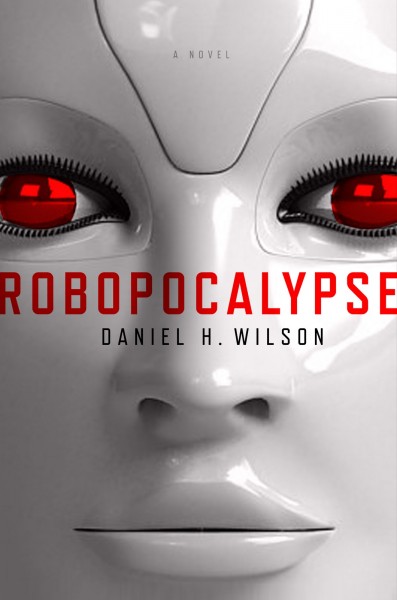
The thought comes to mind as I finish “Robopocalypse,” a recent novel by Daniel H. Wilson, a guy with a doctoral degree in robotics and a hell of an imagination.

There are no zombies in Wilson’s end-of-the-world and beyond — well, not really — but clearly “Robopocalypse” is shooting for the same pop culture impact as Max Brooks’ “World War Z.”

Both novels recount the end of the world. Brooks’ 2006 book is about how society breaks down when zombies begin to spread like a virus. Wilson’s story is a near-future tale about what happens when artificial intelligence emerges and decides it deserves to inherit the earth.

Both books employ the technique of alternating chapters telling the story from the points of view of diverse narrators. Brooks’ book rarely returned to the same characters as it jumped from India to the American west to the international space station.

Wilson’s book, however, follows a half-dozen storylines and that many groups of humans as they survive, elude and eventually fight back against the robot revolution.

In the future portrayed in the book, robots are much more commonplace in our society. Most cars are automated, so when Archon, the AI that leads the revolution, gives the order, they begin running down pedestrians. Robotic household helpers commit bloody murder and electronic peacekeeping robots turn on their armed forces comrades in Afghanistan.

Wilson’s idea of recurring narrators will probably make it easier for director Steven Spielberg to turn the book into a movie, a project that’s been announced but not yet begun. The fractured narrative POV of “World War Z” means that the movie version — now in the works — had to add a human narrator to appear throughout the story. In the movie, he’s played by Brad Pitt.

“Robopocalypse” is clever and often thrilling with a likable group of characters and some genuine suspense.

I have to say, though, that I preferred “World War Z” for a couple of reasons. Brooks’ novel isn’t afraid to let readers figure out things for themselves. Wilson’s book, narrated by a young soldier, over-explains what’s happening. Almost every chapter is filled with intriguing scenes and characters but ends with a narrated paragraph reiterating the importance of the developments we’ve just seen and those to come. They’re totally unneeded.

I’m also kind of surprised that a couple of the strongest plot twists and characters don’t happen a little earlier. They’re turning points, to be sure, but by holding them back, Wilson deprives us of some of the most engaging characters until the last few chapters.

Nevertheless, Wilson’s “Robopocalypse” is a very good sci-fi adventure. If you’ve read it and “World War Z,” you’ve read the best latter-day takes on the end of the world.

Chet and Bernie to the rescue

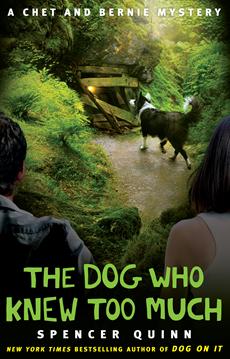
One of the most enjoyable mystery series out there is Spencer Quinn’s Chet and Bernie series.

Bernie is Bernie Little, a California PI. Chet is his dog.

And Chet narrates the stories.

If it sounds kind of cutesy to you, kind of cozy and coy, you’re wrong. While dog lovers will find plenty to like about the books and the dogs-point-of-view that Chet brings to the stories, these are always funny, sometimes tough, often exciting stories in the hardboiled PI genre.

It just so happens, in the case of Quinn’s books, that the hardboiled PI here is Chet.

Quinn — the pseudonym of novelist Peter Abrahams — has created quite a pair. Bernie Little is a former athlete turned PI whose knack for righting wrongs is exceeded only by his bad financial judgment. Chet is his fiercely loyal companion who washed out of K-9 school.

Chet’s narration is frequently touching — the dog thinks Bernie can do no wrong, except when it comes to the aforementioned finances — and almost always funny. As told from Chet’s point of view, the stories are refreshingly straightforward good guys versus bad guys tales leavened with a dog’s outsider-looking-in-on-human-foibles perspective.

Not that Chet is all-knowing. He might be one of the best examples of the “unreliable narrator” style of writing. While Chet “recounts” to us readers the conversations he hears but doesn’t always understand, there are tantalizing gaps in what we know, usually occurring when Chet notices a Cheeto on the floor or gets distracted by the mention of a ball, missing some crucial bit of information.

Not to mention when Chet knows the key to the mystery and who the bad guys are … but can’t communicate that to Bernie, of course.

The latest in Quinn’s series, “The Dog Who Knew Too Much” — really don’t be put off; the titles are the punniest elements of the stories — finds Chet and Bernie investigating the disappearance of a new client’s son, who goes missing from a wilderness camp.

Before long, the man-and-dog duo are trying to find the boy and running afoul of vicious small-time crooks. There are more than a few moments of tension for the two, but the book — like the earlier entries in the series — happily ends with, as Chet would put it, the bad guys in orange jumpsuits breaking rocks in the sun.

People who love dogs will appreciate Quinn’s grasp of the psychology of man’s best friend. Fans of crime novels will like Bernie’s handiness with a gun or his fists and appreciate Chet’s enthusiasm over bringing down a perp with a few well-placed bites.

If you’re so inclined, Quinn maintains a good blog at Chetthedog.com that features reader-submitted photos of “Friends of Chet.”

Quinn’s books are a treat — and not just the kind that Chet and the other members of “the nation within the nation” would enjoy.

What’s on your nightstand?

We’ve got books all over our house. In bookcases and in boxes and filling those handy folding shelves that Target used to sell. I’ve got boxes of old comics and monster movie magazines in the garage (which themselves will one day be the topic of a blog entry or two).

But most of the book action in my household is on the nightstands.

All of us have a few books within reach, ready to be read in the few minutes each night before we (I, really) crash into fitful sleep.

The nightstand is where I put my glasses and my keys and my iPhone each night, but the two stacks of books, teetering a little precariously over everything, is what makes me feel comfortable.

The stack of books at the back of the nightstand is shamefully neglected. Some of those books have been there for a couple of years. They’re books that have been recommended, gifts that I’m meaning to get around to, books that I bought on sale just because I could and books that I’ve actually read before but want to keep handy. “Gregor the Overlander,” by “Hunger Games” author Suzanne Collins, is one that has been highly recommended to me. “Devil in the White City” by Erik Larson is one that I’ve already read and highly recommend.

On top of that stack is a small legal pad, complete with Harry Potter pen, that I keep handy just to jot down notes.

The front stack on my nightstand sees the most action. That’s where you’ll find my latest library books. On top of that stack right now are three books in Craig Johnson’s series of mystery novels about Wyoming sheriff Walt Longmire. If you haven’t read Johnson’s books, you should because they’re great. Good stories, even better characters and a great take on life from his crusty old sheriff protagonist. And you can say, “Oh, I’ve read those books” in case a proposed A&E cable TV series about Longmire is a hit.

Also prominent on the front stack is “The Encyclopedia of Appalachia,” a hefty reference book with a depth of knowledge that matches its weight. Anything you want to know about that region that’s so dear to my heart can be found in that book.

We’re trying to corral our books in this household, figuring out if we want to get some new bookcases. If we do, how we store our books will probably change.

I can’t imagine any change, however, that will rob my nightstand of books.