Category Archives: geek culture

Classic TV: ‘Community’ ‘Remedial Chaos Theory’

I’m not sure there’s anything on TV like “Community,” and that’s probably worked against the viewership of the show.

The NBC sitcom is about as atypical a situation comedy as anything airing now. The premise – a diverse group of misfits forms a family while attending a community college – isn’t novel.

But during its first three seasons, under the guidance of creator Dan Harmon, “Community” became something more.

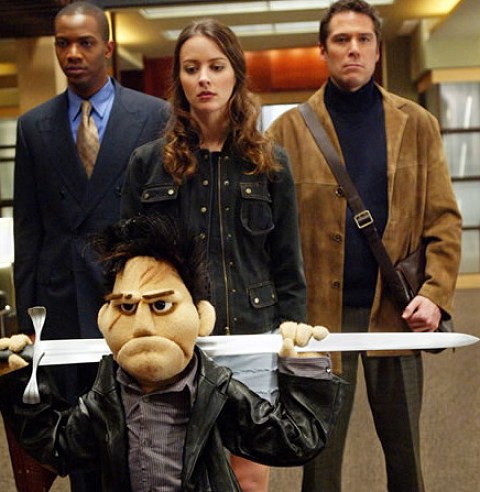
There were inklings of the show’s inherent “different-ness” in the first season, certainly. But the first-season finale, in which the regulars and the large supporting cast wage war in an on-campus paintball match to win “priority status” for class registration, established the show as surely as “Prophecy Girl,” the first-season finale of “Buffy the Vampire Slayer,” established that series as one for the ages.

The paintball episode played, with furious and hilarious seriousness, like an action movie, “Terminator” by way of John Woo, with standoffs and ambushes and devilish double-crosses. All played against expectations.

My favorite moment is when off-kilter geek Abed (Danny Pudi) rushes up to snarky lawyer Jeff (Joel McHale) and intones, “Come with me if you don’t want paint on your clothes.” Fans of the “Terminator” movies recognized that line.

Throughout the second and third seasons, “Community” deepened its characters – a group that is frequently at each others’ throats but can’t live without each other – and raised the freak flag higher. An episode revolving around a game of Dungeons and Dragons was funny and touching.

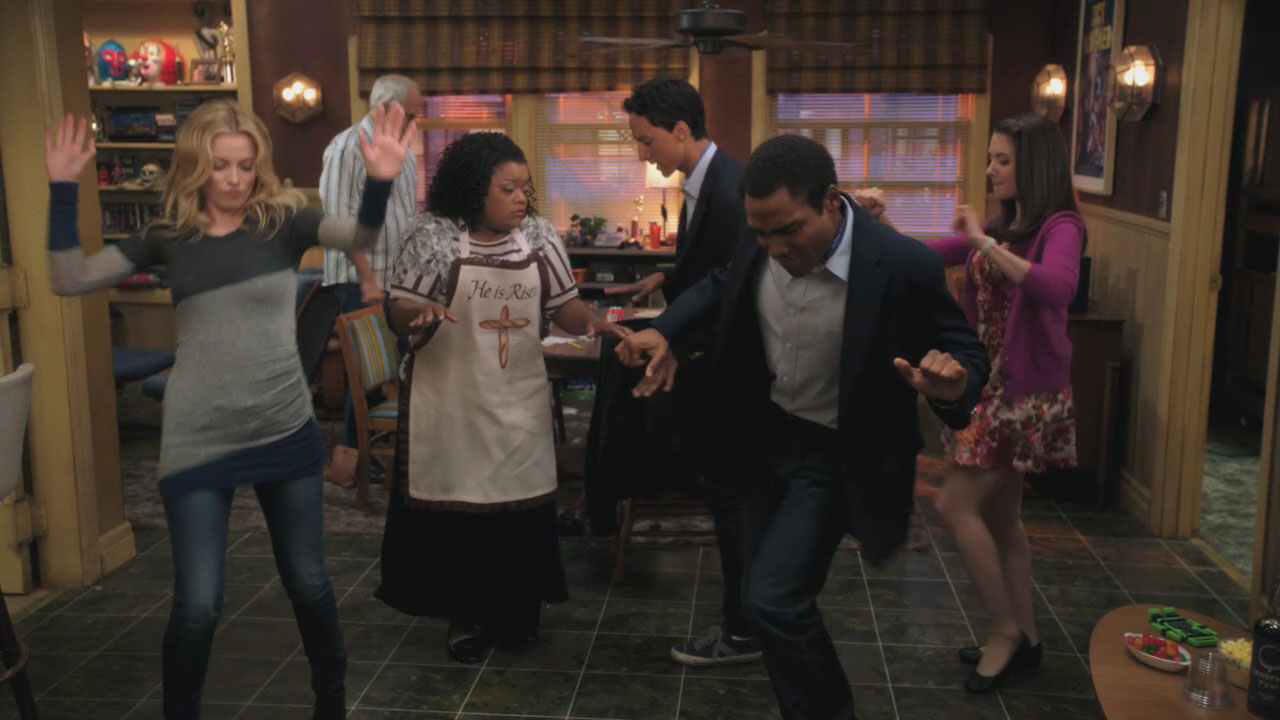
By the time “Remedial Chaos Theory” aired early in the third season, Harmon and the cast and crew knew they could get away with a lot. And they did. As the characters gathered at a housewarming party for roommates Abed and Troy (Donald Glover), they rolled dice to see who would go downstairs to meet the pizza delivery guy.

With each roll of the dice, another reality unfolded. Friendships ended, relationships began and lives were lost, for god’s sake. It was all funny and incredibly clever and mind-bending in a way precisely unlike any show on TV right now.

The show has mixed in a tremendous amount of geekery in a manner that’s less showy but more genuine than the amusing “Big Bang Theory.” After “Remedial Chaos Theory,” the series explored the other, “darkest timeline” and, with a nod to the “Star Trek” mirror universe, Troy and Abed donned Evil Spock-like goatees.

When “Community” returns on Oct. 19, it will be without Harmon, a creative man bounced from his own show, if we’re to believe his own account and those of others, over huge differences in temperament and people skills.

So I’m not sure what “Community” will be like when it returns. Will it be just a silly sitcom? Will it continue to defy expectations and conventions? We’ll know soon.
‘Walking Dead’ season 3 poster arrives

It’s not like we were looking forward to the Oct. 14 return of “The Walking Dead” or anything.

Oh, who are we kidding? Of course we’re looking forward to the third season of the AMC show, to see what happens when the survivors of the zombie apocalypse venture into the prison and the town of Woodbury.

And bonus: Merle!

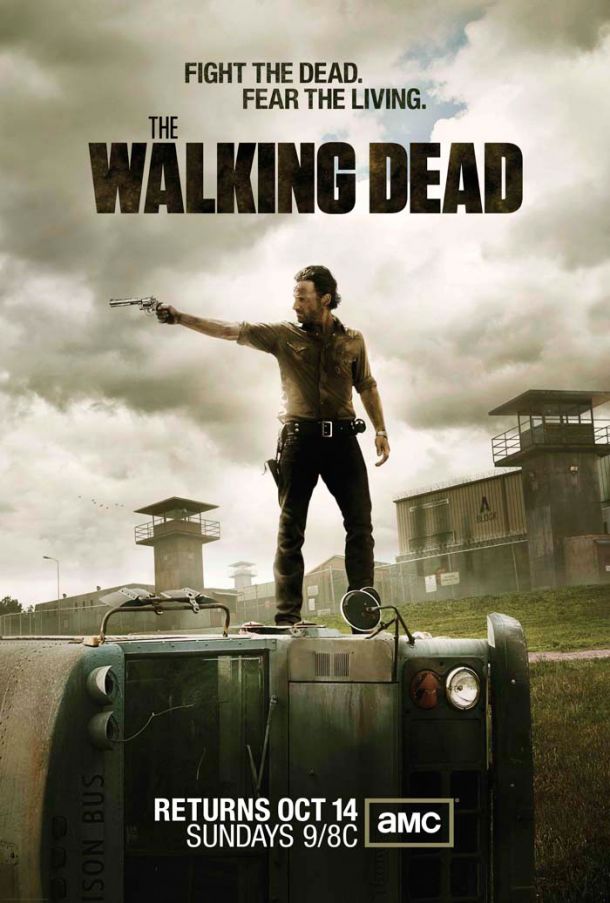
AMC has released the poster for the new season and it features Rick atop a toppled bus in the prison yard.

“Fight the Dead. Fear the Living” is a good slogan. Of course, there are echoes there of George Romero’s classic 1978 “Dawn of the Dead,” where bikers and human frailty posed more of a threat than zombies.

Anyway. Oct. 14. Be there or be zombie chow.


Duncan only one case of unconventional superhero movie casting

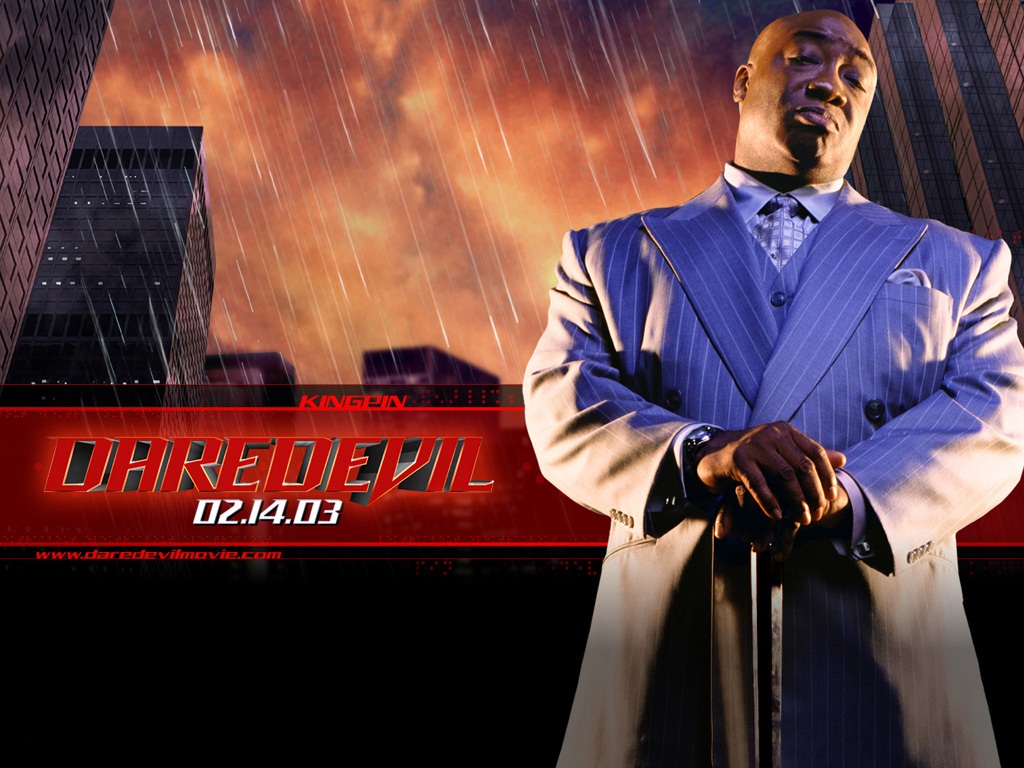
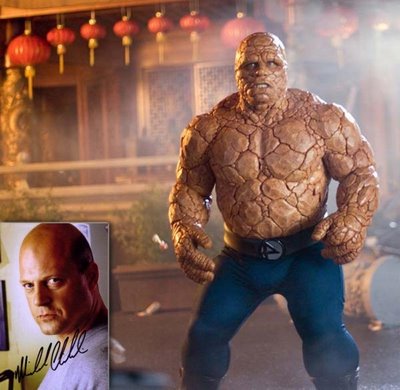
In noting Michael Clarke Duncan’s recent passing in this blog, I mentioned the minor furor after the “Green Mile” actor was cast to play the Kingpin in the Ben Affleck “Daredevil” movie.

Duncan worked as Marvel’s kingpin of crime however, and became the latest in a string of offbeat and unorthodox casting for comic book movies.

Some of them worked and others did not. Here are a few examples.

Offbeat casting that worked:

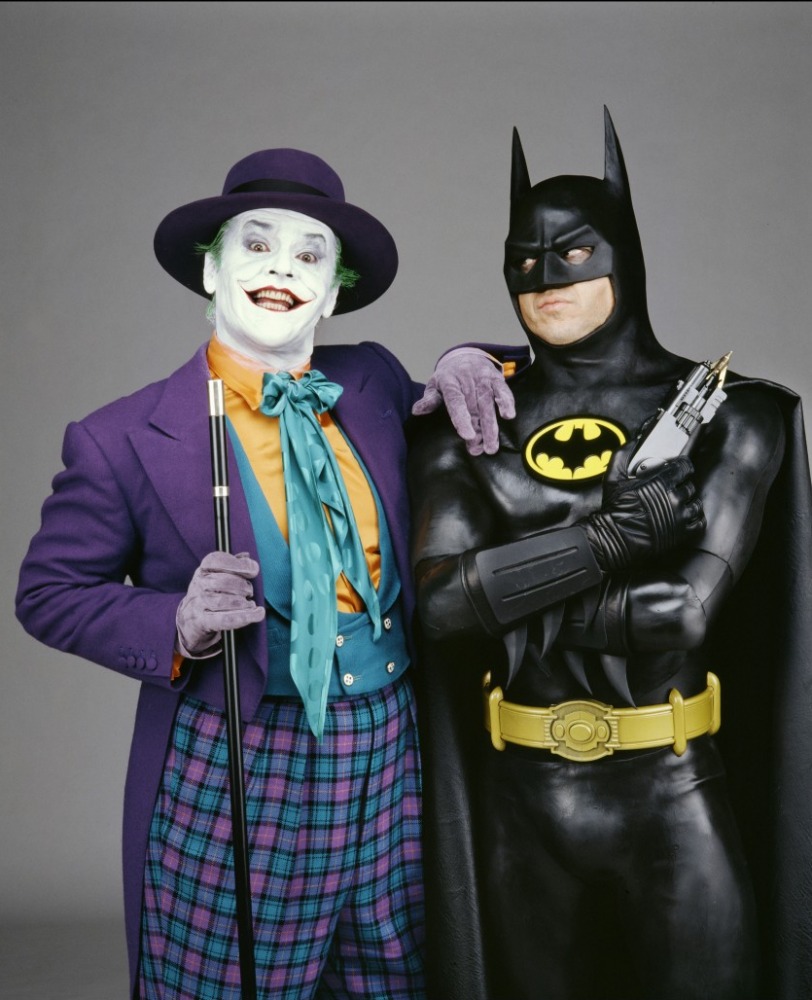
Michael Keaton as Batman. When Tim Burton cast Michael Keaton to play the title role in his 1989 “Batman” adaptation, the furor among fans was crazed. If the Internet had been in every basement at the time, it would have melted down. Keaton was best known for comedic roles like in “Night Shift.” And what about that jaw line? But Keaton was perfect as the grim-faced Dark Knight and the distant Bruce Wayne.

Hmmm. We’re still making up our minds:

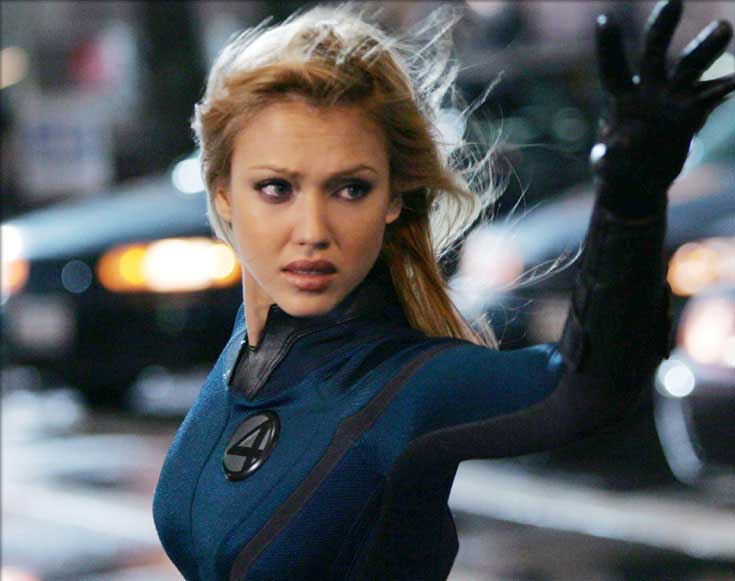
Jessica Alba as Sue Storm. Alba is as beautiful an actress as you can find in Hollywood. But she just looked fake as the blonde adventuress, the Invisible Woman.

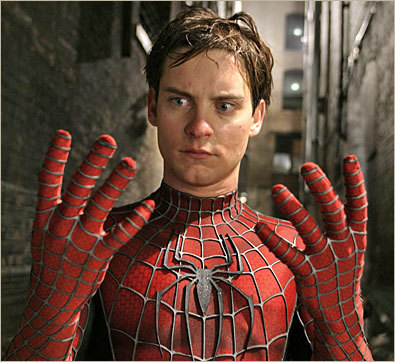
Tobey Maguire as Spider-Man. I thought director Sam Raimi’s first two “Spider-Man” movies were pretty damn good. But Maguire seemed too old to be a believable Peter Parker. Or maybe I was just reacting to foreshadowing of his emo-laden dancing in the third movie.

Nope. That’s just wrong:

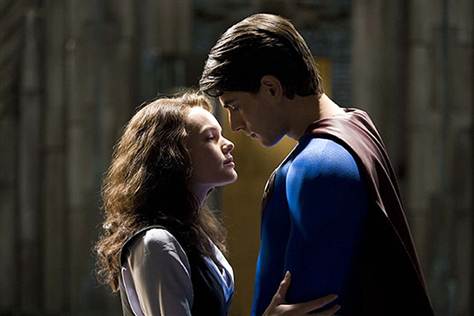
Kate Burton as Lois Lane. “Superman Returns” had a number of problems. Brandon Routh wasn’t one of them, but Burton was. She’s a lovely actress but far too lightweight to be the tough and spunky ace reporter from the Daily Planet. Here’s hoping Amy Adams works better in “Man of Steel.”

Michael Chiklis as Ben Grimm/The Thing. How much do we love Michael Chiklis? A lot. But while he was an okay Ben Grimm he just didn’t work in a Thing suit. And he just wasn’t tall enough. When “Fantastic Four” gets rebooted, I think they should go the Hulk route and combine live action and CGI.

Jack Nicholson as the Joker. Sorry, fans. I love Nicholson. But he wasn’t right for the Joker. He was too old, not physical enough and – while he had an admirably goofy vibe – just didn’t have the right psycho demeanor. When I’m watching “Batman” now I like Nicholson’s pre-Joker performance more than his post-Joker performance.

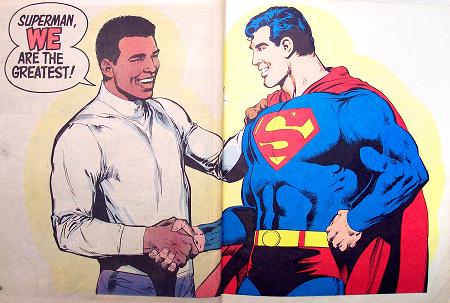
And one wild one: When the producers of the Christopher Reeve “Superman” movie were considering actors to play the Man of Steel, they considered everybody from Robert Redford to Paul Newman (two of the biggest stars of the time). One of the Salkinds suggested casting the most famous man in the world, Muhammad Ali.

Ali wasn’t right for the role, but what an idea!

The Essential Geek Library: The Film Classics Library

It was 1974 and the videocassette recorder was, at least for home use, still on the distant horizon. If movie fans wanted to relive a favorite classic movie, they had few choices. The could wait for an art-house re-release. They could hope to catch it on late-night local TV.

Or they could buy Richard J. Anobile’s Film Classics Library.

Published by Avon and selling for the then-substantial price of $4.95, Anobile’s Film Classics Library was the closest thing to owning a copy of a favorite film that most of us fans could imagine … up until the time we could actually own a copy of a favorite film.

Looking back from the perspective of today’s instant access for movie fans – Want to see a movie? Pop in your disc. Watch it on On Demand. Stream it online. – Anobile’s books were ingenious and just what we needed back then.

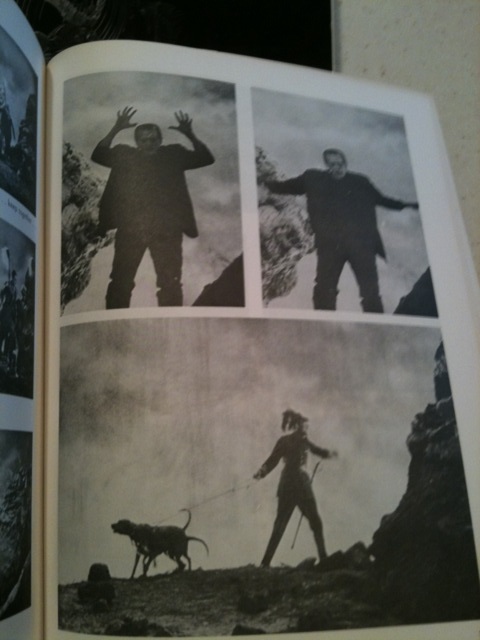
Each movie was recreated in the pages of the oversize paperback through every line of dialogue and more than 1,000 frame blow-ups.

The books were, in a way, like comic books. Anobile took images and dialogue from the movies and reproduced them, in sequence, in such a manner that readers could relive the films.

Everything was included except for movement and audio. Opening and closing credits are included, as are lap dissolves and fades, which, Anobile noted, preserve the feel of the film.

I spent hours of my adolescence studying these books, looking at the still shots and reading the dialogue.

I still own two of the entries from the series, covering James Whale’s “Frankenstein” and Alfred Hitchcock’s “Psycho.” I remember but don’t own Anobile’s recapturing of “Casablanca.” Checking around online today, it appears editions of “The Maltese Falcon” and Buster Keaton’s “The General” were also released.

A few other movies and TV shows, including “Star Trek,” received a similar treatment before the advent of VCRs. None of those later books could match the classic appeal of the FIlm Classics Library.

‘Buffy,’ ‘Angel’ and modern-day cable

“Buffy the Vampire Slayer” ran seven seasons and its spin-off show, “Angel,” ran a too-short five. Both aired on what were considered “mini” networks, The WB and The CW, but networks nonetheless with obligations to meet the standards of broadcast networks and bring in some semblance of traditional over-the-air ratings.

But we can only dream about how those Joss Whedon series as well as his “Firefly” and “Dollhouse” series might have faired if they had aired on channels that were decidedly off-network.

I’m thinking of TNT, FX, USA, AMC and A&E, channels – not networks, since networks are networks of stations, while cable channels have no physical presence out in the real world – that schedule, carry and nurture high-quality episodic drama.

Can you imagine “The Shield” or “Mad Men” or even “Falling Skies” on network TV?

I can’t. I can’t imagine those niche shows pulling enough viewers to stay on the air. “Firefly” sure didn’t.

I can’t imagine the networks allowing the creators of those shows to produce as few as 10 or 12 or 16 episodes per season, something that’s become routine with shows like “The Walking Dead” and “Breaking Bad.”

There seems to be less pressure without a 22-episode, big network season. Less expectation of Super Bowl-sized ratings. Less expectation of quickly meeting the 100-episode threshold for syndication.

With those shorter seasons, you can weed out the deadwood episodes. Okay, some of us were a little impatient with how long last season’s “The Walking Dead” spent on the farm. But it didn’t have to be that way. Look at last season’s “Mad Men” as an example. While the season had its critics, I thought almost every episode was riveting. Would that have been the case if the creators had been compelled to turn out twice as many episodes to fill out a network season?

Who doesn’t think “Smallville,” for example, would have been better with about a half-dozen fewer episodes per season and a little less filler? How about “Lost?”

There are some drawbacks. Out of sight, out of mind. “The Sopranos” and “Mad Men” took their time and sometimes a year or even more passed between seasons. It was torture but it made us look forward to their return even more. That trick wouldn’t work for every show, however.

And admittedly, there’s still less visibility on cable, at least for some audiences. We live in a world where the biggest ratings are still garnered by standard network fare like cops-and-robbers procedurals. We can take solace in knowing that we’re cooler because we know all about “Justified.”

So in my alternate reality TV word, “Buffy” and “Angel” and “Firefly” are still chugging along, well  into the double-digits in years on the air. They’re just airing fewer episodes and every episode is greeted with a sense of anticipation and celebration.

Whedon, Marvel to do S.H.I.E.L.D TV series

Breaking news and, well, duh.

Deadline.com is reporting that ABC has ordered a pilot for a live-action TV series that follows the agents of S.H.I.E.L.D. – the super spy agency headed up by Nick Fury – that brought together “The Avengers” in this year’s biggest movie.

Of course.

For months there’s been speculation on what Marvel might do in its foray into live-action TV. A Jessica Jones/Heroes for Hire series was apparently sidelined and a live-action Hulk remains ill-defined.

So when news broke a few weeks ago that Joss Whedon had, in addition to his “Avengers” sequel directing duties, agreed to develop the big live-action Marvel TV series set in the Avengers universe, all of us went a little meshugana.

And we started talking about possibilities, including a Black Panther series, a Daredevil series, one featuring the Marvel cleanup crew Damage Control and any number of other possibilities.

Of course, a SHIELD (forgive me, I’m dropping the abbreviation practice until further notice) series was proposed and seemed like a natural.

Marvel has spent several movies setting up the workings of SHIELD, introducing us to characters like Nick Fury (Samuel L. Jackson), Phil Coulson (Clark Gregg) and Maria Hill (Cobie Smulders).

While we don’t know what kind of series SHIELD  will be (well, presumably not a sitcom) and we don’t know if Jackson or any of the established actors will show up – please, please, please give us Tony Stark and Bruce Banner cameos – the flashy spy stuff that’s a natural part of the SHIELD universe makes this the most likely Marvel TV vehicle.

And since in the comics SHIELD is pervasive throughout the Marvel universe, we still could see meaty roles for fan favorites: Not just Fury and Coulson (yes, I know, I know) and Hill but others from the comics. Matt Murdock could represent Hill on a bogus murder charge. Fury could recruit the Punisher for a mission.

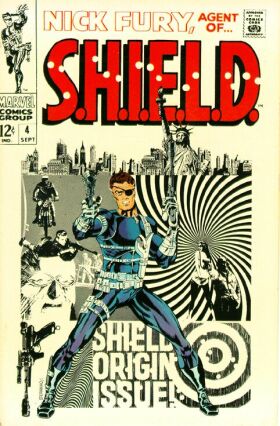
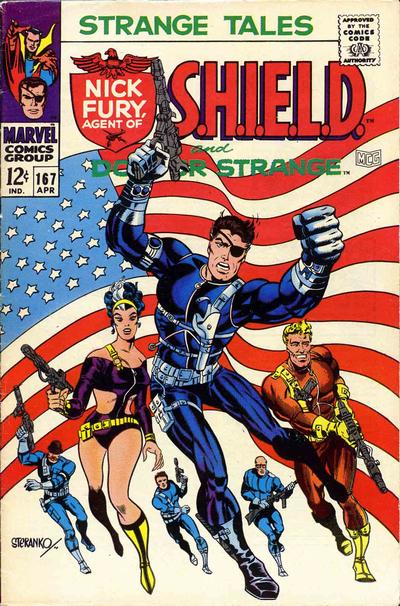
While the series will certainly be set in the present day, wouldn’t it be cool if it had some of the trippy feel of writer/artist Jim Steranko’s ground-breaking work on the comic a generation ago?

Yep, SHIELD is a no-brainer. And with Whedon behind the scenes and his frequent collaborators Jed Whedon and  Maurissa Tancharoen working on the series too, I think we’re going to get more of the Marvel goodness we enjoyed in “The Avengers.”

Comics classic: The Avengers Kree-Skrull War

When fandom realized, a few years ago, that Marvel was planning an “Avengers” movie, half of those who thought about it said it would be a huge hit and half said it couldn’t be done.

And all of them said the plot should cover the Kree-Skrull War.

Well,  now that we’re on the other side of a billion dollars in box office receipts and great critical and fan reception, we know that it was doable, especially with Joss Whedon in the director’s chair.

But what about those Krees and Skrulls?

For those of us reading comics back in the day, the Kree-Skrull war was everything that was great about Marvel Comics, especially compared to DC.

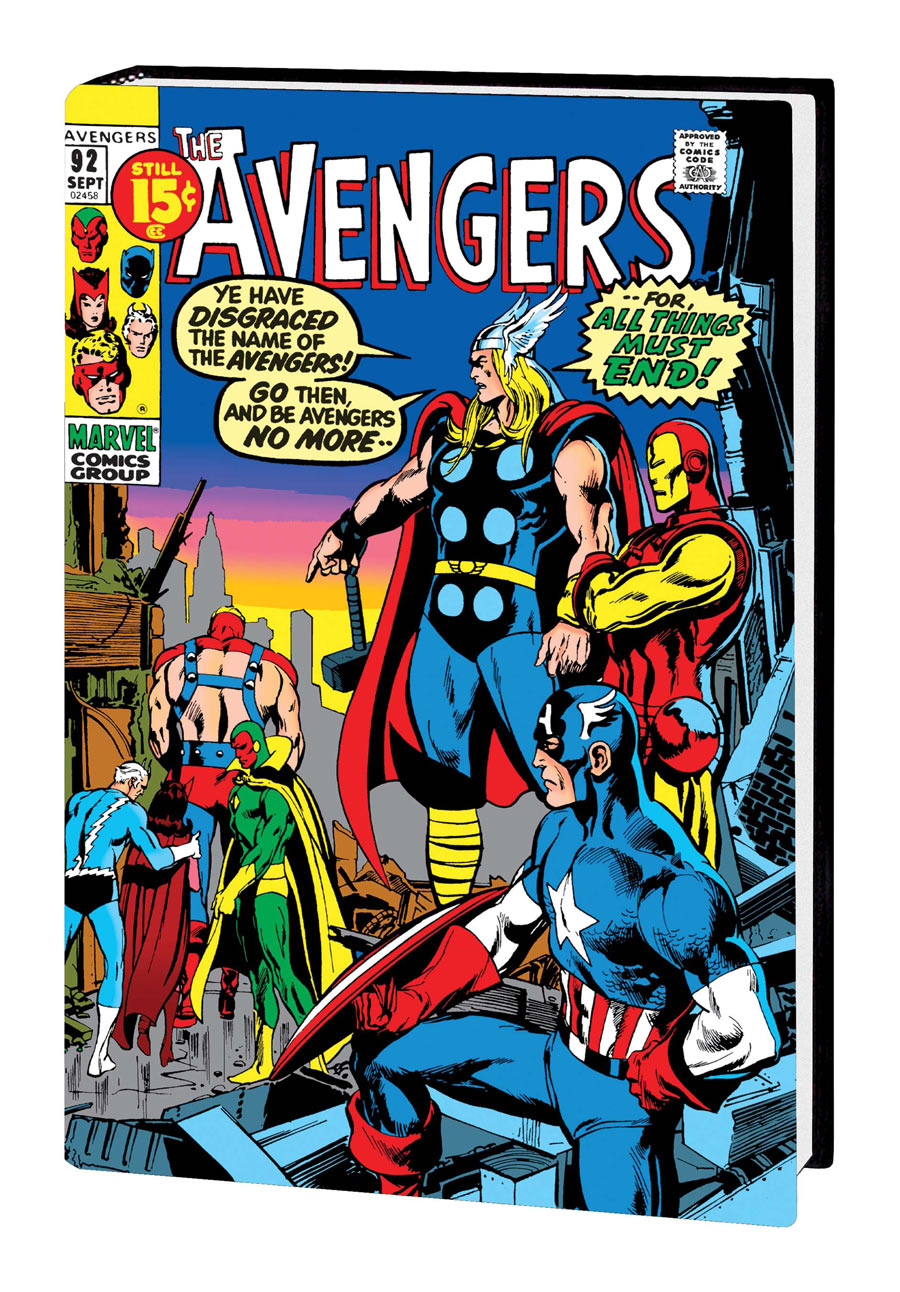
Marvel had, by the time Avengers 89 came out in June 1971, spent nearly a decade building a universe that included not only costume-clad superheroes like the Avengers and the Fantastic Four but also more “cosmic” creatures like Captain Marvel, a Kree warrior come to Earth, and the Skrulls, alien invaders and shape-shifting imposters who fought the FF.

Writer Roy Thomas and artists Sal Buscema, Neal Adams and John Buscema gave us, over the course of eight monthly issues, a nice introduction to the larger universe outside Earth’s atmosphere and outside the influence of its “everyday” heroes.

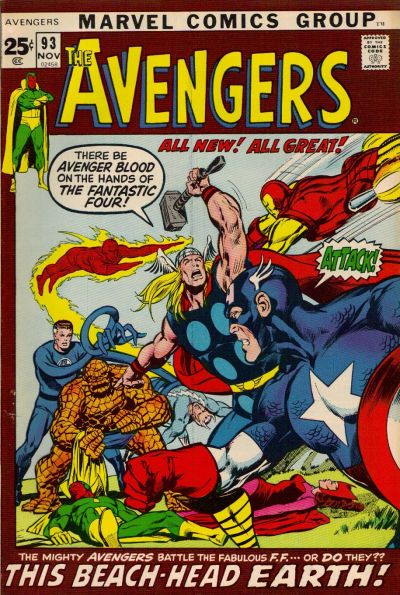
Although Thor, Captain America, Iron Man and lesser-known Avengers like Scarlet Witch, Vision and Black Panther were the kings of New York superherodom, they were pitted here against alien menaces. While some of the storyline was large in scope – including space battles – other moments were (literally) small scale: One of the most famous sequences came in Avengers 93, when Ant-Man shrinks to microscopic size and goes inside the Vision to effect repairs on the android Avenger. The overall series plotline is almost ridiculously complicated and involves everything from the Fantastic Four to Skrulls masquerading as cows.

Because comics of the time were rarely planned out months in advance as “big events” are now, it was extraordinary that Thomas and company took the better part of a year to tell this story. DC comics was still, at this point, doing “one and done” stories. For all of us elementary school kids out there, the Kree-Skrull War series re-emphasized how different – and how much better – Marvel was.

So we didn’t get a Kree-Skrull war in the “Avengers” movie, although we did get a dose of Marvel’s cosmic characters. Particularly when Thanos shows up in the credits.

And of course, the Skrulls figured into the “Avengers” movie as the Chitauri, a disguised version of our favorite galactic marauders.

So maybe we’re inching toward a big-screen version of the classic comic storyline.

In the meantime, we can enjoy the original, which has been reprinted as a trade paperback a few years ago. The full-color paperback really emphasizes the artistry of Adams, one of my favorites.


The essential geek library: ‘Cult Movies’ by Danny Peary

Back in the old days, everything you wanted to know about movies and TV shows and comic books – their makers, their history, their detractors, their weird variations – wasn’t available for perusal at the click of a mouse.

No, children, we had books back then, and they were wonderful resources.

For a few decades, I amassed a collection of books about movies and TV and comics. They were my encyclopedias, my Bibles. I read and re-read them, memorizing facts and committing the photographs to memory.

So I thought I would occasionally mention some of these books here for you. Maybe you’ve got your own copies. Maybe you can find them in used bookstores or on Amazon. Maybe some will still be in print.

Danny Peary’s “Cult Movies” is a good place to start. Published in 1981 and subtitled “The Classics, the Sleepers, the Weird and the Wonderful,” Peary’s book lives up to its name. The dozens of movies he writes about in the first book (three volumes total were published) range from beloved classics like “The Wizard of Oz” to still-at-the-time controversial films like “The Texas Chainsaw Massacre” to “2001” to “Vertigo.”

Peary devotes three or four pages to each movie. He lists the cast and key creative positions and gives a synopsis. He then goes into detail about what made the movies cult films.

Peary tells how director George Romero made “Night of the Living Dead,” from its hardscrabble production to its difficult distribution to its reception by audiences and critics.

He has real insight into the movies he covers.

“Pessimistic and unsentimental, ‘Living Dead’ is so effective because it is totally without pretension,” he notes. “It works on basic fears: unrelenting terror, monsters, darkness, claustrophobia. ‘Aliens’ attack us on American soil; protectors, even blood relations, turn on one another.” He notes how the black and white photography, a side effect of its low budget, made it more effective in some ways (anyone see the recent black-and-white presentation of the pilot for “The Walking Dead?”) but worked against it (Columbia Pictures wouldn’t distribute the film because it wasn’t in color) in others.

Peary, who is still actively writing, although not books about movies, brings the right amounts of reverence and criticism to these great but oddball movies. He and his books are what every modern-day movie and pop culture blogger aspires to be.

Unsung actors: Jonathan Banks

Who’s badder than Jonathan Banks? Nobody.

He’s one of the coolest yet most unsung actors in Hollywood.

Banks is enjoying a little limelight in a recurring role in the hit series “Breaking Bad” these days, but for years he was best known as the creepy henchman of the bad guy … or, infrequently, the offbeat good guy.

Amazingly, Banks’ TV resume goes back to the mid 1970s and appearances on everything from “Barnaby Jones” to “The Waltons” to “Little House on the Prairie!” In the latter, according to IMBD, he played Jed in a 1980 episode.

His career in movies really took off in 1982, however, with his role as a doomed cop in “48 Hours.” He’s a cohort of Nick Nolte’s cop character who gets killed off early.

Two years later, Banks played what I think of as his best henchman role in “Beverly Hills Cop.” He’s the guy who kills Eddie Murphy’s friend at the beginning of the movie and he’s the guy who gets tossed into a buffet table at a tony private club.

Banks brought a dead-eyed menace to the role that sticks with me 30 years later.

For four years beginning in 1987, Banks had his best TV role (sorry, but I haven’t seen him in “Breaking Bad” yet) as federal agent Frank McPike in “Wiseguy.” As McPike, Banks was gruff and no-nonsense as the “handler” for Ken Wahl’s Vinnie Terranova, a federal agent who goes deep undercover in criminal organizations.

Banks’ McPike is the guy who, with more than a little attitude, pulled Terranova’s butt out of the fire during the run of the series. When Wahl left the show, McPike shepherded his replacement.

Here’s to Jonathan Banks, tough guy first class.

RIP William Windom of ‘Star Trek’

One obituary I saw today for William Windom referred to the actor, who died at age 88, as a “comedic actor,” and there’s something to that, of course.

But for me and many others in geek culture, William Windom will always and forever be Commodore Matt Decker from the classic “Star Trek” original series episode “The Doomsday Machine.”

Windom played Decker, a friend of William Shatner’s Jim Kirk and captain of the Federation starship Constellation. In this second-season episode, the Enterprise finds the wreckage of the Constellation floating in space as well as its distraught captain.

The Constellation has been targeted by a mile-long planet killing robot ship, a conical structure that fires energy blasts and absorbs matter as food. Think of it as a less chatty version of Galactus.

Windom is by turns weepy, hysterical, sneaky and imperious as the captain who will use any tool at his disposal – including the Enterprise, liberated from Kirk and Spock – to kill the Doomsday Machine.

Windom was among the strongest guest-stars the original series ever had. Sure, he had his moments that were a bit … overplayed … but most of his performance is subtle and heartbreaking.

“The Doomsday Machine” was written by science fiction author Norman Spinrad. It has one of the great “Star Trek” climaxes as Kirk tries to fly the battered Constellation down the throat of the planet killer.

Windom’s career ranged from “The Twilight Zone” to “Night Gallery” to “Murder, She Wrote,” and was one of the most dependable character actors on TV for a couple of decades.

Here’s to Windom, one of our favorites.