Category Archives: geek culture

Two ‘Avengers’ credits scenes? Complete with screen shot!

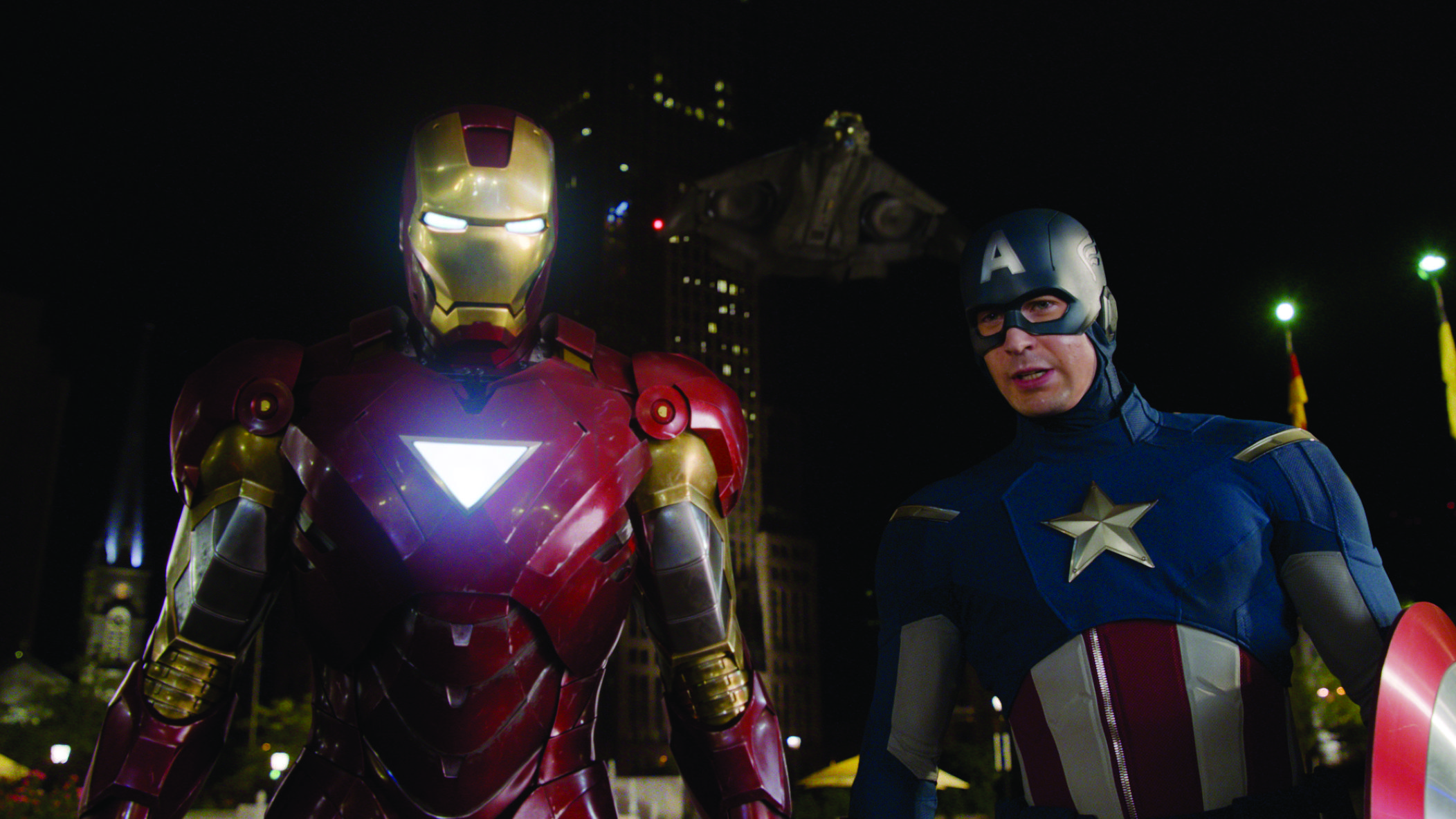
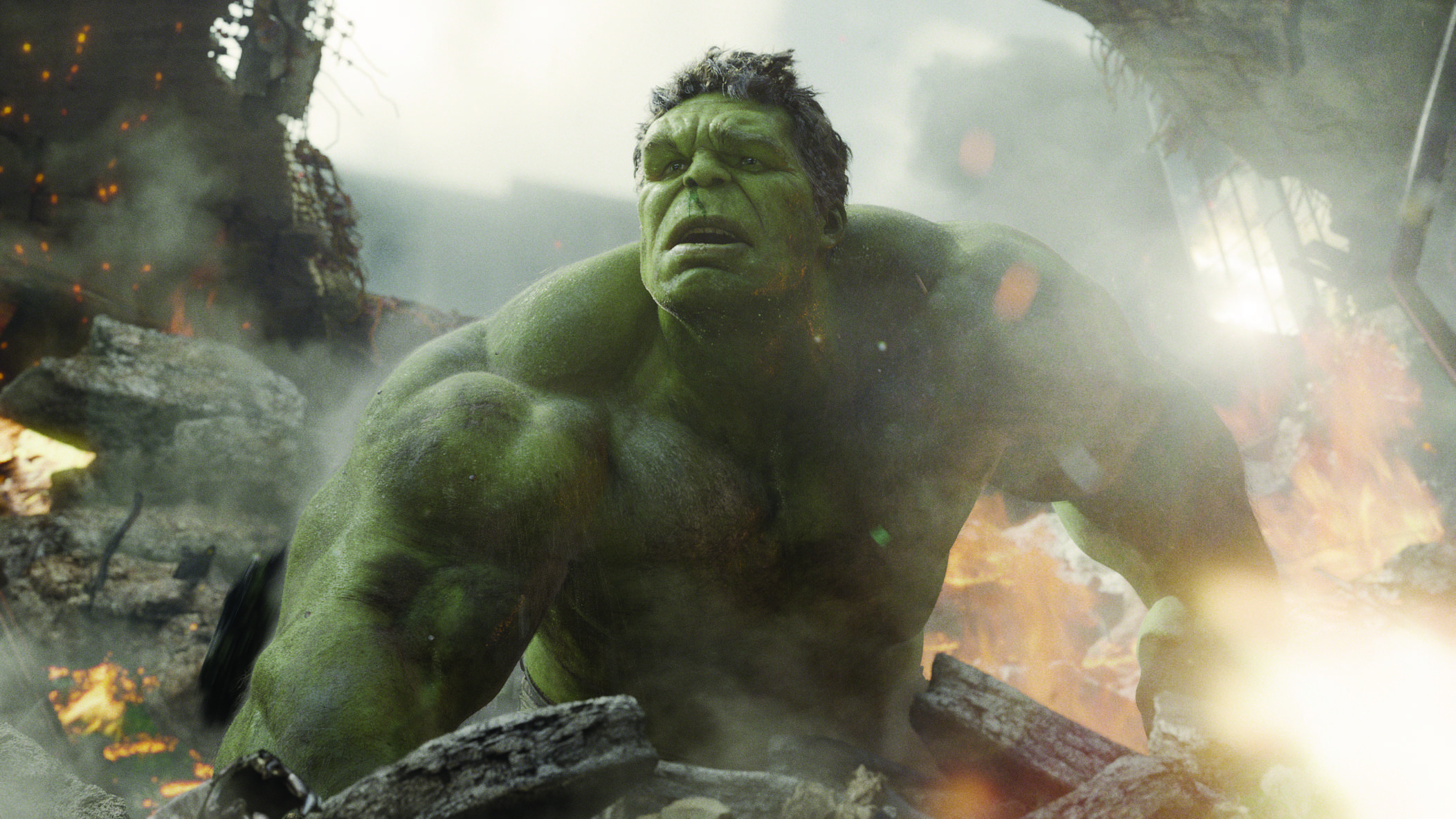
Okay, considering that Marvel’s “The Avengers” brings together more than a half a dozen superheroes, it shouldn’t come as a surprise that the movie — which is already playing internationally and opens wide in the U.S. this Friday — doubles down on Marvel’s practice of surprise end credits scenes.

Beware: Spoilers ahead (if Internet accounts are to be believed; I won’t see the movie until Friday). I’ll give you a countdown to the spoilers, though.

In 2008, “Iron Man” sparked the trend for end credits scenes — sometimes called stingers or buttons — in modern superhero movies.

There was plenty of precedent for post-credits scenes, in all kinds of movies, from “Ferris Beuller’s Day Off” to “Young Sherlock Holmes.” The latter, of course, showed Ferris shuffling out, addressing the audience and telling us to go home because the movie was over. “Airplane” returned after the credits for a final joke.

For real added-value after-credits scenes, “Young Sherlock Holmes” established the practice of offering a twist to the plot by revealing that Sherlock’s teacher would one day be his rival, James Moriarty.

When Samuel L. Jackson showed up as Nick Fury at the end of “Iron Man” and mentioned to Tony Stark “the Avengers initiative,” fans loved the glimpse it provided into Marvel’s plans for its expanded big-screen universe.

Stark himself showed up a couple of months later at the end of “The Incredible Hulk,” while trusty SHIELD agent Coulson appeared at the end of “Iron Man 2.” “Thor” and “Captain America” brought Fury back into play and the latter nicely set up “The Avengers” with what amounted to a commercial for Joss Whedon’s team-up movie.

Last year, “Green Lantern” showed how not to do a credits scene, with Sinestro abruptly embracing his dark — um, yellow — side early in the credits.

So it’s no surprise that “The Avengers” would have an end-credits scene. But after the world premiere a few weeks ago, Robert Downey Jr. teased that the cast was getting together that very night to shoot more footage.

It could only mean one thing: Another credits scene.

If you’re still reading and want to know — at least what little I know — read on.

Otherwise, veer off now!

Spoilers in

5

4

3

2

1

Still here? Okay.

The mid-credits scene in “The Avengers,” as seen in international screenings, shows Thanos, the Marvel Comics god of death. It’s pretty strongly implied that Loki and his alien army were testing the Avengers for a future offensive on Earth by Thanos.

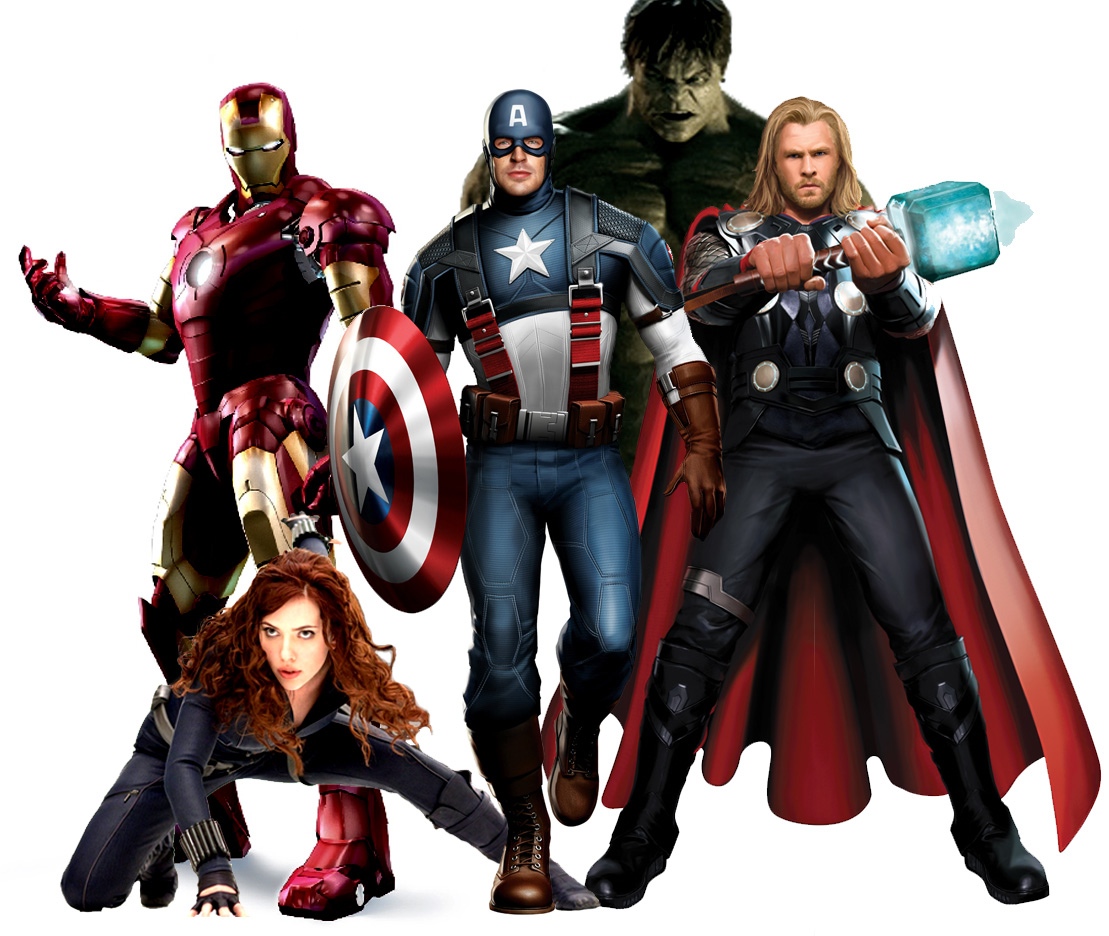
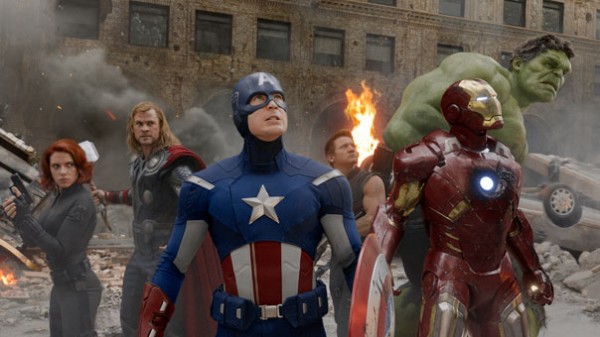
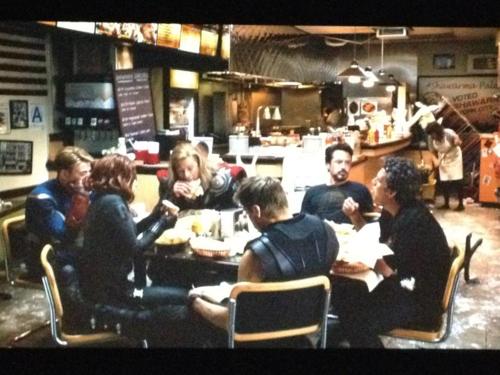
And the end credits scene? If it is what is depicted below, it’s a lighthearted moment of the Avengers, in costume, getting together to have a bite to eat.

This might surprise fans, but knowing Whedon’s whimsical sense of humor, it makes perfect sense. Of course, it could be a big Internet prank.

Here’s the shot. We’ll see soon if it’s true.
 

The documentary about our monstrous childhood

I’ve mentioned before in this space what I call “the monster world” and what others call the “monster kid” phenomenon. It was that golden period from the 1950s until the 1970s when a lot of us kids were obsessed with all manner of spooky, geeky stuff: Old Universal Studios monster movies, monster dragsters, monster comics, Aurora monster models … you name it.

Part of the impetus for the monster world was the release to television, in the 1950s, of the classic Universal Studios monster films from the 1930s and 1940s. After years of re-releases to theaters, the movies finally found a place on TV.

Late night Fridays and Saturdays and on Saturday afternoons, local TV stations that had purchased the Universal movie package — often referred to as the “Shock Theater” package — aired classics like “Frankenstein,” “Dracula” and all their sequels and spinoffs.

Often local stations created horror movie spoof characters — like Sammy Terry on WTTV Channel 4 in Indianapolis — to host the broadcasts.

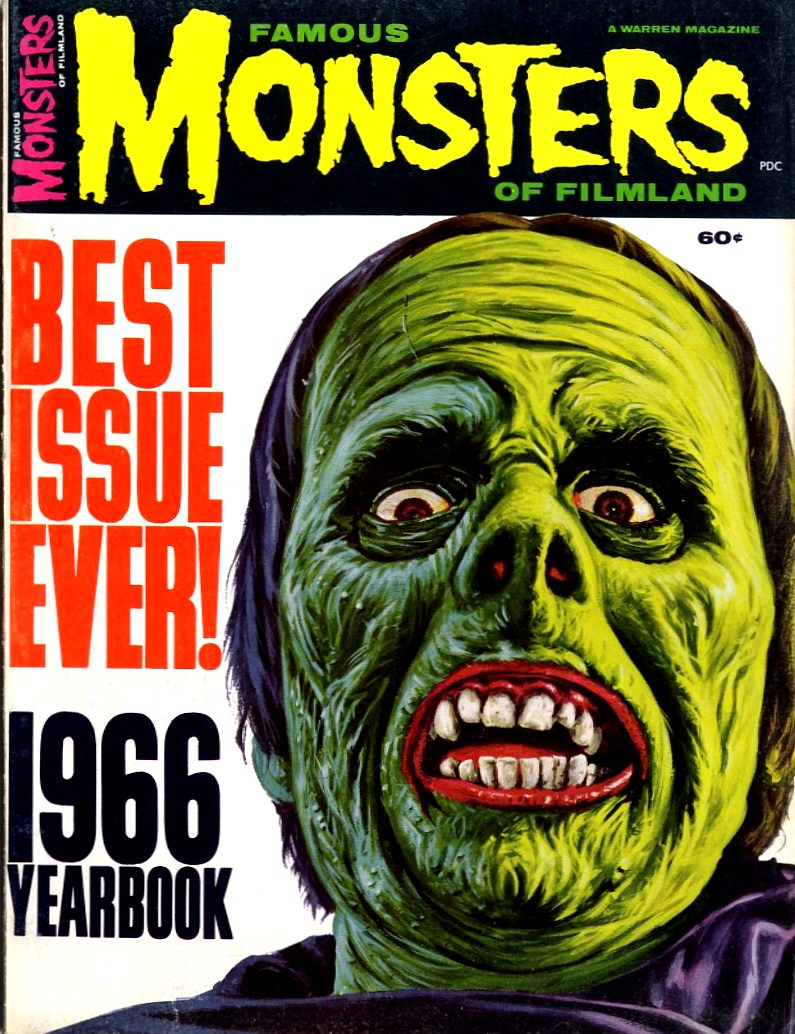
At the same time, magazines like Famous Monsters of Filmland, The Monster Times, Castle of Frankenstein and many more began publishing.

All of a sudden, the denizens of the monster world found each other.

Today I heard about “That $#!& Will Rot Your Brain,” a documentary from Bob Tinnell that looks at the monster kid phenomenon. Through interviews with everybody from Bob Burns to Tom Savini (if you have to ask …) the documentary looks at what it was like growing up in this golden era.

Tinnell and his partners are seeking donations to help raise $10,000 toward the cost of the film. This website has details.

Donate if you want. No sales pitch from me. I mention it only because, as a former denizen of the monster world, it’s pretty cool to see devoted fans putting their fantasies in action this many years after the fact.

The road to ‘The Avengers’ (part two)

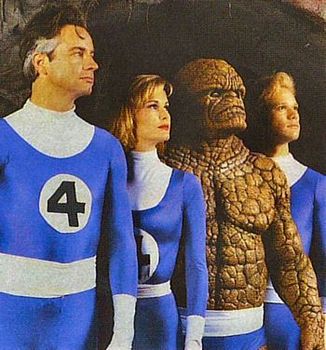
Sixty years after the “Captain America” serial debuted in 1944, another Marvel movie milestone occurred: The aborted release of “The Fantastic Four,” a low-budget movie (co-produced by the legendary Roger Corman). Made to perpetuate rights to Marvel’s first family, the movie was pretty bad. While the cast and crew apparently thought it would be released and a premiere was announced, the movie was shelved. Today it is legend to some and reality to others who have bought bootleg DVD copies at comic book conventions.

For a while it seemed like Marvel’s heroes were destined for low-budget life only. Then “X-Men” was a hit in 2000, followed by “Spider-Man” two years later. The characters, as well as the Fantastic Four, were sold off by Marvel to different companies, though. While Sam Raimi made two good “Spider-Man” films, “Fantastic Four” and its sequel were lackluster enough to make fans crazy. After decades of no big-screen adaptations, were Marvel’s heroes fated to live only through erratic, variable-quality movies?

And would fans never see a unified Marvel universe onscreen?

At some point, Marvel decided to take the best of the properties it still had film rights to — Iron Man, Captain America and other longtime Avengers stalwarts — and knit a coherent universe.

The “Yes!” moment came in 2008 with the release of “Iron Man.” Sure, before Jon Favreau’s movie there had been references to the larger world of Marvel characters, notably on computer screens in the “X-Men” movies. Fun “Easter eggs” maybe, but with no hope of follow-through.

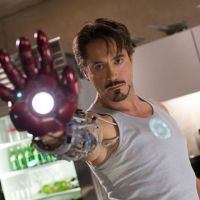
At the end of “Iron Man,” Tony Stark (Robert Downey Jr.) returns to his home and finds Nick Fury (Samuel L. Jackson) waiting for him. Fury tells Stark he’s not the only superhero in the world and tells him he’s there to talk about “the Avengers initiative.”

By that point, fans knew that Marvel had big plans for their universe. Soon, each movie would build toward “The Avengers.”

A long four years followed, but fans were rewarded with some fun movies. “The Incredible Hulk” in 2008 was, I thought, a terrific movie, with good Hulk action but also exciting scenes, including one in which soldiers pursue Bruce Banner (Edward Norton) through a South American slum.

The Hulk movie continued — even amped up — the Avengers foreshadowing. Spymaster Fury didn’t reappear but SHIELD was all over the movie, as it had been in “Iron Man,” and Downey Jr. appeared as Stark at the end. Maybe best of all were the references to the “super soldier” program that created Captain America, as Hulk’s nemesis the Abomination was created in part because of the same serum that, decades earlier in the comics, made Steve Rogers Captain America.

Between them, “Iron Man” and “The Incredible Hulk” made for a great one-two punch.

“Iron Man 2” dug deeper into SHIELD and the Marvel universe two years later. SHIELD was fully staffed by this point, with not only Fury and Agent Coulson returning but Natasha Romanov (Black Widow, played by Scarlett Johansson) showing up. Cap’s shield was even on hand, in Stark’s lab.

We found out why a year later, when the summer of 2011 brought fans “Thor” and “Captain America.”

The two movies almost felt like two chapters of one story. Although “Thor” took place in Asgard and the present day and “Captain America” took place in the 1940s (with a modern-day framing device) the movies integrated the Avengers building blocks. SHIELD agent Coulson and references to other characters, notably a veiled reference to Gamma scientist Bruce Banner, were sprinkled through “Thor,” while “Captain America” put the Red Skull in search of the Cosmic Cube, a treasure from the armory of Odin, Thor’s father.

The two movies didn’t have the impact of “Iron Man,” perhaps, because the earlier film took so many people by surprise. But “Thor” and “Captain America” are so strong, so entertaining and so thorough in their establishing of “The Avengers” that they exude confidence.

By this point, Marvel was confident enough of its plans to end the movies not only with surprise extra scenes but James Bond-style “Captain America will return in The Avengers” slides.

Even while DC Comics was floundering, releasing a half-hearted “Green Lantern” movie that clumsily introduced Amanda Waller, a Nick Fury surrogate, and couldn’t get “Dark Knight” director Chris Nolan to agree to let his Batman character exist in the same world as the rest of the Justice League, Marvel had established its world.

The long road led to “The Avengers.” The movie comes out this week. Early reviews are very positive, and Marvel seems confident enough to continue to build its movie universe.


The geek years of our lives: 1982

I’ve noted before in this space that 1977 was a pivotal year for movies. Two words: “Star Wars.”

But just as 1939 is a golden year for movie lovers, 1982 is a golden year for geeks. Maybe never before and maybe never since have so many milestone movies been released in a single year, many of them in the summer months alone.

I was reviewing movies that year — I had begun four years earlier and did it for another eight years, so it was prime moviegoing time for me — and even then I realized we were seeing something special.

As the 30th anniversary of this pivotal year rolls around, the Alamo Drafthouse Cinema is holding screenings of many of the movies. I can’t make those showings, but I’ll probably watch a few on disc. In the meantime, here’s my little look back.

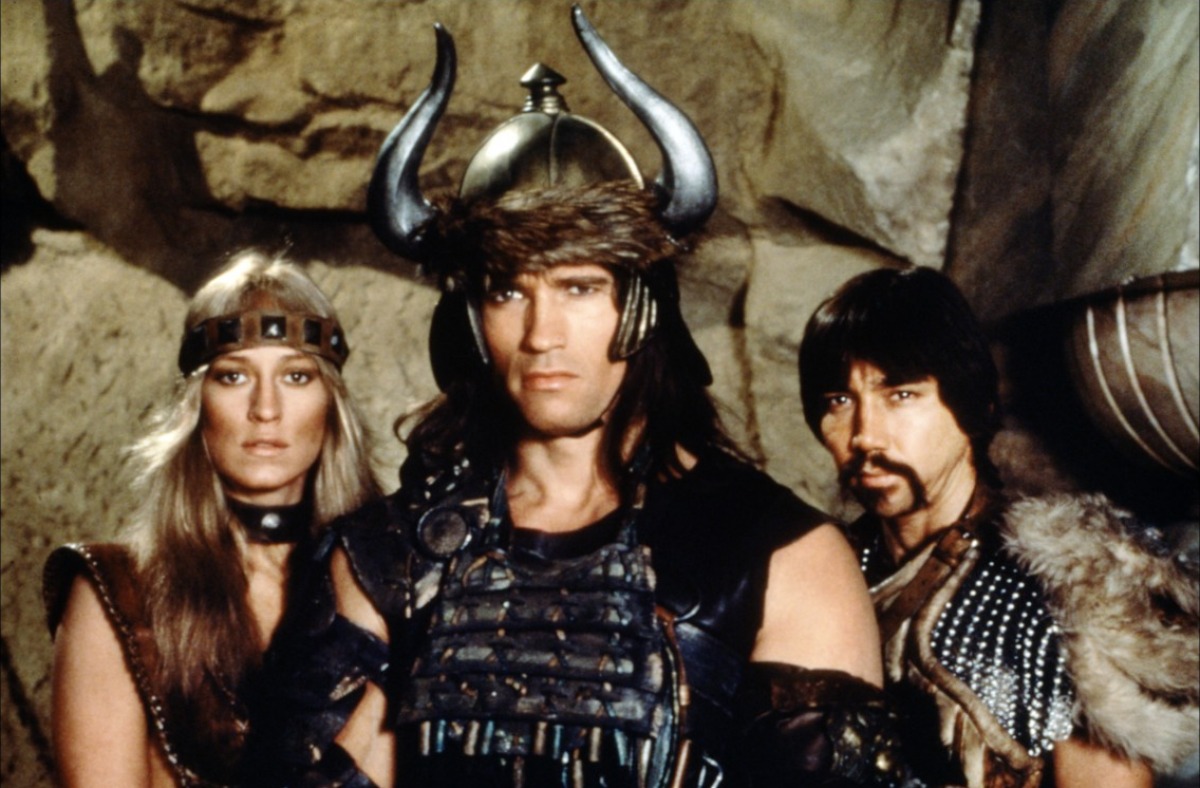
“Conan the Barbarian” — The Arnold Schwarzenegger movie was one of the first movies I saw through the press junket process, going to Chicago to see it and interview the cast and filmmakers. But even without that, I recognized the movie for what it was: The rare moment when Hollywood got the sword-and-sorcery genre right. There are some cheesy effects, to be sure. But the world of the pulp barbarian hero came to life.

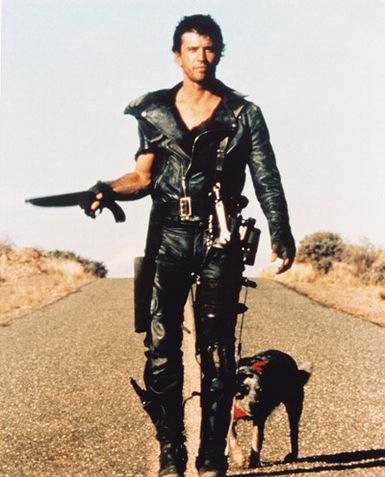
“The Road Warrior” — I had seen George Miller’s “Mad Max,” the dire action thriller starring Mel Gibson as a cop in a lawless land, but it was small in scope compared to “The Road Warrior.” Like “Conan,” “The Road Warrior” quickly defined its genre. All the elements were in place: A nihilistic hero with a heart; truly menacing bad guys; a varied and fascinating collection of good guys; stunts like movies had never seen before.

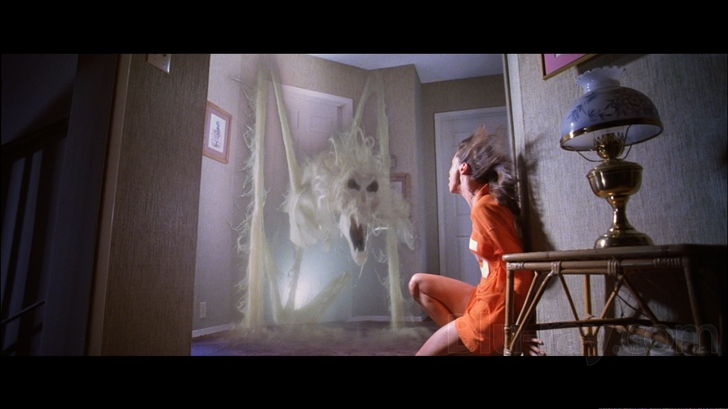
“Poltergeist” — This movie, directed by “Texas Chainsaw Massacre” director Tobe Hooper and produced by Steven Spielberg, was like the “Mirror Mirror” universe take on the suburban world given to us a few weeks later when director Spielberg released “E.T.” After decades of old dark house horror movies, the “haunted ranch house” tale told in “Poltergeist” seemed as fresh as could be.

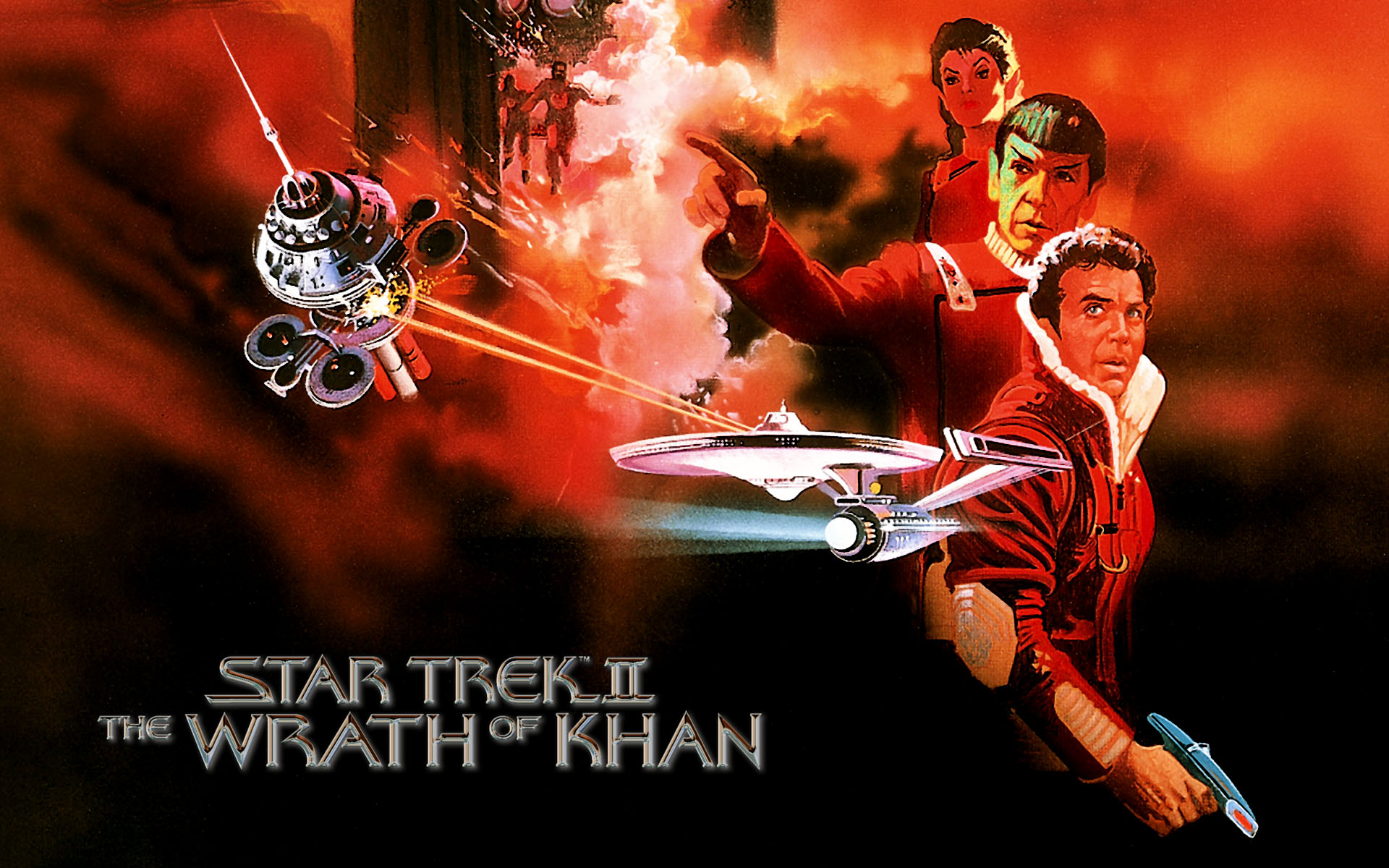
“Star Trek II: The Wrath of Khan” — While I really enjoyed the J.J. Abrams “Star Trek” reboot from a couple of years ago, the fact remains that Abrams, other moviemakers and all of fandom still believes that Nicholas Meyer’s take on Gene Roddenberry’s classic space opera is the one to emulate. And why not? Meyer brought a sharp military take to the familiar characters, pushed them through their paces in a quick-witted, thrilling plot, injected a ton of humor and tragedy and gave us one of the most heart-pounding climaxes ever. To this day, I remember the “Does Spock really die?” rumors before the movie opened, with fans eagerly anticipating/dreading the answer.

“E.T. The Extra-Terrestrial” — Sure the ending is marred by one of those “ohmygod he’s dead, no he’s not” resurrections. But time has probably dimmed our recollection of how simultaneously sweet and tart this movie is. The kids were cute but had realistic anti-sibling mean streaks, the mom (Dee Wallace. Sigh.) was a barely-hanging-in-there abandoned woman and E.T. himself was a great creation. It deserved to make a ton of money.

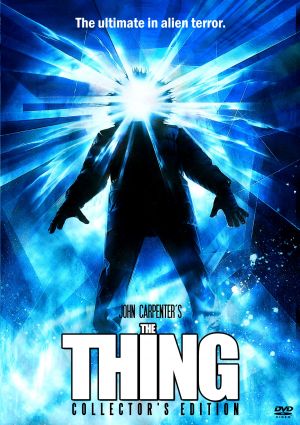
“The Thing” — Man, what a great horror flick. Director John Carpenter was on a roll with “Halloween,” “Escape from New York” and this, making him the most subversive director working and one of the most crowd-pleasing. Think about the endings to those movies for a minute: “Halloween” ended by establishing the boogeyman really existed. “Escape” ended with the protagonist, played by Kurt Russell, deciding “the hell with it” and destroying a tape that could save the world. And “The Thing” ended its cold and nightmarish story with a man versus alien creature showdown — featuring Russell and Keith David — that couldn’t have been more harsh.

The two last movies of the summer of 1982, “Tron” and “Halloween III,” were lesser lights, but how could they not be? “Tron” left enough of an impression to spawn a sequel nearly 30 years later. And “Halloween III” was a noble experiment that ultimately failed. Rather than try to top John Carpenter’s original, the movie’s producers went for a whole new story, about a fiendish plot to sacrifice millions of children with Halloween monster masks. “Three more days to Halloween!” was the earworm TV commercial jingle of the year. I just wish the movie had found an audience.

What a year.

The road to ‘The Avengers’

It’s been a long road to “The Avengers.”

Not just the four years since Samuel L. Jackson showed up at the end of “Iron Man” and freaked out fans — at least those who were sufficiently clued in to hang out in the theater until after the credits — by telling Robert Downey Jr. he wanted to talk to him about “The Avengers Initiative.”

There’s been a lot of anticipation since 2008, but considering the decades since Captain America was introduced in Marvel Comics (actually, Timely Comics back then), the past four years have been a breeze.

Here’s part one of a highly selective look at the road to “The Avengers” movie.

“Captain America Comics,” issue one, dated March 1941 but on stands months earlier, debuted as the world grew edgier about the war in Europe. The character — 98-pound patriot Steve Rogers, turned into Captain America through the Super Soldier experiment — was created by Joe Simon and Jack Kirby. Comics were a  huge deal back then, with far higher sales numbers than today, and Cap was a hit — especially with the punch he landed on Hitler’s jaw on the cover of one issue — and the movies beckoned.

“Captain America” the movie serial was released by Republic Pictures in 1944 starring Dick Purcell as Cap. But Cap wasn’t soldier Steve Rogers in this movie. He was a crime-fighting district attorney. And Purcell was kind of … egg-shaped. At least his head was. Cap continued in the comics but didn’t come back to the screen for decades and his fellow Avengers didn’t get their big-screen chance for an even long time.

The “Avengers” comic debuted in September 1963, the creation of Stan Lee and Jack Kirby, and — like Marvel’s other early team, The Fantastic Four — was a cool variation on DC’s happy family the Justice League. The Avengers bickered and fought among themselves — the lineup was constantly changing, which was one of the comic’s charms.

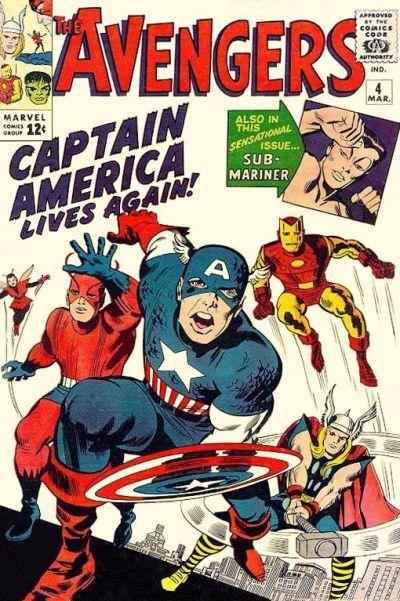
“Avengers” issue four marked a real turning point as Cap was discovered frozen in ice and thawed. While he joined the Avengers — and quickly became the team’s leader — he was an essentially tragic character. Most of the people he knew, with the exception of former commando Nick Fury, were dead. Most tragically, his World War II sidekick, James “Bucky” Barnes, had died in battle. Bucky would, amazingly, stay dead for decades to come.

In 1979, the first of two made-for-TV “Captain America” movies was made. The movies starred Reb Brown and seemed to be a bizarre attempt to cash in on Evel Knievel, the motorcycle stunt rider, since Brown spent more time on a bike than on two feet.

While he continued in the comics and, along with many other Marvel characters, showed up in various animated series, Cap didn’t return to the big screen until the 1990 Albert Pyun “Captain America” movie, starring Matt Salinger as Steve Rogers and Scott Paulin as the Red Skull, bizarrely changed from a Nazi to an Italian facist. Once you get beyond the novelty of seeing live-action images of Cap and the Skull, the move is pretty dreadful. Its low budget doesn’t allow for much action.

For years, attempts to bring Marvel characters to the screen fell by the wayside and it seemed as if fans would never see their favorite heroes in action.

Then Fox released Bryan Singer’s “X-Men” in 2000. The movie was a hit and the studio followed it up with films based on the Fantastic Four.

It was only a matter of time until Cap and the Avengers got their chance.

(More to come.)

‘Incredibly Strange Creatures,’ great memories

My companion, who is now long gone but shall remain nameless anyway, was itching to hit a zombie in the head with a baseball bat.

“If somebody comes at me, they’re gonna get it,” he said, showing me the baseball bat that was well-hidden under some blankets.

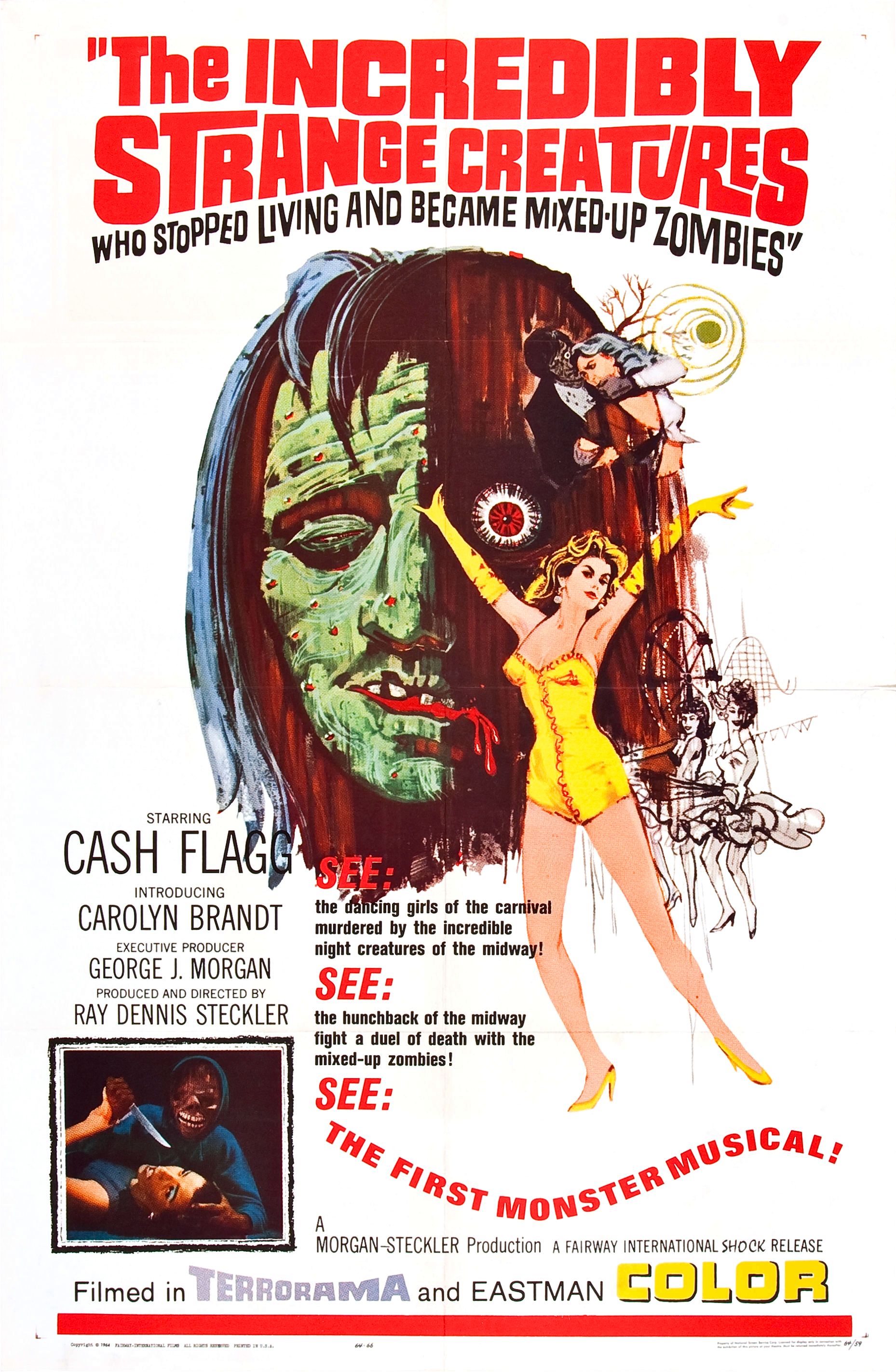
I don’t remember the year, but it must have been the late 1960s or early 1970s. The occasion was the re-release of “The Incredibly Strange Creatures Who Stopped Living and Became Mixed-Up Zombies.”

If you don’t remember this movie milestone, I’ll refresh your memory.

Ray Dennis Steckler was a maker of ultra-low-budget movies in the 1960s. He also acted in some of his movies, under the stage name Cash Flagg, probably because he could afford his salary.

In 1964, Steckler directed “Incredibly Strange Creatures,” which was released by Fairway International Pictures. Fairway released a handful of movies in the 1960s, including this and director Arch Hall’s “Eegah,” in which teenagers encountered a caveman. Of course. It was the 1960s and Hollywood had discovered what a potent box-office force teenagers could be. So teenagers were encountering everything from Frankenstein to giants to … well, you name it.

Fairway’s best-known movie was undoubtedly “Incredibly Strange Creatures,” in which teenagers encountered … not a caveman, but zombies at a carnival.

Stecker — er, Flagg — and other patrons of the carnival are hypnotized by a fortune teller and turned into crazed killers. For good measure, the fortune teller splashes acid on her unwilling slaves, giving them disfigured faces to match their murderous instincts.

By the end of the movie, the … well, sort of strange creatures had broken out of their cages and taken vengeance on their carnival captors.

That’s where my companion’s baseball bat came in.

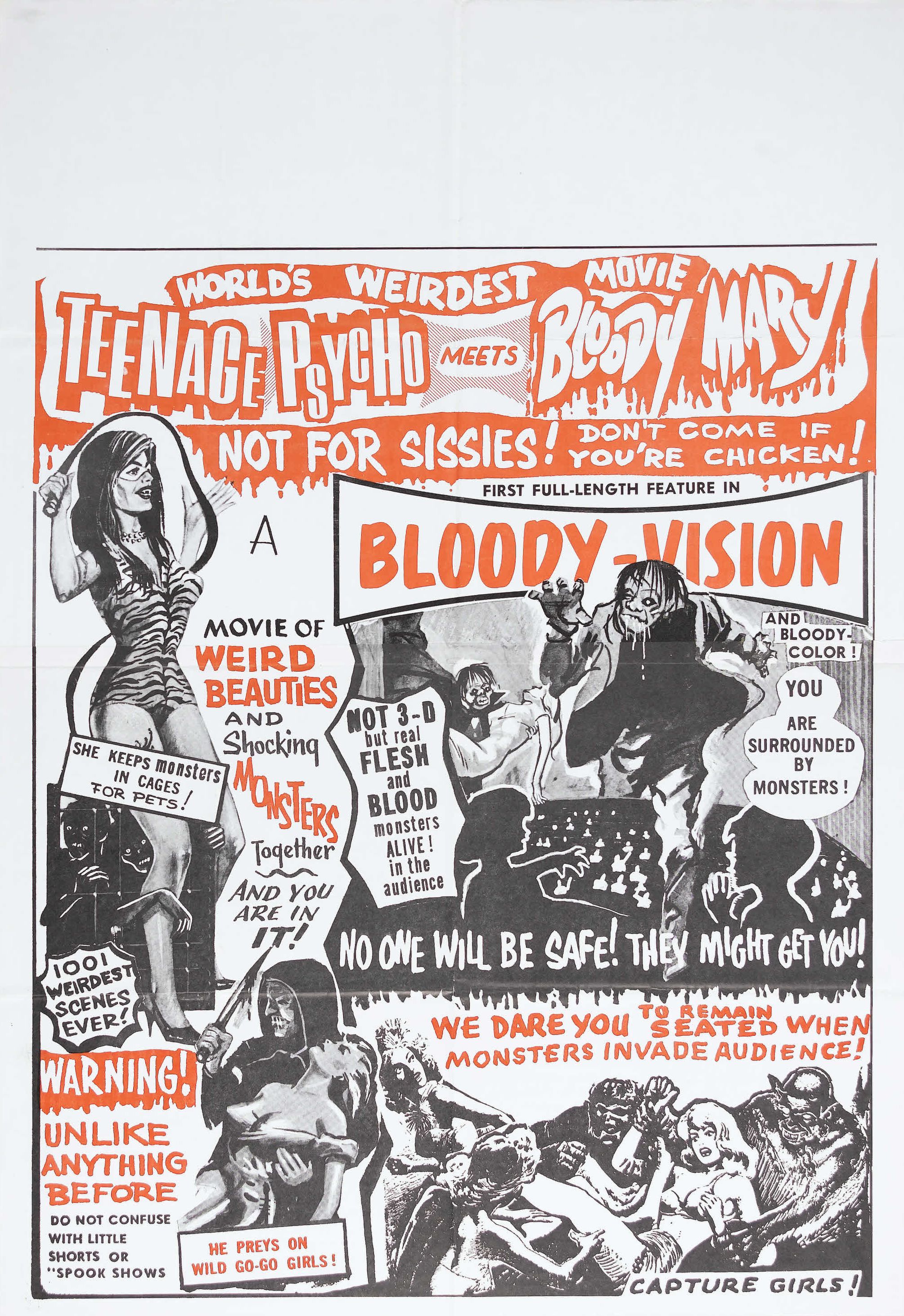
At some point during the surprisingly durable theatrical lifespan of the movie, either during its original release or its subsequent re-release as “Teenage Psycho Meets Blood Mary,” Fairway or someone had the ingenious idea of selling the picture by offering something that TV couldn’t compete with.

Not 3-D. Not Smell-O-Vision.

Real life zombies, running loose in the theater (or more likely, considering the low-budget nature of the movie) the drive-in.

Or, as the ads put it:

“Not for sissies! Don’t come if you’re chicken!”

“Not 3-D but real FLESH and BLOOD monsters ALIVE! in the audience.”

“NO ONE WILL BE SAFE! THEY MIGHT GET YOU!”

“We dare you to remain seated when monsters invade audience!”

In theaters where the movie played, the management made its ushers wear cheap monster masks and, in the scene when the monsters rebelled and broke loose on screen, the hapless theater employees would run up and down the aisles, screaming and frightening moviegoers.

Except for my companion, who had made up his mind to brain one of the zombies if this outbreak occurred.

Really, he understood that “real zombies” — stop and think about that phrase for a moment — would not be rampaging through the aisles of the drive-in.

But just in case …

Anyway, my memory of the movie is fairly dim all these years later. But my memory of that baseball bat and the threat of violence in the aisles remains vivid.

No, nobody got hit with a baseball bat that night. Zombies — in this case undoubtedly the teenage employees of the drive-in — did rampage, but none got close enough to us to warrant a good beating.

Thank goodness. Beating up teenage zombies with a baseball bat during a movie that’s been acclaimed as one of the worst of all time isn’t something you want on your record.


My movie role: Thug in a Batman fight

Did I ever tell you about the time I got beat up by Batman and Robin in a movie?

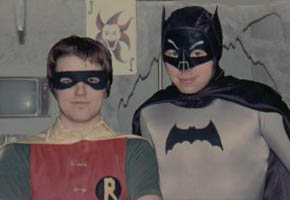
It was about 30 years ago and my circle of geek friends included Mark Racop, a Ball State University student from Logansport, Indiana, who was a fan of all things Batman. Racop did more with his fandom, however, than read comic books or sit around watching reruns of the 1960s “Batman” TV series, however.

Racop made Batman movies. And a Batcave. And, most impressive of all, Batmobiles.

My friends and I had flirted with movie-making a few times, writing and shooting a short thriller masterminded by my pal Brian McFadden. But Mark was serious as a heart attack about his desire to make Batman movies.

Now mind you this was before the 1989 Tim Burton “Batman” movie starring Michael Keaton. Nobody had put Batman on film since the 1960s and then it was the campy “Blam!” “Kee-runch” Batman.

Mark enlisted a bunch of us to appear in “Eyes of the Cat,” a 45-minute Batman movie featuring himself as Batman — in costume quite like Adam West’s outfit from the TV series — and various other friends as Robin, Catwoman and assorted henchmen.

That’s where I came in.

Because Racop shot his movie over the course of months (maybe years), I was only in a few moments of the movie. I played Figgy Pudding, a thug rousted and roughed up by Batman and Robin. My friend Brian played Harry Beefmelons.

We spent a couple of days roughing each other up, throwing punches and working out our own fight choreography. It was a blast.

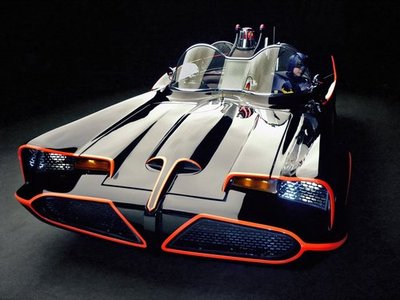
Mark went on to a number of enterprises, including his latest. His company, Fiberglass Freaks, is officially licensed by Warner Bros. and DC Comics to make and sell replicas of the 1960s Batmobile.

The Batmobile he had back in the day was one that he had cobbled together from a 1974 Monte Carlo and it was cool for a fan effort. The vehicles he makes today are gorgeous.

You can check out a webpage about “Eyes of the Cat” here. Sorry, no pics of me as Figgy Pudding.

And you can check out Mark’s custom superhero vehicle website here.

If you buy a Batmobile and decide to make a movie, I’d love to have a part. Maybe a speaking role this time.

Saying goodbye to Jonathan Frid

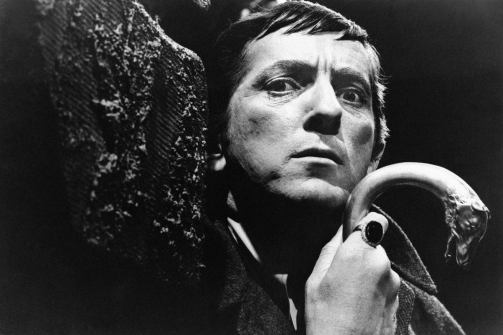
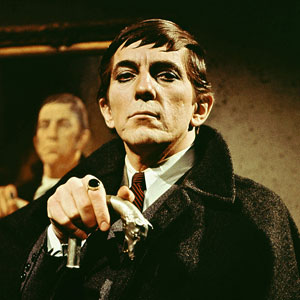
One of the pop culture icons of my childhood is gone. It was announced today that Jonathan Frid died April 13 in his home in Canada. He was 87.

Frid was, of course, Barnabas Collins on the classic supernatural daytime drama “Dark Shadows.”

His death came just a few weeks before the May 11 release of the Tim Burton, Johnny Depp big-screen version of the venerable soap. Frid, along with other regulars from the TV series, appears in the movie, which is pitched as a much more light-hearted take on the gothic drama.

“Dark Shadows” aired late afternoon weekdays from 1966 to 1971. Frid didn’t join the cast until several months in, however, when groundskeeper Willie Loomis (John Karlen) accidentally released him by opening his coffin.

I’ve noted before that the show was a special one for me. I came home from elementary school every day, sat down at the coffee table in my living room and watched the show while I did my homework.

My deepest appreciation for the series, however, came when it aired in syndication years later. Then I recognized all the tricks and treats the series contained: Wild storylines that involved not only vampires like Barnabas but witches, werewolves and ghosts and even time travel.

“Dark Shadows,” like many soaps at the time, was videotaped with little room for error or fixing of same. Actors would sometimes forget their lines or bump into furniture or doors while making a dramatic exit from a scene. I loved the show anyway.

I still remember with bitter disappointment watching the last episode. This was 1971, of course, before the Internet and news of show business — particularly a geeky daytime drama — was hard to come by.

The final episode reflected an effort to tie up loose ends. The last storyline for the show had all the actors playing their ancestors in the past. Near the end of the episode, bite-type neck wounds are inflicted on someone. Is a vampire loose at Collinwood?

But the voice-over narration contradicted that ominous development and predicted a happy ending for Bramwell Collins, played in this storyline by Frid:

There was no vampire loose on the great estate. For the first time at Collinwood the marks on the neck were indeed those of an animal. Melanie soon recovered and went to live in Boston with her beloved Kendrick. There, they prospered and had three children. Bramwell and Catherine were soon married and, at Flora’s insistence, stayed on at Collinwood where Bramwell assumed control of the Collins business interests. Their love became a living legend. And, for as long as they lived, the dark shadows at Collinwood were but a memory of the distant past.

The words had an element of finality to them and I suspected the worst. The following Monday I tuned in and, sure enough, the show was not on.

My disappointment was massive. I even wrote a letter to the Indianapolis TV station that aired the show, asking if it would return. I don’t recall getting an answer.

“Dark Shadows” — all 1,200-plus episodes — is now available on DVD for the enjoyment of fans.

I’m leery of what Burton and Depp have done with the remake, but I’ll probably see it.

And if he does indeed appear in the movie, Frid will be a welcome sight.

So I’ll mourn his passing and enjoy my memories of my afternoons with Barnabas and family and all the enjoyment Jonathan Frid gave me over the years.

More new ‘Avengers’ pics, clip

How many more days until May 4?

I told myself I wasn’t gonna do this. But I’m prematurely geeking over “The Avengers.”

It’s not like I’ve been waiting for this movie since I was in elementary school or anything. Not like I’ve been waiting since the first “Iron Man” movie had a hint of, ultimately, the superhero team-up that is “The Avengers.”

Not like the Twitter reaction to this week’s premiere of Joss Whedon’s movie hasn’t been pretty much uniformly praiseworthy.

Not like Marvel didn’t just release a quick clip of Cap and Thor fighting aliens.

Not like I didn’t just read my first review of the movie. I’m not even going to link to it. The review gives too much away.

Sigh.

Twenty days.

Madchen Amick fans assemble!

What do actress Madchen Amick, the newspaper comic panel “The Family Circus” and the giant flying snake thing from the previews for “The Avengers” have in common?

They’re pretty much the most popular topics I’ve written about in this blog.

Since early this week, when I followed up on my “Mad Men” review with an entry noting that Andrea, the old fling of Don Draper who showed up on Don’s doorstep — and under his bed, choked to death, in his fever dream — was played by Amick, hundreds of readers have checked out the blog.

So, in the spirit of cheap plays for page views, I wanted to note the popularity of Amick, best-remembered for most of us as diner waitress Shelly in the cult classic TV series “Twin Peaks.”

I also wanted to note that most sources online appear to agree that Amick, born in 1970 according to her IMDb entry, looks pretty amazing.

It doesn’t take much Googling to determine that clips of Amick, particularly in a bikini from the cable TV series “Californication,” are out there.

Go ahead and Google. I’ll wait.

Anyway, Madchen Amick is now forever enshrined in this blog’s hall of fame, along with Billy, Jeffy and the the rest of the Keane comic strip family as well as the Leviathan or whatever flying beastie the Avengers will face.

Now if there was only some way to get Madchen Amick, the ghostly grandparents from “The Family Circus” and the flying snake thing from “The Avengers” all into the same blog item.

Hmm.