Category Archives: horror films

‘SharkNado,’ ‘Ghost Shark’ and great exploitation movies

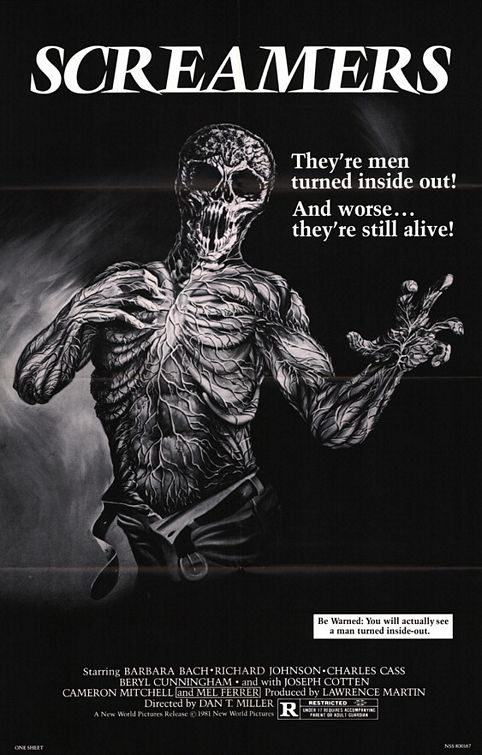
screamers advertisement

I still remember my expectations when I saw “Screamers” at a drive-in theater in 1981.

They were pretty damn low.

After all, “Screamers” was sold with the catchphrase “Be Warned: You Will Actually See a Man Turned Inside Out” on the poster. When a movie is sold on that kind of pitch alone you know it’s got problems.

When that scene doesn’t even happen in the movie, you know the suckers who paid admission have problems.

Anyway, “Screamers” – which was actually an Italian movie called “Island of the Fish Men,” made two years earlier, then released with some footage added by Roger Corman’s New World Pictures – was pretty weak stuff.
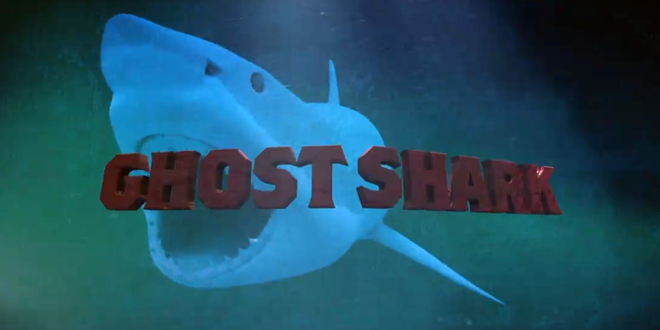
ghost-shark

It’s appropriate that the universally liked Corman has, in recent years, produced cheap sci-fi movies for the SyFy channel, home of “SharkNado,” a huge hit on SyFy a few weeks back, and inspiration for “Ghost Shark,” which aired Thursday night. Neither were Corman productions but might have been. That’s because the mix of inspiration and desperation that went into the writing, filming and marketing of these movies was vintage Corman.

“SharkNado’s” best marketing tool was one that couldn’t have been planned or bought by SyFy. The Twitter reaction to the movie the evening it aired added greatly to the movie’s impact on the pop culture landscape.

When SyFy aired “Ghost Shark” – an inferior movie to “SharkNado” but one with some funny and audacious scenes – the channel seemed to try to prime the Twitter pump by superimposing lame “Tweets” in the upper left corner of the screen.

Didn’t work.

I often wonder how modern technology and social media who have affected the plots of movies that predated their invention. In the case of “Screamers” back in 1981, I can only imagine how my friends and I would have digitallly picked the movie apart there from our drive-in vantage point.
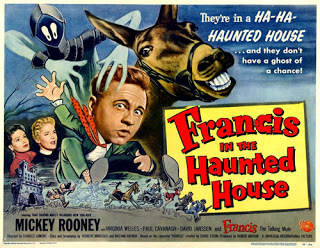
Movie classic: ‘Francis in the Haunted House’

francis in the haunted house poster

More than a half-century later, it’s hard to imagine a movie studio building a series of films around the exploits of a talking mule and his human sidekick.

Yet Universal, home of classic monsters and classic funny/scary movies, released seven pictures about Francis, an Army mule voiced by veteran character actor Chill Wills (in the first six) and accompanied by straight man Peter Stirling (Donald O’Connor in the first six flicks).

The movies were based on a book and were sent into theaters beginning in 1950 mostly as a post-war military comedy. Francis and Peter went to West Point, joined the WACs and the Navy. Inevitably, Peter got into some kind of jam, Francis dispensed wise-cracking good advice and nobody believed that the mule could talk. Until he did.

My introduction to the series was a 1960s showing on an Indy TV station of the last film in the series, “Francis in the Haunted House,” released in 1956.

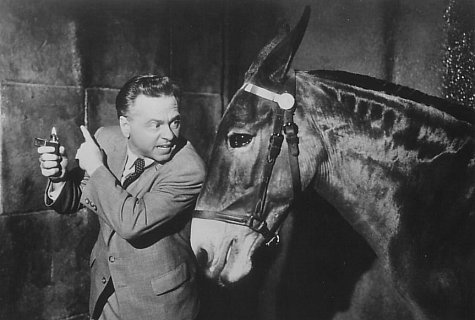
francis in the haunted house leads

My view is no doubt skewed by the fact that this, the first in the series that I remember seeing, had a different star – Mickey Rooney – and a different voice – veteran voice actor Paul Frees – replacing Wills as the voice of Francis.

But for a kid who grew up loving not only Universal monster films, including “Abbott and Costello Meet Frankenstein,” I found the mix of laughs and chills perfect.

In the movie, David Prescot (Rooney) meets Francis and, after the initial surprise at the fact this is a talking mule, they set off on an adventure. The two try to help a woman win her inheritance by staying in a supposedly haunted mansion.

In a formula that became familiar through “Scooby Do,” the haunting is being staged by crooks who want to win the mansion and Prescot is a patsy in more ways than one.

There is, however, a foe that Francis and Prescot can fight together: A ghostly knight on horseback.

It’s no doubt true that the Francis formula was more than a little tired by this point. O’Connor bailed from the series before this entry was made and was widely quoted as saying he knew it was time to go when the mule got more fan mail.

But there’s a lot of pleasure to be found in the final “Francis” movie. It’s perfect for “Abbott and Costello” fans.

Classic schlock: ‘The Brain That Wouldn’t Die’

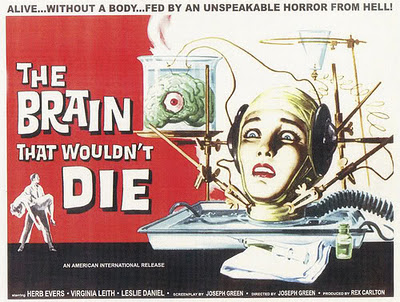
the brain that wouldn't die ad

Believe it or not, I hadn’t seen “The Brain That Wouldn’t Die” in its entirety until just recently.

It is, after all, one of those classic schlocky horror movies, those cult drive-in classics, that everybody is familiar with even if you haven’t seen it. It was the first Mike Nelson “Mystery Science Theater 3000,” for pete’s sake.

Yet I managed to never see more than random clips until I sat down to watch it on DVD the other day.

And what a treat.

Filmed in 1959 but not released until 1962, the movie’s original title was “The Head That Wouldn’t Die,” who was probably more accurate.

The movie stars Jason Evers – a familiar face from the “Star Trek” series episode “Wink of an Eye” – as Dr. Cortner, an arrogant surgeon who is secretly experimenting, Frankenstein-style, on creating life after death. He’s been saving random body parts and assembling a creature that’s kept in the laboratory closet downstairs in his family’s summer home.

Early in the movie, even Cortner’s surgeon father criticizes his lack of humility and unpleasant ambitions.

Then Cortner and girlfriend Jan are in a auto accident and Jan is decapitated. Jan is beheaded in the kind of car crash that is usually found in low-budget movies: Lots of shots of the car careening along a country road, then quickly approaching a guard rail. The crash itself isn’t seen. Neither is Jan’s head, which Cortner wraps up in his sportcoat and rushes from the scene (with as much footage of him running, bunched up jacket in his arms, as there are shots of the car speeding down the road).

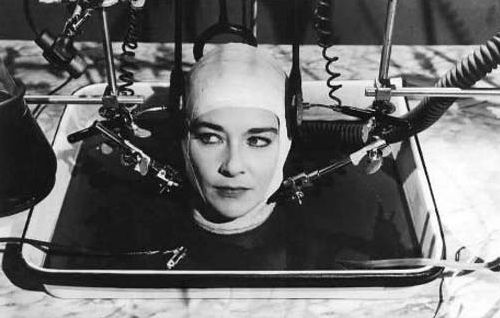
the-brain-that-wouldnt-die

So Cortner put’s Jan … in a pan … at least her head … in his basement lab. Then he begins scouting out a replacement body.

The movie certainly seems to have inspired scenes in “The Re-Animator,” with its head in a pan motif. And “Jan in the Pan” is apparently the nickname for the female lead once she’s … in a pan.

brain that wouldn't die monster in closet

Every cheap horror movie needs a monster and a woman’s head in a pan just wasn’t going to cut it. Hence … the stitched-together monster in the closet.

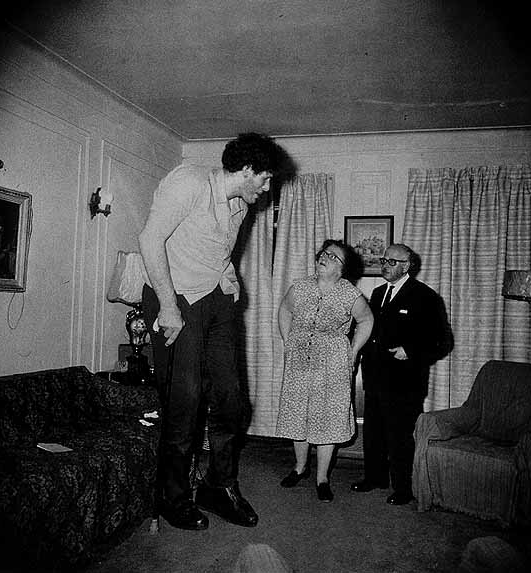
diane arbus the jewish giant

The creature, the result of Cortner’s previous experiments, is played by seven-foot, six inch Eddie Carmel, subject of a photo by renowned photographer Diane Arbus that depicts Carmel as “The Jewish Giant at Home with His Parents.”

As Cortner goes to a burlesque house to pick out a new body for Jan, he doesn’t seem like a tortured soul looking to save his girlfriend. He seems to be enjoying the view a little too much.

Adding to the overall aura of sleaze: Two dancers get into a catfight, boobs jiggling. Cut to drawings of two cats and a dubbed meow.

Jan, meanwhile, wakes up – well, her head wakes up – and she immediately begins talking to the still-unseen monster in the closet, talking up their mutual need for revenge.

There’s some choice dialogue:

“An operating room is no place to experiment.”

“Very well. The corpse is yours.”

Said during operation: “I’ve been working on something like this for weeks.” Well, tons of research then.

“I love her too much to let her stay like this.” Well, a disembodied head in a pan, yeah.

“The line between scientific genius and obsessive fanaticism is a thin one.”

“Horror has its ultimate … and I’m that.”

And cackling by Jan in the pan. Lots of cackling.

The end credit slide on the copy that I watched still had the original title: “The Head That Wouldn’t Die!”

‘Sharknado’ blows us away

sharknado

“Sharknado” owned us all last night.

Social media like Twitter were ablaze Thursday night with jokes and jibes about the latest SyFy movie, featuring TV “stars” like Tara Reid and Ian Ziering fighting to survive a series of tornados and waterspouts raining … er, sharks … down on Los Angeles.

The sight of sharks falling from the sky and maliciously trying to snap up everything in sight was hilarious.

But even better was the accompanying Twitter onslaught, with almost everyone I follow, well-known and unknown, commenting on the show.

SyFy, the network behind “Mansquito” and “MegaShark” and other cheap and cheesy movies, blew up the Internet.

A big win for all of us. Especially the sharks. And Tara Reid.

Classic schlock: ‘Attack of the Giant Leeches’

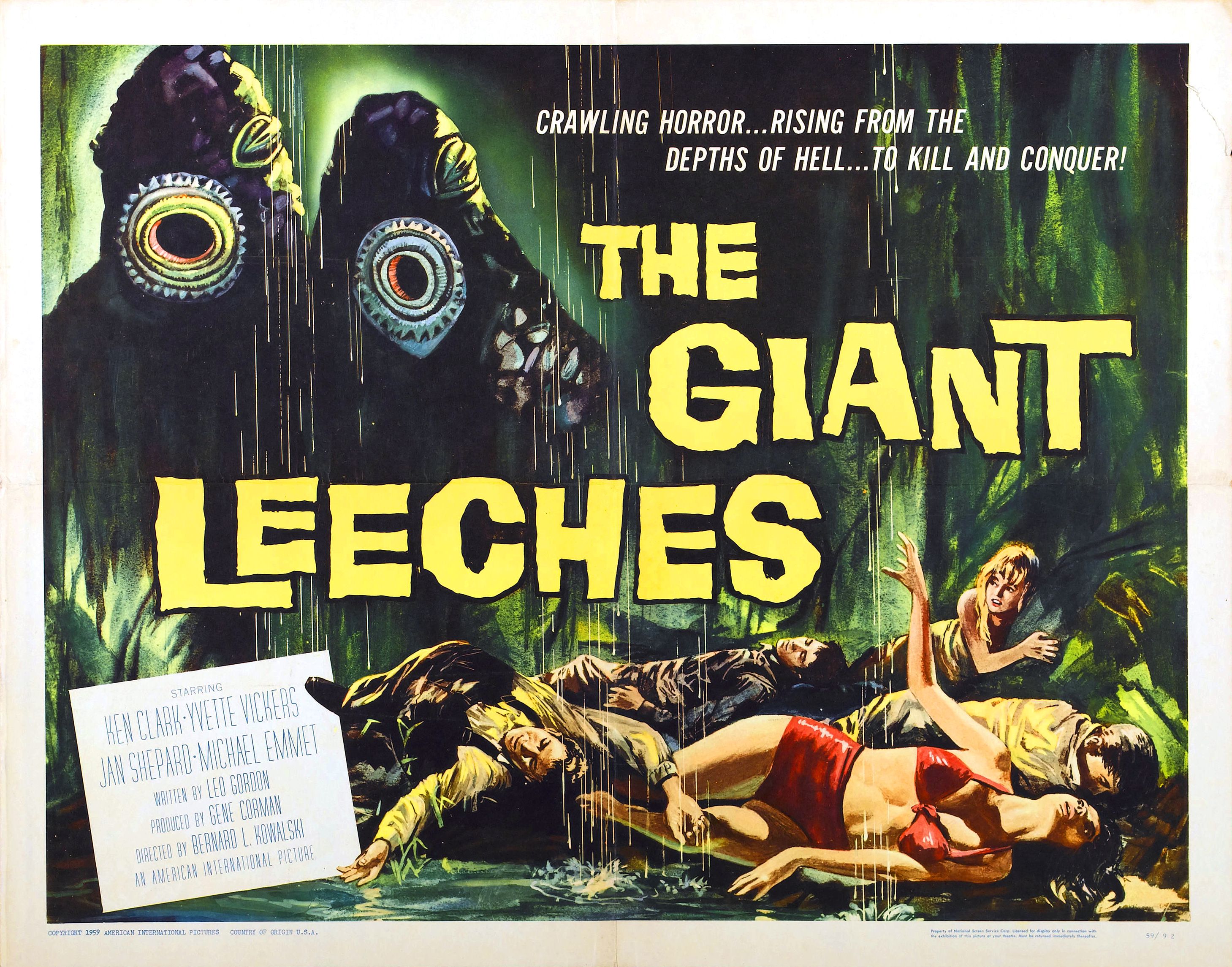
attack_of_giant_leeches_poster

“Attack of the Giant Leeches” sounds like the quintessential low-budget drive-in horror movie, and with good reason:

It’s a Roger Corman production at American International Pictures.

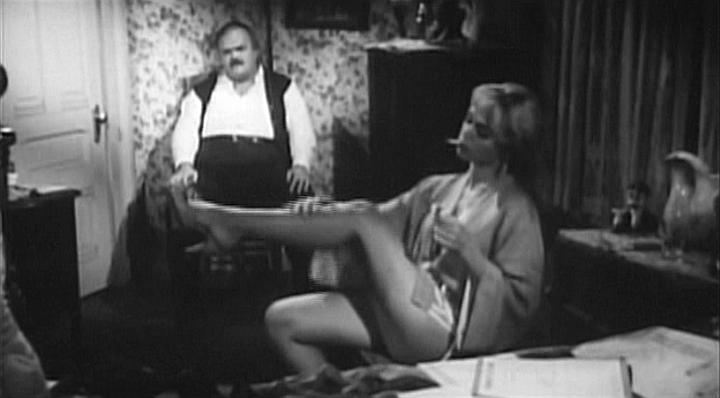
attack of the giant leeches blonde

It’s set in Florida but there’s a southern “swamp trash” – to use a phrase uttered in the movie – feel to the movie, right down to the corn pone accents and moonshine-swilling hillbillies.

It’s a Roger Corman production (did I mention that already?).

Its title alone sounds like every bad imaginary movie that ever played out on a drive-in movie screen in some other movie or TV show.

“Attack of the Giant Leeches,” all 62 minutes of it, is great fun, a mix of southern fried domestic drama right out of “Cat on a Hot Tin Roof” and low-rent monster movie.

Attack_of_the_Giant_Leeches_title_

Legendarily made in eight days, “Attack” has a low-rent feel but doesn’t stint on action. Except for a couple of scenes that feel like people are standing around talking for the sake of filling up a few minutes of screen time, “Attack” brings the drive-in thrills early. One of the titular characters shows up even before the credits, and there’s two or three attacks in the first 20 minutes of the movie.

A small Florida town is beset by attacks by man-sized leech creatures. As people turn up sucked to death or missing, game warden Steve swings into action. Well, sort of. First of all, he needs to make sure nobody’s going to do anything to hurt indigenous wildlife.

attack of the giant leeches monster

The creatures are low rent – somebody sewed plastic octopus suckers on the forerunner of the Snuggie – but probably more effective because they are little seen.

There’s one genuinely creepy moment in the movie in which we learn the giant leeches are taking their victims to an underwater cavern. They’re left there to be sucked dry of blood a bit at a time. It’s kind of eerie.

There are some decidedly loony moments:

Game warden Steve runs up to floozie Liz as she screams because she’s been frightened. But Steve, rather than holstering his pistol, points it right at Liz’s face as he comforts her.

Cal, the no-goodnik making time with Liz, is a dead ringer for comic Adam Carrolla.

attack-of-the-giant-leeches_snuggle

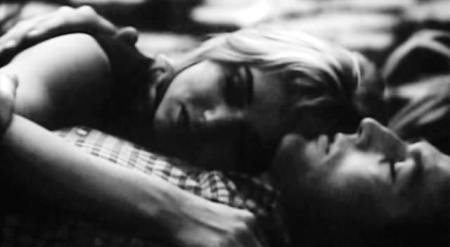
Cal and Liz go out to a remote spot in the swamp – despite stories about the leech creatures – to make out … in a decision they make standing in the doorway of a bedroom. Young people these days!

attack-of-the-giant-leeches steve

Steve and pal Mike decide to go diving in the swamp to look for the giant leech creatures with scuba equipment they took from a ship belonging to “the Italian navy.” Huh?

The creatures usually have a fairly effective “rattle” noise they make, but early on one makes a sound like a cougar’s cry.

Check out “Attack of the Giant Leeches.” It’s drive-in schlock fun.

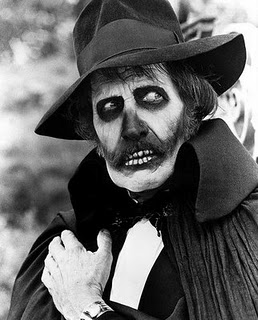
RIP Sammy Terry: We’ll miss our favorite ghoul

sammy terry b&w

I come to praise Sammy Terry, not to bury him.

With the passing Sunday, at age 83, of longtime Indianapolis music store owner Bob Carter, a chapter of television history closes.

That’s because, of course, Carter was the real-life, not-totally-secret identity of Sammy Terry, horror movie host on WTTV Channel 4 from 1962 to 1989.

I’ve written about Sammy before, but his passing prompts me to recount the Sammy Terry legend at greater length.

Carter was a TV pitchman who claimed to have invented the Kentucky Fried Chicken catchphrase “It’s finger-lickin’ good!” during a live commercial spot. He always seemed like a gentle soul and, on the rare occasions I called him for an interview, answered the phone in a toned-down version of the sepulchural voice he used to play Sammy.

sammy terry autographed

He seemed to take his celebrity in stride. For a couple of generations – at least – of Indiana kids, he was a cultural icon before we knew what that phrase meant. But probably because you couldn’t make barrels full of money taping a once-a-week horror movie show on Indianapolis TV – and no doubt because he loved providing music education to legions of school children – he kept that day job.

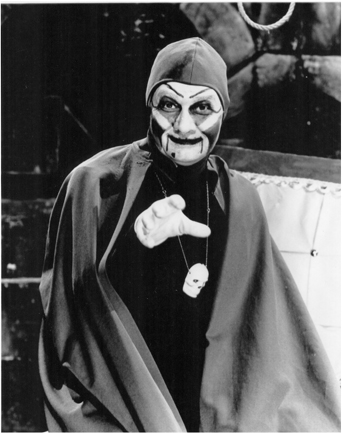
But 11 p.m. Friday rolled around and Carter – in yellow rubber gloves with veins drawn on, pasty pancake makeup, a dark purple cowl and cape and plastic skull around his neck – became friend and nemesis to us kids all at the same time.

He was a friend in my household. Because she knew it was important to me, my mom helped me stay up late on Fridays, talking to me and prodding me and even occasionally offering me a McDonald’s hamburger left over from our special Friday night dinner.

For other kids, including some of my cousins, Sammy, his creaking coffin, his spider friend George and his spooky movies were just a bit too much. Sammy’s entrance was a cue for the sleepover to move into deep sleeping bag mode.

And what movies he showed. Channel 4, like stations all over the country, had bought the Shock Theater package of films. The 50-plus films, including many classic black-and-white Universal Studios horror movies like “Frankenstein” and “The Wolf Man,” had been re-released to theaters for much of the 1930s and 1940s and even the 1950s. But in 1957, the package was released to television and many stations built a weekly horror movie show around it. Thus were born the TV horror hosts, men (and a few women) who dressed up in spooky outfits and presented the classic films, often seasoning their introductions and cut-away bits with campy humor.

Carter – whose stage name was a play on “cemetery” – told me on a couple of occasions how much he enjoyed the gig. He recalled with great fondness how the cardboard dungeon set was created and how the most realistic thing about the show – the coffin from which he arose every Friday at 11 p.m. – had been provided by a funeral home that insisted he never tell its origin for fear it would upset customers.

Carter made appearances here in Muncie over the years, and before one such appearance, in the early 1980s, I had done an interview and asked if I could meet him “backstage” at Muncie Mall as he got into makeup and costume. He graciously agreed and, along with a couple of friends, I was ushered into the room where he was getting ready.

Like three starstruck kids, Jim, Derek and I watched as he got ready and made small talk. When he was finished, I took a picture of the other two with him. That picture hung on Derek’s wall for many years.

Sammy’s time as a horror movie host passed more than a couple of decades ago, a victim of changing tastes and TV economics. He continued to make personal appearances, to the delight of the grown-up kids who remembered him and wanted their kids to know Sammy. In the past couple of years, Carter’s son has been making personal appearances in the character and might continue to do so. It’s a continuation I heartily approve of. Sammy would be pleased to know that he, the ultimate Hoosier TV ghoul, had a life after death.

We’ll miss you, Mr. Carter. And you too, Sammy.

Dead in Hollywood: Avco Embassy Pictures

avcoembassy

If you saw “This is Spinal Tap” or “Escape from New York” or “The Graduate” or “Phantasm” or “The Fog” or “Scanners” or “The Howling” in theaters – and if you didn’t get there late – you saw the Avco Embassy pictures logo at one time or another.

Blue and green geometric shapes swirling into place and into focus, the logo was a familiar one for devoted movie fans, particularly those with a taste for the low-budget and offbeat.

I still remember the anticipation I felt during the Avco Embassy logo at the beginning of John Carpenter’s “The Fog.” “Halloween” had become one of my favorite horror films of all time and I was looking forward to “The Fog.” I wasn’t disappointed, and I can still see that Avco Embassy logo in my head and will forever associate it with that movie.

Founded in 1942 by producer Joseph E. Levine as Embassy Pictures, the releasing company was more highbrow in its early years. The low-rent and fondly remembered period comes after 1967, when Levine sold the company to Avco and the stuff of low-budget dreams was born.

Under president Robert Rehme, the company released movies like “Scanners” and “Time Bandits” and “Phantasm.” Surely this was its heyday.

Norman Lear, creator of “All in the Family,” bought the company in 1982 and, for the most part, concentrated on television production.

Luckily for us, the studio’s best films live on. And so does that logo.

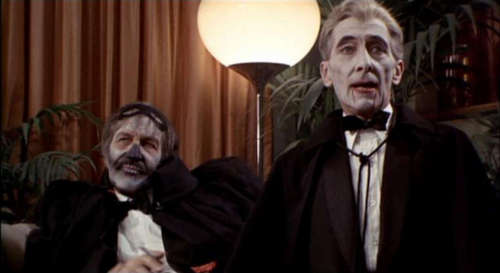
Cushing, Price and ‘Madhouse’

madhouse price cushing

Today, May 26, was the 100th anniversary of the birth of British actor Peter Cushing – best known in some quarters as Imperial Gov. Tarkin, who holds Darth Vader’s leash rather loosely in the 1977 classic “Star Wars” – so I marked the date by watching one of his later horror films, “Madhouse.”

It isn’t a great role for Cushing, who died in 1994 after a long, distinguished and beloved career. He’s a supporting player to Vincent Price, who stars as Paul Toombes, an aging actor lured out of retirement to reprise his role as Dr. Death, anti-hero of a series of horror thrillers.

Released in 1974, “Madhouse” had the distinction of being the last movie Price made for American International Pictures, home of the classic adaptations of Edgar Allen Poe in which Price starred in the 1960s. The movie business was changing even by then and AIP was looking to replace Price with Robert Quarry, who was the third male lead here. Quarry had made a little splash as Count Yorga, a modern-day vampire, and it’s said AIP and producer Samuel Arkoff thought he, rather than Price, was the future.

But horror movies were about to see a huge change. Long the province of a particular breed of actor, like Price and Cushing, and director, like Roger Corman, and producer, like Arkoff, horror films were proven to be worthy of mainstream attention in 1973 when “The Exorcist” was a huge hit. Low-budget horror movies were still drive-in theater fare and would be for several years to come, but by the time “Madhouse” rolled around, people were looking for the new, the young and the shocking in their horror films.

madhouse price

“Madhouse” also held the distinction of being able to evoke the nostalgia, perhaps the last of its kind for its type of film, for earlier horror films. It could do this because of Price’s long-running screen presence. At various points, Cushing and Quarry screen some of Toombes’ earlier horror films, and they show scenes from some of Price’s films, particularly the Poe pictures conveniently (and inexpensively) owned by Arkoff and AIP. The presence of those clips led director Jim Clark to acknowledge former Price co-stars Basil Rathbone and Boris Karloff in the opening credits. It’s a nice gesture but also makes me wonder: Did Clark and Arkoff think the presence of those old-school names would add to the luster of “Madhouse?”

Cushing, whose role as Toombes’ longtime friend is so obviously an attempt to mislead that the final shot has someone referring to a red herring, might be a familiar face to legions of filmgoers from “Star Wars” but is best known to his many fans for his roles in British horror films made by Hammer studios beginning in the 1950s.

Cushing – whose fan club I belonged to in the 1970s and 1980s – sometimes played Dracula nemesis Van Helsing and sometimes played monster maker Dr. Frankenstein in the Hammer outings. He and cohort Christopher Lee always added a touch of class to every movie in which they appeared.

cushing tarkin star wars

Happy birthday, Peter.

RIP Ray Harryhausen

harryhausen skeleton

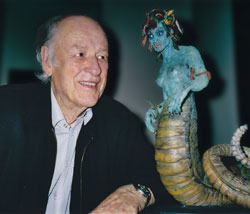
Ray Harryhausen, who passed away today in London at age 92, was certainly inspirational. He sparked a love of movies and special effects among not only lifelong movie fans but boys and girls who grew up to be directors and, like their idol, special effects wizards.

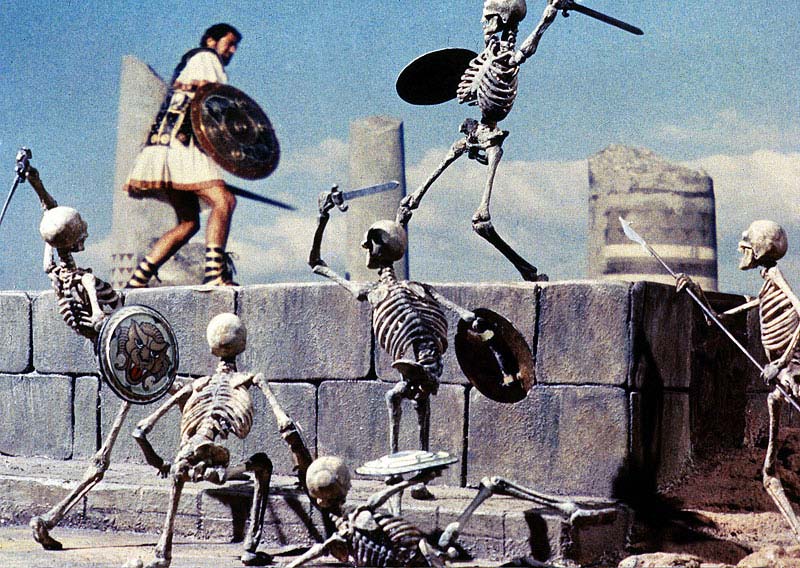
But for me, Harryhausen was more than just the creator of great movie creatures like Medusa in “Clash of the Titans” or the sword-fighting skeletons in “Jason and the Argonauts.”

Harryhausen lent an air of respectability to the wildest fantasy stories kids could hope to see in movie theaters.

jason argonauts skeleton sword fight

That’s because Harryhausen and his writing and directing partners adapted classic stories – a series of Sinbad movies or “The Beast From 20,000 Fathoms,” based on his friend Ray Bradbury’s melancholy “The Fog Horn” – that were almost impossible for parents to say “no” to. Really, faced with the possibility of letting your kid see Harryhausen’s version of mythology or a “Godzilla” flick, what would you say?

Harryhausen’s stop-motion animation techniques – not the first, since the process pre-dated him with “King Kong” – were also the kind of effect you could show your parents and prompt awe. Look, we would say: He moves the small model of the gorilla a fraction of an inch, then exposes a frame of film, then does it over and over and over again. This was moviemaking at its most artistic and most craftsman-like at the same time. Anyone could recognize it as hard work. Even parents.

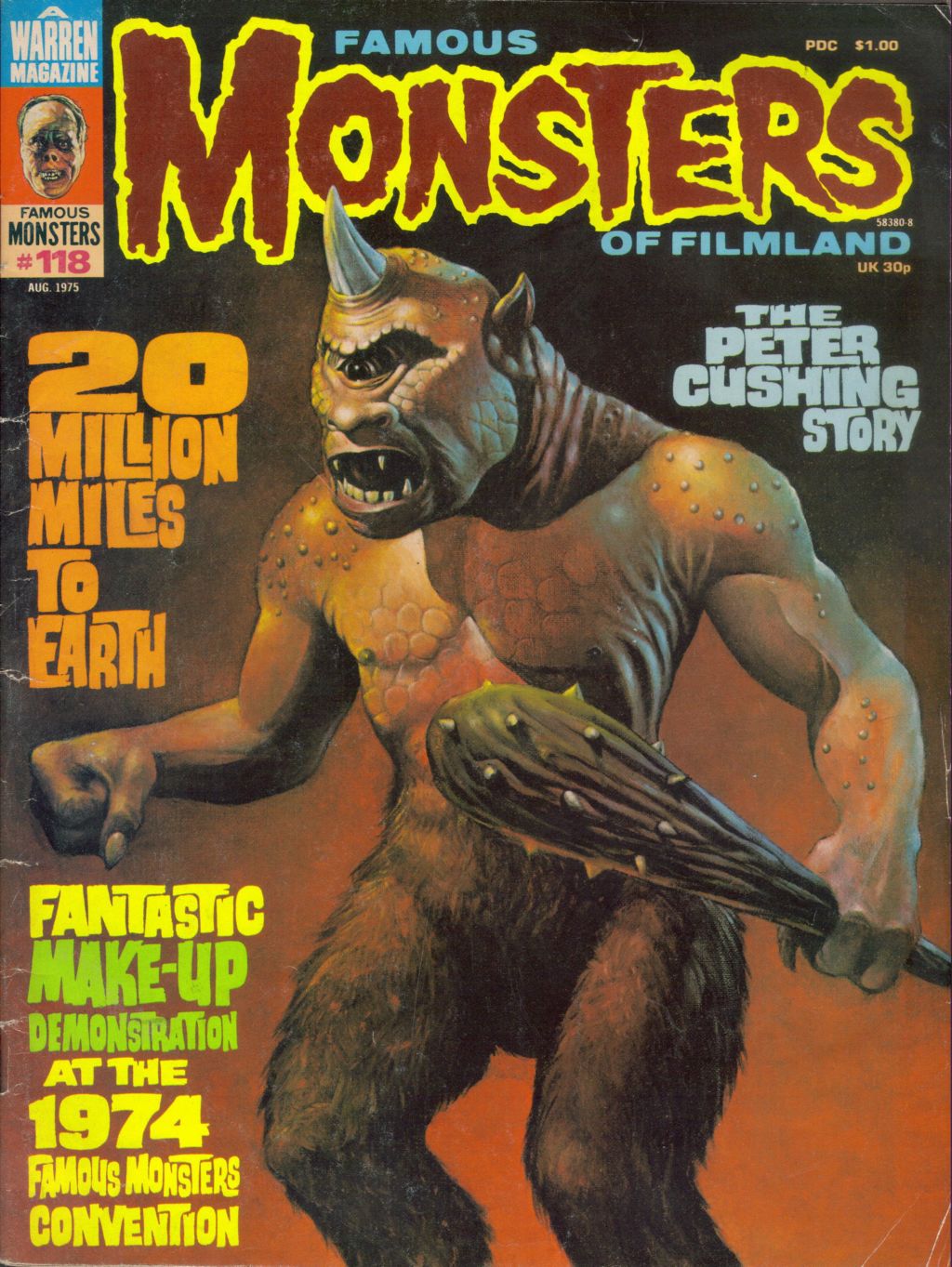
famous monsters 118 harryhausen

Magazines like Famous Monsters of Filmland – edited by another Harryhausen pal, Forrest J Ackerman – let us revel in the process and marvel over those detailed models.

Harryhausen is being memorialized all over the web tonight, and there’s not a lot I can add to that. Except for a few personal favorites:

Harryhausen worked on “Mighty Joe Young,” the 1949 follow-up to “King Kong,” and made a giant gorilla downright cuddly. Who wouldn’t love a simian who rescued tykes from a burning orphanage?

harryhausen medusa

Beginning with “The 7th Voyage of Sinbad” in 1958 and running through “Clash of the Titans” in 1981, Harryhausen made history his own, giving us cyclopses (cyclopsi?) and minotaurs and sabre tooth tigers and fantastic and eerie creations like Medusa, with her snaky body and hair.

The world changed and the world of moviemaking changed and by the time “Clash of the Titans” came out, two “Star Wars” movies had been released and the world was turning to a more sophisticated type of computer-controlled-camera-and-model animation that itself would be replaced within just a few years with computer effects.

But Harryhausen’s legacy was long since in place, as evidenced by the sly references to his work, including the restaurant named after him in “Monsters Inc.”

Harryhausen made us believe that legends, gods and monsters walked among us. And until his death today, they truly did.


Del Tenney, director of ‘Horror of Party Beach,’ dies

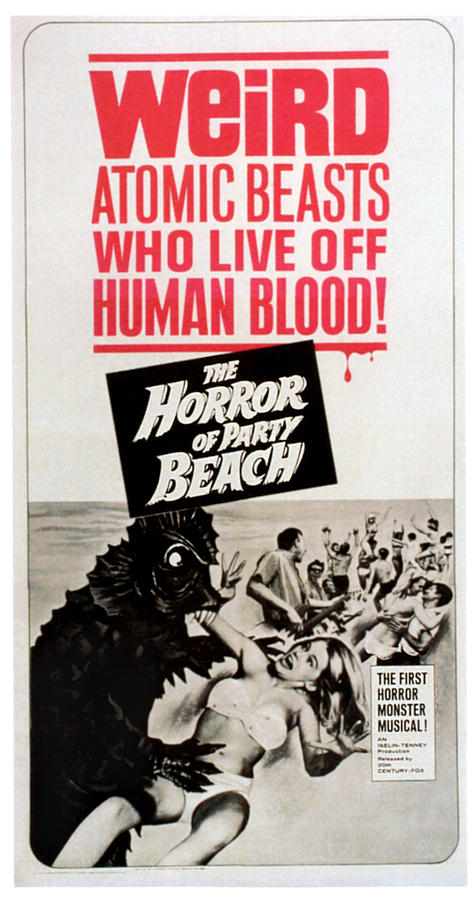
horror-of-party-beach

Word has reached monster movies fans of the death of director Del Tenney, who passed away in February at 82.

del tenney

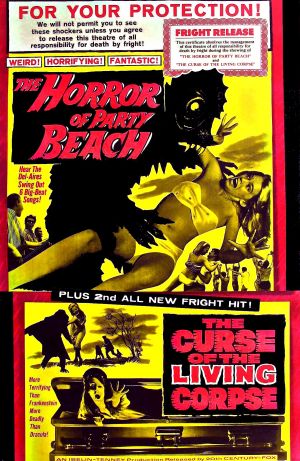
Tenney produced and directed several films, including a drive-in double-feature classic, “I Eat Your Skin,” but he was best known as the director of “The Horror of Party Beach,” a grandly silly 1964 exploitation movie that was often shown on a double feature with “The Curse of the Living Corpse.”

the-horror-of-party-beach-1964-everett

Tenney’s “The Horror of Party Beach” is one of those movies that could only have existed in the wild exploitation days of the 1960s, when drive-in theaters meant that even the lowest-budgeted, most ludicrous movies could be seen by millions of teenagers.

With its mix of Beach Boys-style rock and roll – courtesy of the Del Aires, who perform “The Zombie Stomp” in the movie – frantically dancing teens, beach blanket bingo and a biker gang, the movie had a little something for everyone.

Perhaps typical of a low-budget monster movie from the 1960s, “The Horror of Party Beach” seems pretty vague – or pretty confused – about what its monsters were. In the trailer alone, they’re referred to as atomic monsters, demons, the living dead and zombies. Huh?

horror party beach curse corpse double

The ads for the “Party Beach” and “Living Corpse” double-feature were among those that warned that, in order to see the movie, viewers had to release the theater from liability in the case moviegoers died from shock.

Tenney made his movies in the Stamford, Conn., area, and years after he lit up drive-in movie screens he made a (legitimate) name for himself, according to online obituaries, as a leading light in live theater. Henry Fonda made his last stage appearance in a production at the company that Tenney shepherded.

Here’s to Del Tenney. Our drive-in nightmares were better because of him.