Category Archives: horror films

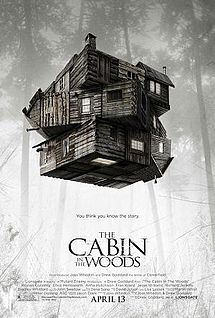
‘Cabin in the Woods’ a fun thrill ride

A lot of people are comparing “The Cabin in the Woods,” the new thriller, to other movies that simultaneously exploited, explored and expanded on horror film themes, notably “Scream.”

But besides being better than “Scream,” “Cabin” reminds me more of a grown-up and bloody “Monsters Inc.,” the Pixar animated movie about a company that specializes in giving kids nightmares with monsters under their bed and in their closet.

Since I didn’t see “Cabin” until a week after it opened, I’m going to assume anyone reading this has either seen the movie or heard the basic story by now. So there might be some spoilers ahead. I won’t spoil the ending, though.

“Cabin” was written by “Avengers” director and “Buffy the Vampire Slayer” creator Joss Whedon and directed and co-written by Drew Goddard. On the surface, it plays like a “Friday the 13th” throwback: A group of college students — a jock, a stoner, a brain, a shy girl and a slut — go to a remote cabin to party.
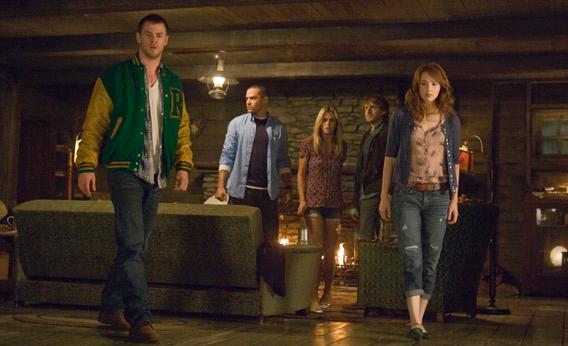
From the very start, though, the audience knows something else is going on. The group is being monitored by office monkeys/scientists in a war room-style bunker. Not only are the watchers seeing everything that happens as the five get to the cabin; they’re manipulating the players and events. Gas is pumped through vents that prompts the partiers to behave in particular ways. A mild electric shock runs through the handle of a knife to make the person holding it drop it.

A few spooky things happen in the cabin — not the least of which is the uncharacteristic behavior of the five — but the movie shifts into high gear when they venture into the cabin’s basement and find hundreds of old and obscure items, including a necklace, reels of film, a studded metal ball (more than a little reminiscent of the mechanical nightmare box from the “Hellraiser” movies) and a diary of the former occupants of the cabin.

The partiers choose — and seal — their fate when they become engrossed in the diary, even reading aloud a passage in Latin. It is here when the movie seems most like “Scream,” as the stoner warns against reading the words aloud. He’s seen enough movies to know what might happen.

Before long, the long-dead cabin occupants have crawled out of their graves and begun stalking the teens.

Of course, it is the lab scenes that set “Cabin” apart from the “Evil Dead” films. We quickly find out that the lab workers are monitoring the goings-on at the cabin — as well as other sites around the world — and causing terror and mayhem. The reason? They’re servants of the ancient, Lovecraftian gods, the old ones, that once dominated the earth. And they know that bad things will happen if those gods aren’t appeased by their sacrifice.

The lab workers are also the source of much of the film’s humor, which is as crass and mean-spirited as it is funny. The scientists, led by Bradley Whitford and Richard Jenkins, are cold-hearted (mostly) and unfeeling as they must be. Their jobs are to stage modern-day human sacrifices. There’s no room for bleeding hearts here — except for the ones being ripped out on the lab’s monitors.

It’s hard to imagine, given the ending, how a sequel to “Cabin” could happen, but I guess a prequel is possible. What’s more likely is the Internet will fill up with speculation/fan fiction set in the world in which “Cabin” takes place that will fill in the backstory of the lab and its workers, how their system was set up and maintained and how it otherwise interacted with the outside world. Do the lab workers commute? Is the lab government-sponsored?

The lab workers, who also include Amy Acker and Tom Lenk from Whedon’s “Buffy” and “Angel,” are perfectly cast and always believable.

The archetype young people offered up for sacrifice are likewise terrific. The movie was made a couple of years ago and sat on the shelf not because of its quality but because its original studio, MGM, was having money problems. Since then, Chris Hemsworth (who plays the jock) has become a star as the Marvel comics character “Thor.” He’s got a big summer between this and “The Avengers.” Hemsworth is good and he and his four co-stars — Kristin Connolly, Anna Hutchison, Jesse Williams and Fran Kranz — are well-cast and play their parts perfectly. Kranz, who was in Whedon’s “Dollhouse” TV series, is very Shaggy-reminiscent as the stoner.

Random thoughts:

The sterile, underground labs and monster holding cells of “Cabin” reminded me of the Initiative, the secret military experiment from the fourth season of Whedon’s “Buffy.” Only instead of stocking a compound full of monsters to kill teenagers, the Initiative captured monsters to experiment on them.

Another “Buffy” echo: “Cabin” builds on the idea of thousands of years of human sacrifice to appease evil. Of course in “Buffy,” the Slayers and Watchers were created, thousands of years ago, to fight evil.

I hope someone’s working on a detailed analysis of the whiteboard in the war room that contained all the monsters and scenarios. I tried to read as much of it as I could and caught some of the other threats like “Kevin” — a Jason stand-in, possibly? — but I would love to see everything that was up there.

Do you think the monsters in the movie were supposed to be real in their world? Or were they created, “inspired” by old horror tales and movies? Or does — as one clever person I know suggested — “Cabin” take place in the same world as all those old horror movies, finally taking us behind the scenes of Jason, Michael Myers, Freddy and all the rest?

“Cabin” is, for those with strong hearts and stomachs, cool, geeky fun. Maybe best of all, it made me want to re-watch “Buffy” episodes and some favorite recent horror movies.

‘Night of the Comet,’ ‘Buffy,’ Black Widow: Butt-kicking heroines

With “The Avengers” coming up on May 4, it’s interesting to note that one of the first clips from the movie officially released, a couple of weeks ago, was one of Black Widow, the non-superpowered, female member of that particular boys club, easily escaping from some bad guys and demolishing them in the process.

It’s a pretty good action scene, if mild compared to what we’ve subsequently seen involving Thor, Iron Man and particularly the Hulk.

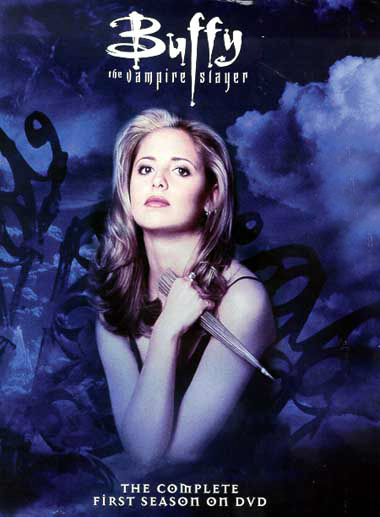
But there was some nice symmetry to the clip’s release considering that “The Avengers” was directed by Joss Whedon, creator of “Buffy the Vampire Slayer.”

There’s been some backlash to Whedon’s signature use of petite female characters as ass-kicking heroines, including Buffy and other slayers from that series and “Angel” as well as River, the programmed killing machine in “Firefly.”

But it’s interesting to note that Whedon has cited in at least one interview “Night of the Comet” as one of the influences on the creation of “Buffy” the lame movie and terrific 1997-2003 TV series.

Not long after the series ended, Whedon told IGN:

So, you know, when I hit on Buffy the Vampire Slayer, it was right around the time when Revenge of the Bimbos, or Attack of the Killer Bimbos or something – there were a lot of movies coming out that were proto-silly ’50s style titles. They were on the video store shelves. I worked at a video store. I would watch them, and I’d be like, “You know what? This is just another bimbo movie. These women aren’t empowered at all. They just made up a funny title.” I was like, “I would like to make a movie that was one of these crappy, low-budget movies, that like the Romero films, had a feminist agenda, had females in it who were people, and had all the fun, all the silliness. Night of the Comet was a big influence. That actually had a cheerleader in it. With a title that would actually make people take it off the video store shelves, because it has to sound silly and not boring. 

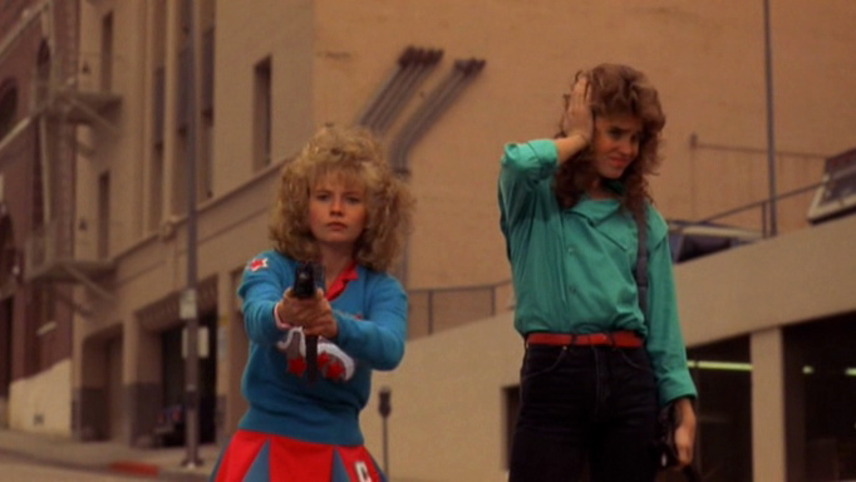
“Night of the Comet,” released in 1984, was the story of two Southern California teenagers, sisters Regina (Catherine Mary Stewart), known as Reggie, and Samantha (Kelli Maroney), known as Sam, who survive the end of the world, brought on by global exposure to a comet that reduces most of the world’s population to red dust and turns the rest into zombies.

Reggie and Sam, after a moment of shock and loss, quickly set out to survive in the post-apocalyptic world and connect with other survivors.

Although they’re teenagers — and the movie was released during the “Valley Girl” craze — Reggie and Sam are level-headed, even matter-of-fact, about the end of the world. There’s the customary all-you-can-shop scene, played to “Girls Just Want to Have Fun,” set at the mall, but George Romero’s “Dawn of the Dead” succumbed to the same idea a few years earlier.

And even though Sam is a cheerleader, the sisters are hardly pushovers. Raised by a career military man, the two quickly find supplies — although Sam is scornful of Reggie’s choice of automatic weapon, noting, “Daddy would have gotten us Uzis” — and are more than capable of defending themselves and other, less capable strays they come across.

Director Thom Eberhardt’s movie is amiably low-budget. You know they filmed the deserted downtown L.A. street scenes on a Sunday morning, for example, and you admire their ingenuity.

Whedon — who I’m pretty sure is an outspoken feminist — is a fan of empowered women. Even if they’re five feet tall and a hundred pounds. As long as they can wield a mean Uzi, kung-fu vampires into the afterlife or hold their own with the likes of Captain America and the Hulk, Whedon believes that size doesn’t matter — and neither does gender.

Have the nerds inherited the earth?

It wasn’t that long ago that fans of comic books, monster movies, science fiction and other nerdy stuff had to be fairly closeted about their pop culture choices.

I still remember the look on a guy’s face who, when I was a teenager, looked at the paperback book in my hand and read the title: “The Martian Chronicles.” This was Ray Bradbury. The author was — and is — considered a literary lion, for pete’s sake. But the guy glanced from the book cover to me and looked as if I had been perusing the latest issue of “Nuns and Nazis.”

God only knows what would have happened if I had been reading the latest issue of Famous Monsters magazine.

So I still feel a little lightheaded over the rise of geek culture. Not just the number of big-screen, big-budget movies based on comic books. I’m kind of getting accustomed to that.

No, I’m thinking about the TV shows — at least one of them based on a Podcast — that are not only devoted to a celebration of geek culture but even feature honest-to-goodness, real life geeks.

These shows portray the real-world versions of geeks like those in “Big Bang Theory” — without the Hollywood veneer. More about “Big Bang” in a bit.

Here’s a run-down of the geek and nerd equivalents of Johnny Carson:

“The Nerdist:” Back in the day, Chris Hardwick was that snarky guy with the big voice on “Singled Out,” the MTV game show. A couple of years ago, Hardwick began “The Nerdist” podcast, an online audio look at geek and nerd culture featuring not only fans but celebrity guests.

Hardwick and “The Nerdist” — which also features genuinely funny geeks Jonah Ray and Matt Mira as regular panelists — got somewhat wider (or different) exposure when BBC America tapped the three to appear on a “Nerdist” TV series.

Only a handful of episodes have appeared so far, but they feature Hardwick, Ray and Mira chatting with geek culture demigods like Wil Wheaton and Nathan Fillion. The shows — available On Demand and no doubt online — are breezy and silly and don’t have any more substance than your typical talk show. They are, however, about the kind of geeky stuff that your parents used to hate.

“Talking Dead:” Hardwick packed up his geek shtick — but unfortunately not his sidekicks — and hosted this AMC talk show that followed episodes of the channel’s hit “The Walking Dead.”

Although the focus is narrow — it’s all about “The Walking Dead” — the show is entertaining and offers some insight into the series. The episode following the season finale of “The Walking Dead” featured the show’s creators announcing the actress who will play Michonne but also included one of the show’s funniest bits: An “In Memoriam” video montage of zombies killed off during that evening’s episode.

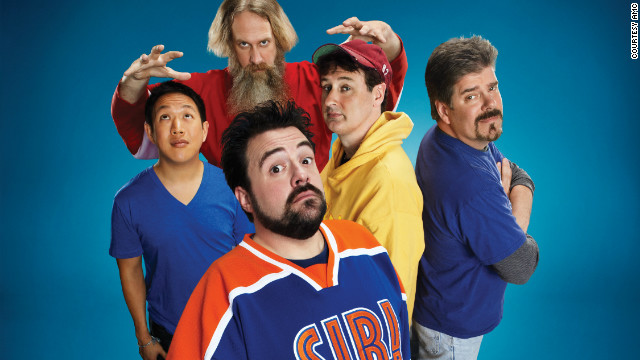
“Comic Book Men:” Somehow AMC has become the channel for nerd talk shows. Airing on Sunday nights along with “The Walking Dead” and “Talking Dead” is “Comic Book Men,” a series set in director Kevin Smith’s New Jersey comic book store.

Smith makes appearances but the series is focused on Walt Flanagan, manager of the store, and three employees/layabouts, Ming Chen, Mike Zapcic and Bryan Johnson.

All four guys are opinionated and entertaining. Chen, the low man on the totem pole, is like the Gilligan of the series.

It is Johnson, sporting a wild mane and wooly beard, who is the show’s highlight, however. Johnson’s online bio indicates that he has acted and directed in projects associated with Smith.

In “Comic Book Men,” Johnson is portrayed as an archetype familiar to anyone who has spent time at a comic book store or convention: The guy — usually older — who always seems to be hanging out, offering up sarcastic comments and withering put-downs. Johnson makes that stereotype immensely likable, however, through his genuine wit.

If “Comic Book Men” has a fault it is that I don’t think it realistically portrays a comic book store in one respect: Nobody ever buys anything! Most of the interaction between the employees and the public comes when people come in hoping to sell old comics or “Catwoman” Barbies. It’s like a nerd version of “Pawn Stars.”

Not even a roundup to non-fiction geek talk shows would be complete without a mention of “Big Bang Theory.” One of the most popular shows on TV, the CBS sitcom is about four geeks who hang out together, playing online games, going to a comic book store and obsessing about sex.

There’s a pretty divisive view of “Big Bang Theory” online. A lot of geeks consider it patronizing and shallow. It is, of course. But it’s no more patronizing or shallow a look at a group of friends than … well, “Friends” was.

And “Big Bang Theory,” like its real-life counterparts, offer a view of geek culture that not even Ross in the depths of his museum-geek persona could reach.


Classic TV: ‘The Night Stalker’

I noted here a couple of days ago the news that director Edgar Wright (“Shaun of the Dead”) and actor Johnny Depp were close to collaborating on a big-screen movie version of “The Night Stalker,” the 1970s TV movies/TV series that starred Darren McGavin as intrepid reporter Carl Kolchak, who pursued big bylines, splashy headlines and … monsters.

The possibility of a remake prompted me to break out my DVD of the original 1972 TV movie “The Night Stalker” and give it yet another viewing.

“The Night Stalker” is one of my favorite TV movies, heck, one of my favorite movies. I saw it when it originally aired, when I was all of 12 years old, and loved it then. I love it now.

Despite the fact that … gulp … 40 years have passed, the movie is rock solid. The elements of the story that are dated now only serve to give it a time capsule, slice of life feel.

With its lean 70-minute running time, the movie — produced by “Dark Shadows” creator Dan Curtis, directed by journeyman TV director John Llewellyn Moxey, written by the great Richard Matheson (“The Incredible Shrinking Man,” “I Am Legend”) based on a book by Jeff Rice — drags only near the very end, when McGavin spends a little too much time skulking around an old dark house.

Most of the movie is a dark-humored, action-filled, bitterly realistic take on newspapering, crime and big-city politics. In fact, it’s one of the best movies ever made about newspaper reporting. Kolchak is egotistical, insulting to his competition, intolerant of his bosses, dismissive to the public and resistant to authority. He is a classic newspaper reporter.

Kolchak, a reporter for a Las Vegas newspaper, narrates the plot, which unfolds in flashback. As the story proper begins, Kolchak is grumbling about being called back from vacation by his editor, Tony Vincenzo (the blustery, ill-tempered Simon Oakland) to cover what looks like the routine murder of a female casino worker.

Kolchak has, more so than many less realistic reporters in movies and TV shows, a fully-developed set of sources, both high and low, and one within the medical examiner’s office tells him the victim lost a lot of blood.

Before Kolchak can even consider that odd detail, another dead woman is found, also drained of blood.

The scenes set at crime scenes in “The Night Stalker” are some of my favorites. Inevitably, Kolchak shows up — sometimes right behind the police, including the nasty-tempered sheriff played by Claude Akins, sometimes even before the police show up.

Kolchak talks to cops and witnesses and in general has free run of these crime scenes. It’s a running gag that was probably unlikely then and is outlandish today, but they are fun scenes to watch.

Bodies, all drained of blood, keep turning up and one woman goes missing when, about halfway through the movie, Kolchak’s girlfriend, casino worker Gail Foster (Carol Lynley) suggests that maybe the killer really is a vampire. Kolchak scoffs at the idea but begins to read the old books Gail gives him.

Eventually, Kolchak tells the authorities — who barely tolerate his presence at press conferences, another realistic touch — that they won’t capture the killer unless they consider the possibility he might be a vampire.

I’m not sure that in the early 1970s a real-life coroner, police chief, sheriff and prosecuting attorney would call as many press conferences as the characters do in this movie, but they’re also fun scenes as Kolchak gets the cops and officials all riled up with his questions. The time capsule element of the press conference scenes is that officials expect the reporters to cover up the grisly, panic-inducing details of the murders. Now, of course, the press conferences would be live-streamed online and the reporters would have been tweeting all along. (Which is why officials today wouldn’t call this many press conferences.)

Besides the crime scene and press conference scenes, “The Night Stalker” boasts some pretty cool action scenes. Although there are a few scenes where Atwater, as vampire Janos Skorzeny, stalks his victims, there’s surprisingly little horror in the movie. Instead we get action scenes with a real sense of the unreal, as Kolchak and the cops come upon Skorzeny’s trail only to have the vampire kick their asses and escape.

The movie’s ending, with the authorities ensuring that Kolchak’s story won’t be told, is as downbeat and dark as anything on TV at the time or since. Ultimately, Kolchak has only the satisfaction of knowing he’s a good reporter to keep him warm at night.

McGavin — a dozen years later immortalized as the dad in “A Christmas Story” — has the right mix of schmoozer and attack dog that a reporter needs. Oakland is wonderful as that TV show cliche, the boss who yells.

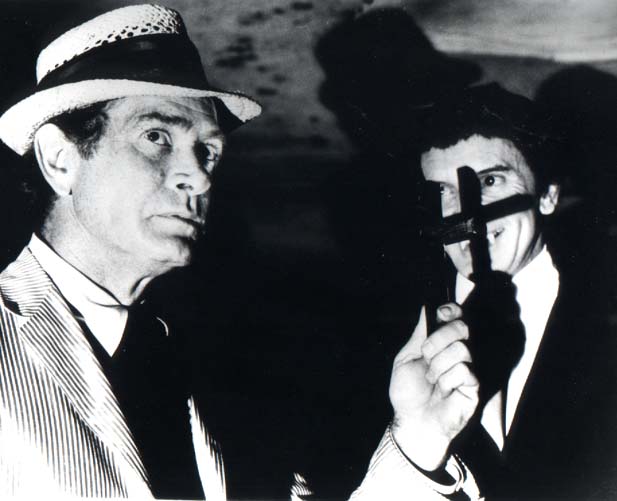
Atwater, who died only a few years after the movie aired, is terrific as the vampire. He makes a big impression without a word of dialogue. Atwater’s most significant other role was as Vulcan leader Surak on a single episode of “Star Trek.”

The movie was the highest-rated TV movie of its time and prompted a sequel, “The Night Strangler,” a year later, and a weekly series, “Kolchak: The Night Stalker,” two years later. Both the sequel movie and TV series were fine, but they couldn’t match the original.

“The Night Stalker” influenced a generation of young fans of the horror genre who went on to pay tribute in a variety of ways. Perhaps the best known homage to the Kolchak concept was “The X-Files,” with FBI agents pursuing mysteries and monsters each week. McGavin even appeared on “The X-Files” as a retired FBI agent.

If Wright and Depp do a modern version of Kolchak — or even one set in the 1970s — they might do a terrific job. I’ll be shocked, though, if they can top the original, which is a classic of its kind.

Wright, Depp to team on new ‘Night Stalker?’

Ever feel that mixture of eager anticipation and dread, that feeling that runs up your spine and messes with your brain when you’re thinking about something that could be so good, so cool … if it just doesn’t get screwed up?

That’s what I felt this afternoon when I heard that Johnny Depp and Edgar Wright, the genius director of “Shaun of the Dead” and “Hot Fuzz,” were teaming up to make a big-screen version of “The Night Stalker.”

If you’re not familiar with it, “The Night Stalker” was a 1972 TV movie that starred character actor Darren McGavin as Carl Kolchak, a hard-charging newspaper reporter who — thanks to his willingness to buck authority and his his inability to kowtow to his bosses — has drifted from newspaper to newspaper, city to city, in search of steady work.

He’s at a paper in Las Vegas when a series of gruesome showgirl murders gets his attention. He starts covering the story and, much to the horror of city officials and the chamber of commerce, discovers not only that a serial killer is at work … the killer is a vampire (played to truly creepy, alien effect by Barry Atwater).

The movie unfolded like a modern-day police procedural, with Kolchak arriving at crime scenes and irritating the cops when he isn’t hanging out in the morgue. It builds to a genuinely suspenseful climax in which Kolchak takes things into his own hands … only to find himself run out of town by officials worried about the story’s impact on tourism.

Masterful writer Richard Matheson wrote the movie based on a terrific book by author Jeff Rice.

“The Night Stalker” was the highest-rated TV movie of its time and sparked not only a 1973 sequel, “The Night Strangler,” but a 1974 series, “Kolchak: The Night Stalker.”

In the series, which ran only one season, Kolchak worked out of a Chicago news service, frustrated the same boss (the blustery Simon Oakland), and kept running into monsters. The best episodes featured a zombie and a vampire who was one of the victims from the original movie.

News of the remake doesn’t fill me with quite the same level of anticipation and dread that I feel for the Tim Burton/Johnny Depp “Dark Shadows.” Maybe because Burton, a genuine artist who seems to have lost the ability to make a coherent movie, isn’t associated with this.

Maybe because, as much as I liked “Dark Shadows,” it isn’t the equal of “The Night Stalker” in my book. If Burton makes “Dark Shadows” an unwatchable mess, that’ll be a loss. If Wright screws up “The Night Stalker,” I’ll be in mourning.

Wright — who has also been working on a movie of the Marvel Comics character Ant-Man, a member of The Avengers — seems well-suited to the mixture of humor and horror that a proper adaption of “The Night Stalker” would need.

But I really would dearly love it if a “Night Stalker” movie was really good, spawning a new generation of fans and renewing attention for the original ABC movies and TV show.

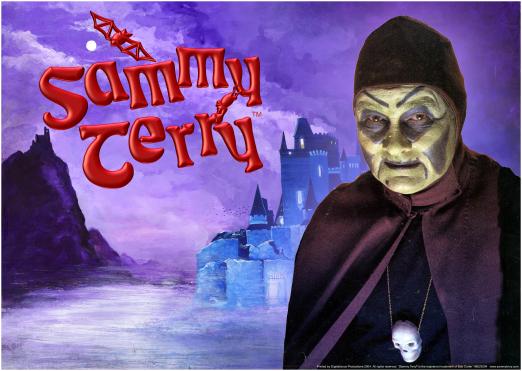
It’s Sammy Terry time

Two weeks from tonight is Halloween. It’s a night for tricks and treats, as they said on the old “Peanuts” special, and it’s Sammy Terry’s night.

With just two weeks to go, I was afraid time would get away from me and I wouldn’t write about the Indianapolis TV horror movie host before it was too late. So here are my Sammy memories, a little early.

I’ve talked to Sammy in phone interviews a few times and met him once. It was the mid-1980s and I did a story about Sammy for the newspaper. I spoke with Bob Carter, Sammy’s mild-mannered, music-store-owning alter ego, over the phone in advance of an appearance at Muncie Mall and then met him when he was putting on his makeup at the mall before going on stage.

An earlier interview with Sammy remains one of my most nightmarish newspaper experiences. I wasn’t working full-time at the paper yet so I went to the office to make the long-distance call — remember those? — and took along a tape recorder and suction-cup-type recording device to attach to the phone.

I had used it before but this time something — the way I connected it to the phone, the florescent lights — fouled up the recording. I didn’t know until after I ended the conversation, of course, and was panicked when I couldn’t hear anything but a low hum on the tape when I tried to listen to it.

I wondered for a moment about calling Sammy back, but I decided not to. Instead, I sat down and furiously scribbled notes of everything I could remember from the interview. The resulting article was pretty lackluster and had virtually no quotes.

The later interview, before his Muncie appearance, went much more smoothly. Nothing notable, really, but Carter — who spoke in normal tones but whose voice was instantly recognizable as the TV ghoul who had presented classic monster movies and scared a couple of generations of  Central Indiana kids to death — was friendly and modest.

By the 1980s, Carter had a lot of great stories. He claimed to have invented the Kentucky Fried Chicken slogan “finger lickin’ good” during a live commercial, and who’s to say he did not? He talked about how the company that donated the casket from which he rose at the start of each show IN NO WAY wanted to be identified or credited because of potential complaints from the families of customers.

Carter was a pro long before this point, having done the show on WTTV Channel 4 since the early 1960s. He was gracious to a young journalist who was also a fan.

When my friends Jim and Derek and I went to meet him at Muncie Mall, he let us come into a back room while he applied his makeup and even posed for a picture right before going on stage at center court, where he delighted a lot of parents and kids — and probably scared a few too.

These days, Carter’s son is appearing as Sammy Terry. The younger version was in Muncie back in September and is probably making a few bucks — and making a lot of people smile.

More power to him. And more power to the original.

Pleasant nightmares, Sammy.

‘Shocking’ developments in horror movies chronicled

If I live to be a hundred, I don’t think I’ll forget the anticipation I felt waiting to see the 1973 thriller “The Exorcist.”

The movie, which had opened just after Christmas in big cities, had made its way to Muncie movie theaters by early 1974 and my friends and I at Cowan High School were eager to see it.

Eager? We were positively nuts about seeing the movie.

I was a horror movie fan from childhood, having grown up on classic Universal horror films and fun-but-sometimes-camp 1960s Vincent Price/Roger Corman flicks.

But “The Exorcist” was something else entirely. A big-studio movie, it was being promoted through a high-profile TV and newspaper ad campaign and the kind of word of mouth that money couldn’t buy.

Newspaper and magazine articles recounted the audience reaction to the film, about a pre-teen girl apparently possessed by the devil. People who saw the movie were fainting and wretching in theaters when confronted by scenes of the girl — played by newcomer Linda Blair — vomiting green bile and backhanding priests. Not to mention that crucifix scene.

My friends and I talked and joked about the movie incessantly. When we finally went to see it, some of the joking stopped. As we waited in the crowded theater for the movie to begin, I could hear a very anxious woman behind me, expressing concern that the movie might be too much for her. I sat forward in my seat, worried that she might throw up on me.

“The Exorcist” was in many ways typical of the new wave of more realistic, more controversial horror movies that were released in the late 1960s and throughout the 1970s, a period documented in Jason Zinoman’s new book, “Shock Value.”

Zinoman covers a lot of ground and a lot of personalities in his book. The big, well-known movies and names are here, as well as the players who had great influence on the new wave of horror films but who were little-known outside Hollywood circles.

One of them is Dan O’Bannon, who, while a student at USC, made a funny science fiction movie called “Dark Star” along with a friend and fellow student, John Carpenter. The ultra-low-budget movie, about the growing madness among members of the crew of a deep-space mission to destroy unstable planets, is odd and funny and made the best of its shoestring budget. The movie’s alien is a spray-painted beach ball with feet. Seriously.

Carpenter, as some of you might know, went on four years later to direct “Halloween,” the 1978 classic that changed horror movies and influenced generations of filmmakers.

O’Bannon co-wrote another classic, “Alien,” but found his career eclipsed by Carpenter. Plagued by medical problems and a bad reputation in moviemaking circles, O’Bannon died in 2009; his memorial service was attended by relatively few of his contemporaries. Zinoman’s book portrays him as a pivotal but tragic figure in modern-day movies.

“Shock Value” touches on many of the best and most notorious movies and filmmakers of the period, from “Night of the Living Dead” and its director, George Romero — I’ll tell you about my interview with Romero in another blog entry — as well as “The Texas Chainsaw Massacre” and its director, Tobe Hooper. Like O’Bannon, Hooper was responsible for one of the most influential movies ever made. And as was the case with O’Bannon, Hooper found himself struggling to equal his early successes.

I was a movie fan and, later, a movie reviewer during much of the period documented in the book and even interviewed some of the leading characters from Zinoman’s story, including Romero and Carpenter. But “Shock Value” told me things I didn’t know, including the shady reputation of the people who financed “Chainsaw Massacre” and some of Carpenter’s inspirations for “Halloween.” If you’ve ever seen the 1961 ghost story “The Innocents,” for example, you’ll appreciate when Zinoman quotes Carpenter about the effectiveness of placing macabre characters in the far background of a shot.

In these days of the Internet and instant updates on movies while they’re still in production, it’s refreshing to find a scholarly but accessible look back at some classic scary movies and the people who made them. “Shock Value” is both enjoyable and informative.