Category Archives: monster world

Today in Halloween: Scaring trick-or-treaters

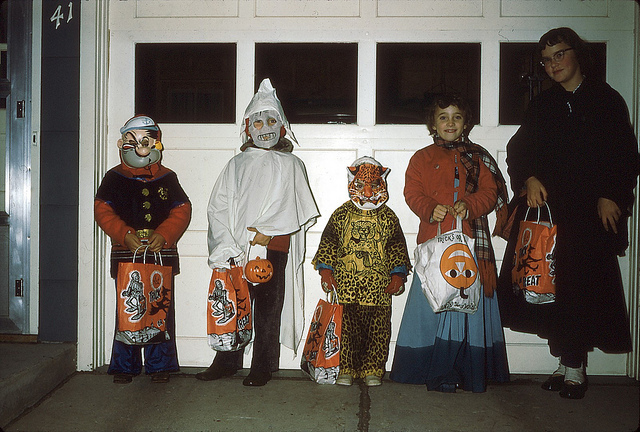
Because I lived in the country when I was growing up, I’d venture into the city and go trick-or-treating every Halloween with my cousins and some friends, who lived in a densely-populated part of town with what seemed like a bazillion trick-or-treaters.

Seriously, you almost couldn’t make your way down the sidewalk without tripping over some other pint-size goblin or superhero.

We did it every year, but one year in particular stands out in my memory.

My cousin, friends and I made our way from house-to-house, like we always did. I was at a disadvantage, as always, because of my mask. I’m pretty sure this year it was a cheap rubber monster mask of some kind, but the disadvantage came in because I had to wear it over my glasses.

As a kid who got glasses in the middle of first grade, I had grown accustomed to all the drawbacks of being a four eyes. But one of the worst was how anything that covered your nose and face – winter weather knit ski masks, for example, but especially Halloween masks – would make my glasses fog up.

So I was flying blind. Or walking blind.

My group walked up the sidewalk to a house much like every other house we had visited that night. But this one was different.

Inside lived someone who loved Halloween very much. That or a sadist who hated kids.

As we drew near the door, someone on the front porch pulled a rope and a dummy fell out of a tree in front of us. It was obviously a stuffed figure but freaked us out anyway. We turned to run.

But they weren’t done with us yet. The homeowner had stationed friends or, most likely, teenage offspring, behind bushes and trees in the front yard. As we beat a hasty retreat they popped out at us, yelling and growling.

We all ran like crazy. Some of us missed the sidewalk and burst out into the nearby street. Luckily cars were moving along at a crawl because of all the kids who were out.

I’ve never forgotten that night. I still think of it when I’m walking my son through our neighborhood and somebody has obviously replaced a stuffed figure in a porch chair with a living, breathing person, ready to jump at us.

It’s fun to be scared on Halloween. A little bit.
Today in Halloween: More creepy trick-or-treaters

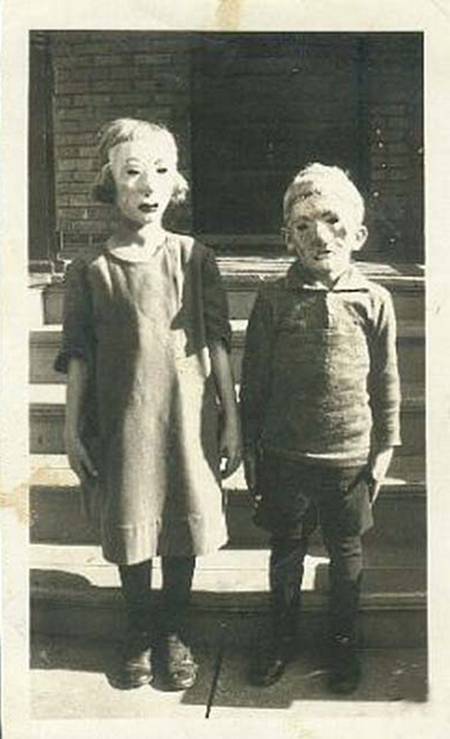
No, nothing creepy about that picture at all.

As part of our continuing series of snapshots – many of them vintage – of old Halloween costumes and trick-or-treaters, we present this picture, undated but certainly from the mid 1900s or earlier.

Maybe it’s the lack of costumes other than the masks.

Maybe it’s the pose, the body language that says, “Please, father, would you finish taking the picture?”

That or, “When you wake up in the middle of the night we’re going to be standing by your bed wearing these masks.”

Or maybe it’s just the ears on the little boy.


Today in Halloween: Good candy and bad candy

During the Halloween season, I’m looking at some of the things that make Halloween … Halloween.

There’s a pecking order in the world of Halloween candy. At least there is in my household.

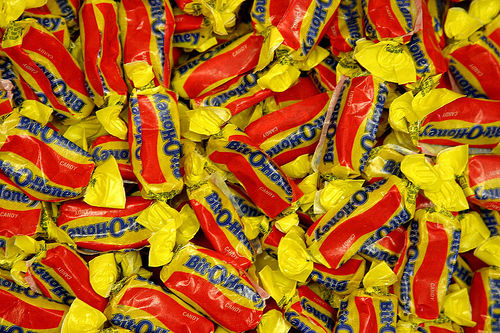
Hard, relatively flavorless candy like Tootsie Rolls and Bit-O-Honey rank very low on the list, just above the kind of generic candy that people can buy in bulk at discount stores.

Really, has any kid in the past 30 years been excited by the prospect of getting a Tootsie Roll tossed in their bag?

The middle-ground is held by a variety of treats, including some that don’t really get distributed much anymore. when I was a kid, people made popcorn balls and handed them out to trick-or-treaters. But many parents discourage consumption of homemade treats these days, so popcorn balls have faded in popularity. A few years ago I discovered that some company actually made and wrapped popcorn balls for Halloween distribution.

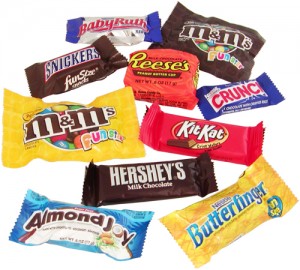
The best case scenario – realistically speaking – for trick-or-treaters is probably the “fun size” versions of popular candy like Twix and Snickers. They’re recognizable candies and actually welcome in a treat bag – and on the kitchen table back at home.

The top of the line, given out only by only some households in some neighborhood, is the stuff of legend: Full-size candy bars.

Each year I tease my wife that we’re going to take any trick-or-treaters we’re responsible for to the ritziest neighborhood around, where legend has it they give out the full-size bars. I’m not sure that such a practice actually exists because she always pooh-poohs the idea.

But a lifelong appreciator of trick-or-treating can dream, can’t he?

Classic TV: ‘Night Gallery’

“Night Gallery” has, since the day it debuted as an irregularly recurring series on NBC in 1970, gotten a bad rap. During its three-year run, critics – and many viewers – alike judged it as Rod Serling’s unworthy follow-up to his ground-breaking anthology series “The Twilight Zone.”

And to be fair there aren’t many episodes of “Night Gallery” that have reached the iconic status of many episodes of “The Twilight Zone.” I recently watched “TZ’s” classic 1960 episode “The Monsters Are Due on Maple Street” and found its compact tale of paranoia and mob mentality still compelling, especially in these times.

But I’ve always loved “Night Gallery,” probably in part because it aired during my formative TV-watching years. I was devouring any kind of genre material in those days – movies, TV, comic books, novels, short stories – and “Night Gallery” fit a couple of those categories.

The show, hosted by Serling, just like “Twilight Zone,” and frequently featuring episodes he wrote, was as satisfying, to my young eyes, a presentation of the weird and the spooky as anything airing back in the day.

The pilot episode, which aired in 1969, was directed by Steven Spielberg and featured Joan Crawford, for goodness’ sake.

And how can we not love Serling? The gifted writer passed on in 1975, just two years after “Night Gallery” ended. He wasn’t much satisfied with the show by the end but that’s probably understandable. Serling’s talents no doubt made him less an artist and more a commodity to TV executives.

I’ve watched a couple of classic episodes recently on Hulu and thoroughly enjoyed them.

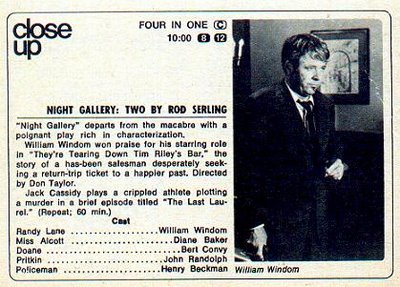
“They’re Tearing Down Tim Riley’s Bar,” from 1971, was written by Serling and comes across as more of a “Mad Men” story of corporate desperation than a spook story with William Windom as a business executive who’s been left behind in the rat race and longs for a past that lives on only in a shuttered neighborhood bar.


And bonus: Bert Convy plays Windom’s smarmy, conniving underling/usurper.

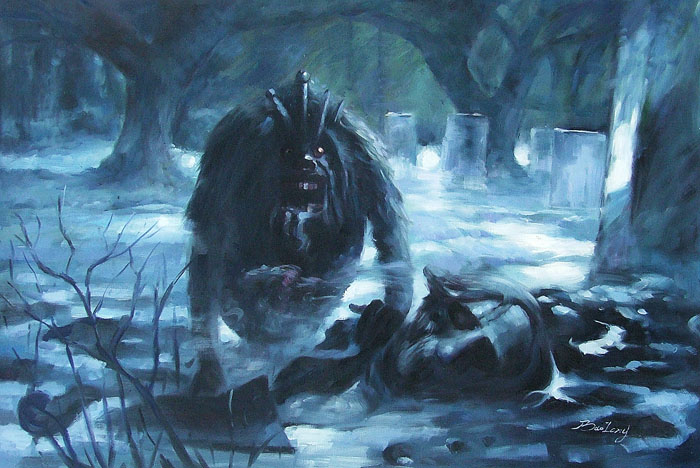
Much more straightforward, slow-burn horror could be found in “Pickman’s Model,” an episode I remembered quite well. Bradford Dillman played a turn-of-the-century artist who literally “paints what he sees.” The problem? He’s painting horrifying scenes of a monstrous ghoul that climbs out of the sewers and snatches people off the streets in a bad part of town.

From Larry Hagman to Leslie Nielsen to Victor Buono to Vincent Price, “Night Gallery” had an amazing rotating cast.

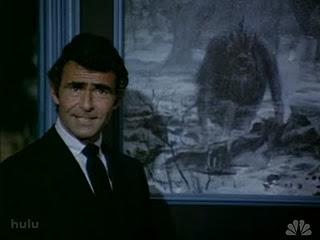
And presiding over it all was Serling, looking more dated in his shaggy haircut and mod jackets than he had as the buttoned-down host of “Twilight Zone,” but a welcome presence to be sure.

Check out Hulu’s collection of “Night Gallery” episodes. They’re also airing on MeTV, a nostalgia channel. “Night Gallery” was an immensely enjoyable follow-up to “The Twilight Zone” and, for me anyway, a fond send-off for Serling.

iPhoneography: Cool Halloween stuff

Has it been a year already? Can it possibly be the weeks leading up to our favorite geeky and spooky holiday?

It’s twue, it’s twue. It’s not all that long now until Halloween.

And that means it’s time for our first 2012 installment of iPhone photos of freaky Halloween stuff.

If you remember from last year, I snap iPhone pics of fun, cool and unappetizing Halloween costumes, masks and decor. Considering that I saw my first Halloween stuff in the stores in July this year, I think I’ve demonstrated remarkable restraint in waiting until September.

Anyway, here goes:

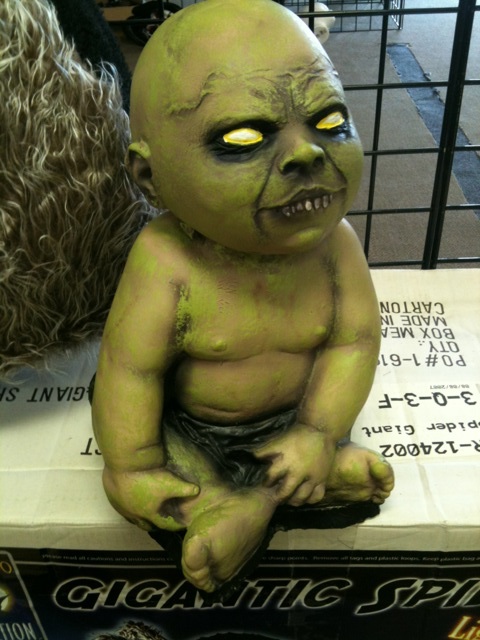
Let’s start with the Zombie Baby pictured above. Remember Zombie Babies? I saw them for the first time last year and was immediately taken (and taken aback) with how twisted they were. Really. A co-worker put one in another co-workers chair last year. This year I’m waiting to see if anyone is brave enough to surprise a new parent with a Zombie Baby (like Freaky Frankie here; yes they all have names) in a playpen. They make quite a strong visual impression.

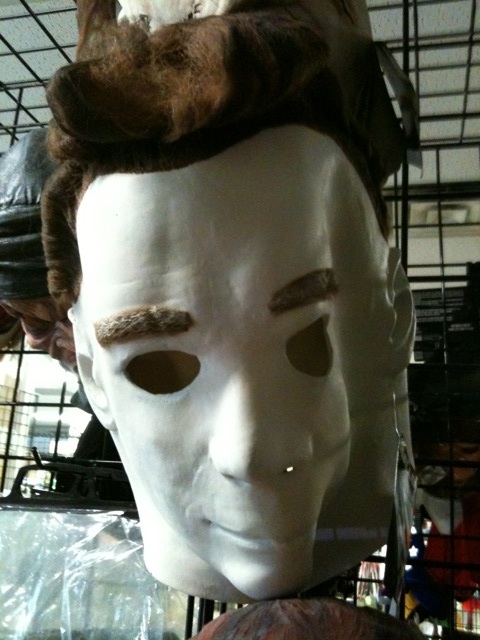
Ah, the classics. You can’t go wrong with a Michael Myers motif, copying the killer from John Carpenter’s classic “Halloween.” The original was apparently a modified William Shatner mask.

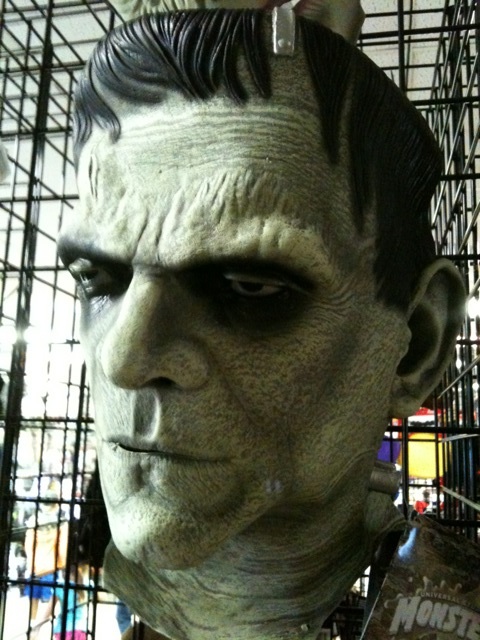
And speaking of classics: This officially sanctioned by Universal Studies mask of the classic Frankenstein monster is beautiful. This photo doesn’t do justice to how detailed it is.

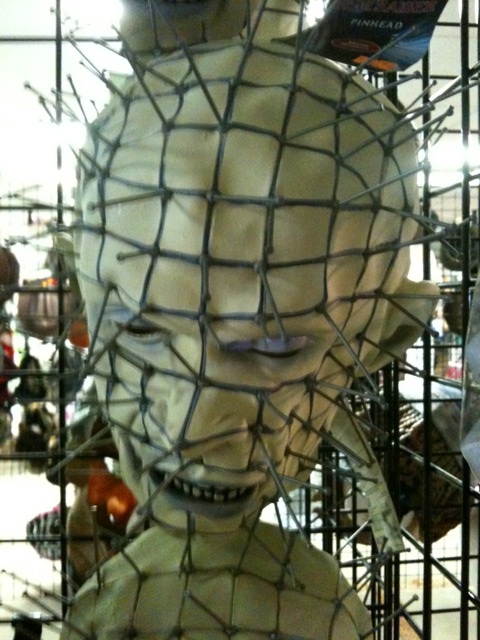
Another classic, more recent: Pinhead from the “Hellraiser” movies. The pins are rubbery, of course. No need to worry about what damage you’ll do to the couch when you fall asleep, still wearing it, after the party.

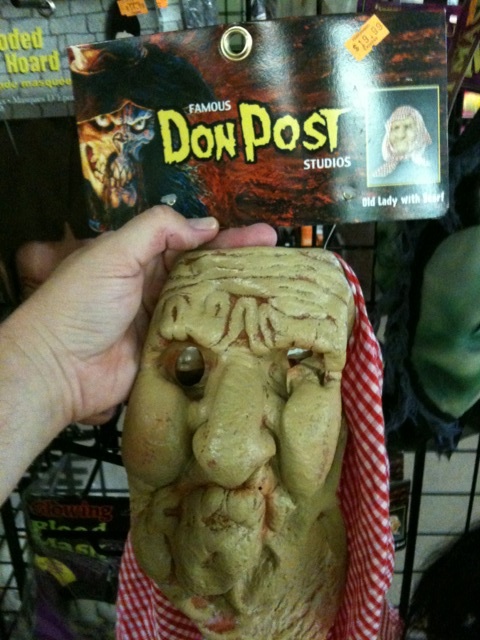
And classics, part three: For decades, Don Post masks have been Halloween standards. Tor Johnson, anyone? (Remind me to do a special Don Post … er, post … in the coming weeks.) This one – Old Lady with Scarf – isn’t top-of-the line Don Post, but it’s nice to see the brand in Halloween stores.

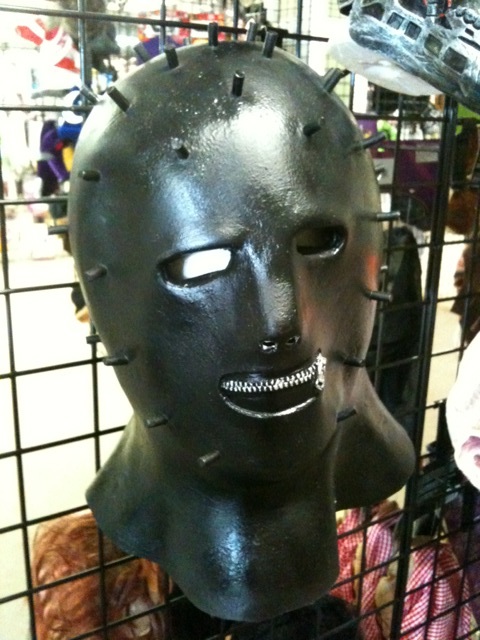
How about a black rubber fetish mask? (The zipper doesn’t work; sorry.) How about standing in a dark room, after everyone else has gone home, wearing a black rubber fetish mask? How about someone calling 911 for me?

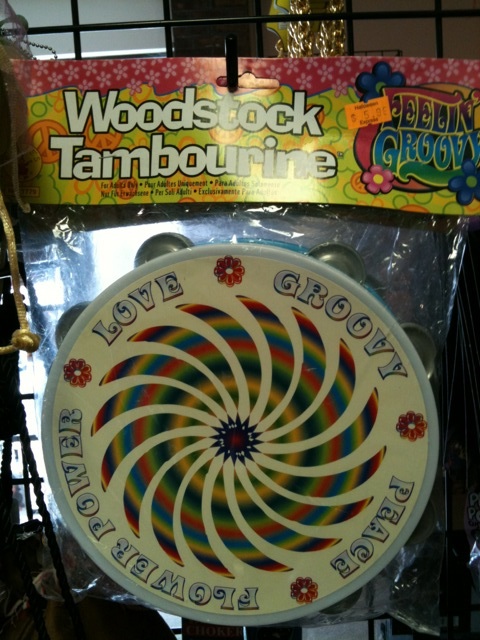
If you’re interested in something a little more light-hearted, you could do the time warp clear back to the 1970s with these sideburns …

Or this tambourine. Be cool, man. Some of us were alive during the ’70s.

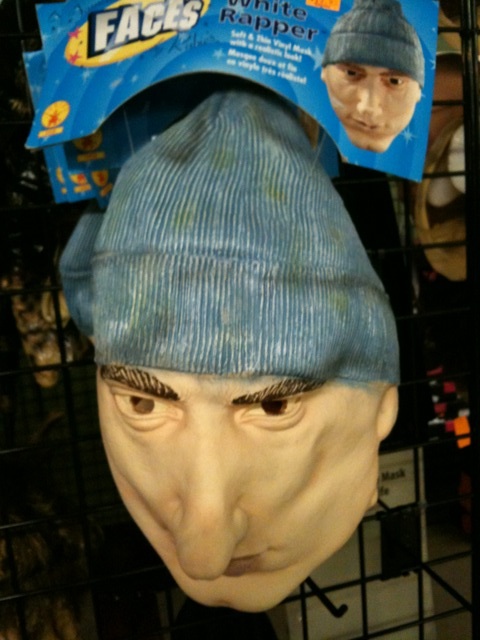
If you prefer something of a more recent vintage. I imagine Eminem fully sanctioned and licensed this “White Rapper” mask.

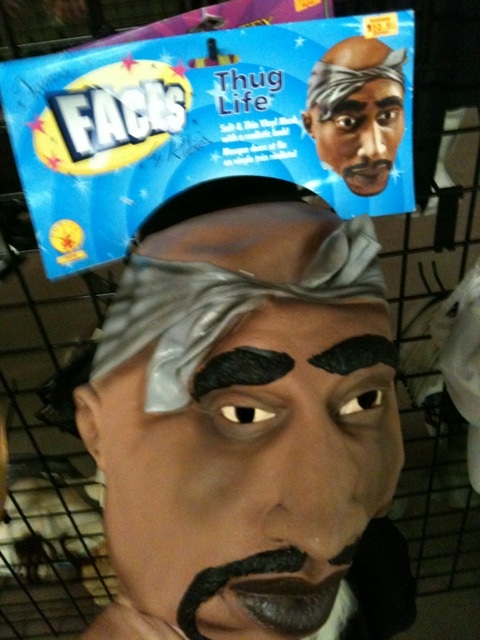
As I’m sure that Tupac’s estate approved this “Thug Life” mask.

Getting away from masks for a moment: This scary clown piece would be perfect to hang in the aforementioned dark room. Now with extra creepy!

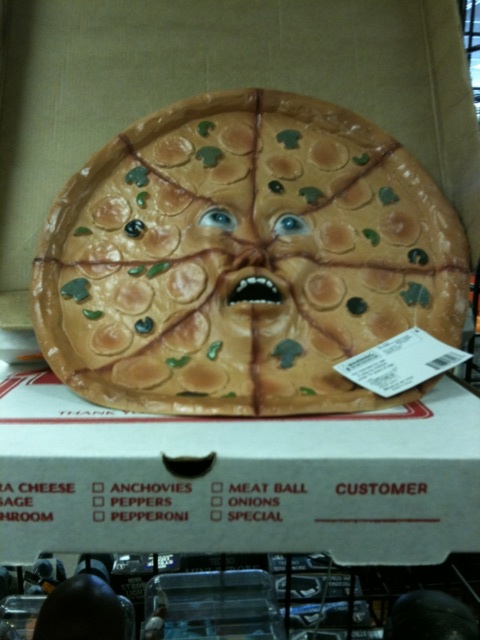
Last but not least for this time around: Pizza face for your coffee table.

More next time.

The Essential Geek Library: The Film Classics Library

It was 1974 and the videocassette recorder was, at least for home use, still on the distant horizon. If movie fans wanted to relive a favorite classic movie, they had few choices. The could wait for an art-house re-release. They could hope to catch it on late-night local TV.

Or they could buy Richard J. Anobile’s Film Classics Library.

Published by Avon and selling for the then-substantial price of $4.95, Anobile’s Film Classics Library was the closest thing to owning a copy of a favorite film that most of us fans could imagine … up until the time we could actually own a copy of a favorite film.

Looking back from the perspective of today’s instant access for movie fans – Want to see a movie? Pop in your disc. Watch it on On Demand. Stream it online. – Anobile’s books were ingenious and just what we needed back then.

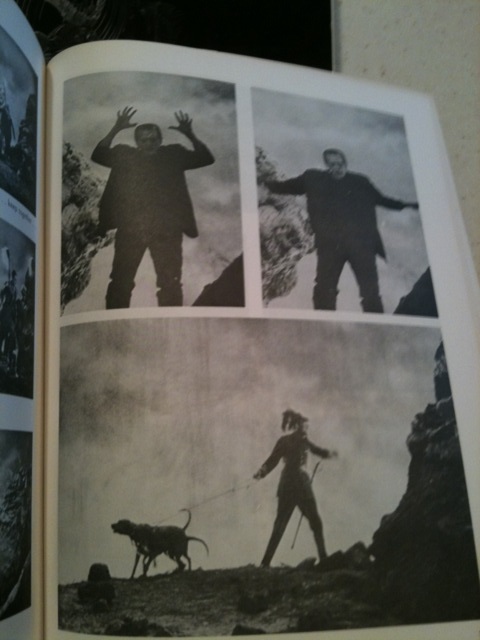
Each movie was recreated in the pages of the oversize paperback through every line of dialogue and more than 1,000 frame blow-ups.

The books were, in a way, like comic books. Anobile took images and dialogue from the movies and reproduced them, in sequence, in such a manner that readers could relive the films.

Everything was included except for movement and audio. Opening and closing credits are included, as are lap dissolves and fades, which, Anobile noted, preserve the feel of the film.

I spent hours of my adolescence studying these books, looking at the still shots and reading the dialogue.

I still own two of the entries from the series, covering James Whale’s “Frankenstein” and Alfred Hitchcock’s “Psycho.” I remember but don’t own Anobile’s recapturing of “Casablanca.” Checking around online today, it appears editions of “The Maltese Falcon” and Buster Keaton’s “The General” were also released.

A few other movies and TV shows, including “Star Trek,” received a similar treatment before the advent of VCRs. None of those later books could match the classic appeal of the FIlm Classics Library.

Comic cons: What I miss (and don’t miss)

So I’m sitting here and watching G4’s coverage of San Diego Comic Con – and also checking out some of the best comments on Twitter – and once again thinking, “Wow, I wish I was there.”

Followed quickly by another thought: “Wow, I’m glad I’m not there.”

I’ve never been to Comic Con but I’ve had a lot of experience at lesser cons from Chicago to Cleveland to Indianapolis to Denver. I’ve stood in line for speakers and autographs and snaked through the dealers room.

Some of my most vivid memories are attending “Star Wars” Celebrations when they were every-three-years events timed to coincide with the release of the prequels. The first was in Denver in 1999 at a decommissioned military base. Outside at a military base. In rain and sleet. At some point when we were standing in line in the cold mud to get into an event, my friend Andy said he was glad it was me who was with him and not his wife. “I’d already be divorced by this point,” he said.

Anyway, here’s some of the best – and worst – about convention-going.

The best:

The sense of community. During a comic convention – and the same goes for science fiction conventions – take a look around. There’s anywhere from a few hundred to several thousand people around you and they all love the same thing. Okay, maybe they’re not all fanatics about Famous Monsters of Filmland or Flash Gordon serials or vintage issues of The Flash. But they’re like-minded enough about some fannish thing to turn out in numbers and geek out.

The sense of excitement. It’s hard to be blase about that comic, movie or TV show when you sit through a convention hall presentation about it, hearing not only the words of the creative team but also the energy and expectation of other fans.

The costumes. A lot of fans get frustrated that much of the news media coverage of conventions focuses on geeks in costumes. While I’m writing this, G4 is interviewing Damon Lindlof as he stands in front of a bunch of guys in “Predator” costumes. No reason, why? But costumes add a lot of visual appeal to conventions, and I’m not talking about just the several dozen Slave Leias at every con. One of my favorites of all time? An Elvis stormtrooper.

The dealers room. Oh man, I’ve spent a lot of money in convention dealers rooms over the decades. Movie posters, magazines, comic books, DVDs. You can find almost anything in some dealers rooms. I bought the original script for the Tim Burton “Batman” movie at a convention. Dealers rooms are an opportunity to find things you never expected and never knew existed. One tip: Bring a lot of cash.

Briefly, a few things I don’t miss about convention-going:

The overwhelming crowds. I’m not inclined to freak out in big crowds. A few years of attending Mardi Gras in New Orleans will cure almost anybody of crowd phobia. But really big conventions will test your tolerance for elbow-to-elbow people.

The obliviousness of people. This is the extension of the overwhelming crowds scenario. I can’t count the number of times I was stopped cold in a convention hall or dealers room aisle by some oblivious guy who didn’t realize there were, I don’t know, a thousand people lined up behind him, also trying to get through the crowd.

The … shall we say … hygiene issues of some fans. ‘Nuff said.


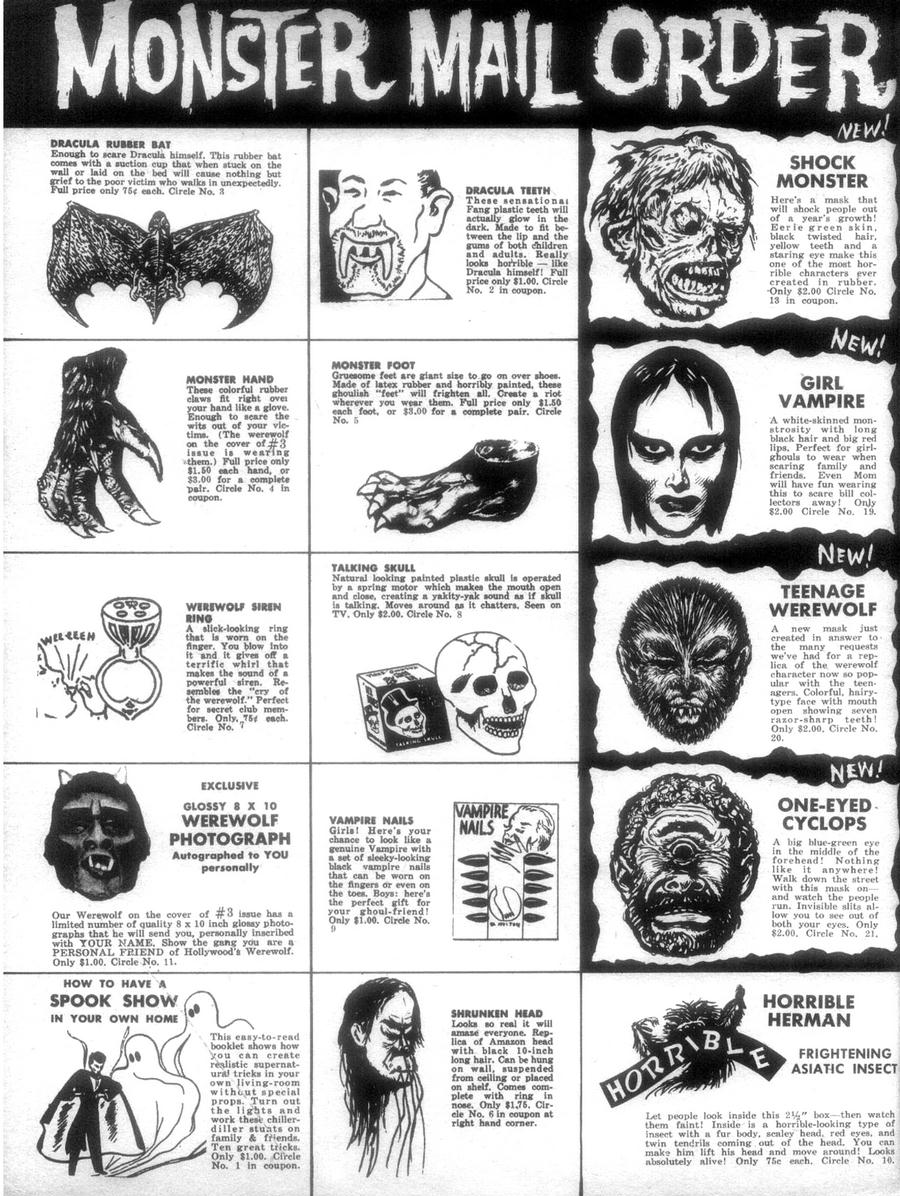
Monster World memories: Captain Company

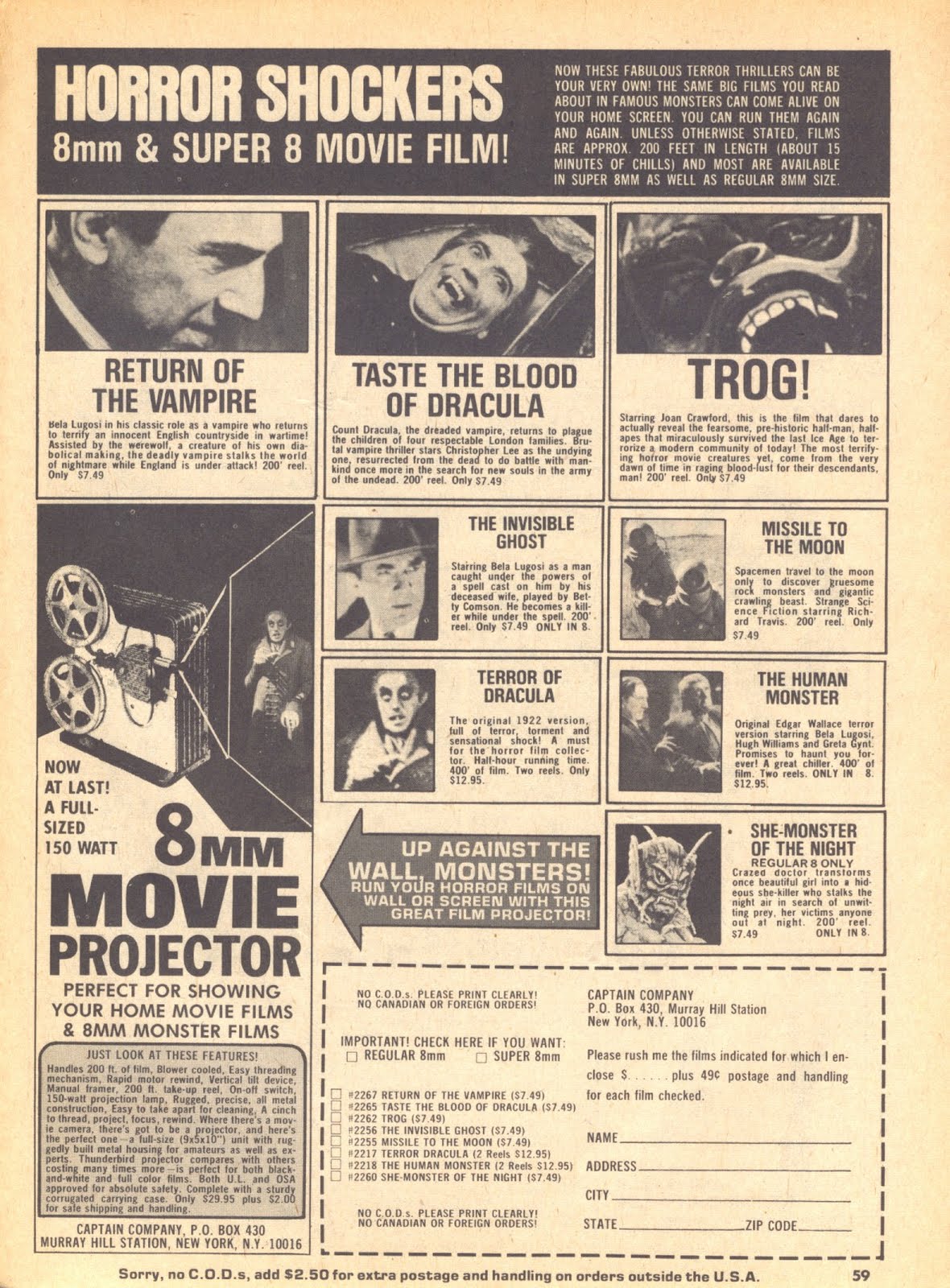
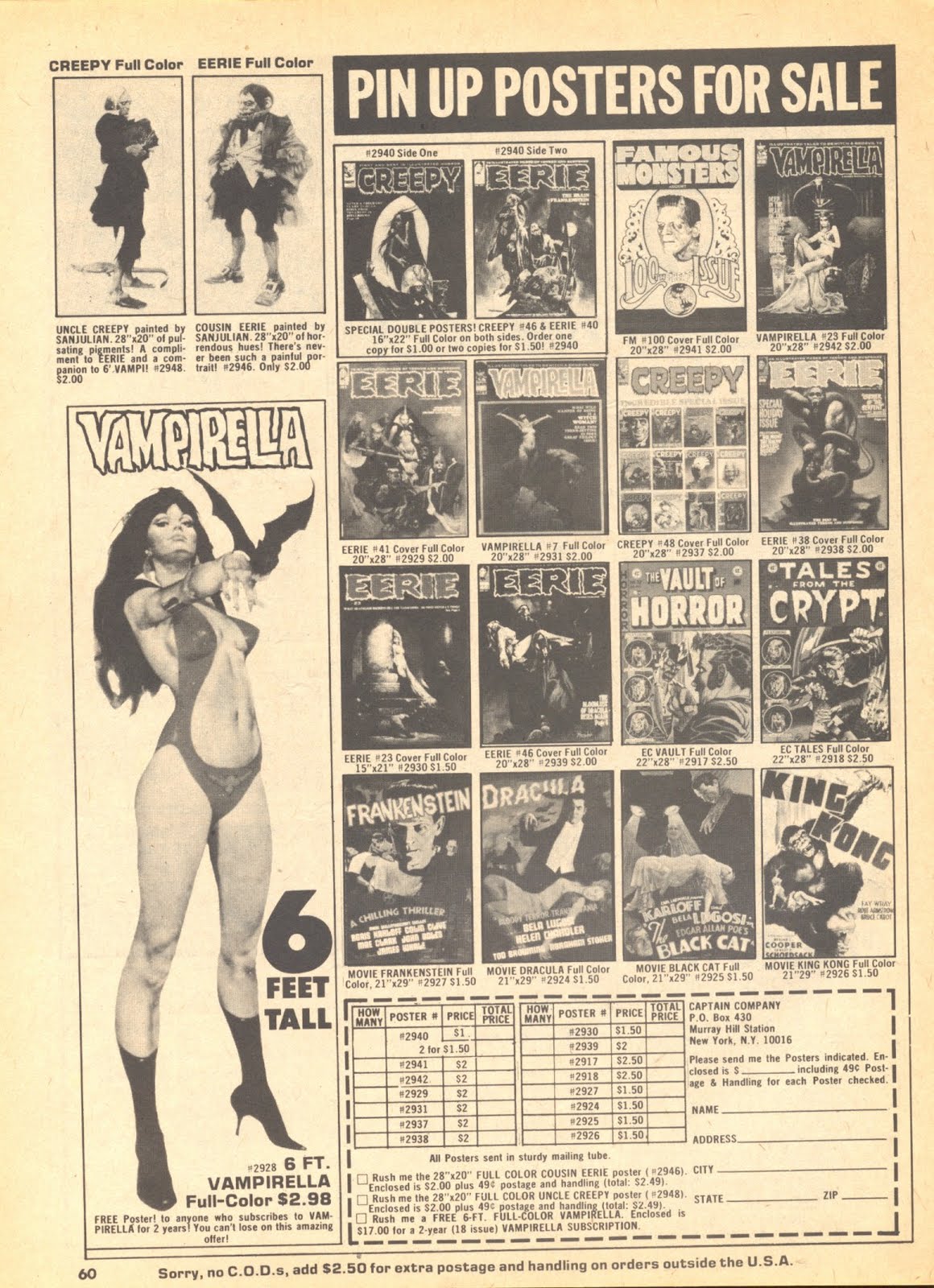
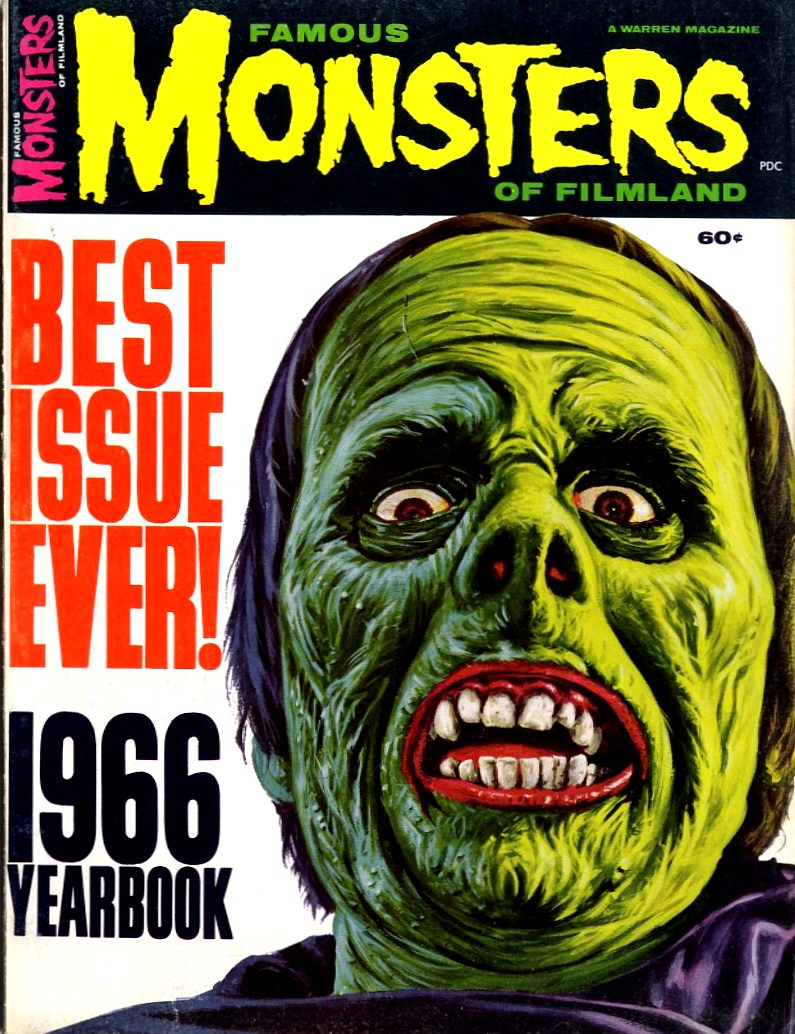
How many of us monster kids, living in the heyday of the Monster World in the 1960s, saved up our nickels until we could stop thumbing through the pages of Famous Monsters of Filmland and actually order something from those Captain Company ads?

It appears there isn’t a definitive history of Captain Company online, which is too bad. I’d love to know more about the mail-order company, which was purportedly based on the East Coast and was the mail-order sales division of Warren Publishing, which unleashed Famous Monsters, Creepy and other mags on the world.

Looking around the Interwebs, though, I see a few people with some of the same memories of Captain Company.

Especially the Captain Company ads: Like their comic book counterparts for X-Ray Specs and the like, the Captain Company ads were a riot of amateurish drawings, over-eager copy and outright misrepresentations.

I ordered back issues of FM through Captain Company as well as a few other items, the details of which I’ve long forgotten. It’s possible I bought some of those little 8 millimeter films — digest versions of classic Universal horror movies — through Captain Company.

I believe Captain Company has been revived, in some form, as a merchandising arm of the new Famous Monsters. It’s not the same, of course, but neither are we.

Here are some ads, many of them collected by http://www.diversionsofthegroovykind.blogsppot.com


‘Shocking’ drive-in movie ads!

There’s something about this weather that reminds me of going to drive-in movies.

Around here, we had two — the Muncie Drive-In and the Ski-Hi Drive-In — in or near the city and another — the Blackford County Drive-In — just to the north. The latter wasn’t the type of drive-in your parents took you to, however. The Blackford showed “adult” movies — porn, in other words.

As for the Muncie and the Ski-Hi, I spent many, many hours there as a kid and young adult.

One of my earliest drive-in moviegoing memories was of seeing the 1967 flick “Born Losers” at one of Muncie’s two drive-ins. “Born Losers” was a low-budget action movie that introduced the cult character of Billy Jack (played by Tom Laughlin), a returning Vietnam vet who takes on a motorcycle gang. The movie actually inspired sequels.

I remember seeing it with my parents and paternal grandmother. Why my parents decided to take me or my grandmother to a (in my memory) sleazy, bloody action movie I can’t imagine.

I just remember my grandmother nearly fainting into her concession-stand pizza after the bad guys push a young man’s face into the windshield of a car, resulting in a bloody, slobbery mess. Onscreen, I mean.

From time to time in this spot I’ll share some memories and some great old drive-in movie ads.

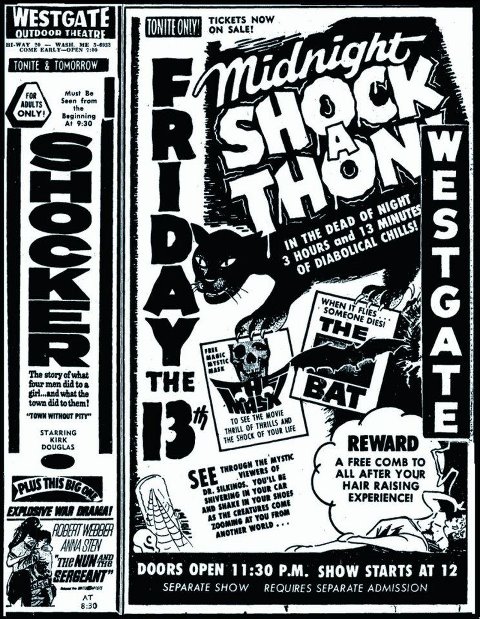
How about this one for a re-release of “The Mask” Not the Jim Carrey comedy but a bizarre 1961 horror movie about an ancient mask that has the power to drive people crazy. Some remember “The Mask” from the early 1980s, when it was re-released at the height of the 3-D revival.

This “midnight shock-a-thon” ad features not only “The Mask” but “The Bat,” probably a 1959 Vincent Price thriller and “Town Without Pity,” a 1961 Kirk Douglas movie that is sold, as you can tell from the ad, in the sleaziest way possible:

“The story of what four men did to a girl .. and what the town did to them!”

This ad has some exploitation/drive-in advertising gems, including “A free comb to all after your hair-raising experience!” I can hear it now: “Mom, Dad, can we go to the drive-in tonight? They’re giving away free combs!”

Lastly, how about the exploitation double-feature classic “I Drink Your Blood” and “I Eat Your Skin.” The former is a 1970 movie about Satanists terrorizing a town. The latter originally came out in 1964 and was about zombies. The combination of titles was drive-in movie gold.

The canny drive-in operator offered a free buffet of “skin chips and dip” and “flesh fries” and provided free Tums.

Who wouldn’t turn out for this drive-in combo?

The documentary about our monstrous childhood

I’ve mentioned before in this space what I call “the monster world” and what others call the “monster kid” phenomenon. It was that golden period from the 1950s until the 1970s when a lot of us kids were obsessed with all manner of spooky, geeky stuff: Old Universal Studios monster movies, monster dragsters, monster comics, Aurora monster models … you name it.

Part of the impetus for the monster world was the release to television, in the 1950s, of the classic Universal Studios monster films from the 1930s and 1940s. After years of re-releases to theaters, the movies finally found a place on TV.

Late night Fridays and Saturdays and on Saturday afternoons, local TV stations that had purchased the Universal movie package — often referred to as the “Shock Theater” package — aired classics like “Frankenstein,” “Dracula” and all their sequels and spinoffs.

Often local stations created horror movie spoof characters — like Sammy Terry on WTTV Channel 4 in Indianapolis — to host the broadcasts.

At the same time, magazines like Famous Monsters of Filmland, The Monster Times, Castle of Frankenstein and many more began publishing.

All of a sudden, the denizens of the monster world found each other.

Today I heard about “That $#!& Will Rot Your Brain,” a documentary from Bob Tinnell that looks at the monster kid phenomenon. Through interviews with everybody from Bob Burns to Tom Savini (if you have to ask …) the documentary looks at what it was like growing up in this golden era.

Tinnell and his partners are seeking donations to help raise $10,000 toward the cost of the film. This website has details.

Donate if you want. No sales pitch from me. I mention it only because, as a former denizen of the monster world, it’s pretty cool to see devoted fans putting their fantasies in action this many years after the fact.