Category Archives: movie ads

Warm hands?

  
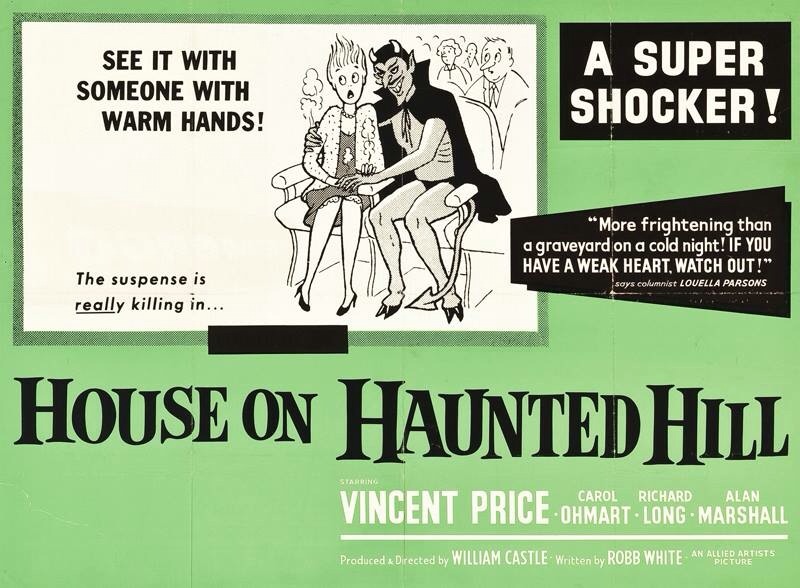
This ad for William Castle’s 1959 fright flick “House on Haunted Hill” has me all “huh?”

See it with someone with warm hands has a more than devilish meaning, seems like.

Also – a blurb from Louella Parsons? Was Hedda Hopper out of town?

1970s cool: ‘Race with the Devil’

race_with_the_devil lobby card

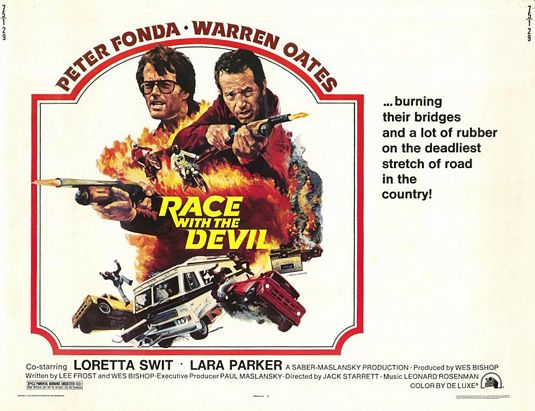
I’m thinking that the vehicular mayhem in “Mad Max: Fury Road” will top that in “Race with the Devil,” but I’m gonna just leave this here to encourage you to check out the latter film if you get a chance.

Directed by Jack Starrett, the 1975 thriller stars Peter Fonda, Warren Oates, Loretta Swit and the gorgeous Lara Parker as friends on an RV trip who stumble upon a Satanic ritual and human sacrifice in the middle of Texas.

Then the chase is on.

The leads are great and the wonderful character actor R.G. Armstrong plays the sheriff who won’t believe their story.

It’s a classic.

‘Charlie Chan in The Scarlet Clue’

charlie chan scarlet clue poster

Maybe it’s hard to imagine, or maybe it’s not, but there was a time in Hollywood when minority characters were little-seen in movies and if they were, they were made to look like the crudest and most base stereotypes.

That’s why the four dozen (!) movies based on Earl Derr Biggers’ detective character, Charlie Chan, are so hard to wrap our heads around these days.

And why it almost seemed like an improvement when Hollywood employed a series of white men to play the Asian detective.

In a series of movies that began in the days of silent films and ran for more than two decades, Chan – often accompanied by one of his many offspring – assisted the police in solving murders. By the time of World War II, Chan was an active agent for the U.S. government, hunting down spies and foiling acts of sabotage.

charlie chan scarlet clue lobby card

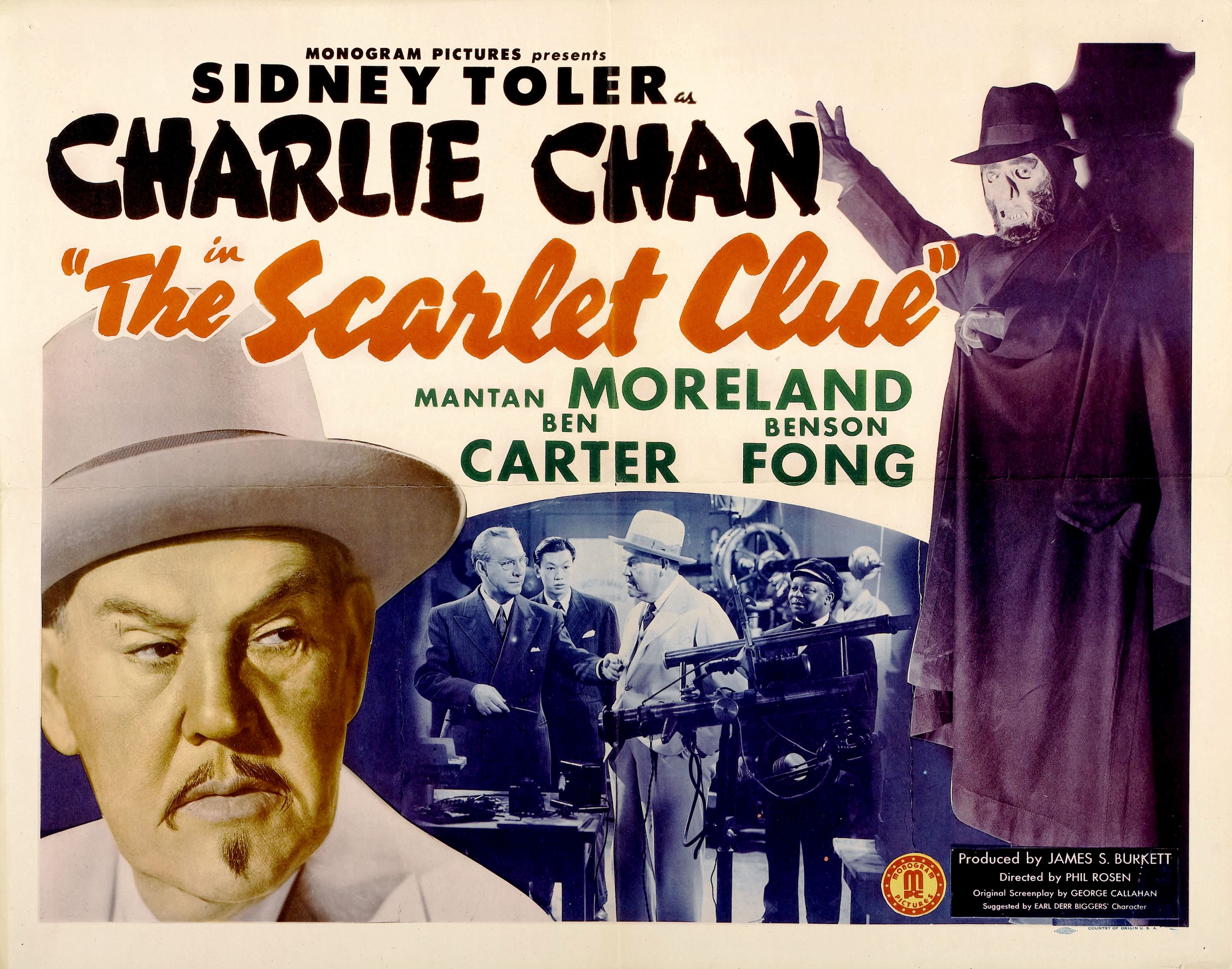
That’s where we find Chan in 1945’s “Charlie Chan in The Scarlet Clue.”

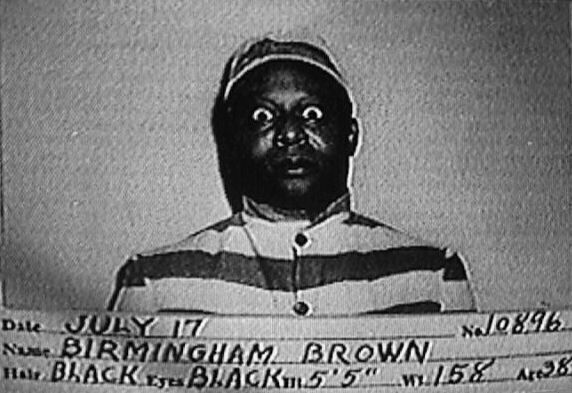
Sidney Toler takes over in the Chan role from Warner Oland, the Swede (again !) who played the lead in previous entries. He’s aided by Benson Fong as Tommy Chan – filling in for Keye Luke as one of Chan’s sons – and Mantan Moreland as Birmingham Brown, Chan’s driver.

Chan and Co. are investigating the efforts of spies to steal radar secrets and their investigation is focused on a radio station and a secret lab.

The movie is almost obsessive about its use of media and technology. The mob of suspects are actors in a radio drama. The mystery is all about radar. And when a henchman calls the Big Bad on the phone, the bad guy replies via Western Union teletype.

The comedy relief – and the shrieking – is left to Moreland, who banters with another African-American man – the two finish each other’s sentences, knowingly – almost gets electrocuted by some Frankenstein-esque lab equipment and squeals with terror when the floor drops out of an elevator.

As troublesome as the idea of casting a caucasian actor as a Chinese-American detective is, Toler – like other actors who played Chan – plays Chan as canny and smarter than anyone else in the movie. Yes, he speaks in a kind of pidgin English and employs old Chinese proverbs to mystify those around him. But Chan is played, for the most part, with dignity.

charlie chan mantan moreland

But Moreland’s character is more troubling. I can only imagine audiences laughing uproariously at the actor’s antics, which seem offensive today even if you watch them through the prism of Hollywood’s racial history. Moreland was a popular and talented actor who was best known for these types of “excitable black folk” roles.

“Charlie Chan in the Scarlet Clue” is best viewed as a moment in time, a time when pop culture went through twists and turns and gyrations to sell movie tickets.

Classic horror: Universal’s ‘Mummy’ movies

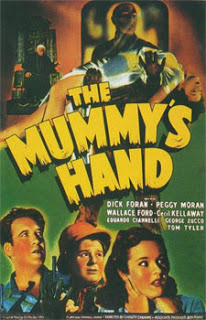
Mummy's_Hand_

It’s hard to imagine how a shambling, vengeance-seeking collection of bones and old cloth ever became a horror film sensation.

And yet: The Mummy.

One of the classic Universal monsters, the Mummy might not have the same level of recognition and shivery admiration as Dracula or Frankenstein or even the Wolf Man, but he’s nevertheless a favorite for some of us, inspiring reboots in recent years and cameoing in movies and cartoons for generations.

Universal’s first entry in the series, “The Mummy,” was released in 1932 and starred Boris Karloff. Made at a time that the world was still fascinated by ancient artifacts discovered – some might say stolen from – ancient Egyptian tombs, the movie was more atmospheric and creepy than monsteriffic.

For me, the best of the Mummy’ moments came with the sequels.

Beginning with the dawn of the 1940s, Universal released four sequels: “The Mummy’s Hand” (1940), “The Mummy’s Tomb” (1942) and “The Mummy’s Ghost’ and “The Mummy’s Curse” (both in 1944).

These movies portrayed the Mummy as a bandage-swathed, limping killer, sympathetic when he’s used by manipulative masters but an inexorable killer – granted, a slowly paced one – that stalks young women who are reincarnated versions of his lost love.

Tom Tyler, who had played Captain Marvel and was best known as a cowboy movie star, played the Mummy, Kharis, in the first sequel. This one was perhaps the creepiest for one of the Mummy’s features: Supernaturally dark eyes visible through gaps in his bandages.

The next three films betray the ever-cheaper budgets Universal was willing to allow for the movies. Each of the four sequels made use of footage from the earlier films, but the practice seemed more standard as the series wore on.
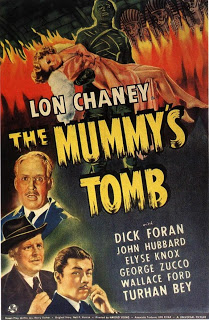
Mummys_Tomb

The three final films in the four-movie sequel series starred Lon Chaney – a star for Universal in “The Wolf Man” following in Tyler’s stuttering footsteps. It was a mark of how quickly Chaney’s star had fallen that he went from playing Universal’s most tortured and likable monster to being unrecognizable as the Mummy.
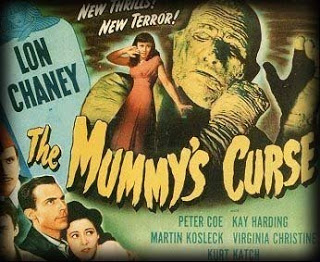
mummys curse

One of the oddest elements of the series was the passage of time, which meant that later installments took place in the 1970s – albeit a very 1940s-style 1970s.

The time jump was nearly equaled in “say what?” by the switch in locales from Egypt to the United States, finding the Mummy and his masters turning up in first Massachusetts then Cajun country.

As much as I love “Abbott and Costello Meet Frankenstein,” there’s something to be said for the comedians’ meeting with the Mummy in 1955 that, for pure and simple thrills and laughs, very nearly beats the A&C classic monsterfest that was originally released in 1948.
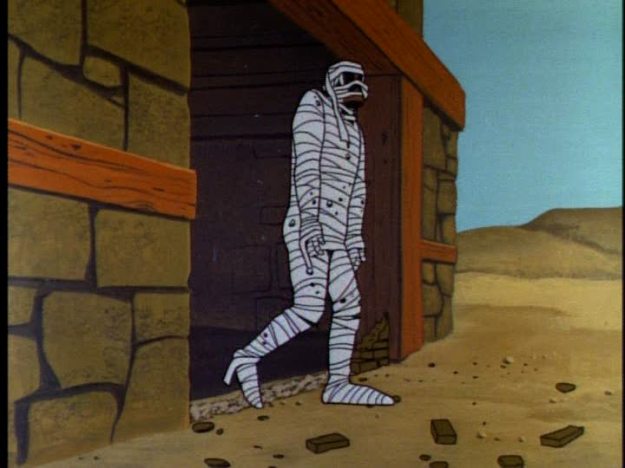
jonny quest mummy curse of anubis

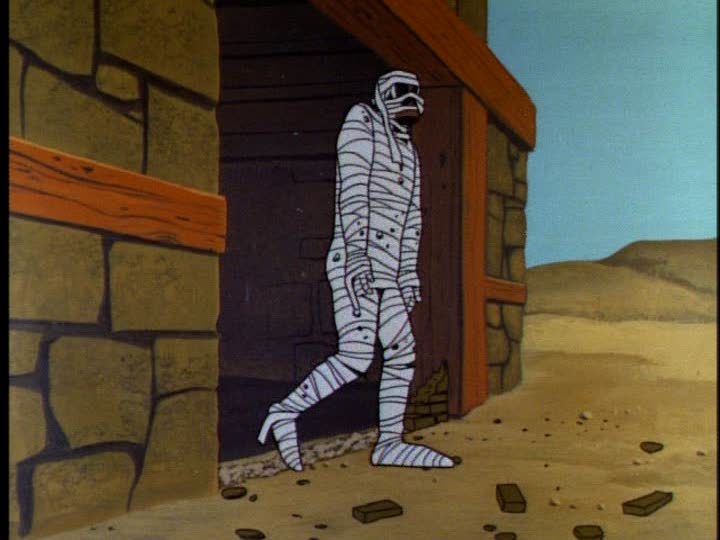
As for those cameos: One of my favorite episodes of “Jonny Quest,” the classic 1964 primetime animated adventure series, is “Curse of Anubis,” in which Jonny and the Quest gang go to Egypt when antiquities come up missing and murders are committed. There’s plenty of human villainy, of course, but striding through the mix is a mummy – maybe the Mummy. There’s no doubt the wonderfully atmospheric scenes of the Mummy stalking victims – sights familiar to anyone who had been watching the Universal films in their early TV showings – inspired plenty of goosebumps.

Not bad for a shambling bunch of bones.
Astronauts on the make: ‘World Without End’

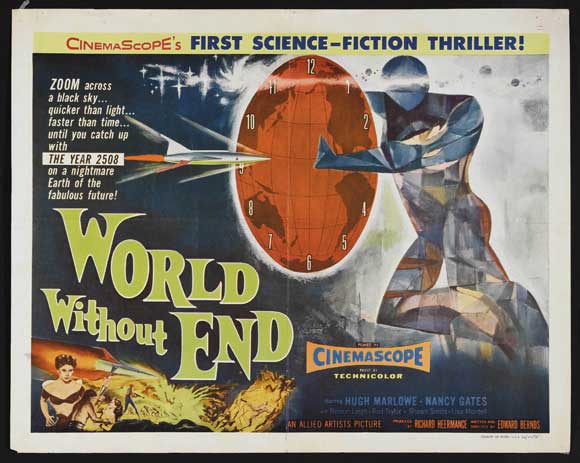
world without end horiz poster

A 1956 B-movie, “World Without End” is what I like to think of as a typical sci-fi thriller from the time.

Astronauts return to Earth after a mission only to find 500 years have passed and atomic war has wiped out civilization. The population is divided between one-eyed mutated humans roaming the surface and pale, effete, skull-cap wearing old men living below ground.

Oh yeah. Also underground: Fabulous babes.

The four astronauts – led by Rod Taylor (“The Time Machine”) and Hugh Marlowe (“The Day the Earth Stood Still,” “Earth vs. the Flying Saucers”) quickly wear out their welcome among the underground dwellers with their suggestion that the race is dying without exposure to sunlight and fresh air aboveground.

The astronauts irritate their Mr. Burns-style hosts even further by suggesting they’ll help build houses on the surface, which is by now radiation-free.

Not to mention the “hubba hubba” interest the astronauts pay to the women and the immediate mutual attraction from the futuristic babes.

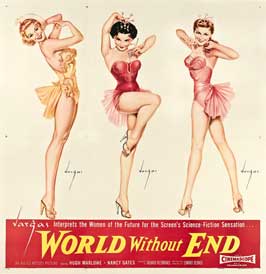
world-without-end-babes

The movie’s advertising played up the female cast.

“World Without End” isn’t, for a low-budget film, an outright cheapie. It looks pretty good, with good sets, location filming in some of Southern California’s nicer parks and CinemaScope Technicolor.

But its “Brave New World” story is dated and silly.

Random observations:

World Without End spaceship

The spaceship was one of those cool 50s models with fins. Big fins.

World_Without_End_spider_attack

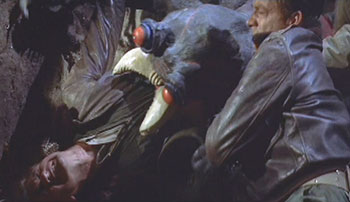
The movie has one of the worst giant spiders ever in the movies. Seriously, it looks like somebody put a silly spider costume on an ottoman, which gets tossed onto one of our heroes.

Five hundred years have passed, but the woman still wear mini-dresses, high heels and serve the meals. No to mention fall in love with the astronauts almost immediately and get upset if they’re not favorably compared with women from the astronauts’ time.

world without end mutate

So close but yet so far: The one-eyed radiation-scarred creatures are called mutates, not mutants.

Dumbest scene: Marlowe’s character is attacked by “mutates” and his three fellow astronauts, standing at some distance, start firing their pistols at the grappling pair. Keep your head down while you’re fighting those mutates, buddy.

Director Edward Bernds, who died in 2000, had an interesting career. He directed Three Stooges shorts as well as Bowery Boys movies and the infamous “Queen of Outer Space” starring Zsa Zsa Gabor.


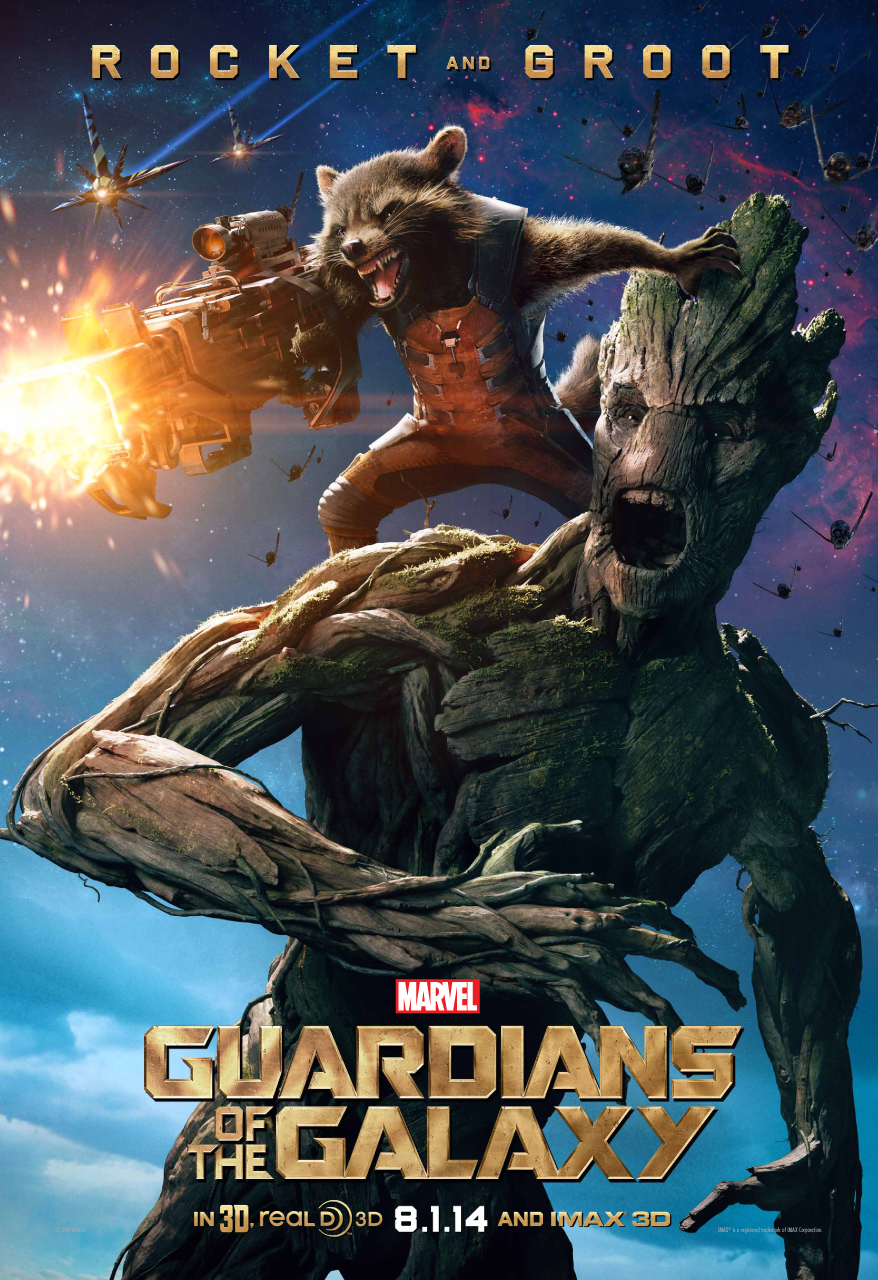
Groot and Rocket poster for ‘Guardians’

rocket groot poster guardians of the galaxy

If you ever find yourself wondering whether the geeks have inherited the earth – here’s proof.

Who would have thought a few years ago that a movie version of “Guardians of the Galaxy” would be forthcoming, no less a character poster featuring Rocket Raccoon and Groot would be released.

It’s a pretty amazing time we live in.

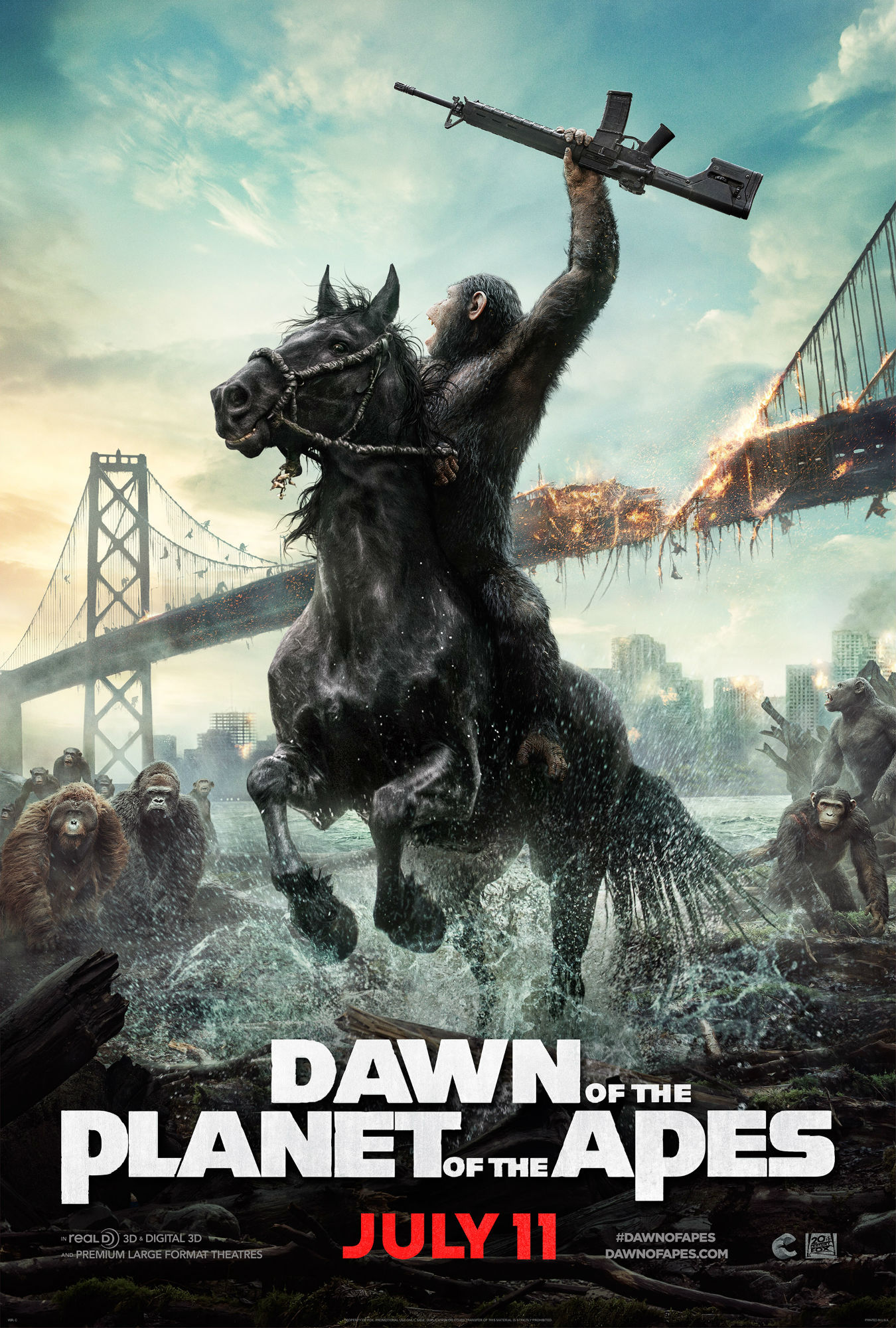
Nice: New ‘Dawn of the Planet of the Apes’ poster

new dawn of the planet of the apes poster

It’s a familiar refrain from fans, and it’s one I can sympathize with:

Too many modern-day movie posters are photoshopped nightmares, without a hint of art like the classic posters for “Star Wars,” “Raiders of the Lost Ark” and other movies with memorable one-sheets.

So it’s fun to see a nicely composed, dramatic and artfully done poster like the one here for “Dawn of the Planet of the Apes.”

It makes me want to see it, that’s for sure.

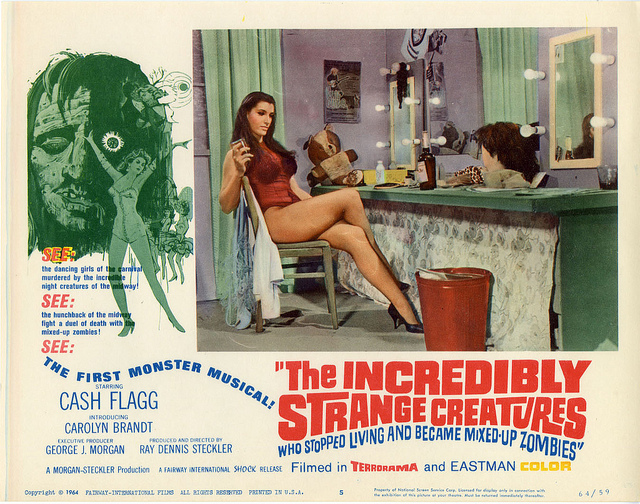
Classic shlock: ‘Incredibly Strange Creatures’

incredibly strange creatures lobbycard

I’ve written about the 1964 low-budget classic, “The Incredibly Strange Creatures who Stopped Living and Became Mixed-Up Zombies” before, notably my memories of seeing it at a drive-in with an older relative.

I didn’t touch on the movie all that much, though.

Ray Dennis Steckler directed and stars – under his pseudonym Cash Flagg – and I guess you could argue he’s a forerunner to the director/stars we’re familiar with from today. His performance isn’t horrible but he’s undercut by the low, low-budget of his own movie.

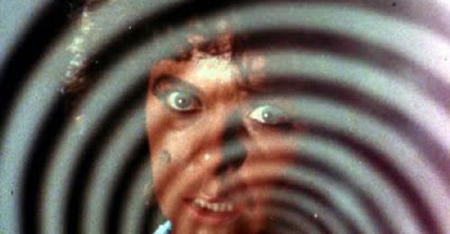
incredibly-strange-hypnotism

The movie follows a group of friends who visit a carnival and stumble upon bad guys who hypnotize, disfigure and enslave people, turning them into, in effect, zombie slaves.

The movie has the telltale leisurely pace of a low-budget flick. For what seems like forever, characters wander around, gazing at stuff, talking about nothing. There seem to be endless scenes of arty dance numbers, totally out of place at a nightclub. Watching one of these movies makes you appreciate how a well-written, well-edited movie … well, moves.

Considering the movie was touted as “the first monster musical,” I know what Steckler was going for. But sheesh. I lost track of how many musical numbers were included.

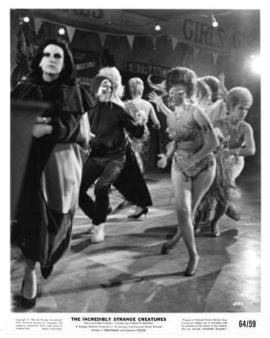
incredibly strange creatures dance number

A dancing girls sequence seems to have been shot in a community theater, and the producers were intent on getting their money’s worth because the scene goes on and on .. and then is followed by another musical sequence. Cue up “Let’s All Go to the Lobby!”

Likewise, scenes of a nightclub comic are so bad they almost seem like a modern-day parody.

Not to mention the interpretive dance/dream sequence.

After a quick break to hypnotize a victim … it’s another musical performance!

Endless shots of carnival rides.

The cheapness of the movie’s production really stands out when you see how many sets look cheaper than your standard 1960s sitcom living room – and that’s the most lavish sets here. The fortune-teller set, which consists of a few drapes and blackout curtains, isn’t as bad as the plywood airplane cockpit in “Plan Nine,” but it’s pretty bad.

Something has to be said about the hairstyles of the three leads. They are, respectively, a receding combover, a towering pompadour and a huge and baffling head of helmet hair.

When the “Incredibly Strange Creatures” finally break loose with about 15 minutes left in the movie … it’s time for another musical sequence. Steckler really knew how to build suspense!

For a real treat, seek out the “Mystery Science Theater 3000” version of the movie from 1997. It’s available through Hulu online and Mike Nelson and the robots’ version of “Incredibly Strange Creatures” is just as funny as you’d think it would be.

70s movie posters: ‘Electra Glide in Blue’

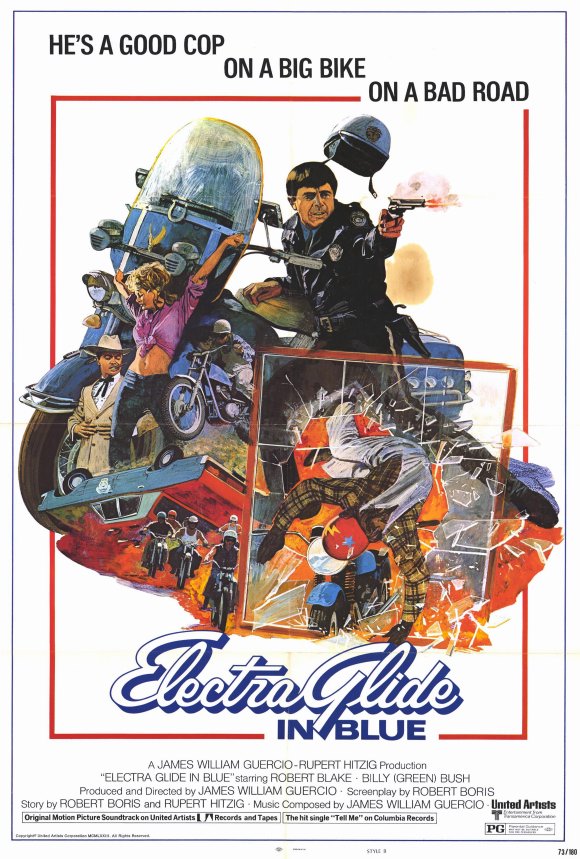
electraglide in blue poster

Here’s the latest in our ongoing series about 1970s movie posters.

If you remember, I started throwing a few classic 1970s movie posters out there after the inspiration of the 1970s-style poster for “Captain America: The Winter Soldier.”

I maintain that some of the best movie posters of all time were produced to help market 1970s movies, including drive-in movies.

I still vividly remember seeing “Electra Glide in Blue” at a drive-in movie theater in 1973 with one of my older brothers.

Robert Blake was yet to achieve fame and notoriety as the star of TV’s “Baretta” – not to mention his late-in-life suspicion of murdering his significant other.

Here, Blake – small of stature but always a cocky bastard – plays a motorcycle cop drawn into a murder mystery.

All the early 70s movie touchstones are here, including rock music, “fuzz” vs “hippies,” and a twist ending.

It’s worth a look, and so is the poster.