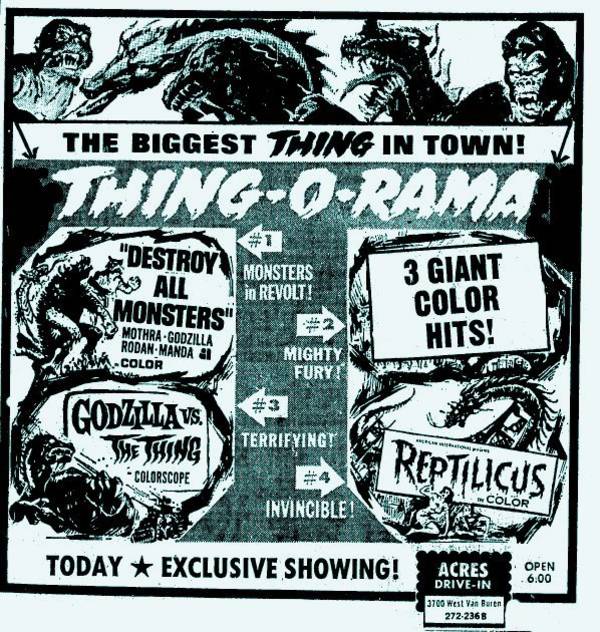
Just because.

Just because.
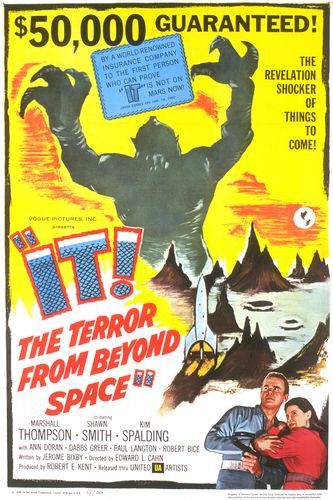
If there was a heyday of black-and-white, low-budget science fiction movies, “It! The Terror From Beyond Space” might have been smack in the heart of it.
It’s startling to think now that the 1958 release date of “It!” came just 10 years before “2001: A Space Odyssey” and less than 20 years before “Star Wars.” Those movies – although decades old now – seem much more contemporary than “It!”
When you make those comparisons, though, it’s funny to note that a movie that still feels contemporary despite the passage of years, Ridley Scott’s 1979 sci-fi thriller “Alien,” was in many ways inspired by “It!” A lot of people have called “It” the inspiration for “Alien.”
Plot-wise, they have more than a few similarities. An expedition to another planet – Mars in the earlier movie – results in a dead crew and suspicion on the survivor. When a second ship is sent to investigate, the only survivor of the earlier crew – played by Marshall Thompson – is to be brought back to Earth to be tried for killing his crew.
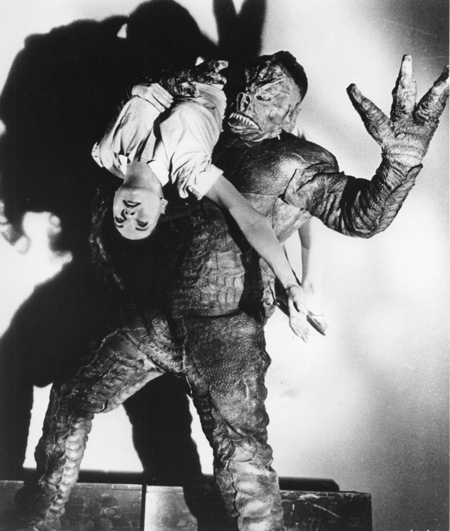
But there’s another addition along for the ride: A stowaway, a monster, a scaly hulk played by stuntman and actor Ray “Crash” Corrigan. The creature killed the earlier crew and, on the trip back, begins picking off the second crew, stalking them in the hidden recesses of the ship.
“It!” is most effective when it doesn’t show the monster. Shots of the creature’s big, rubbery feet and pigeon-toed walk sap some of its menace, that’s for sure. While the hulking monster is appropriately kiddie-matinee scary for its time, every shot of it reduces the mystery and menace.
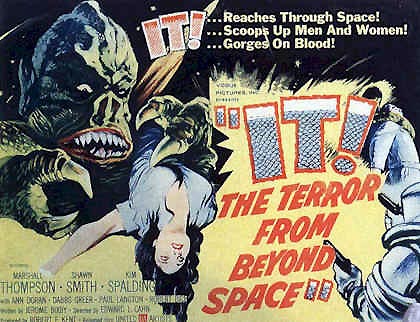
Random thoughts:
Although the movie is called by some the inspiration for “Alien,” it’s almost like a sequel instead.
The movie’s action is set in 1973, which as we all know was a big period for Martian exploration.
“It” came out during the great period of 1950s black and white science fiction with craggy alien landscapes and beautiful star-filled backdrops and graceful rockets with Buick-style fins.
There’s a lot of science-defying action here, with the crew firing guns pretty indiscriminately at the monster. Lots of gas bombs are thrown and there’s a token wearing of gas masks, but only when hatch doors are open. What about the the air-handling system? The monster and his victims spend a lot of time in the vents, so I’m pretty sure that gas would get all around the ship.
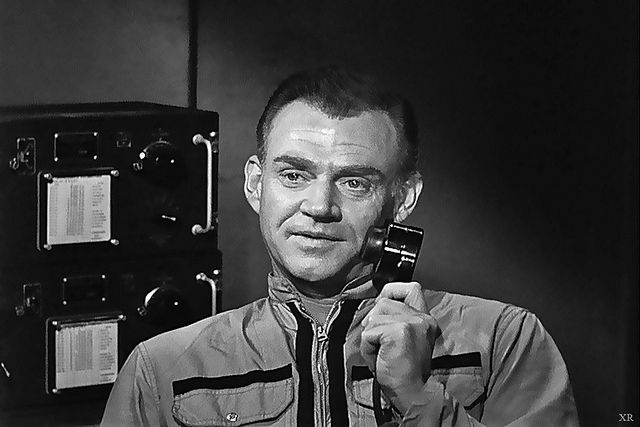
Look for Dabbs Greer, familiar to “Little House on the Prairie” watchers, as one of the crew.

A while back I was inspired to begin this recurring look at the poster art of 1970s movies after seeing the throwback-style poster for “Captain America: The Winter Soldier.”
Movies don’t get any groovier than “Coffy,” the 1973 blaxploitation flick starring Pam Grier in the title role. And the poster does justice to the movie’s storyline.
After her younger sister is hooked on drugs, Coffy, a nurse, sets out to kill as many drug dealers as possible.
It’s a pretty straightforward plot.
If you’ve never looked at it, check out the oddly-written Wikipedia page for the movie, complete with plot recap.
“Coffy uses her sexuality to seduce her would-be killers,” indeed.
And good lord, what an impression Grier made on a lot of us.

See what I mean?
Excuse the lack of posts lately. It’s been a week, I’ll tell you that.
Last week when I posted the “Captain America: The Winter Soldier” 1970s-style poster here, I noted that it was a throwback to an entire era of cool movie posters.
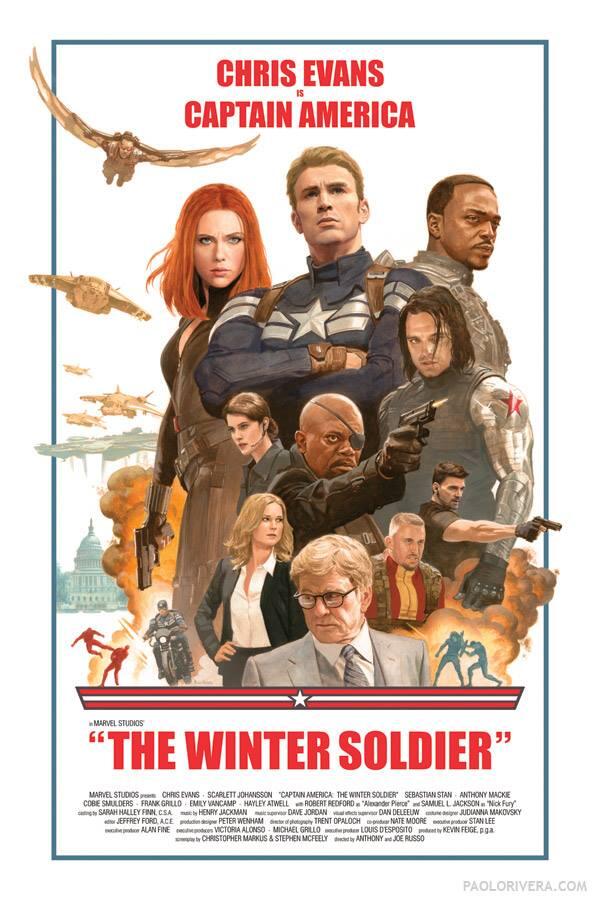
Here’s the “Winter Soldier” poster, of course.
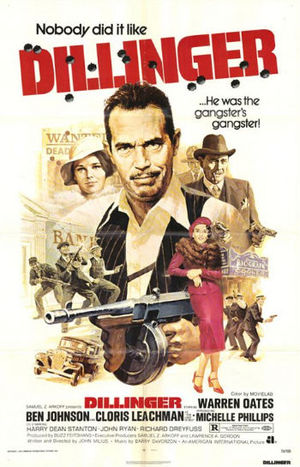
Here (and above) is the poster for “Dillinger,” a 1973 classic.
“Dillinger” was directed by John Milius, writer of such classic screenplays as the original “Conan” and “Red Dawn.”
“Dillinger” starred Warren Oates, a great character actor, as John Dillinger, the Depression-era bank robber.
“Dillinger” is remembered as a classic of its kind. And what a supporting cast: Ben Johnson, Harry Dean Stanton, Richard Dreyfuss (as Baby Face Nelson!) Geoffrey Lewis, Steve Kanaly (of “Dallas”), Frank McRae and so many others.
And it’s got a cool poster too.

I’ve had a love affair with movie posters my whole life. It probably began when I was just a kid and going to movies and continued into the 1970s and 1980s when I bought a lot of posters (one-sheets mostly) and lucked into even m0re when a local movie theater was closing.
I got rid of a lot of my posters but still have some. Maybe when the weather finally warms up I’ll crack open the plastic containers in my garage and pull some posters out to share with you.
In the meantime, I love a good modern-day poster.
I was really taken with the recent poster for “Captain America: The Winter Soldier” and thought you might be too:
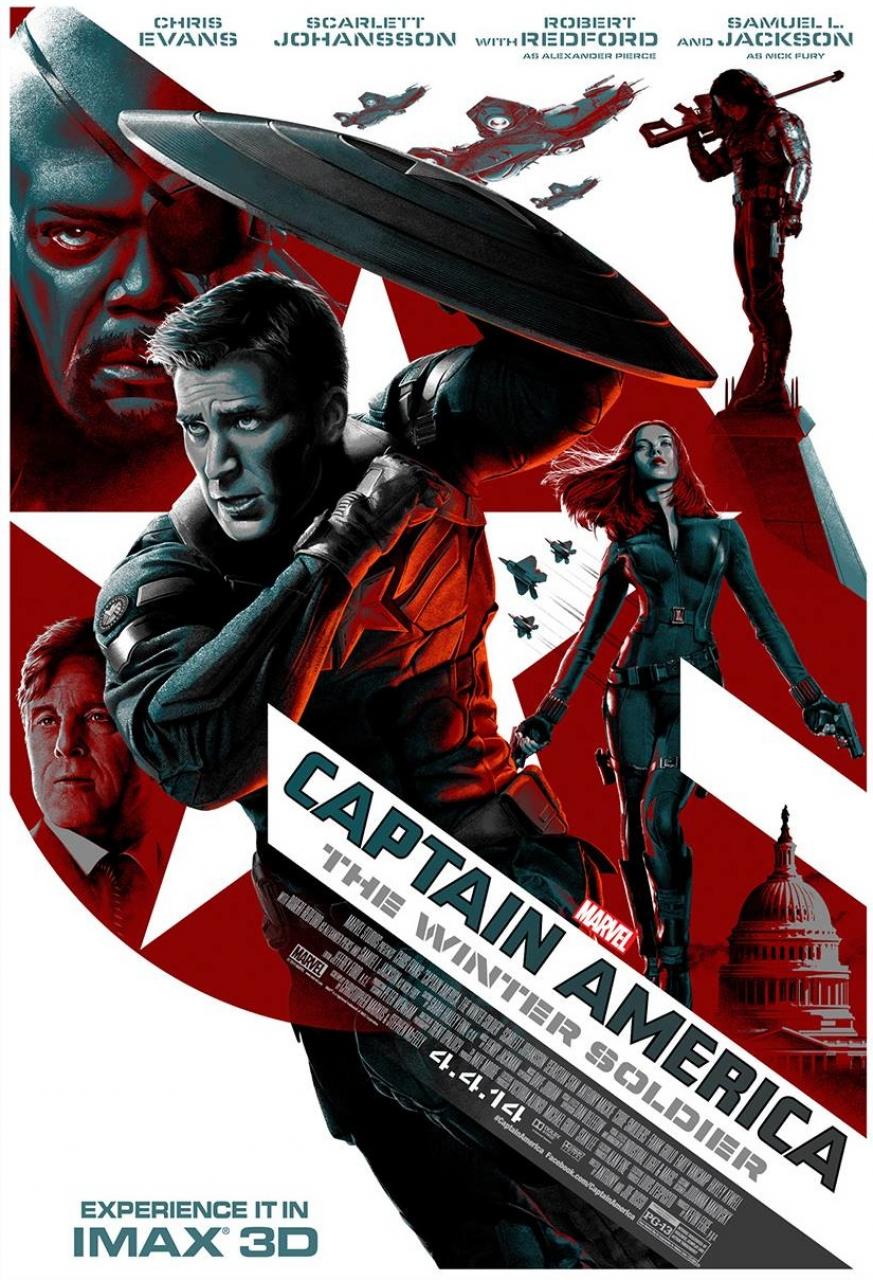
Cool stuff.
But today I saw artist Paolo Rivera’s take on the movie’s poster and loooooved it.
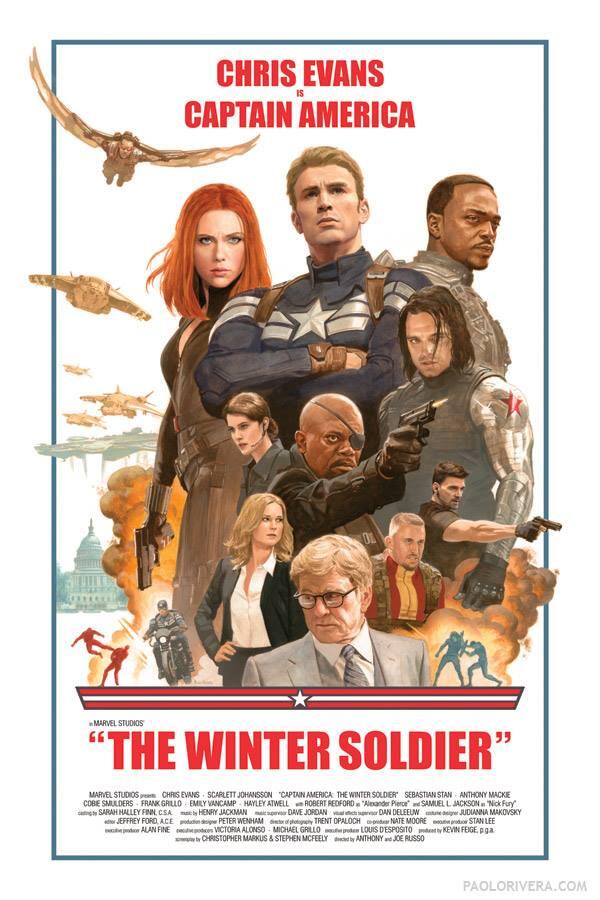
As you can see, Rivera perfectly captures the 1970s action/thriller feel for the movie that the sequel’s makers have said they intended.
What a great piece of art. If you want to see more, check out his blog here.
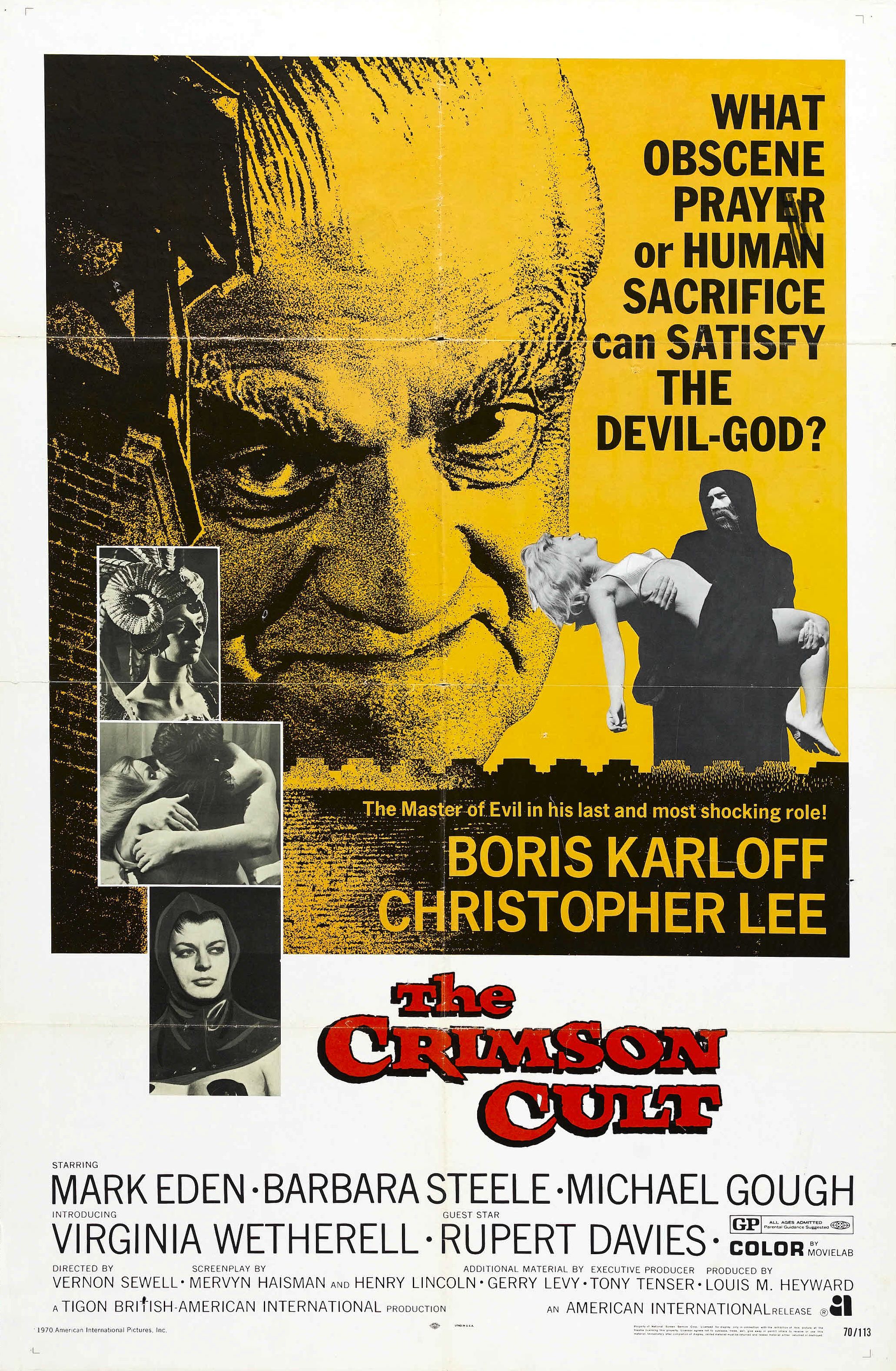
In the final years of his life, before his death at age 81 in February 1969, Boris Karloff had become a beloved figure in movies and TV. The man who played Frankenstein’s monster in 1931 continued working for decades, ensuring himself a place in entertainment history not only with his early work but with vocal performances aimed at children and the entire family, as in “How the Grinch Stole Christmas” in 1966.
Although he was in frail health late in life, Karloff continued working, turning out four movies that were released in 1968 alone. One was “Targets,” a poignant drama in which Karloff played a veteran horror movie actor whose fate is intertwined with a modern-day horror, a murderous sniper.

1968 also saw the release – at least in the United Kingdom; the U.S. release came in 1970 – of “Curse of the Crimson Altar,” known in the U.S. as “The Crimson Cult.”
This movie’s plot is familiar to those who remember “The Wicker Man” and other movies about cults that thrive in small-town England: An outsider comes to town looking for his missing brother. Little does he know that the lord of the manor who welcomes him into his home is the leader of a crazy cult (is there any other kind?) that worships a long-dead witch. The crusty local professor is able to help provide some clues, but it’s only a manner of time until our hero is trussed up in a dungeon, waiting to be sacrificed.
Mark Eden is fair to middling as the hero, but the reason for this movie to exist are the headliners who draw from two generations of horror film superstars.
Karloff plays Professor Marsh, the witchcraft expert, and Christopher Lee is Morley, the leader of the cult. Karloff is frail here, spending much of his time in a wheelchair. But his voice is as rich and strong as it was at any time in his career and he brings a touch of class to the movie.
Lee is likewise good as the cult leader, although anyone hoping to see him invoking demons and sacrificing virgins had better look elsewhere. Lee skulks through his mansion, urbane and threatening by turns, but the cult scenes for the most part look like they could have been shot anytime and anywhere. Except for the presence of Eden in a couple of them, the cult scenes look like they could have been shot years and miles apart from the rest.
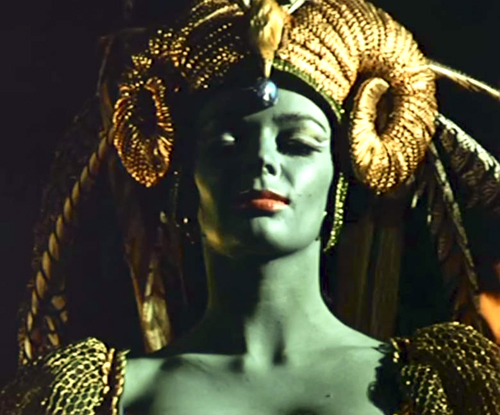
At least those scenes are presided over by Italian horror superstar Barbara Steele. Steele’s painted green here, for some reason – more witchlike? – but looks great.
The movie has many of the loony elements you’d expect from a movie about sinister witch cults released in 1968: A witch (that’s a given), a cult (well …) human sacrifices in a dungeon, implements of torture, women in pasties with whips (!) and guys in, well, I’m not sure how to describe these outfits. Maybe leather onesies with the arms cut out?
Random observations:
The movie, upon release in the U.S. by American International Pictures, was rated “GP,” the forerunner to PG. And while it’s hard to believe now, the movie shared one quality with other PG-rated movies of the 1970s and even 1980s: Nudity. It’s not much more than you can see on some cable TV shows right now, but if a PG or even PG-13 movie came out today and contained nudity, people would go nuts.
Likewise, the movie features scenes of “wild and groovy” parties, complete with dancing girls in mini skirts and people painting each other. In retrospective, the scenes come off like something from an “Austin Powers” movie.
Although Karloff comes off all gruff and sinister – and he’s Boris Karloff, after all, the original Frankenstein’s monster – he’s on the side of the angels here. Despite the looming, grimacing visage in some of the movie’s posters.

Okay, Marvel, good for you, a little.
Marvel’s releasing character posters (Cap, Black Widow, Nick Fury) from “Captain America: The Winter Soldier.”
So here’s this cool character poster featuring Anthony Mackie as Sam Wilson, AKA the Falcon, Cap’s partner.
But it’s only in Spanish-speaking territories so far, apparently.
Come on, Marvel. Let this one loose on U.S. soil.
I want kids to be able to see a poster featuring the first African-American superhero in comics. (Black Panther was African.)

So this is cool.
Here’s the poster for the “Veronica Mars” movie, due out March 14.
Funded by a very successful Kickstarter campaign, the Rob Thomas movie, featuring Kristen Bell in the now-grown-up role of the cult favorite high-school-and-college-sleuth, should be a treat for fans of the short-lived series.

Kenneth Tobey was one of those actors who, when he appeared on screen in anything from the classic sci-fi horror film “The Thing from Another World” to the TV series “I Spy,” you just felt like everything was under control.
Tobey, who was born in 1917 and died in 2003, was a character actor in films like “The Howling” who occasionally got to play the lead, as in his 1950s series “Whirlybirds,” about helicopter pilots.
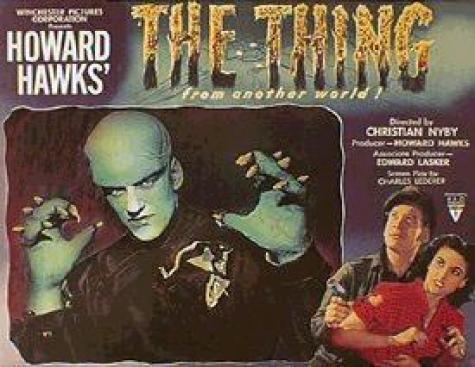
Tobey is one of my favorite actors in one of my favorite movies, “The Thing from Another World.”
In the classic 1951 Howard Hawks production, Tobey played Captain Patrick Hendry, who quickly took control of a remote installation in danger from a fearsome alien (James Arness).
Hendry is low-key and no-nonsense and you had the feeling Tobey was likewise.
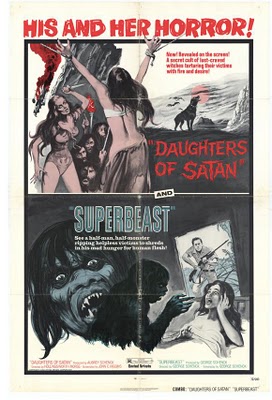
Believe it or not, I’d never heard of “Superbeast” before I saw it among the free movies on the On Demand menu on my cable.
Okay, maybe that’s not all that hard to believe.
The movie was filmed in the Philippines as part of a subset of the movie industry I’ve always been interested in: Cheap exploitation movies filmed – or at least partially filmed – there for release to the US drive-in circuit. For a while there, note some biographies of legendary exploitation filmmaker Roger Corman, exploitation movies and especially exploitation movie trailers included prodigious amounts of Filipino footage of jungles and helicopters and girls firing machine guns. It’s all a little like the footage of chicks shooting machines guns in Quentin Tarantino’s “Jackie Brown.”
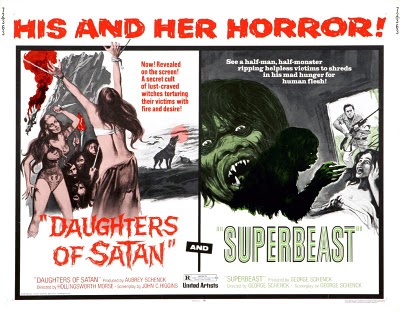
“Superbeast” was released in 1972 on a double-bill with “Daughters of Satan,” a thriller that starred future TV icon Tom Selleck. Selleck went on to greater things, but the same can’t be said for the male lead here, Craig Littler, who did have a stint in the Saturday morning kid’s show “Jason of Star Command.”
Considering the exotic locales in “Superbeast,” there’s a lot of travelogue material here, including trips down rivers with hippos and the like lying alongshore. All this footage serves to fill out the running time of the movie, which has a rather thin storyline.
“Superbeast” is another variation on a couple of well-remembered and much-exploited stories: “The Island of Dr. Moreau” and “The Most Dangerous Game.”
A doctor, played by Antoinette Bower, investigates mysterious goings-on in the jungle and finds lab experiments that turn men into half-men/half-animals.
But there’s really not a whole lot going on for the first half of the movie, except for the doctor waking up to the sounds of screams and gunshots. The doc finds out that the mutated results of these jungle experiments become targets for the mastermind behind it all, a hunter played by Harry Lauter.
Even this description makes “Superbeast” seem more action-packed and coherent than it is. It’s marked by the lazy lack of cleverness that is the ruin of many low-budget movies – and makes clever low-budget films seem even better by comparison. Rather than writing and shooting meaningful plot points, the filmmakers include lots of footage of people just wandering in and out of scenes.
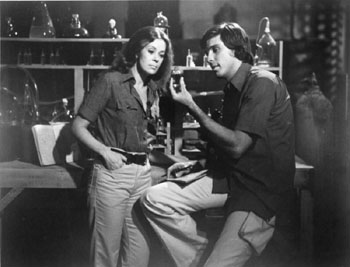
“Superbeast” tries to create shocks by including some real-life gore. There’s an autopsy scene using real footage and another with real organs in a jar. And “Superbeast” might be one of the few movies with exposition delivered via slide show. The movie has a real WTF moment when the female doctor dreams about having sex with one of the mutated natives.
After meandering through the plot for nearly 90 minutes, Litter goes all manimal and shows up in an immobile apeman mask. A struggle ensues and well, that’s pretty much it.
The movie even ends with a “huh?” freeze frame, as if to emphasize the futility of trying to find a coherent plot here.
“Superbeast” didn’t have a life much beyond those 1972 drive-in theaters, and that’s just as well.
 keithroysdon