Category Archives: mystery

We’re still friends, ‘Veronica Mars’

Veronica_Mars camera

As sure as “Buffy the Vampire Slayer” was a drama about high school filtered through horror movie trappings like vampires and demons, “Veronica Mars” was a drama about real-life horror show elements – murder, rape, STDs and, most of all, betrayal – filtered through the high-school experience.

“Buffy” and “Veronica Mars” were sisters of the same mother – as a throw-away line in the “Veronica Mars” movie that debuted just this weekend testifies – and are, ultimately, stories about surviving not just people with murderous intentions but the people who love you and the people you love. Betrayal hurts a hell of a lot worse than a stake to the heart or the zap of a Taser.
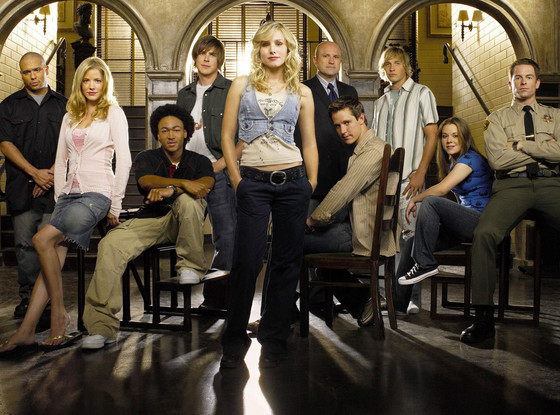
veronica mars cast

As TV shows, “Buffy” and “Veronica Mars” ended before their time. Sure, it can be argued that “Buffy” had more weak moments than strong ones in its last couple of seasons, but the most bitter pill for fans is that the show ended before pop culture’s full-on fixation with vampire stories began, with far lesser tales like “Twilight” hogging the spotlight that should have gone to the show that started it all.

And while “Veronica Mars” had the benefit of an online Kickstarter campaign that brought it back as the big-screen incarnation that debuted this weekend, its three seasons – again, admittedly, with some uneven stories late in its run – just missed out on the shared online community of Facebook, Twitter and name-your-social-media that generates – or at least proves to the world – the dedication of fans.

So we come to the new “Veronica Mars,” a big-screen movie that follows up, seven years later, on the heroine who gave the series and movie their names.

Director Rob Thomas, creator of the series, duplicates the success of the series in creating an unlikely protagonist in Veronica: A female protagonist who acts and talks like the tough-guy hero of a hard-boiled detective story but is still, realistically, a young woman trying to navigate the caste system of a small California town.

Neptune – “It really was built on a Hellmouth,” as one character says in the movie, in a nod to “Buffy” – is still a town full of haves and have nots. Thanks to the corruption that rules the town, the haves – politicians and software makers and movie actors and the police who do their bidding – push the have-nots down and keep them down.

Veronica – the former high-school outcast-turned private investigator, still played with toughness and vulnerability by Kristen Bell – returns to Neptune when former antagonist, former boyfriend Logan (charming, as always, Jason Dohring) is accused of killing his girlfriend, a former classmate who’s become a pop celebrity.
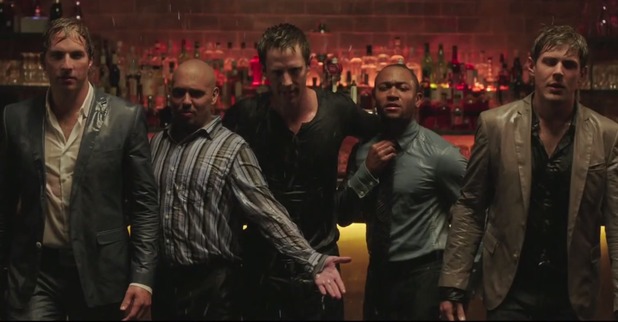
the guys fight veronica mars

The trip means leaving boyfriend Piz (Chris Lowell) and a promising job at a law firm behind in New York. And it means a reunion with friends like Wallace (Percy Daggs III), Mac (Tina Majorino) and Weevil (Francis Capra). There’s also that most dreaded function of “all these years later” plots – an actual high school reunion.
veronica and keith mars

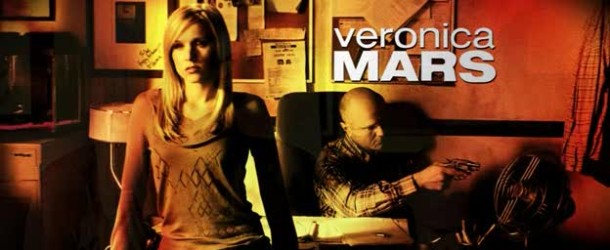
Much more welcome is the reunion between Veronica and her dad, private investigator Keith Mars (Enrico Colantoni). It’s the relationship between Veronica and Keith – heartfelt and quippy, with the warmest and sometimes thorniest parent-child dynamic on TV – that made the show more than a rehash of Nancy and Carson Drew.

Well, that and the more-than-a-little caustic look at a town that seems more relevant today, frankly, than it did in the comparative boom days of the early 2000s. Neptune feels like a jaundiced and corrupt town from the best noir, full of biker gangs, seedy motels and people with either too much to lose or nothing at all.

The heart of the movie is Logan’s dilemma and Veronica’s puzzling out a solution, but there are a lot of nice moments with most of the cast. And there are some nice surprise appearances for fans of the show – mostly along the lines of glimpses of favorite supporting characters, with the notable exception of one who was written out of the story when it was on TV – and a fun and unexpected cameo or two.

The surprises emphasize, in a way, just how focused the movie is on fans – including those tens of thousands who helped fund it through Kickstarter  but also those who fondly remembered the series, its plucky and wry heroine and its jaded look at relationships and a town’s caste system.

The movie’s clubby anti-club slant probably limits its appeal to people who never watched the series. The point of rebooting an old TV show or movie is to bring in new fans, but like the “Serenity” follow-up to Joss Whedon’s “Firefly” series, “Veronica Mars” isn’t likely to engage new followers.

But for the faithful, the fans of the young sleuth and her world, “Veronica Mars” is a welcome reunion.

Mission ‘Veronica Mars’

veronica_mars third season cast

As much as I enjoyed “Serenity,” the big-screen follow-up to Joss Whedon’s cult classic TV series “Firefly,” it didn’t set the world on fire at the movie box office. So it’ll be interesting to see how “Veronica Mars” does when the former UPN and CW show comes to the big-screen on March 14 courtesy of a Kickstarter campaign.

I’ll be there, no doubt, and I know a few other fans of the series – which aired for three years ending in 2007 – but was a decade ahead of its time – will be, too.

But it’s hard to imagine the movie will be a box-office success. And you know what? That’s okay.

“Veronica Mars” was nothing more than a cult series during its three seasons on TV. And while I wish it had been a hit and was still on the air, those of us who watched it then loved it.

Like “Buffy the Vampire Slayer” and a few other cult classics, “Veronica Mars” probably suffered from airing just a little before the prevalence of social media, especially when paired with TV watching. It’s pretty common now to see people live-tweeting “The Walking Dead” or “Game of Thrones” or, before its finale, “Breaking Bad.” “Veronica Mars” would have greatly benefited from that kind of love, which can turn a small cult show into a big cult show.

If you haven’t watched it, I urge you to seek it out, online or streaming or on demand or on disc. Because “Veronica Mars” was almost certainly the smartest, darkest, hippest, snarkiest and most downright appealing show to mix noir crime drama with a coming-of-age story.

In the Rob Thomas-created series, Veronica (played by Kristen Bell) and her father, County Sheriff Keith Mars (Enrico Colantoni) live in Neptune, California. Veronica is part of the high school in crowd when her world is torn apart: Her best friend Lily Kane (Amanda Seyfried) is murdered. After Keith pursues Lily’s father, a software millionaire, for the killing and the case falls through – a more “perfect” suspect is arrested and confesses to the crime – Keith is thrown out of office by Neptune’s vengeful upperclass. Veronica is exiled by her crowd and, on a fateful night, is given a date-rape drug and assaulted.

If “Veronica Mars” sounds dark, it is. But it’s lightened not only by the way Keith and Veronica deal with their outlier status – Keith opens a detective agency, Mars Investigations, and Veronica helps out in the office but takes on her own cases at school – but the tone of the series is slyly, ironically funny.

Not that the series could help but be darkly funny with a cast that included not only Bell and Colantoni but Jason Dohring as Bell’s sometimes antagonist/often boyfriend Logan. Logan was the “bad boy” that so many fans loved to see Veronica with.

The series walked a delicate balance between high school and college heartbreak – Veronica found out what it was like to be an exile in teen society – with real noir crime stories about missing persons, assault and murder.

Bell was always believable as the resourceful young woman who often put herself in danger but never came across as a superhero. In fact, it was her vulnerability – and her realistic and loving relationship with her father – that gave the heroine, who could be hard-edged, a lot of heart.

“Veronica Mars” had its finger on the pop culture pulse, including when Veronica adopts the expletive “frak” from the contemporary “Battlestar Galactica” series and when “Buffy” creator Joss Whedon, a big fan of the series, stopped by for a cameo.

Thomas’ eye for casting the series’ many supporting and recurring roles was second to none. Besides Seyfried, who went on to a movie career, small roles were played by cult-y actors from Ken Marino as Keith’s rival PI Vinnie Van Lowe to Krysten Ritter as Gia.

If the “Veronica Mars” movie isn’t a huge hit – or even, hard to imagine, isn’t very good – that’s too bad. But the series will always be the series and it will always be good.

‘Justified’ – Return to Harlan County. ASAP.

justified a murder of crowes

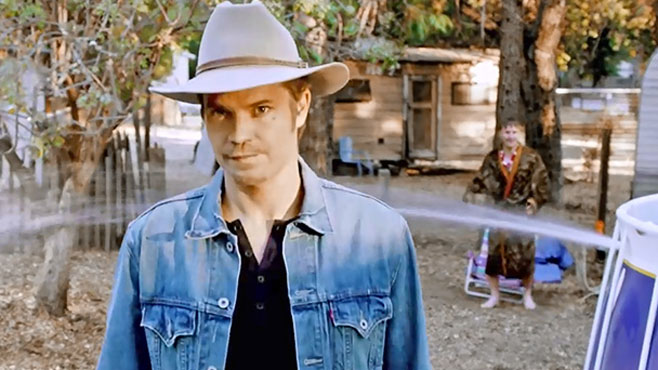
I think I need to watch the fifth season premiere of “Justified” another time. I liked “A Murder of Crowes,” last week’s first show of the new season, just fine, but I’m a little bit on the fence about it.

First of all, a return of the FX series, created by Graham Yost and based on characters created by the late, great Elmore Leonard, is always welcome. It’s one of a handful of TV series that I anticipate for months in advance.

The story of Deputy U.S. Marshal Raylan Givens (Timothy Olyphant), who finds himself back in his homeplace of corrupt, dirt-poor Harlan County, Kentucky, is very nearly equal parts hardboiled crime drama, smart-ass comedy and scarily accurate (to my Tennessee-descended sense) portrait of the dark side of the Appalachian experience.

As someone whose lost a namesake cousin to gun violence and whose family hailed not far from a town named No Business because the law – specifically federal revenue agents – had “no business” being there, I can attest that the show is true-to-life.

The series’ Harlan County – close enough to Lexington to make the chamber of commerce there wince every week when the show airs, I bet – surely numbers a few good people among its population. But aside from the cops, lawyers and judges – some of whom are a little bent themselves – the cast of characters is pretty much made up of outlaws: thieves, drug addicts, meth makers, prostitutes and the kind of guy who keeps a naked man chained to a bed in the back room. Although to be fair, the latter character was just visiting Harlan County from Detroit.

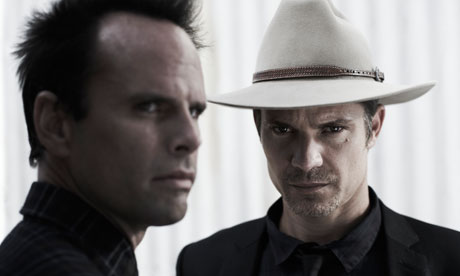
Walton Goggins and Timothy Olyphant in Justified

Chief among these darker characters is Boyd Crowder (Walton Goggins), latest in a long line of criminals who has dabbled in white supremacy – he blew up a black church with a rocket launcher, for god’s sake – evangelism, coal mining, bar owning, drug-making and distributing and, maybe most surprising of all, heroism and doing the right thing.

Pitting longtime friends/enemies and – when it’s convenient for them – cohorts and colleagues Raylan and Boyd against each other and, sometimes, against the dregs of Harlan County (and at times their own families) is the genius aspect of the show.

True to the spirit of Leonard – who’s featured characters used in the show in a few novels and stories – “Justified” features a lawman who’s not only cool but hot-tempered who, at times, makes astonishingly bad decisions and an outlaw who murders – sometimes with remorse, sometimes without – and traffics but is prone, at the time you least expect it, to do the right thing.

justified raylan boyd

If the conflict and simpatico relationship between Raylan and Boyd is the heart of “Justified,” the supporting characters are the veins that carry the blood.

Few cop shows have ever had such a likable and interesting group of lawmen, from wry Chief Deputy U.S. Marshal Art Mullen (Nick Searcy in a performance that makes me want to see a whole hour about him every week), Jacob Pitts and Erica Tazel as marshals Tim Gutterson and Rachel Brooks and assorted characters like a smart-ass U.S. attorney, a kinky judge and Constable Bob, a small-town, small-time lawman played by comedian Patton Oswalt who seems like the comic relief but ended the fourth season as just about the biggest badass in Harlan County. Despite his worries that the folks who live out in the hills eat people. I’m praying Oswalt and his “go bag” will be back this season.

And my god, what bad guys. Goggins makes Boyd Crowder as complex and fascinating a character as any on TV, and likewise Joelle Carter as Ava – a bad-leaning girl who could be downright ruthless when she needed to be, and ended up in prison because of it – are characters capable of carrying their own show.

And what a bunch of low-lifes consort with Boyd and are confounded by Raylan, including Dewey Crowe, the hapless, brainless small-fry crook played by Damon Herriman, Jere Burns as sarcastic criminal Wynn Duffy and so many others.

Tribute must be paid to the Bennett clan, led by Mags (Margo Martindale). The Bennetts, astonishingly corrupt but endlessly fascinating, made the second season of the show so hard to top.

The current season is trying, though, by introducing more members of the Crowe family, including Darryl Crowe Jr. (played by Michael Rapaport), a Florida thug moving to Harlan to complicate Raylan’s life.

I need to watch the first new episode of the season again because I can’t figure out just what about it left me a little frustrated. Maybe it was that Raylan and Boyd were a thousand miles apart for most of the action. Maybe it’s that both were out of Harlan County for most of the premiere. Because, believe me, as much as I wouldn’t want to live in Harlan County, I want my hour there every week.

New: ‘Veronica Mars’ movie poster

veronica-mars-movie-poster

So this is cool.

Here’s the poster for the “Veronica Mars” movie, due out March 14.

Funded by a very successful Kickstarter campaign, the Rob Thomas movie, featuring Kristen Bell in the now-grown-up role of the cult favorite high-school-and-college-sleuth, should be a treat for fans of the short-lived series.


Words of wisdom from Elmore Leonard

elmore leonard frowning

The great crime novel and western writer Elmore Leonard passed away recently and a lot of sites are recalling his 2001 piece for The New York Times with tips for writers.

Here’s Leonard’s wisdom:

These are rules I’ve picked up along the way to help me remain invisible when I’m writing a book, to help me show rather than tell what’s taking place in the story. If you have a facility for language and imagery and the sound of your voice pleases you, invisibility is not what you are after, and you can skip the rules. Still, you might look them over.

1. Never open a book with weather.

If it’s only to create atmosphere, and not a character’s reaction to the weather, you don’t want to go on too long. The reader is apt to leaf ahead looking for people. There are exceptions. If you happen to be Barry Lopez, who has more ways to describe ice and snow than an Eskimo, you can do all the weather reporting you want.

2. Avoid prologues.

They can be annoying, especially a prologue following an introduction that comes after a foreword. But these are ordinarily found in nonfiction. A prologue in a novel is backstory, and you can drop it in anywhere you want. There is a prologue in John Steinbeck’s ”Sweet Thursday,” but it’s O.K. because a character in the book makes the point of what my rules are all about. He says: ”I like a lot of talk in a book and I don’t like to have nobody tell me what the guy that’s talking looks like. I want to figure out what he looks like from the way he talks. . . . figure out what the guy’s thinking from what he says. I like some description but not too much of that. . . . Sometimes I want a book to break loose with a bunch of hooptedoodle. . . . Spin up some pretty words maybe or sing a little song with language. That’s nice. But I wish it was set aside so I don’t have to read it. I don’t want hooptedoodle to get mixed up with the story.”

3. Never use a verb other than ”said” to carry dialogue.

The line of dialogue belongs to the character; the verb is the writer sticking his nose in. But said is far less intrusive than grumbled, gasped, cautioned, lied. I once noticed Mary McCarthy ending a line of dialogue with ”she asseverated,” and had to stop reading to get the dictionary.

4. Never use an adverb to modify the verb ”said” . . .

. . . he admonished gravely. To use an adverb this way (or almost any way) is a mortal sin. The writer is now exposing himself in earnest, using a word that distracts and can interrupt the rhythm of the exchange. I have a character in one of my books tell how she used to write historical romances ”full of rape and adverbs.”

5. Keep your exclamation points under control.

You are allowed no more than two or three per 100,000 words of prose. If you have the knack of playing with exclaimers the way Tom Wolfe does, you can throw them in by the handful.

6. Never use the words ”suddenly” or ”all hell broke loose.”

This rule doesn’t require an explanation. I have noticed that writers who use ”suddenly” tend to exercise less control in the application of exclamation points.

7. Use regional dialect, patois, sparingly.

Once you start spelling words in dialogue phonetically and loading the page with apostrophes, you won’t be able to stop. Notice the way Annie Proulx captures the flavor of Wyoming voices in her book of short stories ”Close Range.”

8. Avoid detailed descriptions of characters.

Which Steinbeck covered. In Ernest Hemingway’s ”Hills Like White Elephants” what do the ”American and the girl with him” look like? ”She had taken off her hat and put it on the table.” That’s the only reference to a physical description in the story, and yet we see the couple and know them by their tones of voice, with not one adverb in sight.

9. Don’t go into great detail describing places and things.

Unless you’re Margaret Atwood and can paint scenes with language or write landscapes in the style of Jim Harrison. But even if you’re good at it, you don’t want descriptions that bring the action, the flow of the story, to a standstill.

And finally:

10. Try to leave out the part that readers tend to skip.

A rule that came to mind in 1983. Think of what you skip reading a novel: thick paragraphs of prose you can see have too many words in them. What the writer is doing, he’s writing, perpetrating hooptedoodle, perhaps taking another shot at the weather, or has gone into the character’s head, and the reader either knows what the guy’s thinking or doesn’t care. I’ll bet you don’t skip dialogue.

My most important rule is one that sums up the 10.

If it sounds like writing, I rewrite it.

Or, if proper usage gets in the way, it may have to go. I can’t allow what we learned in English composition to disrupt the sound and rhythm of the narrative. It’s my attempt to remain invisible, not distract the reader from the story with obvious writing. (Joseph Conrad said something about words getting in the way of what you want to say.)

Appalachian mystery: ‘A Killing in the Hills’

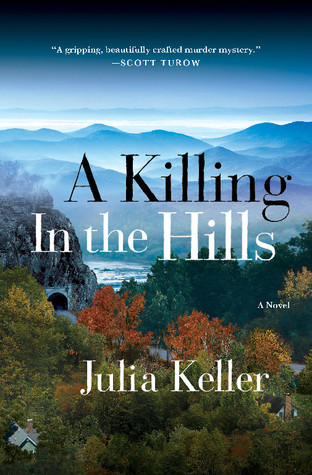
a killing in the hills julia keller

Julia Keller, a Pulitzer Prize-winning writer (who won for stories in the Chicago Tribune about an Illinois tornado and its effects on a small town), has begun an appealing new mystery novel series with “A Killing in the Hills” and its sequel, “Bitter River.”

So far I’ve read “A Killing in the Hills” and, as someone whose family hails from Appalachia, I recognized and appreciated the characters and situations in the book. It’s a world of good people and beautiful places poisoned by poverty, lack of education and the easy opportunity of drugs.

Set in a small West Virginia town, “A Killing in the Hills” introduces Bell (short, kinda, for Belfa) Elkins, a native of Acker’s Gap with a haunted past of childhood abuse who came back to town just a few years ago and was elected prosecuting attorney. Along with her ally, Sheriff Nick Fogelsong, Bell is pushing back hard at the illicit sale and abuse of prescription drugs, which have replaced meth and other illegally manufactured drugs in many towns.

Bell is trying to balance her long days as prosecutor with her role as mom to teenage daughter Carla. Bell’s two worlds collide when Carla, hanging out at a restaurant, sees the assassinations of three old men.

While Bell worries about her daughter and works with the sheriff to try to track down the killer, Carla does something incredibly wrong-headed but typically teenage: She realizes she has seen the killer before, at a drug-fueled party, and goes about trying to find him herself.

One element of the books that rings true is the animosity between Bell and Carla. The girl resents her mother and wants to flee Acker’s Gap to live with her father in D.C. When she decides to help solve the case, it’s almost like her decision is made to spite her mother.

Keller’s book rings true on other levels, too. Acker’s Gap will be familiar to anyone conversant with southern towns that didn’t have much to begin with but have lost even that in the plant closings and economic downturn of recent years. There’s not a lot to keep people in Acker’s Gap, and the people who do stay seem to be heading toward a dead end at quite a clip.

I thought I had the book’s central mystery figured out, but Keller surprised me. Maybe her resolution isn’t as likely as some would be, but it brings a nice bit of shock to the story, which had up to that point played out with greatly readable and realistically disheartening inevitability.

I’m up for another trip to Acker’s Gap.


RIP Elmore Leonard, king of hardboiled crime

Elmore Leonard

Sad news today: Elmore Leonard, author of such crime novels as “Get Shorty” and “Glitz,” has passed away at 87 after recently suffering a stroke.

I won’t pretend to be an expert on Leonard. I’ve read a few of his books – I reviewed his final book published before his death, “Raylan,” in February 2012 – and I appreciated his knack for making his bad guys as interesting as, or more interesting than, his good guys.

I also appreciated Leonard’s nurturing of “Justified,” the FX series based on his short story “Fire in the Hole,” about Raylan Givens, a deputy U.S. marshal working in Kentucky.

As he finds himself up against meth dealers and murderers, Raylan was cool and compelling, especially when dealing with lifelong antagonist Boyd Crowder.

Leonard didn’t have  a lot of love for movie and TV versions of his work, but he liked Graham Yost’s “Justified” and had some kind of synergy going with it, contributing story ideas and writing an episodic novel (the aforementioned “Raylan”) drawn from the same setting.

We’ll miss you, Mr. Leonard.

‘Longmire” hews closer to Johnson’s books

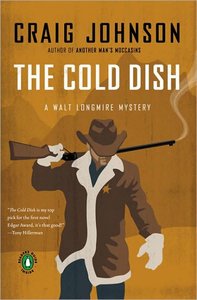
craig johnson longmire the cold dish

When I wrote about the first season of A&E’s “Longmire” in June 2012, my natural inclination was to compare the books and TV series. I’d been enjoying the books for a couple of years and hoped for the best for the series. The best I could say – I mean that sincerely – was that the show captured the characters and flavor but not the plot integrity of author Craig Johnson’s mysteries, set in a rural Wyoming county.

I noted some differences between the series and the books. The series omitted a few characters – Sheriff Walt Longmire’s predecessor in office,  crusty old retired sheriff Lucian, notably – and added a few, including Lucian’s nephew, ambitious deputy Branch Connally, who wants to unseat Walt in an election.

Missing was the forged-in-Vietnam bond between Walt and pal Henry Standing Bear, leaving the Bear’s motivations sometimes in doubt.

Also absent were a Philadelphia connection – deputy Vic is from there, and it is home to Walt’s daughter Cady’s law practice – and the sense of the mystical and spiritual, as Henry nudges Walt toward a deeper connection with the Native American spirits of the Wyoming countryside. Also absent, to some extent, were the Crow and Cheyenne supporting characters that filled the books.

Maybe the most egregious variation from the books is how the series has dealt with the death of Walt’s wife. In the books, she died before the first story began after a battle with cancer. Martha Longmire likewise died before the TV series began, but it’s implied she died at the hands of a drug dealer in Colorado and Walt (and perhaps Henry) then killed her killer.

longmire logo

I’m glad to say, most of the way into the second season of “Longmire,” that the series has greatly improved.

Sure, star Robert Taylor and supporting cast like Katee Sackhoff were always good. But the second season – perhaps with input from Johnson himself, perhaps from a realization on the part of show creators Hunt Baldwin and John Coveny that Johnson gave them excellent material to work with and they should take advantage of it – has seen the show capture the spirit – and sometimes the letter – of the books.

The first episode of the second season, “Unquiet Mind,” echoed the “prisoners on the loose in mountainous countryside” plot of the seventh book, 2011’s “Hell is Empty.”

The third episode of this season, “Death Came in Like Thunder,” explored the Wyoming Basque community that’s a big part of the books. One of the characters omitted from the TV series is Basque deputy Santiago.

And the second season even returned to two major plotlines of the books: Cady Longmire’s serious injury at the hands of an attacker – although in the books it happens in Philly, where’s she’s practicing law – and deputy Vic’s history on the Philly PD.

The Native American spiritualism that seemed so missing from the first season was greatly felt in the second, climaxing in a scene where Walt – to atone for the killing of his wife’s killer – hooks his chest in “Man Called Horse” style and suffers in the blazing sun.

And although I haven’t seen it yet, I’m told an episode even features the TV series version of Lucian.

I can’t think of a recent TV series that improved so markedly from the first season to the second. I think if you’re a fan of the books, you’ll find more to like than just the character portrayals and tone this season. If you’re not a reader of the books, you’ll find an enjoyable crime drama unfolding on a weekly basis.

‘The Bridge’ – Murder from both sides

the bridge leads

We’re living in a golden age of cable TV. Starting with “The Shield” and continuing through “The Walking Dead,” “Breaking Bad,” “Justified” and other series, what was once “basic” cable has in recent years given us serial dramas that rival novels for their depth, complexity and characters.

“The Bridge” is the latest episodic drama that fits that mold.

Based on a Danish/Swedish series, the FX series plays out on two sides of the Bridge of the Americas, between Juarez, Mexico, and El Paso, Texas.

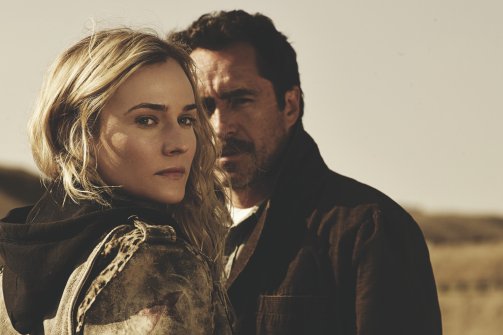
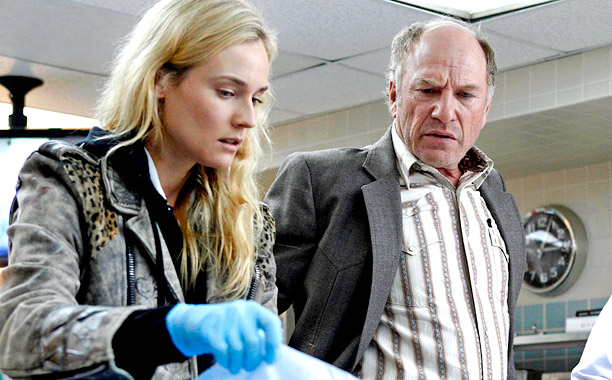
An El Paso detective, Sonya Cross (Diane Kruger), and a Chihuahua detective, Marco Ruiz (Demian Bichir), are called in when a body is found in the middle of the bridge. To their horror, they discover it is actually two bodies: One half is Mexican, the other American.

In service of its gruesome plot, the series launches into a mix of politics and murder, with a serial killer who seems to relish making statements about the disparities between American and Mexican life and justice as much as he enjoys killing.

The cops struggle to keep up as they deal with not only political considerations but a killer who sets out to shock. One episode puts the detectives in a race against time as they try to find a woman staked out in the desert, her slow death being shown via a webcam.

Kruger’s character is especially interesting: She has Apserger’s Syndrome and is prone to tactless pronouncements. Ruiz is a family man who, nevertheless, goes astray from his moral roots.

the bridge ted levine

There’s a good supporting cast, particularly Ted Levine (the killer from “Silence of the Lambs”) as Cross’ crusty cop superior. Annabeth Gish – looking very different from her “X-Files” days – is good as a widow with a secret.

the bridge street

The promos for the series were dark and macabre, focusing on gravesites and dark alleyways and remote haciendas in the desert. The promos sucked me in.

And the series followed through on that imagery. Each week, the story moves back and forth from the mansions of Texas to the seedy streets of Juarez to the dusty desert expanse. The tourism boards from El Paso and particularly Juarez can’t be any more thrilled with this depiction of the area than the chamber of commerce from Lexington, Kentucky is thrilled with the endless parade of meth heads, hookers and small-time criminals on “Justified.”

“The Bridge” is a little more than halfway through its first season and the early episodes are available online and on demand. It’s definitely worth the effort to try to catch up.

‘Fool Me Twice’ carries on Parker tradition

fool me twice robert parker brandman

With 70 books to his credit, masterful crime writer Robert B. Parker passed away in 2010. It might have seemed, for a few moments anyway, that classic detective characters like Boston PI Spencer, tough investigator Sunny Randall and New England small town police chief Jesse Stone might have died with him, along with the leads of other Parker series.

Then the Parker estate picked crime writer Ace Atkins to continue the Spencer series and Michael Brandman, a writer and producer who worked with Parker on adapting the Jesse Stone stories into a successful series of appropriately somber TV movies, was tapped to continue Stone’s adventures.

Brandman’s second Stone book – titled, somewhat unwieldingly, “Robert B. Parker’s Fool Me Twice,” takes us back to the small town of Paradise and not one, not two, but three storylines for Stone to unravel.

Stone, a recovering alcoholic and former LA cop, has settled into his job as small-town police chief but isn’t any less anti-authoritarian. Stone clashes with town council members as well as other law enforcement officials on a couple of the matters he faces here. Paradise is host to a movie production company and its troubled lead actress, Marisol, who is being menaced by her estranged husband; there are also complaints by town residents that their water bills are mysteriously high; and Stone butts heads with a rich family and their privileged teenage daughter.

Brandman is a writer gifted at telling his tale in Parker’s voice, and he does so quite well here. One of the plotlines feels kind of abrupt and another – Stone’s response to the troubled teen – is familiar to fans of Spencer, who showed the value of tough love to a couple of errant young people in that series.

As with all of Parker’s creations, the heroes are more than capable – so much so that there’s very little credible threat to their safety or their plans.

But Brandman, like Atkins, knows what Parker fans want: A strong but soft-spoken hero who can handle any number of tough guys and guys who think they’re tough.

In Brandman’s hands, I’m hoping Jesse Stone will be around for years to come.