Category Archives: mystery

Classic TV: ‘Night Gallery’

“Night Gallery” has, since the day it debuted as an irregularly recurring series on NBC in 1970, gotten a bad rap. During its three-year run, critics – and many viewers – alike judged it as Rod Serling’s unworthy follow-up to his ground-breaking anthology series “The Twilight Zone.”

And to be fair there aren’t many episodes of “Night Gallery” that have reached the iconic status of many episodes of “The Twilight Zone.” I recently watched “TZ’s” classic 1960 episode “The Monsters Are Due on Maple Street” and found its compact tale of paranoia and mob mentality still compelling, especially in these times.

But I’ve always loved “Night Gallery,” probably in part because it aired during my formative TV-watching years. I was devouring any kind of genre material in those days – movies, TV, comic books, novels, short stories – and “Night Gallery” fit a couple of those categories.

The show, hosted by Serling, just like “Twilight Zone,” and frequently featuring episodes he wrote, was as satisfying, to my young eyes, a presentation of the weird and the spooky as anything airing back in the day.

The pilot episode, which aired in 1969, was directed by Steven Spielberg and featured Joan Crawford, for goodness’ sake.

And how can we not love Serling? The gifted writer passed on in 1975, just two years after “Night Gallery” ended. He wasn’t much satisfied with the show by the end but that’s probably understandable. Serling’s talents no doubt made him less an artist and more a commodity to TV executives.

I’ve watched a couple of classic episodes recently on Hulu and thoroughly enjoyed them.
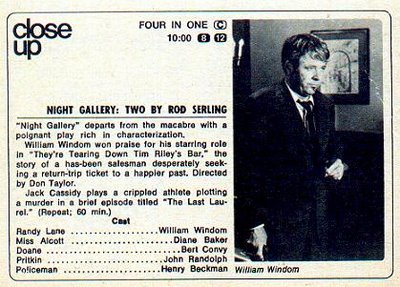
“They’re Tearing Down Tim Riley’s Bar,” from 1971, was written by Serling and comes across as more of a “Mad Men” story of corporate desperation than a spook story with William Windom as a business executive who’s been left behind in the rat race and longs for a past that lives on only in a shuttered neighborhood bar.


And bonus: Bert Convy plays Windom’s smarmy, conniving underling/usurper.
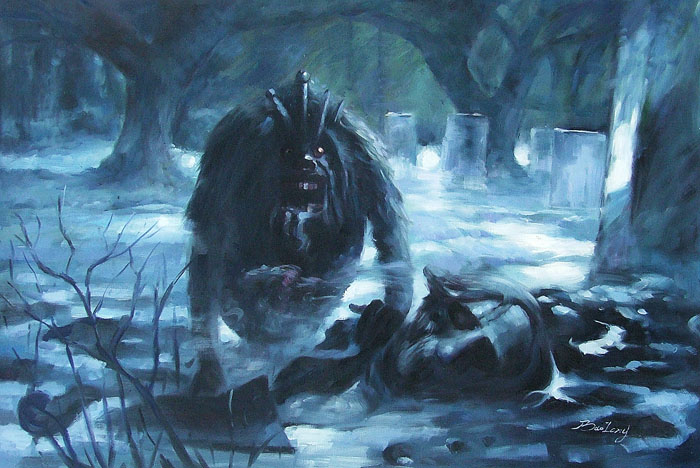
Much more straightforward, slow-burn horror could be found in “Pickman’s Model,” an episode I remembered quite well. Bradford Dillman played a turn-of-the-century artist who literally “paints what he sees.” The problem? He’s painting horrifying scenes of a monstrous ghoul that climbs out of the sewers and snatches people off the streets in a bad part of town.

From Larry Hagman to Leslie Nielsen to Victor Buono to Vincent Price, “Night Gallery” had an amazing rotating cast.

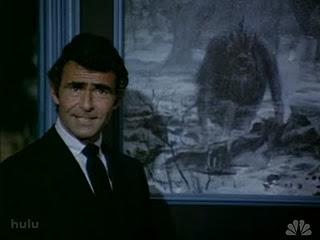
And presiding over it all was Serling, looking more dated in his shaggy haircut and mod jackets than he had as the buttoned-down host of “Twilight Zone,” but a welcome presence to be sure.

Check out Hulu’s collection of “Night Gallery” episodes. They’re also airing on MeTV, a nostalgia channel. “Night Gallery” was an immensely enjoyable follow-up to “The Twilight Zone” and, for me anyway, a fond send-off for Serling.

‘The Cut’ is a cool crime novel

There are a couple of moments in George Pelecanos’ crime novel “The Cut” when his protagonist, solider-turned-investigator Spero Lucas, finds his heart beating and blood racing, usually when he’s confronted with horrific violence.

But most of the time, Lucas is the epitome of cool. And that makes “The Cut” cool reading.

Somebody with better oversight of the world of crime novels would know the answer to this question, but I can’t help but wonder if we’re seeing a slew of new thrillers and hard-boiled PI books featuring capable young heroes newly back in the US after serving in Iraq or Afghanistan. Another good series, Ace Atkins’ books about Mississippi sheriff Quinn Colson, comes to mind.

Pelecanos is planning on turning Spero Lucas’ adventures in gritty DC into a series and it feels like a natural.

“The Cut” finds Lucas back home after his tour of duty in Iraq. He’s working for a defense attorney and distinguishing himself for his no-nonsense investigations.

Between cases, he’s contacted by an imprisoned drug dealer who wants to hire him to find packages of marijuana that have been stolen. The dealer was using that tried-and-true method of moving illegal materials: Shipping packages to houses that are vacant during the day, then sending his men to get the packages off the doorstep. Except that the packages are being stolen.

Lucas, who has a moral code but doesn’t frown on associating with criminals, decides he can work for the dealer for a 40 percent cut of the money recovered.

While chasing down leads, Lucas finds the case is a little too close to home for members of his family, including his brother, a school teacher. Lucas and a small circle of cohorts put themselves on the line to save a promising young student and avenge the deaths of a couple of likable guys who should have known better but didn’t.

Some readers might be perturbed by the way Pelecanos has Lucas so damn casual about everything, including working with less-than-savory characters and, frankly, murder. But the character is ideally drawn considering his military background and his “you or them” matter-of-fact attitude.

While the story is as straightforward as a Robert Parker Spenser novel, Pelecanos fills “The Cut” with a lot of nice little touches, from Lucas’ way with women to his love of food to his blended Greek-and-African-American family.

Pelecanos has written several books but may be best known as one of the creative types behind “The Wire,” the highly-regarded HBO series.

“The Cut” is my first chance to sample Pelecanos’ work. You can bet it won’t be my last.

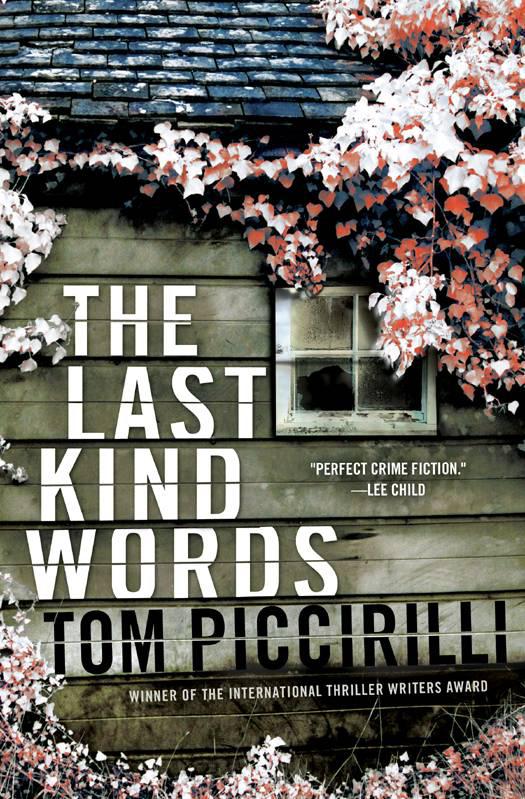
‘Last Kind Words’ mixes crime, family

Most crime novels are told from the point of view of the cops or a PI because that’s who we sympathize with. Author Tom Piccirilli’s “The Last Kind Words” is squarely in the corner of a Long Island, New York, family whose business has been, for generations, crime.

And you’ll find yourself sympathizing with them (at least most of them) and even rooting for them.

It helps that Piccirilli, author of several books, is such a solid writer and that he centers his book on Terry Rand, the youngest son in the family. Terry returns home after a five-year absence. He fled after his brother, Collie, went on a killing spree, shooting, stabbing and strangling several strangers one particularly horrific night.

The family finds Terry and lets him know that Collie wants to see him in the final days before he is executed.

Terry comes back and, reluctantly, returns to his old life and his family’s home. He’s reunited with his teenage sister, Dale; his mother and father, his grandfather and his two uncles.

Dale isn’t in the family business yet, although her current boyfriend is a mob wannabe. But his uncles, Mal and Grey, are still hustlers and card sharps. His father, Pinsch, is obsessed with his porcelain figurine collection but can’t resisting breaking and entering a house now and then. Terry’s long-suffering mom is caretaker for Shep, the family patriarch who, despite being nearly lost to dementia, is still the smoothest pickpocket around.

And then there’s Collie.

Collie has asked the family to contact Terry because of a bizarre twist from the night of the killing spree. In a prison visit, Collie tells a disbelieving Terry that he didn’t kill one of the eight people he was convicted of murdering. The killer is still out there and is still killing.

Terry must overcome his anger at his brother as well as the distance he’s put between himself and his family to try to arrive at the truth.

Plaguing Terry throughout the book: Is evil inherited? Sure, everyone in the family except for their mother and Dale is a thief, a pickpocket, burglar or scam artist. But does that make them evil?

And what pushed Collie over the edge? And could that madness affect other members of the family?

There’s an element of danger for the Rand family in a dogged cop who years ago pursued the family but, because of his own loneliness, has become something of a family member.

But the greatest threat to Terry comes from within himself and within the family.

Piccirilli’s sly sense of humor is an undertone in the book. If you noticed anything odd about the names of the family, Piccirilli gradually reveals that they’re all named after breeds of dog. (Terry’s name is Terrier, for example.)

“The Last Kind Words” is a terrific book. It’s steeped in cool noir, with bad guys and even badder guys.

Best of all, Piccirilli is working on another book about the Rand family. I’ll be reading it.


A cop to the end of the world – and after?

Is “The Last Policeman” a mystery novel or science fiction?

I guess it’s a bit of both, although I’ve seen it classified as science fiction most often.

But Ben H. Winters’ book – the first of a trilogy – defies an “either or” definition.

The book’s protagonist, Hank Palace, is a newly promoted police detective in a New England city that’s slowly falling apart, not unlike much of society. That’s because the world is coming to an end.

A few months before, scientists spotted a previously unnoticed asteroid a few million miles out. As the asteroid – a few kilometers wide – draws closer to Earth, it goes from a scientific curiosity to one of those “look what almost happened” news stories to a harbinger of the end: As the novel tells us in judicious flashbacks and fleeting memories, scientists determine that the asteroid, Maia, is on a collision course with earth.

As society’s conventions begin to fall by the wayside – turns out restaurant chains and cell phone companies are among the first to say “the hell with it” when the end of the world is a few months away – police like Palace have their hands full with suicides, people who skip right past “bucket list” and “party like it’s 1999” and go right to death.

As the story opens, Palace is investigating an incident in which a man apparently hanged himself in the bathroom of a McDonald’s – or, a pirate McDonald’s that sprang up after the company officially folded its golden arches.

Palace believes this latest dead body isn’t the result of a suicide and begins – despite the scoffing of a handful of other detectives – investigating the death.

Not surprisingly, for the first of three planned books, there are some plot elements left open at the end of “The Last Policeman.” While Palace solves the murder of the man in the bathroom, other, larger mysteries are left unresolved. Some of them include nearly-below-the-radar doubts about Maia and whether it will actually collide with Earth, no less end civilization.

Winters brings a nice sense of doom, leavened with some humor, to his story. I’m curious as to where he’s going in the second and third books and whether I should get my hopes up about the fate of the planet.


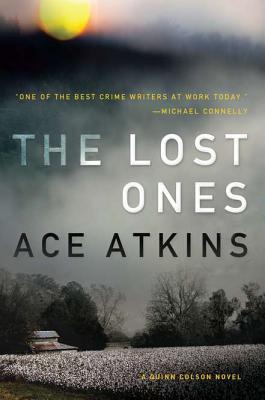
‘The Lost Ones’ good next step for Ace Atkins

After a few years as a writer of solid, entertaining crime novels, Ace Atkins drew a lot of attention among readers in the past year when he was chosen by Robert B. Parker’s estate to continue the beloved writer’s Spenser series. The result, “Robert B. Parker’s Lullaby,” was as good as anything Parker has written in recent years.

But Atkins is at his best when he plays with his own creations, including southern P.I. Nick Travers.

I’ve come to enjoy a new series by Atkins featuring Quinn Colson, an Army Ranger out of the military and back in his small Mississippi home town. Colson debuted in “The Ranger” and is back in “The Lost Ones.”

It’s no surprise that Atkins was chosen to continue Parker’s best-known series. He’s a straightforward writer prone to crime stories that feature a strong protagonist who knows right from wrong and pushes and pushes until the bad guys make a mistake.

In “The Lost Ones,” Atkins sets Colson, now the sheriff of Tibbehah County, against trouble from south of the border. An infant has been killed and Colson and dependable, sarcastic deputy Lillie Virgil and war buddy Boom find themselves dealing not only with a couple that buys and sells babies but also a crew looking to buy enough stolen guns to outfit an army.

Complicating matters are Quinn’s sister, Caddy, a true “lost one,” and his longtime friend Donnie, who’s catering to the gun buyers.

“The Lost Ones” is a satisfying read with an engaging set of characters. I look forward to Atkins’ next story about Colson and company.

Grimm P.I. Tales: The early work of Dennis Lehane

A decade ago, “Mystic River” became a best-selling, highly praised novel for its author, Dennis Lehane, and changed the way the public perceived him – and maybe the way he perceived himself.

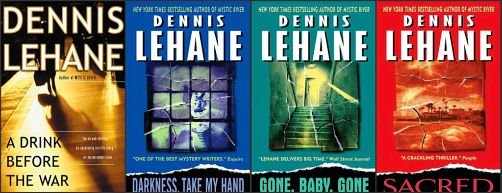
His previous books, revolving around the Boston private investigator duo of Patrick Kenzie and Angie Gennaro, were met with awards and acclaim. The first, “A Drink Before the War,” won the Shamus Award, one of the highest accolades for published mysteries. But the acclaim that greeted “Mystic River” elevated Lehane out of the ranks of typical crime novel writers.

Too bad.

While I liked “Mystic River” and, to some extent, “Shutter Island,” which came out two years later, in 2003, it is Lehane’s early work, the gritty and often downbeat series of novels about Kenzie and Gennaro, that remain my favorites.

A few weeks ago I mentioned that I was indulging in my irregular habit of re-reading the Patrick and Angie books. Along with other summertime reading, I’ve re-read the first three books in the series and thought I’d give you a quick rundown.

By all means, if you read the books – and they’re very rewarding, if very dark – read them in order.

“A Drink Before the War,” published in 1994, opened the series in fine form with Kenzie and Gennaro running their PI office out of a borrowed bell tower in a Catholic church in the blue-collar Dorchester neighborhood. Yes, I know, it sounds gimmicky, like something out of a TV show, and there’s a bit of a formula feel to the setup.

But “A Drink Before the War” is anything but a predictable, feel-good story, as Kenzie and Gennaro are hired by a group of politicians to find a statehouse cleaning lady who’s disappeared with some important documents.

Before long, the two find that everything isn’t what it seems, of course. Class and race tensions thoroughly permeate the action.

The book introduces not only the PIs but the cops in their neighborhood, the criminals – including Bubba, lifelong friend of Patrick and Angie and one of the most dangerous men to walk the streets of Boston – and Phil, Angie’s husband.

While Patrick is a smart ass not unlike Robert Parker’s Spenser – albeit with a dark, dark background – Angie is a complicated character. Phil is a wife-beater. He was once one of Patrick’s closest friends. Now Patrick has to tread lightly around Angie’s awful marriage out of fear of what might happen. Angie, like many victims, doesn’t know how or even seem to want to break free from her hellish life. Patrick has learned the hard way that he can’t interfere.

Before the book ends, Patrick and Angie will jump into harm’s way to right wrongs and expose the truth.

If “A Drink Before the War” seemed dark, the second Lehane book, 1996’s “Darkness, Take My Hand,” proved to be even more so.

When a sadistic killer begins plying his trade around their neighborhood, Patrick and Angie find themselves drawn into a mystery that dates back decades, to separate but equally unholy alliances among killers and among neighborhood vigilantes.

Unlike many crime thrillers, “Darkness, Take My Hand” emphasizes the toll that fear and violence takes on the lives of people who live with it every day.

The story climaxes in one of the most harrowing showdowns I’ve ever read.

Lehane’s third Kenzie and Gennaro story, “Sacred,” is probably the weakest of the original series of books but still a good read. Published in 1997, “Sacred” finds Patrick and Angie hired to find the missing daughter of one of New England’s richest men. It’s a departure from their typical story of Boston’s meanest streets and, to its debit, really could be about any male-female private eye partnership.

I haven’t yet dipped back into Lehane’s fourth book and the best-known of his non-“Mystic River” books, “Gone, Baby, Gone.” The 1998 book – made into a pretty good movie in 2007 by director Ben Affleck – might be Lehane’s best. I’ve read it several times and I’m looking forward to reading it and its 1999 follow-up, “Prayers for Rain,” in the coming weeks. When I do, I’ll note it here.

I’ll also talk about how Lehane’s writing goals seemed to change after “Mystic River” was a hit in 2001 and why his work has been very different since.


The greatest movies ever shown?

A couple of days ago, Sight and Sound, the prestigious magazine published by the British Film Institute, re-issued its list of the greatest movies of all time and made some headlines with a change at the top.

“Citizen Kane,” Orson Welles’ undeniably great 1941 story of a newspaper tycoon, has long set atop the list, which is made up through a poll of cinema experts. But the new list moved “Kane” down a notch in favor of “Vertigo,” Alfred Hitchcock’s 1958 psychological thriller.

My tastes are more pedestrian than those BFI and Sight and Sound poll, obviously. Of the top 10, I’ve seen “Citizen Kane,” “Vertigo,” “2001” and “The Searchers” – my foreign film experience has been limited, frankly to Kurosawa classics and the more offbeat genre outings – and agree those all belong pretty near the top.

But “Vertigo” the greatest movie of all time?

There are different measures of great, obviously. But I think I’d include other Hitchcock films, notably “Strangers on a Train” or “Rear Window,” as avidly as I’d include “Vertigo.”

Anyway. People love lists and love to debate the greatest movies, music, books and other works of art.

Ultimately, it’s all personal. I’m not going to complain one bit if you want to include “The Empire Strikes Back” at the top of your personal list. It would be pretty high on mine too.

The new top 10, according to Sight and Sound:

1. “Vertigo”
2. “Citizen Kane”
3. “Tokyo Story”
4. “La Regle du jeu” (“The Rules of the Game”)
5. “Sunrise: A Song of Two Humans”
6. “2001: A Space Odyssey”
7. “The Searchers”
8. “Man with a Movie Camera”
9. “The Passion of Joan of Arc”
10. “8 1/2″

Happy birthday ‘The Shadow’

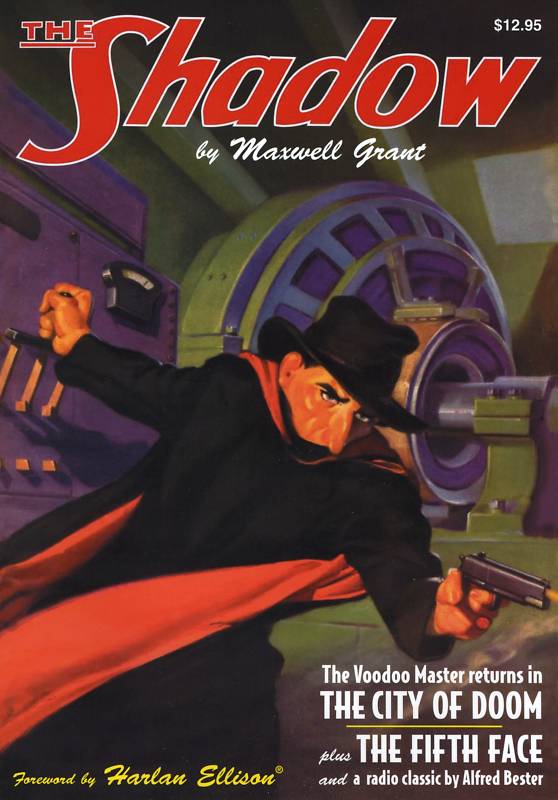
It’s the birthday of our favorite sinister, scary pulp magazine hero. This week in 1930, the character of “The Shadow” was created to serve as narrator of the “Detective Story Magazine” radio show.

On July 31, 1930, “The Shadow” made his debut on the air. The character caught on and publishing house Street and Smith hired Walter Gibson to write a series of pulp magazine stories that debuted in April 1931. He wrote under the name Maxwell Grant.

The character had a fabulously complicated story and history – even multiple secret identities – and enjoyed decades in the pulps and on the radio.

The character has been brought back periodically for comic books, which is appropriate since much about him – his fearsome reputation among crooks, his long cape-like cloak – influenced other famous characters like Batman, not unlike Doc Savage influenced Superman.

Besides a series of movies in the 40s, the character got a big-screen treatment in 1994 in a movie starring Alec Baldwin. It wasn’t bad but was far from a hit.

I’ve noted before my admiration for “The Shadow.” While the pulp stories are fairly typical of their time – and maybe not as good as the best of “Doc Savage” or “The Avenger” – the images of the character are undoubtedly iconic.

So happy birthday Shadow!


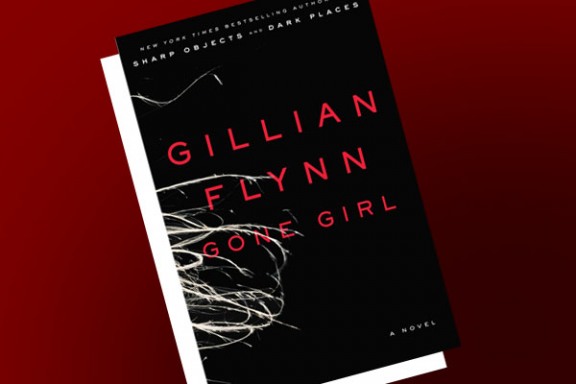
‘Gone Girl’ a twisted tale of marriage

I almost stopped reading “Gone Girl” less than halfway through the book.

It’s not that Gillian Flynn’s thriller, about a married woman who disappears and the growing shadow of suspicion that falls on her husband, isn’t well-written or absorbing.

It’s that Flynn, a former Entertainment Weekly writer, painted dual portraits of the husband and wife that were so sharp, so true-to-life, that they were pretty damn uncomfortable.

We’ve all seen this story played out too many times on tabloid TV: Pretty young woman goes missing. Husband seems oddly unmoved. As the police narrow their focus on him as a “person of interest,” he gets a high-profile lawyer. A loud-mouthed TV show host begins what amounts to a public crusade to convict the husband in the court of public opinion.

I almost didn’t have the heart to finish “Gone Girl.” But I kept going and was rewarded with a neat thriller that pulled me in and held me captive until the twisted ending.

Flynn tells the story of Nick and Amy Dunne, young marrieds who lost their jobs in the New York City media (thanks, Internet!) and moved back to his hometown in Missouri.

Nick seems to be a typical boy-man. He’s charming and good-looking but has never grown up. In NYC he ignores his wife and hangs out with buddies, drinking and flirting with women in bars. Back home in Missouri he takes care of his dementia-addled father and runs a bar with his twin sister, Margo (Go for short).

At the beginning of the book, Amy goes missing. At first it looks like she’s been kidnapped, maybe by one of the desperate men put out of work at the town’s only big industry.

But then the police turn their attention and their investigation toward Nick, who begins behaving oddly and outright lying to police.

Interspersed with chapters in the wake of Amy’s disappearance are her diary entries, over a period of several years, that seem to paint a picture of a troubled young woman. Among her troubles: The growing distance between her and her husband and Nick’s increasingly hostile behavior.

I was getting a little tired of Nick’s duplicity and Amy’s insipid second-guessing, but a little less than halfway through the book, Flynn throws readers a nice curve that very nearly turns the second half of the book into a completely new story. No spoilers here. Suffice it to say that, despite – or because of – a conclusion that is quite troubling, Flynn has written a terrific thriller.

Actress Reese Witherspoon is, according to news reports, going to produce a movie version with a screenplay written by Flynn. No word on whether Witherspoon will play Amy but I guess she’d be right for the part.

I’ve already cast Lizzy Caplan as Go. In my head at least.

“Gone Girl” hits so many notes perfectly. The tension between Nick and Amy’s parents after she disappears. The tactics of police investigators (“We want to help you, Nick”) and flashy, high-profile defense attorneys. Best of all is Flynn’s portrait of the Nancy Grace-style TV host, although after creating the character Flynn doesn’t do that much with it.

Flynn has scored a publishing sensation with “Gone Girl” and, if handled the right way, the movie could be a thriller to appeal to grownups.

One caveat: If you’re about to get married or are already married, “Gone Girl” will have you wondering about not only the little quirks of your relationship but the intent of the person on the other side of the bed from you. Flynn’s book is that good and that unsettling.

Secrets of ‘The Amazing Spider-Man’

Granted, “The Amazing Spider-Man” isn’t loaded with Easter eggs and teasers for the greater Marvel cinematic universe like “Iron Man” and every related Marvel movie since 2008. After all, “Spider-Man” was made by Columbia/Sony and is outside the Marvel movie universe. It’s not building to an “Avengers”-style team-up.

But director Marc Webb and the other makers of “ASM” have thrown a few strands of a larger Spider-Man story – as well as some Easter eggs – into the movie.

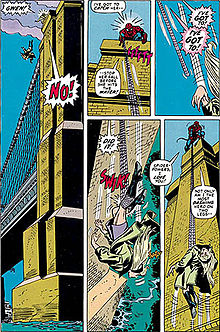
There she goes: Did anyone else wince at the scene when Peter, getting ready to fight the Lizard, apologizes to Gwen and tells her he’s about to throw her out a window? He does so, zapping her with a web and lowering her lightly to the ground below. He’s trying to get her out of harm’s way.

The scene was very reminiscent of the famous “Gwen Stacy dies” issues of “The Amazing Spider-Man” comic 121-122, in which the Green Goblin throws Gwen to her death, only to have Spidey catch her with webbing. But Gwen is dead anyway. I think the debate in fandom raged for years about whether the fall or the sudden stop at the end – thanks to Spidey’s webbing – was what killed her.

There’s no way that Webb didn’t realize the significance of throwing Gwen out of a building and catching her with webbing. Had to be an Easter egg – and foreshadowing.

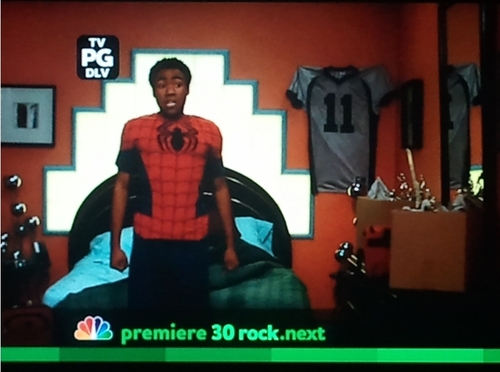
Tip of the hat: I’ll have to look for this Easter egg when I see the movie again, but I’m told there’s a photo of “Community” actor Donald Glover in Peter’s room in “The Amazing Spider-Man.” This is neat because, when the reboot was announced, someone suggested that Glover could play the part. The casting didn’t gain any traction, but now that Spidey in the Ultimate world is African-American, why not do a little universe-blending?

Meet the parents: Much more so than in previous “Spider-Man” movies, “The Amazing Spider-Man” teases about Richard and Mary Parker, Peter’s parents. They’re seen in a flashback at the beginning of the movie and some of the marketing for the film teased “the untold story” of Spidey’s origin. I don’t think the movie really lived up to this hype, but Webb and the screenwriters definitely created some aura of mystery about the Parkers and their connection to Oscorp.

After decades in which they were relatively overlooked in the comics – and their deaths were taken for granted as a mechanism to put Peter in his aunt and uncle’s care – Marvel decided to elaborate on the background of the characters, retconing them as agents of Nick Fury’s SHIELD spy organization. If “Amazing Spider-Man” generates sequels, it’ll be interesting to see how the makers explore the past of the characters – especially since SHIELD is part of the separate Marvel movie universe and theoretically not open to the “Spider-Man” movies.

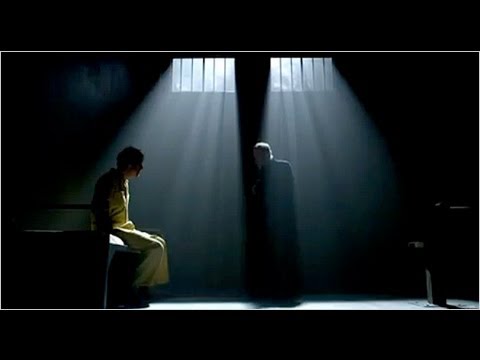
Who’s the guy? I mentioned this in my earlier review, but the movie’s end credits are interrupted by a scene of Rhys Ifans’ Curt Connors, incarcerated and being visited by a shadowy figure. I assumed this was Norman Osborn, the future Green Goblin.

But a number of sites have since theorized that the character was other Spidey villains as diverse as Electro (flashes of lighting? check) and Mysterio (abrupt appearance and disappearance? check).

Maybe we’ll find out in a sequel.