
Category Archives: mystery

Favorite authors: Dennis Lehane wages ‘War’

I’m pretty relentless in my appetite for new books. When I was a kid, I would go back and read and re-read books by my favorite authors, including Ray Bradbury, Robert Heinlein and Kurt Vonnegut.

But these days I’m always trying new authors or devouring everything by a newly-discovered favorite like Craig Johnson or Ace Atkins.

But every year or so, I dip back into the work of Dennis Lehane.

Considering how damn dark much of Lehane’s work is, it’s hard to imagine how it could feel like comfort food to me, but it does. Not so much “Mystic River” or “Shutter Island,” although I liked those (the former quite a bit).

No. When I want to relive my favorite Lehane experience, I jump back into his series of novels about working-class Boston private investigators Patrick Kenzie and Angie Gennaro.

The fourth book in the Kenzie and Gennaro series, “Gone, Baby, Gone,” was made into a pretty good movie in 2007 by director Ben Affleck. Not all of the novel’s grim appeal made it onto the big screen, but quite a bit did.
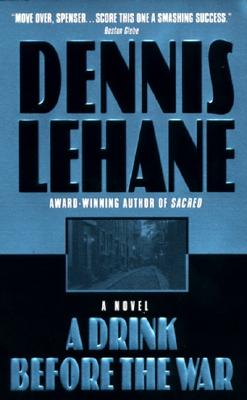
So now that I’m between new books to read, I’m starting the Kenzie and Gennaro series over again with the first, 1994’s “A Drink Before the War.”

If you’ve never read Lehane’s Patrick and Angie series, I’d highly recommend it. But you really have to read them from the beginning.

Lehane takes his characters, including not only the PI partners but their friends like Bubba, the former-Marine-turned-weapons-dealer-nutcase, through some pretty big – you might say dire – changes during the course of the series.

“A Drink Before the War” opens with Patrick and Angie working out of their customary office, the empty bell tower of a Boston Catholic church. Patrick is a smartass with a gooey center. Angie is a beautiful hellraiser with an awful home life.

The two accept a case working for some legislators and their toadies trying to find a statehouse cleaning woman who’s disappeared with some supposed “documents.”

Lehane gets to the nitty gritty quickly, touching on Patrick’s hellish childhood at the hands of his father, a now-deceased firefighter regarded as a homegrown Boston hero, and Angie’s regular beatings at the hands of Phil, her husband and Patrick’s childhood friend.

Patrick, of course, is deeply in love with Angie and seethes when he sees how Phil treats her. Patrick learned the hard way, though, about trying to intercede on Angie’s behalf.

The book manages to touch on class warfare, race relations and marital discord in a plot that’s liberally sprinkled with humor.

Make no mistake, however: Lehane’s vision of his characters is dark, dark, dark. Dark, I tells ya. It’s hard not to love Patrick and Angie and hard not to ache for the troubles that befall them.

But Lehane’s Kenzie and Gennaro books more than make the heartache worthwhile.

I’m planning to touch on the series here over the next few weeks. Pick up the series and follow along if you will.

But remember: Read them in order: “A Drink Before the War,” “Darkness Take My Hand,” “Sacred,” “Gone, Baby, Gone” and “Prayers for Rain.”

I can’t totally endorse Lehane’s 2010 return to the characters after more than a decade’s absence, “Moonlight Mile.” But we’ll get to that later.

Have fun!
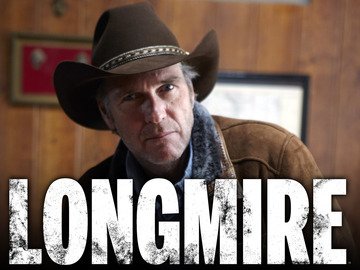
‘Longmire’ the TV show vs the Longmire books

I’m a fan of Craig Johnson’s Wyoming-set mysteries about Sheriff Walt Longmire and the offbeat citizens of his county, so I’m more than willing to give A&E’s “Longmire” series, based on the character, a try.

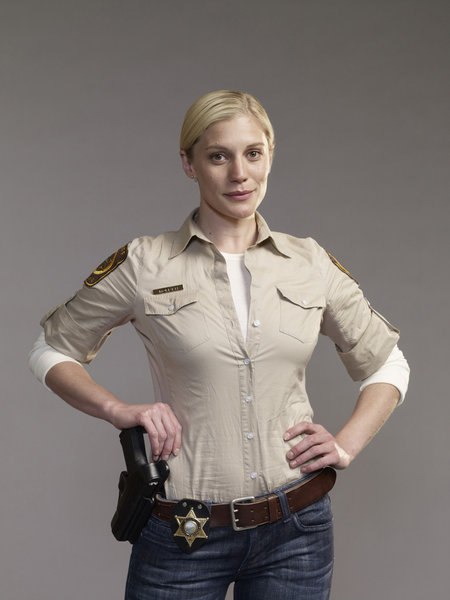
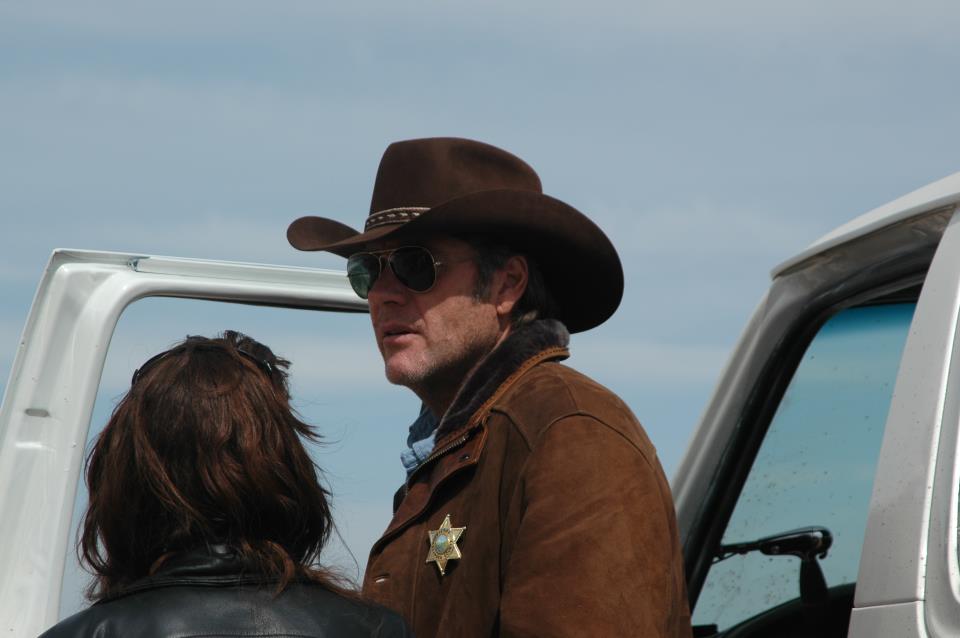
Robert Taylor is really growing on me as Longmire and Katee Sackhoff is ideally cast as Longmire’s deputy, Vic Morelli. Although the show was filmed in New Mexico, the stark, beautiful scenery works for me.

There are some important differences between “Longmire” and the Longmire books, however. Realizing they’re two different animals, I’m overlooking the variances for now.

But just for the record, here’s the most obvious divergences from Johnson’s books:

Cady, Longmire’s daughter. Cassidy Freeman is well-cast as Cady, the young lawyer who plays a central role in some of the novels. But the producers of the TV show made a choice by having Cady a resident of Wyoming rather than Philadelphia as she is in the books. That would appear to eliminate the Philly subplots (more on that next). It’s easier to have a long-distance character in novels than on a TV show, when viewers might wonder, “Why are there so many scenes in which two people talk on the phone?”

Philly: There’s a strong Wyoming/Philadelphia undertone to the books. Cady has a Philly law practice. Vic is from Philly. After the book in which Cady is injured and Walt and Henry Standing Bear go to Philly to find out what happened, Cady meets and falls in love with Vic’s brother, Philly cop Michael Morelli. I’m going to miss the Philly element of the TV series.

Natives: Several of the books, especially the newest, “As the Crow Flies,” have major plots and characters that revolve around the Cheyenne, Crow and other Native American nations represented in Wyoming and Montana. The most recent episode had Walt in a sweat lodge ceremony, an element of the latest book. I’d like to see a much greater representation of indigenous peoples in the books as well as …

The mystical. Almost from the beginning, the Longmire books have featured an undercurrent of the mystical as filtered through Native legends and beliefs. The mystical elements, including spirit guides of sorts who help Walt through tough spots, add a touch most other crime novels don’t have. I wish the series had more of this.

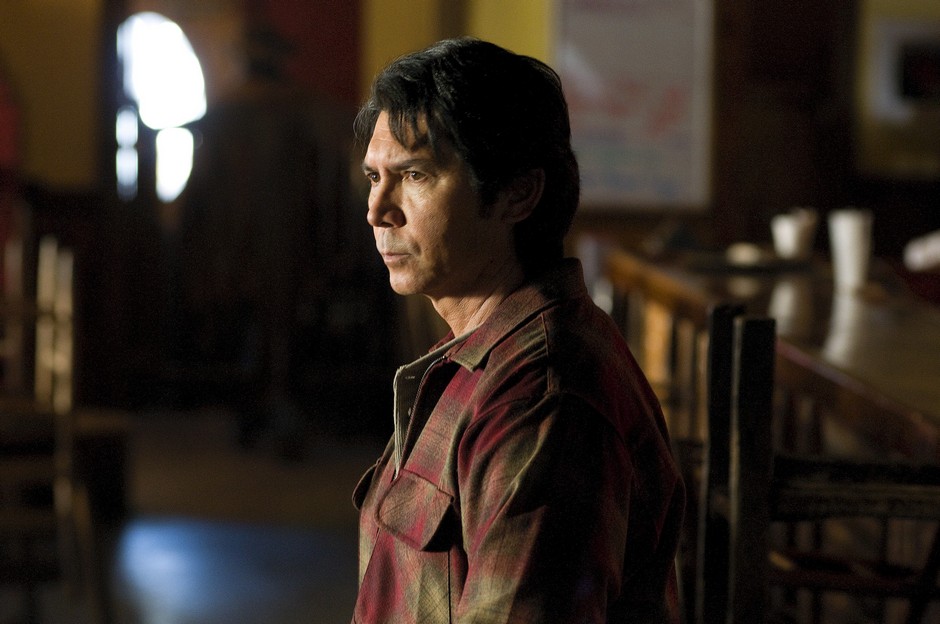
Which brings us to Henry Standing Bear. Lou Diamond Phillips is a very cool actor and he brings a familiar face to “Longmire.” But I’m not sold on him as the in-the-flesh representation of Henry Standing Bear, Walt’s lifelong Cheyenne friend and local bar owner.

I’ve noticed at least one, maybe two, moments in the series in which Walt seemed to doubt Henry, even wondering if he was up to something. That’s a different and not entirely welcome spin on the rock-solid relationship between the characters from the  books. And Phillips isn’t really physically right for role since Henry is such a huge figure. But Phillips is a nice presence and I’m willing to wait to see if he’ll establish himself in the part.

“Longmire” is a pretty good, if unsurprising, TV cop show so far. Here’s hoping it will grow to become even more.


Craig Johnson’s old sheriff ‘Longmire’ in books, TV

For a grizzled old sheriff in a small Wyoming county, Walt Longmire is getting a lot of attention lately.

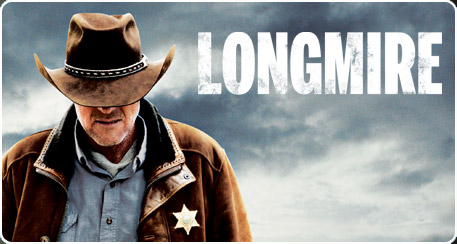
“As the Crow Flies,” author Craig Johnson’s latest novel about Longmire, came out a few weeks ago and “Longmire,” a new weekly series about the character, debuts tonight on A&E.

It’ll be interesting to see how A&E does with the series. Robert Taylor plays Longmire and, in the few clips I’ve seen, looks like he might be a good fit for the character, a laconic modern-day cowboy who’s a dogged detective but wears his heart on his sleeve.

As the series of books opened, Longmire was still recovering from the death, from cancer, of his beloved wife. His daughter, Cady (played by Cassidy Freeman in the A&E series) is an attorney in Philadelphia trying to help her father get back on track. Longmire’s lifelong friend, Henry Standing Bear (Lou Diamond Phillips in the series) is not only his anchor but his backup when dealing with the dangerous types — meth makers, murderous backwoodsmen, escaped convicts — that drift through the county.

A big part of the series is its spirituality. Not in the organized religion sense, but in Longmire’s discovery of the Native American beliefs of Henry and his fellow Cheyenne people as well as the Crow and other nations that populate the area.

The tie between Longmire’s small-town policing and the world of the reservation is especially strong in “As the Crow Files,” Johnson’s latest book. Longmire and Henry investigate the death of a young Native woman who fell from cliff while they watched. Her infant was clutched in her arms and survived the fall. Now Walt and Henry have to piece together who would push a woman and baby off a cliff and why.

At the same time, Walt is preparing for Cady’s upcoming Wyoming marriage to Michael Moretti, brother of Vic Moretti (ideally cast with Katee Sackhoff of “Battlestar Galactica” fame), Walt’s tempestuous deputy, a former Philly cop.

As in all the Longmire books, there’s an undercurrent of humor. Walt and Henry and Vic are dryly funny characters.

Besides the humor, there’s a somber feeling to Longmire as well as the aforementioned spirituality. Henry’s beliefs, which might come across as mysticism to some, gradually seem more plausible to Walt, who gets spiritual guidance at just the right time in many of the novels.

The A&E series, which seems intended to appeal to the type of audience that likes “Justified,” the FX series about a Kentucky lawman, might do a good job capturing the character-heavy drama of Johnson’s stories. It’s hard to imagine how it will capture the humor and spirituality. We’ll see tonight.


Brian Freeman is small-town tough in ‘Spilled Blood’

If you’re tried Brian Freeman’s books — many of them crime novels focusing on cops and lawbreakers in Minnesota — you know Freeman writes with a little bit of … kink.

There’s an element of the lascivious in his stuff. His female cops are sexy but have secrets. His male protagonists are sexy … but have secrets. Everybody’s a little on edge.

There’s a lot of edge but not as much of the old dirty stuff in “Spilled Blood,” Freeman’s latest mystery. It’s still a very enjoyable read.

The story follows Chris Hawk, a lawyer estranged from his wife and daughter. Chris leaves the big city and heads for small-town Minnesota when his teenage daughter, Olivia, is accused of murdering a teenage rival.

Of course, the towns of St. Croix and Barrons have plenty of secrets. St. Croix is the struggling blue-collar town while Barrons is the more upscale town where a chemical company is located. For the past few months, trouble between the two towns has been threatening to boil over because of a series of cases of cancer in St. Croix. The citizens there, including Olivia and her mom, suspect the chemical company of poisoning their town.

And it just so happens that the murdered girl was the daughter of the chemical company CEO.

Chris has to untangle the mysteries of the two towns, save his daughter and his wife and navigate his way through a cast of antagonists that includes murderous young hoods and an anonymous environmental crusader with his sights set on the chemical company.

Freeman is a clever writer. His characters are likable and his stories really move along at a good pace.

Spilled Blood” is a good, fun read.


‘Sherlock’ takes a leap with ‘The Reichenbach Fall’

Anyone who has read the Canon — as Arthur Conan Doyle’s Sherlock Holmes stories are known — knows the significance of Reichenbach Falls.

It was there, at the famous Swiss waterfall, that Conan Doyle’s famous consulting detective met his end. In the 1893 story “The Final Problem,” Conan Doyle — sick to death of the notoriety and fame and, yes, stereotyping and literary ghetto-izing that the Holmes stories had placed on his shoulders — decided to kill off Holmes once and for all. (Reader demand led Conan Doyle to reverse the decision a few years later.)

Holmes pursued Moriarty, the criminal genius, the spider at the center of the web of crime for all of England and a good portion of the globe, to the falls. Holmes’ friend and biographer, John Watson, becomes separated from the detective and later finds a note from Holmes. He is about to grapple with Moriarty atop the falls.

Two sets of footprints ascend to the top. No footprints are seen coming back down. Even an amateur detective like Watson can see that.

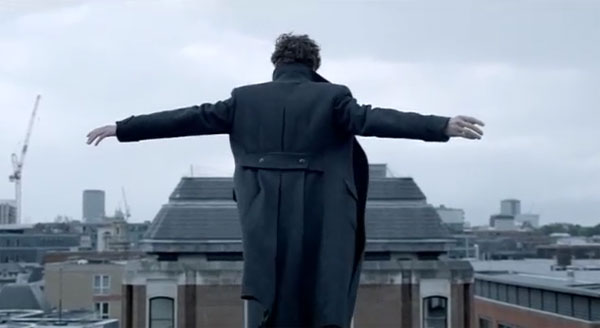
Tonight’s episode of “Sherlock,” “The Reichenbach Fall,” plays on that theme. After a cat-and-mouse game in previous episodes of the first and second seasons of the BBC series — airing on Masterpiece Mystery stateside — Moriarty begins an all-out assault on Holmes in this story.

Moriarty pulls off three seemingly impossible crimes: He opens the vault of the Bank of England, unlocks the gates of an impenetrable prison and seizes the Crown Jewels from the Tower of London.

But instead of making off with the priceless baubles, Moriarty sits on the throne, be-crowned-and-sceptered, waiting for Lestrade and the other London coppers to arrive.

Holmes testifies at Moriarty’s trial and — being Holmes — irritates the members of the jury so much that they exonerate the criminal. Or is some other game afoot?

After the trial, Moriarty shows up at 221B Baker Street and begins “playing” with Holmes. It is a game that sees Holmes trying to find a computer code of Moriarty’s design that can unlock virtually any door, any secret, a code that makes Holmes a target of an international set of assassins.

Meanwhile, Moriarty begins chipping away at Holmes’ reputation until only Watson is still in his corner. And even Watson’s faith is a little shaken.

Although there are only three “Sherlock” episodes per season — maybe because there are only three — the series is uniformly high in quality and clever beyond compare. I’m guessing they’ll do more episodes this year and we’ll get to see them in 2013. I sure hope so.

Other thoughts about tonight’s episode:

I love the way the series plays with how Sherlock and Watson are perceived. Tonight Watson is irritated to see himself described in the press as a “confirmed bachelor” and constant companion to Holmes.

As a member of the press, I’m a little chagrinned about how it was portrayed tonight. But it is the British press, after all.

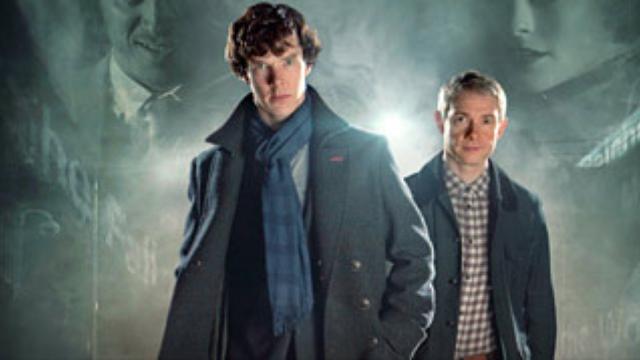
Benedict Cumberbatch and Martin Freeman continue to be among my favorite Holmes and Watsons of all time. Cumberbatch in particular isn’t afraid to play Holmes as unlikable for most of an episode.

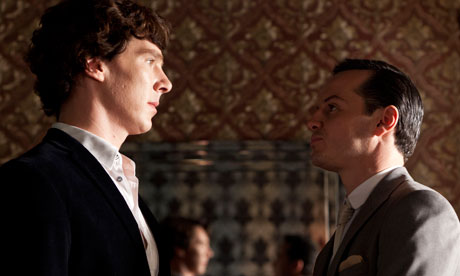
Andrew Scott played Moriarty with just enough crazy. A little bit more would have been too much. If tonight’s episode, in the style of “The Final Problem,” proves to be his swan song, it was a good one.

Most of this show is attention-grabbing and attention-keeping. There’s some effort involved, of course, in keeping up with the quick-paced, accent-tinged dialogue delivery. But the riveting stories and scenes are another reason to keep watching the screen. The two main dialogue scenes between Holmes and Moriarty in tonight’s episode could not have been more mesmerizing.


Atkins takes over for Parker with ‘Lullaby’

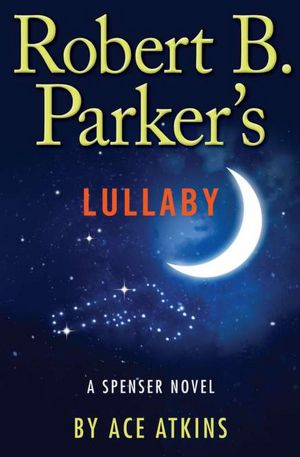
Maybe the greatest compliment that I can give Ace Atkins is that “Lullaby,” his debut taking over the reigns of Robert B. Parker’s Spenser crime novel series, reads link vintage Parker.

Parker had been turning out books featuring Spenser, the boxer-turned-private-eye, since the Vietnam War and straight up until his death in January 2010. Parker told stories about Spenser, his longtime girlfriend Susan Silverman and Spenser’s dangerous cohort Hawk in a relaxed but muscular style that mixed hard-boiled action, genuinely funny witticisms and relaxed, likable characters.

Atkins — one of two writers taking over a couple of Parker series — is an accomplished author on his own. He’s written a series of crime novels that take place in the steamy modern-day south.

With “Robert B. Parker’s ‘Lullaby,'” Atkins has continued the Spenser series with all of the wit and a little more effort than Parker was putting into the books at the end.

Spenser is hired by Mattie, a tough Boston 14-year-old whose drug addict mother was killed four years ago. A neighborhood mook is serving time in prison for the murder but Mattie — hardened beyond her years and raising her younger siblings with no help from an alcoholic grandmother — is convinced that someone else killed her mother. She saw some goons push her mother into a car a few hours before her death.

With Mattie frequently insisting on tagging along, Spenser and Hawk shake down the Boston underworld, top to bottom, looking for the real killers. The good guys take their lumps but there’s little doubt of the outcome.

Most of the Spenser supporting cast is here, from cops Quirk and Belson to loyal hoodlum Vinnie, even gym owner Henry and Pearl the Wonder Dog.

Atkins gets it right when it comes to Parker’s portrayal of Spenser’s style: The PI pushes and pushes and waits for some lowlife to come unglued.

I’m very glad the Parker estate chose Atkins to continue the Spenser series. In just his first outing, he’s found the style that Parker fans have appreciated for decades. And he just might have improved on recent Parker outings.


Elvis (Cole) lives in ‘Taken’

Sherlock Holmes and John Watson. Spenser and Hawk. There are some pretty amazing duos in crime fiction. I’d put Elvis Cole and Joe Pike right up there with the best of them.

Cole and Pike, the creations of crime novel author Robert Crais, return in “Taken,” Crais’ latest book about the cool Los Angeles detective and wiseguy Cole and his man-of-few-words-but-lots-of-deadly-action partner Pike.

Crais has played change-up a bit in recent books, sometimes concentrating more on Pike and less on Cole. In “Taken,” the author splits the story pretty evenly between Cole and Pike with a little attention paid to Jon Stone, Pike’s equally deadly but much more flamboyant associate.

As usual, Cole is a practical but noble example of the classic “knight for hire” crime novel character. Here he’s hired by a LA businesswoman to find her college-age daughter. Cole quickly determines that the daughter and her boyfriend have been taken by ruthless criminals who prey on human traffickers and the undocumented immigrants they smuggle into the country.

The twist in the story is that Cole himself gets taken by the bad guys and it’s up to Pike and Stone to get him back.

Crais, like Robert B. Parker did with his Spencer books, makes his protagonists immensely likable. Although Pike is quiet and mysterious, Cole is a flippant hero, needling the bad guys in his efforts to push them into mistakes.

It’s hard to imagine that Crais has been writing about Cole and Pike since 1987. He’s written 15 books about the two as well as some stand-alone novels that have fed into his series.

While the last few books haven’t had the punch of the first several, Crais has deepened our understanding of Cole and Pike — particularly Pike — and fleshed out their personalities. While the books might not carry the emotional weight of the early entries in the series — especially now that Cole’s relationship with attorney Lucy Chenier seems to be on the back burner — they’re still absorbing, entertaining reads and time spent with familiar characters.


‘Sherlock’ runs with the pack in ‘The Hounds of Baskerville’


Since it was published in serialized form in 1901 and 1902, Arthur Conan Doyle’s “The Hound of the Baskervilles” has become one of those touchstone Sherlock Holmes stories. As much as everybody knows (often wrongly) that Holmes was a “difficult” genius and that John Watson was always a step behind him, everyone knew that Holmes took on a huge, mysterious hound in this Conan Doyle novel.

So the makers of “Sherlock,” the BBC production airing on PBS’ “Masterpiece Mystery” series, had to do an adaptation and had to do something different.

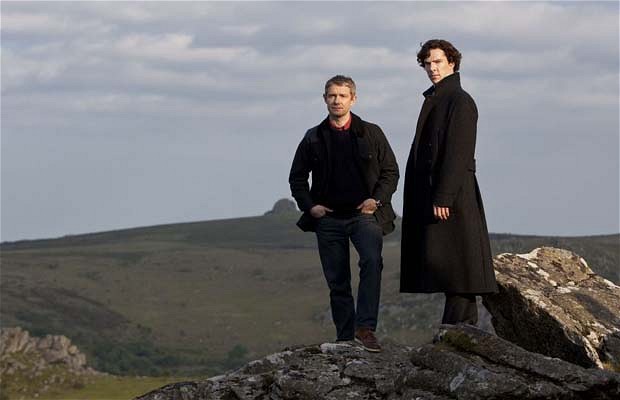
In “The Hounds of Baskerville,” the second of three “Sherlock” episodes in this season, Holmes (Benedict Cumberbatch) and Watson (Martin Freeman) take on the case of Henry Knight, who remains traumatized by seeing his father killed by a huge hound 20 years before. The two venture into the English countryside, specifically to the Baskerville military research base, to find out if giant glowing dogs with red eyes really do exist.

In the process, they have brushes with Sherlock’s brother Mycroft (the top-level British intelligence agent) and even James Moriarty, the warped genius who has become Sherlock’s nemesis. The ending of tonight’s episode forecasts the return of Moriarty next week.

Of course, Holmes and Watson also have the misfortune of running into that hound — as well as a couple of levels of conspiracy.

A few thoughts about the episode:

I loved that Holmes at one point notes that the CIA has a top-secret facility in Liberty, Indiana. That’s just down the road from me and I can assure you that if the Company has set up shop there, it’s pretty well hidden. Made me wish, for a moment, that they had chosen Muncie like everyone from “Tom Slick” to “The Simpsons” to “Hudsucker Proxy” to “Angel” has.

Not that there’s anything wrong with that: Not for the first time in the run of the series, someone mistakes Holmes and Watson for a couple. Cute.

Watson mockingly refers to Holmes as “Spock” after a scene in which Holmes is shaken by his failure to keep his emotions in check. Comparisons between the two have always been made and “Star Trek” episodes have obliquely referred to Spock’s ancestor Holmes (possible, as Trek fans know, because Spock’s mother is human). But for a joke that trumps all, Cumberbatch plays the bad guy in the now-in-production “Star Trek” movie sequel.

This Sherlock turns to cigarettes when he’s bored and anxious between cases, and not a seven percent solution.

Tonight’s episode had the misfortune of airing in the US following a couple of successful movies that had similar elements. The Baskerville hound looked a bit too much like the “mutts” in “Hunger Games,” while the idea of mind-altering gas released into outdoor settings echoed “Cabin in the Woods.”


‘Sherlock’ returns with ‘Scandal in Belgravia’

One of the unexpected pleasures of TV in the past couple of years — along with “The Walking Dead” and a handful of other shows — has been “Sherlock,” Steven Moffat’s modern-day updating of Arthur Conan Doyle’s Victorian-age detective Sherlock Holmes.

There have been so many — hundreds — of stage, film and TV adaptations of the Conan Doyle books and short stories in the past century years that it’s hard to imagine crowning one as the best, particularly one that takes such liberties with the content of the canon. But “Sherlock,” a BBC production airing on PBS’ “Masterpiece” series (with two more installments to come May 13 and 20) is certainly near the top of the list.

In the series, set in the present day, Holmes (Benedict Cumberbatch) and Watson (Martin Freeman) forge the offbeat relationship familiar to readers of the original stories. Holmes is a brilliant consulting detective, Watson a physician and soldier. Each man is troubled in some respects. Watson is recovering from physical and spiritual wounds suffered in Afghanistan while Holmes is, for all his British intellect and wit, a stranger in a strange land.

The updated series uses original Conan Doyles stories (and titles; tonight’s episode is a take-off on “A Scandal in Bohemia”) as jumping off points, mixing in high-tech touches along with Holmes’ old-school detective work. In other words, for every scene in which Holmes deduces someone’s life story by observing stay hairs on their pants or scuffs on their shoes, there’s another scene in which Holmes or one of the players is texting on their smartphone. Just as Conan Doyle’s original writing had Watson publishing stories about his exploits with Homes — much to Holmes’ bemusement — in the new series, Watson writes a popular blog about the detective.

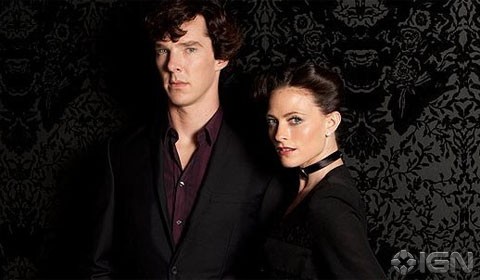
Tonight’s episode, like the 1891 original, introduced Irene Adler, a woman who is Holmes’ equal in sheer, cool intellect. In “Sherlock,” Adler is a high-society dominatrix who, as the  episode opens, is being sought for the compromising photos of a member of the royal family on her cell phone.

Adler is, as fans know, “The Woman,” the female who greatly intrigued Holmes, who was very likely his perfect match … if not for her habit of lawbreaking.

In “Belgravia,” we get some choice “Sherlock” scenes, as Holmes stays one step ahead of the police and the bad guys even as he struggles to keep up with Adler.

All the key ingredients to the “Sherlock” series are here: Holmes and Watson’s fond verbal jousting; landlady Mrs. Hudson; even Holmes’ nemesis James Moriarty. The opening of the episode resolves the standoff between Holmes and Moriarty from the end of the first season.

“Sherlock” revels in its modern-day ingenuity — the use of technology and London’s cool blue exteriors give the series a properly detached feel — as much as it encourages us to focus on Holmes’ never-out-of-style intensity.

Cumberbatch and Freeman are among the best portrayers of Holmes and Watson ever. Cumberbatch gets a showy role but Freeman — soon to star in “The Hobbit” with Cumberbatch providing the voice of the dragon Smaug — is an understated delight.

“John Hamish Watson. Just in case you’re looking for baby names,” Watson mutters at some point when Holmes and Adler are striking sparks.

And what an Alder Lara Pulver is. I love Rachel McAdams, who plays Adler in the current Robert Downey Jr. Holmes movies. But Pulver makes McAdams look like the high schooler she played in “Mean Girls.” Pulver, who matches Cumberbatch in cheekbones and ivory skin, is gorgeous and dangerous. She’s utterly believable as “the woman” in Holmes’ life.

Next week, “Sherlock” takes on “The Hound of the Baskervilles.” I’ll be watching.

Waiting patiently for Sheriff ‘Longmire’

One of my favorite mystery novel series right now is Craig Johnson’s Walt Longmire series, which follows the sheriff of a sparsely populated Wyoming county as, slowly and sometimes painfully but with dry humor, he recovers from the cancer death of his wife and keeps the peace.

Johnson’s Longmire is a tough guy with a soft heart. He’s no spring chicken — Longmire and his native buddy, Henry Standing Bear, served in Vietnam together — but he’s rough and ready. Longmire is more than capable of dealing with the kooks and criminals that pass through his county.

His vulnerability is his heart. Longmire worries — with good reason — about his smart and independent daughter, Cady, and tries to figure out his relationship with Victoria Moretti, his imported-from-back-east deputy who is as rough-edged as she is tempting.

The books have their fair share of action, often involving the inhospitable Wyoming terrain and a group of surly bad guys. But the Longmire stories won’t be mistaken for “Die Hard.” Longmire can defuse a situation as handily as he can brawl his way out.

In light of the success of cable TV series like “Justified,” A&E announced last year that it would turn Johnson’s Longmire books into a series. “Longmire” debuts June 3.

I hope they get the show right. Robert Taylor seems a little too young to play Longmire, and Lou Diamond Phillips will have to convince me he is Henry Standing Bear. Katee Sackhoff couldn’t be more perfect as Vic Moretti, though. Sackhoff has the perfect mix of sex appeal and hot-headedness to play Vic.

I’ve read all of Johnson’s books and I’m looking forward to the next, “As the Crow Flies.”

And I’m looking forward to — if a little anxious about — the TV version.