Category Archives: Star Wars

‘Star Wars,’ ‘Doctor Who’ legends pass away

stuart-freeborn-yoda

A moment of thoughtful consideration, please. Two genre legends have passed away.

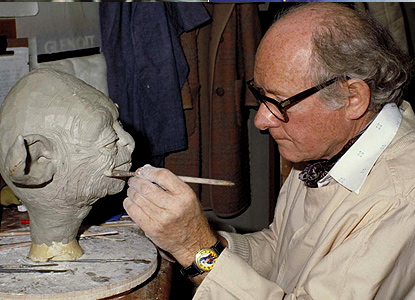
British makeup designer Stuart Freeborn has died at 98.

Freeborn worked on 75 movies during his career, according to the New York Times, including creating the apemen from “2001: A Space Odyssey.”

But he is best known for creating the look of Yoda, the puppet embodied by Frank Oz in “The Empire Strikes Back.” Freeborn’s creation has lived on in several movies, animated series and, no doubt, future “Star Wars” movies now in the planning stages.

Freeborn famously decided Yoda’s look needed to include eyes reminiscent of Albert Einstein.

Ray-Cusick-dalek

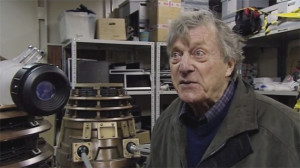
Also leaving us was another talented Brit, Ray Cusick, who died at age 84. He created the most famous “Doctor Who” adversary, the robotic Daleks, for a 1963 episode of the series.

The world of entertainment is better for their roles in it.

Geektastic: The Force is with us

return-of-the-jedi-vader-and-luke

I’ve lost track of the rumors and likely developments coming, fast and furious, at geeks and genre fans this week.

Rumors that Marvel is planning to base a lot of its Phase Three movies – following the “Avengers” sequel, a group of films to include “Ant-Man” and possibly “Dr. Strange” – on a multi-movie adaptation of the “Planet Hulk” and “World War Hulk” comics.

Reports that Chris Pratt, the goofy guy from TV’s “Parks and Recreation” and one of the Seals from “Zero Dark Thirty,” would play Peter, the human lead of “Guardians of the Galaxy,” one of Marvel’s Phase Two tentpoles.

The announcement by Disney’s Robert Iger that, in addition to making the three “Star Wars” sequels, the studio would make stand-alone stories in the “Star Wars” universe. A Yoda movies? A Boba Fett movie? Does it sound like Disney is following the game plan established by its Marvel subsidiary?

And heck, all that’s in addition to the line-up of movies already coming out this year, from “Iron Man 3” to “Star Trek Into Darkness” to “Thor: The Dark World.”

My son doesn’t remember a time when each year wasn’t a non-stop parade of science fiction, fantasy and comic book characters on the big screen. When you couldn’t pick up a magazine and see Iron Man looking back at you from the cover.

But I remember.

So it’s a pretty damn cool time to be us, huh?

And we’re back. Maybe.

simpsons technical difficulties

Yesterday, like several billion other people with access to the Interwebs, I tried to post some thoughts on the news that director/producer J.J. Abrams, who rebooted the “Star Trek” franchise, was reported to be directing the next movie in the rebooted “Star Wars” franchise.

Not only didn’t all of that blog entry post, but something – the photo of Abrams I used, the lens flare joke, something – caused the blog to go south. A week’s worth of posts disappeared.

Right now it looks like once I deleted the Abrams post the previous posts came back. Which is great, because I didn’t look forward to reposting several items.

You get what you pay for, I suppose. Word Press blogs – at least the type I have – are free, after all.


What we want to see in new ‘Star Wars’ movies – and what we don’t

The announcement that George Lucas had sold Lucasfilm to Disney for $4 billion – and that Disney intended to release new “Star Wars” movies, beginning in 2015 – was just the beginning.

Then came news that “Toy Story 3” writer and Oscar-winner Michael Arndt was writing the first movie and, in fact, had written a lengthy treatment for all three movies.

All of a sudden the possibility of new “Star Wars” movies was real. And then word came out that Harrison Ford wasn’t actively opposed to making an appearance in a new movie, presumably as an aging Han Solo, and that Carrie Fisher and Mark Hamill were enthusiastic about reappearing as Luke and Leia.

So since this is really happening, what do we want to see in new movies?

Keep in mind that I’ve only read one “Star Wars” original novel, “Splinter of the Mind’s Eye,” that came out while the original trilogy was still being made. I know only a little about what happened in the later books that took the form of sequels and prequels and killed poor old Chewbacca.

In other words, I don’t know if these ideas have already been out there. I just know that they intrigue me.

Consider mixing things up in time. While the stories will likely take place after the original trilogy, it’s not a given that they take place 40 years later. Maybe recast the main characters for action that takes place right after the timespan of the original movies but have some scenes featuring the original actors playing older versions of their characters. It worked to have Ford play an older Han Solo in Lucas’s “Young Indiana Jones” TV series.

Let us have more Luke and Leia and maybe more Han Solo, even if they’re in cameos. But make it dignified and make it make sense.

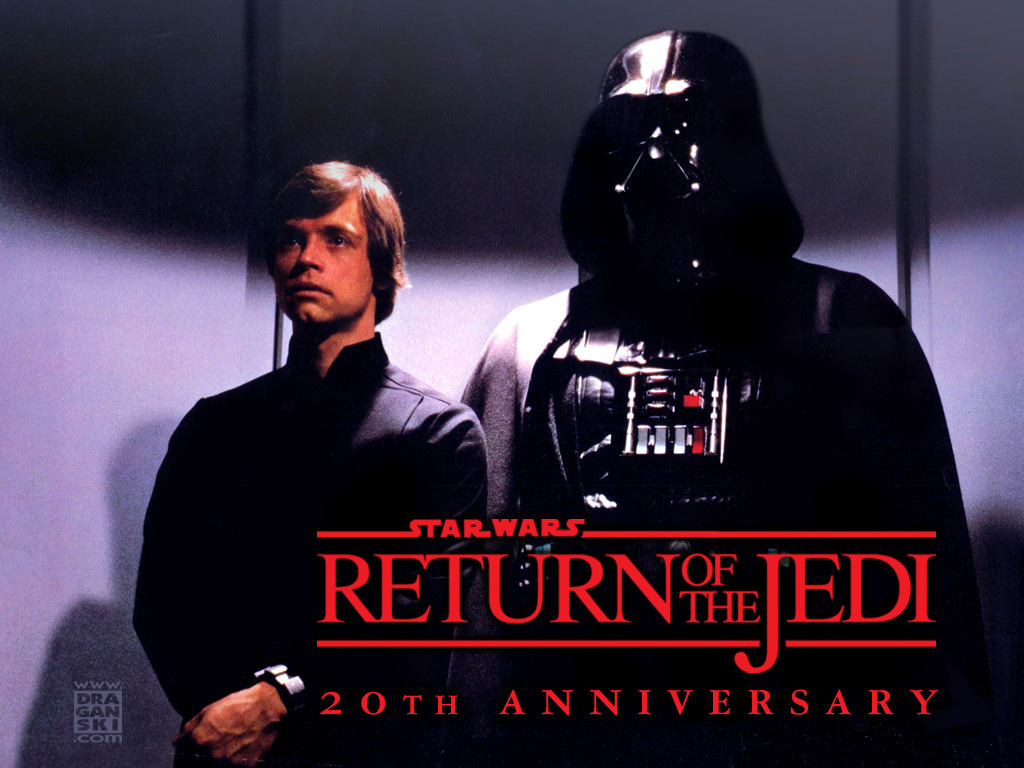
Don’t bring back Darth Vader. I know it would be tempting to resurrect the former Anakin Skywalker. But the first two trilogies were all about his fall and redemption. It would cheapen everything to bring him back.

Bring back, or at least make reference to, the occasional supporting character. Lando, Chewie and others would be a nice presence.

Make the scope of the movies range from the personal to the epic. It would be great to see intimate drama and suspenseful stories about characters in the huge “Star Wars” universe, even characters we don’t know yet. Take a cue from the “Clone Wars” series here. But also consider the type of galaxy-spanning action the earlier movies specialized in as an essential element.

Maybe take a pass on the droids. We can have some robots, for sure. But I don’t know that I ever need to see C3PO and R2D2 again.

While you’re at it, lose all the cute characters. No Ewoks. No Gungans. And yes, I realize that might feel like the path to alienating the younger kids who will be the primary audience for the ongoing movies. But, again, take a cue from the “Clone Wars” animated series. They’re fun and action-filled and respect their audience.

Jedis would be good.

Lots of the Force. And not Midi-Chlorians.

Yoda. I wouldn’t mind seeing Yoda again. And yes, I know he’s a glowy Jedi ghost now. But a smart guy like Arndt can find a way to make it work.


Thoughts on Disney becoming the master of jedis

So you might have heard this a few days ago, but Disney – home in recent years to Pixar and Marvel – bought Luscasfilm. For a cool $4.05 billion.

Setting aside that staggering figure for a moment – hella big even though the price tag was probably a bargain – the announcement made the Internet freak out and produced wonderful memes like the one above by Geek Girl Diva.

It also left us wondering what happens next. Well, some of that we already know. Disney immediately announced it would make three more “Star Wars” films, with the first coming out in 2015 (the summer of the “Avengers” sequel). The films would be episodes 7, 8 and 9, the long-rumored continuation of the story that left off with “Return of the Jedi.” Will we see aging Han Solo? Luke leading a rebuilding of the Jedi order?

There was some degree of fanboy moaning about the news, but probably less than there might have been if “Star Wars” creator George Lucas hadn’t made so many mis-steps with the prequel trilogy beginning in 1999.

A lot of people – and I think I count myself in this crowd – think that it’s perfectly fine for somebody other than Lucas to oversee the fate of his creations, for a couple of reasons:

Lucas has been pretty tone-deaf about what’s wrong with the (particularly later) movies.

A billionaire many times over, he’s shown little inclination to make new “Star Wars” movies (maybe that’s not a bad thing considering the prequels).

I will say, however, that Lucas and his people made a very good decision regarding the “Clone Wars” animated series on Cartoon Network. The series has been far more adult, far more diverse and far more interesting than the prequel movies.

Most importantly, although 30- and 40- and 50-something fans don’t like to admit it, the “Clone Wars” series reached a whole new generation of fans.

I just asked my son if, when he thought of “Star Wars,” he thought of the movies or “Clone Wars.” He answered, “Clone Wars.” He’s seen the live-action movies on DVD but that didn’t have the impact on him that seeing the original trilogy had on me, as a teenager and young adult.

“Clone Wars” has kept “Star Wars” alive and relevant for a new generation.

Although a lot of people have complained about changes Lucas made to the original movies – the Han Solo/Greedo shootout comes to mind, of course – for subsequent re-releases, he has, at least, kept them in the public eye and at the top of fanboy discussions. When was the last time somebody had an Internet meltdown about “The Last Starfighter?”

Beyond the new trilogy, what are we likely to see?

More merchandising, of course. Not that there wasn’t plenty of that anyway.

Regular theatrical movies and new TV series and releases of original content on disc.

Someday, in the future, dramatic mashups and re-imaginings of the existing movies and characters. Disney based “Pirates of the Caribbean” on a Disney park ride, after all, so there’s a willingness to try new things if audiences will respond. Who’s to say we won’t see feature films or series based on minor characters and events from the familiar stories, ala “Rosencrantz and Guildenstern are Dead?”

And that’s a good thing. There’s always been debate about whether “Star Wars” was for kids or for the general moviegoing audience or for the fans who’ve kept it alive and relevant and in the public eye for decades, even during some pretty lean times.

I think the answer is that “Star Wars” has been for all of those audiences. And Disney has the power to reach all them.

Movie magic: My favorite big-screen moments

How many times, while watching a movie, did you find yourself wearing a huge grin of appreciation, chuckling with approval or outright yelling “YES!” back at the screen?

If that sounds familiar, you’ve had some goosebump moments, scenes that connected on a visceral level with you as a moviegoer.

I’m a lifelong movie fan and I’ve had a lot of those moments. But these are some of the very best.

The head popping out of the boat in “Jaws.” When my friend Jim and I went to see “Jaws” for the first time, the showing was sold out. We decided to wait for the next one, hanging out in a nearby ice cream shop. As we sat there, incredulous, the clerks behind the counter – who had somehow already seen the movie – dissected the entire plot, scene by scene, including the moment when, as Richard Dreyfuss dives to investigate a wrecked boat, the head of Ben, the shark’s victim, floats out of a hole in the hull. Even though the ice cream shop kids spoiled the moment for us, it was still amazing to see.

“Star Wars” and the passing of the Imperial ship overhead. Just after the opening credits of the groundbreaking 1977 science fiction classic, the blockade runner ship carrying, as we will soon find out, Princess Leia, passes overhead. The model is impressively detailed and looks big. Then the Imperial cruiser carrying, as we will soon find out, Darth Vader, passes overhead. And passes. And passes. And passes. You think it’s done but – psyche! – it’s just the docking bay. So it goes on and on and on some more.

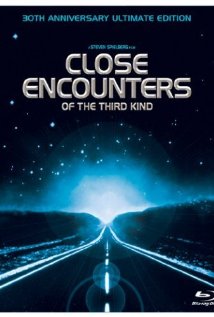
Muncie in “Close Encounters of the Third Kind.” I was born and raised in Muncie, Indiana, so it was particularly goosebump-inducing to see not only the onscreen subtitle for Indianapolis but my hometown of Muncie. So the portrayal of Muncie and its denizens wasn’t very flattering. It was our biggest big-screen moment.

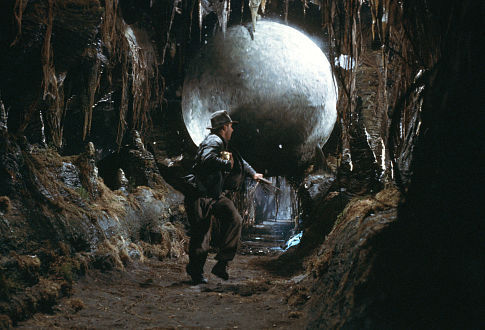
The boulder in “Raiders of the Lost Ark.” I didn’t know what to expect from Steven Spielberg’s homage to old movie serials, so the first 10 or 15 minutes of the movie – with a jungle trek, creepy spiders, double-crossing guides, skeletons on spikes and lots of whip action – had me nearly breathless with appreciation. Then Harrison Ford has to outrun a huge boulder. Holy crap!

Nick Fury shows up in “Iron Man.” I realized that my first four favorite moments were all from George Lucas or Steven Spielberg movies. My favorite modern-day movie moment just might be when Samuel L. Jackson shows up, eyepatch and all, at the end of Jon Favreau’s 2008 superhero movie that kicked off the Marvel cinematic universe. If “Iron Man” had bombed, the presence of Nick Fury wouldn’t have carried any more significance than the title of the ill-fated “Remo Williams: The Adventure Begins.” (Hint: The adventure ended.) But “Iron Man” was a terrific movie and began the road to “The Avengers.”

Carlo Rambaldi, designer of ‘E.T.,’ dies at 86

Time slips on past us and, as the visionary directors, writers, designers and illustrators of classic films grow older, fans are inevitably going to be faced with their passing.

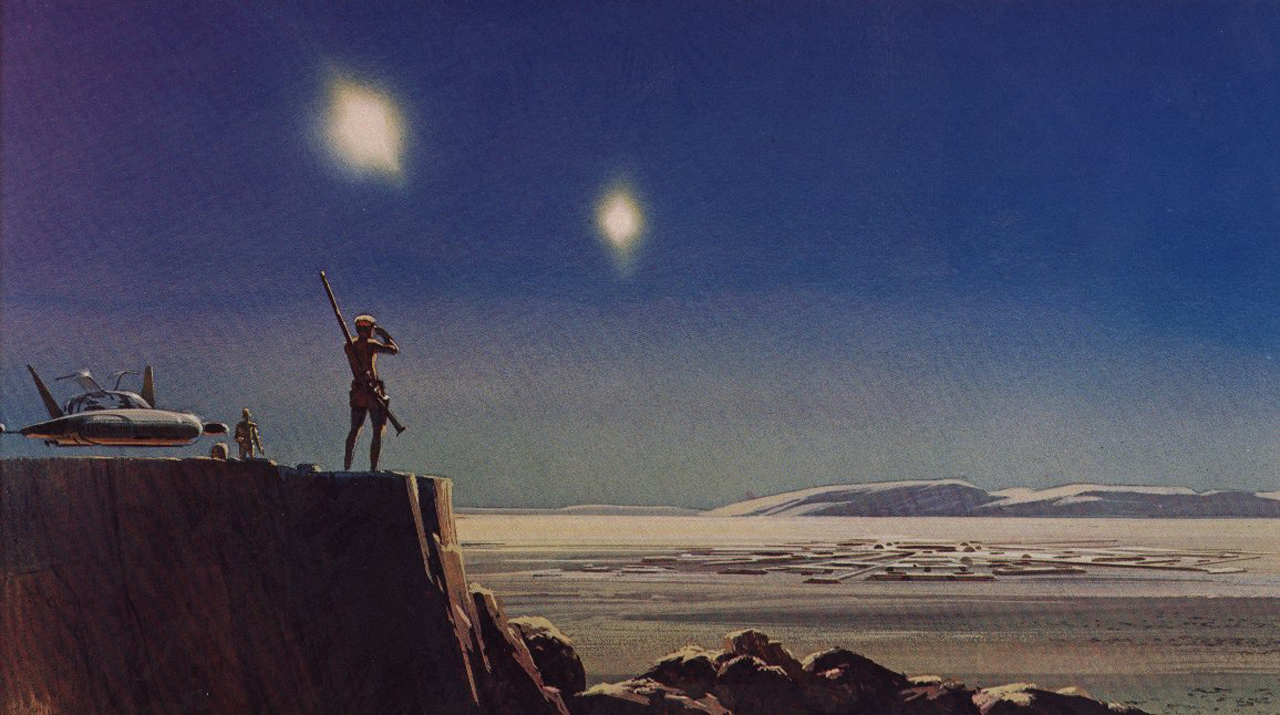
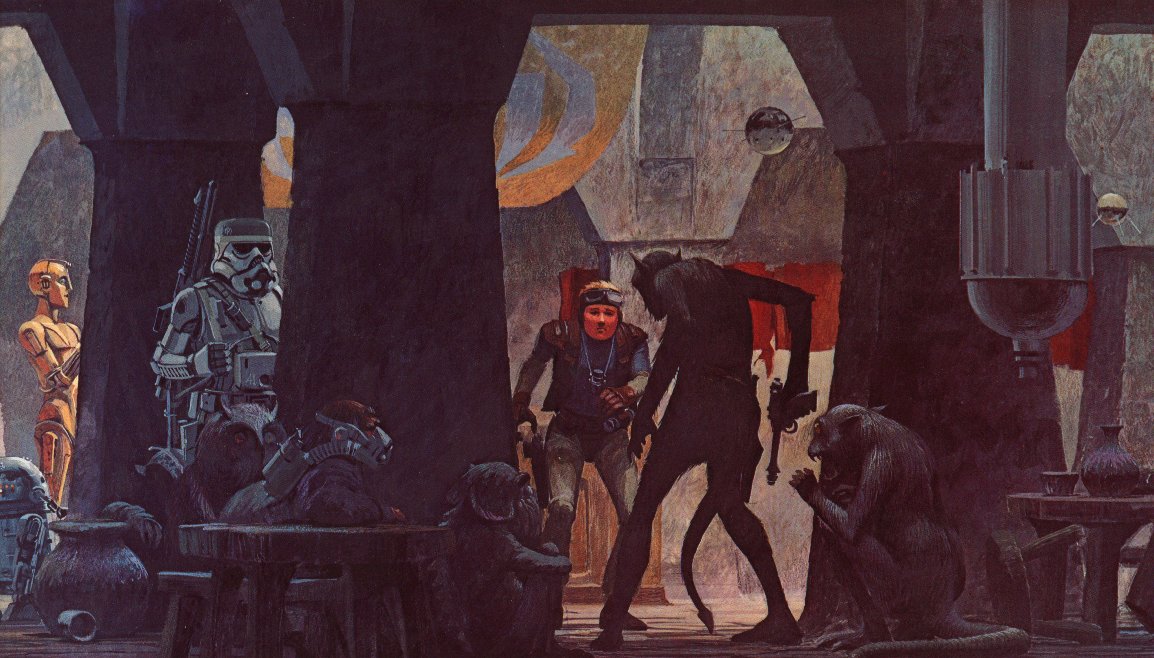
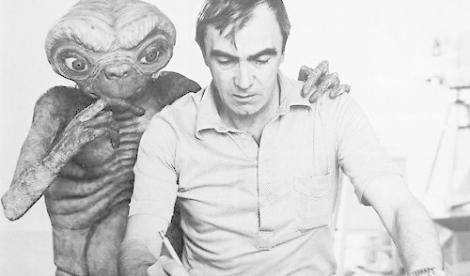
Like “Star Wars” illustrator Ralph McQuarrie, who died in March, Carlo Rambaldi’s work is, at least, immortalized on film. Rambaldi worked with Steven Spielberg to create the title character for the 1982 classic “E.T. The Extra-Terrestrial.”

The Washington Post notes that Rambaldi created three E.T. robots (probably a reference to remotely controlled E.T. faces, heads and necks) two costumes worn by actors and gloves that doubled for E.T.’s hands.

Nowadays, of course, E.T. would be a computer-generated creature, as in “Avatar.”

In the Post story, by the Associated Press, Rambaldi is quoted expressing his skepticism about CGI. There’s little doubt that mechanical effects that created creatures as diverse as E.T. and the shark from “Jaws” gave actors a real, physical presence to act opposite on the set.

Rambaldi won visual effects Oscars for “E.T.,” “Alien” and the 1976 “King Kong” remake.


Movie classic: ‘Sinbad and the Eye of the Tiger’

There’s a strong case to be made for 1982 as one of the great, if not the greatest, years of all time for science fiction, fantasy and horror films. I’ll get into that at another time.

But just as 1982 was a high-water mark for genre films, the summer of five years before, 1977, was a turning point.

Why? “Star Wars.”

George Lucas’ space opera, for many years the highest-grossing and most popular movie of all time, was the “two” in the one-two punch that began in 1975 with Steven Spielberg’s “Jaws.” There had been summer movie blockbusters before, of course. But “Jaws” then “Star Wars” made the summer months a place for movies of the fantastic: Science fiction, action, horror and — in recent years — comic book movies reign in the summer.

In my mind, the modern movie era turns on “Star Wars.” Everything is divided into before and after “Star Wars.”

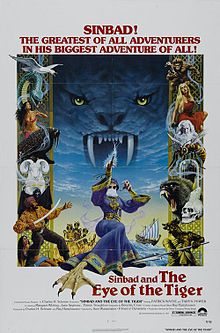
But another, much lesser-seen, gem came out in 1977: “Sinbad and the Eye of the Tiger.”

The movie was the third in a series of films, based on the classic adventure character of Sinbad, that special effects genius Ray Harryhausen made for release in the U.S. by Columbia Pictures. The series — whose earlier installments were “7th Voyage of Sinbad” and “Golden Voyage of Sinbad” — stretched clear back to the 1950s and featured different actors in the lead role, so it hardly seemed like a series.

The “Sinbad” movies were Saturday afternoon popcorn features, unlikely to be mistaken for art. But each had their own charms.

Some of the highlights of this installment:

Harryhausen’s effects. Harryhausen, who pioneered and perfected stop-motion animation — the art of moving model figures in small increments while exposing frames of film, creating the illusion of movement — practiced his craft into the 1980s and “Clash of the Titans.” Computer-generated effects are the standard now and give filmmakers possibilities they couldn’t dream of decades ago. But Harryhausen’s effects have their own kind of charm and their own kind of realism. Is the movie’s baboon character (actually a good prince, turned into an ape by an evil witch) as realistic as the CG simians in “Rise of the Planet of the Apes?” No. But it is effective and as crucial to telling the movie’s story as modern-day computer creations.

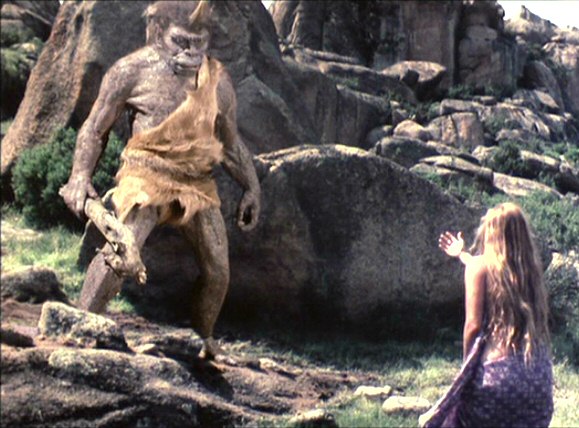
The creatures. The highlight of any Harryhausen movie (which were directed by a variety of filmmakers, but always bore the stamp of the effects genius) were the imaginative monsters. Aside from the effects work, the choice and design of creatures (in this film the mechanical Minaton and the horn-in-the-forehead Troglodyte) is always a delight. Harryhausen probably reached his peak with Medusa in “Clash of the Titans,” but the creatures here are great.

The cast. The movie’s casting has a “Huh? What?” quality to it. There are a couple of legacy actors (Patrick Wayne, son of John Wayne, as Sinbad, and Taryn Power, daughter of Tyrone Power), as well as Patrick Troughton, who had played the lead role in the popular British sci-fi series “Doctor Who” in the 1960s.

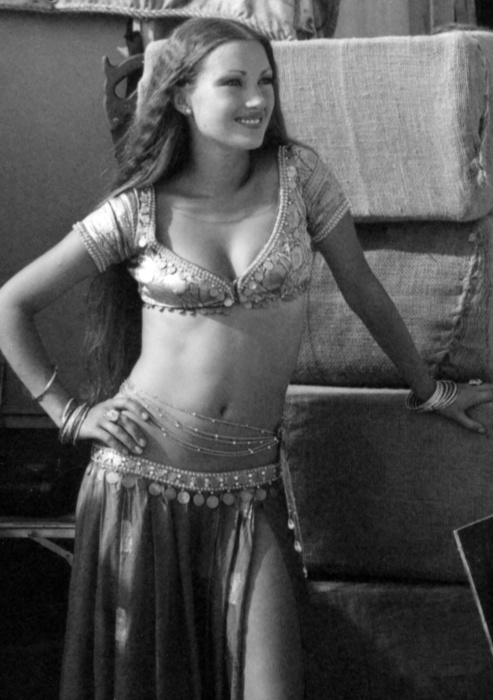
And then there’s Jane Seymour. The actress, who had made a big impression in the 1973 James Bond movie “Live and Let Die,” was a highlight of “Sinbad and the Eye of the Tiger” for any red-blooded male.

Jane, rocking incredibly long, straight hair, was dressed as improbably as any sword-and-sorcery movie heroine: a top that’s little more than a bikini with sleeves, a hip-hugging skirt and — most exotic for Midwestern boys like me — gold chains around her hips.

Yowza.

“Sinbad and the Eye of the Tiger” was not fated to be the equal of “Star Wars” or the other genre hits of 1977, including “Close Encounters of the Third Kind,” at the box office or with audiences and critics. But thanks to Harryhausen’s creatures and Jane Seymour, it lives on in the Saturday afternoon memories.


Have the nerds inherited the earth?

It wasn’t that long ago that fans of comic books, monster movies, science fiction and other nerdy stuff had to be fairly closeted about their pop culture choices.

I still remember the look on a guy’s face who, when I was a teenager, looked at the paperback book in my hand and read the title: “The Martian Chronicles.” This was Ray Bradbury. The author was — and is — considered a literary lion, for pete’s sake. But the guy glanced from the book cover to me and looked as if I had been perusing the latest issue of “Nuns and Nazis.”

God only knows what would have happened if I had been reading the latest issue of Famous Monsters magazine.

So I still feel a little lightheaded over the rise of geek culture. Not just the number of big-screen, big-budget movies based on comic books. I’m kind of getting accustomed to that.

No, I’m thinking about the TV shows — at least one of them based on a Podcast — that are not only devoted to a celebration of geek culture but even feature honest-to-goodness, real life geeks.

These shows portray the real-world versions of geeks like those in “Big Bang Theory” — without the Hollywood veneer. More about “Big Bang” in a bit.

Here’s a run-down of the geek and nerd equivalents of Johnny Carson:
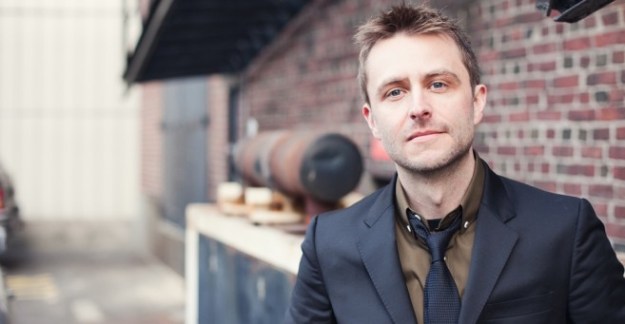
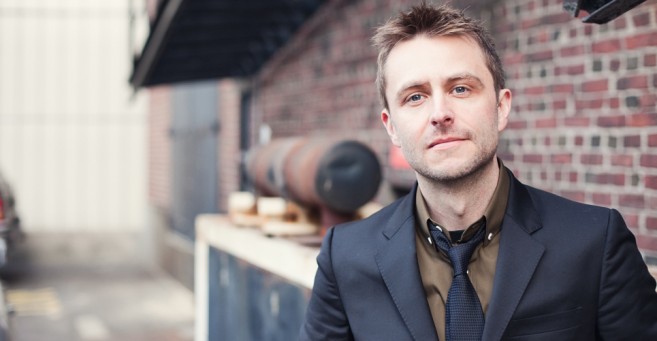
“The Nerdist:” Back in the day, Chris Hardwick was that snarky guy with the big voice on “Singled Out,” the MTV game show. A couple of years ago, Hardwick began “The Nerdist” podcast, an online audio look at geek and nerd culture featuring not only fans but celebrity guests.

Hardwick and “The Nerdist” — which also features genuinely funny geeks Jonah Ray and Matt Mira as regular panelists — got somewhat wider (or different) exposure when BBC America tapped the three to appear on a “Nerdist” TV series.

Only a handful of episodes have appeared so far, but they feature Hardwick, Ray and Mira chatting with geek culture demigods like Wil Wheaton and Nathan Fillion. The shows — available On Demand and no doubt online — are breezy and silly and don’t have any more substance than your typical talk show. They are, however, about the kind of geeky stuff that your parents used to hate.

“Talking Dead:” Hardwick packed up his geek shtick — but unfortunately not his sidekicks — and hosted this AMC talk show that followed episodes of the channel’s hit “The Walking Dead.”

Although the focus is narrow — it’s all about “The Walking Dead” — the show is entertaining and offers some insight into the series. The episode following the season finale of “The Walking Dead” featured the show’s creators announcing the actress who will play Michonne but also included one of the show’s funniest bits: An “In Memoriam” video montage of zombies killed off during that evening’s episode.

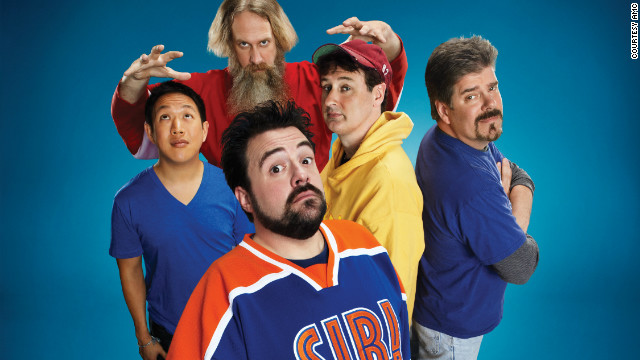
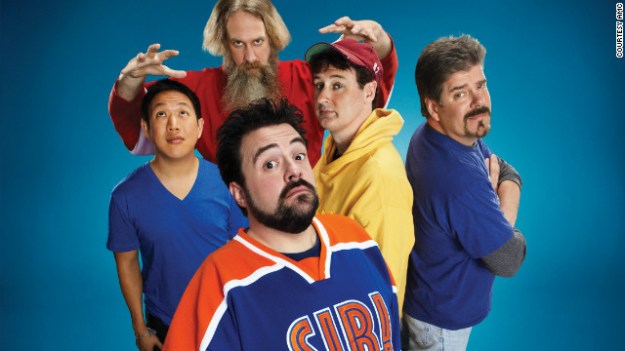
“Comic Book Men:” Somehow AMC has become the channel for nerd talk shows. Airing on Sunday nights along with “The Walking Dead” and “Talking Dead” is “Comic Book Men,” a series set in director Kevin Smith’s New Jersey comic book store.

Smith makes appearances but the series is focused on Walt Flanagan, manager of the store, and three employees/layabouts, Ming Chen, Mike Zapcic and Bryan Johnson.

All four guys are opinionated and entertaining. Chen, the low man on the totem pole, is like the Gilligan of the series.

It is Johnson, sporting a wild mane and wooly beard, who is the show’s highlight, however. Johnson’s online bio indicates that he has acted and directed in projects associated with Smith.

In “Comic Book Men,” Johnson is portrayed as an archetype familiar to anyone who has spent time at a comic book store or convention: The guy — usually older — who always seems to be hanging out, offering up sarcastic comments and withering put-downs. Johnson makes that stereotype immensely likable, however, through his genuine wit.

If “Comic Book Men” has a fault it is that I don’t think it realistically portrays a comic book store in one respect: Nobody ever buys anything! Most of the interaction between the employees and the public comes when people come in hoping to sell old comics or “Catwoman” Barbies. It’s like a nerd version of “Pawn Stars.”

Not even a roundup to non-fiction geek talk shows would be complete without a mention of “Big Bang Theory.” One of the most popular shows on TV, the CBS sitcom is about four geeks who hang out together, playing online games, going to a comic book store and obsessing about sex.

There’s a pretty divisive view of “Big Bang Theory” online. A lot of geeks consider it patronizing and shallow. It is, of course. But it’s no more patronizing or shallow a look at a group of friends than … well, “Friends” was.

And “Big Bang Theory,” like its real-life counterparts, offer a view of geek culture that not even Ross in the depths of his museum-geek persona could reach.