Category Archives: The Avengers: Age of Ultron

‘Avengers: Age of Ultron’ has its own Vision

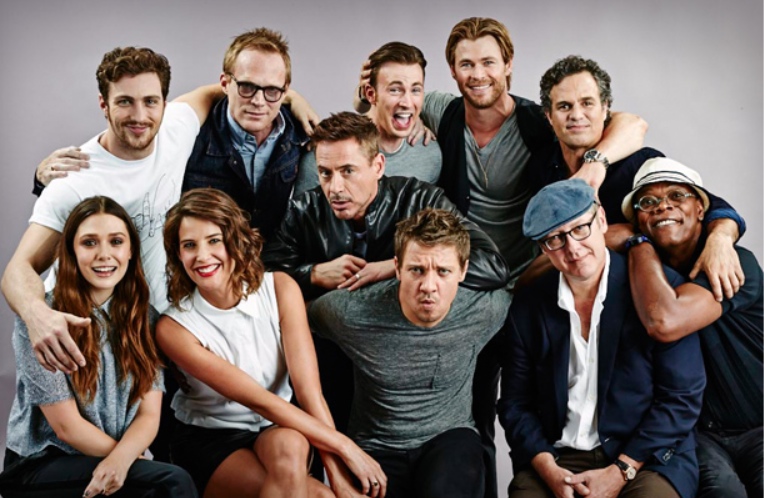
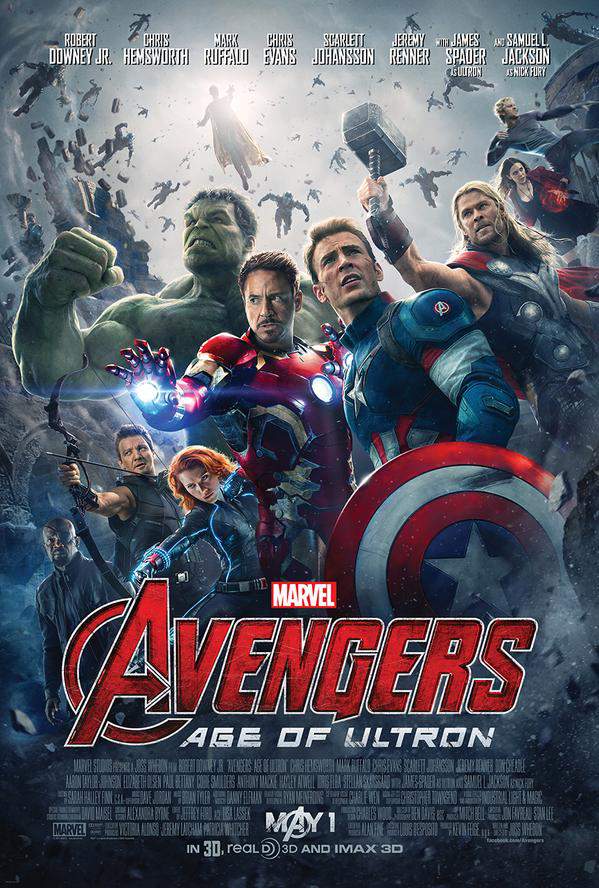
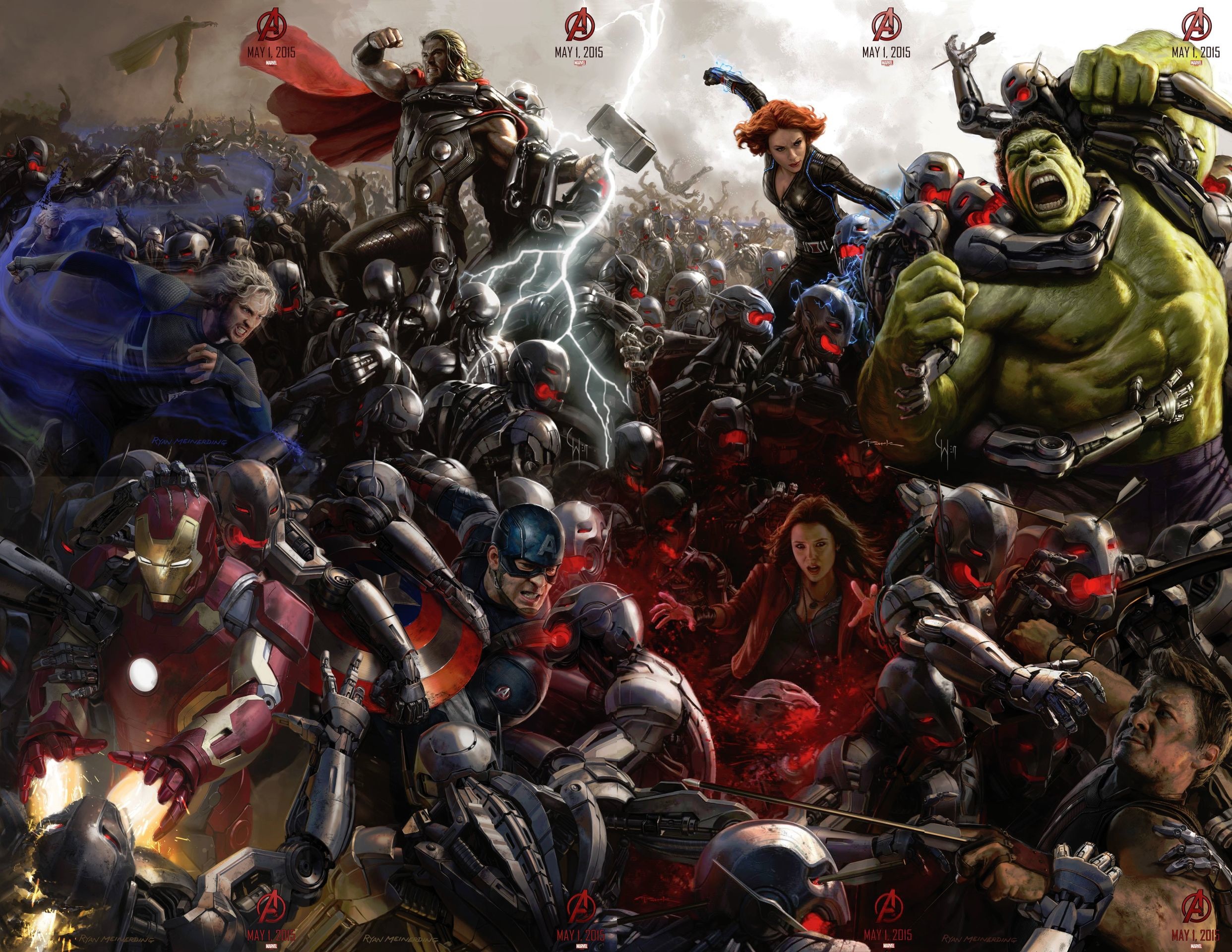
avengers-age-of-ultron-collage

For a while now, I’ve been anticipating that “Avengers: Age of Ultron” would be “The Empire Strikes Back” of the “Avengers” movies and after seeing it tonight, I’m somewhat surprised to say that I was right.

Now keep in mind that “Empire” is my favorite “Star Wars” film and after just one viewing, I’m not sure I can say that “Age of Ultron” is my favorite Marvel movie, or even my favorite “Avengers” movie. It is pretty damn good and director Joss Whedon put everything up on the screen. I was nearly exhausted by the end.

Here are my first impressions of the movie. Spoilers to come after a spoiler warning, because there are so many surprises here that I don’t want to ruin it for anyone who is unspoiled.

Whedon had a tough act to follow not only counting his 2012 original “Avengers” but everything that has come since. That’s because the “Avengers” movies are the tentpoles, the mile markers, of the Marvel Cinematic Universe. “Age of Ultron” caps Phase Two of this universe, a group of movies that included “Iron Man 3” and “Thor: The Dark World” but also “Guardians of the Galaxy” and, best of all, “Captain America: The Winter Soldier.”

Appropriately enough since Cap is the heart of the Avengers team, but “Age of Ultron” – besides setting up a ton of plot lines – feels like a bridge between the very-nearly-peerless “Winter Soldier” and “Captain America: Civil War,” which comes out next summer and will then lead to the two-part finale of Phase Three, “Avengers: Infinity War Part 1” in 2018 and “Infinity War Part 2” in 2019.

Having said that, though, “Age of Ultron” doesn’t feel like just a stepping stone. And the ending is more satisfying, in its own way, than “Empire.”

What keeps “Age of Ultron” from feeling like just another link in the MCU chain is the plot – which wraps up plot lines like Hydra and Loki’s scepter and furthers the story of the Infinity Stones and Thanos, the Mad Titan seen in the end credits of the original – and the ingenuity of this movie’s characters.

As the movie opens, the Avengers – in a post-SHIELD world, since that spy organization was mostly dismantled in “Winter Soldier” – are the peacekeepers. They’re cleaning up messes around the globe – along with the help of some other very recognizable and very welcome Marvel movie characters – and rooting out the last of Hydra, which has been using Loki’s scepter and its Infinity Stone power source to experiment on human beings.

The only survivors of those Nazi-inspired experiments are Pietro and Wanda Maximoff, who in the comics are Quicksilver and the Scarlet Witch, the children of Magneto and mutants, but here are Eastern European twins who have an understandable grudge against Tony Stark.

The two find an ally against the Avengers in Ultron, a sentient android inadvertently created by Stark and science bro Bruce Banner.

As voiced by James Spader, Ultron is the kind of perfectly mad artificial intelligence who decides the only way to save the world is to destroy it.

With an army of robotic surrogates, Ultron causes havoc just at the wrong time for the Avengers. Stark and Banner feel guilty for their role in Ultron’s birth, personal complications rock the core of the team and all the members – Iron Man, Cap and Thor included – are haunted by visions of things to come.

Speaking of which … the Vision.

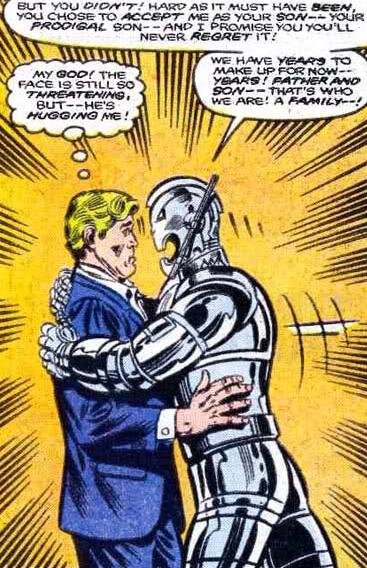
Just like “The Avengers” was one of my favorite comics, the Vision was one of my favorite characters. The synthetic offspring of Ultron, he was created to destroy the Avengers but, in the comics, becomes their ally. The shifting allegiances might come a little too easily in the movie but they are effective.

And the Vision, as played by Paul Bettany – the voice of Jarvis in previous MCU movies – is the oddest but most perfect addition to the cast. He’s eerie and weird and endearing – in other words, just like in the comics.

“Age of Ultron” is a piece in the sprawling Marvel Cinematic Universe, for certain. But it stands on its own.

And that ending …

Okay, spoilers from here on out.

Ready?
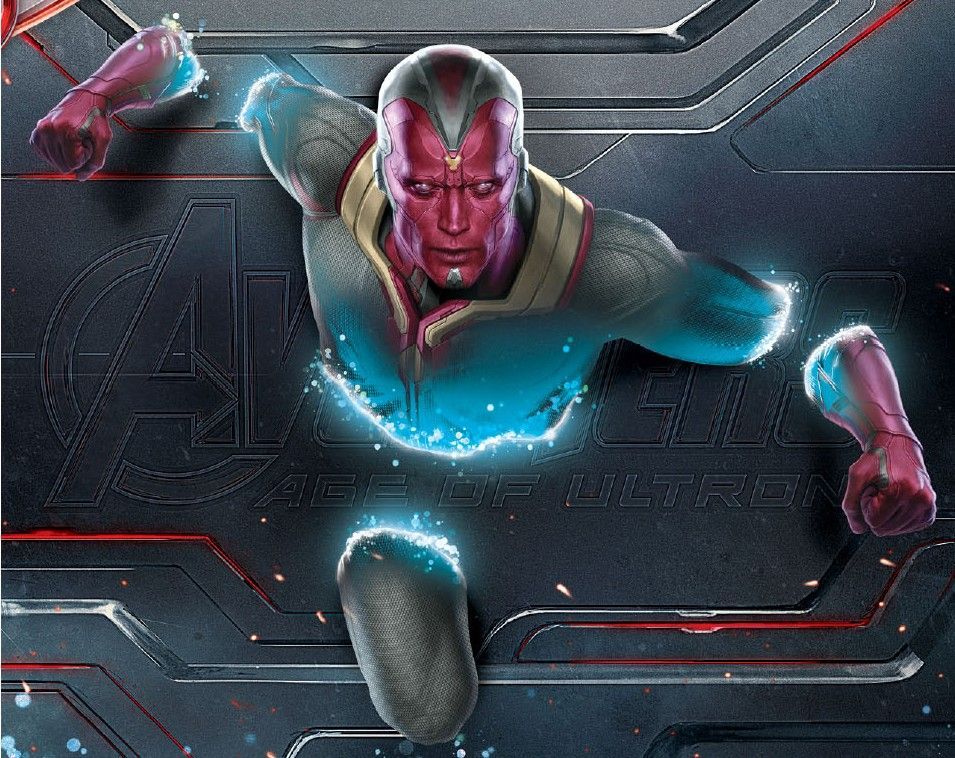
vision age of ultron

Avengers Assemble ….

To get to the conflicts to come in “Captain America: Civil War” and to reunite the team – and, perhaps, every member of the MCU – for the two-part “Infinity War” movies three and four years from now, “Age of Ultron” had to shake things up. And it does.

Besides the seeds of doubt sewn in the characters here – doubt enough to make Thor split for Asgard and prompt Stark to leave the group – the movie plants so many other seeds for the future. Longtime fans will recognize the moment when Vision rescues Scarlet Witch as a tip to their relationship in the comics, which included marriage, children and madness.

The reintroduction of old friends felt so right. It was a pure pleasure to see characters like James Rhodes (War Machine) and Sam Wilson (Falcon) in action and as part of a new Avengers line-up at the end.

The relationship between Black Widow and Bruce Banner also felt just right .. and its bitter ending felt just like a Joss Whedon relationship moment.

Who’s the happiest Avenger? No doubt it is Clint Barton. In this movie, we find out what Barton does when he leaves his Hawkeye persona behind. It’s heartwarming.

And the big character death? I was expecting maybe someone with a little more history in the MCU than Pietro but I was okay with it. And her brother’s death ensures that Wanda has the proper “push” into joining the team.

I’ll probably have more thoughts after seeing the movie a second time. Suffice it to say, “Age of Ultron” has more than its share of plot complications and hints for the future to bear another pass.

By the way … reports that there is no extra scene after the last of the end credits are true. There is a mid-credits scene, however.

Not that I have to tell you to stick around.
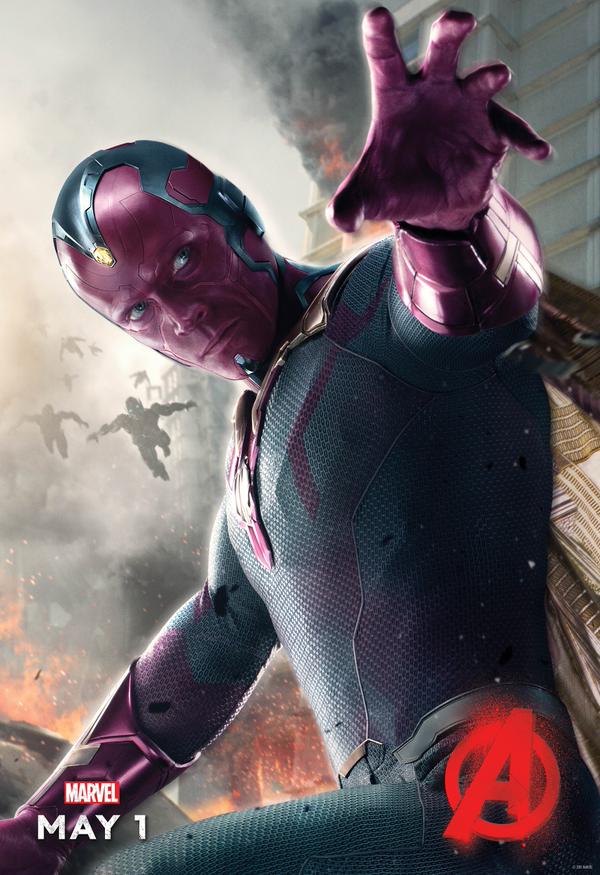
Vision and The Thing

visionultronConsidering that both “Avengers: Age of Ultron” and “Fantastic Four” come out this summer, we’ve seen surprisingly little of two of the most important characters.

That changed last week when images of Vision from “Ultron” and Ben Grimm – The Thing – from “FF” were released.

That’s Paul Bettany as Vision above and, although the picture was almost certainly retouched for the Vision poster, he looks good.

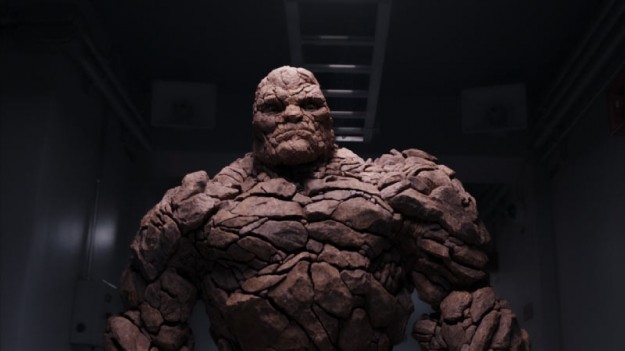
thingfantasticfour

And there’s The Thing, which looks better in this picture than an earlier one but still isn’t quite right.

What’s missing?

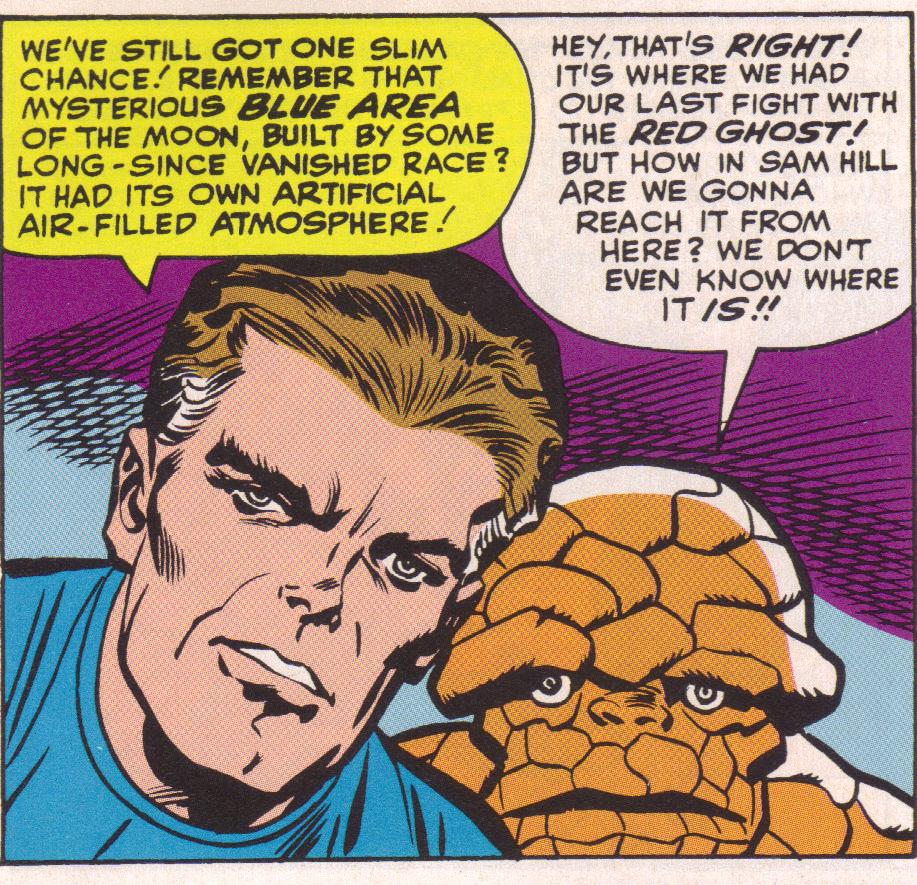
thethingbrow

His brow, of course. That simple feature, as created by Jack Kirby, made The Thing’s face so much more expressive, so much more human.

‘Age of Ultron’ new trailer: It’s outta there

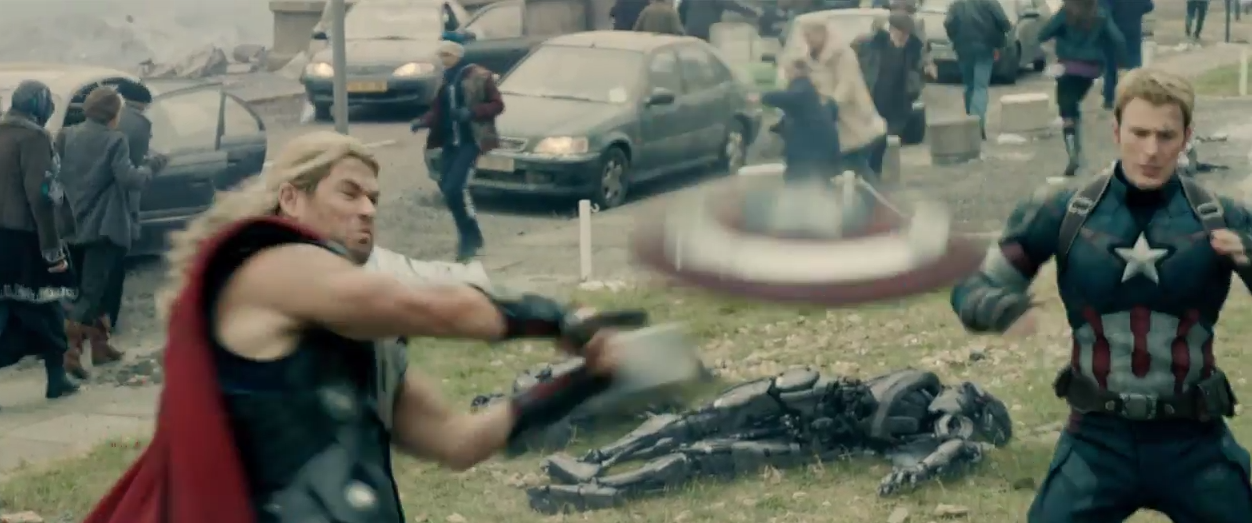
ultronthorcapshield

So how did everybody like Thor hitting Cap’s shield into a pack of Ultron minions?

Or our first hint at Quicksilver’s Eurotrash accent?

Or Tony’s quips?

In other words, there was a new “Avengers: Age of Ultron” trailer today.

May 1. Just keep telling yourself, May 1.

New ‘Avengers: Age of Ultron’ trailer

ultron trailer hulk close

I know there’s a new “Star Wars” movie coming out in December, but I’m still looking forward to May and “Avengers: Age of Ultron” more than any other movie this year.

The new trailer came out tonight.

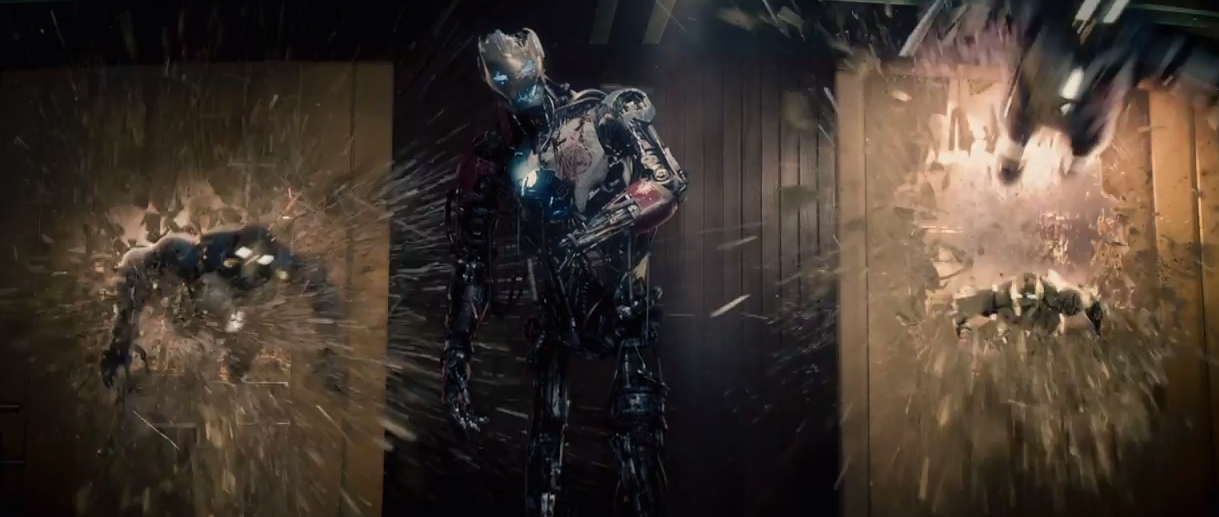
ultron trailer ultrons bursting

And this Joss Whedon sequel is, obviously, the “Empire Strikes Back” of this series.

ultron trailer ultron close

Dark, I tells ya.

Here’s the trailer.

Why Ant-Man – and maybe ‘Ant-Man’ – matters

tales-to-astonish-35

I know there was some discontent out there with the trailer for Marvel’s “Ant-Man” movie, but I was relieved when I saw it the other day.

Why?

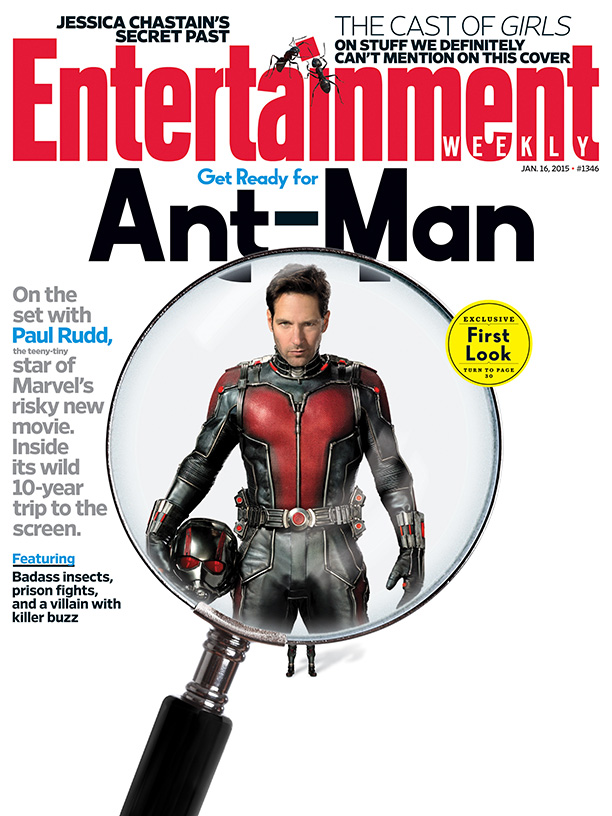
Mostly because I was relieved the trailer indicated the movie, starring Paul Rudd as the second Ant-Man, Scott Lang, will address some of the same questions the moviegoing public will have: Why do we need a superhero who shrinks? And why would anyone call themselves Ant-Man?

But also because the movie will finally acknowledge the place in the Marvel Universe of one of its pioneering characters.

So who is Ant-Man and why should we care about him?

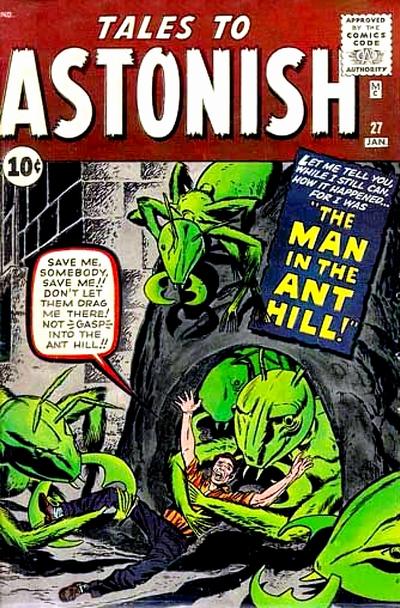
Tales_to_Astonish_Vol_1_27

Ant-Man is best known as Henry, or Hank, Pym, and he debuted in comics in “Tales to Astonish” 27, published in January 1962. Pym was an unfortunate scientist who could shrink to ant-size … but couldn’t defend himself from ants. He barely survived this tale that was a retread of “The Incredible Shrinking Man.”

But Pym returned in “Tales to Astonish” 35, this time as Ant-Man and sporting a helmet that let him communicate with ants. He was their master!

After several issues of adventures, Pym and girlfriend (later wife) Janet Van Dyne appeared in the first issue of “The Avengers,” as a diverse group of heroes got together to defeat Thor’s brother, Loki.

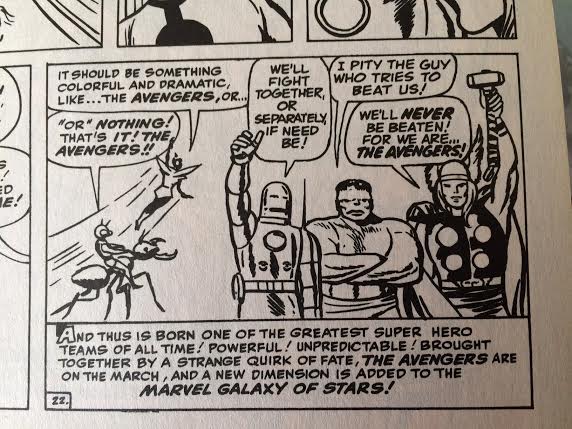
antmanavengers1panel

Pym and Van Dyne even named the group, which makes it all the more important that their history in the Marvel universe be part of the Marvel Cinematic Universe. Avengers co-founders!

Pym is a problematic character on a couple of counts, though.

pymandultron

It’s not like the Marvel Cinematic Universe needs another genius scientist, even if Pym created Ultron, the villain in the upcoming “Avengers: Age of Ultron.” The MCU already has Tony Stark and Bruce Banner.

pymhitjanet

Plus, Pym was always an erratic character. That’s a plus for the realistic 1960s-and-beyond Marvel Comics universe, but not for movies that increasingly play to a wide mainstream audience. So Pym the brilliant genius who had emotional breakdowns, masqueraded as at least one super-villain and even struck his wife is shifted to a secondary role in the movie.

antmanEWcover

Why the “Ant-Man” movie matters is another thing. but I think that it does.

Everybody worried when the movie’s original director, “Shaun of the Dead” creator Edgar Wright, left the project and he and Marvel cited creative differences. The temptation was to worry that Marvel wanted Wright to make his movie more mainstream and he didn’t go along.

I trust ultimate director Peyton Reed – “Bring it On” is a classic – but more than anything, I trust Marvel.

Why?

Well, their track record is pretty good. Most of the Marvel Cinematic Universe movies have been good to great, with only a couple of lesser entries (“Iron Man 2” to some extent).

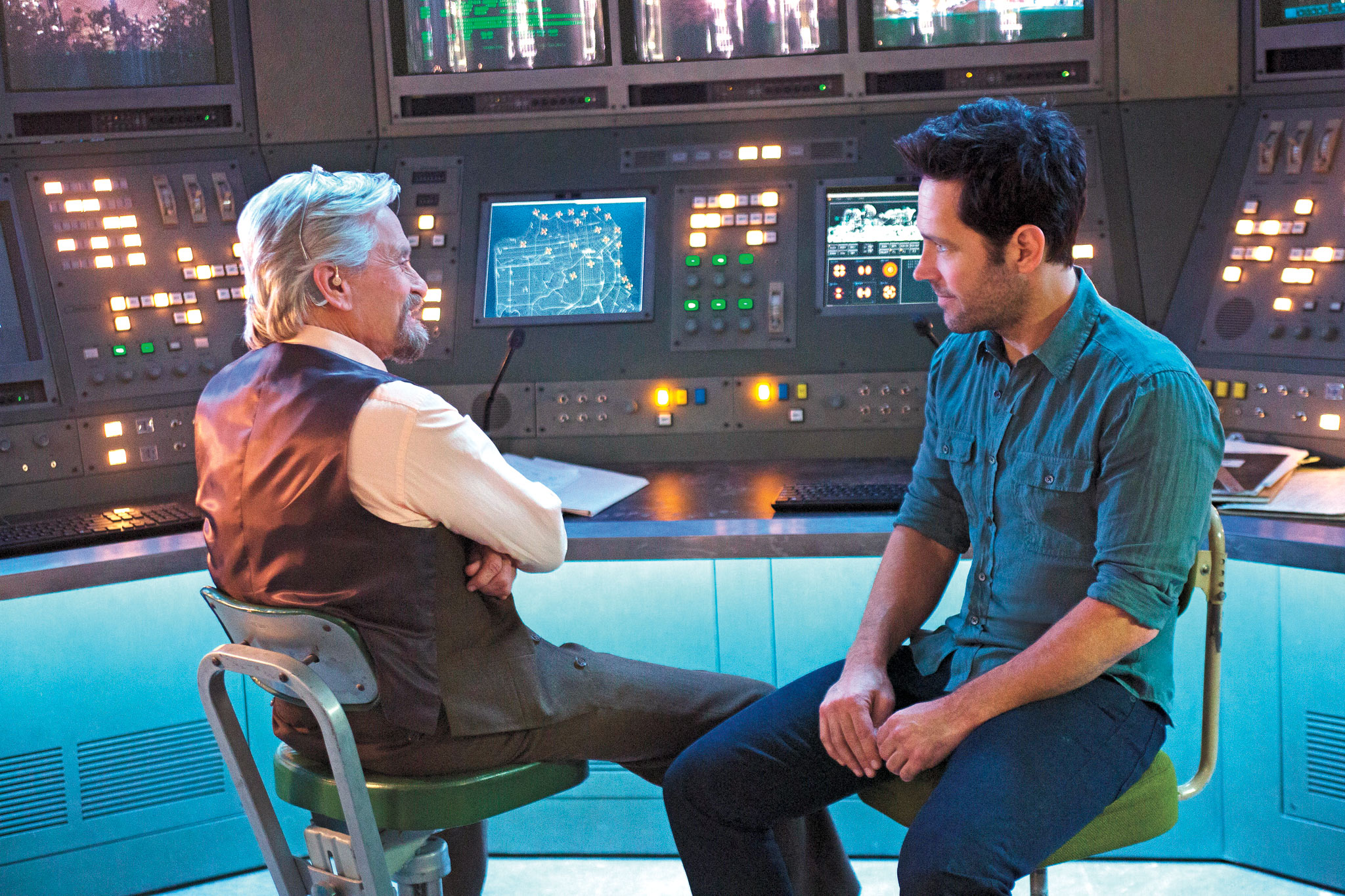
antmanduoEW

I also think “Ant-Man” will explore the idea of failure, loss and redemption in the Marvel universe. And that’s good, because those story beats and emotions are a huge part of the comic books.

The upcoming “Doctor Strange” movie, with Benedict Cumberbatch set to play the arrogant surgeon who rebuilds his life, should strike some of the same notes.

But more importantly, I think Marvel will use “Ant-Man” to fill in the gaps in its movie universe.

How?

Rumors indicate that portions of “Ant-Man” will take place in the 1960s, with a younger actor playing Michael Douglas’ role of Hank Pym, the original Ant-Man. It’s been suggested that we’ll see 1960s-period-appropriate versions of Howard Stark and other characters long established but unexplored during a period of several decades.

Just like “Agent Carter” on TV right now is filling in the blank spots in the post-World War II Marvel universe, I believe “Ant-Man” will fill the gaps in the 1960s, with a young Pym and wife Janet Van Dyne (parents of Hope Van Dyne, the character played by Evangeline Lilly in the movie) adventuring and working with SHIELD.

There’s a ton of material here that, if properly explored, will fill in “lost years” and make the Marvel on-screen universe feel even more like a real, if fantastical, world.

So yeah, Ant-Man matters because of his history and “Ant-Man” matters because of how it might flesh out the Marvel history onscreen.

‘Guardians of the Galaxy’ takes us out there

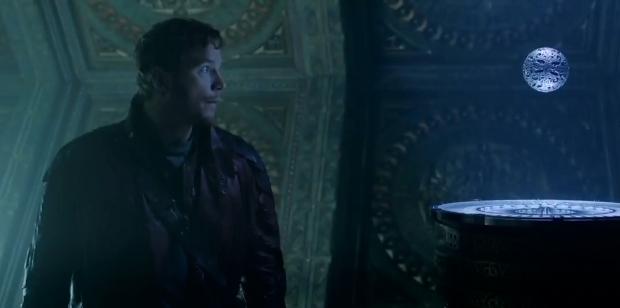
guardians infinity stone

A lot of people are saying “Guardians of the Galaxy” is this generation’s “Star Wars.” I’m not sure that’s the case, or that anything could be this generation’s “Star Wars.” Some people forget just what a game-changer “Star Wars” and, two years earlier, “Jaws,” were. Those two movies solidified summertime as a time for big-screen escapist fare and proved that people would pay to see it.

Others say that “Guardians” is this generation’s “The Last Starfighter” but I think that’s selling “Guardians” short. As fond as my memories of “Starfighter” are, I think “Guardians” is a better movie.

So what role does “Guardians” fill?

Roles, really.

First of all, it’s a really good summer movie. It’s good-natured and funny and full of action.

Secondly, it’s a sure-footed next milestone in the Marvel Cinematic Universe. Although it only slyly references the quest for the Infinity Stones – the sources of power that will, almost certainly lead Thanos to Earth in the third “Avengers” movie, probably in 2018 – it keeps that subplot to the first three phases of Marvel movies in moviegoers’ minds.

Thirdly, it expands the Marvel Cinematic Universe. Here’s how:

The comics published by Marvel in the past half-century-plus have covered a lot of territory, literally and figuratively speaking.

There’s the street-level superheroes, like Spider-Man and Daredevil, dealing with maniacal villains and street punks alike. The non-Marvel Cinematic Universe “Spider-Man” movies and Marvel’s upcoming Netflix series like “Daredevil” map out this world. (They’re the Marvel counterparts of Batman, for you DC lovers out there.)

There’s the global superheroes, like the Avengers, who have the power to face threats to the entire world. The non-MCU heroes like “Fantastic Four” also fall into this category, as does DC’s Superman and Justice League.

What “Guardians” does is give Marvel Studios a beachhead in the cosmic universe where the comic books have played for a half-century.

There’s always been some crossover among all these Marvel realms, such as when Galactus, devourer of worlds, shows up and is tackled by the FF. Cosmic threat comes to global heroes.
But quite often, the links between the cosmic and Earth-based heroes have been only tenuous. Captain Marvel or the Silver Surfer or Warlock show up and fight and eventually team up with the FF or the Avengers to face a menace like the Kree-Skrull War, but by the end of the story, things are back to a Marvel status quo and the Avengers are dealing with Earth-based villains like Doctor Doom.

“Guardians” plunges us headlong into that cosmic Marvel universe with only occasional looks back at Earth.

I won’t recap the plot I’m sure you’re familiar with by now or even go on and on with my thoughts about “Guardians.” Director James Gunn had made a fun, “Star Wars”-ian adventure pitting an unlikely band of heroes against evil forces. Along the way, the movie introduces, more smoothly than most would have thought possible, fantastic creatures like Rocket Racoon, a small but ferocious animal with a pitiable past and a love of big guns, and Groot, a walking, talking (well, a little) tree creature. Space raccoon and gentle plant-based giant you say? Sure, why not. It’s a testament to Gunn’s handling of the characters and plot of “Guardians” that what the characters are matter less than who they are.

If you remember, Thanos, Marvel’s go-to cosmic bad guy, showed up at the end of “The Avengers” to take credit for pitting an invading alien army against Earth and grin at the thought of courting death.

Thanos wants the Tesseract – the Cosmic Cube in the comics – that the Red Skull wielded in “Captain America” and Loki sought in “The Avengers.” Along with the Aether, the cosmic power from “Thor: The Dark World,” and other Infinity Stones, Thanos can make the Infinity Gauntlet, a weapon of unimaginable power. It’s a certainty that will be the major plot point of the third “Avengers” movie.

One of the most amusing things about “Guardians” is that much of the history and power of the Infinity Stones is laid out midway through the movie … but to the protagonists and antagonists of “Guardians,” who don’t even know as much as Captain America and Iron Man about the importance of the Stones but know a thing to keep away from bad guys when they see one.

So the collected Guardians, led by the effortlessly charming Chris Pratt as Peter Quill, take on Ronan, an upstart ally of Thanos, in an effort to keep a handle on their particular Infinity Stone and keep it away from Thanos.

It’s an effort that will continue for another four years before the contest for the Stones pits Avengers – and likely other allies – against Thanos in the third Avengers movie, which will likely act as capper to the first three phases of big-screen Marvel.

“Guardians” is so much fun, so funny, so charming, that it carries all the responsibility of furthering the over-arching plot of big-screen Marvel as if it were a feather. Despite its many accomplishments, that might be the movie’s handiest achievement.

By the way, I wanted to mention Marvel’s other comic-book universes, besides street-level, global and cosmic playgrounds, because the big-screen Marvel universe will no doubt incorporate them as well.

(I won’t get into a couple of lesser-known Marvel comic book universes here because, frankly, I don’t think we’ll see big-screen versions of Marvel’s romance and western comic worlds anytime soon.)

We’re all but certain to see Marvel’s mystical and horror universes come into play in movies before long, perhaps in a combined venture.

The studio has already named a director for its “Dr. Strange” movie, about a physician who became a master of the mystic arts and fought supernatural creatures. It’ll be interesting to see who the studio picks to play the part because Strange could be as much of an anchor for ongoing Marvel movies as Robert Downey Jr. has been as Tony Stark.

A “Strange” movie would not only introduce the mystical and supernatural Marvel universes to the big screen but could encompass the company’s long history of horror characters, some of whom regularly cross paths with heroes like Spider-Man (I’m looking at you, Moebius the Living Vampire) but operate in a realm that ranges from the dark corners of the Earth to other dimensions. It’s a world of magic – already explained in the “Thor” movies as simply science that humans can’t understand – and wild creatures.

If the idea seems strange to you, consider how strange a space raccoon and a talking tree might have seemed before this record-breaking opening weekend for “Guardians of the Galaxy.”

Secrets of ‘Avengers: Age of Ultron?’

avengers-age-of-ultron-

Are you ready for some total guesswork?

I’m going to speculate on what we might see next May when “Avengers: Age of Ultron” hits theaters.

I don’t have any inside knowledge (my friend in the movie business doesn’t work on these Marvel movies). I’m speculating based on what I’ve read online recently and on recent re-readings of half-century-old comics that told this story before.

And I’ve already written about Marvel’s long game, the climax – most likely in the third “Avengers” movie – that will pit Marvel Cinematic Universe heroes against Thanos, the god-like destroyer and embracer of death.

Josh Brolin voices Thanos in “Guardians of the Galaxy” and likely in future Marvel movies. From scenes we’ve already seen in the “Thor” sequel and in “Guardians,” we know Thanos is pursuing the Infinity Stones to make his all-powerful weapon, the Infinity Gauntlet. Heck, Brolin took the stage in San Diego wearing a mock-up of an Infinity Gauntlet.

But what happens in the meantime, in “Age of Ultron?”

While the MCU has taken big variations away from the established Marvel comic book shorelines we’ve known for a half-century now, I think “Age of Ultron” will mix elements from a couple of milestone “Avengers” comic books.

We already know Ultron is in the movie, obviously, The murderous robot is invented (in the movies at least) by Tony Stark but, like Skynet, gets his own ideas on how to run the world.

And we know that Vision, a synthetic person created by Ultron to kill the Avengers only to end up joining them, is in “Age of Ultron.” He’s played by Paul Bettany, the voice of Tony Stark butler Jarvis in the “Iron Man” movies and “The Avengers.”

“Age of Ultron” creates Ultron (voiced by James Spader) and sets up the conflict depicted in the original 1960s “Avengers” comics, namely issues 55 through 57, when the Vision is introduced. In the comics, of course, Ultron was created by Hank Pym, played by Michael Douglas in “Ant-Man” but that movie’s not coming out until later in 2015.

So Ultron on a collision course with the Avengers, with Vision changing sides. Check.

But who else changes sides?

For this, we go back a few years in the “Avengers” comics, to issue 16, in which the Avengers experiences the biggest line-up change in its young history.

Although Hulk had come and gone and Cap joined the team in “Avengers” 4, the big change didn’t come until issue 16, when Thor flies off to deal with Asgardian issues, Giant-Man (the former Ant-Man) and Wasp decide to leave and Tony Stark decides to retire his “bodyguard,” Iron Man, from the roster.

Who joins?

Three former criminals/crooks/super villains: Hawkeye, the archer (already on the team in the MCU), Quicksilver and Scarlet Witch (who we know are in “Age of Ultron).

While I’d LOVE to see the “Ultron” footage screened at Comic Con, I’m pretty sure the final scene shown – the Avengers lying defeated at Ultron’s hands, Cap’s shield broken – isn’t the end of the movie. Despite the fact I believe it will end up being “The Empire Strikes Back” of the “Avengers” series, “Ultron” won’t end that way. That’s a vision (pun intended) or dream of something plaguing Tony.

No, I think “Ultron” will end with something more dire: The team breaking up. The powerhouses will be gone and Cap will carry on, as he did in the comics, with less powerful teammates like Quicksilver, Scarlet Witch and Vision.

Which will make it all the more essential that big guns like Thor and Hulk return in 2018, the likely release date of the third “Avengers” movie.