Category Archives: Thor the Dark World

‘Guardians of the Galaxy’ takes us out there

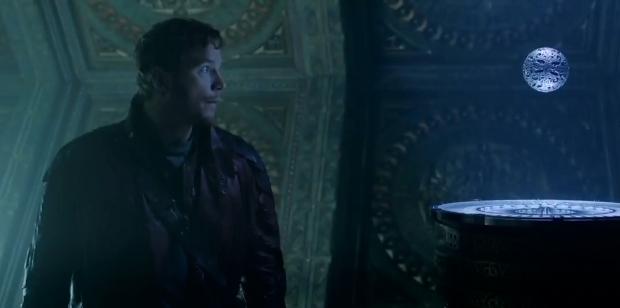
guardians infinity stone

A lot of people are saying “Guardians of the Galaxy” is this generation’s “Star Wars.” I’m not sure that’s the case, or that anything could be this generation’s “Star Wars.” Some people forget just what a game-changer “Star Wars” and, two years earlier, “Jaws,” were. Those two movies solidified summertime as a time for big-screen escapist fare and proved that people would pay to see it.

Others say that “Guardians” is this generation’s “The Last Starfighter” but I think that’s selling “Guardians” short. As fond as my memories of “Starfighter” are, I think “Guardians” is a better movie.

So what role does “Guardians” fill?

Roles, really.

First of all, it’s a really good summer movie. It’s good-natured and funny and full of action.

Secondly, it’s a sure-footed next milestone in the Marvel Cinematic Universe. Although it only slyly references the quest for the Infinity Stones – the sources of power that will, almost certainly lead Thanos to Earth in the third “Avengers” movie, probably in 2018 – it keeps that subplot to the first three phases of Marvel movies in moviegoers’ minds.

Thirdly, it expands the Marvel Cinematic Universe. Here’s how:

The comics published by Marvel in the past half-century-plus have covered a lot of territory, literally and figuratively speaking.

There’s the street-level superheroes, like Spider-Man and Daredevil, dealing with maniacal villains and street punks alike. The non-Marvel Cinematic Universe “Spider-Man” movies and Marvel’s upcoming Netflix series like “Daredevil” map out this world. (They’re the Marvel counterparts of Batman, for you DC lovers out there.)

There’s the global superheroes, like the Avengers, who have the power to face threats to the entire world. The non-MCU heroes like “Fantastic Four” also fall into this category, as does DC’s Superman and Justice League.

What “Guardians” does is give Marvel Studios a beachhead in the cosmic universe where the comic books have played for a half-century.

There’s always been some crossover among all these Marvel realms, such as when Galactus, devourer of worlds, shows up and is tackled by the FF. Cosmic threat comes to global heroes.
But quite often, the links between the cosmic and Earth-based heroes have been only tenuous. Captain Marvel or the Silver Surfer or Warlock show up and fight and eventually team up with the FF or the Avengers to face a menace like the Kree-Skrull War, but by the end of the story, things are back to a Marvel status quo and the Avengers are dealing with Earth-based villains like Doctor Doom.

“Guardians” plunges us headlong into that cosmic Marvel universe with only occasional looks back at Earth.

I won’t recap the plot I’m sure you’re familiar with by now or even go on and on with my thoughts about “Guardians.” Director James Gunn had made a fun, “Star Wars”-ian adventure pitting an unlikely band of heroes against evil forces. Along the way, the movie introduces, more smoothly than most would have thought possible, fantastic creatures like Rocket Racoon, a small but ferocious animal with a pitiable past and a love of big guns, and Groot, a walking, talking (well, a little) tree creature. Space raccoon and gentle plant-based giant you say? Sure, why not. It’s a testament to Gunn’s handling of the characters and plot of “Guardians” that what the characters are matter less than who they are.

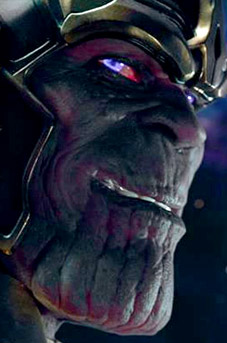
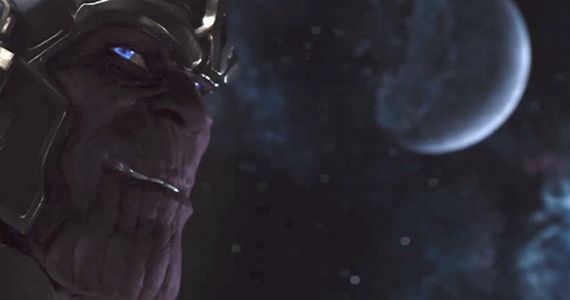
If you remember, Thanos, Marvel’s go-to cosmic bad guy, showed up at the end of “The Avengers” to take credit for pitting an invading alien army against Earth and grin at the thought of courting death.

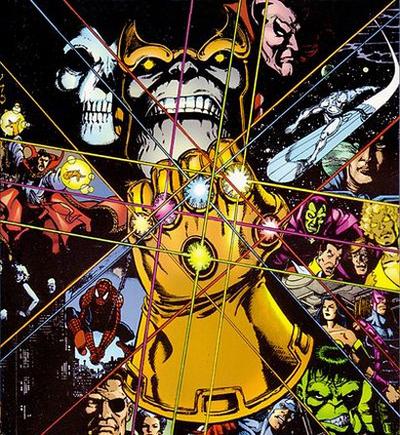
Thanos wants the Tesseract – the Cosmic Cube in the comics – that the Red Skull wielded in “Captain America” and Loki sought in “The Avengers.” Along with the Aether, the cosmic power from “Thor: The Dark World,” and other Infinity Stones, Thanos can make the Infinity Gauntlet, a weapon of unimaginable power. It’s a certainty that will be the major plot point of the third “Avengers” movie.

One of the most amusing things about “Guardians” is that much of the history and power of the Infinity Stones is laid out midway through the movie … but to the protagonists and antagonists of “Guardians,” who don’t even know as much as Captain America and Iron Man about the importance of the Stones but know a thing to keep away from bad guys when they see one.

So the collected Guardians, led by the effortlessly charming Chris Pratt as Peter Quill, take on Ronan, an upstart ally of Thanos, in an effort to keep a handle on their particular Infinity Stone and keep it away from Thanos.

It’s an effort that will continue for another four years before the contest for the Stones pits Avengers – and likely other allies – against Thanos in the third Avengers movie, which will likely act as capper to the first three phases of big-screen Marvel.

“Guardians” is so much fun, so funny, so charming, that it carries all the responsibility of furthering the over-arching plot of big-screen Marvel as if it were a feather. Despite its many accomplishments, that might be the movie’s handiest achievement.

By the way, I wanted to mention Marvel’s other comic-book universes, besides street-level, global and cosmic playgrounds, because the big-screen Marvel universe will no doubt incorporate them as well.

(I won’t get into a couple of lesser-known Marvel comic book universes here because, frankly, I don’t think we’ll see big-screen versions of Marvel’s romance and western comic worlds anytime soon.)

We’re all but certain to see Marvel’s mystical and horror universes come into play in movies before long, perhaps in a combined venture.

The studio has already named a director for its “Dr. Strange” movie, about a physician who became a master of the mystic arts and fought supernatural creatures. It’ll be interesting to see who the studio picks to play the part because Strange could be as much of an anchor for ongoing Marvel movies as Robert Downey Jr. has been as Tony Stark.

A “Strange” movie would not only introduce the mystical and supernatural Marvel universes to the big screen but could encompass the company’s long history of horror characters, some of whom regularly cross paths with heroes like Spider-Man (I’m looking at you, Moebius the Living Vampire) but operate in a realm that ranges from the dark corners of the Earth to other dimensions. It’s a world of magic – already explained in the “Thor” movies as simply science that humans can’t understand – and wild creatures.

If the idea seems strange to you, consider how strange a space raccoon and a talking tree might have seemed before this record-breaking opening weekend for “Guardians of the Galaxy.”
‘Agents of SHIELD,’ ‘Winter Soldier’ building to … ?

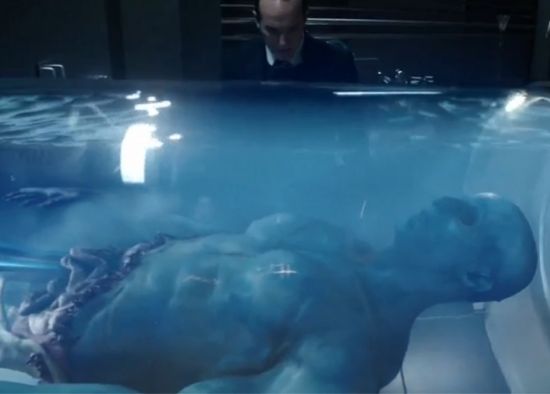
blue-alien-agents-of-shieldIt shouldn’t be surprising that Disney/ABC/Marvel is practicing synergy in how it’s handling ABC’s Tuesday-night series “Agents of SHIELD” and the April 4 release of “Captain America: The Winter Soldier,” the second Marvel movie – after “Thor: The Dark World” – released since “SHIELD” debuted last fall.

There was a “SHIELD” episode earlier in the season that tied in, in a minimal way, to the “Thor” sequel. And Jaimie Alexander guest-starred this week as Sif on “SHIELD,” tracking down fellow Asgardian Lorelei.

But it’s increasingly obvious, as I noted in an earlier piece, that both “SHIELD” and “Winter Soldier” seem to be building to something.

On “SHIELD,” Agent Phil Coulson (Clark Gregg) has had a season-long arc of discovery as he tries to determine how and why he was brought back from the dead after Loki inflicted a fatal goring in “The Avengers.” So far, we’ve learned that Coulson – and SHIELD team member Skye – were saved by a mysterious liquid that appears to be generated from the half-missing corpse of a blue alien bottled up in a remote SHIELD facility. In last week’s episode, Coulson asks Sif about “blue aliens” and she mentions several, from frost giants (obviously not the answer in this case) to the Kree, the longtime Marvel alien race that spawned not only the original Captain Marvel but also is the mortal enemy of the Skrulls (or the Chitauri, as they were depicted in “The Avengers.”)

By episode’s end, Coulson – frustrated that alien biologics were used in his resurrection and to save Skye – is seeking answers and demanding to speak to Nick Fury (Samuel L. Jackson, who’s already appeared on the series).

Promos for the series – using the subtitle (“Uprising”) – would lead us to believe that Coulson’s quest for knowledge may shake up the prevailing image of SHIELD.

As I’ve stated before, SHIELD’s been the subject of sinister undertones in the big-screen Marvel movies, most notably “The Avengers,” when our heroes discovered that SHIELD was experimenting with Hydra weaponry.

I have a feeling this will tie in, more or less, to “Winter Soldier” when it comes out on April 4. The promos for the movie indicate Cap, Black Widow and new partner Sam (aka The Falcon) Wilson might find themselves pitted against SHIELD itself or at least leader figures like the one Robert Redford plays. I’ve previously speculated the role Robert Redford’s character plays in all this (spoilers here if you look).

So what can we infer from this?

Marvel is trying to pull off something that’s extremely tricky. It’s making some pretty big changes to SHIELD, the organization that has been, more or less, the glue that’s held its cinematic universe together from the start.

And it’s doing some while it’s producing a weekly TV series about that organization.

Is the series going to turn its “good guy” into a “bad guy,” with the rank-and-file agents on the outside? Or even on the run?

Method to their madness: Marvel movie credits scenes

Thanos-in-The-Avengers-

In all the verbiage that’s been dedicated to end-credits scenes in Marvel movies, gone unaddressed is the question of why some movies have one end-credits scene and why a few have two.

Early Marvel movies had only one end-credits “stinger,” or “button,” scene. The first, of course, was Samuel L. Jackson as Nick Fury showing up at the end of “Iron Man” in 2008.

“The Avengers” set a precedent for two credits scenes that was continued in “Thor: The Dark World” and, we’re hearing, “Captain America: The Winter Soldier.”

Spoilers ahead, obviously, although some are for movies you’ve probably seen by now. And if you haven’t, why not?

What we’re hearing so far about the end credits scenes from the “Captain America” sequel indicate the movie continues the mini-trend of two end credits scenes but also the trend of making one a direct promo for a future movie and one a character piece.

We saw that in “The Avengers,” which – in its first credits scene – teased Thanos as the bad guy behind the scenes of the movie. Then, in the end credits scene, the tired Avengers sit down for a meal in a nearly-demolished NYC restaurant. It’s a scene that emphasized the humor of director Joss Whedon.

Two end-credits scenes in “Thor: The Dark World” followed that pattern. In the first, the story is advanced toward this August’s “Guardians of the Galaxy” by introducing not only the character the Collector but the concept of the Infinity Stones before the very final scene showed Thor returning to Earth and reuniting with Jane Foster.

Now we’re hearing that two end credits scenes in “Captain America: The Winter Soldier” will follow the same approach. One will advance the larger Marvel movie storyline while the other will further the development of one character.

Is it purely a marketing strategy on the part of Marvel? At the end of the original “Captain America,” the most marketing-oriented extra so far included a montage of shots from “The Avengers.”

Is it artistic vision from the director? We know that’s not always the case. “Thor: The Dark World” director Alan Taylor grumbled about the inclusion of footage promoting “Guardians of the Galaxy” at the end of his movie. He didn’t direct it. Likewise, “Avengers” series director and Marvel’s big-screen consultant Whedon directed an “Avengers”-leaning promo at the end of the original “Thor” and, it was announced this week, directed one of the two scenes at the end of “Winter Soldier.”

So we’re guessing it’s more of a savvy, catch-em-while-they’re-in-the-theater-and-create-buzz move by Marvel.

And it’s one that usually adds to the enjoyment of the movies for fans.

Ranking the Marvel movies

Avengers assemble

Here’s a pointless exercise but maybe a fun one.

I decided to rank, in order of how much I enjoyed them/how good I thought they were, the big-screen Marvel movies.

It’s not too hard to tell that I prefer the official Marvel Cinematic Universe movies over the random Fox and Sony movies, I know.

A few provisos:

I’m not dipping back into pre-history far enough to drag “Howard the Duck” into this. And I haven’t seen it in a couple decades.

And I’m not including the 1994 “Fantastic Four” movie because it wasn’t released – I’ve only seen it on a bootleg DVD bought at a convention – and it doesn’t belong on this list any more than the awful “Captain America” TV movies do. Same for the “Blade” movies, which had their moments but seem as remote as the 1944 “Captain America” serial now.

Be aware, I’ve only glimpsed moments of the “Ghost Rider” movies on TV. And I’ve never seen the “Punisher” movies at all.

Two lists: First, just the “official” Marvel movies, then the list with the non-Marvel-overseen movies mixed in.

The Avengers

Captain America: The First Avenger

Iron Man

Thor

Thor: The Dark World

The Incredible Hulk

Iron Man 3

Iron Man 2

If you add the other post-2000 Marvel movies that aren’t part  of the official Marvel Cinematic Universe into the mix, it’s still weighted pretty heavy toward the official Marvel canon.

The Avengers

Captain America: The First Avenger

Iron Man

Thor

Thor: The Dark World

X-Men 2

Spider-Man 2

X-Men

X-Men: First Class

The Incredible Hulk

Spider-Man

Iron Man 3

The Wolverine

The Amazing Spider-Man

Daredevil

Iron Man 2

X-Men 3

Fantastic Four

Fantastic Four: Rise of the Silver Surfer

Spider-Man 3

X-Men Origins: Wolverine

Hulk

Elektra

Looking at that list, it seems like “Iron Man 3” is way too far down. But maybe not. I need to see it again.

Something tells me my list will see a big shake-up next month, when “Captain America: The Winter Soldier” opens.

Cool, cool, cool

la_ca_0102_Captain_America

Here are things that make me smile.

Like that picture, above, of Chris Evans and Anthony Mackie as Captain America and the Falcon from “Captain America: The Winter Soldier.”

JaimieAlexander_Sif

And this, Jaimie Alexander as Sif from “Thor: The Dark World.” She’s going to appear in a February episode of “Agents of SHIELD.”

hayley atwell agent carter

And here, Hayley Atwell, in her role of “Agent Carter” from “Captain America,” starring in a pilot for ABC for a possible series about the early days of SHIELD.

‘The Well’ takes ‘SHIELD’ to ‘Thor’ territory

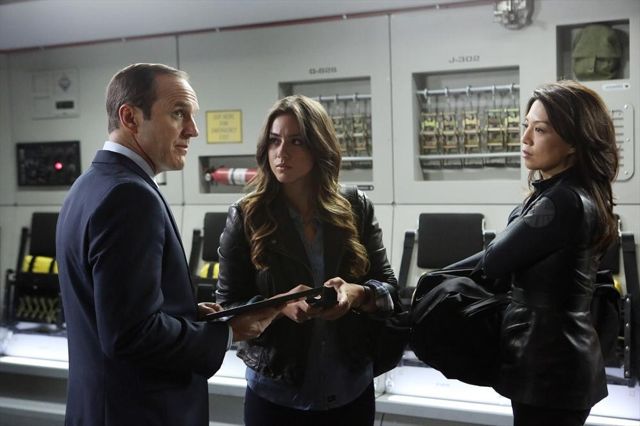
CLARK GREGG, CHLOE BENNET, MING-NA WEN

Tonight’s “The Well,” the eighth episode of “Agents of SHIELD,” tried and mostly accomplished its latest delicate task: Tying into the big-screen Marvel universe.

“The Well” was billed as a follow-up to “Thor: The Dark World,” but really the plot that drove the episode wasn’t so much a continuation of the current “Thor” sequel but a variation on the idea of humans coming into contact with Asgardian (alien) technology we’ve seen before.

That’s not to say “The Well” wasn’t entertaining – most episodes of the series are; they’re just … underwhelming – but its most interesting element was a little more exploration of the show’s least appealing character, the gruff and ultra-competent Agent Grant Ward.

In the episode, the team is in England, picking up the pieces (literally) left over from Thor’s battle in the current movie. Agent Coulson (Clark Gregg) consults with a Norse legends expert in Spain (played by Peter MacNicol) and unwittingly sets off a chase to recover portions of an Asgardian staff.

The staff – the weapon of an Asgardian berserker that’s been on Earth for centuries; so the Thor aftermath stuff is really only a way to get the expert involved – has been broken into three pieces. Each piece has the power to tap into the rage of the person holding it, increasing their strength.

A group of Nordic hate mongers (just go with it) gets first one, then two pieces and the race is on to stop them from getting the third and completing the berserker staff.

In the process, Ward (Brett Dalton) gets “infected” by touching the staff. Normally a slightly edgy, even standoffish guy, touching the piece of staff lets Ward’s rage turn him into a hostile bully. One important point, though: Ward recognizes the change and offers to bench himself. And Coulson – much like he’s given hacker Skye more than a few chances – keeps Ward in play.

The episode ends with a surprising encounter between Ward and Agent May (Ming Na Wen) and a Tahiti flashback for Coulson.

A couple of thoughts:

The show still isn’t as engaging as “Sleepy Hollow” or “The Blacklist,” but I’m enjoying it a bit more each week.

I’m ready for some real developments with Coulson’s resurrection.

I’m wondering how SHIELD itself will be portrayed by the end of this first season. By the time “Captain America: The Winter Soldier” comes out next spring, I’m wondering if SHIELD won’t be the bad guy in the whole Marvel universe picture and the agents we’ve (hopefully by then) come to care about will be like the “Angel” gang in Joss Whedon’s series of the same name, who were working for good in the evil law firm Wolfram and Hart.

By Selvig’s Chalkboard! More ‘Thor’ sequel Easter eggs

selvig chalkboard thor the dark world

Right before “Thor: The Dark World” opened, I pointed out some of the hidden secrets from the latest Marvel movie and how its first end credit scene – featuring the Collector, a character from next year’s “Guardians of the Galaxy” movie – set up a narrative thread that could carry Marvel movies through “Avengers 3” in 2018.

Turns out there were other Easter eggs also that I’ve been learning about this week thanks to online postings.

The “Cabin in the Woods” whiteboard was a treasure trove of geeky fun for fans of that movie, and the chalkboard Erik Selvig uses to explain the events of the first “Thor” movie are pretty fun too.

Sharp-eyed fans have pointed out the reference on the chalkboard to the “616 Universe,” the name for the Marvel universe all the comic book characters inhabit. Looks like crazy old Selvig knows it exists.

The board also references – in a portion of the board right behind Selvig – “The Fault,” a “tear in the universe” plot point used in comic book stories featuring The Inhumans, the secretive super-powered race that Marvel is said to be interested in bringing to the big screen.

There’s also reference to “The Crossroads,” taken from a past adventure featuring the Hulk and … Dr. Strange, another Marvel character apparently destined for the big screen.

Here’s one I’m actually kinda more excited about, even if it is a longshot:

warlock cocoon thor the dark world

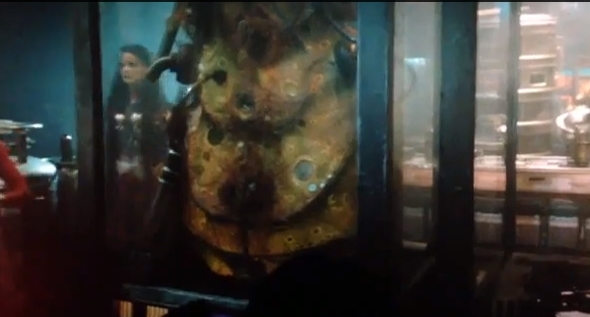
That cocoon-type thing is from the first scene in the end credits of “Thor: The Dark World” and is something that’s apparently been collected by … well, the Collector.

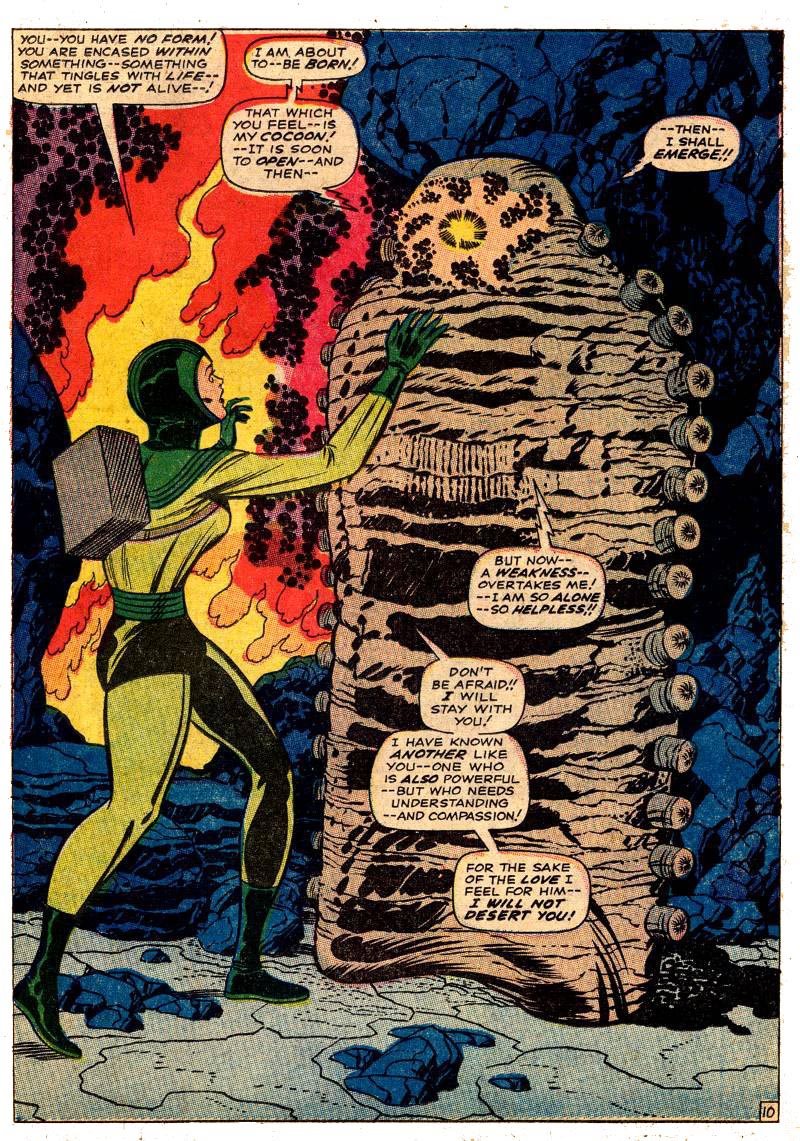
It looks suspiciously like this object:

warlock cocoon-fantastic_four_167_1

That’s from Fantastic Four 67, and that panel shows FF friend Alicia Masters finding the cocoon of Him, the cosmic being later known as Adam Warlock.

Warlock was a favorite of mine from the comics. He was a foe of Thanos, the smiley bad guy from the end credits of “The Avengers,” the guy who’s apparently destined to play antagonist in future Marvel movies, including “Avengers 3.”

Cool, huh? I’m kind of convinced that nothing happens in these Marvel movies by accident. Maybe they’re just in-jokes to entertain fans. Maybe they’re pointing the way toward future adventures. Either way, it’s fun stuff.

‘Thor’ sequel setting the stage for cosmic Marvel

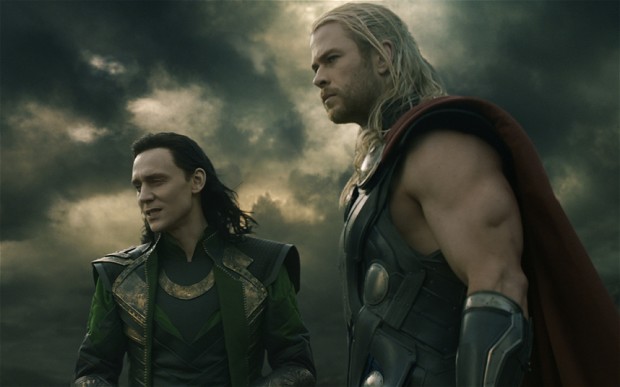
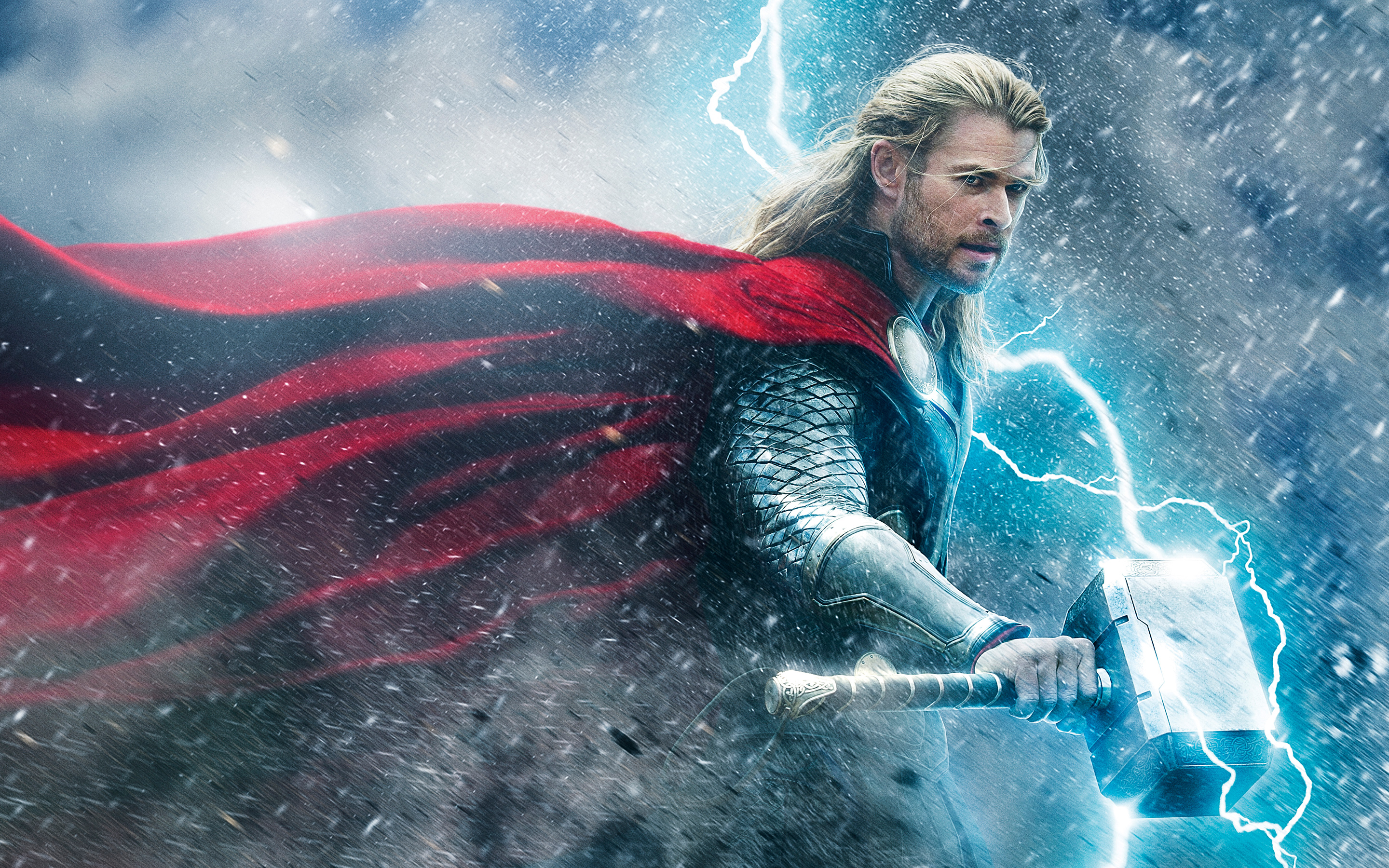
thor and loki thor the dark world

When Marvel released “Thor” in 2011, I doubt that most of us on this side of the screen realized how important the adventures of the Thunder God would become to big-screen Marvel.

I liked “Thor” really pretty well. Maybe not as much as “Iron Man” or “Captain America,” but I thought the movie did a very good job of introducing the more fantastic elements of the Marvel Universe to the moviegoing audience. With “Thor” a success, how far behind could “Dr. Strange” or the cosmic Marvel stories or even the horror-tinged reaches of the Marvel universe be?

As it turns out, Marvel and director James Gunn are making the “Star Wars”-ian “Guardians of the Galaxy” now, for release next year. There’s a connection between “Thor” – spoilers ahead, I’ll warn you before – and “GOTG” but after duty in “The Avengers,” the Asgardian god of thunder returns in “Thor: The Dark World,” which stakes out, even more than the original, the more mystical, more space-bound corner of Marvel.

I won’t go very deep into the plot. Suffice it to say that Thor (Chris Hemsworth) returns to face an enemy (former Doctor Christopher Eccleston) intent on avenging himself on Odin (Anthony Hopkins) and Asgard and recapturing the Aether, force of cosmic power not unlike the Tesseract, the mystical Cosmic Cube from “Captain America” and “The Avengers.”

The movie skips from Asgard to London, where Thor is reunited with Jane Foster (Natalie Portman) and her crew, and to other stops among the Nine Realms.

Director Alan Taylor (“Game of Thrones”) and the screenwriters make this sequel a far grittier – literally and figuratively – story than the original. Asgard has texture and the Dark World itself is a nightmarish landscape. London is the steely blue/gray we’re familiar with in modern-day TV outings like “Sherlock.”

The action is thrilling and the realm-skipping action shows every penny of the production budget.

Hemsworth is so at ease as Thor it’s fun to imagine him  playing the part for years to come. Likewise, Tom Hiddleston is such a welcome presence as Thor’s trickster brother Loki that I hope he becomes omnipresent in movies.

“Thor: The Dark World” could feel like just another step in setting up the decade-long Marvel movie plotline, as I talked about in this recent entry. But it doesn’t. It never feels perfunctory. It’s a grand, thrilling adventure in its own right.

Random observations:

Spoiler this line only: What I reported the other day about the two end credits sequences was correct. The first featured Benecio Del Toro as the Collector and sets the stage for “GOTG.” It’s a fun if oddball scene, directed by “GOTG” director James Gunn. It’ll be interesting to see how “GOTG” comes out next year.

Obviously Chris Hemsworth’s contract calls for a minimum of one shirtless scene per “Thor” movie.

Hiddleston gets to play more vulnerable and more multifaceted here than in “Thor” of “The Avengers.” It’s great and unsettling at the same time.

No spoilers here, but I loved the cameo. That’s the advantage of a shared big-screen universe.

‘Thor: The Dark World” marks the eighth movie in the official big-screen Marvel universe. Eighth.


‘Thor’ sequel spoilers and Marvel’s long game (maybe)

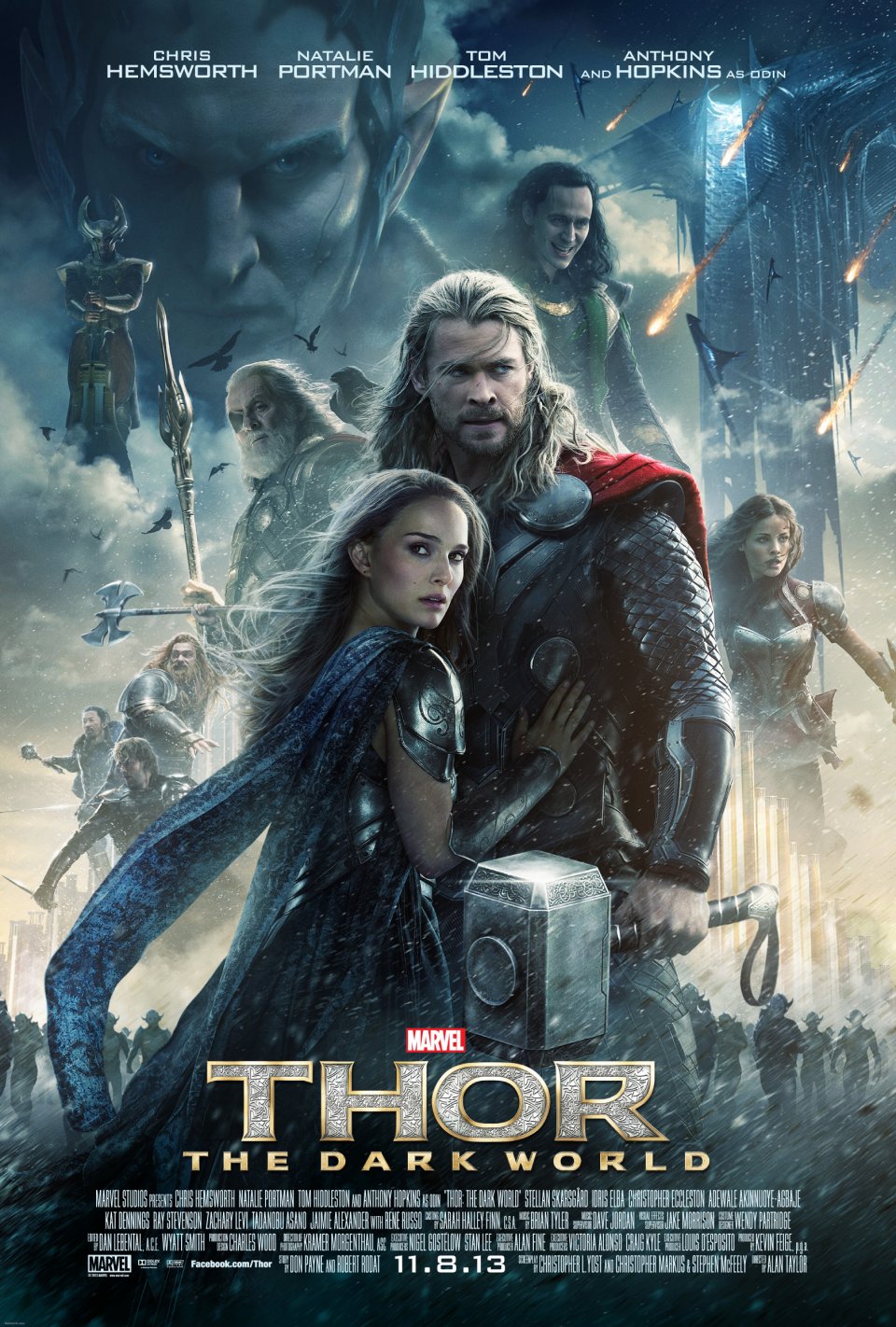
thor the dark world poster

It has been there, right in front of us, since 2011.

Marvel’s long game, its plan for its big-screen universe, through the next several years.

odin's vault with gauntlet

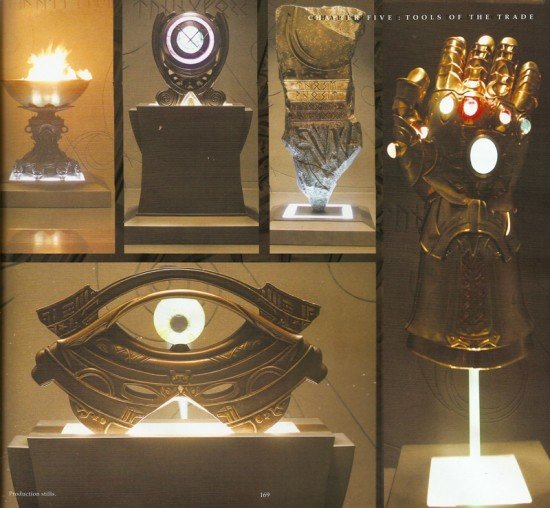
2011 is when “Thor” came out, and figuring prominently into the plot were MacGuffiins – the objects of desire that spark movie plotlines, rare and powerful objects like the Casket of Winters and other arcane weapons in the arsenal of Odin in Asgard.

Marvel gave us another big hint that same summer, as “Captain America” fought the Red Skull to possess the Tesseract, also known as the Cosmic Cube. Another artifact of power. The Tesseract even showed up at the end of “Thor.”

The Tesseract, lost when the Skull’s airship went down in the ocean after Captain America defeated the villain, figured prominently into 2012’s “The Avengers.” In Loki’s hands, the cube opens a portal that allows an army assembled by Thanos, a cosmic villain, to attack Earth.

thanos avengers credits

Thanos. That smiley purple guy who appeared in the mid-credits scene at the end of “The Avengers.”

Now that Marvel has announced that the next “Avengers” adventure, 2015’s “Age of Ultron,” will be about Ultron, the robotic villain, it became clear that Marvel and Joss Whedon didn’t put Thanos at the end of “The Avengers” for no reason. They were, obviously, building to something bigger for the third “Avengers” movie. And they were laying it out for us to see.

Remember, in “The Avengers,” when Nick Fury asks Captain America about the Tesseract, Cap replies, “You should have left it on the bottom of the ocean.”

Okay, so items of great power. Check.

Here’s where we get to the spoilers for “Thor: The Dark World,” which opens this Friday. So don’t continue reading if you don’t want to know. But it’s essential to my theory about Marvel’s long-term plans.

Ready?

There are two end-credits scenes in “Thor: The Dark World.” The latter scene, at the very end, is a nice character moment and establishes that Thor’s relationship with Jane Foster will continue.

But it’s the mid-credits scene that sets up several years worth of Marvel movies.

In that scene, Sif and Volstagg, two of Thor’s cohorts, have possession of the Aether, a powerful MacGuffin that plays into the plot of “Thor: The Dark World.”

Thor and his allies have captured the Aether and, in the end credits, Sif and Volstagg take the Aether to the Collector, a longtime Marvel Comics character played by Benicio Del Toro, who just so happens to play the same character in “Guardians of the Galaxy” the Marvel movie coming in late 2014.

Thor’s allies give the Collector the Aether and note the Tesseract is in Odin’s arsenal.

“It’s too dangerous to have two Infinity Stones in the same place,” they say.

thanos infinity gauntlet

Six Infinity Stones, or gems, are the power source for the Infinity Gauntlet in Marvel comics. It is a tool and a weapon of … Thanos.

After Sif and Volstagg leave, the Collector says the words that set the next several years worth of Marvel movies on their path:

“One down, five more to go,” he says.

In the comics, the Infinity Gems were not artifacts like the Cosmic Cube or Casket of Winters. They were literal stones or gems, albeit with supernatural powers.

Now consider the plot description Marvel released last year when it announced “Guardians of the Galaxy:”

“In the far reaches of space, an unlikely cast of characters including an American pilot and a group of futuristic ex-cons go on the run with a highly coveted object and must join forces to defeat a cosmic force of epic proportions.”

What highly coveted object? Possibly another Infinity Stone?

It now seems apparent that the Marvel movies are pursuing the years-spanning storyline of Thanos trying to acquire the powerful Infinity Stones and the Avengers, Guardians of the Galaxy and other heroes trying to foil his plans … coming to a theater near you in “Avengers 3,” maybe in 2017 or 2018.

In the meantime …

Marvel movie universe mastermind Kevin Feige has been quoted recently as hinting that the company has its movies roughly planned out into 2021 or so. Considering that’s only three years after the third “Avengers” film completes Phase Three of Marvel’s big screen plans, it’s probably not surprising.

Okay, so bonus round: What’s Marvel planning through and post Phase Three?

What could possibly top the showdown with Thanos?

(FYI, I’m not counting the movies based on Marvel characters that the company doesn’t have the rights to for the screen, so there’s no mention of “Spider-Man” or “X-Men” movies here, although those are certain to continue, as likely will “Fantastic Four” films.)

So here’s the rough timetable as we know it so far.

2014: “Captain America: The Winter Soldier,” “Guardians of the Galaxy.”
2015: “The Avengers: The Age of Ultron,” “Ant-Man.”

2016: Two still-unspecified Marvel films.

2017: One still-unspecified Marvel film, with at least one more likely to come.

2018: The third “Avengers” film maybe, if they continue to turn them out every three years.

Mentioned as likely or possibilities: “Dr. Strange,” “Black Panther.” Possibilities since their rights have reverted to Marvel: “Daredevil” and “The Punisher.”

Also almost certain: “The Inhumans,” about Marvel’s other race of super-powered beings besides “The X-Men.”

Any of these movies would be fine post-Phase Three fare.

And any of them would be appropriate for shoe-horning into the Phase Three build-up to the third “Avengers” movie.

Maybe they’ll turn up in one of those 2016 films, or one in 2017 or 2018.

I don’t know about you, but I’m planning to be there.

Two credits scenes in ‘Thor: The Dark World?’

Thor-The-Dark-World

I was already looking forward to Nov. 8 and “Thor: The Dark World.”

Then today ScreenCrush.com reports that initial screens indicate the latest Marvel movie will have two credits sequences, not unlike “The Avengers.”

There’s supposedly a scene part way through the credits, like the Thanos scene in “The Avengers,” and an after-credits stinger, like the restaurant scene at the end of “The Avengers” and the Bruce Banner appearance at the end of “Iron Man 3.”

True? We should get some kind of confirmation soon.

And the movie opens Nov. 8.