
I think I’ll be live-Tweeting the season finale of “The Walking Dead” in a few minutes on my pop culture Twitter account, @Pop_Roysdon.
See you there.
I think I’ll be live-Tweeting the season finale of “The Walking Dead” in a few minutes on my pop culture Twitter account, @Pop_Roysdon.
See you there.
It’s that time of year. Some of my favorite shows are working toward their season finales, with just an episode or two left. I’m glued to the TV (well, not literally).
Here’s the best of the best:
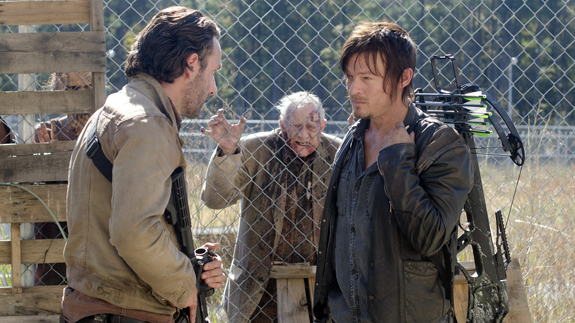
“The Walking Dead.” This season, the third, has been a big improvement over last year, which spent way too much time at Herschel’s farm. Much of the current season – which ends with the season finale Sunday night – has been split between the prison, where Rick and the other survivors have stopped, and the town of Woodbury, where the so-called Governor rules.
Pivotal events this season – the death of Lori, the birth of “Little Ass-Kicker,” the full acceptance into the group of Daryl Dixon, the return of Merle Dixon (the incomparable Michael Rooker) – seemed to come in the first half of the season.
In the second half of the season, its as if the showrunners decided to avoid the problems of season two by not repeating, over and over, scenes of the cast standing around and ruminating.
Instead, episodes have focused on small groups of characters. Like “Clear,” in which Rick, Carl and Michonne go back to Rick’s old sheriff’s station in search of weapons only to find that Morgan (Lennie James), Rick’s friend from the first season, has holed up in the town.
Morgan has lost his mind after losing his wife and son, and his madness and complete failure to cope with the post-apocalyptic world sent a message to Rick (Andrew Lincoln), who was spending too much time in Crazytown himself.

Other episodes focused on Daryl and Merle – ending tragically for the newly reunited brothers – and on Andrea and the Governor, both of whom came off as badasses.
I’ll be watching the season finale, “Welcome to the Tombs,” this Sunday.
Meanwhile, “Justified,” the FX show about Deputy U.S. Marshal Raylan Givens (Timothy Olyphant), continues to be one of the most clever and sarcastic shows on TV. The over-arching storyline of the season, ostensibly, was the 30-year-old mystery of thief Drew Thompson, but the story is less important than the parade of great characters we’ve been able to enjoy, ranging from the regulars – who have more to do this season – to great new faces like Constable Bob (Patton Oswalt).
“Justified” has always had some uneven moments, but this season has had some of the best episodes of the series to date. The season finale airs Tuesday night.
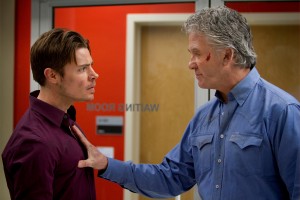
There’s another sort of pleasure to be had from “Dallas,” the continuation of the classic American soap opera about the Ewing clan of Texas.
The death of beloved actor Larry Hagman in November left the show in a tough spot mid-way through the second season: How to continue without J.R., a character who symbolized the show even as the real-life illness of Hagman reduced his presence in the new series.
The producers have handled Hagman’s passing well. On the show, J.R. died, the victim of a shooting, in Mexico. But the scripts have taken the mystery of J.R.’s death in a new direction, with Bobby (Patrick Duffy) and the younger generation of Ewings trying to figure out why J.R. was trying to find Pamela (Victoria Principal in the original series, who is apparently not returning).
J.R.’s presence still figures into the show and his death allowed for the return, even briefly, of classic “Dallas” characters like Gary Ewing, Val Ewing and Afton Cooper.
The show has five episodes remaining this season, so we can look forward to more Ewing scheming in the weeks to come.
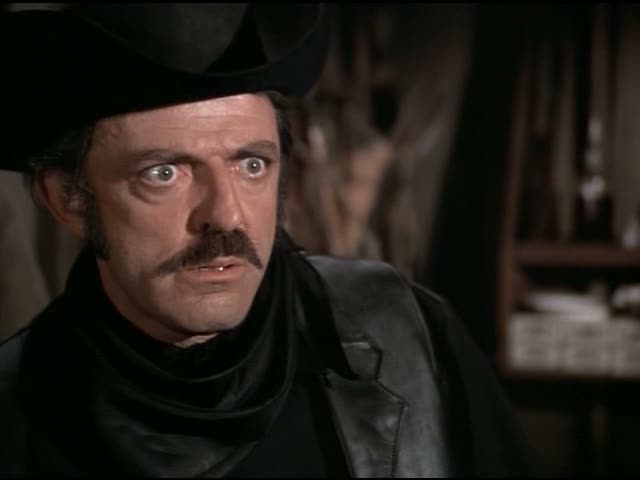
I can only imagine most TV audiences in 1972 upon encountering the western spoof movie “Evil Roy Slade.”
My friends and I loved the movie, with its goofy wordplay and spoof of traditional western movie moments.
But what was a straighter audience to make of John Astin as an outlaw so mean even wolves wouldn’t raise him when, as a baby, he was orphaned in an Indian raid?
Or Mickey Rooney as Nelson Stool, a bitter railroad magnate who had worn down his index finger tapping out telegraph messages?
Or Dick Shawn as Bing Bell, a traveling lawman?
Directed by Jerry Paris, the “Dick Van Dyke Show” actor turned TV director, and produced and written by “Happy Days” masterminds Garry Marshall and Jerry Belson, “Evil Roy Slade” was the type of TV movie that they just didn’t make back then and they certainly don’t make now.
Some observations:
The movie is full of great lines. “I learned a valuable lesson today. Never trust a pretty girl or a lonely midget.” “I have kings with an ace.” “I have threes with a gun.” “You win.”
Slade at some point tells a cello player to get his instrument out from between his legs and hold it up under his chin, like a fiddle should be held. The man complies.
Slade is asked to solve a math problem: “If you had six apples and your neighbor took three apples, what would you have?” “A dead neighbor and all six apples.”
Each time Bing Bell’s name is mentioned, a character says, “Somebody at the door?”
According to Rooney’s nephew, played by “Laugh-In” regular Henry Gibson, Rooney’s deformity is the stuff of western legend: “Men often sit around the campfire and sing about your stubby index finger.”
The movie seems like a time capsule to Hollywood past. Besides Rooney, the cast includes Milton Berle, Edie Adams and, in the role of narrator, Pat Buttram.
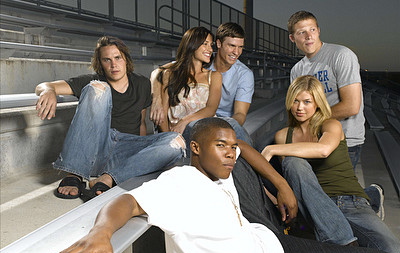
Back before the advent of DVD, I would videotape (remember that?) and watch each episode of a favorite show, like “Buffy the Vampire Slayer” or “The X-Files,” and re-watch a whole season during the summer months, especially in preparation for a new season in the fall.
It was kind of the precursor to the TV season binge that’s possible now with DVD, Blu and streaming video.
Since entire seasons of shows became available on disc, I’ve usually bought the ones I’ve already seen and re-watched those. But I recently bought “Friday Night Lights” because I’d heard so much about Peter Berg and Jason Katim’s TV version of Berg’s movie about high school football in Texas and thought I might like it.
And I do.
I’ve just finished the first of five seasons and found myself really enjoying its middle-class, small town soap opera.
If you’re unfamiliar, “Friday Night Lights” is about the town of Dillon, Texas, where Eric Taylor (Kyle Chandler) has become coach of the high school football team. As the show opens, Taylor finds himself poised to coach young football star Jason (Scott Porter) to a championship season … when an on-field accident leaves Jason paralyzed for life.
Taylor taps second-string QB Matt Saracen (the priceless Zach Gilford), an under-confident but talented player, to lead the team.
The football action punctuates most episodes but the emotional heart of the show is the web of relationships among the characters. We grow to know and care about Tami Taylor (the wonderful Connie Britton), the coach’s wife; their rebellious daughter Julie (Aimee Teegarden), who begins dating Saracen; ballers Smash Williams and Tim Riggins (Gaius Charles and Taylor Kitsch) and their struggling middle-class families; and very different high school girls Lyla (the adorable Minka Kelly) and Tyra (Adrianne Palicki).
The show is filled with realistic characters, for a soap, from Saracen’s aging grandmother to Lyla’s dad, Buddy, the local car dealer and head of the booster club.
“Friday Night Lights,” with its soap opera-ish tone balanced by its documentary-style cinematography, carries the perfect emotional heft. It’s a bit corny in spots, sure, but it’s one of the best depictions of small-town life I’ve seen on TV.
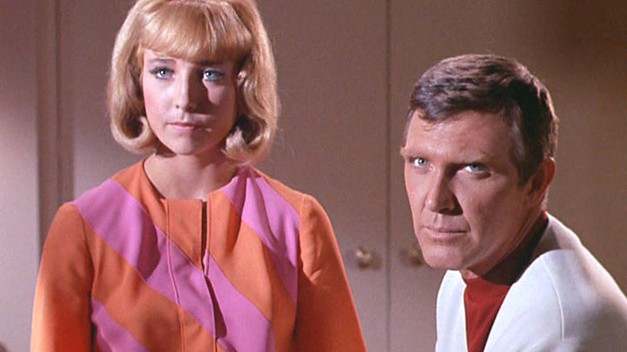
Although it’s disparaged in some circles, “Assignment: Earth” remains one of my favorite episodes of the original “Star Trek” series.
Airing in March 1968 – the last episode of the second season of the classic show – “Assignment: Earth” was a “backdoor pilot,” industry parlance for an episode of a regular TV series that was intended to be a try-out for a spin-off series, an entirely different show.
The story follows the crew of the Enterprise as they – in rather blase manner – use the “slingshot” effect to travel back through time to 1968, a pivotal moment in world history. With the launch of an orbital nuclear weapons platform, the U.S. threatens to escalate the arms race.
Kirk, Spock and company don’t know about this particular wrinkle in time (heh), however. They just know that they have been waylaid by Gary Seven (Robert Lansing), ostensibly an Earth man who tells Kirk he’s been living on another planet his entire life and has been beamed back to his motherland to help the population avoid World War III.
Seven proceeds to escape from the Enterprise and beam down to the rocket launch site, with Kirk and Spock wondering if they should capture him or help him.
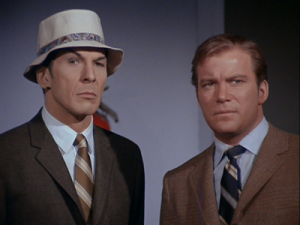
To investigate further, the two go down to 1968-era Earth, nattily dressed in sport coats and, for Spock, an ear-covering hat, and get mixed up in the goings-on. Lots of time-twisting hijinks ensue and we meet Roberta Lincoln (Teri Garr), the young woman working as secretary in the futuristic office from which Seven operates.
The episode builds to a tense climax as Seven tries to sabotage the rocket launch and throw just enough of a scare into the world without actually sparking war.
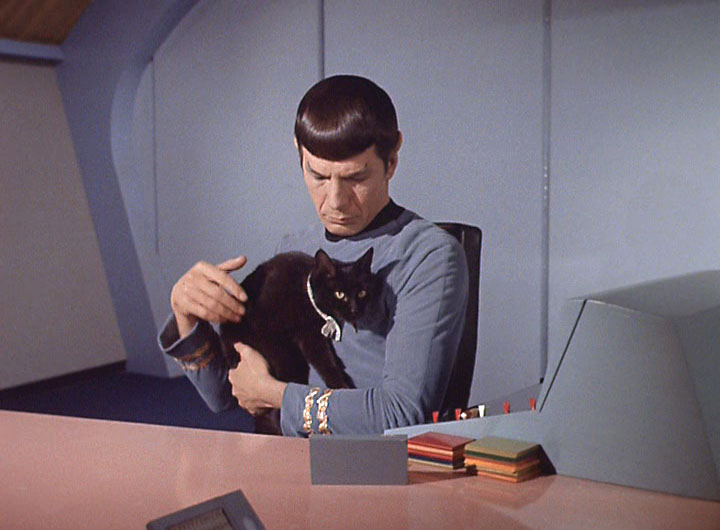
The episode ends with Kirk and Spock, looking smug, having done some research on Seven and Lincoln – they are from the future, after all – and predicting interesting adventures ahead for the team (including Seven’s shape-shifting cat/companion, Isis).
It was not to be, however. The series never materialized.
The characters turned up in a couple of “Star Trek” novels and comic books, but we never got to see the continuing adventures of Gary Seven. That’s too bad, too, because Lansing was such an interesting character actor. His grumpy, frowning demeanor would have made for an interesting, ahead-of-his-time presence on TV.
Some online criticism of the episode is that it seems dated – Teri Garr’s “mod” wardrobe and explanation of the hippie movement – or that it limits the amount of screen time for Kirk, Spock and others, particularly in the final episode of the second season. But I’m not sympathetic to those arguments. It was, after all, a pilot for a spin-off TV series. It’s done much more handily than in some series.
And it left me wanting more of Gary Seven and Roberta Lincoln.

“Community” has always been an offbeat sitcom. It’s kind of hard to imagine that the Dan Harmon creation ever got on the air.
Ostensibly the antics of a wacky and diverse bunch of adults attending classes at a community college, the show – which had its fourth-season premiere Thursday – quickly took off on its own path.
With its self-absorbed and sometimes even hard-to-take characters, its odd stories and its completely off-kilter style – an entire Christmas episode in Claymation-style animation? Another mostly depicted in old video-game style graphics? One that takes its cues from a “Law and Order” episode? – “Community” is one of those shows that inspires either absolute fanhood or absolute irritation.
You don’t have to be a fan of the show, in other words – but it helps.
Over the course of the first three seasons, Harmon and cast created some truly classic episodes, including the first-season-ending paintball war that exploded action movie cliches; the most high-stakes and heartfelt game of Dungeons & Dragons ever; an epic blanket fort; the machinations of the evil heating and air conditioning wing of the school; the characters exploring various timelines, including the darkest, complete with “Evil Spock” goatees; the highlights go on and on.
There’s no question that “Community” is unique in TV history.
Harmon was, by some accounts, a “difficult” personality and clashed with Chevy Chase, who by almost every account was as big an ass on the set as was his character.
So Harmon got fired from his own show before this fourth season began.
I watched the season opener and liked it pretty well. The story’s conceit – that mentally fragile Abed (Danny Pudi), confronted by the likelihood that their community college careers were coming to an end, retreated into a world that played out in a standard sitcom format where the characters were simpler, the laugh track made everything seem easier and Fred Willard played Chase’s role – seemed like vintage “Community.”
But something about the show seemed … off.
I’ll still be watching “Community.” I’ll have my fingers crossed that the low-rated show gets a full season – although I can’t imagine it will achieve the Twitter hashtag #sixseasonsandamovie goal – and that the show won’t wither without Harmon.
I’m hoping for a good timeline, in other words.

Watching “The Americans,” the new spy thriller on FX, really impressed upon me just how much time has passed since the time of the show’s early 1980s setting.
The Cold War grew stone cold not many years later. Ronald Reagan, remembered as Kindly Old Grandpa President by many now, is referred to – albeit by a KGB agent – as a “mad man.”
As a matter of fact, the early 1980s setting of “The Americans” seems more remote to us today than the early 1960s setting of some flashback scenes.
Nevertheless, creators Joe Weisberg and Graham Yost (“Justified”) have made “The Americans” feel fresh. Its “Spy vs. Spy” plot set within the United States has some kitsch value, sure. But the “who do you trust?” theme of the story is immediate.
Keri Russell – still “Felicity” for most of us, but maybe that will change after this show – and Matthew Rhys play Elizabeth and Phillip Jennings, a typical American couple with two school-age kids.
But Elizabeth and Phillip aren’t typical Americans at all. They’re Russian sleeper agents, sent to the U.S. in the early 1960s to … well, I guess they do what sleeper agents do. They establish identities, settle in and raise kids and … wait for a chance to foment rebellion from within? Maybe.
As the premiere opens, Elizabeth is seducing a federal agent to learn some secrets and Phillip is on a mission with a fellow spy. Things go bad and the comrade is wounded, but Phillip captures Russian defector Timachev.
Elizabeth – who is a stone-cold bad ass – finds herself in a tough situation. The Jennings are supposed to keep Timachev safe until he can be turned over to the mother country. But only Elizabeth knows that Timachev brutally raped her when she was just a cadet back in Russia.
Meanwhile, Phillip is – after nearly 20 years – having second thoughts about their mission. He’s seriously considering defecting and setting up a new life for him, Elizabeth and their kids.
There’s a realistic amount of tension between Elizabeth and Phillip, some good action and some good drama involving FBI agent Stan Beeman (Noah Emmerich) who lives across the street.
Will Beeman discover their secret? I imagine some future episodes will revolve around this question.
If you’re okay with the premise – we’re rooting for people who were working against the United States at the time – you will probably enjoy “The Americans.”
Random observations:
If one scene in particular jumped out at all of you other aging TV fans, it was no doubt one late in the first episode. Elizabeth and Phillip are driving around after putting the finishing touches on a mission and Phil Collins’ “In the Air Tonight” is the mood music on the soundtrack. Of course, the song was used in the premiere of “Miami Vice” back in 1984.
There’s a couple of nice musical touches in the show, including the use of Quarterflash’s “Harden My Heart” in the opening moments, when Elizabeth seduces – pretty overtly – a federal agent to get his secrets.
So far, “The Americans” hasn’t gone overboard on the period touches. Russell rocks some high-waisted jeans and has Breck girl hair by the yard, but there’s not a lot of gratuitous pop culture references to set the story in its time. In other words, there’s no moments like in the 1980s-set “The Wedding Singer,” which featured a scene of Adam Sandler yelling from another room, “Come in and check this out. I think somebody just shot J.R.!”
As much as I liked “Last Resort” and “Threshold” and “Firefly” and other TV series, I knew better than to give my heart fully to them.
“Dark Skies” taught me that lesson.
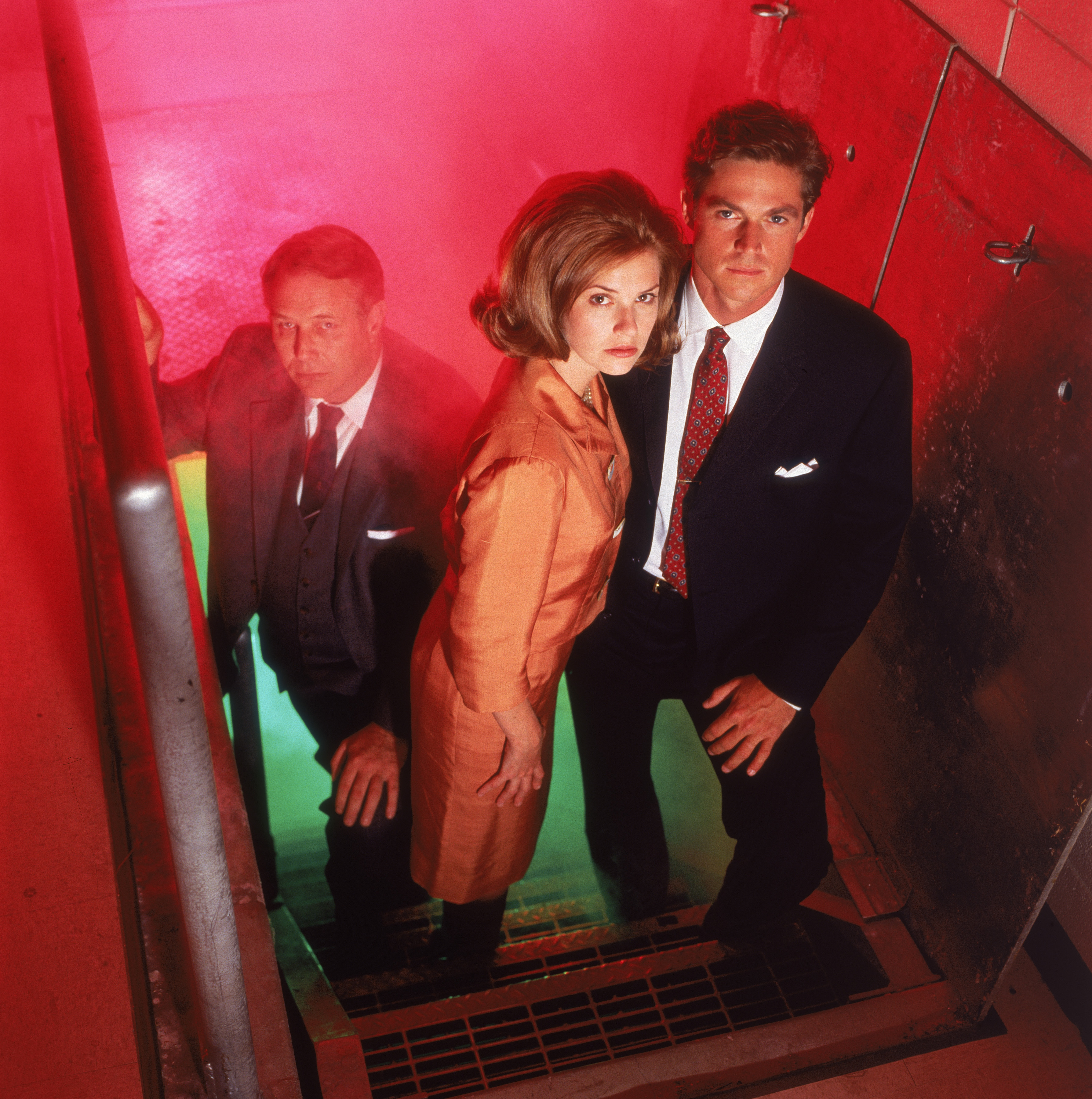
“Dark Skies” was an episodic sci-fi TV series that ran on NBC for only about a dozen and a half episodes in 1996 and 1997. Created by Brent Friedman and Bryce Zabel, the series was an ambitious one: Inspired by the hit conspiracy show “The X-Files,” Friedman and Zabel created a decades-spanning series about an alien invasion of Earth, the conspiracy to cover it up and the few people who sought to blow the lid off the whole mess.
And, oh yeah, along the way, the good guys and bad guys run across the most pivotal figures of the time, from John F. Kennedy to The Beatles to Jim Morrison to J. Edgar Hoover.
Heroes Eric Close and Megan Ward not only sought to expose the invasion but stay away from murderous conspirators with shadowy connections.
And bonus: Late, great character actor J.T. Walsh played a military man mixed up in the conspiracy.
The show’s creators had an ambitious plan that would have taken their story from the early 1960s to 2001, with each of five seasons covering a different decade.
It was a bold plan considering the follies of network TV, where shows are mercilessly canceled when they fail to garner sufficient ratings. “Dark Skies” was canceled when not enough people tuned in.
The show’s first and only season had some highlights, however:
With JFK in their corner, it was only a matter of time until the charismatic president was assassinated. The third episode did a nice job with the tragic development.
The fifth episode, “Dark Days Night,” was set against the backdrop of The Beatles appearing on Ed Sullivan’s show. The aliens planned to send a sinister signal out over the airwaves during the broadcast.
“We Shall Overcome” reunited Close’s character with a former colleague from the government set during civil rights unrest in Mississippi.
What other series featured Robert Kennedy as a recurring character and spotlighted a diverse bunch of figures including and Jack Ruby, Carl Sagan and Hubert Humphrey?
I was a bit too young when “The Time Tunnel” aired for a single season beginning in 1966 to catch the nuances of the show. Same goes for other shows from the same producer/creator, Irwin Allen, like “Voyage to the Bottom of the Sea” (1964) and “Lost in Space” (1965) and “Land of the Giants” (1968).
Well, there were not a lot of nuances to be found in “Lost in Space.” And “Land of the Giants” was in some ways the purest and most fun of the bunch in its story of little people trapped on a planet of giants.
But “The Time Tunnel,” although it only lasted a season on ABC, made a big impression on me.
Maybe it was because of its premise – two scientists from a top-secret government project (one that cost billions of dollars) go back in time and move, out of control, from one pivotal moment in history to the next. (Yes, the premise was duplicated in “Quantum Leap.”)
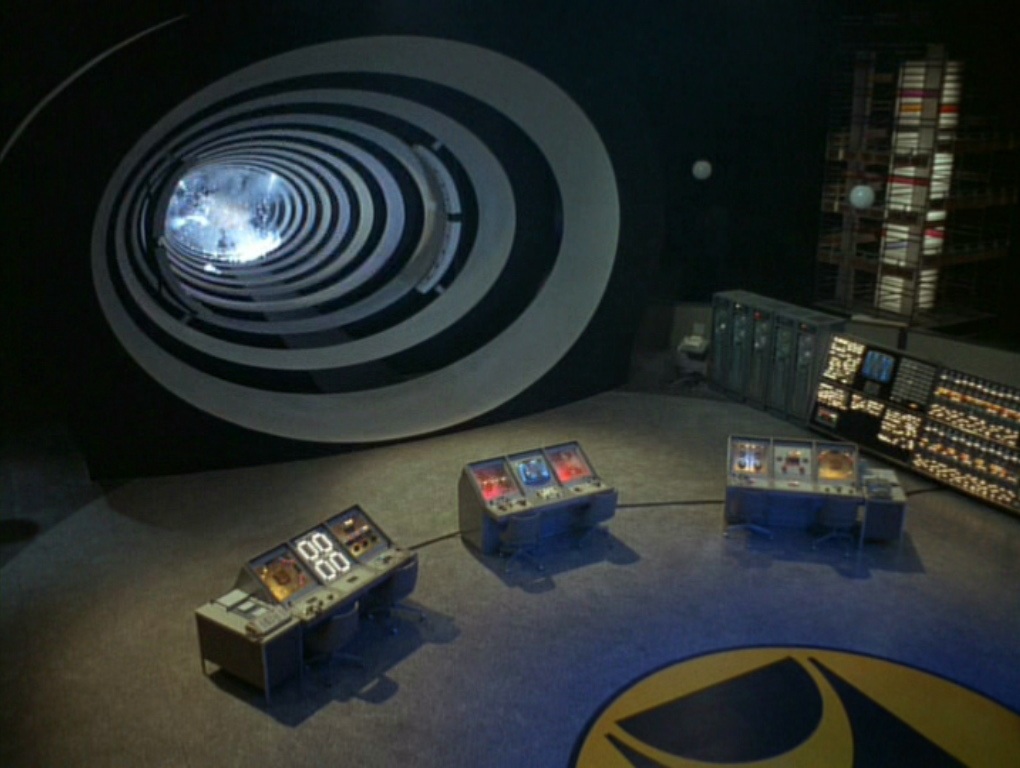
The show had colorful sets and costumes and stories that seem even more preposterous in retrospect than they do now: As time travelers James Darren and Robert Colbert bounce around from one moment in history – and a few in the future – in one episode to another in the next, they get involved not only in the course of human events but, often, try to change the course of human events.
Let’s think about this for a minute: Is there anything less scientific when you’re time traveling than trying to persuade the captain of the Titanic to cross the ocean just a little further to the south? Humanitarian, maybe; maybe even purely an instance of self-preservation, since the scientists in question had time-jumped onto said “unsinkable” ocean liner. But not very impartially scientific.
Anyway, whole genres of time travel stories have demonstrated that, even if you could change the course of history, you shouldn’t. That wasn’t a big stumbling block on “The Time Tunnel,” however.
The show is available on Hulu.com and is pretty fun to sample.
Some stray observations:
If you want to see all the great sets – the mammoth underground research project, code-named Tic-Toc, buried hundreds of stories below the desert floor – you need only watch the first episode. The sets and special effects, which echo the great Krell laboratories of “Forbidden Planet,” are all out there in the pilot. Then repeated endlessly in later episodes.
There’s a wonderful contingent of actors in the show, from Whit Bissell as the military man in charge of the project to guest-stars like Robert Duvall.
Lee Meriwether, who was an also-also-ran among Catwoman fans for her work in the big-screen “Batman” movie, has a nice role as a scientist here.
Allen set up this show like he did with “Lost in Space,” with a teaser ending that led into the next episode.
The show gave plenty of airtime to stock footage from old movies, the kind of Hollywood economizing that probably made the series possible. Why shoot new footage for a Battle of Little Bighorn sequence when Hollywood has already told General Custer’s story?
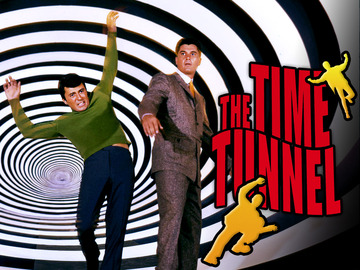
The way the time travelers tumbled through time was endlessly amusing and must have seemed as silly to the cast as the “throwing yourself back and forth across the bridge of the Enterprise” scenes were to the cast of “Star Trek.”
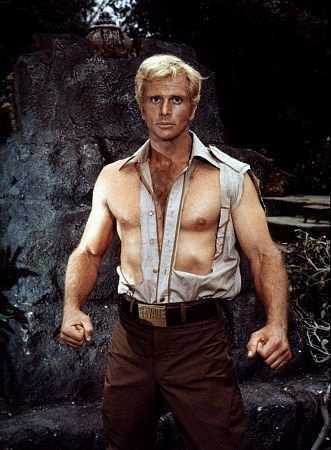
Ron Ely, we love you despite the broken promises you represent.
More precisely, we love you because you played three of the great characters from geek literature … even if only one was in a well-executed, fully-formed manner.
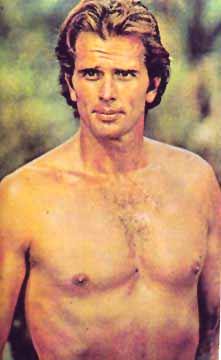
Ely is most familiar, of course, as “Tarzan” in the TV series of the same name from 1966 to 1968. I haven’t seen one of these shows in decades but my memory of it is that the stories, while not the equal of the fantastic yarns written by Edgar Rice Burroughs, were pretty good. And Ely looked good in a loincloth, as I’m sure female viewers would agree.
And then there was “Doc Savage.”
In 1975, Ely played Clark “Doc” Savage, the epitome of the pulp magazine hero, in a Michael Anderson directed big-screen movie.
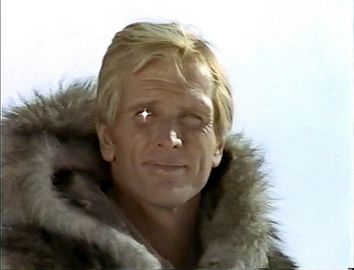
“Doc Savage: The Man of Bronze” was awful. Campy and silly and played like the worst episodes of the 1960s “Batman” TV series, it was an incredible disappointment for fans of the books like me.
Then Ely played Superman … kind of.
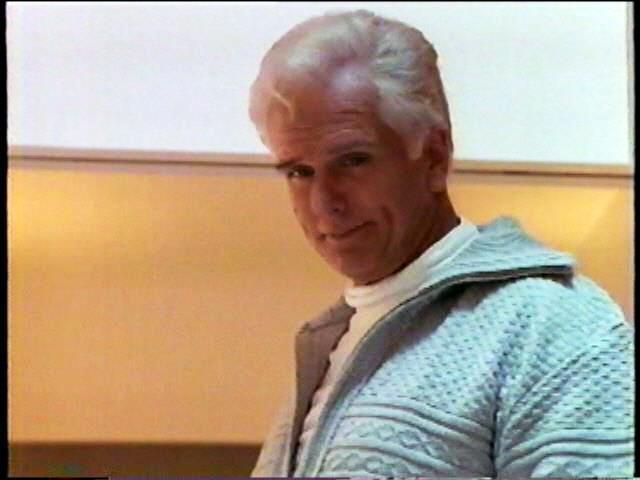
In the late 1980s/early 1990s syndicated “Superboy” TV series, an episode sent Superboy (Gerard Christopher) to an alternate timeline – dare I say the darkest timeline – where he met a mysterious white-haired man with a familiar “S” curl on his forehead. Yes, this gentleman was Superman, now retired, and he gives Superboy some advice before the show’s normal timeline is restored.
The producers, who had made the Christopher Reeve “Superman” movie but no longer had the rights to the adult superhero, couldn’t credit Ely as playing Superman and Ely didn’t wear the costume. But he definitely was and did a pretty nice job.
Somewhere there’s an alternate timeline where Ely played Superman in a 1960s movie or TV show and then made a serious-minded “Doc Savage” movie.
Definitely not the darkest timeline.
 keithroysdon