Category Archives: TV

Farewell to ‘Justified’

Justified

There have been so many great TV dramas in the past decade. Too many, if you have a life like mine and have limited hours to watch TV live or even catch up later on demand or online.

With “Mad Men” winding down in curious fashion, “The Americans” getting out in front of me, leaving me unable to keep up, and “Walking Dead” uneven but still rewarding, I’m mostly keeping pace only with the superhero shows like “Arrow,” “The Flash” and “Agents of SHIELD.”

One show that I did keep up with, pretty much every week, was “Justified,” Graham Yost’s show, based on characters created by wonderful writer Elmore Leonard, about U.S. marshals, lowlife criminals and everybody in between in modern-day Kentucky, was too good to miss.

I watched the show live pretty much every week during the course of its six seasons. And I mourned a little bit when “Justified” ended its run six days ago.

If you’ve never watched, I highly recommend it. For so many reasons:

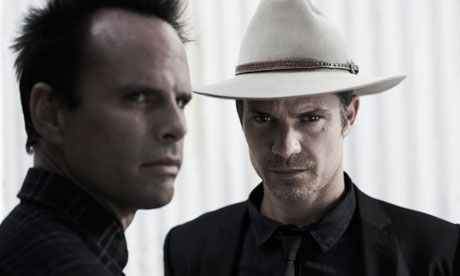
The lead characters, marshal Raylan Givens and criminal Boyd Crowder, are charismatic and fascinating and they’re portrayed by terrific actors in Timothy Olyphant and Walton Goggins.

Other lawmen (and law-women) came and went and a couple dozen wonderful bad guys (and women) have passed through these parts but Raylan and Boyd were, ultimately, the reason we watched every week.

The two – who grew up together, dug coal together, dreamed of getting out of Harlan, Kentucky, and had less than straightforward solutions to problems – did the most fascinating dance for six seasons.

As much as we rooted for Raylan, we agreed with his boss and co-workers that he could be an angry, danger-seeking jerk.

And as much as we wouldn’t want to be on the bad end of a deal with Boyd, we’d also like to have sat down the bar from him, having a beer and listening to him formulate schemes and recounting fascinating characters he met .. and, most likely, swindled or killed.

“Justified” never let us forget that, as shaded and shady as these two could be, they were our protagonists. We were as caught up in their stories – more so, really – as any tried-and-true, straight-arrow characters.

I’ve been to and through Kentucky many times. I’m not sure I pined for the characters of “Justified” – Mags Bennett, Dewey Crow, Wynn Duffy or any of them – to sidle up next to me at a diner.

But it would have been fascinating.
‘Arrow,’ ‘Flash’ and world-building

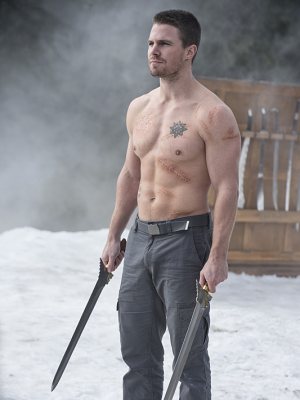
arrow atom

I’ve noted here before that the geeks have inherited the earth. When I was growing up in the 1960s and 1970s, we prized Famous Monsters and Marvel Comics but were looked down upon by adults for our reading materials; were happy with those lame Marvel superheroes TV cartoons that were very limited animation versions of classic comic books; and thrilled at the random superhero who made his way to TV or movies, even though most of the time the live-action versions weren’t very good.

Now, in any given week, I can watch “Agent Carter” – really good limited series that finished its run a few weeks ago; hope it comes back – “Agents of SHIELD,” a show that’s found its way, and most particularly “Arrow” and “The Flash,” two CW series from the same producers who have taken two characters who might have peaked in the Silver Age and made them intriguing and fun.

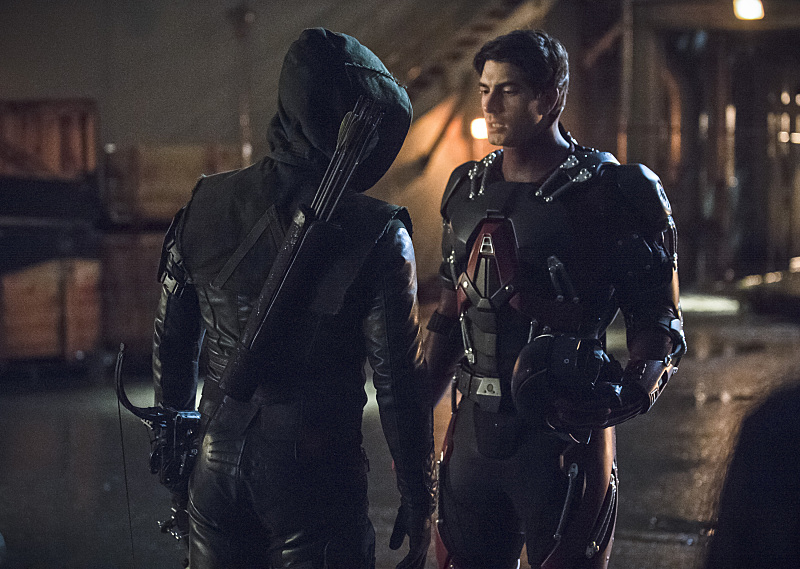
Through “Arrow’s” three seasons and “Flash’s” half-completed first season, they’ve introduced so many great comic-book characters – Ray Palmer/Atom, Black Canary – two of them! – and so many bad guys, including Ra’s al Ghul and Gorilla Grodd. Grodd, for Grodd’s sake!

“Arrow” has always done well when its made its Green Arrow character a substitute for Batman –  in the comics, the character originally was a Batman copy. Arrow in “Arrow” has just been asked to succeed Ra’s as the leader of the League of Assassins. It’s an offer that Ra’s made to Batman and it only heightened their conflict over the decades.

Meanwhile, “Flash” has just introduced Grodd. Yes, a telepathic, hyper-intelligent gorilla from a race of telepathic, hyper-intelligent gorillas. “Flash” is much more fanciful than “Arrow” anyway, but the introduction of Grodd takes the series even more into the realm of comic-book sci-fi than it already was.

And, in the process of all this, “Arrow” and “Flash” began building the world in which these shows live.

There’s a lot that’s been said about universe-building in Marvel’s movie and TV universes, but Warner Bros/DC is doing this on TV about as well as it can be done, not just with “Flash” and “Arrow” but with their next plans.

CBS – CW’s sister network – will air a “Supergirl” series this fall and we’ve been told it will share a universe with “Arrow” and “The Flash.” I guess we’ll see if that means cross-network cross-overs. It’s rare but it’s happened before.

Potentially more exciting are CW’s apparent plans to spin off some characters introduced on “The Flash” and “Arrow” into their own series. Plans to have Atom and Firestorm and at least some version of Canary and other characters sharing a weekly series not only sounds like a small-screen “Justice League” or “Brave and the Bold,” but is so damn fun.

We’ll see how all this plays out, of course. The CW shows are doing well but “Supergirl” could tank. Will Superman be the 800-pound gorilla (sorry Grodd) absent from the room, like Iron Man was when “Agents of SHIELD” debuted?

Can too many heroes – or superhero shows – spoil the soup?

Not ready for prime time

snl title

I might not watch a whole lot of tonight’s 40th anniversary special for NBC’s “Saturday Night Live,” and not just because, as someone else pointed out, the actual anniversary is sometime this fall.

And not just because I’ll be watching “The Walking Dead” and “Talking Dead” during the middle couple of hours of this marathon-length SNL fete. (And don’t even get me started on “The Walking Dead” right now, because I’m not gonna be another of those people who goes on about how the show has become an endless march through an unending storyline with the only mile markers being the death of characters great and not-so-great and I don’t know how much longer i’m gonna watch it … because I’ll keep watching it, almost without question.)

And not because I haven’t been a fan of “SNL” since virtually the beginning. One of my friends had a record album  – an LP, a vinyl disc you played at 33 and a third RPM, for the young folks – of bits from the show’s first season. He would bring it to school and one of our teachers was cool enough to let us listen to some of it on a turntable. We all watched the show every week, but these were the pre-VCR, pre-online days when you couldn’t see it again unless NBC decided to replay it. So we were riveted to the audio soundtrack of the show.

No, I might not watch a lot of tonight’s special because, as I was watching last night’s replay of the very first episode, hosted by George Carlin, from 1975, I was struck by how much of it I remembered so well.

And it struck me: “Saturday Night Live” has been on eternal replay pretty much for the past two decades-plus.

NBC and show creator Lorne Michaels have relentlessly rerun episodes and bits and pieces of episodes over the decades. The show has been cut down to fit hour-long timeslots (and I think half-hour slots as well) and repackaged into so many anniversary shows on NBC and retrospectives on VH1 and elsewhere and so many “Best of Chevy Chase” and “Best of Will Ferrell” specials … sheesh, this material has been run into the ground.

Still, there are bits that I want to still want to see. Anything with that genius Phil Hartman (the unfrozen caveman lawyer skits especially, or his Bill Clinton in McDonald’s), for example. Or Ferrell’s “Get on the bag!” sketches.

But I don’t need to see more Chase, who I can’t believe we ever thought was funny, or even more Aykroyd or Belushi, who indisputably were.

And if I do, I’ll look ’em up online. Or maybe check various shelves and boxes in my house to see: Did I ever buy that old album?

‘Black Mirror’ a ‘Twilight Zone’ for … yadda yadda

black mirror be right back

Every few years, a new TV series is dubbed “The Twilight Zone” of its generation. Heck, even the 1980s “Twilight Zone” series was called the “Twilight Zone” of its generation. And it was really pretty good.

The designation shows the staying power of Rod Serling’s “Twilight Zone,” which began in late 1959 and ran several years into the 1960s.

But while “Black Mirror” might properly be called the “Twilight Zone” of its generation … it just might earn that title a bit more because its emphasis on technology and the way it is integrated into our lives makes it very thoroughly of our generation.

“Black Mirror,” created by Charlie Brooker, has been airing in England for a couple of years now, but its recent appearance on Netflix and online have made it widely known.

It’s a dark show. Dark. And if you don’t the title reference, it seems to me to be about that little slab of glass that most of us carry around with us every day: the smart phone. Dark until it’s activated and, as “Black Mirror” shows us, that little piece of glass and plastic and electronic innards can be mighty dark.

“Black Mirror” is set in a future that’s not very far ahead, when electronics have advanced somewhat but are still totally believable in this world of Google Glass and ever-present iPhones.

The series – two seasons of three episodes and a Christmas special – look at the way technology can be used to warp and twist us. Even by ourselves.

The opening episode, “The National Anthem,” is notorious because of its adult content, but it’s gripping and upsetting in an old-fashioned way. A beloved young British princess is kidnapped by terrorists. Their only demand? That the prime minister have sex. On live TV. With a pig.

blackmirrornationalanthem

As the clock ticks, the PM and his staff try to find a way to beat the demand and avoid the horrifying, humiliating and potentially politically disastrous ransom. Meanwhile, TV reporters scramble to find out what’s going on and the public watches, fascinated, as the drama plays out first on social media then on TV. It’s a fascinating commentary on new media and old media and how we shape them and they shape us.

black mirror christmas

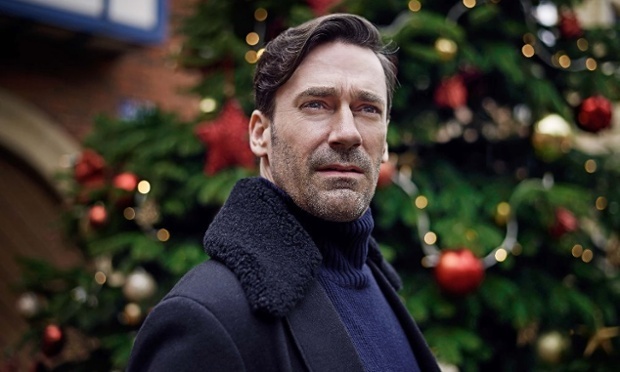
I liked “The Entire History of You” but winced at its tale of obsessive love and jealousy in a world where a “grain” of technology implanted in your head makes it possible to review – and share – your memories. The Christmas episode featuring Jon Hamm of “Mad Men” seemed to bite off too many stories.

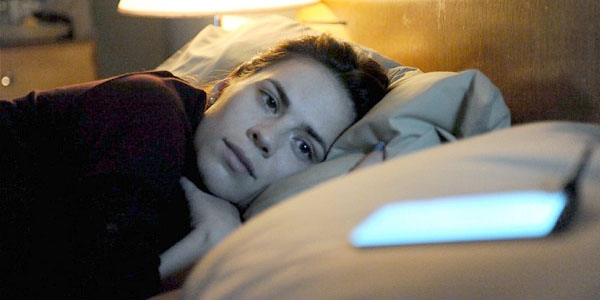
The best of the episodes I’ve seen is “Be Right Back,” with “Agent Carter’s” Hayley Atwell and Domhnall Gleeson as a young couple separated by his death in a tragic accident. But Atwell’s character learns there’s a way of being with her love again, thanks to technology. But what’s the price?

“Black Mirror” probably benefits from the cool, blue-tinged modern Brit TV atmosphere of shows like “Sherlock.”

Not to mention the pervasive feeling of technological dread each episode is infused with.

Blast from the past: Level 42 ‘Something about You’

level42somethingaboutyoulead

I was a child of the 60s but i became a young adult in the 1970s and 1980s and those were the most influential periods of my life as far as music goes. And being a visual person, I especially loved that weird bastardization of music and visuals, the music video.

One of my favorites was the video for British band Level 42’s “Something about You.”

So many videos are awful and so many are ridiculous in their efforts to mash up the song with some kind of story, particularly romantic vignettes starring the the artist or lead singer of the band.

What I like about director Stuart Orme’s 1985 video for “Something about You” is that it’s all about the most weird and awful romance.

level42somethingaboutyou

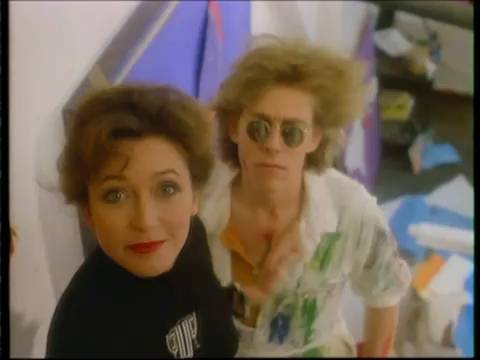
Members of the band play characters riding in a train car. The oddest of the group, played by band leader and writer Mark King, imagines – envisions? – each of his fellow passengers with the same woman, usually in some sort of troubled moment in their relationships.

Overlooking each quick vision is King as a creepy, heavily-made-up man in a plaid suit, laughing heartily at each couple’s troubles. Near the end of the video, King’s suit-wearing character is either lurking or confronting each couple in some dark field or winding staircase. Creepy!

somethingaboutyoucherilunghi

At the end of the video, King’s character gets off the train and spots the woman (played by beautiful Cherie Lunghi, remembered as Guinevere in “Excalibur”) waiting in the station. But who is she waiting for?

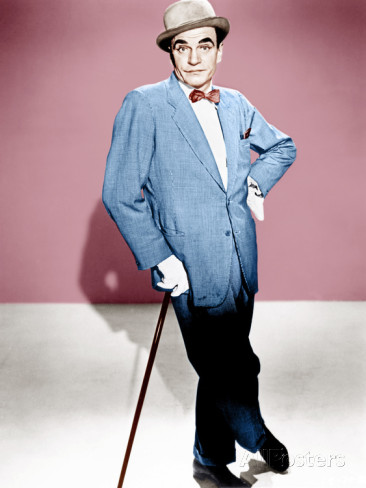
I remember hearing at the time that King’s character was based on the character Lawrence Olivier played in the 1960 movie “The Entertainer.”

the-entertainer-laurence-olivier-1960

Looks right to me.


Classic TV: ‘Community: Advanced Dungeons and Dragons’

abed community dungeons dragons

Further proof the geeks have inherited the Earth: “Advanced Dungeons and Dragons,” a typically wonderful second-season episode of “Community,” which originally aired in 2011.

Other than a few melodramatic references in old TV movies, I’m not sure the role-playing game Dungeons and Dragons has ever had the broad awareness it has now, with references – sometimes uncomplimentary – on a variety of shows on the air in recent years.

There was almost certainly no D&D story on TV as great, as true-to-life and as funny as this “Community” episode, though.

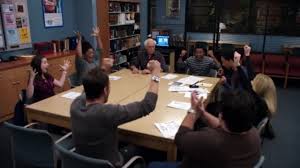
community advanced dungeons dragons

In “Advanced Dungeons and Dragons,” the Greendale study group plays D&D to befriend Neil, a fellow student with the less-than-charitable nickname “Fat Neil.” The study group, with a very shaky sense of the game, begins to play only to be interrupted by Pierce (Chevy Chase), the usually-unlikable group member. Pierce is outraged that he’s been excluded and forces his way into the game.

What the gang doesn’t suspect, however, is that Pierce has a plan.

The episode has genuine heart, but it’s also one of the funniest entries in the show. From Abed’s strict adherence to his role of Dungeon Master to Annie’s mimed performance as Hector the Well-Endowed to the relish of Pierce’s revenge … oh my gosh, so much goodness.

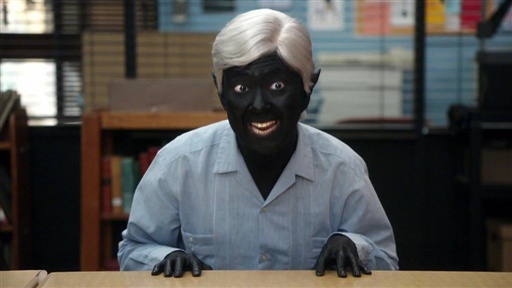
chang community dungeons dragons

Shirley’s reaction to Chang’s “dark elf” makeup: “So we’re just going to ignore this hate crime?” Priceless.

The case of the midseason finale

arrow left behind

When did winter finales and midseason finales begin? And what did we ever do before they existed?

I ponder this question after having watched the last episodes of “Arrow” and “The Flash” and “Agents of SHIELD” and “The Walking Dead” until January or February – some of them a couple of times now – and thinking about when this trend began.

If you’re not sure what trend I’m talking about: Sometime in the past few years, TV shows, which normally do not air fresh episodes in much of December or January, began calling their last episode before taking a break for a few weeks a “winter finale” or “midseason finale.”

Shows take breaks from new episodes for a few reasons. There’s apparently an ingrained belief that viewers aren’t watching during several weeks before and after Christmas, so there’s no point in burning off new episodes. I question this thinking and point to “Doctor Who,” which gets a new episode on Christmas Day itself each season. But those Brits are different all the way around.

So rather than just limping off our screens for a few weeks, after a Christmas-themed episode that aired just after Thanksgiving, series began airing a climactic episode – well, as climactic as an ongoing TV series ever is, given the need for an ongoing storyline that can run for several seasons – with a dramatic cliffhanger. (Almost literally, in the recent case of “Arrow.”)

And they began calling it a winter finale or midseason finale. So it feels important, you know.

I believe AMC and the producers of “The Walking Dead” might have started this trend. But “Arrow” and a lot of other shows have embraced it whole-heartedly.

So that’s why we see characters die or “die,” why villains are sometimes dispatched, why secrets are exposed.

And why we’re left wondering not only what happens next but how they’re going to top this in the spring, when their regular old season finale airs.

“SHIELD” left us hanging in its mid-season finale but promises something fun in the interim, at least, with episodes of the new prequel series “Agent Carter” beginning in January.

For the rest of these shows, we’ll wait and wonder. And marvel (no pun intended) at how networks and production companies have trained us to expect the middle of the season to end with a bang.

Me, MeTV and Saturday night

meTVsaturday

The weekend nights – Friday and Saturday nights, really – are and always have been special to young people. They were nights of freedom, with the promise of being able to stay up late because the next mornings were not school mornings.

I grew up watching “Sammy Terry” on WISH-TV 4 on Friday nights – a double-feature of classic and/or cheesy movies beginning at 11 p.m. – and “Science Fiction Theater,” a double-feature of more SF-oriented – as opposed to horror – movies without a host that aired on WISH on Saturday nights.

Of course, despite the enduring memories of Sammy Terry on Fridays, Saturdays have always had an edge is airing great old horror and science fiction. The legendary “Mystery Science Theater 3000” ended its run on the then-Sci-FI Channel on Saturdays (I still miss that viewing experience so much) and “Commander USA’s Groovie Movies” aired on USA Network in the latter half of the 1980s.

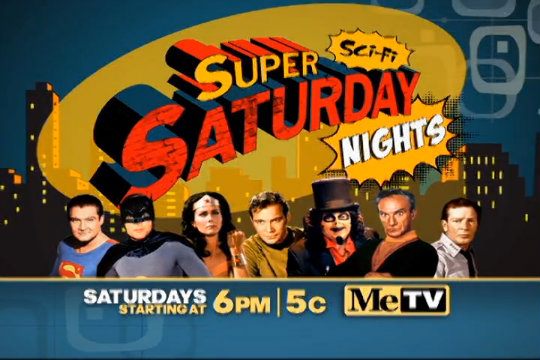
Considering I’m in the demographic for MeTV, it’s not a surprise that the channel, which specializes in airing classic TV of the 1950s-1980s, is one that I’m always checking out. And it’s not surprising that MeTV has me – and a loyal fanbase – hooked for its Super Sci-Fi Saturday Nights programming block.

MeTV’s Saturday night line-up has varied a bit over the past couple of years but has only grown more solid recently with its selection of TV shows and, as its crown jewel, the selection of classic horror films hosted by longtime Chicago horror host Svengoolie.

I’ve written about Svengoolie here before, but I’ll note for the record that the show, written, hosted and almost totally performed by Rich Koz, is perhaps the most entertaining geek-oriented two hours on TV right now.

That’s because of how much TV has changed in the past two decades.

With a proliferation of channels – and channels devoted to geek-friendly fare that include (now) SyFy – it seemed like a safe bet that lots of classic TV shows would be available to fill our days and late-nights.

(And yes, I know that virtually anything that airs on TV these days is available on disc, streaming or online. But I like a well-curated TV lineup.)

But any dreams I might have had of being able to see classic sci-fi or horror movies on these 24-7 channels were dashed when I saw what the channels actually chose to air: Tons of “reality” programming and hour after hour of reruns of network shows like “CSI.”

MeTV, which began airing in Chicago in 2005 and went national in 2010, appealed to Baby Boomers and others of nostalgic mindset by airing classic sitcoms and dramas.

The channel’s Saturday night lineup doubles down that appeal by programming for the growing geek base.

The night starts strong with episodes of “The Adventures of Superman,” the 1950s George Reeves series that hasn’t been widely seen in recent decades. That’s followed by the 1960s “Batman” series, the 1970s “Wonder Woman” series, “Star Trek,” “Svengoolie,” “Lost in Space” and “Voyage to the Bottom of the Sea.”

I’ve never been a big fan of the last two, Irwin Allen kids’ shows from the 1960s, but they’re good fare for insomniacs who haven’t been lulled into peaceful sleep by Svengoolie’s airing of some classic Universal monster movie.

And while “Wonder Woman” never met a villain she couldn’t subdue by throwing him into a swimming pool – just watch a few episodes; you’ll see what I mean – the Lynda Carter series plays nicely along with the campy “Batman” series and the crime-busting noir “Superman” show.

MeTV’s whole lineup is comfort food for those of a certain age, of course. Its Saturday night lineup is comfort food for geeks of a certain age.

‘The Musketeers’ and ‘The Three Musketeers’

the musketeers bbc america

I’ve always loved Musketeers stories.

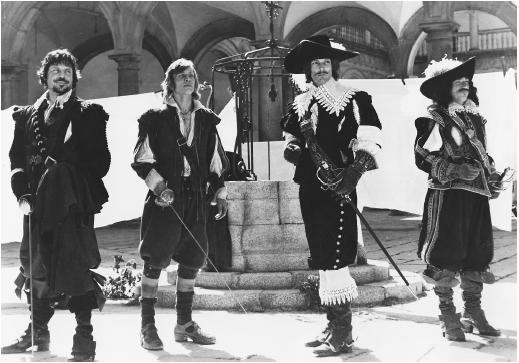
I’m pretty sure I read Alexandre Dumas’ novel of 17th-century Musketeers – the king’s guard – when I was still young and certainly before the 1973 Richard Lester movie version. I really loved Lester’s movie and its made-at-the-same-time sequel, “The Four Musketeers,” which was funny and slapstick and swashbuckling all at the same time. The movies clinched my love of the story and characters, a love that deepened when I saw the very different but equally thrilling 1948 version starring Gene Kelly and Van Heflin.

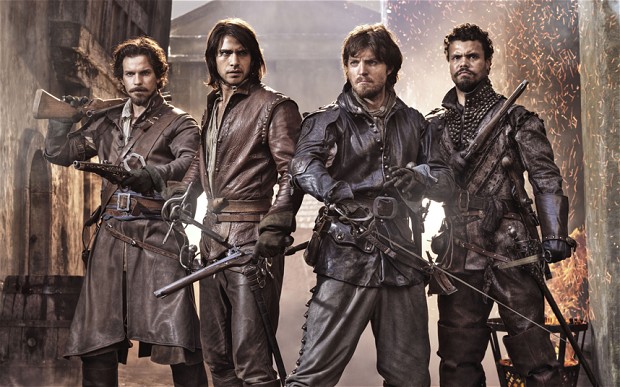
So I’ve enjoyed getting a double-dose of Musketeers lately with a BBC America series, “The Musketeers,” and a repeat viewing of Lester’s first movie.

“The Musketeers” is a handsome version of the story of young French farm boy d’Artagnan, who goes to Paris on a mission of revenge but soon finds companions in three of the king’s best Musketeers, suave Aramis, tragic Athos and brawling Porthos.

The series has the court intrigue, double-crossings and mysterious motives familiar from the story. The four Musketeers are stalwart but portrayed as men with faults and secrets.

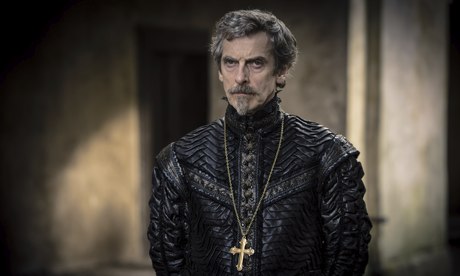
Peter Capaldi as Cardinal Richelieu in the BBC's The Musketeers.
A nice bonus is the presence of Peter Capaldi, who just last night began his tenure as the Doctor in “Doctor Who,” as Cardinal Richelieu, often portrayed as a villain but given some interesting shading here.

The series finishes up tonight, but I’m sure you can catch it streaming or on demand.

As for a recent chance to re-watch Lester’s original “Three Musketeers,” with Michael York, Raquel Welch and the amazing Oliver Reed, I rediscovered my love for the movie again.

the three musketeers 1973
But I hadn’t remembered how goofy parts of the movie were.

And for all the talk about modern-day movies hinting at or previewing future movies in a series, “The Three Musketeers” ends with scenes from its sequel.

It was a practice the producers, the Salkinds, pioneered here and tried to do again with the first two “Superman” movies. In the latter series, the producers threw out much of the footage shot for the sequel. With the “Musketeers” films, some members of the cast sued because they had been paid for only one movie.

Pretty sure Peter Jackson worked out such details with the “Lord of the Rings” cast before the fact.

‘The Strain’ a gooey mess, but fun

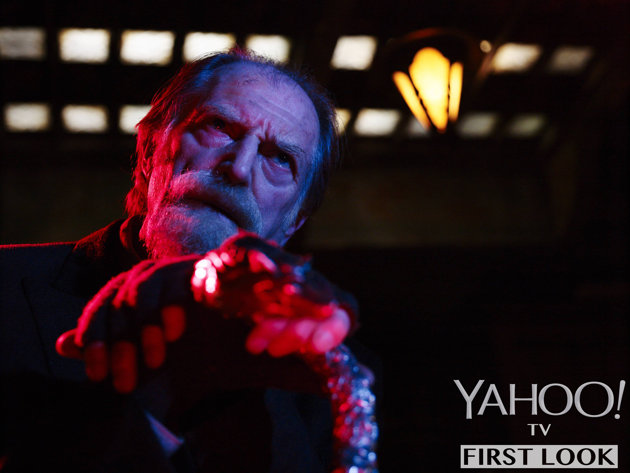
the strain david bradley

“The Strain” is an odd bird. Even besides the whole “vampires projecting fleshy six-foot-long stingers out of their mouths” thing.

It’s odd because it’s a TV series drawn from a series of three books that began life as a TV project.

Published in 2009, “The Strain” was written by movie director Guillermo del Toro and top-notch crime drama writer Chuck Hogan, who wrote “Prince of Thieves,” the hard-bitten Boston thriller made into the Ben Affleck movie “The Town.”

The two based “The Strain” and its two sequels, “The Fall” and “The Night Eternal,” on a TV series they wanted to develop.

The first book – and this is the plot familiar to viewers of the FX series, which is five episodes into a 13-episode first (?) season – follows the efforts of a small group of people – a couple of Centers for Disease Control scientists, an exterminator and a sword-wielding survivor of a World War II death camp – to convince authorities that New York City is the breeding ground for a deadly type of virus, It’s a disease that turns people into grotesque vampires, spreads rapidly – and has been deliberately released into the population after most of the passengers and crew of an airliner turn up dead on the runway at JFK.

“The Strain” is also odd in that, having read the books, I can’t quite imagine how the show can play out like Hogan and del Toro’s series of novels.

I won’t get into spoilers here, but suffice it to say that it would be an odd series indeed that starts as a medical thriller with supernatural overtones and morphs into … well, something else entirely.

“The Strain” is not what it seems. I’m not sure at what pace the plot will play out – and I’m pretty sure the series will be more faithful to the books than the adaptation of Stephen King’s “Under the Dome” has been – but it’ll be very interesting to see what happens by the end of this season. Or next, if there is one.

And those stingers. Sheesh.